

Note: This article contains affiliate links. If you click on these links and make a purchase, I may earn a small commission at no extra cost to you. This helps support my research and content. Read my full affiliate disclosure here.
Keeping a lawn free of stones protects mower blades, prevents foot injuries, and helps seed or sod take hold evenly. If you spend time picking rocks by hand or using poorly suited tools, a purpose-focused garden rake saves effort and reduces damage to grass. This guide covers our six shortlisted garden rakes for removing stones from lawn and explains the practical differences that matter in real yards. We evaluate durability of the tines, how gentle the tool is on turf, handle ergonomics, and overall ease of use to help you pick the right rake for regular stone removal. Read on to see which designs suit your lawn size, soil type, and storage needs.
Top Picks at a Glance
| Best Overall The best all-around choice for most situations | ATFVERDEX 60" Wooden-Handle 17-Tine Heavy-Duty Garden Rake |  |
| Best Quality Built to a higher standard if you want something more solid | Jardineer Heavy-Duty Bow Rake with 18 Steel Tines (Long Handle) |  |
| Best Value The sweet spot between price and what you get | BlumeTrec 68" Adjustable Bow Rake with 17 Manganese-Steel Tines |  |
| Best Budget The cheapest option that still gets the job done reliably | Lilyvane 4-ft Heavy Duty Metal Bow Rake with 17 Tines and Adjustable Stainless Steel Handle |  |
| Highest Rated A top-rated pick with lots of positive feedback | Bully Tools 7-Gauge 16-Tine Stone Rake with 66" Fiberglass Handle |  |
| Most Popular A crowd favorite that many people choose with confidence | Walensee Dual-Sided Heavy Duty Bow Rake, 63" Stainless Steel Handle, 17" Head |  |
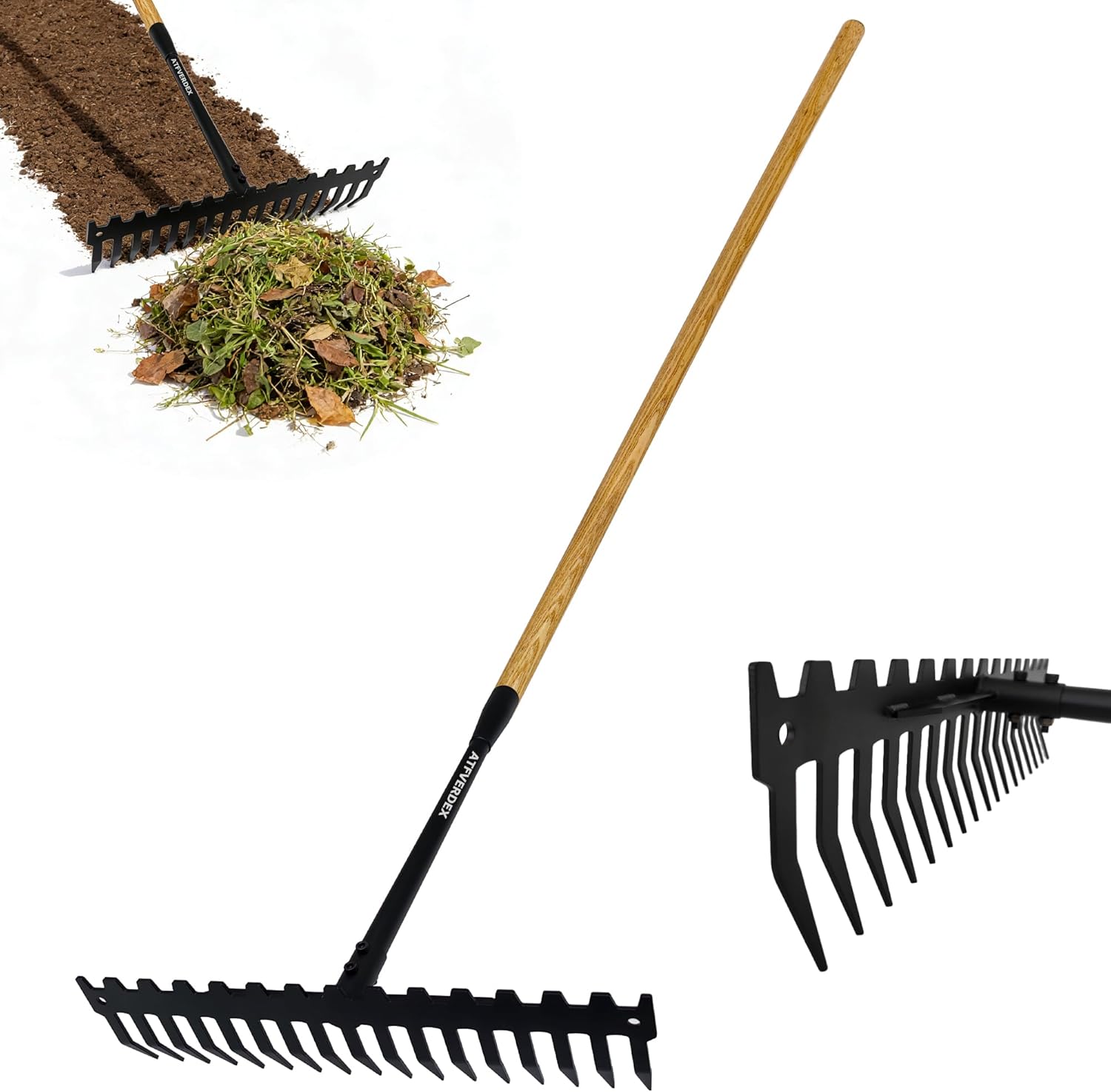
ATFVERDEX 60" Wooden-Handle 17-Tine Heavy-Duty Garden Rake
| Handle Material | Wood |
|---|---|
| Head Material | Iron |
| Rake Type | Multi-purpose rake |
| Head Width | 17 inches |
| Overall Length | 60 inches |
This ATFVERDEX garden rake is built for hard yard work: a 17-inch-wide forged-iron head with 17 tines and a 60-inch wooden handle that lets you work upright without bending. One side has long, deep tines for loosening compacted soil, pulling small stones and breaking up thatch while the short-tine side is for smoothing soil, spreading mulch and leveling gravel. The one-piece wooden handle gives a secure connection and comfortable feel compared with multi-piece shafts that can loosen. Reinforced welding at stress points and thick iron tines make the head resistant to bending when you scrape gravel or pick through stony areas. Expect it to cover a lot of ground per pass thanks to the wide head, which speeds tasks like clearing stones from lawns or prepping gravel beds. Limitations are typical for wooden-handle iron tools: the handle will require occasional care to avoid weather damage and the tool is heavier than lightweight aluminum rakes, so it is less suited to very long sessions for users who prefer ultra-light tools.
Best for: Gardeners who need a single, durable tool to loosen compacted soil and remove or move small stones across lawns and gravel areas while working upright and efficiently.
Less Ideal for: People who prioritize a very lightweight tool for long continuous use or who want a rust- and weather-proof metal handle that requires no periodic care.
- Dual-mode head with long and short tines for both deep loosening and surface leveling
- Forged iron head with reinforced welds resists bending when scraping stones or compacted soil
- Wide 17-inch head covers more ground per pass for faster work
- One-piece wooden handle provides a secure, comfortable grip and reduced wobble
- Wooden handle needs periodic maintenance to prevent weathering and may not be as durable as treated or metal shafts
- Heavier than lightweight rakes, which can tire some users during extended use
Verdict: A robust, two-sided iron rake with a long wooden handle that excels at loosening soil and clearing stones across lawns and gravel surfaces.
Jardineer Heavy-Duty Bow Rake with 18 Steel Tines (Long Handle)

| Rake Type | Stone Rake |
|---|---|
| Head Material | Alloy Steel |
| Handle Material | Aluminum |
| Tines | 18 |
| Head Size | 16 inches |
This Jardineer bow rake is built for heavy yard work where strength and coverage matter. Its 16-inch wide head has 18 thick alloy-steel tines and a triple-welded joint so it can penetrate compacted soil, pry out stones, and spread gravel or mulch without the head separating. The head offers two working edges: shorter tines to break up compacted ground and longer tines to rake and level loose material, which makes switching tasks quick while you work. An aluminum long handle keeps the tool lighter than an all-steel shaft and the anti-rust coating on the head improves durability for outdoor use. The rake ships with a detachable handle for easier storage and assembly in minutes. Expect a very capable landscaping tool that excels on rocky turf and gravel paths but is a bit heavier than leaf-specific rakes and lacks adjustability found on some telescoping models.
Best for: A buyer who prioritizes durable performance for preparing seedbeds, clearing rocks from grass, and moving gravel or mulch will appreciate this tool; it suits homeowners and landscapers who need a robust, no-nonsense rake for tough ground work.
Less Ideal for: If you mainly need a feather-light rake for leaf collection, frequent ergonomic adjustments, or long periods of repetitive hand-friendly use, a flexible leaf rake or adjustable-handle model is a better match.
- Sturdy alloy-steel head with 18 thick tines resists bending when digging into compacted soil or gravel.
- Dual-sided tine design lets you use short tines for prying stones and long tines for spreading and leveling material.
- Triple-welded joint reduces risk of head detachment during heavy tasks.
- Wide 16-inch head covers more ground for faster raking and leveling.
- Handle is aluminum which is lighter but transmits more shock than a cushioned or fiberglass grip.
- Non-adjustable long handle limits length customization for different user heights.
- Heavier and stiffer tines make it less suited for delicate leaf raking or fine lawn grooming.
Verdict: Built for heavy-duty rock and gravel work, this wide 18-tine bow rake gives the strength and coverage performance-focused users need to clear and level rocky turf efficiently.
BlumeTrec 68" Adjustable Bow Rake with 17 Manganese-Steel Tines

| Head Material | Manganese steel |
|---|---|
| Handle Material | Stainless Steel |
| Head Size | 17 inches |
| Overall Length | 68 inches |
This BlumeTrec bow rake is built for multi-purpose yard work: a 17-inch manganese-steel head with 17 welded tines tackles compacted soil, dethatching, leaf collection, and light leveling, while the dual-sided design (long tines one way, shorter tines the other) lets you switch between loosening and spreading without swapping tools. The 68-inch stainless-steel handle with a soft non-slip grip helps maintain an upright posture for longer sessions and breaks down into threaded sections for easier storage and transport. In real use the solid tines and heat-treated head feel durable and resist bending during heavy raking, and the wide head covers ground efficiently so you spend fewer passes per task. Assembly is straightforward with the provided fasteners. Limitations are that the long steel handle is modular rather than a single-piece shaft, which may develop play at the threaded joints over many seasons, and the tool is large for small patios or container gardens where a shorter rake would be easier to maneuver.
Best for: Gardeners who need a single, heavy-duty rake that handles soil prep, dethatching, and leveling across medium to large lawns and beds and who value durability and coverage over compact size.
Less Ideal for: People with very small patios, container gardens, or those who prefer lightweight, travel-friendly tools should consider a shorter or folding rake instead.
- Durable manganese-steel head with 17 welded tines for strong soil penetration and resistance to bending
- Dual-sided head provides long tines for loosening and short tines for spreading and leveling
- Long 68-inch handle encourages upright posture and reduces back strain during extended use
- Detachable multi-section handle for compact storage and easier transport
- Multi-section threaded handle can develop slight play over time compared with a one-piece shaft
Verdict: A robust, versatile bow rake that combines heavy-duty tines and a long handle to speed up soil prep and lawn maintenance across medium to large outdoor spaces.
Lilyvane 4-ft Heavy Duty Metal Bow Rake with 17 Tines and Adjustable Stainless Steel Handle

| Handle Material | Stainless Steel |
|---|---|
| Rake Type | Garden Rake |
| Number of Items | 1 |
| Head Material | me |
This Lilyvane bow rake is built for heavy garden and landscaping work. The reinforced all-metal head with 17 sturdy tines breaks up compacted soil, moves gravel, and gathers debris without bending, while the flat side and shorter tines make smoothing and leveling quick. The handle comes in three connectable stainless steel sections so you can set the length for comfort or split it for compact storage. Triple-welded construction and an anti-rust finish give the tool durability for regular outdoor use, and the head-to-handle connection screws together by hand for simple assembly. Practical benefits include a versatile two-sided head that replaces multiple tools and a rust-resistant handle that holds up in damp conditions. Limitations are minor: the rake is all-metal so it is heavier than lightweight aluminum or plastic models and the finish may show surface wear after prolonged abrasive use. For anyone needing a dependable, long-lasting rake for tough soil, driveways, and yard prep, this is a solid choice.
Best for: Homeowners and landscapers who prioritize a durable, dependable tool for tough jobs like compacted soil, gravel work, and regular yard preparation and want something built to last.
Less Ideal for: People who need an ultralight rake for frequent overhead or high-mobility jobs should consider lighter materials or specialized leaf rakes instead.
- Reinforced all-metal head with 17 tines resists bending under heavy use
- Dual-sided design for both breaking up soil and leveling or spreading material
- Adjustable stainless steel handle that can be shortened or disassembled for storage
- Triple-welded construction and anti-rust coating for long-term durability
- All-metal construction makes it heavier than lightweight alternatives
- Finish may show wear after extended abrasive tasks
Verdict: Choose this rake if you want a tough, rust-resistant all-metal tool that handles heavy soil, gravel, and leveling tasks reliably.
Bully Tools 7-Gauge 16-Tine Stone Rake with 66" Fiberglass Handle

| Rake Type | Stone Rake |
|---|---|
| Head Material | Alloy Steel |
| Handle Material | Fiberglass |
| Head Size | 18 inches |
| Tines | 16 |
The Bully Tools 7-gauge 16-tine stone rake is built for heavy-duty gravel and yard-prep work where strength and coverage matter. The extra-thick alloy-steel head and 16 tines let you move and level gravel, mulch, and compacted soil without bending or missing spots, while the 66-inch fiberglass handle gives good leverage and cuts fatigue compared with a short wooden shaft. Typical use cases are spreading stone, smoothing beds before seeding, redistributing mulch, and scraping out debris or roots. Notable features are the commercial 7-gauge steel construction, rubber grip for control, and weather-resistant fiberglass handle that holds up to moisture. Practical benefits include faster coverage of large areas thanks to the wide 18-inch head and durable materials that stand up to repeated heavy use. Limitations are that its heavy-duty build makes it heavier to swing than lightweight leaf rakes and the fixed long handle can be awkward in tight beds or trucks; minor assembly is required out of the box.
Best for: Buyers who prioritize performance and durability for large gravel beds, landscaping jobs, or regular heavy-duty yard work and want a tool that speeds up coverage and holds up to frequent use.
Less Ideal for: Not the best choice for gardeners who need a lightweight rake for delicate beds, tight planting areas, or primarily leaf cleanup in small yards.
- Commercial-grade 7-gauge alloy-steel head for exceptional durability under heavy loads
- 16 tines and 18-inch head provide broad, even coverage for faster leveling
- 66-inch fiberglass handle offers strong leverage and resists moisture
- Rubber grip improves control during heavy raking tasks
- Heavier than lightweight leaf rakes, so more effort for prolonged overhead use
- Long fixed handle can be cumbersome in tight spaces or when transporting
Verdict: Choose this stone rake when you need a tough, commercial-grade tool that moves and levels gravel and mulch quickly and reliably.
Walensee Dual-Sided Heavy Duty Bow Rake, 63" Stainless Steel Handle, 17" Head

| Head Size | 17 inches |
|---|---|
| Handle Material | Stainless Steel |
| Head Material | Metal |
| Rake Type | Garden Rake |
The Walensee dual-sided bow rake is a practical all-purpose garden tool built for yard maintenance tasks like loosening compacted soil, pulling thatch, spreading mulch and leveling gravel or topsoil. One side of the 17-inch head has 17 reinforced steel tines for aggressive raking and soil penetration while the opposite edge provides a flatter surface for smoothing and leveling. The head is heat-treated manganese steel with triple-welded joints and double-locking screws, so it feels sturdy under heavy use. A 63-inch stainless steel handle with an adjustable multi-section pole reduces bending and gives comfortable reach for longer sessions. In use the wide head covers ground quickly and the rigid construction stands up to rocky or rooty soil, though the metal head makes the tool best suited to outdoor, tough-duty tasks rather than delicate bed work. The rake is straightforward to use and low maintenance but its full-metal build means it is heavier than lightweight aluminum or wooden-handled rakes and may be overkill for occasional light-duty chores.
Best for: Homeowners and regular gardeners who want a single, durable rake that handles soil breaking, dethatching and leveling across medium to large yards.
Less Ideal for: Casual users with very small gardens or those who need an ultra-light tool for frequent, gentle bed work should consider a lighter or softer-tined rake instead.
- Dual-sided head combines aggressive tines for loosening with a flat side for leveling.
- Heat-treated manganese steel head and triple-welded construction for durability.
- Wide 17-inch head covers more ground per pass for faster work.
- Long adjustable stainless steel handle reduces bending and improves reach.
- All-metal construction increases weight compared with lighter rakes, which may tire some users.
- Not tailored for delicate planting beds or very fine finishing work due to rigid steel tines.
Verdict: Choose this heavy-duty dual-sided bow rake if you want one durable tool that quickly handles soil loosening, dethatching and leveling across medium to large yards.
Choosing the Right Garden Rake for Removing Stones From Lawn: Key Factors to Consider
Tine Material and Shape
Tine construction determines how effectively small stones are lifted without bending. Stamped steel tines are common and offer good strength, but heat-treated or thicker-gauge steel resists warping better over time.
The shape matters too. Slightly curved or flared tines scoop and retain stones, while very flat or rigid tines can jab the turf. Look for tines with tapered ends that slide under shallow thatch and grab stones instead of pushing them deeper into the grass. Tine spacing also changes behavior: tighter spacing catches small pebbles but can collect debris, while wider spacing lets fine material pass through.
Turf Contact and Grass Safety
How the rake contacts the lawn is essential to avoid scalping or tearing grass. Rakes with rounded, slightly flexible tines make multiple light contact points that lift stones without digging into crowns. Rigid, thin-edged tines concentrate force and risk creating bare patches on soft lawns.
Consider the rake head width and the angle you use it at. A wider head covers more area but increases the leverage on each tine, so combine a wider head with gentler strokes. For delicate turf or newly established lawns, choose tools designed to skim the surface rather than penetrate deeply.
Handle Length, Grip, and Weight Distribution
Handle length affects posture and leverage. A longer handle reduces bending and lets you use body weight efficiently when sweeping, which is helpful for larger lawns or heavier stone loads. Short handles give better control for confined areas or near borders.
Grip material and diameter influence fatigue during longer sessions. A slightly padded, non-slip grip reduces strain and improves control when pulling small stones. Balance between head weight and handle length matters too; a front-heavy rake can feel awkward and increase wrist strain, while a well-balanced tool lets you sweep in longer arcs with less effort.
Head Width and Maneuverability
Head width determines how quickly you cover ground and how easy it is to work around obstacles. Narrower heads navigate around trees, flower beds, and garden features more easily, while wider heads speed up open-lawn work.
Consider whether the head is rigid or has articulation. Some designs allow a slight flex to follow minor ground contours, which helps keep consistent contact on uneven lawns. If you have a lot of tight spaces, prioritize maneuverability and the ability to control each pass precisely.
Build Quality and Corrosion Resistance
Rakes live in wet, gritty conditions and often sit in sheds for long periods. Materials with rust-resistant finishes, stainless fasteners, or powder-coated heads last longer with less maintenance. Welded connections between head and handle are stronger than simple press-fit joints in the long run.
Also check whether the head is replaceable or the handle is standard-sized for easy swaps. Replaceable parts extend a tool's usable life and can be more sustainable. A well-finished tool costs less to care for and remains effective season after season.
Storage and Maintenance Needs
Practical storage matters when you use the rake intermittently. Collapsible or detachable heads reduce footprint and make it easier to store the rake vertically or hang it on a wall. Tools that resist corrosion need less frequent attention, while simpler designs may require occasional tightening of fasteners and light oiling.
Routine care is minimal for most rakes but cleaning off grit and drying the tool before storage prevents premature wear. If you plan to leave a rake outside, prioritize corrosion-resistant finishes and materials to avoid structural weakening over time.
Best Rake Styles for Turf Stone Removal
Different rake head styles behave differently on lawns. Leaf-style or fan rakes with flexible tines are gentler and lift small stones and debris without digging into crowns. Landscape-style or garden rakes with rigid, closely spaced tines pull heavier material and can be used for more aggressive stone collection, but they require a careful hand on turf to avoid damage.
- Flexible fan rakes skim and collect light debris while reducing turf stress
- Rigid garden rakes are better for gravelly soils but need gentler technique on grass
- Consider a mid-width head if you alternate between open lawn and narrow areas
Techniques for Removing Stones Without Hurting Grass
Technique matters as much as tool choice. Use shallow, sweeping strokes rather than aggressive raking. Angle the head so the tines glide just under the surface rather than plunging in. Work with the grain of the grass and avoid repeated hard passes over the same spot to minimize wear.
If stones are partially embedded, loosen soil lightly with a specialized tine or hand tool before raking to avoid pulling grass roots. For larger or sharp rocks, lift by hand after exposing them to prevent the rake from taking excessive force that could damage both the tool and the lawn.
- Start with lighter passes and increase pressure only if needed
- Rake toward you to better control stone capture and reduce turf tearing
- Clean out collected stones regularly to keep tines effective
When to Use a Rake Vs Other Stone-Removal Methods
Rakes are efficient for scattered small stones and daily maintenance. For heavy gravel patches or deep bed preparation, other methods such as sieving soil or using a coarser landscape rake are more appropriate. Hand removal is still best for large, sharp stones that might slip through rake tines.
If you are preparing lawn for seeding or repair, combine raking with a light topdressing rather than relying on raking alone to remove compacted gravel. Rakes complement other tools but are not a universal replacement for targeted hand work or mechanical soil screening.
- Use rakes for spreading and collecting small to medium stones
- Switch to hand tools for large or embedded rocks
- For heavy gravel, consider soil sieving or a sturdier landscape rake
Maintenance Tips to Keep a Rake Working Longer
After each use, knock loose grit and hose down the head to remove abrasive particles. Dry the tool before storing to reduce rust risk. Periodically inspect fasteners and welds and tighten or touch up finishes as needed.
Store the rake off the ground in a covered space and, if possible, hang it to keep tines straight. If a tine bends, try to reshape it carefully rather than forcing it, which can lead to breakage. Replace worn heads or handles if they show significant wear to maintain safe, effective operation.
- Clean and dry after use to prevent corrosion
- Check connections annually and tighten or replace fasteners
- Hang the rake to prevent bent tines and save space
How We Chose the Best Garden Rake for Removing Stones From Lawn
We focused on features that directly affect stone removal from established turf and the day-to-day handling gardeners will encounter. Primary evaluation criteria included tine material and geometry, which determine how well the rake penetrates light thatch and lifts small stones without bending or breaking. We assessed turf friendliness by looking at tine spacing, contact profile, and any cushioning or flexible designs that reduce scalp risk to grass. Handle length, weight, and grip were considered for ergonomics and leverage during sweeping motions across lawns. Build quality and corrosion resistance matter because rakes see wet soil and grit; we prioritized durable metals and protective finishes. We also considered storage footprint and whether the head is adjustable or replaceable, as practical maintenance extends a tool's usable life. We excluded specialty landscape rakes intended for heavy gravel work or metal scrapers that are designed to remove large rocks from soil beds. Tools that would routinely gouge turf or require two people to operate were not included. The shortlisted rakes demonstrate a balance of stone-lifting effectiveness and gentle interaction with grass, plus reasonable durability and ergonomic handling.
FAQ
What tine spacing is best for picking up small pebbles?
Tighter tine spacing generally catches small pebbles more effectively because fewer gaps let material pass through. However, very tight spacing can trap leaves and organic debris, requiring more frequent clearing. Choose spacing that balances stone capture with the type of debris you normally have.
Will a stone-focused rake damage new grass seed?
Some rakes can disturb new seed if used aggressively. For lawns newly seeded or sodded, use lighter, flexible rakes and very gentle strokes so the tines skim the surface rather than digging in. In many cases, hand removal of visible stones is safest until the turf establishes.
Can I use a regular leaf rake to remove stones?
A flexible leaf rake can work for small, scattered stones and is gentler on turf. It may not be as effective with heavier or embedded stones, so you might need more passes. For frequent stone removal, a tool with stronger tines shaped for lifting stones will be more efficient.
How often should I remove stones from my lawn?
Frequency depends on the source of stones and your lawn use. Inspect and remove stones after heavy storms, construction work, or if you notice mower damage. Routine checks once a month during active seasons often keep lawns safe and reduce buildup.
Is a replaceable head worth paying attention to?
A replaceable head extends the life of the tool and lets you swap to different tine styles for specific tasks. It is worth considering if you want a long-term tool that can adapt as your needs change or if you expect heavy use that may wear the head faster.
Final Verdict
Choose a garden rake that balances stone-lifting strength with gentle contact on grass. Prioritize tine design and turf-friendly profiles if your main job is removing stones from an established lawn, and match handle length and head width to your yard size and body mechanics. Accept tradeoffs: stiffer, stronger tines lift stones better but require more careful technique on delicate turf, while flexible heads protect grass but may need more passes. Use the evaluation criteria above to weigh those tradeoffs and pick the rake that fits your lawn conditions and maintenance routine.
