

Note: This article contains affiliate links. If you click on these links and make a purchase, I may earn a small commission at no extra cost to you. This helps support my research and content. Read my full affiliate disclosure here.
Ants in the kitchen are more than an annoyance. They follow scent trails to food and can spread bacteria across counters, so the right baiting strategy matters for day-to-day hygiene. This guide looks at six top kitchen ant traps chosen for how they perform where you live and cook. You will find options that prioritize fast bait uptake, placement safety around kids and pets, and ease of ongoing use. Below we summarize the shortlist and the evaluation criteria used so you can pick a solution that fits your household and kitchen layout.
Top Picks at a Glance
| Best Overall The best all-around choice for most situations | TERRO Liquid Ant Killer 3-Pack (T200-3SR) |  |
| Best Quality Built to a higher standard if you want something more solid | Catchmaster Defiant Liquid Ant Bait Starter Kit (1 Liquid Bait + 4 Refillable Stations) |  |
| Best Value The sweet spot between price and what you get | ROUTADE 48-Pack Slow-Acting Ant Gel Bait Stations |  |
| Best Budget The cheapest option that still gets the job done reliably | Combat Max Ant Killing Bait Stations, 6 Count |  |
| Most Popular A crowd favorite that many people choose with confidence | TERRO Liquid Ant Bait Stations, 18 Count (3 Pack) |  |
| Best Seller A high-volume bestseller chosen again and again | Terro Multi-Surface Liquid Ant Baits, 4-Pack |  |
TERRO Liquid Ant Killer 3-Pack (T200-3SR)

| Item Form | Liquid |
|---|---|
| Active Ingredients | Sodium Tetraborate Decahydrate (Borax) 5.40% |
| Target Species | Insects |
| Specification Met | EPA |
TERRO Liquid Ant Killer is a straightforward indoor bait system designed to eliminate common household ants by having workers feed on a borax-based liquid and transfer it to the colony. You apply drops of the bait onto the included cardboard tiles and place them along ant trails, baseboards, counters, and other activity hotspots. The 3-pack gives multiple bait stations for treating several rooms or repeated placements. The active ingredient, sodium tetraborate decahydrate, works slowly enough to be shared among nestmates so the queen and hidden workers are affected, which can produce visible reductions in a few days. Because the formulation is liquid and comes in drip bottles, placement and reapplication are simple and low-mess compared with granular or spray options. Limitations are that the product is intended for indoor use only and requires ants to find and feed on the bait, so heavily contaminated or outdoor nests may need additional measures. When used as directed it is a practical, low-effort solution for routine household infestations.
Best for: Homeowners wanting a low-effort, indoor-focused solution to eliminate sugar ants and other household species who prefer baiting over sprays.
Less Ideal for: People who need immediate knockdown of visible ants outdoors or who require a product for large external infestations should look at targeted outdoor nest treatments.
- Borax-based liquid attracts worker ants and allows transfer to the colony for more complete elimination
- Three 2 oz bottles provide multiple placements for whole-house coverage
- Simple drop application on included cardboard tiles makes setup and reapplication low-mess
- EPA specification met and formulated for common household ant species including sugar and ghost ants
- Only effective if ants discover and consume the bait, so results depend on placement and ant behavior
- Designed for indoor use and may not address outdoor nests feeding into the house
Verdict: A simple, effective indoor bait that uses borax to knock out sugar ant colonies by relying on worker-to-colony transfer.
Catchmaster Defiant Liquid Ant Bait Starter Kit (1 Liquid Bait + 4 Refillable Stations)

| Unit Count | 4 Count |
|---|---|
| Included Components | Sodium Tetraborate Decahydrate (Borax) 5.4%, Other Ingredients: 94.6% |
| Target Species | Ant |
| Number of Pieces | 5 |
| Recommended Uses For Product | Indoor Ant Control, Outdoor Ant Control, Reducing and Removing Entire Ant Colonies |
The Defiant Liquid Ant Bait Starter Kit is a performance-focused ant control system that uses a sugar-attractive liquid bait workers carry back to the colony to eliminate the queen and nest. You pour a few drops of the ready-to-use bait into the included stations, place them near ant trails or hotspots, and monitor activity through the clear stations. The kit is designed for repeated use: stations are refillable and stackable for use in dustier or high-traffic spots, and the 3.38 oz bait bottle is described as roughly a one-year supply for an average home. Practical benefits include targeted placement indoors and outdoors, discreet clear housings to watch bait levels, and a formulation intended to be slow-acting so ants transfer the bait through the colony. Important limitations are that it is not labeled for carpenter, fire, or pharaoh ants and results depend on worker ants finding and carrying bait back to the nest which can take up to three weeks for full colony elimination.
Best for: Buyers who prioritize effective colony-level control of sugar-attracted ants and want a reusable, monitored baiting system they can place indoors and near entry points outdoors.
Less Ideal for: Those facing infestations of carpenter, fire, or pharaoh ants or people who need immediate knockdown of visible ants should consider other targeted treatments.
- Ready-to-use liquid bait that workers can carry back to the colony for whole-nest control
- Refillable, stackable stations let you reuse traps season after season and adapt placement
- Clear stations allow easy monitoring of ant activity and bait level
- Includes multiple stations for placement around indoor and outdoor hotspots
- Not effective against carpenter, fire, or pharaoh ants
- Elimination depends on ants finding and transporting bait so results can take up to three weeks
Verdict: Choose this kit if you want a reusable, monitored liquid-bait system built to eliminate sugar-attracted ant colonies rather than just repel or kill individual workers.
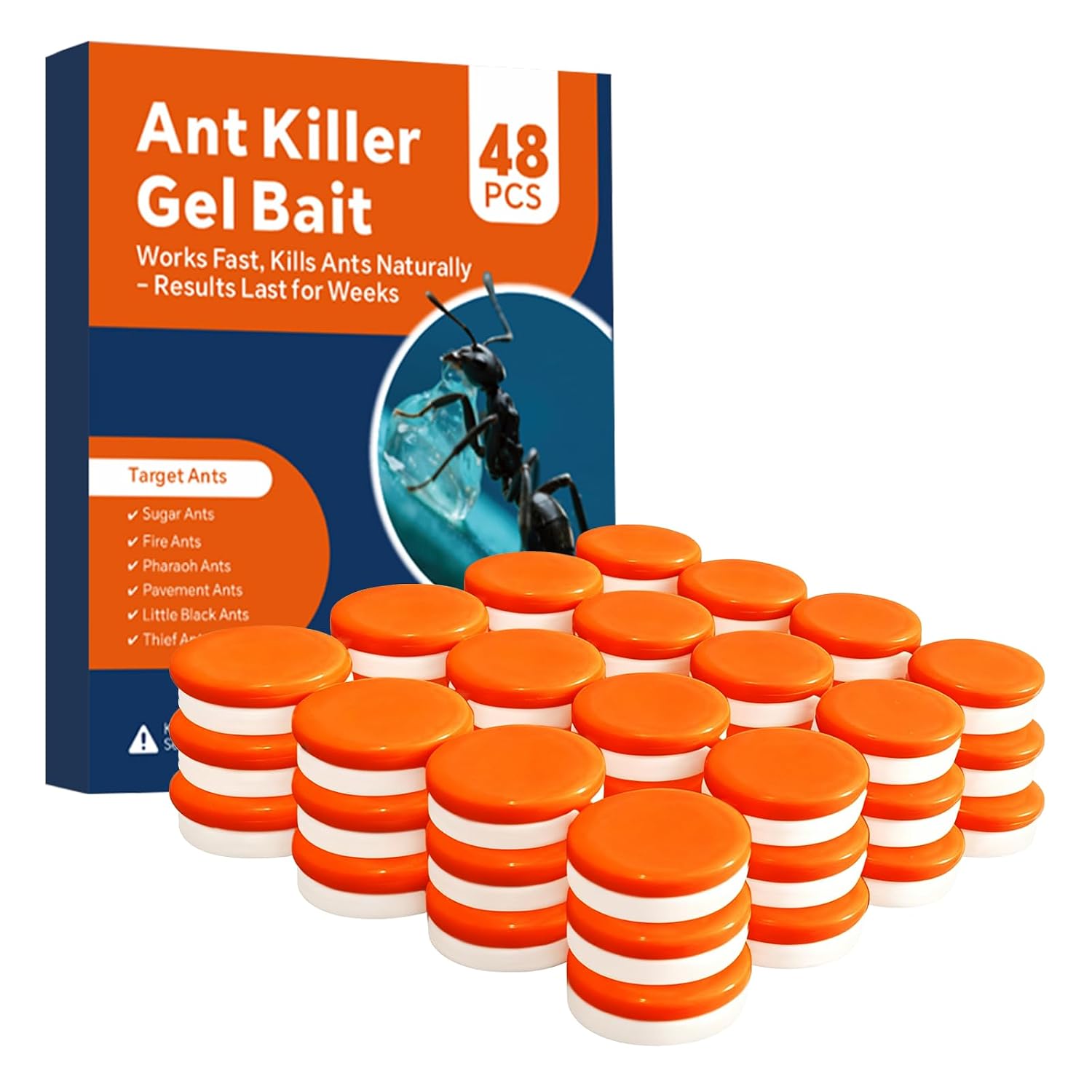
ROUTADE 48-Pack Slow-Acting Ant Gel Bait Stations
| Unit Count | 48 Count |
|---|---|
| Item Form | Gel |
| Target Species | Ants |
| Included Components | Ant gel bait |
This 48-pack of ROUTADE slow-acting ant gel bait stations is built for systematic, long-term ant control in and around the kitchen. Each station contains a gel formula that worker ants consume and carry back to the nest, which helps reduce the entire colony rather than only visible foragers. The product is supplied in ready-to-use stations with adhesive tape so you can place them along baseboards, in cabinets, near sinks, and on entry thresholds without messy sprays or frequent repositioning. The large pack lets you deploy multiple stations in high-traffic areas and replace them over time for continuous coverage. Because the formula is slow-acting, it is effective against a range of common household species including carpenter ants and sugar ants, but it requires several days to weeks to knock down a colony and will not give instant removal of visible ants. Also the stations are small and contain gel rather than a tamper-resistant hard block, so keep them away from children and pets. For someone wanting a low-maintenance, colony-focused approach to kitchen ant problems, this kit makes it easy to set and forget while the bait works.
Best for: Homeowners who prioritize reliable, long-term elimination of ant colonies in kitchens and want a low-maintenance bait they can deploy across multiple hotspots.
Less Ideal for: People who need an immediate knockdown of visible ants or who require childproof solid bait stations should consider alternatives.
- Slow-acting gel designed for worker ants to carry bait back to the nest for colony-level control
- Ready-to-use bait stations with adhesive for easy placement along baseboards and in cabinets
- 48-count pack provides broad coverage around a kitchen and enough replacements for extended use
- Versatile for indoor and outdoor placement to block entry points and high-traffic ant routes
- Slow-acting formula takes days to weeks to eliminate a colony so visible results are not immediate
- Gel in small stations may require careful placement to keep away from children and pets
Verdict: A practical, deploy-and-forget gel bait kit for reliable colony-level control of kitchen ant infestations.
Combat Max Ant Killing Bait Stations, 6 Count

| Active ingredient | Fipronil 0.01% |
|---|---|
| Units included | 6 bait stations |
| Intended use | Indoor and outdoor |
| Protection duration | Up to 3 months per station |
Combat Max Ant Killing Bait Stations are compact, child-resistant plastic stations prefilled with a Fipronil-based bait intended for indoor and outdoor use. You place the stations along ant trails or near entry points and foraging ants enter, feed, and carry the bait back to the nest where it works to eliminate the queen and other colony members. The package includes six stations, each designed to provide up to three months of protection, and the odorless, fuss-free formula means they can sit in kitchens, bathrooms, and living areas without noticeable fumes. Practical benefits include no-mess setup, a discreet low-profile housing that fits under sinks and behind appliances, and a bait attractive to multiple common ant species. Limitations are that results depend on ants finding and accepting the bait and that replacement every three months is recommended to maintain effectiveness. As with any insecticide, keep stations out of reach of children and pets and follow label directions for safe placement and disposal.
Best for: Buyers who want a practical, low-effort indoor ant solution they can place and forget for weeks at a time; good for homeowners prioritizing convenience and discreet placement.
Less Ideal for: People who need immediate knockdown of visible ants by contact spray or who prefer non-chemical control methods; not suitable where children or pets may repeatedly access bait despite child-resistant design.
- Ready-to-use, no activation or messy application required
- Child-resistant, low-profile plastic housing suitable for tight spaces
- Uses Fipronil for fast-acting control that targets the colony via forager transfer
- Odorless and vapor-free formula safe for use in living areas when used as directed
- Effectiveness depends on ants locating and accepting the bait so placement matters
- Requires replacing stations approximately every three months to maintain control
Verdict: A convenient, ready-to-use bait station pack that reliably targets entire ant colonies with minimal setup for buyers who prioritize low-effort indoor control.
TERRO Liquid Ant Bait Stations, 18 Count (3 Pack)

| Unit Count | 18 Count |
|---|---|
| Item Form | Liquid |
| Target Species | Insects |
| Active Ingredients | Sodium Tetraborate Decahydrate (Borax) |
| Specification Met | EPA |
TERRO Liquid Ant Bait Stations are compact, ready-to-use traps that use a sweet liquid bait containing borax to attract foraging ants and carry the poison back to the colony. Typical use is placing the small stations along baseboards, in corners, behind appliances, or on counters where you see ant trails; no mixing or setup is required beyond opening the tab. The kit includes 18 bait stations (three packs of six) and the liquid formula is kept from drying by the sealed station design so it stays attractive for extended periods. Practical benefits include quick visible reduction in worker ants within a few days and the potential to eliminate the colony if placements are maintained until the bait is gone. Limitations: it is for indoor use only and works on ants that take sweet baits, so species that prefer greasy or protein foods may be less affected; results can take up to two to four weeks for full control and you should remove competing food sources for best results.
Best for: Homeowners or renters who want a low-effort, evidence-backed way to target kitchen ant trails and remove colonies without sprays, and who prefer products with a strong track record and social proof.
Less Ideal for: People needing immediate knockdown of visible ants or those dealing with species that avoid sweet baits should consider fast-acting sprays or alternative bait types instead.
- Ready-to-use stations require no mixing or tools
- Sealed liquid design resists drying so bait remains attractive over time
- Attracts worker ants that share bait, which can eliminate the colony
- Includes multiple stations for widespread placement around a kitchen
- Indoor-only product not formulated for outdoor use
- Relies on ants accepting a sweet bait so may be less effective on non-sugar-seeking species
Verdict: A ready-to-use, proven liquid bait kit that targets kitchen ant trails and can eliminate colonies with minimal effort.
Terro Multi-Surface Liquid Ant Baits, 4-Pack

| Included Components | 4 ant bait stations plus adhesive strips |
|---|---|
| Target Species | Ant |
| Material Type | Plastic |
| Active Ingredient | Sodium Tetraborate Decahydrate (Borax) 5.40% |
The Terro Multi-Surface Liquid Ant Baits are ready-to-use stations filled with a sweet liquid bait containing borax that worker ants carry back to the nest, which can lead to colony elimination over a few weeks. They are simple to deploy: remove the tab and either lay a station flat along ant trails or stick it to walls, kick plates, or under cabinets using the included adhesive strips. Practical benefits for kitchen use include discreet placement out of reach of children and pets, flexible mounting where ants enter, and visible reduction in activity within days. Because the active ingredient works slowly, you may initially see more ants as foragers find the bait before numbers decline, and full control typically takes 2 to 4 weeks. These stations are single-use and must be replaced when the bait is gone, so ongoing infestations require monitoring and repeat placement. They target common household ants and are made of plastic, so they are lightweight but not intended for outdoor or large-scale commercial use.
Best for: Buyers who want a low-effort, kitchen-safe approach to stop visible ant trails and eliminate colonies without DIY mixing or specialized equipment. Ideal for homeowners who prioritize easy placement and discreet, monitored control.
Less Ideal for: Those needing an immediate kill of large outdoor infestations or a long-term continuous refill system should consider professional services or refillable bait stations instead.
- Ready-to-use prefilled stations require no mixing or setup
- Multi-surface design with adhesive strips allows discreet placement on walls or under cabinets
- Slow-acting borax formulation is carried back to the colony for broader control
- Visible reduction in ant activity often within a few days
- Single-use stations must be replaced when bait is depleted
- Contains borax so stations should be kept away from children and pets
Verdict: An easy, low-effort kitchen solution that lets you place discreet, ready-to-use baits where ants travel so you can eliminate colonies without mixing or complex setup.
Choosing the Right Kitchen Ant Trap: Key Factors to Consider
Bait Attraction and Formulation
How quickly ants find and consume bait affects whether a trap breaks the colony's foraging trail. Sugar-based baits attract different ant species than protein-based or grease-targeting baits. In a kitchen you will often face multiple food preferences, so choosing a bait that appeals to the dominant species in your home shortens the time to visible results.
Bait formulation also determines whether worker ants carry the toxicant back to the nest. Slow-acting active ingredients that allow ants to return to the colony before dying improve colony-level control. Rapid-acting baits can remove foragers fast but may fail to reduce the nest if ants die before transferring the bait.
Containment and Tamper Resistance
Containment design matters for household safety and for maintaining bait integrity. Enclosed housings, narrow entry ports, or childproof lids keep bait out of reach of children and pets while still allowing worker ants access. Open dishes or improperly sealed reservoirs risk spills, accidental ingestion, and reduced effectiveness if food or moisture dilutes the bait.
Tamper resistance also affects where you can place the trap. More secure housings can go closer to food prep areas or lower cabinets without worrying about curious hands or paws. Consider models with clear visual cues for when to replace or refill bait to avoid leaving spent, exposed bait in high-traffic areas.
Placement Flexibility for Kitchen Layouts
Kitchen architecture varies from apartments with limited counter space to larger homes with many entry points. Traps that offer multiple mounting or placement options let you target trails along baseboards, under appliances, inside cabinets, and near trash containers. Adhesive-backed units and low-profile trays are useful for narrow gaps behind appliances, while freestanding stations can be tucked into corners or under sinks.
Think about cleaning routines and where spills occur. Removable or washable housings make it easier to reposition traps after mopping or renovating surfaces. Placement flexibility also helps avoid areas where water or steam could dilute the bait and reduce effectiveness.
Active Ingredient Persistence and Reservoir Size
The duration a bait remains attractive and effective depends on the active ingredient stability and reservoir capacity. Small reservoirs dry out faster, especially in warm kitchens, requiring more frequent replacement. Larger reservoirs and moisture-retaining formulations reduce maintenance and keep bait palatable to foragers.
Persistent active ingredients that remain effective as the bait ages help sustain control between replacements. However, longer persistence must be balanced against safety and environmental considerations; always follow label guidance for indoor use to limit non-target exposure.
Ease of Use and Disposal
A trap that is easy to set, monitor, and dispose of reduces the chance of user error that diminishes performance. Clear indicators for when bait is consumed, simple refill or swap mechanisms, and straightforward disposal instructions matter in busy kitchens. If a trap requires tools or complex assembly you are less likely to keep it in service, letting ant trails reestablish.
Consider how the trap handles dead ants and spent bait. Designs that contain remnants without leaking make cleanup safer and faster. Biodegradable or clearly labeled disposable components simplify responsible waste handling.
Non-Target Safety and Indoor Use Considerations
Safety around people, pets, and food surfaces is a top priority for indoor products. Choose traps with physical barriers or low-toxicity bait profiles suited for indoor environments. Placement instructions should explicitly address distances from food prep areas and waste containers to avoid contamination risks.
Also consider ventilation and humidity in kitchens. Steam and cooking fumes can affect bait palatability and bait life. Products designed to tolerate indoor microclimates will maintain effectiveness longer and reduce the chance of reinforcement of ant trails due to diluted or spoiled bait.
Identifying the Ant Species and Trail Patterns
Before choosing a trap, take a few minutes to watch ant movement at different times of day. Some species forage in large, visible lines while others move singly. Noticing whether they prefer sweets, grease, or protein helps you select a bait type that those workers will accept and carry back to the nest.
Trail origin is also important. If ants are entering from gaps under doors, wall voids, or through plumbing penetrations, place traps along those routes rather than only near food sources. Targeting the trail increases the chance that foragers will find and transport bait into the colony.
- Observe at morning and evening when foraging often peaks
- Follow the trail to likely entry points and place traps along it
- Note what they feed on to choose an appropriate bait type
Safe Placement Strategies for Busy Kitchens
High-traffic kitchens require traps that stay out of the way and out of reach. Tuck stations under sinks, behind trash bins, or along baseboards where children and pets are unlikely to access them. Use adhesive-backed or slim-profile traps for tight gaps behind appliances.
Avoid placing bait directly on counters used for food prep. If you must place a trap on a work surface, choose models with sealed housings and double-check that no residue or spilled bait can contact utensils or food.
- Keep traps away from dish racks and open food
- Check placement after cleaning to ensure traps were not moved
- Rotate trap locations if trails shift after initial deployment
Monitoring Progress and When to Replace Bait
Expect to see activity at bait stations within 24 to 72 hours for common kitchen species. If there is no uptake after several days, try a different bait formulation or relocate the trap nearer the active trail. Visible ant activity does not always mean colony elimination; continue monitoring for new trails and foraging patterns.
Replace bait when the reservoir appears dry, when dead ants accumulate outside the device, or after several weeks according to label instructions. Keeping a simple log of placement dates and visible activity helps you judge whether a product is working or needs changing.
- Look for decreasing trail traffic as a sign of success
- Relocate a station before it becomes contaminated with food or moisture
- Document bait changes to evaluate long-term control strategies
Non-Chemical Supportive Measures
Traps work best when combined with sanitation and exclusion practices. Wipe up spills promptly, store food in sealed containers, and fix leaks that provide water sources. Seal cracks and gaps to slow reinvasion and reduce the number of entry points that need baiting.
Use physical barriers such as door sweeps and mesh covers for vents to limit new ants from entering. These measures lower overall ant pressure and increase the likelihood that targeted baiting eliminates existing colonies rather than only suppressing foragers temporarily.
- Keep counters and floors free of crumbs and sticky residues
- Store pet food in sealed containers and clean feeding areas regularly
- Patch gaps and screen vents to reduce reinfestation
When to Call a Professional
If trails persist despite trying multiple bait types and placements, or if you find repeating infestations from multiple entry points, professional help may be warranted. Pest professionals can identify species that are difficult to control with over-the-counter baits and can implement targeted nest treatments while advising on long-term exclusion.
Professional assessment is also sensible if you have infants, many pets, or immunocompromised household members and need a coordinated, low-risk control plan. In those situations, technicians can recommend strategies that minimize non-target exposure while addressing large or hidden colonies.
- Consider pro help for persistent, widespread, or seasonal infestations
- Request identification of the species to guide bait selection
- Ask about minimal-exposure treatment options for sensitive households
How We Chose the Best Kitchen Ant Trap
We focused on attributes that matter in real kitchens and ranked products that consistently address them. Evaluation emphasized bait formulation and speed of attraction so traps remove workers and reduce trails quickly. Containment design and tamper resistance were assessed to limit accidental access by children and pets. Placement versatility looked at low-profile and adhesive-backed forms that sit on countertops, baseboards, or inside cabinets. Longevity and bait reservoir size were considered to reduce maintenance frequency in busy households. Ease of use and clear labeling were required so gardeners and home cooks can deploy traps without guesswork or special tools. We excluded products intended solely for outdoor use, insecticidal sprays, and traps that rely on sticky surfaces without bait, since those behave differently in a kitchen. Final selections favored reliable bait uptake, safe containment, clear directions, durable housings, and refill or disposal options that suit indoor food-preparation spaces.
FAQ
How long does it take for a kitchen ant trap to start working?
It often takes 24 to 72 hours to see forager activity at a properly placed trap. Colony-level reduction can take one to several weeks depending on species, bait uptake, and how many foragers find the station.
Are indoor ant baits safe around children and pets?
Many indoor baits are formulated with containment features to reduce exposure, but safety varies. Choose tamper-resistant designs and follow placement instructions closely. If you have concerns, select traps with enclosed reservoirs and store unused bait out of reach.
What should I do if ants ignore the bait?
Try a different bait formulation since species differ in food preference. Relocate the trap along the active trail and ensure no competing food sources are available. If multiple baits fail, monitoring and exclusion steps may be needed or professional identification can help.
Can I use multiple traps at once in a kitchen?
Using several stations is often effective, especially in larger kitchens or when ants have multiple entry points. Place traps along different trails and near likely nesting areas while keeping them away from food prep surfaces.
How often should I replace or refill bait stations?
Replace bait when the reservoir dries out, shows contamination, or per the product guidance. In warm or humid kitchens baits may need replacing more frequently. Regular checks every one to two weeks are a good practice until activity declines.
Will cleaning with bleach or strong detergents reduce trap effectiveness?
Strong cleaners can remove or mask scent trails and bait residues, which may reduce initial ant attraction. Clean surfaces first, then place traps in likely trail locations and avoid heavy cleaning directly over bait stations for several days to let ants locate them.
Final Verdict
Choosing the right kitchen ant trap hinges on balancing bait attractiveness with safe, tamper-resistant containment and flexible placement. Prioritize bait types that match the ants' food preference, a housing design that limits non-target access, and a reservoir size suited to your kitchen climate and traffic. For most households, a strategy that combines well-placed traps, regular monitoring, and basic sanitation will resolve ant trails without escalating to harsher measures. If infestations persist despite careful baiting and exclusion, seek professional guidance to identify species and nest locations before scaling up treatments.
