

Note: This article contains affiliate links. If you click on these links and make a purchase, I may earn a small commission at no extra cost to you. This helps support my research and content. Read my full affiliate disclosure here.
Clearing dead grass and surface thatch is a routine part of lawn care, and the right garden rake makes the job faster and easier. You want a tool that pulls up loose material without digging into healthy turf or forcing you to stop every few minutes to rest. This guide covers five top picks for garden rakes suited specifically for raking dead grass and light thatch. Each shortlisted rake was evaluated for how it handles dead grass in real garden conditions, how comfortable it is to use for extended periods, and how durable it will be season after season. Read on to understand the practical tradeoffs so you can pick the best rake for your lawn size and physical needs.
Top Picks at a Glance
| Best Overall The best all-around choice for most situations | Walensee 15-Inch Thatch Rake with 19-Tine Dual-Sided Head and Adjustable Handle |  |
| Best Quality Built to a higher standard if you want something more solid | Walensee Dual-Sided Heavy Duty Bow Rake, 63" Stainless Steel Handle, 17" Head |  |
| Best Value The sweet spot between price and what you get | Serqd Adjustable Heavy-Duty Leaf Rake with 25-Tine Metal Head and 36–73 in Handle |  |
| Best Budget The cheapest option that still gets the job done reliably | THANKSFINE Dual-Action Dethatcher Rake with Adjustable Handle |  |
| Highest Rated A top-rated pick with lots of positive feedback | Lilyvane 2-in-1 Stainless Steel Thatching and Leaf Rake, 19-Tine 69" |  |
Walensee 15-Inch Thatch Rake with 19-Tine Dual-Sided Head and Adjustable Handle

| Rake Type | Thatch Rake |
|---|---|
| Item Highlight | Dual-sided 19-tine head; 40, 55 and 70 in. handle lengths |
| Handle Material | Stainless Steel |
| Head Material | Stainless Steel |
This Walensee thatch rake is a straightforward manual dethatcher built for routine lawn maintenance. The 15-inch, dual-sided 19-tine head lets you flip between a tined side that lifts dead grass and a more aggressive side for loosening the top of the soil, so you can use it for light dethatching, leaf and debris cleanup, and surface cultivation. The hardened manganese steel head with a powder coat should resist rust and stand up to repeated use. The sectional stainless steel handle detaches and adjusts to roughly 40, 55, or 70 inches, which reduces bending and makes it easier to store or transport. A cushioned non-slip grip improves control during longer sessions. Because it is manual, this rake requires physical effort and works best on moderate thatch layers rather than heavy, compacted mats that need mechanical dethatching. Assembly uses twist-lock sections, so check connections before extended use. For buyers who value proven construction and clear product details, this rake offers a practical, low-tech solution for seasonal thatch control.
Best for: Buyers who want a reliable, low-tech tool for seasonal dethatching and surface cleanup and who prefer clear product details and simple construction backed by solid materials.
Less Ideal for: Homeowners with very large lawns or severe, compacted thatch who need a powered dethatcher or professional service should look elsewhere.
- Dual-sided 19-tine head lets you switch between lifting dead grass and loosening surface soil
- Hardened manganese steel head with powder coat for improved rust and wear resistance
- Adjustable, detachable stainless steel handle (40, 55, 70 in.) reduces bending and eases storage
- Cushioned non-slip grip improves comfort and control during use
- Manual operation can be tiring on large lawns or with heavy compacted thatch
- Twist-lock handle sections require periodic rechecking to ensure connections stay tight
Verdict: A durable, easy-to-use manual dethatcher that delivers practical seasonal thatch removal for small to medium lawns.
Walensee Dual-Sided Heavy Duty Bow Rake, 63" Stainless Steel Handle, 17" Head

| Head Size | 17 inches |
|---|---|
| Handle Material | Stainless Steel |
| Head Material | Metal |
| Rake Type | Garden Rake |
The Walensee dual-sided bow rake is a practical all-purpose garden tool built for yard maintenance tasks like loosening compacted soil, pulling thatch, spreading mulch and leveling gravel or topsoil. One side of the 17-inch head has 17 reinforced steel tines for aggressive raking and soil penetration while the opposite edge provides a flatter surface for smoothing and leveling. The head is heat-treated manganese steel with triple-welded joints and double-locking screws, so it feels sturdy under heavy use. A 63-inch stainless steel handle with an adjustable multi-section pole reduces bending and gives comfortable reach for longer sessions. In use the wide head covers ground quickly and the rigid construction stands up to rocky or rooty soil, though the metal head makes the tool best suited to outdoor, tough-duty tasks rather than delicate bed work. The rake is straightforward to use and low maintenance but its full-metal build means it is heavier than lightweight aluminum or wooden-handled rakes and may be overkill for occasional light-duty chores.
Best for: Homeowners and regular gardeners who want a single, durable rake that handles soil breaking, dethatching and leveling across medium to large yards.
Less Ideal for: Casual users with very small gardens or those who need an ultra-light tool for frequent, gentle bed work should consider a lighter or softer-tined rake instead.
- Dual-sided head combines aggressive tines for loosening with a flat side for leveling.
- Heat-treated manganese steel head and triple-welded construction for durability.
- Wide 17-inch head covers more ground per pass for faster work.
- Long adjustable stainless steel handle reduces bending and improves reach.
- All-metal construction increases weight compared with lighter rakes, which may tire some users.
- Not tailored for delicate planting beds or very fine finishing work due to rigid steel tines.
Verdict: Choose this heavy-duty dual-sided bow rake if you want one durable tool that quickly handles soil loosening, dethatching and leveling across medium to large yards.
Serqd Adjustable Heavy-Duty Leaf Rake with 25-Tine Metal Head and 36–73 in Handle

| Head Material | Alloy Steel |
|---|---|
| Handle Material | Stainless Steel |
| Grip Material | Plastic |
| Number of Tines | 25 |
This Serqd leaf rake is a practical tool for everyday yard cleanup that combines a sturdy metal head with an extendable stainless steel handle. The 25-tine alloy steel head covers an 18-inch swath so you can clear leaves, pine needles, and grass quickly while the rust-resistant stainless steel handle reduces flex and wear. The telescoping handle adjusts from 36 to 73 inches, making it easy to set a comfortable working height or shorten it for storage and kid use. The package also includes a reusable 32-gallon woven polypropylene leaf bag for collecting debris, which saves trips to a bulk bin. Assembly is tool-free and straightforward, and the plastic grip helps control the rake during longer sessions. Limitations to note are the straight-handle design, which may not suit those who prefer ergonomic bent handles, and the metal tines can still snag on heavy wet debris compared with heavier fan-style steel rakes. For routine leaf and light debris removal this set is efficient, durable, and saves time with the included collection bag.
Best for: Buyers who want a durable, no-nonsense rake that speeds routine leaf and light debris cleanup and values an adjustable handle and included collection bag.
Less Ideal for: Users who need a specialty rake for heavy wet debris, thatching, or who prefer an ergonomically bent handle for back relief should consider other designs.
- 25-tine alloy steel head clears leaves and needles over an 18-inch width
- Rust-resistant stainless steel handle reduces bending and corrosion
- Telescoping handle (36–73 in) adapts to different user heights and storage needs
- Includes a reusable 32-gallon woven polypropylene leaf bag for on-the-spot collection
- Straight handle lacks ergonomic bend favored by some users
- Metal tines can struggle or snag with very wet, heavy debris
Verdict: A tough, adjustable leaf rake with a wide 25-tine metal head and included 32-gallon bag that makes regular yard cleanup faster and more efficient.
THANKSFINE Dual-Action Dethatcher Rake with Adjustable Handle
| Head Material | Carbon Steel |
|---|---|
| Handle Material | Metal |
| Head Size | 21 inches |
| Handle Type | Adjustable |
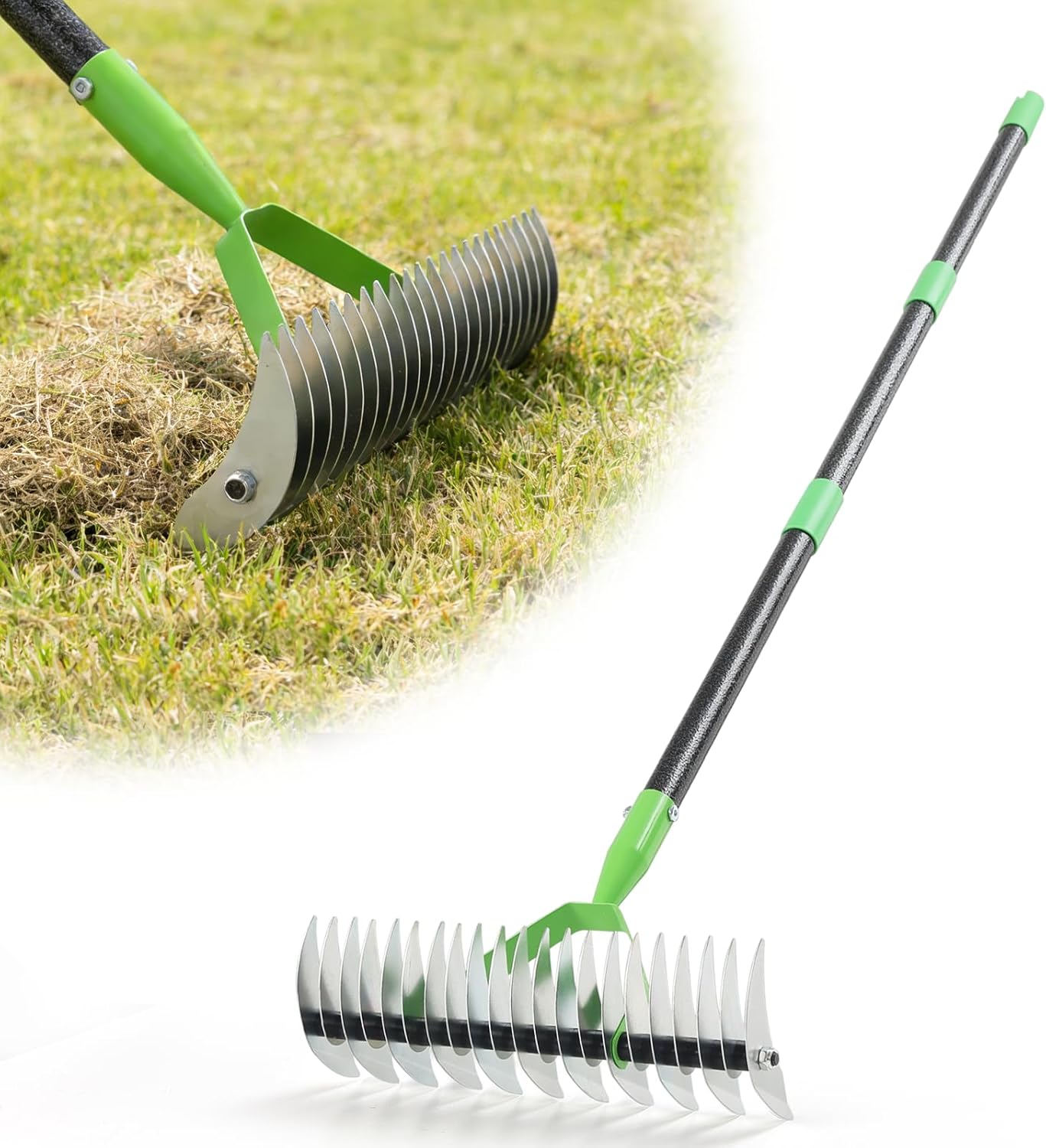
This THANKSFINE dual-action dethatcher rake combines a 21-tine curved side for lifting thatch with an 11-tine side for breaking up compacted soil, letting you switch functions quickly for common lawn tasks. The sectional metal handle adjusts to three lengths so users can work upright and reduce back strain, and the carbon steel head and reinforced welds aim to stand up to regular yard use. In practice it is best for light-to-moderate dethatching of dead grass, surface debris removal, and loosening topsoil before overseeding or aeration. Assembly is straightforward and the head includes a hanging hole for compact storage. Expect a straightforward, utilitarian tool rather than a premium pro-grade rake: the materials and finish are suitable for seasonal home use but may show wear over heavy, frequent commercial use. It is a practical option for weekend gardeners who need a single, affordable tool for multiple basic lawn chores.
Best for: Budget-minded home gardeners who want a single, multiuse tool for seasonal dethatching, removing dead grass, and light soil loosening without buying separate specialty rakes.
Less Ideal for: Professional landscapers or owners of very large lawns who need heavy-duty, long-lasting commercial tools or a dedicated power dethatcher.
- Dual-function head: 21 curved tines for dethatching and 11 wider tines for loosening soil
- Adjustable handle with three length settings to reduce bending and improve comfort
- Carbon steel head with reinforced welds for basic durability in yard use
- Sectional design for easy assembly, transport, and hanging storage
- Build and finish are geared to budget buyers and may wear faster under heavy commercial use
- Metal handle may transfer vibration and feel less comfortable than cushioned or wooden handles
Verdict: A low-cost, two-in-one rake that handles dead grass removal and light soil breaking for homeowners who want practical seasonal lawn care without extra tools.
Lilyvane 2-in-1 Stainless Steel Thatching and Leaf Rake, 19-Tine 69"
| Rake Type | Lawn Rake |
|---|---|
| Head Material | Stainless Steel |
| Handle Material | Stainless Steel |
| Number of Tines | 19 |
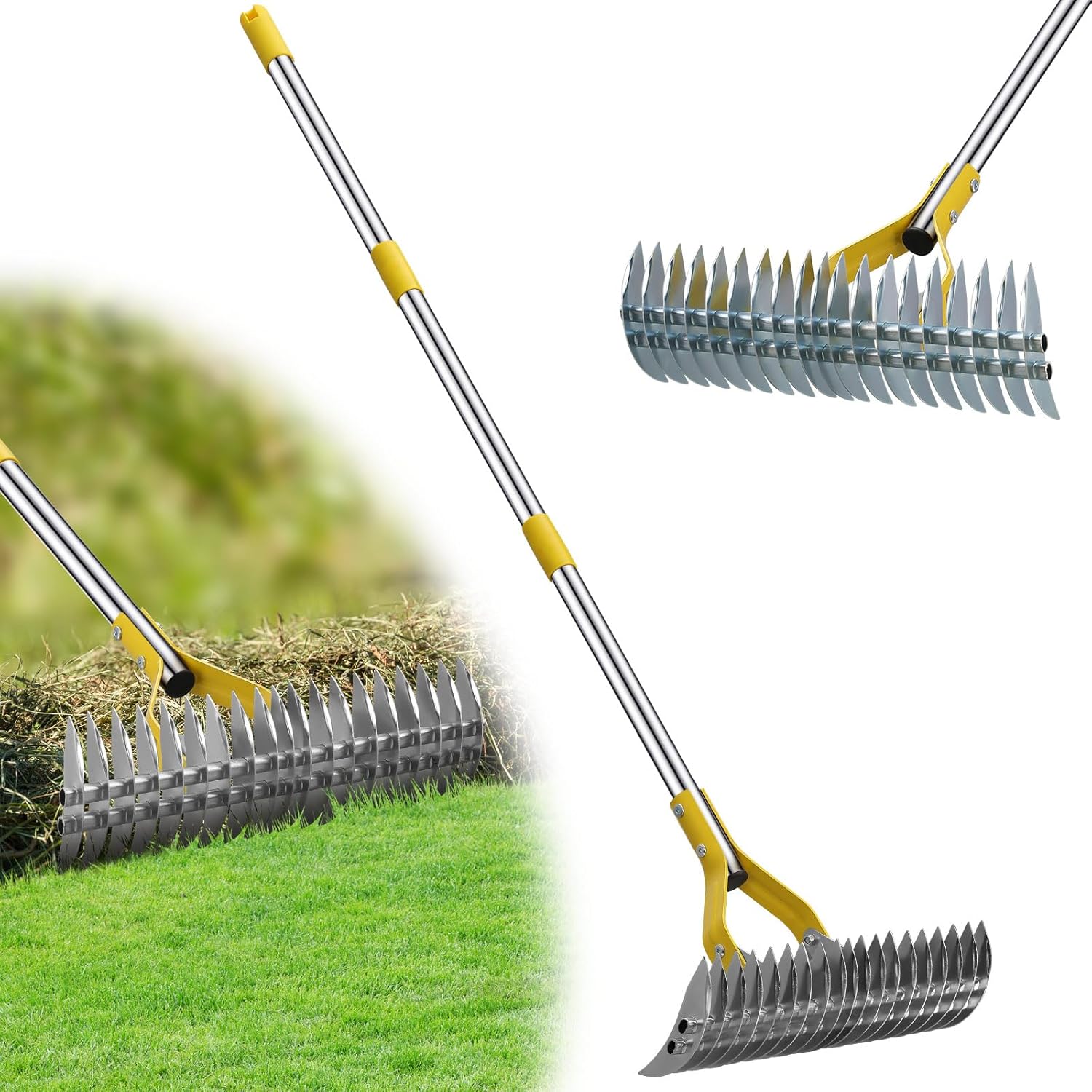
This Lilyvane rake combines a dethatching scarifier and traditional leaf rake in one stainless steel tool aimed at removing dead grass, thatch, and surface debris. In use the 19 sharp steel tines dig into compacted thatch and pull up moss and dead grass, while the curved side gathers leaves and needles for fast cleanup across medium to large lawns. The reinforced head with dual central support bars and two screws gives the tool a rigid feel under heavier loads so the tines do not bend or wobble easily. The long handle assembly provides extra reach and a more upright working position to ease back strain during longer sessions, and the all-stainless construction resists rust for season-long reliability. Limitations are that the head is moderately wide so it is best for open lawn areas rather than tight beds, and the fixed stainless-steel handle makes the tool heavier than models with hollow or wooden shafts.
Best for: Gardeners who value a durable, low-maintenance tool for seasonal dead grass removal and regular lawn cleanup and who prioritize a sturdy build that lasts over time.
Less Ideal for: People who need a lightweight rake for frequent detailed work around flower beds or very small yards should consider lighter or narrower alternatives.
- Dual-function head lets you dethatch and rake leaves without swapping tools
- 19 sharp stainless-steel tines dig into compacted thatch and pull up dead grass
- Reinforced head with dual support bars and screws reduces wobble under load
- All-stainless construction resists rust and holds up to outdoor use
- Stainless-steel handle increases overall weight compared with hollow or wooden handles
- 15-inch head width is less maneuverable in tight or landscaped areas
Verdict: Choose this stainless steel dual-action rake if you want a reliable, rust-resistant tool that dethatches and gathers dead grass efficiently without needing two separate rakes.
Choosing the Right Garden Rake for Raking Dead Grass: Key Factors to Consider
Tine Design and Flexibility
Tine shape, material, and spacing determine how the rake interacts with dead grass and light thatch. Thinner, slightly flexible tines can slide under dead blades and lift them without pulling on live crowns, while overly stiff tines may dig into the soil and stress turf.
Tine spacing controls whether small clippings pass through or get collected. For raking dead grass you want spacing that traps blades and thatch but does not clog after a few passes. Also consider corrosion resistance for tines you will use on slightly damp material.
Head Width and Shape
Head width affects how quickly you can cover a lawn. Wider heads move through more area per stroke but can be harder to control near edges, whereas narrower heads are more precise around beds and corners.
The head shape matters too: a slightly curved head can scoop and hold debris better, while a flat head offers consistent contact. Think about the typical lawn size and the clearance needed around obstacles when choosing head dimensions.
Handle Length and Ergonomics
Correct handle length keeps your back in a comfortable posture and reduces bending. Taller users and large lawns benefit from longer handles to minimize stooping, while compact handles can be better for detail work.
Grip material and diameter affect control and hand fatigue. A non-slip, cushioned grip helps during wet conditions and longer sessions. Also look for handles with ergonomic angling if you plan to rake for extended periods.
Weight and Maneuverability
A lightweight rake is easier to swing and hold for longer stretches, which matters when tackling a whole yard of dead grass. However, a too-light design may feel flimsy and require extra effort if tines bend under load.
Balance between head and handle influences maneuverability. Well-balanced rakes reduce wrist strain and make directional changes smoother, important when navigating around trees and garden beds.
Materials and Long-Term Durability
Materials determine how a rake stands up to repeated use near damp grass and the occasional rocky patch. Steel tines and reinforced heads resist bending, while anodized or coated metals reduce rust risk.
Handle materials range from wood to fiberglass to aluminum. Wood can offer comfortable shock absorption but may weather; fiberglass resists moisture and stays straight; aluminum is light but can dent. Consider the expected lifespan and whether replacement parts or warranty support are available.
When To Use a Rake Instead Of a Power Dethatcher
Manual raking is often the better choice for small to medium lawns, spot dethatching, or when you want to remove only the top layer of dead grass and clippings without disturbing the root zone. It gives you fine control over pressure so you can avoid scalping healthy turf, and it is quieter and lower-cost than renting power equipment.
- Best for lawns with light surface thatch
- Ideal for patchy areas and around plant beds
- Safer for shallow-rooted grass types and newly seeded areas
Techniques For Raking Dead Grass Efficiently
Start with light passes to see how the lawn responds, then increase pressure only if dead material is lifting cleanly. Work in overlapping strokes and keep the rake at a shallow angle so tines skim under blades rather than digging in. Collect debris into a pile as you go to avoid repeated passes over the same area. For large yards break the work into sections to avoid fatigue and reassess tine engagement after the first few passes.
- Use the rake at a slight angle to scoop and lift
- Make overlapping passes for even coverage
- Take frequent short breaks on large jobs to maintain form
Caring For Your Rake Between Seasons
Clean off grass and soil after each use to prevent rust and tine wear. A quick rinse and thorough drying followed by a light oiling of metal parts keeps the tool functional. Store the rake indoors or hanging off the ground to protect wooden handles from moisture. Sharpen or straighten bent tines as needed and tighten any loose head-to-handle connections before the next season. Regular maintenance lengthens the tool life and ensures consistent performance when you need it.
- Rinse and dry after use
- Oil metal parts lightly and check fastenings
- Store hanging or indoors to protect the handle
Adjusting Your Technique For Different Grass Types
Finer-bladed grasses usually need gentler raking because their crowns are more delicate. Use lighter pressure and fewer passes to remove dead material without stressing growth. Coarser or more robust turf can tolerate firmer raking and slightly deeper engagement to lift compacted thatch. If your lawn includes mixed grass types, test in a small area first and adjust pressure and stroke length accordingly. Pay close attention after raking to detect any signs of turf stress so you can modify technique on subsequent passes.
- Use lighter pressure on fine-bladed turf
- Test a small area when grass types are mixed
- Watch for signs of stress and adjust accordingly
How We Chose the Best Garden Rake for Raking Dead Grass
We focused on features that affect how well a garden rake handles dead grass and light thatch rather than generic popularity. Our selection filtered for tines and head design that lift and gather dead blades without gouging healthy turf, handles that reduce fatigue during repeated passes, and construction that resists bending or rust when used on damp material. Concrete evaluation dimensions included tine spacing and flexibility, head width and shape, handle length and grip comfort, and overall durability of materials. We excluded heavy landscaping rakes made for soil grading and specialized dethatching machines; those tools serve different purposes and perform differently on live turf. We also de-prioritized rakes with fragile plastic heads or non-serviceable joints that fail quickly. Products that made the list reliably balanced efficient debris pick-up, manageable weight, and user comfort so home gardeners can clear dead grass effectively without damaging the lawn or overexerting themselves.
FAQ
How often should I rake dead grass in spring?
Often once or twice during spring cleanup is enough for light surface thatch. Timing depends on growth and weather; rake when turf is dry enough that tines can lift dead blades without smearing the soil.
Will raking remove deep thatch buildup?
Usually manual raking removes only surface dead grass and light thatch. Deep, compacted thatch may require mechanical dethatching or core aeration for effective removal.
Can I use a leaf rake for dead grass?
Leaf rakes can work for very light debris but their flexible plastic tines are less effective at lifting compacted dead blades. A sturdier garden rake with metal tines is better for consistent removal.
Should I sharpen rake tines?
Sharpening is rarely needed; straight, undamaged tines perform best. If tines bend, gently straighten them to restore engagement. Avoid sharpening in a way that creates sharp hooks that could tear turf.
Is it better to rake when grass is wet or dry?
Dry conditions are preferable because tines glide through dead blades more cleanly and debris collects without clumping. Wet grass can clog tines and smear soil, making cleanup less effective.
Final Verdict
Prioritize tine design, handle ergonomics, and build durability when choosing a garden rake for raking dead grass. Those dimensions determine how well the tool lifts dead blades, how comfortable it is to use for extended sessions, and how long it will hold up in routine lawn care. Balance wider heads for faster coverage with the need for control around edges, and favor materials that resist bending and corrosion. Focus on the tradeoffs that matter to your lawn size and your physical comfort to choose the rake that will make seasonal cleanup faster and less taxing.
