

Note: This article contains affiliate links. If you click on these links and make a purchase, I may earn a small commission at no extra cost to you. This helps support my research and content. Read my full affiliate disclosure here.
Picking the right garden rake for soil matters more than you might think. The right rake shapes seedbeds, breaks clumps, redistributes amendments, and clears debris without damaging soil structure. For ornamental beds, vegetable gardens, or prep before planting, a purpose-built soil rake saves time and protects root-zone health. This guide covers six top-rated garden rakes for soil suited to common garden tasks. We shortlisted options that perform well across typical garden situations and evaluated each on practical criteria gardeners care about, including tine layout, handle ergonomics, build durability, and ease of use. Read on to find the best match for your soil type and garden workflow.
Top Picks at a Glance
| Best Overall The best all-around choice for most situations | joyhalo 14-Tine Adjustable Bow Rake (30.5–57 in) |  |
| Best Quality Built to a higher standard if you want something more solid | Lilyvane 4-ft Heavy Duty Metal Bow Rake with 17 Tines and Adjustable Stainless Steel Handle |  |
| Best Value The sweet spot between price and what you get | BlumeTrec 68" Adjustable Bow Rake with 17 Manganese-Steel Tines |  |
| Best Budget The cheapest option that still gets the job done reliably | YEELOR 16-Tine Heavy-Duty Garden Bow Rake with Adjustable Stainless Steel Handle |  |
| Highest Rated A top-rated pick with lots of positive feedback | VANZACK 2-Pack Metal Hand Rakes with 9 Tines, Short Ergonomic Handle |  |
| Most Popular A crowd favorite that many people choose with confidence | Walensee Heavy Duty Dual‑Sided Bow Rake, 63" Stainless Steel Handle, 17‑Tine Metal Head |  |
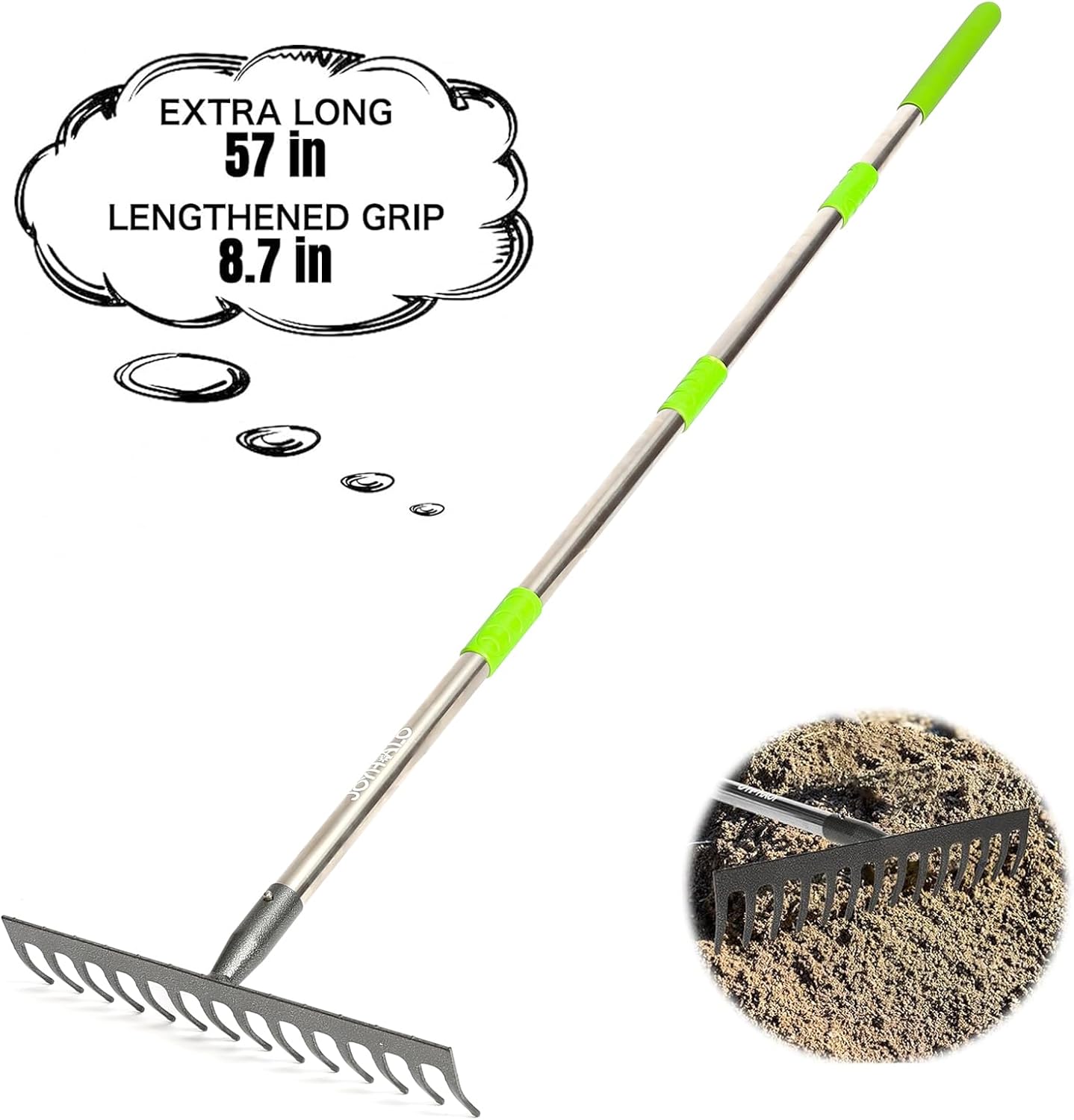
joyhalo 14-Tine Adjustable Bow Rake (30.5–57 in)
| Rake Type | Garden Rake |
|---|---|
| Head Size | 13.7 inches |
| Handle Material | Aluminum |
| Grip Material | Rubber |
The joyhalo 14-tine adjustable bow rake is built for soil prep and heavier yard work where a rigid head and stout tines are needed. The 13.7-inch metal head with 14 2.5-inch tines pulls through compacted soil, spreads and levels topsoil, and gathers debris or grass clippings more efficiently than a flexible leaf rake. An aluminum telescoping handle (30.5 to 57 inches) adapts to different user heights and folds down for transport or storage. The rubber grip improves comfort for longer sessions and the coated metal head resists rust for seasonal outdoor use. Because the tines are relatively stiff and the head is narrow compared with wide leaf rakes, this model excels at breaking up and grading soil but is less suited to sweeping large areas of loose leaves quickly. The handle and head are described as sturdy but the tool is intended for typical garden and landscaping tasks rather than industrial excavation. Simple assembly and a collapsible design make it convenient to carry to beds or job sites.
Best for: Buyers who want a versatile, durable rake for preparing garden beds, grading soil, and handling medium-duty landscaping tasks while minimizing back strain.
Less Ideal for: If your priority is rapid clearing of large swaths of loose leaves or very lightweight, delicate raking, choose a wider, more flexible leaf rake instead.
- Sturdy metal head with 14 firm tines for effective soil loosening and grading
- Adjustable aluminum handle lets users set comfortable working length and reduces bending
- Protective coating on head improves corrosion resistance for outdoor use
- Long rubber grip reduces hand fatigue during extended use
- Collapsible design is quick to assemble and easy to transport or store
- Narrow 13.7-inch head covers less surface than wide leaf rakes so more passes are needed for large areas
- Heavier construction makes it a better fit for soil work than delicate tasks like fine leaf collection
Verdict: A durable, adjustable bow rake that gives dependable soil loosening and leveling performance for everyday garden and landscaping work.
Lilyvane 4-ft Heavy Duty Metal Bow Rake with 17 Tines and Adjustable Stainless Steel Handle

| Handle Material | Stainless Steel |
|---|---|
| Rake Type | Garden Rake |
| Number of Items | 1 |
| Head Material | me |
This Lilyvane bow rake is built for heavy garden and landscaping work. The reinforced all-metal head with 17 sturdy tines breaks up compacted soil, moves gravel, and gathers debris without bending, while the flat side and shorter tines make smoothing and leveling quick. The handle comes in three connectable stainless steel sections so you can set the length for comfort or split it for compact storage. Triple-welded construction and an anti-rust finish give the tool durability for regular outdoor use, and the head-to-handle connection screws together by hand for simple assembly. Practical benefits include a versatile two-sided head that replaces multiple tools and a rust-resistant handle that holds up in damp conditions. Limitations are minor: the rake is all-metal so it is heavier than lightweight aluminum or plastic models and the finish may show surface wear after prolonged abrasive use. For anyone needing a dependable, long-lasting rake for tough soil, driveways, and yard prep, this is a solid choice.
Best for: Homeowners and landscapers who prioritize a durable, dependable tool for tough jobs like compacted soil, gravel work, and regular yard preparation and want something built to last.
Less Ideal for: People who need an ultralight rake for frequent overhead or high-mobility jobs should consider lighter materials or specialized leaf rakes instead.
- Reinforced all-metal head with 17 tines resists bending under heavy use
- Dual-sided design for both breaking up soil and leveling or spreading material
- Adjustable stainless steel handle that can be shortened or disassembled for storage
- Triple-welded construction and anti-rust coating for long-term durability
- All-metal construction makes it heavier than lightweight alternatives
- Finish may show wear after extended abrasive tasks
Verdict: Choose this rake if you want a tough, rust-resistant all-metal tool that handles heavy soil, gravel, and leveling tasks reliably.
BlumeTrec 68" Adjustable Bow Rake with 17 Manganese-Steel Tines

| Head Material | Manganese steel |
|---|---|
| Handle Material | Stainless Steel |
| Head Size | 17 inches |
| Overall Length | 68 inches |
This BlumeTrec bow rake is built for multi-purpose yard work: a 17-inch manganese-steel head with 17 welded tines tackles compacted soil, dethatching, leaf collection, and light leveling, while the dual-sided design (long tines one way, shorter tines the other) lets you switch between loosening and spreading without swapping tools. The 68-inch stainless-steel handle with a soft non-slip grip helps maintain an upright posture for longer sessions and breaks down into threaded sections for easier storage and transport. In real use the solid tines and heat-treated head feel durable and resist bending during heavy raking, and the wide head covers ground efficiently so you spend fewer passes per task. Assembly is straightforward with the provided fasteners. Limitations are that the long steel handle is modular rather than a single-piece shaft, which may develop play at the threaded joints over many seasons, and the tool is large for small patios or container gardens where a shorter rake would be easier to maneuver.
Best for: Gardeners who need a single, heavy-duty rake that handles soil prep, dethatching, and leveling across medium to large lawns and beds and who value durability and coverage over compact size.
Less Ideal for: People with very small patios, container gardens, or those who prefer lightweight, travel-friendly tools should consider a shorter or folding rake instead.
- Durable manganese-steel head with 17 welded tines for strong soil penetration and resistance to bending
- Dual-sided head provides long tines for loosening and short tines for spreading and leveling
- Long 68-inch handle encourages upright posture and reduces back strain during extended use
- Detachable multi-section handle for compact storage and easier transport
- Multi-section threaded handle can develop slight play over time compared with a one-piece shaft
Verdict: A robust, versatile bow rake that combines heavy-duty tines and a long handle to speed up soil prep and lawn maintenance across medium to large outdoor spaces.
YEELOR 16-Tine Heavy-Duty Garden Bow Rake with Adjustable Stainless Steel Handle

| Handle Material | Stainless Steel |
|---|---|
| Head Material | Aluminum |
| Grip Material | Rubber |
| Head Type | 16-tine bow rake |
This YEELOR bow rake is a straightforward landscaping tool built for common yard tasks like loosening soil, leveling mulch, spreading gravel, and gathering debris. The 16-tine aluminum head is fastened with screws for a secure feel, and the carbon/stainless steel construction aims to resist rust while staying sturdy during heavier use. The handle adjusts by combining sections, so you can shorten it for storage or extend it for reach without tools. A rubber ergonomic grip makes longer sessions more comfortable and helps control the rake when breaking clods or smoothing topsoil. Practical advantages are reliability and simplicity: it assembles quickly, tolerates routine landscaping work, and avoids fragile fittings found on cheaper rakes. The main trade-offs are that the head is aluminum rather than thicker forged steel and the adjustable pole uses a multi-joint design rather than a continuous forged shaft, so very heavy, professional repeated use may wear connections faster than industrial-grade rakes. For homeowners and weekend landscapers who want a durable, no-frills tool on a budget, this rake covers the essential jobs well.
Best for: Homeowners and DIY landscapers who need an affordable, durable rake for occasional to regular garden and yard tasks and who prioritize value over industrial-grade longevity.
Less Ideal for: Professional landscapers or users who perform continuous heavy-duty raking and require the absolute highest durability and single-piece construction.
- Secure 16-tine aluminum head fastened with screws to reduce loosening during use
- Adjustable stainless steel handle lets you change length for storage and reach without tools
- Carbon steel and stainless materials offer corrosion resistance for longer outdoor life
- Ergonomic rubber grip reduces hand fatigue during extended raking sessions
- Aluminum head is lighter and less impact-resistant than forged steel heads
- Multi-joint adjustable handle may be less durable than a single-piece shaft under heavy professional use
Verdict: A cost-conscious, reliable bow rake that handles typical landscaping tasks with a secure 16-tine head and adjustable stainless steel handle.
VANZACK 2-Pack Metal Hand Rakes with 9 Tines, Short Ergonomic Handle

| Rake Type | Leaf Rake |
|---|---|
| Head Material | Iron |
| Handle Material | Plastic |
| Number of Items | 1 |
These VANZACK hand rakes are a practical two-pack for working in raised beds, narrow paths, and around individual plants where a full-size rake is unwieldy. Each tool has nine iron tines and a short, ergonomically shaped plastic handle that gives precise control for loosening topsoil, breaking crusts, and pulling out debris from between plants. The polished metal head makes the rakes easy to clean after use and the compact length helps you reach into tight corners and along edges without disturbing nearby plants. Because the heads are iron, they offer solid stiffness for scraping and light cultivation, though they are not intended for heavy digging or prying of compacted ground. The short handles keep work close to hand, which reduces shoulder strain during detail tasks but means you will be bending more than with a long-handled rake. Supplied as a matching pair, they are useful to keep one at the garden bed and one in a tool bag for quick tasks.
Best for: Gardeners who need a reliable hand tool for routine soil loosening, bed tidy-up, and working in confined spaces where control and durability matter.
Less Ideal for: People who primarily need a long-reach rake for large lawns or heavy-duty soil breaking should choose a full-size tool instead.
- Nine iron tines provide firm action for loosening soil and clearing debris
- Short ergonomic handle gives precise control in raised beds and tight spaces
- Polished metal head cleans easily after use
- Comes as a two-pack so you have a spare or a second tool for concurrent tasks
- Short handles require frequent bending for larger areas
- Iron heads are sturdy but not suited for heavy prying or breaking very compacted soil
Verdict: A sturdy, easy-to-control pair of hand rakes built for dependable soil loosening and tidy-up work in raised beds and tight garden spots.
Walensee Heavy Duty Dual‑Sided Bow Rake, 63" Stainless Steel Handle, 17‑Tine Metal Head

| Head Material | Metal |
|---|---|
| Handle Material | Stainless Steel |
| Grip Material | Stainless Steel |
| Rake Type | Garden Rake |
This Walensee dual‑sided bow rake is built for homeowners who need one robust tool for dethatching, soil loosening, and light leveling. One side of the head has reinforced, heat‑treated manganese steel tines for pulling thatch and breaking up compacted soil while the opposite side provides a flatter profile for spreading mulch, gravel, or topsoil. The 17‑inch head covers ground quickly and the 63‑inch stainless steel handle reduces bending during extended use. Construction details such as triple‑welded joints and double‑locking screws aim to keep the head secure under heavy use. In practical terms the rake works well across typical yard tasks — clearing thatch from lawns, prepping beds for planting, and evening out material after wheelbarrow work. It is heavier and stiffer than lightweight leaf rakes, which helps with tougher soil but makes it less nimble for very fine raking or delicate plants. Expect a durable, no‑nonsense garden tool that consolidates several functions into one implement.
Best for: Buyers who want one sturdy, multiuse rake for regular lawn and garden maintenance and value durability and coverage over featherlight maneuverability.
Less Ideal for: If you need an ultra‑light rake for fine surface work, frequent trimming around plants, or a collapsible tool for compact storage, this heavier bow rake is not the best choice.
- Dual‑sided head handles dethatching and leveling without swapping tools
- Heat‑treated manganese steel head and triple‑welded construction for durability
- 17 steel tines and 17‑inch head cover more ground per pass
- 63‑inch stainless steel handle reduces bending for more comfortable extended use
- Heavier, stiffer build is less suited to delicate finishing or lightweight leaf raking
- Adjustable multi‑section pole may add slight flex compared with a single‑piece handle
Verdict: A heavy‑duty, dual‑sided bow rake that combines effective dethatching and reliable leveling in one durable tool.
Choosing the Right Garden Rake for Soil: Key Factors to Consider
Tine Design and Spacing
Tine shape, thickness, and spacing determine whether a rake cuts through clods, levels loose soil, or simply skims the surface. Narrow, closely spaced tines are better at producing a fine seedbed and catching small debris, while wider spacing moves larger debris and breaks up medium clods faster. The angle of the tines relative to the head also affects how aggressively the tool engages soil; shallower angles glide and level, while steeper angles dig in and break compaction.
Selecting the correct tine design matters because you will use the rake repeatedly across beds. A head that is too flexible or too rigid can make soil prep inefficient or create uneven surfaces. Consider the typical tasks you do, such as preparing seedbeds, smoothing raised beds, or incorporating amendments, and choose a tine layout that matches those jobs.
Head Width and Shape
Head width influences coverage per pass and maneuverability. Wider heads cover more ground and speed up work in large beds, but they can be harder to use in tight raised beds or between closely spaced plants. Narrower heads give better control for detail work along borders and around transplants.
Head shape also matters. A slightly curved head can concentrate force and pull clods apart, while a flatter head helps with precise levelling. Think about bed size and how often you work around obstacles when choosing the head geometry that will be most practical.
Handle Length and Grip
Handle length affects posture and leverage. Longer handles let you work standing upright and cover more area per stroke, reducing back strain for larger beds. Shorter handles provide more control for close-in tasks and are easier to carry and store. Grip material and diameter influence comfort during repetitive motions; a cushioned or shaped grip reduces hand fatigue and helps prevent slipping when hands are sweaty or damp.
Balance the desire for reach with the need for control. If you have mobility or back concerns, prioritize a length that keeps your spine neutral during raking. For gardeners who switch frequently between beds and containers, a mid-length handle is often the most versatile.
Material and Construction Quality
Materials determine longevity and how much maintenance a rake needs. Heads forged from thicker steel resist bending when prying at compacted clods, while lighter alloy heads reduce fatigue but may flex sooner. The connection between head and handle is a common failure point, so look for solid fastenings, reinforced collars, or welded joints in tools meant for heavy soil.
Consider corrosion resistance for wet climates; galvanized or powder-coated finishes will last longer outdoors. Good construction reduces the chance of sudden failure while working and extends the useful life of the tool, making it safer and more economical over time.
Weight, Balance, and Ergonomics
Weight affects how hard the tool hits the soil and how quickly you tire. Heavier rakes carry more momentum for breaking small clods but increase arm and shoulder strain during long sessions. Lighter rakes are easier to swing but may require more passes to achieve the same result. Balance between head and handle lets you control the tool with minimal effort; a head-heavy rake digs more easily, while a well-balanced tool tracks straighter and requires less correction.
Ergonomic features like angled heads or shock-absorbing grips can reduce strain during repetitive use. Gardeners who spend significant time preparing beds should prioritize a comfortable, well-balanced design.
Suitability for Soil Type
Different soils respond differently to raking. Sandy or friable loam generally requires gentler, finer tines to achieve a smooth surface, while heavy clay benefits from sturdier, stiffer tines that can break clods without bending. Organic matter or root-filled beds may need stronger tines and closer spacing to catch and clear debris efficiently.
Match the rake to your primary soil type to avoid inefficient work and excessive tool wear. If your garden includes a mix of textures, choose a versatile mid-range design or plan to keep more than one rake for specialized tasks.
Best Rake Shapes for Different Garden Tasks
Not all soil rakes are built for the same chores. Flat, wide heads are excellent for levelling and grading large beds quickly. Narrower, more curved heads are better for breaking clods and working close to plants.
If you alternate between seedbed prep and clearing debris, a medium-width head with moderate tine stiffness offers the best compromise. For heavy-duty clod breaking, choose a more aggressive head profile that concentrates force.
- Wide flat head: fast levelling across open beds
- Curved head: concentrates force for clod breaking
- Narrow head: precision around plants and borders
- Medium head: versatile for mixed tasks
Using a Garden Rake Without Damaging Soil Structure
Raking technique affects soil health as much as the tool. Use light, even strokes to level the surface rather than repeated heavy scrapes that compact the seed zone. When working compacted areas, first loosen the soil with a fork or tine tool before finishing with the rake.
Avoid staging large piles of soil in one place while raking; redistribute material gradually to prevent creating compacted spots. Finish with a gentle cross-rake to create a uniform seedbed without crushing soil pores.
- Loosen hard clods before raking aggressively
- Use overlapping strokes for even coverage
- Keep tines angled to glide rather than dig when leveling
Maintenance Tips to Extend Tool Life
Simple care will keep a garden rake functional for years. After use, remove stuck soil and organic matter to prevent moisture-driven corrosion and decay. Wipe metal parts dry and, if needed, apply a light coat of oil to exposed steel to slow rust.
Store the rake hanging off the ground in a dry shed or garage. Inspect fastenings and the head-to-handle joint regularly and tighten or reinforce before the next season. Replace or strap split wooden handles promptly to avoid sudden breakage during use.
- Clean tines and dry thoroughly after use
- Oil exposed metal to resist rust
- Hang tools out of direct ground contact
- Check and tighten head-to-handle fittings
Adapting Rakes for Raised Beds and Containers
Raised beds and containers need more control and gentler action. Use narrower heads and shorter handles to avoid disturbing nearby plants or root systems. A lightweight rake with fine tines produces a tidy seedbed in confined spaces without overworking the soil.
For repetitive container work, consider a smaller hand rake for precision and a mid-sized garden rake for larger container groups. The goal is to match tool scale to bed size so you do not over-aggregate soil or damage existing plants.
- Shorter handle improves control in tight spaces
- Fine tines reduce disturbance to roots
- Keep a small hand rake for precision work
Ergonomic Options for Repetitive Garden Work
If you spend long periods preparing beds, ergonomics becomes important. Look for grips that cushion hands and handles with anti-vibration features. Angled heads can let you work with a more natural wrist position and reduce strain.
Adjustable-length handles or models with multiple grip sections help gardeners of different heights maintain good posture. Small upgrades to handle comfort often translate to longer, less tiring work sessions.
- Cushioned or shaped grips reduce hand fatigue
- Angled heads promote neutral wrist alignment
- Adjustable handles accommodate different users
How We Chose the Best Garden Rake for Soil
We prioritized attributes that directly affect how a garden rake behaves in real soil work. Primary evaluation criteria included tine geometry and spacing for effective levelling and clod breaking, handle length and grip comfort for posture and control, construction materials and joint strength for longevity, and overall weight and balance for day-long use. We also considered how well a rake adapts to different soil textures, from loose loam to heavier clay, and its ability to clear surface debris without compacting the seed zone. Excluded from our shortlist were tools designed primarily for leaves, turf dethatching, or snow removal, since their tine spacing and flex are not suited to soil preparation. We also filtered out rakes with obvious durability or safety concerns based on user reports and specification mismatches. The final picks represent a range of head widths and handle styles so gardeners can match tool geometry to bed size and personal reach.
FAQ
What tine spacing is best for preparing a seedbed?
Closer tine spacing generally produces a finer finish ideal for seedbeds because it catches small clods and levels evenly. For very compacted soil, start with a sturdier tool to break clods, then finish with a fine-spaced rake for smoothing.
Should I use a heavier rake for clay soils?
Heavier, stiffer tines can help break clay clods, but excessive weight increases fatigue. Use a sturdier head to tackle clods and follow up with lighter passes to avoid compacting the finished surface.
How long should a rake handle be for comfortable use?
Handle length depends on bed size and your height. Taller gardeners or those working open beds benefit from longer handles that let them stand upright, while shorter handles are better for raised beds and close work. A mid-length handle is a versatile compromise.
Can one rake serve all garden tasks?
One versatile rake can cover many tasks, but specialists perform better for certain jobs. A medium-width, moderately stiff rake suits most soil prep. For delicate seedbeds or heavy clod breaking, dedicated tools will save effort and protect soil structure.
How do I prevent a rake from rusting?
Clean soil from tines after use and dry the tool before storage. Apply a light coat of oil to exposed steel and store the rake hanging in a dry place to reduce corrosion risk.
Final Verdict
Choosing the best garden rake for soil means balancing head geometry, tine stiffness, and handle ergonomics against the types of beds and soils you work most often. Prioritize tine design and build quality if you need consistent seedbeds, and favor comfortable handles if you spend long hours preparing soil. For mixed gardens, a medium-width, well-balanced rake provides the most flexibility. Focus on the tradeoffs between aggressiveness for clod breaking and finesse for finishing. With the right rake matched to your soil and tasks, you will prepare beds faster, reduce fatigue, and protect soil structure for healthier plantings.
