

Note: This article contains affiliate links. If you click on these links and make a purchase, I may earn a small commission at no extra cost to you. This helps support my research and content. Read my full affiliate disclosure here.
Finding the right pair of gardening gloves matters because your hands do the work: planting, pruning, digging, and handling thorny stems. Women's hands often need gloves sized and shaped differently than unisex styles, with attention to fit, fingertip dexterity, and cuff length. This guide shortlists seven top gardening gloves for women, chosen for real garden tasks like potting, pruning roses, and general beds-and-border work. We evaluate each pick on grip, durability, protection level, fit, and comfort so you can match gloves to the chores you do most. Read on to see which styles suit lighter planting jobs, heavy-duty pruning, or working in wet soil.
Top Picks at a Glance
| Best Overall The best all-around choice for most situations | Bamllum Leather Gardening Gloves for Women |  |
| Best Quality Built to a higher standard if you want something more solid | Wells Lamont Women's HydraHyde Leather Hybrid Gardening Gloves |  |
| Best Value The sweet spot between price and what you get | COOLJOB Women's Gardening Gloves, 6-Pair Medium, Breathable Latex-Coated |  |
| Best Budget The cheapest option that still gets the job done reliably | YRTSH Medium Women's Microfiber Leather Gardening Gloves |  |
| Highest Rated A top-rated pick with lots of positive feedback | Wells Lamont Women's HydraHyde Water-Resistant Leather Gardening Gloves (Small) |  |
| Most Popular A crowd favorite that many people choose with confidence | COOLJOB Gardening Gloves, 6-Pair Medium, Breathable Latex-Coated, Pack of 6 |  |
| Best Seller A high-volume bestseller chosen again and again | COOLJOB Women's Breathable Latex-Coated Gardening Gloves, 2-Pack Medium |  |
Bamllum Leather Gardening Gloves for Women

| Base Material | Sheepskin Leather |
|---|---|
| Department | Unisex Adult |
| Key Features | Breathable, Light weight |
| Package Quantity | 1 Pair |
These Bamllum leather gardening gloves combine a leather palm and fingers with a breathable, elastic back to protect hands during weeding, pruning, digging, and harvesting. The leather sections and reinforced stitching give good abrasion resistance for handling thorns and rough tools while the soft, flexible fingers preserve dexterity for tasks that require grip and precision. An elastic cuff keeps the gloves in place and the breathable back panel helps reduce sweat during longer sessions. They are clearly aimed at regular home gardeners who want a comfortable, durable glove rather than a heavy-duty work glove. Limitations are typical of leather gloves: they can stiffen if they get very wet and need occasional cleaning and conditioning to stay supple, and they do not offer cut-proof certification for heavy-duty pruning. Overall they are a versatile, comfortable option for everyday garden work where protection and tactile control matter.
Best for: Home gardeners who want a comfortable, protective glove for regular tasks like weeding, planting, pruning, and harvesting and who value dexterity as much as durability.
Less Ideal for: People who need certified cut resistance or heavy industrial hand protection or those who want fully waterproof disposable-style gloves for wet jobs.
- Leather palm and fingers for abrasion resistance when handling thorns and tools
- Breathable elastic back reduces sweat and improves comfort during extended use
- Ergonomic stitching and flexible fingers preserve dexterity for planting and pruning
- Elastic cuff makes the gloves easy to put on and keeps them secure while working
- Leather can stiffen and requires care after heavy exposure to water
- Not rated as cut-proof for heavy-duty pruners or industrial tasks
Verdict: A well-balanced, comfortable leather glove that protects hands while keeping dexterity for everyday garden tasks.
Wells Lamont Women's HydraHyde Leather Hybrid Gardening Gloves

| Department | womens |
|---|---|
| Manufacturer | Wells Lamont |
| Date First Available | July 24, 2026 |
These Wells Lamont HydraHyde hybrid gloves combine a water-resistant leather palm with a flexible fabric back to give good protection without sacrificing hand movement. In garden use they shield against thorns, rough stems, and dirt while the breathable back keeps hands from overheating during extended tasks like pruning, planting, and weeding. The leather palm is treated to resist moisture so light wet work and morning dew are less of an issue than with plain fabric gloves. Because they are a hybrid design they fit closer to the hand than bulky work gloves, which improves grip and control for handling small tools and plants. The main limitations are that treated leather still needs care to stay supple and these are not heavy cut-resistant gloves for handling very thorny briars or industrial tasks. For routine to moderately demanding garden work they offer a strong balance of protection, dexterity, and weather resistance.
Best for: Active gardeners who prioritize performance and control during planting, pruning, and routine yard work and want a balance of protection and dexterity.
Less Ideal for: People who need heavy cut or puncture resistance for handling briars, rose removal, or industrial tasks should choose a specialized heavy-duty glove instead.
- Water-resistant HydraHyde leather palm sheds light moisture and morning dew
- Hybrid construction keeps fingers nimble for pruning, planting, and detail work
- Breathable back reduces hand sweat during extended wear
- Durable leather palm provides abrasion resistance against rough surfaces
- Not designed for heavy cut resistance or industrial-grade thorn protection
- Leather requires occasional cleaning and conditioning to maintain flexibility
Verdict: Choose these gloves if you want a performance-oriented women's gardening glove that blends water-resistant leather protection with the dexterity needed for precise outdoor tasks.
COOLJOB Women's Gardening Gloves, 6-Pair Medium, Breathable Latex-Coated

| Unit Count | 6 Count |
|---|---|
| Recommended Uses For Product | Gardening |
| Material | Latex |
| Glove Liner Material | Polyester |
| Fit Type | Snug |
These COOLJOB gloves are a value-oriented set designed for routine garden tasks. The knitted polyester liner keeps hands breathable while the foamed latex-dipped palm gives a textured, non-slip grip for weeding, planting, digging and light harvesting. The long cuff helps keep dirt and debris out and the thicken fingertips add modest protection when handling thorny stems or pulling roots. Because the gloves are machine washable and sold in a six-pair bundle, they are convenient to rotate, launder and replace without fuss. Expect a snug, flexible fit that preserves dexterity for pruning and seed work rather than heavy demolition. The gloves are described as water resistant at the palm but are not intended as full waterproof or puncture-proof protection, so they are best for everyday garden chores rather than heavy-duty pruning or handling rough materials.
Best for: Buyers who prioritize practical, low-cost solutions for regular garden maintenance and want multiple washable pairs to rotate through seasonal chores.
Less Ideal for: Gardeners who need heavy-duty puncture or thorn protection or fully waterproof gloves for prolonged wet work should look at purpose-built protective gloves.
- Six-pair bundle for easy rotation and replacement
- Breathable polyester liner for cooler wear during warm-weather gardening
- Textured latex-dipped palm provides secure non-slip grip
- Machine washable for simple cleaning and maintenance
- Not designed for heavy puncture or thorn protection so may not suit intensive rose or cactus work
- Water resistance is limited to the coated palm and not full waterproofing
Verdict: A cost-effective six-pair set that delivers breathable comfort and reliable grip for everyday women's gardening tasks.
YRTSH Medium Women's Microfiber Leather Gardening Gloves

| Material | Microfiber Leather |
|---|---|
| Closure Type | Elastic, Pull On |
| Reusability | Reusable |
| Water Resistance Level | Water Resistant |
| Fit Type | Regular |
These YRTSH gardening gloves combine a microfiber leather palm with a breathable stretch back to offer a balance of protection and feel for everyday garden work. They are typically used for weeding, planting, digging and light pruning where abrasion and thorn protection matter. Reinforced stitching and a reinforced thumb add durability in high-wear areas while the elastic pull-on closure keeps dirt out and makes them quick to put on. The lightly textured leather palm helps with grip on hand tools and the back-of-hand nylon provides breathability so hands stay cooler during longer sessions. They are machine washable for easy care and marketed as water resistant rather than fully waterproof, so they handle damp soil but will not keep hands dry in heavy wet conditions. Touchscreen-capable finger tips are a convenience for quick phone use without removing the gloves. If you need heavy-duty puncture resistance for thick thorny shrubs or waterproof protection for long wet tasks, these gloves are less suited to those extremes.
Best for: A frugal gardener who wants a reliable, reusable everyday glove for planting, weeding and light pruning without paying for heavy-duty specialty gloves.
Less Ideal for: People who routinely work with very thorny plants, heavy briars, or who need fully waterproof gloves for extended wet tasks should choose a more specialized heavy-duty glove.
- Microfiber leather palm for good grip and abrasion resistance
- Reinforced thumb and stitching increase durability in high-wear areas
- Breathable stretch back improves comfort during extended use
- Elastic pull-on closure is easy to use and helps keep out dirt
- Machine washable for simple cleaning and reuse
- Not fully waterproof so hands can get wet in heavy rain or when submerged
- May not provide enough puncture resistance for handling very thorny plants
Verdict: A budget-friendly, durable everyday gardening glove that balances protection, grip and breathability for most routine garden tasks.
Wells Lamont Women's HydraHyde Water-Resistant Leather Gardening Gloves (Small)
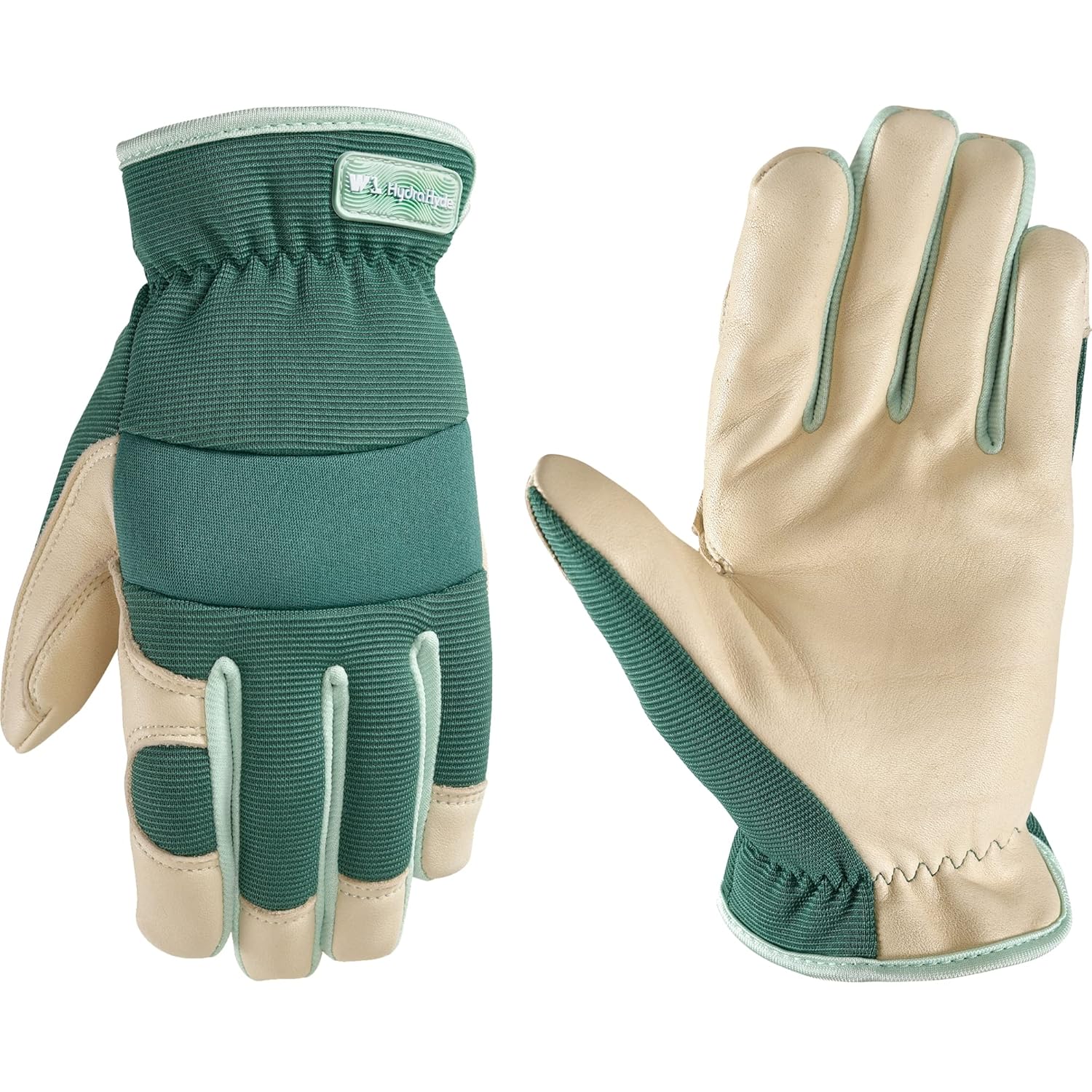
| Material | Leather, Polyester, Spandex |
|---|---|
| Palm Material | Cowhide |
| Glove Construction | Cut & Sewn |
| Water Resistance Level | Water Resistant |
| Closure Type | Pull On |
These Wells Lamont HydraHyde gardening gloves combine a treated cowhide leather palm with a water-resistant spandex back to give durable, comfortable protection for routine garden tasks. They are designed as slip-on gloves with an elastic wrist and neoprene knuckle for easy on/off and improved dexterity when pruning, digging, or handling rough materials. Reinforced leather fingertips and double stitching increase abrasion resistance where gloves wear fastest, while a cotton liner and breathable construction help keep hands from getting clammy during longer jobs. They are reusable and spot-cleanable, so they stand up to repeated use, but they are not fully waterproof so prolonged immersion or heavy downpours will still wet your hands. Fit runs true to size and the medium-stretch fabric lets you grip small tools without losing feel, though gardeners wanting full waterproofing or heavy chemical protection should look elsewhere.
Best for: Gardeners who prioritize long-lasting, protective gloves for routine outdoor tasks and want a balance of grip, comfort, and ease of use.
Less Ideal for: People who need fully waterproof gloves for working in standing water or those requiring chemical-resistant or insulated winter gloves.
- Water-resistant treated cowhide palm for abrasion resistance and grip
- Stretch spandex back and neoprene knuckle for comfortable dexterity
- Reinforced fingertips and double stitching increase durability at high-wear points
- Elastic slip-on wrist for quick on/off and a secure fit
- Breathable construction with cotton liner reduces sweat during extended wear
- Not fully waterproof so hands can get wet if submerged or in heavy rain
- Only available details for small size in this listing so exact sizing options may require checking
Verdict: Buy these if you want dependable, abrasion-resistant gardening gloves that balance grip and comfort for regular outdoor use.
COOLJOB Gardening Gloves, 6-Pair Medium, Breathable Latex-Coated, Pack of 6

| Material | Latex palm on polyester base |
|---|---|
| Glove construction | Dipped |
| Reusability | Yes |
| Product care instructions | Machine Wash |
| Fit type | Snug |
These COOLJOB gloves are a value-oriented set designed for everyday gardening tasks. Each pair has a lightweight polyester knit base with a foamed latex coating on the palm and fingers, which gives a non-slip grip for weeding, planting, pruning and handling tools. The dipped construction adds fingertip reinforcement to protect nails and the longer cuff helps keep dirt out. The breathable base and snug fit reduce sweating and the gloves are machine washable for repeat use. Because the set includes six pairs in bright colors you can keep spares for different tasks or share with family. Limitations: the latex coating performs well for grip and light abrasion but is not specialty puncture- or chemical-resistant, and the gloves are described as water resistant but not fully impermeable for heavy wet work. Overall these are practical, comfortable gloves for routine gardening and yard chores where grip and dexterity matter more than industrial-level protection.
Best for: Buyers who want reliable, everyday garden gloves with good grip and multiple pairs for regular use or sharing, prioritizing comfort and value over specialty protection.
Less Ideal for: People needing heavy-duty cut, puncture or chemical-resistant gloves for thorny pruning, handling sharp metal, or working with strong solvents should choose a specialized protective glove.
- Six-pair pack offers clear value and spare pairs for frequent use or sharing
- Foamed latex palm provides strong non-slip grip with tools and plants
- Breathable polyester knit base and snug fit reduce hand sweat and preserve dexterity
- Machine washable construction makes them easy to clean and reuse
- Latex coating is not engineered for heavy puncture resistance or chemical protection
Verdict: A practical, budget-friendly multi-pair pack that delivers good grip, comfort, and easy care for routine gardening tasks.
COOLJOB Women's Breathable Latex-Coated Gardening Gloves, 2-Pack Medium

| Unit Count | 2 Count |
|---|---|
| Size | Medium (Pack of 2) |
| Material | Latex |
| Glove Construction | Dipped |
| Reusability | Yes |
These COOLJOB gloves are a lightweight, budget-friendly option for everyday gardening. They pair a breathable knitted polyester base with a foamed latex dip on the palm and fingers to deliver a tactile, non-slip grip for weeding, planting, digging, and harvesting. The fingertips are slightly thickened to protect nails during pruning and precision work, while the long cuff helps keep dirt out. Two different colors in the pack make it easy to reserve one pair for messy jobs and the other for cleaner tasks. The gloves are machine washable and hose-cleanable, which extends their usable life. Limitations to note are the latex coating, which can cause reactions in users with latex sensitivity despite a “latex free” field present in the listing, and that heavy-duty thorn protection is limited compared with thicker leather or specialty thorn-proof gloves. These are best for light- to medium-duty garden chores where dexterity and grip matter more than puncture resistance.
Best for: A cautious buyer seeking reliable, easy-to-clean gloves for everyday garden work who values comfort, grip, and straightforward protective features.
Less Ideal for: Gardeners who regularly handle thorny shrubs, heavy landscaping tools, or require certified cut or puncture resistance should choose heavier-duty or specialized gloves instead.
- Breathable knitted fabric with foamed latex coating for good grip and reduced hand sweat
- Thickened fingertips provide extra protection for nails and precision tasks
- Long cuff design keeps dirt and debris out of the wrist area
- Comes as a two-pair pack with two colors to separate uses and extend wear life
- Machine washable and easy to hose off for quick cleaning
- Latex coating may be unsuitable for people with latex allergies
- Not designed for heavy-duty thorn or abrasion protection compared with leather gloves
Verdict: Great everyday women's gardening gloves that deliver breathable comfort, reliable grip, and easy cleaning for routine light- to medium-duty tasks.
Choosing the Right Gardening Gloves for Women: Key Factors to Consider
Fit and Sizing
Glove fit affects comfort and control. A glove that is too loose bunches and reduces dexterity, while one that is too tight restricts movement and quickly becomes uncomfortable during longer tasks. Look for manufacturers that offer women-specific sizing or multiple size options and check whether the cuff and palm proportions match narrower hands.
Sizing also matters for tasks: close-fitting gloves with slim palms and tapered fingers give better control for seeding and delicate transplanting. If you plan to layer thinner liners under gloves for cold weather, factor that thickness into your sizing choice.
Fingertip Dexterity and Tactile Feedback
How well you feel the soil, seeds, and small plant stems through the glove defines what jobs you can do efficiently. Thin synthetic or knit gloves typically offer the best tactile feedback, making them suited to sowing, pruning small stems, and potting. Thicker leather or padded gloves reduce sensitivity but provide more abrasion resistance.
Consider fingertip construction: stitched, reinforced fingertips may add durability but can blunt sensitivity. Some gloves use thin synthetic overlays or touchscreen-capable fabrics on the fingertips to maintain feel while protecting from dirt and wear.
Protection Level for Tasks
Different chores call for different protection. Light weeding and seed starting need minimal protection and prioritize dexterity. Pruning roses or handling brambles requires thorn-resistant materials and longer cuffs to protect the wrist and lower forearm. Digging and hauling soil benefit from abrasion-resistant palms and reinforced seams.
Assess the main tasks you do and choose gloves with protection matched to those risks rather than always buying the heaviest duty option. Overly bulky gloves can make precise tasks awkward and slow you down.
Grip and Surface Traction
Grip affects safety and efficiency when using hand tools, watering cans, or carrying pots. Materials such as textured nitrile coatings, rubberized palms, or patterned silicone provide secure hold on wet or slippery surfaces. Knit or leather palms without additional coating can become slick when wet.
Also consider grip placement: full-palm coatings offer consistent traction, while partial coatings on fingertips and palm zones preserve breathability and flexibility. For frequent tool use, choose gloves where the grip zones align with how you hold trowels and shears.
Durability and Construction
Durability determines how often you will replace gloves. Tougher materials like split leather, heavy-duty synthetics, or reinforced palms resist abrasion from soil, stone, and tool handles. Stitching quality and seam placement matter; seams across flex points can wear quickly and lead to early failure.
Look for reinforced high-wear areas such as fingertips and palms, double-stitched seams, and materials rated for repeated outdoor exposure. Balance durability with comfort – very stiff materials protect well but can cause hand fatigue during prolonged tasks.
Breathability and Comfort
Comfort keeps you wearing gloves for longer sessions. Breathable fabrics and mesh panels reduce sweaty palms in warm weather and lower the chance of skin irritation. Some gloves include moisture-wicking linings or perforated backs to improve airflow.
Consider cuff design for comfort too. Elastic wrists keep dirt out but should not cut off circulation. Adjustable closures let you fine-tune fit for both comfort and keeping debris from entering the glove.
Glove Styles and Where to Use Them
Different glove styles suit different garden chores. Lightweight knit or jersey gloves are ideal for seed starting, bulb planting, and light weeding because they prioritize dexterity and breathability. Coated fabric gloves add grip and some abrasion resistance, making them a solid all-purpose option for potting and general bed work.
Heavier gloves made from leather or thick synthetic blends are better for pruning, handling thorny plants, and heavier digging tasks. Look for longer cuffs on these styles to protect the wrist and forearm. There are hybrid designs that combine a flexible back with a reinforced leather palm, giving a balance between control and protection.
- Lightweight knit: best for fine work and seed handling
- Coated fabric: good all-purpose option with improved grip
- Leather or synthetic leather: best for pruning and abrasion resistance
- Thorn-resistant styles: longer cuffs and reinforced forearms for brambles
Sizing Tips and How to Measure Your Hand
Measure the widest part of your palm excluding the thumb to determine the correct glove size. Compare that measurement with the manufacturer's sizing chart rather than relying on generic small/medium/large labels. If a chart lists hand circumference in inches or centimeters, use that exact number to minimize fit surprises.
When between sizes, consider how you will use the gloves. Choose the larger size if you plan to layer liners or want more wrist mobility. Choose the smaller size for jobs requiring fine control. Pay attention to finger length as well; gloves that fit the palm but have short fingers will cramp dexterity.
- Use a soft tape measure around the palm to get circumference
- Check finger length and wrist cuff length on sizing charts
- Account for liners or cold-weather layering when sizing
Care and Maintenance to Extend Glove Life
Clean gloves after heavy soil work to prevent material breakdown and reduce abrasion from gritty particles. Many fabric and synthetic gloves can be rinsed or hand-washed; leather gloves should be gently wiped and allowed to air dry away from direct heat to avoid stiffening. Regularly remove trapped dirt from seams and reinforcements.
Rotate between a couple of glove pairs if you garden often. Letting one pair dry fully before reuse prevents mildew and weakens fewer fibers over time. For small repairs, patch worn palm areas or re-stitch loose seams to squeeze more life from a favorite pair.
- Rinse or hand-wash fabric gloves after muddy jobs
- Wipe and air-dry leather gloves; avoid machine drying
- Store gloves in a dry place and rotate pairs to extend life
Matching Glove Features to Seasonal Work
In warm months prioritize breathability and short cuffs to keep hands cool while maintaining dexterity. Perforated backs, mesh panels, and thin synthetic palms work well for potting, transplanting, and frequent hand-tool use. Light-colored gloves can also reduce heat absorption for hot-day gardening.
For cooler seasons choose gloves with thermal liners, thicker palms, or wind-resistant backs. If you work in wet conditions, look for water-resistant coatings or quick-drying fabrics. In winter you may prefer gloves that accept thin liners for added insulation without sacrificing too much dexterity.
- Summer: breathable fabrics, short cuffs, lightweight coatings
- Wet weather: water-resistant coatings and quick-dry materials
- Cold weather: liners and thicker palms for insulation
Special Considerations for Thorny Plants
If you prune roses, work with blackberries, or handle other spiny plants regularly, prioritize thorn resistance. That typically means thicker materials, double layers at the palm and fingers, and longer cuffs that protect the forearm. Fit remains important here; a glove that is too loose presents gaps that thorns can penetrate more easily.
Also evaluate seam placement and reinforcement panels. Thorns will exploit weak stitch lines, so look for gloves with reinforced seams and protective overlays in high-contact areas. In heavy bramble work consider pairing thorn-resistant gloves with arm guards for extra protection.
- Use double-layered palms and reinforced fingertips
- Choose longer cuffs to cover wrists and lower forearms
- Inspect seam quality before heavy thorn work
How We Chose the Best Gardening Gloves for Women
We focused on attributes that matter when gardeners actually use gloves: fit and sizing to match typically narrower hands; fingertip dexterity for planting and fine work; protective coverage against thorns and abrasions; grip on tools and wet surfaces; and material durability for repeated use in soil and sun. Our editorial filters included labelling and specifications that describe materials and construction, user reports about fit and longevity, and design details such as reinforced fingertips, touchscreen compatibility, and adjustable cuffs. We excluded gloves intended solely for industrial or chemical use, very specialized work gloves that sacrifice dexterity for heavy impact protection, and products lacking clear sizing information. The final shortlist emphasizes a range of usable options from lightweight plant-and-potting gloves to heavier thorn-resistant styles, ensuring readers can find gloves suited to planting, pruning, weeding, or mixed garden chores.
FAQ
What glove material is best for planting versus pruning?
Thin synthetic or knit gloves are best for planting because they allow more tactile feedback for seeds and small seedlings. Leather or thicker synthetic gloves offer better protection for pruning and handling thorny stems but reduce fingertip sensitivity.
How should gardening gloves fit to allow safe shearing and tool use?
Gloves should fit snugly across the palm and fingers without compressing. A secure fit prevents slippage when holding tools and preserves control. If a glove moves around on the hand, it increases the risk of accidental cuts or poor tool handling.
Can I wash gardening gloves in a machine?
Some fabric and coated gloves tolerate gentle machine washing, but leather gloves should not be machine washed. Always check care guidance. Hand-washing and air-drying is the safest approach to preserve material structure and fit.
Are there gloves sized specifically for women?
Yes. Many manufacturers offer women-specific sizing or narrower-fit options with shorter fingers and slimmer palms. These designs help improve comfort and dexterity for those whose hands do not match standard unisex proportions.
How often should I replace gardening gloves?
Replacement depends on frequency and task intensity. Light-duty gloves used occasionally can last a season or more, while gloves used for heavy pruning or frequent digging will show wear sooner. Replace gloves when seams split, palms thin, or protection against thorns is compromised.
Final Verdict
Match glove choice to the tasks you do most and prioritize fit first. If you perform a lot of fine work, choose close-fitting, thin styles that preserve fingertip feel. If you handle thorns or heavy soil, favor reinforced palms, thicker materials, and longer cuffs. Expect tradeoffs between protection and dexterity. Decide which features matter most for your garden chores and choose the glove type that balances those needs. That approach will keep your hands safer and make routine tasks more comfortable and efficient.
