

Note: This article contains affiliate links. If you click on these links and make a purchase, I may earn a small commission at no extra cost to you. This helps support my research and content. Read my full affiliate disclosure here.
Rooftop planters expose plants to more sun, wind, and shallow soil than a ground bed. Choosing the right plants reduces watering frequency, prevents blown-over pots, and helps containers look lush through hot, dry spells. This guide covers our six shortlisted plants for rooftop planters and focuses on traits that matter in elevated, exposed settings. We evaluated candidates for drought tolerance, wind resistance, rooting habit in restricted containers, and seasonal interest. Read on for practical notes about how each plant behaves in real rooftop planters and which growing conditions suit them best.
Top Picks at a Glance
| Best Overall The best all-around choice for most situations | Plants for Pets Live Sedum Succulent Mat (10 x 20 in.) |  |
| Best Quality Built to a higher standard if you want something more solid | Sprout N Green Ruby Necklace (Othonna capensis) Live Trailing Succulent |  |
| Best Value The sweet spot between price and what you get | Seed Needs Herb Seed Variety Pack — 12 Culinary Heirloom, Non-GMO Seeds |  |
| Highest Rated A top-rated pick with lots of positive feedback | CitronellaKing Hesperaloe Red Yucca Plants (2 pack) |  |
| Most Popular A crowd favorite that many people choose with confidence | Altman Plants 20-Pack Live Succulent Assortment (2" Pots) |  |
| Best Seller A high-volume bestseller chosen again and again | THE NEXT GARDENER Ruby Necklace (Othonna capensis) Live Succulent, 4-inch |  |
Plants for Pets Live Sedum Succulent Mat (10 x 20 in.)

| Indoor Outdoor Usage | Indoor, Outdoor |
|---|---|
| USDA Hardiness Zone | 3, 4, 5, 6, 7 |
| Moisture Needs | Little To No Watering |
| Other Special Features of the Product | Weather Resistant |
| Expected Blooming Period | Spring to Summer |
This live sedum mat arrives as a pre-planted 10 x 20 inch tray of assorted hardy stonecrop varieties designed for easy installation on roofs, walls, or ground cover. It is typically used for green roofs, rooftop planters, vertical gardens, edging, and low-maintenance rock gardens where drainage and sunlight are available. The mat is drought tolerant and weather resistant, so once established it needs only occasional watering and tolerates heat and poor soil conditions better than many plants. Expect small star-shaped flowers in late spring to early summer and a low, spreading habit that fills in quickly when given full sun. Limitations to note are the tray format and mixed varieties mean colors and exact plants vary by shipment, so you cannot pick individual cultivars, and these sedums will go dormant in cooler temperatures. For rooftop use you will still need a well-draining substrate and occasional supplemental water during prolonged dry spells.
Best for: Rooftop gardeners who want a low-maintenance, sun-loving groundcover that establishes quickly and reduces the need for frequent watering.
Less Ideal for: Users seeking specific single cultivars, tightly uniform color, or plants suited to deep, moisture-retentive planters should consider other options.
- Pre-planted mat makes installation on roofs or planters quick and straightforward
- Highly drought tolerant and weather resistant, suitable for exposed rooftop conditions
- Low-growing, spreading habit provides good groundcover and quick visual impact
- Produces small spring to summer flowers that add seasonal interest
- Varieties and colors vary by tray so exact appearance is not guaranteed
- Tray format limits choice of individual cultivars and may require transplanting for some layouts
Verdict: A ready-to-use, drought-tolerant sedum mat that simplifies establishing attractive, low-maintenance rooftop planting.
Sprout N Green Ruby Necklace (Othonna capensis) Live Trailing Succulent

| USDA Hardiness Zone | 8a-11b |
|---|---|
| Sunlight Exposure | Partial Shade |
| Soil Type | Well draining soil |
| Moisture Needs | Moderate Watering |
| Indoor Outdoor Usage | Indoor, Outdoor |
The Ruby Necklace (Othonna capensis) is a compact trailing succulent grown in a 4-inch starter pot and intended for indoor hanging baskets or bright windowsills. It produces long, ruby-red stems with small leaves that deepen in color with six or more hours of direct light, and it occasionally blooms small yellow daisy-like flowers. Care is straightforward: fast-draining soil, infrequent watering only after the soil is mostly dry, good ventilation, and protection from intense midday summer sun. The plant arrives rooted in a cactus/succulent mix, so you can leave it in the nursery pot or transplant to a hanging container. Practical benefits are its drought tolerance, pet-friendly label, and attractive color change that makes it a decorative hanging accent. Expect fragile leaves during shipping and seasonal color shifts; it is not cold-hardy so keep it indoors in cooler climates. If you want an easy-to-care-for trailing succulent that rewards bright light with stronger color and longer stems, this is a sensible choice for small indoor hanging displays.
Best for: Buyers who want an easy, space-saving hanging succulent that adds seasonal color without frequent care and prefer straightforward plants that thrive on bright light and minimal watering.
Less Ideal for: People seeking frost-hardy outdoor plants or those who want very robust, childproof foliage for high-traffic locations.
- Trails up to 2 feet, making it well suited for hanging baskets and wall planters
- Colorful stems and leaves that intensify with bright light for decorative appeal
- Shipped established and rooted in succulent/cactus starter mix so it is ready to display
- Drought tolerant and low maintenance, requiring watering only after soil is mostly dry
- Not cold-hardy and best kept indoors in cooler climates
- Leaves are fragile and may drop during transit or handling
Verdict: A ready-to-display, low-maintenance trailing succulent that brightens small indoor spaces with colorful stems and easy care suited for hanging planters.
Seed Needs Herb Seed Variety Pack — 12 Culinary Heirloom, Non-GMO Seeds

| Indoor Outdoor Usage | Indoor, Outdoor |
|---|---|
| Other Special Features of the Product | Heirloom, Non-GMO & Untreated |
| Sunlight Exposure | Full Sun |
| Moisture Needs | Moderate Watering |
| Unit Count | 12 Count |
This Seed Needs variety pack supplies 12 commonly used culinary and medicinal herbs in individual packets, making it easy to start a small pot herb garden. The collection includes basil, chives, cilantro, dill, marjoram, oregano, parsley, sage, thyme, borage, summer savory and rosemary, with planting directions printed on each packet. Seeds are sold as non-GMO, heirloom or untreated and are packaged to resist moisture for season-to-season storage. For pot gardeners the mix is practical because most included herbs do well in containers placed in full sun and require only moderate watering and fertile soil. Expect to direct-sow in spring or begin indoors, then move seedlings to pots once frost risk passes. Limitations to note are that germination and yields depend on following spacing and watering guidance and a few varieties such as rosemary prefer larger pots and better drainage than the average small container. For a cautious buyer this pack is low risk: recognizable, kitchen-friendly herbs with clear instructions and shelf-stable packaging.
Best for: A cautious home gardener who wants an easy, low-risk way to grow a range of kitchen herbs in pots or windowsill planters and values clear instructions and non-GMO seed stock.
Less Ideal for: Those seeking single-variety commercial quantities or perfectly uniform, guaranteed germination rates for large-scale production should look for specialized or bulk seed options instead.
- Wide culinary selection of 12 popular herb varieties suitable for cooking and simple remedies
- Heirloom and non-GMO seeds supplied in moisture-resistant packets for longer shelf life
- Clear sowing and care instructions printed on each packet for novice gardeners
- Suitable for indoor or outdoor container growing when given full sun and moderate watering
- Some herbs like rosemary and larger sages need bigger pots and better drainage than typical small containers
- Germination and performance vary by variety and require following specific spacing and watering guidance
Verdict: A convenient, low-risk seed assortment that gives beginners everything needed to grow a variety of kitchen-friendly herbs in pots.
CitronellaKing Hesperaloe Red Yucca Plants (2 pack)

| USDA Hardiness Zone | 5-11 |
|---|---|
| Sunlight Exposure | Full Sun to Partial Shade |
| Expected Blooming Period | Spring, Summer, Fall |
| Soil Type | Well-Draining Soil |
| Moisture Needs | Moderate Watering |
These two Hesperaloe red yucca starter plants arrive ready to plant in nursery cubes and are meant to provide low-maintenance vertical interest in drought-tolerant landscapes. They form neat, arching rosettes of narrow foliage and send up tall coral-red flower spikes that attract pollinators through spring to fall. Use them in full sun to partial shade beds, rock gardens, or large containers on well-draining soil; water sparingly after establishment and keep the top inch of soil dry between waterings. Notable features include broad USDA hardiness (zones 5–11), evergreen foliage, and strong drought and cold tolerance, which reduce seasonal chores and replacement risk. As starter plants they require transplanting and some early-season attention to settle in, and they will take a season or two to reach the reported mature height and bloom potential. If you need instant, full-size impact you will need to supplement with larger specimens, but for reliable, low-effort long-term structure in low-water designs these are a practical choice.
Best for: Buyers who prioritize reliable, low-maintenance perennial plants for drought-tolerant landscapes and want long-term structural interest with minimal ongoing care.
Less Ideal for: Gardeners seeking immediate large specimens, instant screening, or plants for heavily shaded locations should consider alternatives.
- Drought-tolerant and cold-hardy across USDA zones 5–11 for dependable outdoor performance
- Evergreen, architectural foliage with tall coral-red flower spikes that attract hummingbirds
- Low maintenance once established and suited to xeriscapes, rock gardens, borders, and containers
- Arrives as ready-to-plant nursery cubes that simplify initial planting and establishment
- Starter size means several seasons of growth are needed to reach full height and spread
- Not a quick fix for instant privacy or immediate large-scale impact
Verdict: A dependable, low-care choice for adding architectural form and long-lasting coral-red blooms to drought-tolerant gardens and containers.
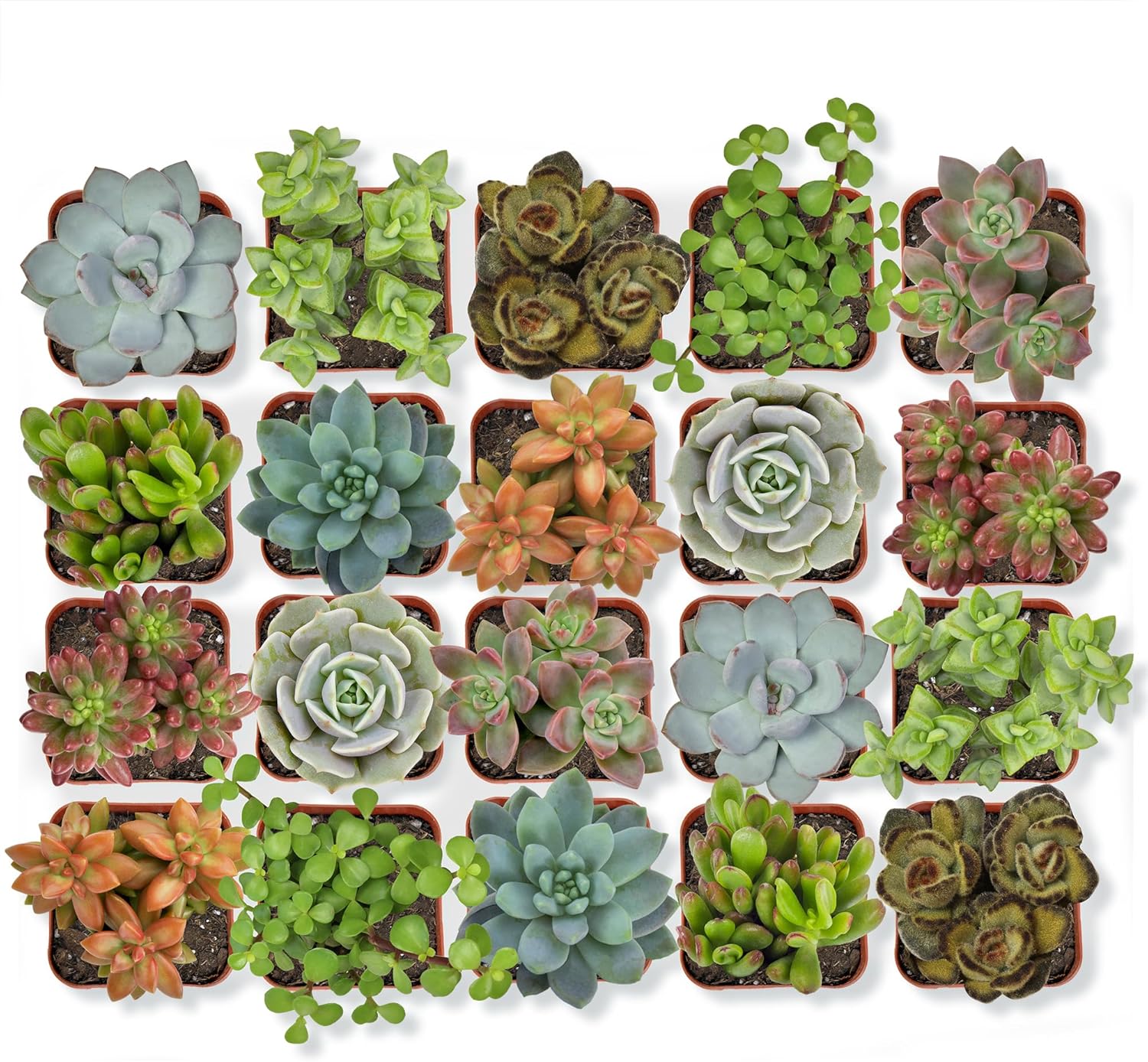
Altman Plants 20-Pack Live Succulent Assortment (2" Pots)
| Indoor Outdoor Usage | Indoor, Outdoor |
|---|---|
| Moisture Needs | Little To No Watering |
| Sunlight Exposure | Full Sun |
| USDA Hardiness Zone | 5 |
This 20-pack from Altman Plants delivers a varied selection of 2" succulents intended for starting container displays, terrariums, or gifting. Each pack contains ten paired varieties such as Echeveria, Crassula, Sedum and others, so you get color and texture variety without sourcing plants individually. The plants are grown to be drought tolerant and prefer bright light and sandy, well-draining media, which makes them easy to place in small pots or mixed container gardens. Practical benefits include low watering needs, year-round interest, and visibly healthy nursery-rooted stock suited to DIY arrangements. Limitations to note are the small nursery pot size, so plan to pot up into larger containers for long-term growth, and full sun preferences mean some indoor spots may require very bright light or supplemental light. For container projects these give a quick, coordinated start but expect to replant or group them for mature displays.
Best for: Buyers who want a reliable, low-maintenance way to start multiple container displays or DIY succulent projects and who value visible social proof that the mix performs well for other gardeners.
Less Ideal for: Gardeners seeking mature, display-size specimens or those who need plants for consistently low-light indoor spots should consider larger, sun-tolerant varieties or shade-adapted houseplants instead.
- Twenty individually potted succulents provide immediate variety for mixed container arrangements
- Pairs of ten different varieties make it easy to create balanced, symmetrical plantings
- Low watering needs and drought tolerance reduce maintenance for container growers
- Suitable for both indoor and outdoor container use when given bright light
- Plants come in 2" nursery pots and will need repotting for sustained growth
- Many varieties prefer full sun, which can limit bright indoor placement options
Verdict: A convenient, low-maintenance 20-pack that gets container succulent projects started quickly with a variety of ready-to-pot plants.
THE NEXT GARDENER Ruby Necklace (Othonna capensis) Live Succulent, 4-inch

| Indoor Outdoor Usage | Indoor |
|---|---|
| Other Special Features of the Product | Drought Tolerant |
| Sunlight Exposure | Partial Sun |
| USDA Hardiness Zone | 3 |
| Soil Type | Sandy Soil |
The Ruby Necklace (Othonna capensis) is a trailing succulent sold in a 4-inch grower pot that brings cascading foliage to small balconies, shelves, or sunny windows. It arrives fully rooted in well-draining soil so it adapts quickly into a new pot or hanging planter. The plant is drought tolerant and follows a simple soak-and-dry watering routine, making it easy to care for if you prefer low-maintenance greenery. In bright light the leaves take on a reddish tint that adds seasonal color to a compact balcony display. Practical limits to expect are its modest size and preference for partial sun and sandy, well-draining media, so it will need protection from prolonged cold or heavy rain if your balcony is exposed. Also, because it is sold as a live plant, appearance and fullness can vary slightly by season. For someone looking for a reliable, easy trailing succulent to fill a small planter or hanger, this is a straightforward choice.
Best for: Buyers who want a low-effort, attractive trailing succulent for a small balcony planter or hanging display and prefer plants that establish quickly with minimal care.
Less Ideal for: Not the best pick for gardeners who need large statement plants for wide outdoor terraces or for locations that stay cold and wet for extended periods.
- Arrives fully rooted in a 4-inch grower pot ready for transplant or display
- Drought tolerant and low maintenance with simple soak-and-dry watering
- Trailing habit works well in hanging planters, shelves, or small balcony containers
- Leaves develop red tones in bright light for seasonal visual interest
- Modest mature size limits impact in large planters or expansive balcony arrangements
- Prefers partial sun and well-draining sandy soil so exposed, wet balconies may require extra protection
Verdict: A fuss-free, fully rooted trailing succulent that adds color and easy-care greenery to small balcony planters or hanging displays.
Choosing the Right Plants for Rooftop Planters: Key Factors to Consider
Sun and Heat Exposure
Rooftop planters receive stronger sunlight and reflected heat from nearby surfaces than ground-level gardens. Choose plants that can photosynthesize efficiently under full sun without leaf scorch. Consider how reflected heat from paving or metal railings will raise foliage temperature and increase water loss.
Plants with small, thick, or silver-gray leaves often withstand intense sun better because they reflect light and reduce transpiration. When possible, group pots so taller specimens shade more delicate neighbors during the afternoon. If you cannot provide afternoon shade, select species rated for full sun and test them in a single trial planter before committing to a full rooftop display.
Wind Exposure and Structural Stability
Rooftop winds are usually stronger and more constant than at ground level, which stresses stems, dries soil faster, and can topple lightweight containers. Look for plants with flexible stems, low center of gravity, or a habit that resists wind shear.
Container weight and center of gravity matter too. Deep-rooted, clumping plants that anchor into the soil are less likely to be uprooted. When using taller specimens, pair them with heavier pots or windbreaks such as lattice or glass panels to minimize blow-over risk.
Rooting Depth and Container Volume
Planter depth and volume limit how large roots can grow and how much moisture the soil can hold. Many rooftop planters are shallow, so plants that naturally have shallow, fibrous root systems perform better than those needing a deep taproot.
Consider a plant's mature root spread versus the available pot depth. Small-rooted, clumping perennials and many ornamental grasses are ideal for limited volume. If you must use deeper-rooted plants, choose larger containers and plan for more frequent watering during peak season.
Drought Management and Watering Frequency
Even drought-tolerant rooftop plants need more frequent watering than the same species in a garden bed because containers dry quickly. Think about how often you can water and whether you will use passive irrigation such as self-watering inserts or drip systems.
Mulching the surface of containers with coarse material or decorative gravel reduces evaporation. Also consider substrate choice: mixes designed for containers with good water retention and drainage will lengthen time between waterings while preventing root rot.
Seasonal Interest and Winter Survivability
Rooftop planters should offer more than a single-season display when possible. Evaluate plants for summer bloom, fall color, winter form, or early spring shoots, depending on your climate. Some tender species will need to be swapped each year unless you can overwinter them indoors or provide frost protection.
Deciduous plants may lose leaves and look sparse in winter, so include evergreens or structural plants to maintain interest through colder months. Also consider how freeze-thaw cycles affect container soils and root survival on exposed roofs.
Maintenance and Practical Handling
Access and safety constraints on rooftops change the maintenance routine. Heavy lifting, frequent repotting, or plants that require regular deadheading may be impractical if rooftop access is limited. Favor plants that tolerate occasional neglect and have predictable pruning windows.
Also think about pest management in a contained environment: some plants attract pollinators and beneficial insects, which is desirable, but heavy infestations can be harder to manage on a rooftop. Choose low-maintenance options if you prefer fewer routine chores.
Designing a Rooftop Container Group
Plan your layout with wind and sightlines in mind. Place taller or screening plants downwind or near railings to reduce leverage on the containers and create sheltered microclimates for more delicate specimens. Mix forms and textures to keep containers visually interesting even when some plants are not in bloom.
Cluster pots of similar watering needs together and use consistent pot materials to standardize soil drying rates. Consider using heavier materials or adding ballast to lightweight containers for large or top-heavy plants.
- Group by irrigation needs to simplify watering
- Use varied heights and textures for year-round appeal
- Add windbreaks where full exposure causes stress
Soil Mixes and Drainage for Rooftop Planters
Use a high-quality container mix that balances moisture retention with quick drainage. Rooftop containers need good aeration to keep roots healthy while still holding enough moisture between waterings. Avoid garden soil; it compacts and reduces drainage.
Include chunky components like bark, perlite, or pumice to improve structure. Ensure pots have reliable drainage holes and consider a layer of coarse material at the bottom only if it improves stability, not as a substitute for proper mix.
- Choose mixes labeled for containers or rooftop use
- Check drainage holes regularly to prevent clogging
- Consider a water-retentive layer if you travel often
Irrigation Solutions for Busy Rooftop Gardeners
Rooftop planters drain and dry fast, so set up irrigation that matches your schedule. Drip lines, soaker hoses, or self-watering systems reduce the need for daily hand-watering and help maintain consistent moisture in each container.
If automated irrigation is not possible, use water-retentive soil amendments and group plants by water needs to make hand-watering efficient. A moisture meter can prevent overwatering and help you learn how quickly specific containers dry out in your microclimate.
- Install staged drip lines for different watering zones
- Use self-watering pots for high-value or moisture-sensitive plants
- Employ mulch or surface rock to reduce evaporation
Seasonal Care and Overwintering Tips
Protect containers from freeze-thaw cycles by insulating pots or moving sensitive plants indoors. Lighter pots can suffer frost heave; consider planting vulnerable species in heavier or insulated containers to stabilize roots.
Prune spent perennials in late winter and refresh container soil every few years to replenish nutrients. For seasonal color, plan to swap annuals or tender plants before the first frost and replace with evergreen or structural specimens for winter interest.
- Insulate or move pots when hard freezes are expected
- Refresh topsoil annually and repot when rootbound
- Rotate seasonal containers for continuous displays
Safety, Weight, and Building Limits
Rooftop planters add live load to a structure. Check building weight limits before installing very large or numerous containers. Use lightweight potting mixes and planters when structural capacity is a concern, and distribute weight evenly across the roof surface.
Anchor tall plant supports and avoid placing heavy pots near edges or over utilities. If in doubt, consult a building professional about maximum loads and placement to prevent structural damage or safety hazards.
- Estimate total container weight when saturated with water
- Prefer wide, low-profile pots to reduce tipping risk
- Coordinate large installations with building management
How We Chose the Best Plants for Rooftop Planters
We selected plants that reliably succeed in exposed, shallow containers typical of rooftop planters. Our editorial filters prioritized observable garden traits over trendiness: tolerance of full sun and reflected heat, resistance to drying winds, and ability to establish in limited root volume were required. We also looked at seasonal resilience, including plants that keep form through summer heat or provide winter structure in milder climates. Container rooting habit and predictable maintenance needs were key. Plants that demand deep soil, constant moisture, or heavy pruning were excluded, as were species known to be invasive in small urban plots. Final choices were those that combine reliable container performance, manageable watering needs, and visual interest across seasons.
FAQ
How often should rooftop planters be watered in summer?
That depends on pot size and plant type, but containers often need daily or every-other-day watering in hot, windy weather. Larger pots and mixes with water-retentive amendments reduce frequency, while small shallow pots can dry out in a single day.
Can I grow vegetables and herbs in rooftop planters?
Yes, many vegetables and herbs adapt well to containers if they get enough sun and consistent moisture. Choose compact varieties and ensure containers are large enough for the crop's root system and have good drainage.
What pot materials work best on rooftops?
Materials that balance weight, insulation, and durability are ideal. Lightweight materials reduce structural load, but heavier pots help stabilize tall plants. UV-resistant composites, thick fiberglass, and terracotta with proper drainage are common choices depending on weight limits.
How do I protect rooftop plants from strong wind?
Create windbreaks with screening or group pots to shelter tender plants. Use lower-growing specimens in the most exposed spots and secure tall pots with ballast or by placing them near solid structures. Flexible-stemmed plants cope better than rigid, brittle species.
Do rooftop planters need special soil mixes?
Yes. Use mixes formulated for containers that retain moisture while draining well. Avoid heavy garden soils that compact and impede airflow. Adding organic matter and chunky components helps maintain structure in containers.
When should I repot rooftop plants?
Repot when roots are circling the container, when growth slows dramatically, or every two to three years for many long-term container plants. Late winter or early spring is usually best so plants recover quickly as the growing season begins.
Final Verdict
Prioritize plants that tolerate full sun, wind, and limited root volume when planning rooftop planters. Balance drought-tolerant species with a few moisture-loving specimens only where irrigation is reliable. Consider container size, soil mix, and maintenance ability as you choose so the display remains healthy and manageable. By focusing on wind resistance, rooting habit, and seasonal interest you can create rooftop planters that perform well with reasonable care. Match plant traits to your rooftop conditions and maintenance routine to make confident selections.
