

Note: This article contains affiliate links. If you click on these links and make a purchase, I may earn a small commission at no extra cost to you. This helps support my research and content. Read my full affiliate disclosure here.
Small garden shears matter when you are working in crowded beds, with potted plants, or shaping small shrubs. The right pair makes precise cuts without bruising stems and reduces hand strain during repetitive pruning. This guide collects the top shortlisted small garden shears for close-in work around patios, raised beds, and balcony planters. Each pick was evaluated for cutting performance, comfort, and durability so you can choose shears that behave well in real garden conditions. Read on for quick decision criteria and what to expect from each style.
Top Picks at a Glance
| Best Overall The best all-around choice for most situations | Fiskars 6" Non-Stick Micro-Tip Pruning Snips |  |
| Best Quality Built to a higher standard if you want something more solid | Kimura 8" Pro Bypass Pruning Shears (Japanese SK5 Steel blades) |  |
| Best Value The sweet spot between price and what you get | VIVOSUN 6.5" Gardening Pruning Shears with Straight Stainless Steel Blades |  |
| Best Budget The cheapest option that still gets the job done reliably | Fondwell 6.5" Pruning Shears – Small Garden Trimming Scissors |  |
| Highest Rated A top-rated pick with lots of positive feedback | Housolution Flower Scissors SK5 Steel Pointed Pruning Shears |  |
| Best Seller A high-volume bestseller chosen again and again | VOTREK VT-C800 8.5" Bypass Pruning Shears with SK5 Teflon-Coated Blade |  |
Fiskars 6" Non-Stick Micro-Tip Pruning Snips

| Cutting width | 1.81 inches |
|---|---|
| Blade Type | Anvil |
| Blade Material | Alloy Steel |
| Hand Orientation | Ambidextrous |
| Includes | Sheath |
These Fiskars 6" Non-Stick Micro-Tip Pruning Snips are a compact, general-purpose tool for trimming flowers, harvesting herbs, deadheading, and making intricate cuts in tight spaces. The precision-ground steel blades reach to the tip for clean cuts, and a non-stick coating helps reduce resin build-up so the snips stay reliable when working with sticky stems. An Easy Action spring reopens the blades after each cut to reduce hand fatigue during repetitive tasks, and Softgrip touchpoints with an ambidextrous shape make them comfortable to use for short sessions. They include a sheath and an easy-open lock for safe storage and transport. The snips are aimed at light garden work rather than heavy pruning, so they excel on stems, buds, and small shoots but are not intended for thick branches. If you want a versatile, low-fatigue snip for regular deadheading, harvesting, and detail trimming, these deliver solid durability and control in a small package.
Best for: Gardeners who want a reliable, low-fatigue snip for regular deadheading, herb harvesting, and precise shaping in small gardens or containers.
Less Ideal for: People who need a tool for pruning large branches or heavy woody growth should choose a larger pruner or lopper instead.
- Micro-tip precision blades cut all the way to the tip for clean cuts in tight spaces
- Non-stick coating reduces resin build-up and jamming when cutting sticky plants
- Easy Action spring lowers hand fatigue during repetitive trimming
- Softgrip handles and ambidextrous design offer comfortable control for most users
- Designed for light garden work and not suitable for thick branches or heavy pruning
Verdict: A compact, low-fatigue micro-tip snip that gives precise, clean cuts for everyday small-garden tasks.
Kimura 8" Pro Bypass Pruning Shears (Japanese SK5 Steel blades)

| Blade Material | Japanese SK5 Steel |
|---|---|
| Cutting width | 25 millimeters |
| Blade Type | Bypass |
| Hand Orientation | Ambidextrous |
| Size | 8" |
These Kimura 8" Pro bypass pruners are built for performance-focused gardeners who need a durable, precise tool for regular pruning. The SK5 Japanese steel blades are heat treated to a high hardness and PTFE coated to resist sap and reduce friction, so cuts stay clean and require less frequent sharpening. With a stated 1" cutting capacity the shears handle rose canes, woody stems and general deadheading without bogging down. The aluminum handles are lightweight, non-slip PVC coated and shaped for ergonomic control, which helps during longer sessions and for users with grip issues. Ambidextrous orientation and a simple safety lock make them easy to use and safe to carry. The construction uses riveted joints and anti-rust components aimed at longevity, though very heavy-duty or professional vineyard use may push the limits over time. Overall these pruners trade the extra features of specialty rose snips for a robust, all-purpose cutter that prioritizes sharpness and lasting edge retention.
Best for: Gardeners who prioritize clean, durable cuts for roses and mixed borders and want a dependable, ergonomic tool for frequent pruning sessions.
Less Ideal for: Those needing to cut very large woody branches or who want specialized floral snips for delicate deadheading should consider different tools.
- High-hardness Japanese SK5 steel blades for sharp, long-lasting cuts
- PTFE coating reduces sap buildup and makes slicing smoother
- Ergonomic, lightweight aluminum handles with non-slip PVC for comfortable extended use
- Ambidextrous design and simple safety lock for ease of use and transport
- Cut capacity limited to about 1 inch, so very large branches require a saw or lopper
Verdict: If you want sharp, long-lasting bypass pruners that make clean cuts on rose canes and everyday garden stems, these Kimura professional shears deliver reliable performance.
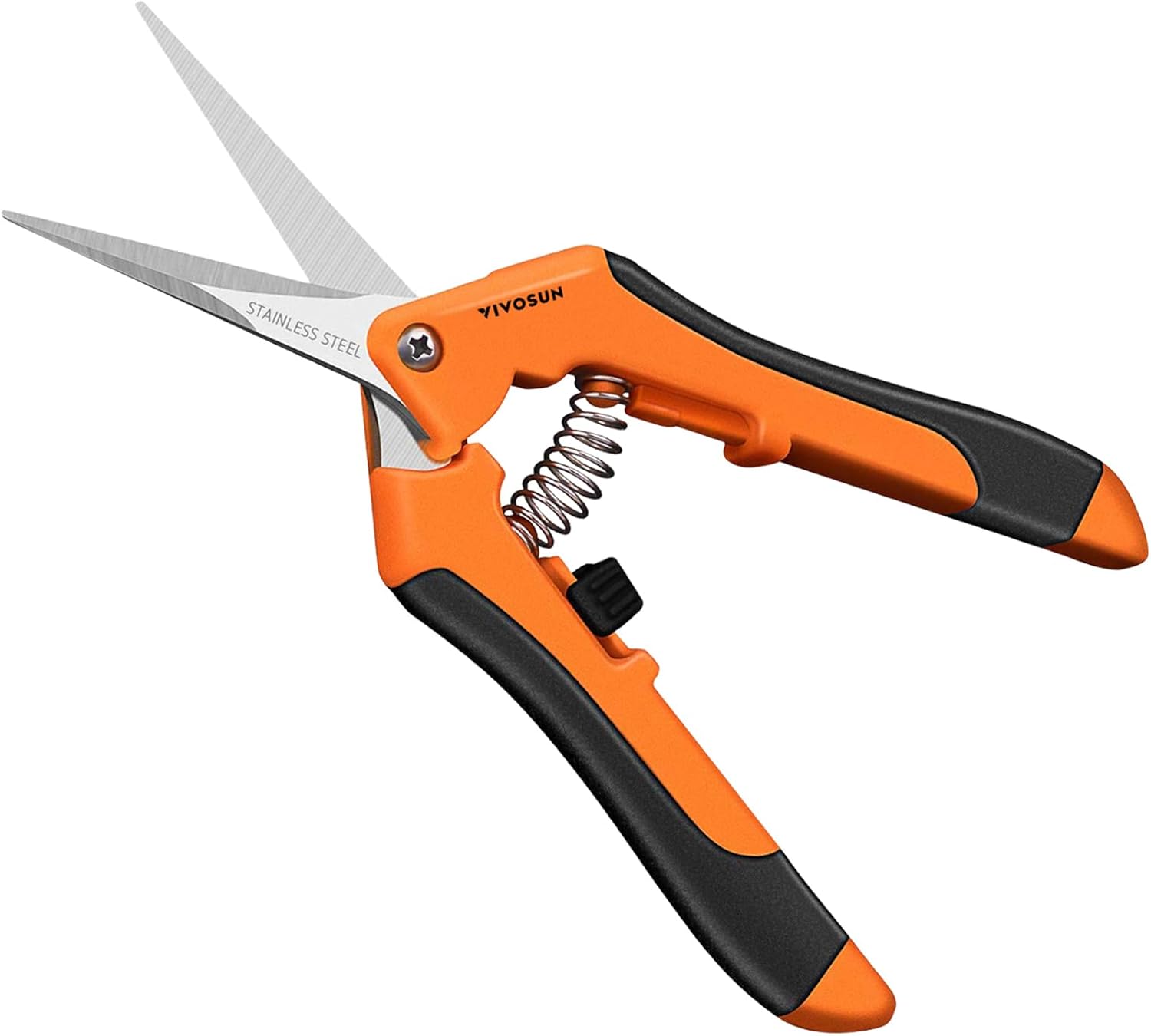
VIVOSUN 6.5" Gardening Pruning Shears with Straight Stainless Steel Blades
| Blade Type | Anvil |
|---|---|
| Blade Material | Stainless Steel |
| Hand Orientation | Ambidextrous |
| Blade Edge | Straight |
These VIVOSUN 6.5-inch pruning shears are small, light, and built for precise cutting of flowers, small stems, and detailed garden tasks. The straight, precision-sharpened stainless steel blades and micro tip design let you get into tight spaces for deadheading, shaping, and bonsai work without disturbing nearby stems. An ambidextrous polished stainless steel handle keeps the tool simple and durable while a sideways locking mechanism secures the blades when not in use. Because it is an anvil-style cutter with a short 2.1-inch blade, it excels at delicate snips rather than thick branch work; expect best results on softwood and thin-diameter growth. The low weight and ergonomic grip reduce hand fatigue for long sessions, though heavier pruning or cutting branches near 3/4 inch will require a larger bypass pruner. For gardeners who want a budget-friendly, fuss-free snipping tool for everyday trimming, these shears cover the basics reliably with minimal maintenance required.
Best for: A no-frills, cost-conscious gardener who needs an easy-to-use snipping tool for daily deadheading, shaping, and light pruning around flowers and small shrubs.
Less Ideal for: Gardeners who regularly cut thick woody branches or need a shear for heavy-duty tree pruning should choose a larger bypass pruner or lopper instead.
- Precision micro-tip stainless steel blades for tight, detailed cuts
- Ambidextrous design and comfortable grip reduces hand strain
- Sideways locking mechanism keeps blades closed and safe when stored
- Lightweight construction makes it easy to use for extended trimming sessions
- Anvil blade and short blade length limit effectiveness on thicker woody stems
Verdict: A simple, affordable micro pruning shear that delivers precise, low-effort snips for everyday deadheading and light pruning.
Fondwell 6.5" Pruning Shears – Small Garden Trimming Scissors

| Blade Material | Stainless Steel |
|---|---|
| Blade Type | Bypass |
| Blade Edge | Straight |
| Hand Orientation | Ambidextrous |
| Item Highlight | Ultra-Sharp Curved Blades, Non-Stick Lightweight |
These Fondwell 6.5" pruning shears are a compact, budget-friendly tool for precise garden tasks. They use stainless steel bypass blades with a micro-tip profile that reach tight spots on bonsai, potted plants, and flower stems and the non-stick coating helps reduce sap buildup. The 6.5-inch frame, spring action, and TPR grips make repeated cuts comfortable and help reduce hand fatigue during longer sessions. A simple push-to-lock keeps the blades closed for safe storage. Practical strengths are the sharp, rust-resistant blades and the ambidextrous handle that suit most users and small trimming jobs. Limitations are inherent to the size: these shears are intended for stems and buds rather than woody branches, and the lightweight polypropylene handle will not offer the same durability or leverage as heavier-duty pruners. For everyday deadheading, harvesting small fruits, and detailed shaping tasks they deliver good value, but they are not a substitute for larger pruning tools when you need more cutting power.
Best for: Gardeners who want an inexpensive, compact set of shears for deadheading, bonsai work, indoor plants, and general small-plant trimming where precision and low hand fatigue matter.
Less Ideal for: Those who need a heavy-duty pruner for thick, woody branches or professional landscapers who require high-leverage, long-lasting handles for daily demanding use.
- Sharp stainless steel micro-tip blades for precise cuts in tight spaces
- Non-stick, rust-resistant finish reduces sap buildup and eases cleaning
- Lightweight 6.5-inch design with spring action and TPR grips for low fatigue
- Ambidextrous handles and push-to-lock for safe storage
- Too small for woody branches or larger pruning jobs
- Polypropylene handle is less robust than metal-handled pruners
Verdict: A low-cost, lightweight choice that delivers precise, low-fatigue trimming for small plants and delicate garden work.
Housolution Flower Scissors SK5 Steel Pointed Pruning Shears

| Blade material | SK5 steel |
|---|---|
| Pruning diameter | 8 mm |
| Handle material | Non-slip PP |
These Housolution flower scissors are small, purpose-built shears for trimming flowers, harvesting stems, and light pruning around the garden. The blades are made from SK5 high-carbon steel with a plated finish to resist rust and keep a sharp edge, so cuts feel clean and require less re-sharpening. The pointed blade profile and 8 mm maximum pruning diameter make the tool best for delicate stems, floral arranging, and potted plants rather than woody branches. The non-slip polypropylene handles with ergonomic grooves are comfortable for repeated use and help maintain control while snipping. Maintenance is straightforward: wipe clean after use and apply a little oil to the blade to protect the plating and preserve sharpness. Expect reliable, long-running performance for routine tasks, although the shears are not intended for pruning thick woody stems or heavy-duty landscaping jobs.
Best for: Buyers who prioritize a dependable, low-maintenance hand shear for regular floral work, potted plants, and light garden trimming will appreciate its reliable cutting and rust-resistant finish.
Less Ideal for: Gardeners who need a tool for thick woody stems, heavy pruning, or landscaping tasks should choose a larger bypass pruner or lopper instead.
- SK5 high-carbon steel blade offers sharp, clean cuts and holds edge well
- Plated blade finish resists rust and corrosion for longer blade life
- Ergonomic non-slip PP handles with grooves provide a comfortable grip
- Compact pointed blades suit flower arranging and precise trimming
- Maximum cutting diameter of 8 mm limits use to soft stems and small branches
Verdict: A dependable, low-maintenance small shear that delivers sharp, rust-resistant cuts for everyday flower arranging and light garden trimming.
VOTREK VT-C800 8.5" Bypass Pruning Shears with SK5 Teflon-Coated Blade

| Blade Material | High Carbon Steel (SK5) |
|---|---|
| Cutting width | 20 millimeters |
| Hand Orientation | Ambidextrous |
| Handle Material | Aluminum, Rubber |
The VOTREK VT-C800 is a straightforward hand pruner aimed at routine garden pruning, rose trimming, bonsai work, and light tree maintenance. It uses an SK5 high-carbon steel blade with a Teflon coating to resist sap buildup and keep cuts clean, while a sealed spring reduces debris jams and improves blade return in damp conditions. The ambidextrous thumb lock can be operated one-handed and works with gloves, which helps with safe carrying between jobs. Ergonomic aluminum and rubber handles and a non-slip grip reduce wrist strain for longer sessions and make the tool easier for users with weaker hands. The cutter is rated to slice branches up to about 20 mm (0.8 in), so it is best for live growth and small stems rather than large-diameter pruning. Buyers should expect to sharpen the blade occasionally to maintain peak performance and to avoid using it on dry, very hard wood where bypass pruners are less efficient. For routine backyard pruning where reliable, jam-resistant action and comfortable handling matter, this model delivers consistent, low-fuss performance.
Best for: A practical gardener who prioritizes reliable, low-maintenance tools and wants comfortable, safe shears for everyday pruning tasks around the yard.
Less Ideal for: People who need to cut thick, dry, or woody branches frequently should choose a larger anvil or powered pruner instead.
- Sharp SK5 high-carbon steel blade with Teflon coating reduces sap adhesion and keeps cuts cleaner
- Sealed jam-proof spring design resists debris and improves blade return in wet or dirty conditions
- Ambidextrous one-handed thumb lock that works with gloves for safer handling and storage
- Ergonomic aluminum and rubber handles with non-slip grip minimize wrist fatigue during extended use
- Cut capacity is limited to about 20 mm (0.8 in), so not suitable for larger branches
- Requires periodic sharpening to maintain optimal cutting performance
Verdict: If you want dependable, jam-resistant garden shears with a sharp, low-stick blade and comfortable grip for routine pruning, this is a solid, low-fuss choice.
Choosing the Right Small Garden Shears: Key Factors to Consider
Blade Material and Edge Geometry
Blade material affects how long the cutting edge stays sharp and how well it slices live stems without crushing them. High-carbon steels hold an edge better and are easier to sharpen, while stainless alloys resist corrosion in humid or coastal gardens. Edge geometry, including bevel angle and blade thickness at the tip, controls how cleanly the shear severs soft green growth versus woody tissue.
For small garden shears you want a thin, finely ground edge for clean cuts on herbaceous stems and flower stalks. If you plan to work on slightly woody stems, look for blades with a consistent hardening treatment so the edge does not chip. Consider whether the blade accepts re-sharpening and how often you will need to strop or hone it based on your pruning frequency.
Handle Shape and Ergonomics
Handles determine how long you can prune before your hands tire and whether the tool prevents pinching or nerve strain. Look for contoured grips that support the palm and have enough room between handles for gloved use in cooler seasons. Soft-touch coatings reduce blistering, but overly soft materials can trap moisture and degrade over time.
Consider the angle of the handles relative to the blades; some small shears use an offset that provides better visibility and cleaner shears with less wrist bend. If you have arthritis or weak grip strength, choose a design with reduced hand-crunch mechanics or spring assist to open the blades after each cut.
Cut Capacity and Precision
Small garden shears are intended for fine work, so cutting capacity and tip control determine what tasks they handle well. A narrow, pointed tip helps deadhead flowers and trim in tight spaces without damaging nearby foliage. Maximum cutting diameter indicates whether the shear is limited to soft growth under a certain thickness.
Match the cut capacity to your garden tasks: frequent deadheading and shaping of annuals need delicate tips and lower capacity, while occasional trimming of small woody shoots requires a slightly thicker blade and stronger pivot. Precision also depends on blade alignment and the smoothness of the pivot mechanism.
Rust Resistance and Finish
Exposure to moisture from watering, morning dew, or storage on a porch demands corrosion resistance. Stainless finishes, protective coatings, and sealed pivot areas delay rust and reduce maintenance. Rust can quickly lead to rough cuts and accelerated wear on moving parts.
If you store tools outside or in an unheated shed, prioritize materials and coatings rated for damp environments. Routine wiping and a light oiling are still necessary, but initial rust resistance extends service life and preserves cutting quality between sharpening sessions.
Pivot Design and Maintenance
The pivot is the mechanical heart of a shear. A well-made pivot stays tight with adjustable tension and maintains blade alignment for accurate cuts. Simple riveted pivots can be durable but sometimes loosen or wear unevenly; threaded pivots with a locking mechanism allow periodic adjustment to remove play.
Also consider how easy it is to disassemble, clean sap buildup, and reassemble the tool. Shears that accept replacement parts or that allow sharpening without complex disassembly reduce long-term ownership costs and downtime.
Weight Balance and Handling
Weight matters in close-in pruning. Too heavy and the tool causes forearm fatigue during repeated trimming sessions; too light and the shears may lack the momentum needed for clean cuts. Balance between blade and handle helps you maintain control, especially when working at odd angles in containers or on trained topiary.
Test for a neutral balance point near the pivot so small hand movements translate to precise tip placement. Consider the effect of gloves on feel and whether additional textured grip zones or thumb rests improve control during detailed work.
When Small Shears Are the Right Choice
Small shears excel at tasks where control and visibility are more important than raw cutting power. Use them for deadheading, trimming seedlings, pruning herbs, and tidying the edges of crowded beds where larger pruners would be clumsy or damaging.
They are also the best option for container gardens and balcony planters because their compact size lets you reach into tight groupings of pots without displacing plants. If you regularly shape small-leaved shrubs or maintain floral arrangements, the fine tips and lighter weight of small shears make repetitive tasks quicker and neater.
- Ideal for deadheading, shaping, and light pruning of soft growth
- Compact size fits crowded beds and pots
- Better visibility and control around delicate stems
Maintaining Sharpness and Preventing Sap Buildup
Keep blades clean and sharp for fast, clean cuts. After each session, wipe blades with a rag to remove sap and grit. For sticky residues use a mild solvent or a bit of warm soapy water followed by drying and light oiling.
Regular stropping or light sharpening on a fine stone will restore a crisp edge. Address nicks promptly; small defects can be eased out with a few controlled passes rather than letting damage worsen. Proper maintenance preserves cutting precision and reduces the force needed for each snip.
- Wipe blades after use to remove moisture and sap
- Sharpen occasionally with a fine stone or strop
- Oil pivot and metal surfaces lightly to prevent rust
Working Techniques for Cleaner Cuts
Cut at a slight angle and position the branch or stem against the anvil or lower blade if present. For bypass-style small shears, let the sharp edge slice past the opposing blade rather than crushing the tissue. Make decisive, single cuts rather than sawing motions to avoid ragged wounds.
When pruning flowering stems, cut just above a node or bud that faces the direction you want new growth to take. Taking a little time to position the tip accurately will pay off with faster healing and neater regrowth.
- Use single, decisive cuts instead of sawing
- Position cuts above outward-facing nodes for controlled regrowth
- Support the stem close to the cut to reduce slippage
Storage and Seasonal Care
Store small shears in a dry, ventilated place to limit corrosion. Keep them in a tool roll or hanging on a pegboard to prevent blade contact with other metal tools. If you store tools in a shed that gets damp, consider adding silica gel packs to the storage area.
Before long-term storage, clean and lightly oil the blades and pivot. Check for loose fasteners and tighten them so the shear is ready when pruning season returns. Seasonal maintenance keeps tools dependable and reduces the frequency of full refurbishing.
- Clean and oil before storing for extended periods
- Hang or keep shears separate to avoid contact damage
- Check and adjust pivot tension prior to the pruning season
Alternatives and Complementary Tools
Small shears are part of a gardener's toolkit and pair well with a sturdy pair of pruners for thicker stems and a folding saw for larger woody cuts. For very fine floral arranging work, consider a pair of snips with micro-tipped blades for tighter control.
If your garden includes both heavy pruning tasks and delicate shaping, choose a reliable small shear for detail work and keep a larger bypass pruner on hand to avoid damaging the smaller tool or struggling with inappropriate cuts.
- Pair with bypass pruners for thicker stems
- Use floral snips for ultra-fine trimming
- Maintain separate tools for rough and delicate tasks
How We Chose the Best Small Garden Shears
We focused on tools built specifically for close-up pruning and detail work in small gardens, containers, and tight plantings. Selection prioritized blade metallurgy and edge geometry because sharp, properly hardened blades determine cut quality and how often you must sharpen. Ergonomics and handle design were next: comfortable grips, correct jaw clearance, and features that reduce pinch or wrist torque matter for frequent short cuts. Durability of the pivot and fasteners was evaluated to ensure the shear maintains alignment and a consistent cut over seasons. Ease of maintenance, including ability to clean, sharpen, and replace parts, influenced selection as well as rust resistance for outdoor storage. We excluded oversized bypass pruners and multi-tool combos that are designed for heavy pruning or lopping; this list focuses on small shears intended for fine trimming, deadheading, and precise shaping. Final choices balance cutting precision, user comfort, longevity, and simple upkeep.
FAQ
Can small garden shears handle woody stems?
They can handle small, semi-woody shoots but are not designed for thick, mature wood. For anything tougher than a pencil diameter, use a larger pruner or a saw to avoid damaging the blade or pivot.
How often should I sharpen small shears?
Frequency depends on use, but light stropping after several sessions and a sharpening stone session every few months of regular use is typical. Sharpen sooner if cuts become ragged or the tool requires extra force.
Are stainless blades always better for outdoor storage?
Stainless steels resist rust more than plain carbon steels, which helps in damp conditions. However, stainless can vary in hardness and edge retention. Prioritize both corrosion resistance and the ability to be sharpened when selecting a blade.
How should I disinfect shears between plants to prevent disease spread?
Wipe blades with a diluted bleach solution or isopropyl alcohol between infected plants, then rinse and dry thoroughly. Frequent cleaning is important when working with diseased material to avoid moving pathogens between plants.
What grip features help if I have weak hands or arthritis?
Look for cushioned, contoured handles, an easy-opening spring, and low-effort pivot mechanics. Some small shears use a compound action or reduced-leverage design to lower pinch force and improve comfort for longer sessions.
Can I replace parts like springs or pivots on small shears?
Many quality shears have replaceable springs and pivot hardware, but availability varies. Choose tools with simple fasteners and accessible parts if long-term serviceability is important to you.
Final Verdict
Prioritize blade sharpness and comfortable handles when choosing small garden shears. Expect to trade a bit of cutting capacity for greater control and finer tips that protect nearby foliage while producing clean cuts. Regular maintenance, including cleaning, light oiling, and occasional sharpening, preserves performance and extends tool life. Choose a shear that matches the typical stem thickness and duration of your pruning sessions so you get precise results with minimal hand fatigue.
