

Note: This article contains affiliate links. If you click on these links and make a purchase, I may earn a small commission at no extra cost to you. This helps support my research and content. Read my full affiliate disclosure here.
When you need nimble pruning around borders, potted plants, or densely planted beds, small lightweight garden shears make repetitive trimming easier and more accurate. The right pair will help you reach into confined areas, make clean snips on soft stems, and lower wrist and hand fatigue during longer sessions. This guide focuses on the top short-handle, lightweight shears suited for close-up work and container gardening. We shortlisted five top-performing small lightweight garden shears and evaluated them for blade sharpness, ergonomic comfort, durability, and ease of maintenance. Below you will find practical notes to help you pick the style that fits your daily tasks and gardening posture, followed by buying factors and a detailed editorial methodology.
Top Picks at a Glance
| Best Overall The best all-around choice for most situations | Fiskars 6" Non-Stick Micro-Tip Pruning Snips |  |
| Best Value The sweet spot between price and what you get | Craft911 2-Pack Stainless Steel Pruning Shears and Snips |  |
| Best Budget The cheapest option that still gets the job done reliably | Fondwell 6.5" Garden Pruning Shears (Micro‑Tip) |  |
| Highest Rated A top-rated pick with lots of positive feedback | Fondwell 6" Lightweight Bypass Pruners |  |
| Most Popular A crowd favorite that many people choose with confidence | VIVOSUN 6.5" Gardening Pruning Shears with Straight Stainless Steel Blades |  |
Fiskars 6" Non-Stick Micro-Tip Pruning Snips

| Cutting width | 1.81 inches |
|---|---|
| Blade Type | Anvil |
| Blade Material | Alloy Steel |
| Hand Orientation | Ambidextrous |
| Included Components | Pruning Shears |
These Fiskars 6" Micro-Tip Pruning Snips are small, lightweight shears made for precise, repetitive work around the garden. The precision-ground alloy steel blades cut all the way to the tip so you can trim flower buds, harvest herbs, and snip tiny stems cleanly in tight spaces. A non-stick blade coating reduces resin build-up and jamming, which keeps the tool working smoothly when you move between sticky sap-bearing plants. The Easy Action spring opens the blades after each cut to reduce hand strain during longer sessions, and Softgrip touchpoints improve comfort and control. The included sheath and easy-open lock make storage and transport safe. Because these are micro-tip snips they are intended for light pruning and detailed tasks rather than thick branches, so heavier cutting tools are still needed for larger jobs. For gardeners who want a small, durable everyday snip, these deliver precise performance and low fatigue in a compact package.
Best for: Ideal for gardeners who need a compact, precise snip for deadheading, shaping, and harvesting herbs and small flowers and who value low hand fatigue during repetitive tasks.
Less Ideal for: Not a good fit for users who need a single tool for heavy pruning or cutting larger diameter branches; they should choose heavier-duty pruners instead.
- Micro-tip precision blades cut right to the tip for clean cuts in tight spaces
- Non-stick blade coating reduces resin build-up and jamming
- Easy Action spring reduces hand fatigue during repetitive snipping
- Softgrip handles improve comfort and control
- Includes sheath and blade lock for safe storage and transport
- Designed for light, detailed pruning only and cannot handle thicker branches
Verdict: A compact, low-fatigue micro-tip snip that delivers clean, resin-resistant cuts for everyday light pruning and harvest tasks.
Craft911 2-Pack Stainless Steel Pruning Shears and Snips

| Blade Material | Stainless Steel |
|---|---|
| Blade Edge | Serrated, Straight |
| Blade Type | Bypass |
| Hand Orientation | Ambidextrous |
This Craft911 two-pack pairs a full-size bypass pruning shear with a smaller pruning snip so you can handle both thicker stems and delicate rose work with one set. The blades are stainless steel, with the snip carrying a titanium coating for extra edge life, and both tools lock closed for safe storage. They are ambidextrous and have non-slip, comfortable handles that reduce hand fatigue during longer sessions, which is useful when deadheading or shaping roses. The bypass blade and serrated options give clean cuts that help protect plant tissue and reduce tearing. Because the materials are rust resistant and the tools are easy to clean, they require minimal maintenance between uses. On the downside the handles are listed as plastic or metal without a specific ergonomic mechanism for heavy-duty leverage, so they are best for routine rose pruning and lighter branches rather than very thick woody canes. For gardeners who prefer straightforward, low-maintenance tools this combo covers most rose-care tasks effectively.
Best for: Gardeners who want dependable, low-maintenance tools for routine rose pruning, deadheading, and shaping and who prefer safe, easy-to-use gear.
Less Ideal for: Those who regularly cut very large or old woody rose canes and need heavy-duty loppers or pruners with superior leverage and anvil-style cutting.
- Includes both full-size bypass shears and a precision snip for versatile rose care
- Stainless steel blades with a titanium-coated snip edge for lasting sharpness
- Ambidextrous design and non-slip handles that reduce hand fatigue
- Built-in safety locks keep blades closed for safe storage and transport
- Handles are basic plastic or metal without advanced leverage for very thick canes
- Not intended for heavy woody pruning of large rose canes
Verdict: A safe, low-maintenance pruning combo that handles most rose grooming tasks well with sharp stainless blades and easy-to-use locks.
Fondwell 6.5" Garden Pruning Shears (Micro‑Tip)

| Blade Material | Stainless Steel |
|---|---|
| Handle Material | Polypropylene (PP) |
| Blade Type | Bypass |
| Hand Orientation | Ambidextrous |
These Fondwell 6.5-inch pruning shears are a compact, budget-friendly tool for precise gardening tasks. The micro-tip stainless steel blades and straight bypass edge make clean cuts on small stems, deadheading, bonsai work, and harvesting delicate fruit. At 6.5 inches with a spring-action and TPR grip the shears are easy to handle and designed to reduce hand fatigue during extended use. A non-stick, rust-resistant blade finish helps prevent sap buildup so blades stay sharper longer and cleaning is simpler. The simple push-to-lock mechanism keeps the blades closed for safe storage. Because they are small and lightweight they are best suited to light-duty trimming rather than cutting thicker branches, and the plastic polypropylene handles trade some long-term durability and heft for low cost and comfort. For routine, detailed pruning in home gardens these shears deliver precise performance without a high price tag.
Best for: Gardeners who want an inexpensive, easy-to-use pair of shears for detailed work like deadheading, bonsai shaping, and indoor plant trimming and who prioritize maneuverability and low cost over heavy-duty cutting.
Less Ideal for: People who regularly need to cut woody stems or larger branches should choose heavier-duty bypass pruners with larger blades and sturdier handles.
- Micro-tip stainless steel blades for precise, clean cuts on small stems
- Lightweight 6.5-inch design with spring action and TPR grip reduces hand fatigue
- Non-stick, rust-resistant coating minimizes sap buildup and eases cleaning
- Ambidextrous bypass blade suitable for delicate pruning and deadheading
- Push-to-lock safety mechanism for secure storage and transport
- Small size and lightweight plastic handles limit effectiveness on thicker branches
Verdict: A very affordable, lightweight micro-tip shear that delivers precise cuts for small-plant and detail pruning tasks.
Fondwell 6" Lightweight Bypass Pruners

| Blade Type | Bypass |
|---|---|
| Hand Orientation | Ambidextrous |
| Blade Material | Stainless Steel |
| Cutting width | 6 inches |
The Fondwell 6" Lightweight Bypass Pruners are designed for precise, low-fatigue pruning of delicate stems, herbs, flowers, and small bonsai branches. The razor-sharp stainless steel bypass blades make clean cuts that help preserve plant health, while the non-stick finish eases sap buildup. An ergonomic, ambidextrous metal handle and smooth spring action reduce hand strain for longer trimming sessions, and a push-to-lock safety keeps the blades closed between tasks. These shears are best used for light-duty garden work such as deadheading, harvesting herbs, and shaping small plants rather than heavy woody pruning. Notable features include corrosion-resistant materials for all-weather use and a compact 6-inch profile that fits easily in a gardening apron or toolbox. The main limitations are the small size and lightweight construction, which prioritize comfort and precision but limit leverage on thicker stems. For gardeners who want a reliable, low-fatigue tool for frequent delicate tasks, these pruners deliver consistent, plant-friendly cuts season after season.
Best for: Gardeners who prioritize dependable, low-fatigue tools for frequent delicate pruning, harvesting herbs, and maintaining flower beds in small to medium gardens.
Less Ideal for: People who regularly cut thick woody branches or need heavy-duty loppers should choose a larger, higher-leverage pruner instead.
- Sharp stainless steel bypass blades produce clean, plant-friendly cuts
- Ergonomic ambidextrous handle and spring action reduce hand fatigue
- Corrosion-resistant construction suited for all-weather use
- Push-to-lock safety secures blades between tasks
- Small 6-inch size limits leverage on thicker or woody stems
- Metal handles may be less cushioned for users preferring padded grips
Verdict: A compact, reliably built shear that delivers precise, low-fatigue cuts for everyday delicate garden tasks.
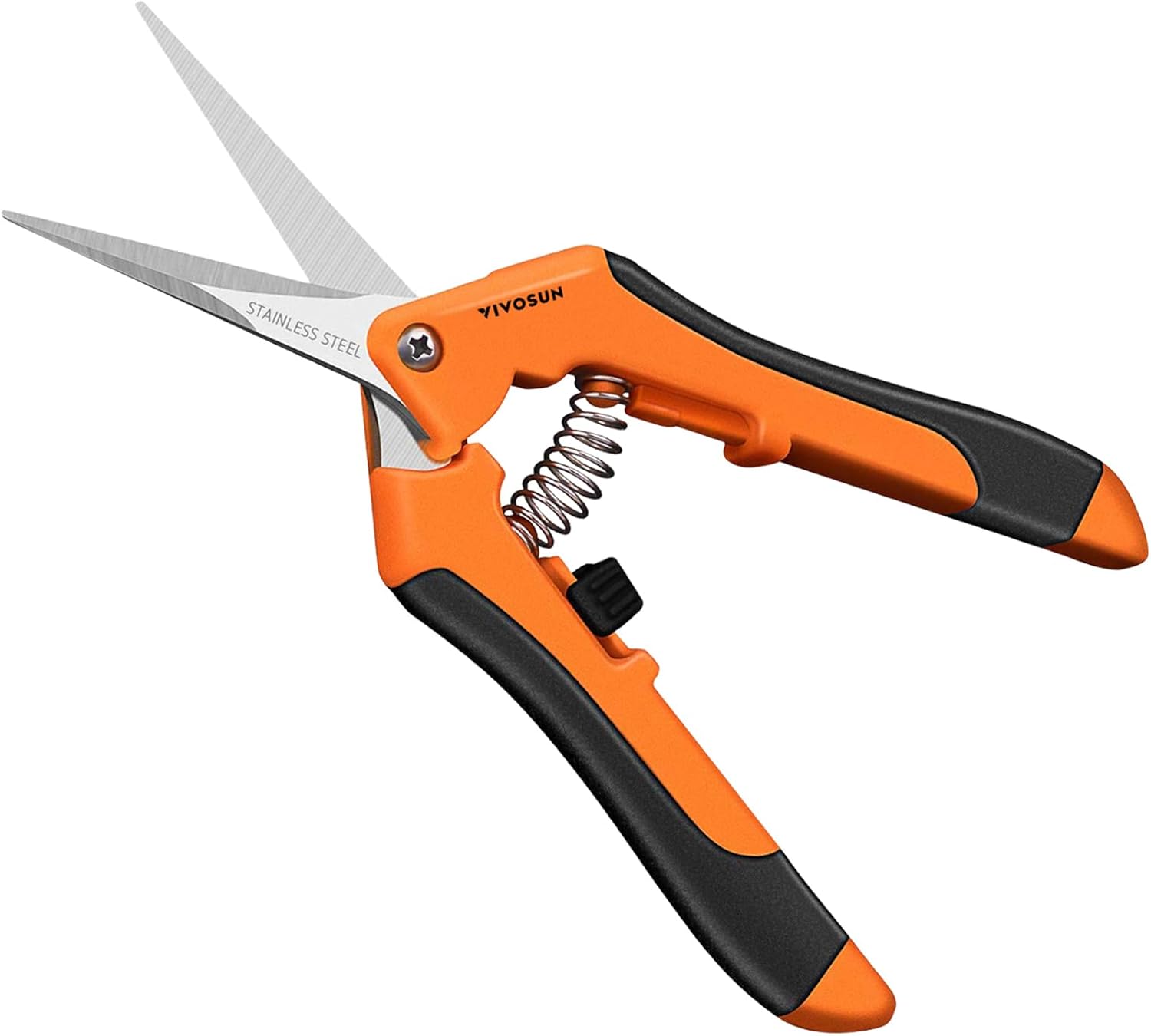
VIVOSUN 6.5" Gardening Pruning Shears with Straight Stainless Steel Blades
| Blade Type | Anvil |
|---|---|
| Blade Material | Stainless Steel |
| Hand Orientation | Ambidextrous |
| Blade Edge | Straight |
These VIVOSUN 6.5-inch pruning shears are small, light, and built for precise cutting of flowers, small stems, and detailed garden tasks. The straight, precision-sharpened stainless steel blades and micro tip design let you get into tight spaces for deadheading, shaping, and bonsai work without disturbing nearby stems. An ambidextrous polished stainless steel handle keeps the tool simple and durable while a sideways locking mechanism secures the blades when not in use. Because it is an anvil-style cutter with a short 2.1-inch blade, it excels at delicate snips rather than thick branch work; expect best results on softwood and thin-diameter growth. The low weight and ergonomic grip reduce hand fatigue for long sessions, though heavier pruning or cutting branches near 3/4 inch will require a larger bypass pruner. For gardeners who want a budget-friendly, fuss-free snipping tool for everyday trimming, these shears cover the basics reliably with minimal maintenance required.
Best for: A no-frills, cost-conscious gardener who needs an easy-to-use snipping tool for daily deadheading, shaping, and light pruning around flowers and small shrubs.
Less Ideal for: Gardeners who regularly cut thick woody branches or need a shear for heavy-duty tree pruning should choose a larger bypass pruner or lopper instead.
- Precision micro-tip stainless steel blades for tight, detailed cuts
- Ambidextrous design and comfortable grip reduces hand strain
- Sideways locking mechanism keeps blades closed and safe when stored
- Lightweight construction makes it easy to use for extended trimming sessions
- Anvil blade and short blade length limit effectiveness on thicker woody stems
Verdict: A simple, affordable micro pruning shear that delivers precise, low-effort snips for everyday deadheading and light pruning.
Choosing the Right Small Lightweight Garden Shears: Key Factors to Consider
Blade Sharpness and Edge Geometry
Sharp blades and the right cutting geometry are essential for clean, healthy cuts. A fine, well-hardened edge slices plant tissue rather than crushing it, which reduces the risk of ragged wounds and disease entry. For small shears that focus on softwood and thin stems, look for blades ground for a slicing action rather than heavy anvil-style contact.
Edge retention matters because a dull small shear forces you to use extra hand strength and increases the chance of crushing stems. Consider how easy the blade is to sharpen and whether the steel grade and heat treatment are described in specs or product documentation.
Ergonomics and Grip Design
Ergonomics determine how long you can prune without discomfort. Handle shape, padding, and hand clearance affect pressure points on the palm, fingers, and thumb. For gardeners with smaller hands or those prone to wrist pain, shorter handles, contoured grips, and shock-absorbing materials can make a big difference during repetitive motion.
Also pay attention to the shear's opening width and the reach between pivot and tip. A compact tool should allow comfortable full closure without hyperextending the fingers, and the locking mechanism should be easy to operate with one hand.
Weight, Balance, and Control
Small lightweight shears are meant to increase control in tight spaces. Total weight affects hand fatigue, while balance determines how the tool responds when you position it for a cut. A well-balanced pair will feel almost weightless at the tip, letting you make accurate snips without fighting the tool's center of gravity.
Consider materials like aluminum, composite, or light steel for handles, and whether any metal reinforcements add unnecessary weight. Lighter tools are better for long sessions or overhead trimming on short ladders, but stability in the hand should not be sacrificed for minimal mass.
Corrosion Resistance and Finish
Garden tools are exposed to moisture, sap, and fertilizers that accelerate corrosion. Blades with stainless or corrosion-resistant coatings last longer with less maintenance. Similarly, handles with sealed grip materials or anodized finishes resist weathering and remain comfortable over seasons of use.
Think about whether the finishing allows for occasional wet storage or if you will need to store the tool dry. Better corrosion resistance reduces the frequency of cleaning and protects blade function.
Cutting Capacity and Intended Use
Small shears are designed for thin stems, deadheading, and fine shaping, not for thick woody branches. Knowing the maximum cutting diameter you expect to work on will help match the tool to tasks. A pair that handles up to approximately a half inch of soft green stem will suit most container and bedding jobs, while anything larger likely needs a different tool type.
Also consider whether you need a pointed tip for tight spots, curved blades for better contact on rounded stems, or a slender profile to enter dense foliage without damaging adjacent plants.
Ease of Maintenance and Serviceability
Tools that are easy to maintain stay functional longer. Look for designs with accessible pivot bolts for tension adjustment, blades that can be detached for sharpening, and finishes that wipe clean of sap. Simple maintenance routines-wiping, occasional oiling, and periodic sharpening-are far more likely to be performed if the tool is straightforward to service.
Spare parts availability and a replaceable spring or latch can extend a shear's life and reduce waste, so check whether common wear parts can be replaced without special tools.
Why Small Shears Matter for Container and Border Work
Small shears let you work closely around fragile foliage and multiple stems without disturbing nearby plants. Their compact size and short blades make precise cuts easier when you are deadheading, pinching back seedlings, or shaping compact shrubs.
Using the right small shear reduces collateral damage in crowded pots and dense borders. For gardeners who spend time on detailed tasks like bonsai-style shaping, floral arranging, or maintaining rock gardens, the added control outweighs the limited cutting diameter.
- Better access to tight clusters and center-of-plant cuts
- Reduced accidental snips on neighboring stems
- Lower hand fatigue for repetitive small cuts
Materials That Balance Weight and Durability
Common handle materials include aluminum, reinforced composites, and light steel. Aluminum and composite handles lower weight but still provide strength when well designed. Blade materials often determine lifetime more than handle material: stainless steels resist corrosion, while high-carbon steels can hold an edge longer but need more care.
A good compromise for small lightweight shears is stainless or coated carbon steel blades paired with lightweight handles. That combination tends to offer good cutting performance without excessive maintenance burdens.
- Aluminum or composite handles for low weight
- Stainless or coated blades for weather resistance
- Tension-adjustable pivots for long-term performance
Handling Hand Size, Arthritis, and Repetitive Use
If you have smaller hands or joint sensitivity, look for shears with reduced jaw opening and soft touch grips that distribute pressure. Ergonomic contours and non-slip materials reduce the force needed to hold and operate the tool, which matters when snipping hundreds of flowers or shaping dozens of stems.
Consider trying grips with textured but cushioned surfaces and tools with an easy-to-reach locking catch. Lightweight options that still provide tactile feedback at the blades are usually more comfortable during long sessions.
- Shorter jaw openings protect smaller hands
- Soft-touch grips ease pressure points
- Lightweight shears reduce cumulative strain
Maintenance Tips to Keep Small Shears Working
Regularly wipe blades clean of sap and soil after each use. A quick cleaning routine prevents residue buildup that accelerates dulling and corrosion. If blades are sticky after cutting sappy plants, a little warm water and mild soap will remove residue; dry thoroughly before storing.
Occasional lubrication of the pivot and light sharpening keeps the cutting action smooth. Check blade alignment and pivot tension if the snips start to tear rather than slice, and tighten or loosen the pivot as needed to restore clean contact.
- Wipe blades after every use
- Dry thoroughly to prevent rust
- Sharpen periodically and oil the pivot
Safety and Storage Practices
Because small shears are often kept in tool belts or baskets, a secure locking mechanism and a blade cover help prevent accidental cuts. Store shears in a dry spot with the blades closed and locked to protect both the edge and your fingers.
If you transport shears in a garden tote, consider a small sheath to keep blades from contacting other tools. Periodically inspect the locking catch and pivot fastener to ensure safe, reliable operation.
- Use blade covers or sheaths for transport
- Lock blades closed when not in use
- Store in a dry place to preserve finish
How We Chose the Best Small Lightweight Garden Shears
We evaluated small lightweight garden shears with a practical gardener perspective, prioritizing attributes that matter during routine pruning and detailed trimming. Key evaluation criteria included blade sharpness and edge retention to ensure clean cuts on live stems, handle ergonomics to limit wrist and hand strain during frequent snips, and overall weight and balance for reach and control in tight spaces. We also considered corrosion resistance and materials for longevity with outdoor use, plus maintenance needs such as how easy the blades are to clean, sharpen, and lubricate. Products that were overly heavy, intended for heavy woody pruning, or designed as general-purpose loppers were excluded because they do not perform well for close-in, high-precision tasks. We favored tools with short blades, comfortable grips, and components that can be serviced without special tools. The final selections reflect combinations of lightweight handling, precise cutting geometry, durable finishing, and straightforward upkeep.
FAQ
What cutting diameter can I expect from small lightweight garden shears?
Small lightweight shears are best for thin green stems, flowers, and small-diameter pruning-usually up to about a half inch depending on the tool. For thicker woody stems you will need shears with longer handles or a different cutting class.
How often should I sharpen small garden shears?
Sharpening frequency depends on use, but many gardeners find light sharpening a few times per season keeps blades performing well. Regular wiping and occasional honing will extend the time between full edge restorations.
Are stainless steel blades better than high-carbon blades for small shears?
Stainless blades resist rust and are lower maintenance, which is helpful if you store tools in a damp environment. High-carbon steels can hold a sharper edge longer but require more attention to prevent corrosion. The right choice depends on how much upkeep you are willing to do.
Can lighter shears still be durable enough for regular garden use?
Yes, many lightweight shears are built to withstand regular use if they combine quality blade steel and robust pivot hardware. Look for corrosion-resistant finishes and a solid pivot mechanism to ensure longevity while keeping weight low.
What maintenance steps prevent sap buildup on blades?
Wiping blades after each use removes most sap. For sticky residue, wash with warm soapy water, then dry and apply a thin film of oil to protect the metal. A periodic deep clean with a mild solvent will remove stubborn deposits.
Final Verdict
For gardeners who work in containers, borders, and tight plantings, prioritizing blade sharpness, ergonomic comfort, and low weight will yield the most practical small lightweight garden shears. Expect tradeoffs between absolute edge retention and corrosion resistance; select the material and finish that matches how often you will maintain the tool. Focus on fit in the hand and ease of routine care to ensure the shears remain comfortable and effective over many seasons.
