

Note: This article contains affiliate links. If you click on these links and make a purchase, I may earn a small commission at no extra cost to you. This helps support my research and content. Read my full affiliate disclosure here.
When you need the cleanest cuts and the least damage to stems and branches, choosing very sharp garden shears matters. Sharp, well-made blades reduce tearing, speed repeated pruning tasks, and help plants heal faster. This guide covers the top shortlisted options for gardeners seeking the sharpest garden shears and explains the practical differences that matter in the yard, border, and container spaces. We evaluated cut quality, blade durability, ergonomics, corrosion resistance, and maintainability to assemble these picks. Read on to see the gear that performs best for precise pruning and to learn which features match the way you garden.
Top Picks at a Glance
| Best Overall The best all-around choice for most situations | Decerk 8.5" Bypass Pruning Shears with Titanium-Coated SK5 Blade |  |
| Best Quality Built to a higher standard if you want something more solid | FELCO F2 Pruning Shears — Swiss-Made Bypass Hand Pruner (F2) |  |
| Best Value The sweet spot between price and what you get | Kynup Pruning Shears with SK5 High Carbon Steel Blade |  |
| Best Budget The cheapest option that still gets the job done reliably | VOTREK VT-C800 8.5" Bypass Pruning Shears with SK5 Teflon-Coated Blade |  |
| Highest Rated A top-rated pick with lots of positive feedback | BYANE 8.5" Bypass Pruning Shears with SK5 Titanium-Coated Blade |  |
| Most Popular A crowd favorite that many people choose with confidence | Fiskars Bypass Pruning Shears with Nonstick Coating |  |
| Best Seller A high-volume bestseller chosen again and again | VOTREK VT-C800 Bypass Pruning Shears (8.5") |  |
Decerk 8.5" Bypass Pruning Shears with Titanium-Coated SK5 Blade

| Cutting width | 20 millimeters |
|---|---|
| Blade Type | Bypass |
| Blade Material | Titanium |
| Hand Orientation | Ambidextrous |
| Included Components | Replacement Spring |
These Decerk pruning shears are built for regular garden tasks like deadheading, stem trimming, and cutting small branches up to about 3/4 inch. The SK5 high-carbon steel blade is nano-polished and titanium-coated to resist rust and hold an edge longer, while the lever-action design multiplies cutting force so thicker stems go through with less hand strain. Aluminum handles with a rubberized grip make the tool comfortable to hold and the ambidextrous layout and one-hand safety lock simplify use and storage. The pruner ships with a spare spring and the straight bypass blade produces clean cuts that help plant health. Expect a compact, durable tool that suits routine pruning and light shrub work; it is not intended for heavy woody pruning beyond its stated cut capacity. As with any bypass pruner, keeping the blade clean and occasionally oiling the pivot will preserve performance over time.
Best for: Gardeners who prefer reliable, low-effort tools for routine pruning and want a durable, easy-to-use shear that reduces hand fatigue.
Less Ideal for: People who need a tool for heavy woody pruning or for frequent commercial-scale cutting should choose larger pruning tools or loppers instead.
- Titanium-coated SK5 bypass blade for longer edge life and corrosion resistance
- Lever-action design increases cutting force and reduces hand effort
- Ergonomic rubberized handles for a secure, comfortable grip
- Includes spare spring and one-hand safety lock for convenience and safer storage
- Cut capacity limited to about 20 mm (3/4 inch), not suitable for larger woody branches
- Blade care required to prevent sap buildup and maintain sharpness
Verdict: A comfortable, rust‑resistant bypass pruner with lever-action power that makes everyday garden cuts easier and gentler on the hands.
FELCO F2 Pruning Shears — Swiss-Made Bypass Hand Pruner (F2)

| Blade Length | 2 inches |
|---|---|
| Cutting width | 1 inches |
| Hand Orientation | Right |
| Blade Material | Metal,Steel |
| Handle Material | Metal,Rubber,Steel |
The FELCO F2 is a heavy-duty, precision pruning shear designed for regular use by serious gardeners and professionals. It delivers clean cuts up to about 1 inch thanks to a hardened steel cutting blade and anvil/bypass-style geometry that reduces crushing and promotes plant health. Forged aluminum handles keep the tool lightweight while providing strong, long-lasting support and a rubberized grip that helps reduce hand fatigue during extended sessions. Every part is replaceable which makes the F2 a tool you can service for years rather than replace. Practical benefits include very reliable cutting performance, comfortable ergonomics for right-handed users, and the ability to maintain sharpness and replace worn parts. The main limitations are that it is offered in a large size and right-hand orientation only, so it will not suit left-handed users or gardeners who need a smaller pruner for fine detail work.
Best for: Gardeners and landscapers who prioritize durable, professional cutting performance and want a serviceable tool they can rely on for frequent pruning.
Less Ideal for: Casual gardeners who need a budget or ambidextrous pruner or anyone who requires a small-size tool for fine trimming and delicate work.
- Hardened carbon steel blade produces clean, precise cuts up to 1 inch
- Forged aluminum handles offer strength with a lightweight feel
- Rubberized ergonomic grip reduces hand and wrist strain during long sessions
- All parts are replaceable so the tool can be maintained for decades
- Right-hand orientation and large size limit suitability for left-handed or small-handed users
- No blade coating or locking thumb catch on this model
Verdict: Buy the FELCO F2 if you want a professional, serviceable pruning shear that delivers precise, long-lasting cutting performance.
Kynup Pruning Shears with SK5 High Carbon Steel Blade

| Blade Material | High Carbon Steel |
|---|---|
| Blade Type | Bypass |
| Cutting width | 1 inches |
| Hand Orientation | Ambidextrous |
These Kynup pruning shears are built for precision rose pruning and everyday garden tasks. The bypass SK5 high carbon steel blade and serrated edge deliver clean, tear-free cuts on stems and branches up to about 1 inch diameter, which helps roses heal faster. The ambidextrous, non-slip rubber grip and built-in spring reduce hand strain, making longer sessions or gardeners with weaker hands easier. A thumb-accessible safety lock protects the blades and fingers during storage. Practical extras include a polished finish and a non-stick coating on the blade to resist sap and rust, so the tool stays smooth with routine cleaning. Limitations are typical for compact hand pruners: they are not suitable for large-diameter limbs beyond the stated cutting width and will require regular sharpening for heavy frequent use. For focused rose work and general shrub trimming the shears balance control, comfort, and blade performance in a small, easy-to-handle package.
Best for: Gardeners who want a reliable, comfortable pruner for regular rose and shrub maintenance and who prioritize clean cuts and low hand fatigue during routine pruning.
Less Ideal for: People needing a heavy-duty tool for large tree limbs or professional landscapers who frequently cut branches thicker than 1 inch should choose a larger lopper or saw.
- SK5 high carbon steel bypass blade produces clean, precise cuts up to 1 inch in diameter
- Ergonomic non-slip rubber handle and spring reduce hand strain for longer use
- Ambidextrous design and easy one-hand safety lock suitable for left- and right-handed users
- Non-stick coating and polished finish help resist sap buildup and corrosion
- Compact size limits use to small branches and stems rather than thick limbs
- Will need periodic sharpening with heavy or professional use
Verdict: A compact, ergonomic bypass pruner that delivers clean 1-inch cuts with minimal hand strain, ideal for precise rose and shrub maintenance.
VOTREK VT-C800 8.5" Bypass Pruning Shears with SK5 Teflon-Coated Blade

| Blade Material | High Carbon Steel (SK5) |
|---|---|
| Cutting width | 20 millimeters |
| Hand Orientation | Ambidextrous |
| Handle Material | Aluminum, Rubber |
The VOTREK VT-C800 is a straightforward hand pruner aimed at routine garden pruning, rose trimming, bonsai work, and light tree maintenance. It uses an SK5 high-carbon steel blade with a Teflon coating to resist sap buildup and keep cuts clean, while a sealed spring reduces debris jams and improves blade return in damp conditions. The ambidextrous thumb lock can be operated one-handed and works with gloves, which helps with safe carrying between jobs. Ergonomic aluminum and rubber handles and a non-slip grip reduce wrist strain for longer sessions and make the tool easier for users with weaker hands. The cutter is rated to slice branches up to about 20 mm (0.8 in), so it is best for live growth and small stems rather than large-diameter pruning. Buyers should expect to sharpen the blade occasionally to maintain peak performance and to avoid using it on dry, very hard wood where bypass pruners are less efficient. For routine backyard pruning where reliable, jam-resistant action and comfortable handling matter, this model delivers consistent, low-fuss performance.
Best for: A practical gardener who prioritizes reliable, low-maintenance tools and wants comfortable, safe shears for everyday pruning tasks around the yard.
Less Ideal for: People who need to cut thick, dry, or woody branches frequently should choose a larger anvil or powered pruner instead.
- Sharp SK5 high-carbon steel blade with Teflon coating reduces sap adhesion and keeps cuts cleaner
- Sealed jam-proof spring design resists debris and improves blade return in wet or dirty conditions
- Ambidextrous one-handed thumb lock that works with gloves for safer handling and storage
- Ergonomic aluminum and rubber handles with non-slip grip minimize wrist fatigue during extended use
- Cut capacity is limited to about 20 mm (0.8 in), so not suitable for larger branches
- Requires periodic sharpening to maintain optimal cutting performance
Verdict: If you want dependable, jam-resistant garden shears with a sharp, low-stick blade and comfortable grip for routine pruning, this is a solid, low-fuss choice.
BYANE 8.5" Bypass Pruning Shears with SK5 Titanium-Coated Blade

| Blade Type | Bypass |
|---|---|
| Blade Material | SK5 high-carbon steel, titanium-coated |
| Hand Orientation | Ambidextrous |
| Included Components | Spare spring and safety lock |
These BYANE 8.5-inch bypass pruning shears are built for regular garden work where clean cuts and low hand effort matter. The SK5 high-carbon blade is nano-polished and finished with a three-layer titanium coat to resist corrosion and slice through live stems; the bypass action favors precise cuts on roses, herbs, and light branches. An optimized lever-assist mechanism multiplies user force so you can tackle stems up to about 3/4 inch without excessive hand strain, and the included spare spring and one-handed safety lock simplify upkeep and storage. Handles are anodized aluminum with rubber cushioning that gives a secure, comfortable grip and supports both left- and right-handed use. Practical limitations are its intended cutting capacity — very hard or thick wood will exceed its 3/4-inch guideline — and the compact size may not be the best choice for heavy woody pruning. For routine trimming, deadheading, harvesting, and bonsai shaping these shears deliver dependable performance and easy maintenance.
Best for: Gardeners who prioritize consistent, low-effort cutting for routine tasks like deadheading, herb and vegetable harvesting, and shaping shrubs or bonsai, and who want a tool that stays reliable with basic maintenance.
Less Ideal for: Landscapers or homeowners needing a shear for heavy woody pruning or larger branches should choose a larger anvil or lopper instead.
- Durable SK5 high-carbon steel blade with three-layer titanium coating for smooth cuts and improved corrosion resistance
- Lever-assisted mechanism reduces hand effort when cutting stems up to 3/4 inch
- Ambidextrous, cushioned non-slip grips on lightweight aluminum handles for comfortable repeated use
- Includes spare spring and one-handed safety lock for easier maintenance and safe storage
- Not intended for heavy woody branches or large-diameter pruning beyond the stated 3/4-inch capacity
Verdict: If you want a reliable, low-effort hand pruner for everyday trimming and precise cuts on flowers, herbs, and small branches, these shears are a solid choice.
Fiskars Bypass Pruning Shears with Nonstick Coating
| Cutting width | 0.63 inches |
|---|---|
| Blade Edge | Serrated |
| Blade Material | Alloy Steel |
| Hand Orientation | Ambidextrous |
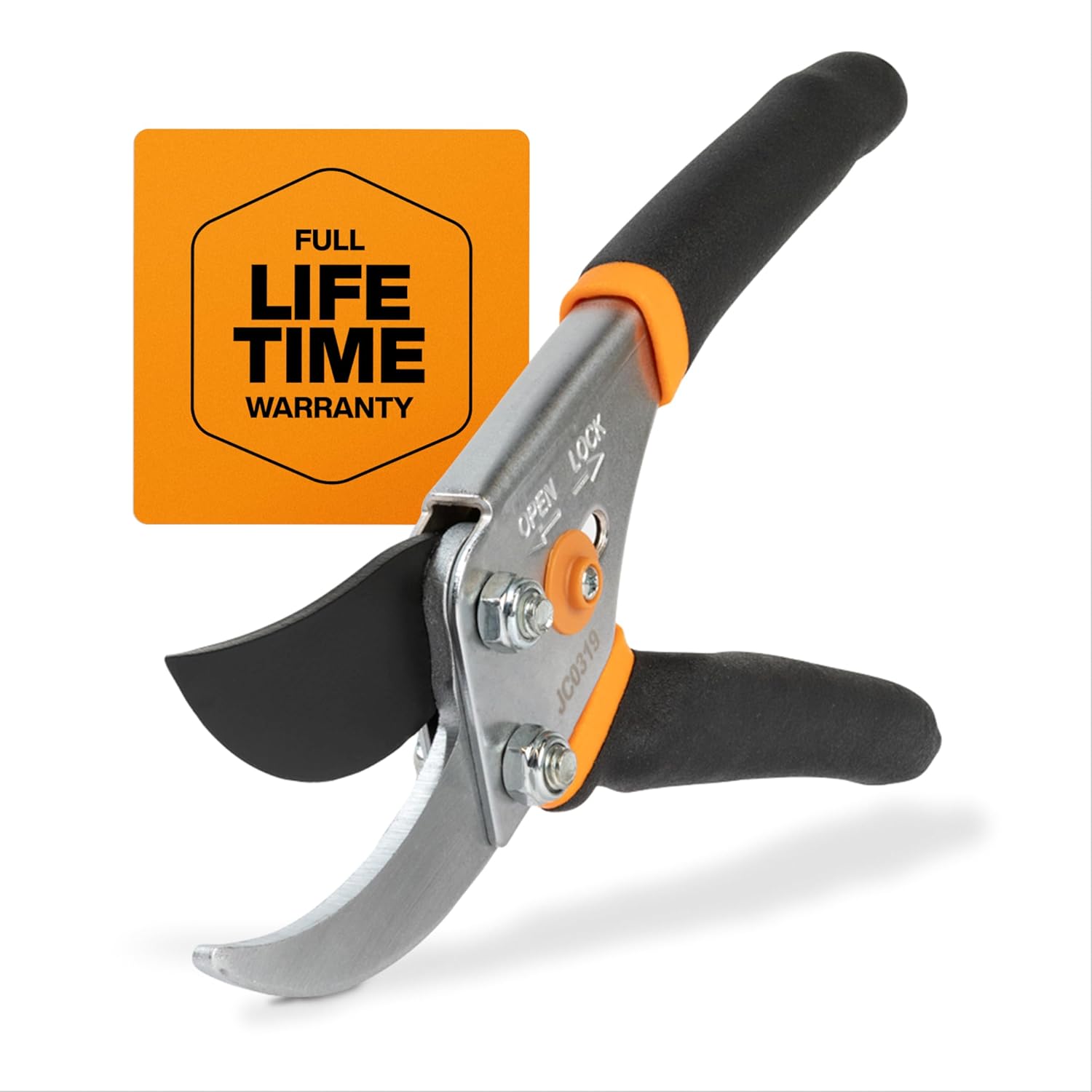
These Fiskars bypass pruning shears are a straightforward, reliable tool for everyday garden pruning. They use a bypass cutting action with precision-ground alloy steel blades and a low-friction coating so stems and green growth are sheared cleanly without crushing, which is helpful for flowers, shrubs, and small woody shoots up to about 5/8 inch. The pruners include a sap groove and nonstick finish to reduce sticking and rust, and an ergonomic non-slip handle that makes repeated trimming more comfortable. Because they are all-steel construction they feel solid and hold an edge through routine use, and the safety lock keeps the blades closed for storage. The main limitations are the modest cutting capacity, which is not suited for thick branches, and the simpler design lacks compound leverage for heavy cutting, so they work best for regular maintenance rather than heavy-duty pruning. For gardeners who want a durable, easy-to-maintain daily pruner, these are a dependable choice.
Best for: Home gardeners who want a dependable, low-maintenance pruner for routine trimming, deadheading, and shaping of flowers and small shrubs and who value proven, widely used tools.
Less Ideal for: People who need a pruner for larger woody branches or frequent heavy-duty cutting should choose a lopper or powered/pruning tool instead.
- Bypass blades and precision-ground steel deliver clean cuts on live stems
- Low-friction blade coating and sap groove reduce sticking and resist rust
- Ergonomic non-slip handle improves control and reduces hand fatigue
- All-steel construction offers durable, long-lasting performance
- Cut capacity limited to about 5/8 inch so not suitable for thicker branches
- No compound leverage mechanism, making heavy or woody cuts harder
Verdict: A tough, no-nonsense pruner that provides clean cuts and low-maintenance blades for everyday garden grooming.
VOTREK VT-C800 Bypass Pruning Shears (8.5")

| Blade Material | High Carbon Steel (SK5) |
|---|---|
| Blade Type | Bypass |
| Cutting width | 20 millimeters |
| Hand Orientation | Ambidextrous |
The VOTREK VT-C800 is a handheld bypass pruning shear designed for precise cuts on roses, bonsai, and small branches up to about 20 mm. It pairs a sharp SK5 high-carbon blade with a Teflon-style coating to resist sap buildup and reduce rust, so blades stay cleaner between uses. The sealed jam-proof spring and one-handed slide lock make operation safe and low maintenance, while the soft non-slip handle and compact leverage reduce hand and wrist fatigue for gardeners with weaker grip strength or arthritis. Typical uses are deadheading, shaping shrubs, light fruit tree pruning, and bonsai work where clean, crush-free cuts matter for plant health. The tool is lightweight and easy to carry for repeated outdoor sessions, though the 20 mm cutting capacity limits it to small to medium branches and it is not intended for heavy woody pruning. Buyers seeking the sharpest, lowest-maintenance hand pruner will appreciate the blade quality and anti-sap coating, but larger cutting tasks will require a larger lopper or saw.
Best for: Gardeners who prioritize reliable, low-maintenance tools and want a comfortable, easy-to-use pruner for precise work on roses, bonsai, and small fruit tree limbs.
Less Ideal for: People who need to cut thick woody branches or perform heavy pruning should choose loppers or a pruning saw instead.
- Sharp SK5 high-carbon blade provides clean, crush-free cuts for plant health
- Teflon-style non-stick coating reduces sap buildup and corrosion, lowering maintenance
- Sealed jam-proof spring and one-handed slide lock improve safety and reliability
- Ergonomic non-slip handle and compact leverage reduce hand and wrist fatigue
- Maximum cutting width about 20 mm limits use to small branches and stems
- Not suitable for heavy woody pruning or larger branches
Verdict: Choose the VT-C800 if you want a sharp, low-maintenance hand pruner that delivers precise, plant-friendly cuts for small branches and delicate work.
Choosing the Right Sharpest Garden Shears: Key Factors to Consider
Blade Steel and Heat Treatment
The metal alloy and heat treatment determine how well an edge will form and how long it will hold between sharpenings. Harder steels can take a finer, longer-lasting edge but may be more brittle if not properly tempered. For hand shears, a balance between hardness and toughness is ideal so the blade resists chipping while holding a keen cutting surface.
Think about the kinds of stems you prune most. Frequent cutting of fibrous or slightly woody growth benefits from steels that keep a bur-free cutting face. Also consider whether the finish or coating adds sacrificial corrosion protection without interfering with the edge.
Edge Geometry and Bevel
Edge shape affects how the blade slices plant tissue. A narrow primary bevel produces a razor-like edge that slices cleanly through green stems and flower stalks, while a more obtuse bevel can be tougher for woody material but resists rolling and damage. Some shears use a convex or micro-beveled edge that balances sharpness with durability.
Evaluate the bevel and how easy it will be to resharpen at home. Very acute edges will need more frequent attention to stay at peak sharpness. If you prefer low-maintenance gear, choose an edge profile designed to resist rolling while still delivering clean cuts.
Cutting Capacity and Blade Clearance
Cut capacity tells you the maximum stem or branch diameter the shears can handle cleanly. Even the sharpest edge will struggle if the blade geometry or pivot doesn't allow sufficient clearance or leverage. For routine garden pruning, look for shears that match the largest stems you regularly trim, whether that is herbaceous growth or light woody shoots.
Blade length and nose shape also affect access into tight flower clusters or dense shrub growth. Narrow tips give access to confined spots but may flex more under load. Consider how you use shears in beds, containers, or on small shrubs.
Handle Ergonomics and Leverage
A truly sharp blade still needs good handle design so you can apply cutting force without hand fatigue or slipping. Ergonomic handles, proper offset, and comfortable grips reduce pressure on knuckles and wrists during repetitive pruning. Leverage from handle length and the pivot design amplifies the sharp blade without requiring excessive grip strength.
If you have arthritis or prune for long sessions, prioritize handles shaped to spread pressure and materials that stay grippy when wet. Also consider the ease of adjusting the pivot and whether the design lets you close the blades securely for storage.
Corrosion Resistance and Finish
Outdoor tools face moisture, sap, and fertilizer residues that can accelerate corrosion and degrade a blade edge. Protective finishes, stainless alloys, or coating systems help preserve both the cutting surface and the metal beneath. Corrosion can roughen an edge and make sharpening more difficult, so resistance matters for long-term performance.
Think about your storage and cleaning habits. If shears are likely to sit outdoors or be used in salty coastal conditions, choose finishes and alloys that tolerate those environments and require less frequent refinishing.
Sharpening and Maintenance Needs
The sharpest shears still require periodic maintenance. How easy a blade is to sharpen at home influences long-term sharpness and usefulness. Consider whether the edge profile is straightforward to re-establish with a small file or whetstone, and whether the blade is user-serviceable for hinge servicing and cleaning.
Tools that come apart easily or have accessible pivots simplify deep cleaning and edge reconditioning. Also weigh the availability of replacement parts such as pivot bolts or springs if you want a tool that can be kept in service for years.
How Sharpness Affects Plant Health
A clean, razor-like cut seals faster and reduces the area exposed to pathogens. When a blade tears or smashes tissue, that damage increases the chance of disease and slows healing. For flowering perennials, vegetables, and young woody stems, pristine cuts can lead to healthier regrowth and neater pruning results.
Use sharp shears for selective deadheading and formative pruning to minimize stress. For larger structural cuts, pair sharp shears with appropriately sized tools so the cut is completed in a single clean action.
- Clean cuts reduce pathogen entry points
- Neater wounds promote faster callusing and regrowth
- Consistent sharpness helps maintain plant aesthetics
Maintaining a Razor Edge in the Garden
Rinse sap and debris off blades after use, then dry them to reduce corrosion. A little light oil applied to the pivot and blade surfaces prevents rust and keeps the action smooth. For daily use, a quick wipe with a sharpening stone or ceramic rod can restore a keen edge in minutes.
For deeper wear or nicks, remove the pivot and dress the bevel with a fine file or whetstone, then realign and test on green stems. Regular maintenance extends the life of both steel and handle components and ensures the shears keep cutting cleanly.
- Clean, dry, and oil after each session
- Use a rod for quick touch-ups
- Reprofile or file out nicks as needed
Matching Shear Style to Pruning Tasks
Different shear shapes suit different tasks. Short straight blades and narrow tips make precise cuts in flower beds and among dense foliage. Slightly curved blades can cradle stems for smoother slicing, while longer blades are useful for trimming larger shoots and for reaching into shrub interiors.
Think about the repetitive motions and the pruning angles you commonly use. Choose a style that reduces awkward wrist positions and gives you the reach and visibility needed for accurate cuts.
- Short, straight blades: fine detail work
- Curved blades: slicing action for stems
- Longer blades: bigger cuts and reach
Safety and Storage Best Practices
Keep blades locked or sheathed when not in use to protect the edge and prevent accidents. Store shears in a dry spot and away from tools that could chip or dull the blade. Check the pivot fastener periodically so the blades align properly and do not rub or chatter when cutting.
Wear protective gloves when sharpening and when cutting tougher material to avoid slips. Regular checks for loose fittings, cracked grips, or bent tips keep the tool safe and effective.
- Sheath blades or lock closed for storage
- Store dry and separate from other metal tools
- Inspect pivots and grips regularly
Edge Profiles and DIY Sharpening Techniques
Most gardeners will use a small sharpening stone, diamond rod, or ceramic hone to maintain edges. Work with the existing bevel angle, stroking evenly along the blade and maintaining consistent pressure. A leather strop can polish out burrs and raise a keen finish after sharpening.
If you are unfamiliar with sharpening, practice on an inexpensive tool first to learn angle control and pressure. When done correctly, a quick home sharpening session restores performance without complex tools.
- Match the file to the bevel angle
- Strop to remove burrs and polish
- Practice on a spare blade before tackling favorites
How We Chose the Best Sharpest Garden Shears
We focused on features that directly affect cutting performance and long-term edge retention. Evaluation criteria included blade metal and heat treatment, edge geometry and finish, and the ability to make clean cuts through living wood without crushing or tearing. We also considered cutting capacity and blade clearance to ensure a range of pruning tasks could be handled, from fine deadheading to light woody trimming. Ergonomics and handle design were weighed for repeated use, including grip comfort, leverage, and suitability for gardeners with less hand strength. Corrosion resistance and finish were assessed for reliability in humid and variable outdoor conditions. Ease of sharpening and routine maintenance were included so gardeners can keep a keen edge season after season. We excluded tools designed primarily for heavy lopping, hedge shearing, or mechanical power pruners, as those use different blade geometries and force profiles. The resulting shortlist favors hand shears whose construction and geometry support consistently sharp cutting and straightforward maintenance.
FAQ
How often should I sharpen garden shears to keep them razor-sharp?
It depends on use. For light deadheading and frequent touch-ups, a quick hone every 2 to 4 weeks during the growing season is common. For heavier or woody cutting, expect to do more substantial sharpening every few months.
Can I sharpen shears with household tools like a file or whetstone?
Yes. A small flat file, whetstone, or ceramic rod will work for most bevels. Keep a steady angle and make even passes. Finish with a strop or fine abrasive to remove burrs and restore a keen edge.
Will stainless blades stay sharp longer in wet or coastal gardens?
Stainless alloys resist corrosion better in wet conditions, which helps preserve the cutting surface. However, corrosion resistance is only one factor. Edge retention still depends on steel hardness and heat treatment, so maintenance remains important.
Are sharper shears always better than heavier, tougher blades?
Not always. Extremely acute edges cut cleanly but can be more delicate on very hard or gritty wood. Heavier blades with blunter bevels may be more durable for thicker or abrasive stems. Match sharpness to the typical material you prune.
How should I store shears between uses to protect the edge?
Wipe blades clean and dry, apply a light coat of oil, and lock or sheath the blades. Store in a dry place away from other metal tools to avoid nicks and corrosion.
Final Verdict
Prioritize blade metallurgy, edge geometry, and suitable cut capacity when choosing the sharpest garden shears. Ergonomics and corrosion resistance determine how comfortably and reliably you can use and maintain a keen blade over seasons. Tradeoffs are inevitable: a very acute edge delivers the cleanest cuts but needs more upkeep, while a tougher profile may be lower maintenance but less razor-like. Decide which pruning tasks you do most, then pick a shear style and finish that match those needs. With routine cleaning and simple sharpening, the right pair of shears will keep plants healthier and make pruning faster and more pleasant.
