

Note: This article contains affiliate links. If you click on these links and make a purchase, I may earn a small commission at no extra cost to you. This helps support my research and content. Read my full affiliate disclosure here.
When you need to lift plants without shredding roots or compacting the surrounding soil, the right garden shovel makes the job faster and gentler. A shovel designed for digging up plants combines a blade geometry that slices cleanly, a handle that reduces fatigue, and a shaft that transmits controlled force without crushing root balls. This guide concentrates on shovels suited specifically for extracting perennials, moving shrubs, and digging out established plants. Below are our top shortlisted garden shovels for digging up plants, selected for real garden performance. We outline the practical strengths gardeners should expect and the evaluation criteria used to compare them, so you can choose the tool that fits your transplanting and removal needs.
Top Picks at a Glance
| Best Overall The best all-around choice for most situations | WIKER Garden Spade Drain/Planting Shovel with Fiberglass Handle |  |
| Best Quality Built to a higher standard if you want something more solid | ZIKUPOL Root Shovel with Serrated Carbon Steel Blade, 46-inch Fiberglass Handle |  |
| Best Value The sweet spot between price and what you get | GARDEN WEASEL Oversized Potting Scoop |  |
| Best Budget The cheapest option that still gets the job done reliably | MECHEER Garden Hand Trowel with Ergonomic TPR Handle |  |
| Highest Rated A top-rated pick with lots of positive feedback | HARFINGTON Stainless Steel Garden Hand Shovel Trowel |  |
| Most Popular A crowd favorite that many people choose with confidence | Root Slayer Garden Shovel with Serrated V-Tip |  |
WIKER Garden Spade Drain/Planting Shovel with Fiberglass Handle

| Blade Material | Metal |
|---|---|
| Handle Material | Fiberglass |
| Grip Type | Ergonomic |
| Blade Type | Narrow drain/planting blade |
The WIKER garden spade is a narrow drain and planting shovel built for precise digging, transplanting, and light trenching. Its hardened manganese steel blade is slender and sharp, which helps cut through turf and loosen soil to remove plants with intact root balls or to create narrow trenches for irrigation. The fiberglass D-handle provides good leverage and resists weathering compared with wooden handles, while the ergonomic grip reduces hand fatigue during longer sessions. In practice this spade excels at raised bed prep, moving out perennials, and digging neat holes for small trees and shrubs where a wide shovel would disturb too much soil. It is not a substitute for heavy post-hole work or large-scale digging in extremely rocky ground, where a heavier head or specialized tool would be better. The build emphasizes durability and precision over broad scooping capacity, so expect efficient, controlled work for planting and drainage tasks rather than fast bulk earthmoving.
Best for: Home gardeners who need a precise, durable shovel for transplanting, raised beds, and narrow trenching and who prioritize controlled digging and longevity over bulk earthmoving speed.
Less Ideal for: Landscapers or homeowners who regularly move large volumes of soil or dig deep post-holes should choose a heavier, wider digging tool instead.
- Narrow hardened steel blade for precise holes and clean rootball removal
- Fiberglass D-handle resists weathering and provides strong leverage
- Ergonomic grip reduces hand fatigue during extended use
- Three-layer anti-corrosion coating improves blade longevity
- Slender blade limits soil scooping speed compared with full-size shovels
- Not ideal for heavy post-hole digging or very rocky excavation
Verdict: Choose this spade if you want a weatherproof, narrow digging tool that makes transplanting and neat trenching faster and less damaging to roots.
ZIKUPOL Root Shovel with Serrated Carbon Steel Blade, 46-inch Fiberglass Handle

| Blade Material | Carbon Steel |
|---|---|
| Handle Material | Fiberglass |
| Blade Length | 12 inches |
| Grip Type | Ergonomic |
This ZIKUPOL root shovel is built for demanding digging tasks where cutting roots and penetrating hard soil matter. The 12-inch AISI 1053 carbon steel blade has a V-shaped serrated edge that helps slice through small roots and pry out stubborn stumps while the powder-coated finish resists rust. A 46-inch fiberglass handle keeps the tool strong but lighter than steel shafts, and the PP+TPR ergonomic grip with a widened anti-slip footrest makes repeated stomping more comfortable. Typical uses include removing roots, planting trees and shrubs, transplanting perennials, trenching, and general hardground digging. Practical benefits are its cutting edge for root work, corrosion resistance for wet conditions, and the longer handle for extra leverage. Important limitations are the single-piece focus on root cutting rather than fine edging or narrow urban beds, and the 4-pound weight that may feel tiring during long sessions for some users.
Best for: Buyers who prioritize power and durability for heavy planting and root removal tasks and who want a shovel that makes cutting roots and trenching easier without frequent tool failure.
Less Ideal for: Gardeners who mainly work in small containers, delicate flower beds, or need a very lightweight tool for long-duration hand work should consider narrower or lighter alternatives.
- Serrated V-shaped carbon steel blade designed to cut small roots and remove stumps effectively
- Powder-coated blade finish improves rust and corrosion resistance for outdoor use
- 46-inch fiberglass handle provides good leverage while reducing shaft flex and weight compared with steel
- Ergonomic PP+TPR grip and widened anti-slip footrest increase comfort and force application during stomping
- At about 4 pounds it is heavier than lightweight trowels and may fatigue users during extended use
- Blade width and shape are not ideal for precision work in tight or ornamental beds
Verdict: Choose this shovel if you need a robust, serrated blade and long handle that reliably cut roots and tackle tough digging jobs.
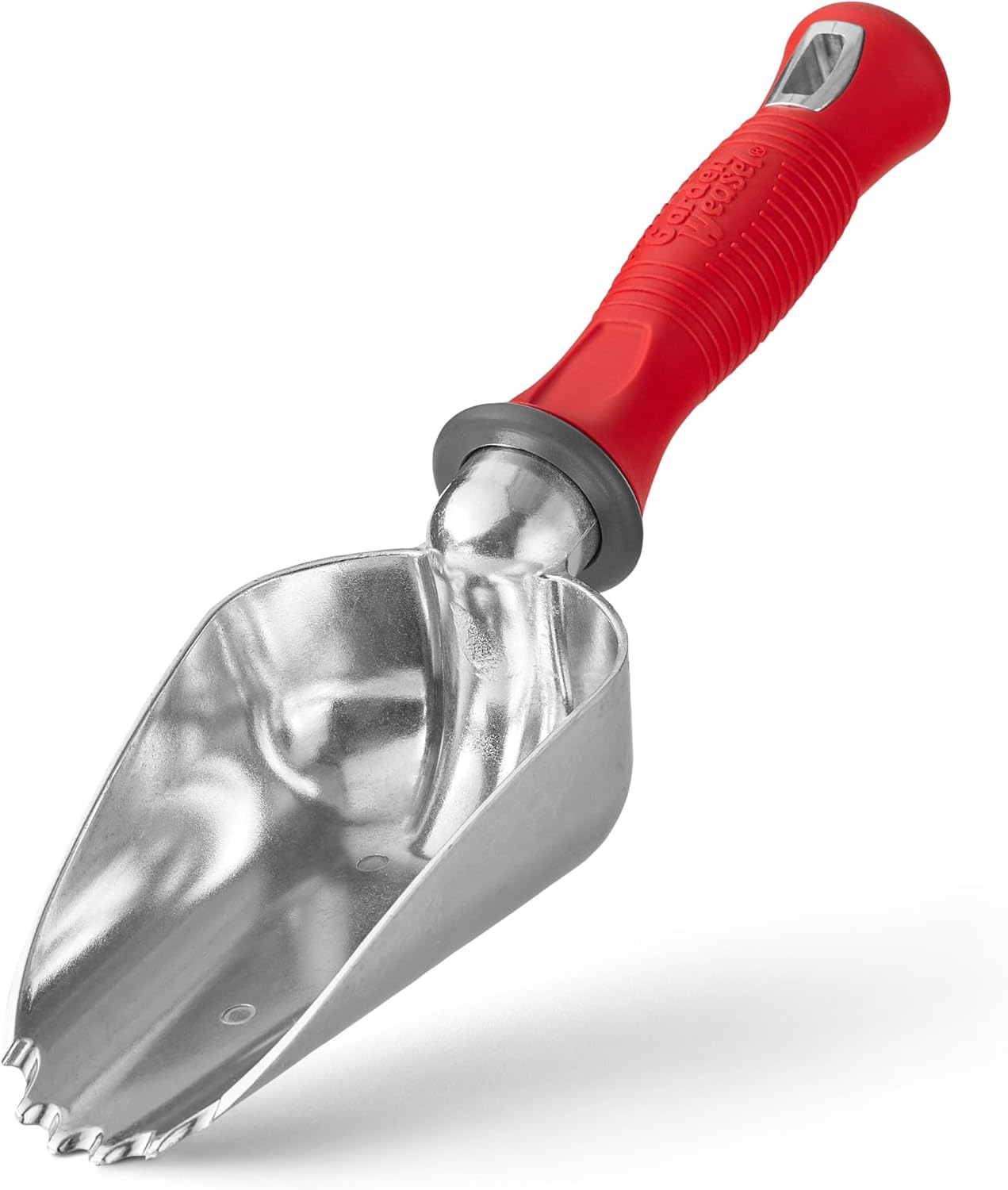
GARDEN WEASEL Oversized Potting Scoop
| Material Type | Aluminum |
|---|---|
| Blade Material | AluminIron |
| Handle Material | Thermoplastic Rubber (TPR) |
| Grip Type | Textured |
The Garden Weasel oversized potting scoop is a one-piece hand tool designed to dig, cut and scoop soil, compost, and fertilizer with minimal spillage. Its deep, 1.25-inch scoop and tall sides let you transfer loose material from bags or containers directly into pots and planting holes, while the serrated tip breaks up clumps and slices through small roots so you do not need a separate knife. Construction uses a proprietary Aluminiron alloy for a lightweight yet rust-resistant blade and a full-length tang for strength, and the 6-inch textured non-slip rubberized grip reduces hand fatigue during repetitive tasks. The tool hangs easily when not in use and rinses clean after a day in the garden. It is not intended for prying large rocks or heavy-duty digging in compacted clay where a full-size spade would be better, and very large roots will blunt the serration over time, so occasional sharpening or replacement may be needed for intensive root cutting.
Best for: Buyers who want a single, durable hand tool that speeds routine potting, planting, and bag-to-bed transfers while minimizing mess and wrist strain.
Less Ideal for: Gardeners who need a heavy digging tool for rocky or compacted soils or who frequently tackle large roots should choose a full-size spade or root saw instead.
- Deep scoop with tall sides reduces spillage when transferring soil and amendments
- Serrated tip cuts roots and breaks up clumps so you can use one tool for multiple tasks
- One-piece Aluminiron construction offers lightweight strength and corrosion resistance
- Ergonomic textured TPR grip reduces hand fatigue during extended use
- Built-in eyelet for hanging makes storage simple
- Not suitable for heavy prying or breaking up very compacted ground
- Serration can dull if used persistently on large roots
Verdict: If you want a durable, multiuse hand scoop that reduces spillage and replaces several small tools during potting and planting, this is a top practical choice.
MECHEER Garden Hand Trowel with Ergonomic TPR Handle

| Blade Material | Aluminum Alloy |
|---|---|
| Handle Material | Thermoplastic Rubber (TPR) |
| Grip Type | Ergonomic |
| Blade Length | 6.5 inches |
This MECHEER hand trowel is a straightforward, no-frills garden shovel built around a thickened aluminum-alloy blade and a soft TPR rubber ergonomic handle. In use it performs typical trowel jobs well: the 6.5-inch blade cuts into soil and turf, digs planting holes, loosens soil, and helps with transplanting and weeding. The aluminum alloy construction keeps the tool light while the 0.08-inch blade thickness and polished surface resist bending and reduce rusting, so it holds up to frequent backyard use. The molded non-slip handle and hanging hole make it easy to grip, store, and carry on a tool belt or in a garden bag. Limitations are its small, single-piece design compared with heavier steel trowels for prying very compacted ground and the lack of additional features such as measurement markings or a full tang for extreme leverage. For everyday flowerbed and container gardening tasks this trowel is practical and low-cost, though those who need aggressive leverage or professional-grade pry power should look at heavier digging tools.
Best for: Gardeners looking for an affordable, reliable hand trowel for routine backyard, container, and flowerbed work who prioritize comfort and rust resistance over heavy-duty leverage.
Less Ideal for: Landscapers or gardeners who regularly work in rocky, compacted ground or need a heavy-duty pry tool should choose a heavier steel shovel or a long-handled digging tool instead.
- Aluminum-alloy blade provides rust resistance and is lightweight for easy handling
- Ergonomic TPR rubber handle offers a comfortable, non-slip grip
- Blade thickness and polished finish increase durability and reduce corrosion
- Compact size and hanging hole make it easy to store in a garden bag or on a hook
- Not as strong as heavier steel trowels for prying into very compacted or rocky soil
- Single small trowel design lacks extra features like measurement markings
Verdict: A budget-friendly, rust-resistant hand trowel that comfortably handles everyday digging, transplanting, and weeding tasks.
HARFINGTON Stainless Steel Garden Hand Shovel Trowel

| Material | Stainless steel |
|---|---|
| Blade feature | Depth markings |
| Blade tip | V-shaped |
This HARFINGTON hand shovel is a straightforward, reliability-focused trowel for everyday planting and transplanting tasks. The stainless steel blade is described as rustproof and corrosion-resistant, so it should hold its shape and resist bending during routine digging of garden beds and pots. A sharp V-shaped tip and depth markings make it easy to cut into soil and plant to consistent depths, which is helpful when moving seedlings or bulbs. The handle is ergonomically shaped and coated in plastic to improve grip and comfort during extended use. Because it is compact, the trowel excels in tight spaces, containers, and working close to established plants. It is not a substitute for larger shovels when moving heavy loads or breaking very compacted ground, and the plastic-coated grip will wear faster than full-tang wooden or rubberized handles under heavy professional use. Regular cleaning and dry storage are recommended to maintain the finish and longevity.
Best for: Gardeners who prioritize a dependable, easy-to-use hand tool for regular planting, transplanting, and container work and who want predictable performance in everyday garden tasks.
Less Ideal for: Landscapers or gardeners who need a heavy-duty digging tool for large-scale soil moving or frequent work in highly compacted ground should look for a larger shovel or mattock.
- Stainless steel blade marketed as rustproof and corrosion-resistant for lasting shape
- Depth markings on the blade for consistent planting and transplanting
- Sharp V-shaped tip cuts into soil easily for digging and removing roots
- Ergonomic handle with plastic coating improves grip and comfort for extended use
- Compact size limits leverage for heavy-duty digging or breaking very compacted soil
- Plastic-coated handle may wear faster than heavier-duty handle materials over time
Verdict: Buy this trowel if you want a reliable, rust-resistant hand shovel with depth markings that makes planting and transplanting precise and comfortable.
Root Slayer Garden Shovel with Serrated V-Tip

| Blade Material | Carbon Steel |
|---|---|
| Handle Material | Carbon Steel |
| Blade Length | 13 inches |
| Grip Type | Ergonomic |
The Root Slayer is a purpose-built digging shovel that combines a sharpened inverted-V tip, sawtooth edges, and a sturdy carbon steel blade so you can cut through roots and packed soil without switching tools. In use it functions as a spade, root saw, and hatchet for tasks like digging planting holes, removing stubborn grasses, and trenching in clay or compacted ground. The resin-encased steel shaft and ergonomic O-handle give good leverage and a comfortable grip during repeated digs, while the powder-coated carbon steel resists rust and holds up to heavy garden work. Because the blade focuses force on a narrow point it penetrates hard-packed areas more easily than a flat shovel, and the serrated sides let you slice roots instead of yanking them. Expect a robust, long-lasting tool suited to regular backyard landscaping, but be mindful it is built for cutting and digging rather than prying or levering large stones, and the heavier construction adds noticeable weight compared with lightweight trowels or fiberglass-handled alternatives.
Best for: Gardeners who need a single robust tool for digging in compacted soil and cutting roots while valuing proven design and positive user feedback.
Less Ideal for: If you mainly need a lightweight transplanting trowel, long-handled pry tool, or a shovel for moving large volumes of loose material, this specialized root-cutting shovel is not the best match.
- V-shaped sharpened tip concentrates force to penetrate compacted soil and break through roots
- Serrated blade edges allow cutting through roots without switching tools
- Powder-coated carbon steel blade offers durability and rust resistance for repeated outdoor use
- Ergonomic O-handle and resin-encased steel shaft provide good leverage and a comfortable grip
- Heavier construction makes it less convenient for prolonged overhead or fine-detail tasks
- Not designed for heavy prying or levering large rocks
Verdict: Buy this if you want a durable, root-cutting shovel that makes digging holes in compacted soil and slicing roots significantly easier than a standard spade.
Choosing the Right Garden Shovel for Digging Up Plants: Key Factors to Consider
Blade Shape and Profile
The blade geometry determines how easily the shovel slices into soil and severs roots. A narrower, pointed blade penetrates compacted ground, while a slightly rounded or spade-shaped blade can cradle root balls for safer lifting. For digging up plants you want a balance: enough point to drive between roots but enough width to support the root mass during extraction.
Blade profile also affects how the soil releases from the tool. A concave face can hold a root ball as you lift, which is helpful for transplanting, whereas a flat face is faster to scrape and break sod when removing plants. Consider the typical soil in your garden and the root systems you most often handle when choosing blade shape.
Edge Strength and Maintenance
A well-hardened edge will keep a sharp cutting surface through seasons of digging and avoid frequent regrinding. Strong edges slice roots cleanly rather than tearing them, which reduces transplant shock and makes removal neater. For heavier root systems you may prefer a thicker, heat-treated edge that resists chipping.
Regular maintenance preserves edge performance. Wiping soil from the blade after use, a quick touch-up with a file when the edge dulls, and storing the shovel dry will extend its life. If you often dig in rocky ground, expect to resharpen more regularly or choose a blade material built to withstand abrasion.
Handle Length and Grip
Handle length controls leverage and posture while digging and lifting. A longer handle gives more leverage for prying out root balls and reduces the need to bend, but overly long shafts can be awkward in tight beds. Shorter handles increase control for delicate work in containers or crowded plantings.
Grip shape and material matter for comfort and control. A D-handle offers two-handed control for heavy lifts, while a straight shaft with an ergonomic grip gives flexibility for angled digging. Look for non-slip surfaces that still allow glove use and for handle designs that reduce hotspots on palms during repeated use.
Shaft Strength and Flex
A shovel used to extract plants must resist bending when leveraged against stubborn roots or compact soil. Stiff shafts transmit force efficiently and feel solid under load; some controlled flex can reduce sudden jarring when hitting a hidden rock. Material choice-steel, fiberglass, or reinforced wood-affects both strength and shock absorption.
Consider the tradeoff: heavier steel shafts often last longer under heavy use, while fiberglass and quality hardwood absorb vibration better and weigh less. For gardeners who frequently pry large root balls, prioritize a shaft with known tensile strength and reliable connections to the blade.
Corrosion Resistance and Finish
Garden shovels are exposed to moisture, acidic soils, and fertilizer salts, all of which accelerate rust. A protective finish such as powder coating, galvanizing, or stainless materials helps the tool last longer and reduces the need for aggressive maintenance. Rusty blades can seize soil and degrade cutting performance.
A corrosion-resistant finish also keeps the shovel easier to clean; soil slides off painted or plated surfaces more readily than raw steel. For gardeners who store tools outdoors or work in wet climates, prioritize finishes and materials rated for frequent exposure to moisture.
Weight and Balance
Weight affects how long you can use the shovel comfortably and how easily you can control the blade while lifting root balls. Heavier shovels often cut better and withstand hard use, but they increase fatigue during repetitive transplanting. Balance between blade and handle helps the tool feel predictable and reduces wrist strain when placing or removing plants.
Think about the typical job length and the size of plants you move. For occasional light transplanting a lighter, well-balanced shovel might be ideal. For regular heavy digging and root removal, accept a bit more weight for durability and cutting power.
Preparing the Planting Area Before Digging
Loosening the surrounding soil a day or two before you dig can make extraction much easier. Water the area lightly to soften the soil for clay or compacted beds, but avoid soaking immediately before digging because muddy soil clings and smears.
Mark the root zone for larger shrubs by probing gently with a thin tool to understand how far roots extend. That helps you plan your shovel entry angle and reduces accidental root shearing.
- Water deeply 24 to 48 hours before planned digging in dry soils to reduce compaction.
- Use a thin spade or border fork to trace the root crown before inserting the larger shovel.
- Work from the outside toward the root ball to maintain root structure as much as possible.
Techniques for Lifting Plants With Minimal Root Damage
Start by slicing a perimeter around the plant rather than plunging the shovel under the crown. This severs peripheral roots cleanly and reduces tearing. Angle the blade slightly inward and use rocking or levering motions rather than brute force.
When the plant is partially freed, cradle the root ball by sliding the blade underneath and lift with both hands, keeping the root mass intact. For larger specimens, work with a helper or use a garden fork to support the opposite side as you lift.
- Slice roots with the sharpened edge rather than jerking to avoid pulling fragile feeder roots.
- Keep the root ball moist during the process if you plan to transplant immediately.
- Prune any excessively long roots cleanly rather than ripping them during extraction.
Maintaining Your Shovel for Long-Term Performance
After each use remove clinging soil and rinse the blade if needed. Dry the tool thoroughly before storing to prevent rust. A light coat of oil on the blade and metal fastenings helps keep moisture at bay during storage.
Inspect the handle and shaft junction for loosening or cracks. Tighten hardware as necessary and sand and treat wooden handles to prevent splintering and water damage. Regular touch-up of the edge with a file keeps cutting performance consistent and reduces the effort needed for each dig.
- Wipe blades and metal parts clean, then apply a thin oil film for storage.
- Replace or repair damaged grips to maintain safe control.
- Sharpen the edge lightly after heavy use to restore clean root-cutting ability.
Matching Shovels to Plant Types and Soil Conditions
Shallow-rooted perennials and small container plants respond well to narrower, pointed blades that allow precise digging. For woody shrubs or plants with dense root balls choose wider blades or a fork-assisted approach to preserve the root mass.
Soil texture changes the ideal tool. Sandy soils require less edge aggressiveness and lighter tools, while clay and compacted turf benefit from stronger edges and more leverage. Adjust technique as well as tool choice to suit the conditions.
- Narrow blade for small root systems and tight spaces.
- Wider, sturdier blade for large root balls and heavy soil.
- Consider combining a spade and hand fork for delicate rootwork in mixed beds.
Safety Tips When Digging Up Established Plants
Wear sturdy gloves and closed-toe shoes to protect from slips, stones, and sharp roots. Keep a clear work area so you can pivot the shovel without tripping over hoses or pots.
Be mindful of underground utilities and irrigation lines. If you encounter resistance that feels like a cable or pipe, stop digging and investigate before applying more force.
- Use proper lifting posture: bend at the knees and use leg muscles rather than your lower back for lifting root balls.
- Keep hands away from the cutting edge when removing soil from the blade.
- Check for buried irrigation lines or hard landscaping before deeper digs.
How We Chose the Best Garden Shovel for Digging Up Plants
We focused on tools that perform well when removing plants from garden beds, containers, and turf. Selection prioritized blade geometry that slices roots cleanly and penetrates compact or loamy soils, handle ergonomics to reduce wrist and back strain during lifting, and shaft strength and flex to resist bending when levering out root balls. We also considered blade material and edge holding for long-term durability, corrosion resistance for wet soil use, and ease of maintenance so the shovel stays serviceable season after season. Performance filters excluded multiuse digging tools that lack a distinct plant-rescue geometry and very lightweight decorative trowels that cannot handle larger root systems. Products that required unusual maintenance or specialized replacement parts were also filtered out. The final picks balance practical digging-up capability, long-term durability, and gardener comfort across a range of soil types and plant sizes.
FAQ
What blade shape is best for lifting a whole root ball?
A slightly wider, rounded spade blade that can support the root ball while sliding underneath is usually best. It helps keep the soil intact during lifting, reducing transplant shock.
How sharp should a shovel be for digging up plants?
The edge should be sharp enough to slice roots cleanly but not razor thin. A maintained, moderately sharp edge reduces tearing and makes cutting through fibrous roots easier without frequent regrinding.
Is a long handle always better for digging plants?
Long handles give more leverage for prying larger root balls but can be cumbersome in tight beds. Choose handle length based on the space you work in and the size of plants you move.
Can I use a garden fork instead of a shovel to remove plants?
A garden fork is useful for loosening soil and teasing roots free, especially in compacted ground. However, forks do not cradle root balls as well as shovels, so they are best used in combination with a shovel for lifting.
How do I prevent a shovel from rusting after winter use?
Clean off soil, dry the blade thoroughly, and apply a thin coat of oil before storage. Store tools indoors or under cover and treat wooden handles with a preservative to prevent moisture damage.
Final Verdict
For digging up plants prioritize a shovel that balances a root-cutting edge with a blade profile that can support root balls during lifting. Consider handle length and ergonomics to reduce strain, and choose shaft materials that match the leverage you need for larger root systems. Tradeoffs are inevitable: lighter tools ease fatigue but may wear faster in heavy soils, while heavier, stiffer shovels last longer but cost more effort per lift. Focus on the blade shape, edge durability, and handle comfort most relevant to the plants and soils you work with to pick a reliable tool for transplanting and removal.
