

Note: This article contains affiliate links. If you click on these links and make a purchase, I may earn a small commission at no extra cost to you. This helps support my research and content. Read my full affiliate disclosure here.
Picking the right garden shovel for planting changes how quickly and comfortably you can plant bulbs, shrubs, and bareroot stock. The right blade shape, steel thickness, and handle length affect hole shape, depth control, and how much effort you expend when digging in compacted or rocky soil. This guide shortlists six strong options chosen for common planting tasks in beds, borders, and small trees. We evaluate each pick on digging effectiveness, durability, and user comfort so you can match a shovel to the soils and planting jobs you do most often. Read on to understand the traits that matter for planting shovels and how those traits translate into faster, less tiring planting sessions.
Top Picks at a Glance
| Best Overall The best all-around choice for most situations | Edward Tools Bend‑Proof Garden Trowel |  |
| Best Quality Built to a higher standard if you want something more solid | Root Slayer Garden Shovel with Serrated V-Tip |  |
| Best Value The sweet spot between price and what you get | GARDEN WEASEL Oversized Potting Scoop |  |
| Best Budget The cheapest option that still gets the job done reliably | Fiskars FiberComp Soil Scoop (hand shovel) |  |
| Highest Rated A top-rated pick with lots of positive feedback | Kemaier Heavy-Duty Garden Trowel |  |
| Most Popular A crowd favorite that many people choose with confidence | Fiskars Ergo Garden Trowel (Cast-Aluminum Head, Ergonomic Grip) |  |
Edward Tools Bend‑Proof Garden Trowel

| Material Type | Rubber, Stainless Steel |
|---|---|
| Blade Material | Stainless Steel |
| Handle Material | Stainless Steel |
| Grip Type | Contoured, Ergonomic |
| Number of Items | 1 |
The Edward Tools Bend‑Proof Garden Trowel is built for demanding garden work where a regular hand trowel struggles. Its one‑piece stainless steel construction and oversized blade let you dig through rocky or heavy clay soils without the shaft flexing, so each stroke moves more soil and takes fewer passes. The contoured rubber grip with a palm rest reduces hand fatigue during extended use and helps keep control when prying roots or breaking compacted ground. Practical benefits include faster hole digging for planting and more effective soil removal when transplanting or edging. The main limitation is that its heavier, sturdier build makes it less nimble for delicate tasks like working in tight pots or fine root work where a smaller, lighter trowel is preferable. This trowel is best when you need durability and power rather than ultra‑lightweight finesse.
Best for: Gardeners who prioritize performance and durability for tough soil conditions and want a tool that speeds up planting, transplanting, and heavy digging.
Less Ideal for: People who mostly work in small containers, delicate seedlings, or need an ultra‑lightweight trowel for extended mobility should consider a smaller, lighter model.
- One‑piece stainless steel construction resists bending in rocky or compacted soils
- Oversized trowel head moves more soil per scoop for quicker digging
- Contoured ergonomic rubber grip with palm rest reduces hand fatigue
- Stainless steel blade and handle offer corrosion resistance and durability
- Heavier, less maneuverable for fine work in small pots or tight spaces
- Not ideal if you prefer a very lightweight trowel for extended carrying
Verdict: Buy this trowel if you need a rugged, bend‑proof tool that powers through rocky or compacted soils for faster, tougher digging.
Root Slayer Garden Shovel with Serrated V-Tip

| Blade Material | Carbon Steel |
|---|---|
| Handle Material | Carbon Steel |
| Blade Length | 13 inches |
| Grip Type | Ergonomic |
The Root Slayer is a purpose-built digging shovel that combines a sharpened inverted-V tip, sawtooth edges, and a sturdy carbon steel blade so you can cut through roots and packed soil without switching tools. In use it functions as a spade, root saw, and hatchet for tasks like digging planting holes, removing stubborn grasses, and trenching in clay or compacted ground. The resin-encased steel shaft and ergonomic O-handle give good leverage and a comfortable grip during repeated digs, while the powder-coated carbon steel resists rust and holds up to heavy garden work. Because the blade focuses force on a narrow point it penetrates hard-packed areas more easily than a flat shovel, and the serrated sides let you slice roots instead of yanking them. Expect a robust, long-lasting tool suited to regular backyard landscaping, but be mindful it is built for cutting and digging rather than prying or levering large stones, and the heavier construction adds noticeable weight compared with lightweight trowels or fiberglass-handled alternatives.
Best for: Gardeners who need a single robust tool for digging in compacted soil and cutting roots while valuing proven design and positive user feedback.
Less Ideal for: If you mainly need a lightweight transplanting trowel, long-handled pry tool, or a shovel for moving large volumes of loose material, this specialized root-cutting shovel is not the best match.
- V-shaped sharpened tip concentrates force to penetrate compacted soil and break through roots
- Serrated blade edges allow cutting through roots without switching tools
- Powder-coated carbon steel blade offers durability and rust resistance for repeated outdoor use
- Ergonomic O-handle and resin-encased steel shaft provide good leverage and a comfortable grip
- Heavier construction makes it less convenient for prolonged overhead or fine-detail tasks
- Not designed for heavy prying or levering large rocks
Verdict: Buy this if you want a durable, root-cutting shovel that makes digging holes in compacted soil and slicing roots significantly easier than a standard spade.
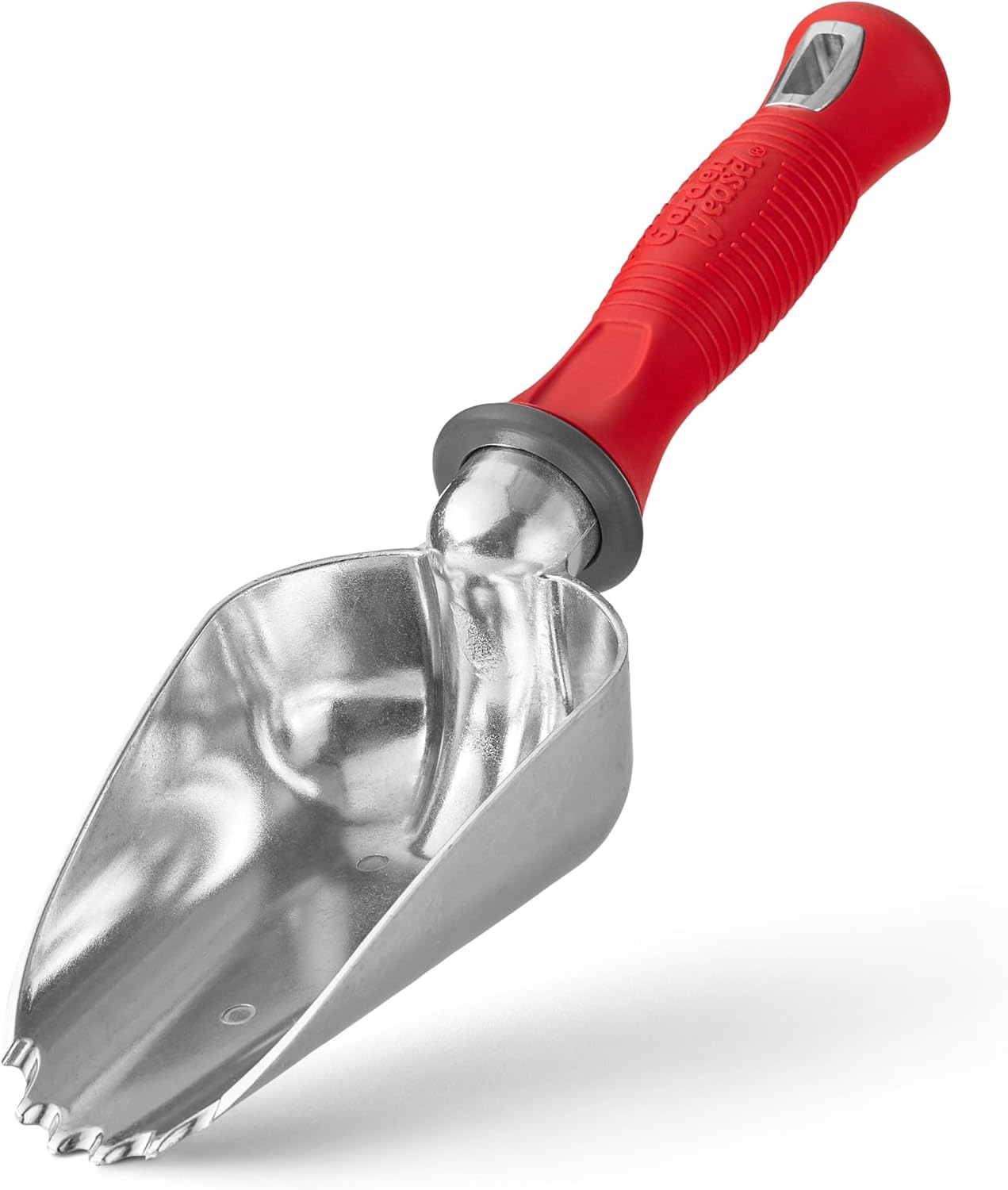
GARDEN WEASEL Oversized Potting Scoop
| Material Type | Aluminum |
|---|---|
| Blade Material | AluminIron |
| Handle Material | Thermoplastic Rubber (TPR) |
| Grip Type | Textured |
The Garden Weasel oversized potting scoop is a one-piece hand tool designed to dig, cut and scoop soil, compost, and fertilizer with minimal spillage. Its deep, 1.25-inch scoop and tall sides let you transfer loose material from bags or containers directly into pots and planting holes, while the serrated tip breaks up clumps and slices through small roots so you do not need a separate knife. Construction uses a proprietary Aluminiron alloy for a lightweight yet rust-resistant blade and a full-length tang for strength, and the 6-inch textured non-slip rubberized grip reduces hand fatigue during repetitive tasks. The tool hangs easily when not in use and rinses clean after a day in the garden. It is not intended for prying large rocks or heavy-duty digging in compacted clay where a full-size spade would be better, and very large roots will blunt the serration over time, so occasional sharpening or replacement may be needed for intensive root cutting.
Best for: Buyers who want a single, durable hand tool that speeds routine potting, planting, and bag-to-bed transfers while minimizing mess and wrist strain.
Less Ideal for: Gardeners who need a heavy digging tool for rocky or compacted soils or who frequently tackle large roots should choose a full-size spade or root saw instead.
- Deep scoop with tall sides reduces spillage when transferring soil and amendments
- Serrated tip cuts roots and breaks up clumps so you can use one tool for multiple tasks
- One-piece Aluminiron construction offers lightweight strength and corrosion resistance
- Ergonomic textured TPR grip reduces hand fatigue during extended use
- Built-in eyelet for hanging makes storage simple
- Not suitable for heavy prying or breaking up very compacted ground
- Serration can dull if used persistently on large roots
Verdict: If you want a durable, multiuse hand scoop that reduces spillage and replaces several small tools during potting and planting, this is a top practical choice.
Fiskars FiberComp Soil Scoop (hand shovel)

| Material Type | Alloy Steel |
|---|---|
| Blade Material | Fiberglass/Nylon Composite |
| Grip Type | Ergonomic |
| Item Type Name | FiberComp Soil Scoop |
| Manufacturer Warranty Description | Lifetime |
The Fiskars FiberComp Soil Scoop is a compact hand shovel built for moving soil, mulch, or potting mix quickly thanks to its oversized scoop and ergonomic grip. Its one-piece Nyglass (fiberglass/nylon) composite construction keeps the tool light for extended use while resisting rust and bending that can affect metal scoops. Typical uses include filling pots, scooping mulch into planting beds, transplanting small plants, and loading birdseed or compost. The generous scoop volume reduces trips back to a wheelbarrow and the hang hole makes storage simple. Because the handle and blade are molded as a single piece, you do not need to worry about a loose ferrule or handle separation during routine digging. The main limitations are that it is a hand tool intended for small to medium tasks rather than heavy digging in compacted soil or roots, and the composite blade is not sharpened for cutting through dense sod. For gardeners who value a lightweight, rustproof scoop for routine mulching and potting work, this is a practical, low-maintenance choice backed by a long-standing brand.
Best for: Gardeners who want a lightweight, low-maintenance hand tool for scooping mulch, potting mix, and soil during planting and routine bed work, and who prioritize ease of use and durability over heavy-duty digging power.
Less Ideal for: People who need a tool for breaking hardpan, cutting roots, or large-scale trenching should choose a full-size spade or digging fork instead.
- Oversized scoop displaces more soil or mulch per pass to speed common tasks
- One-piece fiberglass/nylon composite construction is lightweight and resists rust and bending
- Ergonomic grip improves comfort during repeated scooping
- Hang hole for convenient storage
- Backed by a lifetime warranty from the manufacturer
- Not intended for heavy-duty digging in compacted or rocky ground
- Blade is not sharpened for cutting roots or sod
Verdict: If you want a lightweight, rustproof scoop that moves mulch and potting mix quickly with minimal effort, this Fiskars FiberComp Soil Scoop is an easy practical pick.
Kemaier Heavy-Duty Garden Trowel

| Material Type | Stainless Steel |
|---|---|
| Handle Material | Metal |
| Blade Material | Stainless Steel |
| Grip Type | Ergonomic |
The Kemaier Heavy-Duty Garden Trowel is a robust hand shovel intended for serious planting and repeated backyard use. Its full-tang stainless steel construction and reinforced hand-welded joint make it resistant to bending when working in compacted soil or clay, while the razor-sharp blade and dual-sided serrated edge let you cut roots and saw through stubborn weeds without switching tools. The ergonomic, heat-dipped rubber grip keeps the tool secure and reduces wrist strain during extended planting sessions. In practice this trowel serves both as a precise dibber for transplanting and as a mini shovel for breaking up tougher patches of ground, so it is useful whether you are planting perennials or creating new beds. The main limitations are that the all-metal handle can feel cold or heavy to some users and the tool is single-purpose compared with larger shovels for heavy earthmoving. For gardeners who prioritize a durable, do-everything hand trowel for planting, this model offers longevity and cutting performance you can rely on.
Best for: Gardeners who need a reliable, long-lasting hand tool for frequent planting and working in compacted or root-filled soil and who prefer investing in durability over lightweight novelty. Ideal for hobbyists and small-scale professionals who value a single trowel that can both dig and cut.
Less Ideal for: Users who need a lightweight tool for casual, infrequent use or those who do most heavy digging with large shovels rather than hand tools should consider other options.
- Heavy-duty stainless steel blade resists rust and bending for long-term use
- Dual-sided serrated edge plus sharp blade for cutting roots and sawing through tough material
- Full-tang, hand-welded construction for strong blade-to-handle connection
- Ergonomic, non-slip heat-dipped grip reduces wrist strain during extended use
- All-metal handle can feel heavier and colder than wood or composite options
Verdict: Buy this trowel if you want a dependable, heavy-duty hand tool that digs and cuts through roots without bending.
Fiskars Ergo Garden Trowel (Cast-Aluminum Head, Ergonomic Grip)

| Material Type | Aluminum |
|---|---|
| Grip Type | Ergonomic |
| Included Components | Trowel |
| Item Type Name | Ergo Garden Hand Trowel |
| Manufacturer | Fiskars Garden |
The Fiskars Ergo Garden Trowel is a straightforward, heavy-duty hand tool built for everyday gardening use. Its cast-aluminum head provides extra digging power and resists rust, so it cuts through compact or slightly rocky soil more easily than thinner steel trowels. The polished blade holds an edge through routine use, making tasks like planting, transplanting, and loosening soil faster. The molded ergonomic grip reduces hand fatigue during longer sessions and gives good control when scooping soil or working around roots. A convenient hang hole keeps the trowel accessible in a shed or on a pegboard. Limitations are few but notable: the all-aluminum construction is strong and corrosion resistant but less forgiving than tempered steel if used as a pry bar, so avoid levering heavy roots or rocks. For general garden beds, pots, and everyday planting chores this trowel is reliable, comfortable to hold, and designed to last.
Best for: Gardeners who want a dependable, comfortable all-purpose trowel for beds, containers, and routine planting tasks and value durability and ease of use.
Less Ideal for: People who frequently need a tool for heavy prying, splitting roots, or digging large stones should consider a heavier-duty digging tool or a tempered-steel trowel instead.
- Cast-aluminum head offers strong digging power and rust resistance
- Ergonomic non-slip grip reduces hand fatigue and improves control
- Polished blade holds up to regular use for planting and transplanting
- Hang hole for easy, space-saving storage
- Backed by a full lifetime warranty (manufacturer-stated)
- Not intended for heavy prying or levering large roots or rocks
- All-aluminum construction can bend under extreme leverage compared with tempered steel alternatives
Verdict: A comfortable, rust-resistant trowel built for dependable everyday digging and planting in garden beds and containers.
Choosing the Right Garden Shovel for Planting: Key Factors to Consider
Blade Material and Thickness
Blade material determines how the shovel cuts through soil and resists bending. Thicker carbon or heat-treated steel blades hold an edge better in compacted or rocky ground, letting you slice roots and penetrate dense layers without the blade flexing. Stainless steel blades resist rust and abrasion but can be thinner, which affects long-term edge retention.
For planting, choose a blade thickness and tempering that balance sharpness with toughness. A too-thin blade may roll or bend when you lever out a plug; a too-thick blade can add unnecessary weight and reduce tactile feedback when shaping a planting hole.
Blade Shape and Edge Geometry
Blade shape controls the hole profile and how soil releases from the shovel. Rounded-point blades and transplanting profiles create neat, deep holes useful for bulbs and small shrubs, while squared blades are better for slicing turf and moving soil. A beveled or sharpened leading edge makes initial penetration easier and reduces the force needed per dig.
Edge geometry also affects maintenance. A simple beveled edge is easy to resharpen in the garden with a file, while complex scalloped or serrated profiles may grab roots but are harder to maintain. For planting, prioritize a shape that produces the hole size you commonly need and an edge that you can maintain between seasons.
Handle Length and Grip Design
Handle length influences leverage and posture. Longer handles give more leverage for deep digging and levering out root balls, but they can be clumsy in tight beds or raised planters. Shorter handles offer control for precise planting work but require more bending. Grip design, including diameter, material, and presence of a D-handle, affects hand comfort and wrist alignment during repetitive work.
Ergonomic grips and slightly larger diameters reduce pinch and fatigue. Look for designs that allow a comfortable two-handed stance and keep the wrist in a neutral position when you push the blade into soil.
Weight, Balance, and Maneuverability
Overall weight matters for repeated planting sessions. A heavier shovel increases digging power but also accelerates fatigue when moving between holes. Balance between the blade and handle determines how easy the tool is to control when placing soil or working around delicate roots. A well-balanced shovel feels natural in the hand and reduces overswing.
Consider how often you will be planting and whether you need more power to work tough soil or better maneuverability for container and border work. Lighter tools can be preferable for extended use or gardeners with limited upper-body strength.
Connection Quality and Repairability
The joint between blade and handle is the most common failure point on planting shovels. A solid socket weld, multiple fasteners, or a full-tang design improves longevity under twisting and levering loads. Tools with replaceable heads or handles extend usable life and reduce waste.
Assess the connection method when choosing a shovel, because a repairable tool is more sustainable and often cheaper over several seasons than replacing a broken unit.
Corrosion Resistance and Finish
Finishes and coatings affect how quickly a shovel will rust when exposed to damp soil and fertilizer residues. Powder-coated or painted blades resist surface corrosion but may chip under heavy use, exposing the steel. Stainless steel or galvanized finishes provide better long-term resistance but may be heavier or more expensive.
For planting shovels that will see frequent moisture, prioritize corrosion resistance to reduce maintenance. Regular cleaning and oiling the blade after use also prolongs service life.
Choosing the Right Blade Shape for Common Planting Tasks
Match blade profile to the planting job. For bulbs and small perennials, a rounded or narrow-point blade makes tidy holes that limit root disturbance. For shrubs and small trees, a deeper, broader blade helps form a wider root ball hole and lets you loosen compacted sides for better root expansion.
If you do a mix of tasks, favor a versatile rounded-point shovel with a moderate blade depth. That shape balances penetration, soil release, and the ability to cut through thin roots without producing an oversized hole.
- Rounded-point for planting bulbs, perennials, and small shrubs
- Broader, deeper blades for larger root balls and transplanting
- Square or transfer-style blades for moving soil and edging
Working in Different Soil Types
Soil texture dictates the force you need and the blade features that work best. In clay and compacted soils you want a strong, sharp leading edge and a stiff blade to avoid flexing. In sandy, friable soils a lighter, thinner blade works well and reduces weight during extended use.
If your plot alternates between rock pockets and loam, choose a shovel with a tougher tempered steel and reinforced socket design to withstand impact and lateral loads without deformation.
- Clay: prioritize blade strength and a sharp edge
- Sandy: prioritize lightness and maneuverability
- Rocky: prioritize reinforced head-to-handle construction
Handle Options: Wood, Fiberglass, and Metal
Wood handles offer natural vibration damping and a traditional feel. They can be sanded and replaced but require occasional maintenance to avoid splintering. Fiberglass provides a balance of strength and shock absorption with low maintenance, while metal handles are extremely durable but transmit more vibration and can be heavy.
Choose a material based on your maintenance willingness and how you react to handle vibration. A padded or molded grip can compensate for stiffer materials and improve comfort during long planting sessions.
- Wood: comfortable, repairable, needs maintenance
- Fiberglass: low maintenance, good shock absorption
- Metal: durable, heavier, more vibration
Caring for Your Planting Shovel
Regular maintenance keeps a shovel working season after season. After each use, knock loose soil off the blade, wipe it dry, and store it out of standing moisture. A quick hone of the leading edge once or twice per season restores penetration in compacted ground.
If the shovel has a wooden handle, sand and oil it annually to prevent cracking. Tighten fasteners and inspect the head-to-handle joint for looseness before heavy digging sessions. Small repairs early prevent catastrophic failure when you are mid-planting.
- Clean and dry after each use
- Sharpen leading edge seasonally
- Inspect and tighten the head-to-handle connection
Practical Tips for Planting Efficiently
Use the shovel to pre-cut the perimeter of a planting hole with shallow angled strokes before levering out the plug. This minimizes root disturbance and creates neat soil for backfilling. When working in tight beds, plant several holes in sequence rather than repeatedly switching hand positions; this maintains rhythm and reduces fatigue.
Consider carrying a small hand trowel or transplanting spade for final root placement and firming soil around young roots. A properly balanced shovel combined with small tools produces cleaner, faster planting overall.
- Pre-cut hole perimeter to reduce root damage
- Plant multiple holes in sequence to maintain rhythm
- Use smaller tools for final placement around roots
How We Chose the Best Garden Shovel for Planting
We focused editorial selection on the features gardeners rely on when planting in real landscapes and containers. Core evaluation criteria included blade material and edge geometry to judge digging performance in native soil and root systems. Handle design and length were assessed for leverage, wrist alignment, and vibration damping during repeated digs. Connection strength and construction quality were examined to ensure the head-to-handle joint survives leverage and twisting while planting heavier roots. Weight and balance were considered so the tool is easy to control around delicate plants and in tight beds. We also looked at long-term durability factors such as corrosion resistance and replaceable parts where applicable. We excluded lightweight decorative trowels and tools intended only for potting or indoor use. Tools that lacked sufficient blade depth, had poor head attachment, or were clearly optimized solely for scooping loose soil did not make the list. The final picks reflect tools suited to typical outdoor planting tasks across a range of soils and gardener strength levels.
FAQ
What blade length is best for planting bulbs and perennials?
Shorter, narrower blades between 6 and 9 inches are usually best for bulbs and perennials because they make precise holes without disturbing nearby roots. Longer blades are unnecessary for small plants and can over-dig.
Is a pointed or rounded point shovel better for transplanting small shrubs?
A rounded-point shovel is often preferable because it creates a clean, deep hole while allowing you to loosen soil around the sides. Pointed blades are better for penetrating compact soil but may produce narrower holes that need reshaping.
How do I maintain the edge on a planting shovel?
Wipe the blade clean after use and remove rust. Use a flat file or mill file to restore the bevel on the leading edge, following the original angle. A light oil coat after sharpening protects the steel between seasons.
Can a heavier shovel reduce effort when digging in clay?
Heavier shovels can help by adding downward force and improving penetration, but they also increase fatigue. For clay, a stiffer blade and sharper edge often matter more than raw weight. Consider balance and handle ergonomics too.
Are replaceable handles worth it on a planting shovel?
Yes, replaceable handles extend the tool's usable life and can be more sustainable. If you expect heavy use or occasional torque loads when levering out root balls, a shovel with an easily replaceable handle is practical.
Final Verdict
When choosing a garden shovel for planting, prioritize the blade shape and strength that match the plants and soil you work with most. Pair that blade with a handle length and grip that preserve posture and reduce wrist strain during repetitive holes. Expect tradeoffs between weight and power: heavier, stiffer tools dig better in compacted ground but require more strength, while lighter shovels are easier to manage for long sessions or in tight beds. Focus on head-to-handle durability and corrosion resistance for long-term value. With those priorities in mind, you can select a shovel that speeds planting, protects roots, and lasts for many seasons.
