

Note: This article contains affiliate links. If you click on these links and make a purchase, I may earn a small commission at no extra cost to you. This helps support my research and content. Read my full affiliate disclosure here.
A gas pole saw lets you handle high branches and thick limbs without climbing or renting scaffolding. For gardeners and property owners with mature trees, the right saw delivers reach, reliable cutting power, and enough endurance to finish bigger jobs on a single tank of fuel. This guide covers seven shortlisted options that perform well in demanding yard work and frequent trimming. We evaluated saws for engine torque, bar length and chain design, vibration and balance, and serviceability so you can pick a tool that fits your workload and maintenance comfort. Read on to compare the top choices and see the core factors that matter for long-term yard care.
Top Picks at a Glance
| Best Overall The best all-around choice for most situations | Husqvarna 122LKP Gas Pole Saw (21.7cc) |  |
| Best Quality Built to a higher standard if you want something more solid | Husqvarna 525P4S Gas Pole Saw with 12-Inch Bar |  |
| Best Value The sweet spot between price and what you get | YIYIBYUS Gas Pole Saw 42.7cc 2-Stroke with 12" Chain and Telescoping Pole |  |
| Best Budget The cheapest option that still gets the job done reliably | DCEHKR 42.7CC 2-Stroke Gas Pole Saw |  |
| Highest Rated A top-rated pick with lots of positive feedback | EIDOWA 48CC Gas Pole Saw with 16 ft Reach and 11.8-inch Bar |  |
| Most Popular A crowd favorite that many people choose with confidence | PROYAMA 42.7cc Gas Pole Saw with 12-inch Oregon Bar and Chain |  |
| Best Seller A high-volume bestseller chosen again and again | ECHO PPT-2620 X Series 25.4 cc Gas Telescoping Power Pole Saw, 12 in. Blade, Extends to 12.1 ft |  |
Husqvarna 122LKP Gas Pole Saw (21.7cc)

| Power Source | Gas Powered |
|---|---|
| Horsepower | 0.8 hp |
| Chain Length | 10 inches |
The Husqvarna 122LKP is a gas-powered pole saw attachment built for homeowners who need reliable reach and cutting power for routine tree pruning and spring cleanup. It fits as a detachable pole saw with an effective reach of up to 12 feet and is rated to cut limbs up to 8 inches thick, which covers most residential pruning tasks. The proprietary X-CUT chain and automatic oiling improve cutting efficiency and reduce chain maintenance, while Smart Start technology makes the small 0.8 hp engine easier to start. Because it is attachment-capable, the 122LKP can be part of a multi-tool system for edging or hedge trimming if you already own compatible Husqvarna equipment. Expect the benefits of strong cutting performance and long-lasting chain sharpness, but plan for routine gas maintenance and the usual vibration and noise of a two-stroke engine. This model is best for users who want the power and runtime of gas and value a versatile tool platform more than the lower weight and quiet of battery alternatives.
Best for: Homeowners who need a powerful, long-reach pole saw for regular pruning and who prefer the runtime and cutting strength of a gas tool over battery options.
Less Ideal for: People seeking a lightweight, quiet, or low-maintenance option for occasional small pruning should consider battery or manual alternatives instead.
- Up to 12-foot reach for accessing high branches without ladders
- X-CUT chain for sharper, longer-lasting cutting performance
- Automatic oiling reduces bar and chain wear and maintenance
- Smart Start engine design for easier starting compared with typical small gas engines
- Attachment-capable design lets you use other Husqvarna click-on tools to expand functionality
- Gas engine requires regular fuel mixing, maintenance, and produces noise and vibration
- Sold as a bare tool attachment so compatible power head or other attachments may be required
Verdict: Choose this Husqvarna pole saw if you want gas-powered reach and durable cutting performance for serious residential tree pruning.
Husqvarna 525P4S Gas Pole Saw with 12-Inch Bar

| Power Source | Gas Powered |
|---|---|
| Horsepower | 1.36 hp |
| Chain Length | 12 inches |
| Engine Displacement | 25.4 CC |
The Husqvarna 525P4S is a performance-focused gas pole saw built for demanding pruning and professional landscaping tasks. It pairs a 25.4 cc X-Torq two-cycle engine with a 12-inch bar to deliver rapid acceleration and the torque needed to cut through medium limbs while its telescoping/pole configuration gives up to 13 feet of reach for high branches. Notable features include an air purge system for easier starting, an ergonomic padded handle and balanced design to reduce operator fatigue, and a rear impact guard to protect the powerhead. In practice this saw is best used for seasonal pruning, clearing high limbs, and routine tree maintenance where power and reach matter more than low noise or zero emissions. Important limitations are its weight and sound level typical of gas engines, and the need to mix fuel with 2-stroke oil and perform regular maintenance. For buyers who prioritize raw cutting performance and durability, this Husqvarna is a capable, no-nonsense option.
Best for: Gardeners and landscapers who need a high‑performance, gas-powered pole saw for frequent or demanding pruning and value power and reach over lightweight convenience.
Less Ideal for: Casual homeowners with small yards who prefer quieter, lower-maintenance battery tools or those concerned about engine noise and emissions.
- Powerful 25.4 cc X-Torq engine delivers strong acceleration and torque for cutting thicker limbs
- Up to 13 feet reach with a 12-inch bar lets you trim high branches without a ladder
- Air purge system and ergonomic controls make starting and handling easier during long jobs
- Commercial-grade build with rear impact guard designed for professional use
- Typical gas-engine weight and 107 dBA sound level make it tiring and loud for extended handheld use
- Requires 2-stroke fuel mixing and periodic maintenance not needed on battery models
Verdict: Choose the Husqvarna 525P4S if you want a rugged, high‑torque gas pole saw that delivers professional cutting power and extended reach.
YIYIBYUS Gas Pole Saw 42.7cc 2-Stroke with 12" Chain and Telescoping Pole

| Power Source | Gas Powered |
|---|---|
| Horsepower | 550 watts |
| Engine Displacement | 43cc |
| Chain Specification | 12in, 3/8" |
| Fuel Tank Capacity | 1000ml/33.81oz |
This YIYIBYUS gas pole saw is a work-oriented tool for pruning higher branches without climbing. It pairs a 42.7cc two-stroke engine with a 12-inch chain and a telescoping pole that extends to roughly 7.9–11.5 feet, providing about a 16-foot reach for an average-height operator. Typical use is trimming limbs, cutting small-diameter limbs for cleanup, and light logging where a corded or battery option would be limiting. Notable features include a split-shaft design for attachment swapping, an anti-slip start handle, a push-button kill switch for safety, and a manganese steel chain claimed to resist wear. Practical benefits are continuous run time without battery limits and the reach to handle taller trees from the ground. Important limitations are the usual noise, vibration, and maintenance of a two-stroke gas engine including fuel mixing and periodic tune-ups, plus a learning curve for safe overhead cutting and secure extension setup. The saw is packaged with a carrying bag and basic accessories which help transport and storage.
Best for: Gardeners and property owners who prioritize continuous power and reach for regular pruning or light logging and who are comfortable with basic engine maintenance and safety procedures.
Less Ideal for: Urban users with strict noise or emissions restrictions or casual users who prefer low-maintenance electric or battery pole saws.
- Powerful 42.7cc two-stroke engine for continuous cutting without battery limits
- Telescoping pole that extends to roughly 7.9–11.5 ft to reach high branches from the ground
- Durable manganese steel saw chain designed for faster, wear-resistant cutting
- Split-shaft system allows swapping attachments for different tasks
- Includes carrying bag and shoulder strap for easier transport and storage
- Two-stroke gas engine requires fuel mixing and routine maintenance
- Engine noise and vibration make longer sessions tiring without anti-vibration gear
- 12-inch bar limits cutting to small-to-medium diameter branches
Verdict: Choose this gas pole saw when you need reliable power and ground-level reach to prune taller trees without the limits of batteries.
DCEHKR 42.7CC 2-Stroke Gas Pole Saw
| Power Source | Gas Powered |
|---|---|
| Horsepower | 1.25 KW |
| Model Number | 1E40F-5A |
| Unit Count | 1 Count |
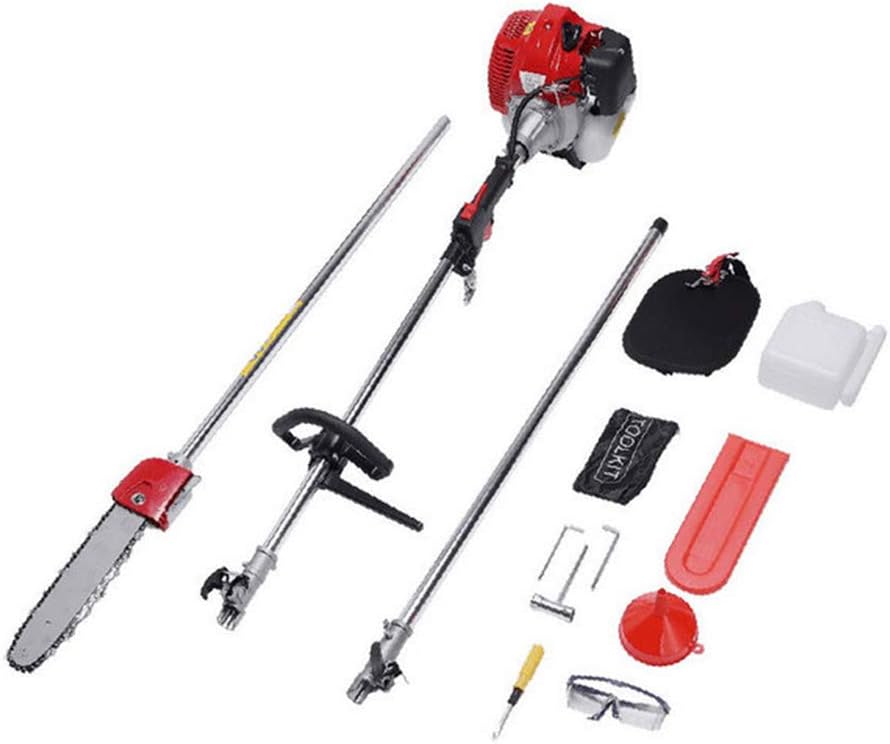
This DCEHKR pole saw uses a 42.7cc two-stroke engine to give you handheld reach for pruning high branches without climbing. It comes with an extension pole and a removable design so you can disassemble it for storage or transport. The engine delivers about 1.25 kW and runs on a 0.26 gal fuel tank, which means reasonable continuous run time for routine yard work. The air-cooled system helps keep temperatures down during extended cuts. Included accessories such as a carrying strap, goggles, and a fuel mixing tank make it usable right away, but expect basic controls and a learning curve for starting and throttle management typical of small two-stroke tools. Practical benefits are strong cutting power for branch pruning, decent run time between refills, and the safety advantage of trimming from the ground. Important limitations are its two-stroke engine complexity compared with battery models and likely higher noise and vibration levels; assembly and regular maintenance are required to keep it running well.
Best for: Homeowners who need an affordable, gas-powered pole saw for occasional to regular pruning and prioritize cutting power and run time over low-noise or low-maintenance operation.
Less Ideal for: People who want quiet, low-maintenance tools or frequent short trimming sessions where a battery model would be more convenient.
- Powerful 42.7cc two-stroke engine provides strong cutting performance for thick branches
- Air-cooled design helps prevent overheating during extended use
- 0.26 gal fuel tank offers longer run time between refills for typical yard jobs
- Removable extension pole for easier storage and ground-level trimming without climbing
- Two-stroke engine requires fuel mixing and more maintenance than electric alternatives
- Likely louder and subject to more vibration than battery-powered pole saws
Verdict: If you want the most cutting power for the money in a ground-use pole saw, this gas-powered DCEHKR model delivers solid performance and run time for routine branch pruning.
EIDOWA 48CC Gas Pole Saw with 16 ft Reach and 11.8-inch Bar

| Power Source | Gas Powered |
|---|---|
| Horsepower | 3.5 hp |
| Reach | 16FT |
| Bar Length | 11.8-Inch |
This EIDOWA gas pole saw is built for homeowners who need a dependable tool for trimming tall trees and cleaning storm damage. The 48cc, 3.5 hp two-stroke engine delivers continuous power at up to 9000 RPM so you can work across large yards without recharging or running an extension cord. Its 16 foot reach lets you prune high limbs from the ground while the 11.8-inch steel guide bar handles thicker branches that smaller pole saws struggle with. Practical touches include automatic chain oiling to reduce maintenance and a padded shoulder strap plus anti-slip handle to cut operator fatigue during longer sessions. Expect routine pruning, crown thinning, and debris cleanup to be faster than with battery or corded alternatives, but plan for regular fuel mixing, engine maintenance, and typical gas-engine noise and emissions. The saw’s weight and need for periodic engine care are normal for this class but worth considering if you prefer near-zero maintenance tools.
Best for: Best for homeowners and property owners who need a reliable, high‑reach saw for frequent or large pruning jobs and prioritize continuous power over low maintenance. Ideal for people who are comfortable with basic small-engine upkeep and want to avoid ladders or limited cordless runtimes.
Less Ideal for: Not a good fit for users who need a lightweight, low-maintenance tool for occasional small tasks or who prefer zero-emission electric alternatives.
- Powerful 48CC, 3.5 hp gas engine for sustained cutting performance
- 16 foot reach enables safe ground-level pruning of tall branches
- 11.8-inch steel guide bar can cut through substantial limbs beyond twig-level work
- Automatic chain oiling reduces manual lubrication and helps prolong chain life
- Padded shoulder strap and anti-slip handle improve comfort during extended use
- Requires regular gas mixing, engine maintenance, and produces typical gas-engine noise and exhaust
- Heavier than battery models which can increase fatigue despite the shoulder strap
Verdict: Choose this gas pole saw if you want sustained, ladder-free cutting power and a long reach for serious pruning and storm cleanup.
PROYAMA 42.7cc Gas Pole Saw with 12-inch Oregon Bar and Chain

| Power Source | Gas Powered |
|---|---|
| Horsepower | 2 hp |
| Chain Length | 12 inches |
| Adjustable Length | 8.2-11.4 FT (reach ~15 FT with user height) |
The PROYAMA 42.7cc gas pole saw is built for homeowners and landscapers who need a reachable, powerful tool for trimming higher branches without climbing. It uses a 42.7cc two-cycle engine to deliver steady cutting power through a 12-inch Oregon guide bar and chain, and an extendable shaft that adjusts from roughly 8.2 to 11.4 feet so users can reach about 15 feet when standing. The saw head rotates up to 90 degrees to change cutting angles, which helps when pruning awkward limbs. Practical touches include a rubber front grip to reduce vibration and an ergonomic harness that spreads the load during longer jobs. Because it is gas powered, expect the usual maintenance: mixing fuel/oil, periodic tune-ups, chain sharpening and more noise and emissions than electric alternatives. The unit is better for medium branches rather than heavy tree felling, and its weight and vibration mean short sessions or using the harness for comfort are advisable.
Best for: A buyer who wants a robust, reach-capable pole saw for regular yard and landscape pruning and prioritizes cutting power and proven components over quiet or zero-emission operation.
Less Ideal for: Not the best choice for users who need a lightweight, low-noise, or emission-free tool for occasional small pruning jobs or for urban settings with strict noise limits.
- Powerful 42.7cc 2-cycle engine for reliable cutting performance
- Oregon 12-inch guide bar and chain for durable, efficient cuts
- Adjustable reach up to about 15 feet to trim high branches without ladders
- 90-degree rotating head allows angled cuts and better access to awkward limbs
- Includes ergonomic harness and rubber front grip to improve comfort and reduce vibration
- Gas engine requires fuel mixing, regular maintenance, and produces noise and emissions
- Heavier and more vibration than battery-powered alternatives, so longer use can be tiring
Verdict: Choose this PROYAMA pole saw when you need gas-powered reach and cutting power with Oregon components to tackle high and medium branch pruning without climbing.
ECHO PPT-2620 X Series 25.4 cc Gas Telescoping Power Pole Saw, 12 in. Blade, Extends to 12.1 ft

| Power Source | Gas |
|---|---|
| Blade Length | 12 inches |
| Other Special Features of the Product | 2-stage air filtration, automatic oiler, aluminum inner drive shaft |
| Speed | 600 rpm |
The ECHO PPT-2620 is a gas telescoping pole saw built for homeowners and light pros who need to prune tall limbs without ladders. It uses a 25.4 cc two-stroke gas engine and a telescoping shaft that extends reach to handle overhead work up to roughly 12 feet. Notable features include a 12-inch high-carbon steel bar and chain, a 2-stage air filtration system and an automatic oiler that help reduce wear and maintenance. The aluminum inner drive shaft and loop handle give a balance of strength and control when cutting at angles up to 45 degrees. Practically, the saw delivers strong cutting power for thicker branches and the filters and oiler make it more reliable season to season. The main trade-offs are the typical noise, vibration, and maintenance of a gas two-stroke tool and its 17.4 pound weight which can feel tiring during extended overhead use. For buyers who want cordless convenience or the lowest vibration, electric or battery pole saws may be preferable.
Best for: Buyers who prioritize reliable, proven gas power and durability for occasional to regular high-reach pruning and who prefer a low-risk, serviceable tool backed by straightforward maintenance features.
Less Ideal for: People who need a quiet, low-maintenance saw for short jobs or those who prefer a lightweight battery option for frequent use or easy storage.
- Powerful gas engine suitable for cutting thicker branches
- Telescoping shaft extends reach for overhead pruning without a ladder
- 2-stage air filtration and automatic oiler reduce engine and chain wear
- Durable high-carbon steel 12-inch cutting bar and aluminum inner drive shaft
- Heavier than battery-powered alternatives which can cause fatigue during long overhead work
- Requires regular two-stroke maintenance and fuel mixing
- Produces typical gas engine noise and vibration
Verdict: Choose the ECHO PPT-2620 if you want a durable, serviceable gas pole saw that delivers strong cutting power and extended reach for reliable high-branch pruning.
Choosing the Right Gas Pole Saw: Key Factors to Consider
Engine Power and Torque
Engine output determines how well a gas pole saw slices through hardwoods and larger-diameter limbs. A saw with higher torque will maintain chain speed under load and reduce the chance of bogging during thick cuts.
For frequent or professional pruning, prioritize engines that deliver steady power rather than peaky high-rpm performance. Consider how the engine behaves when the chain is under stress because consistent torque shortens cut time and reduces the need for multiple passes.
Bar Length and Total Reach
Bar length affects how thick a limb you can cut in a single pass, while pole length and extension mechanism determine how high you can reach without a ladder. Longer bars let you tackle bigger branches, but they add weight and change balance.
Think about the typical height of branches on your property and whether you prefer a telescoping pole or fixed sections. Factor in comfortable working reach with the saw at full extension; excessive reach can magnify vibration and reduce cutting control.
Weight, Balance, and Vibration Control
Gas engines and long poles make these tools inherently heavier than hand pruners. Proper balance between the head and the pole helps you aim cuts accurately and reduces shoulder strain during overhead work.
Look for models with built-in vibration dampers and ergonomic grips. Reduced vibration matters for user comfort and control, particularly during longer jobs. Even small improvements in balance can significantly lower fatigue and improve cut placement.
Durability and Construction
Durability determines how well a saw stands up to regular outdoor use, repeated impacts, and rough handling on job sites. Robust materials in the pole sections, secure locking mechanisms, and a well-protected engine housing reduce the risk of damage.
Inspect how the chain drive is shielded from debris and whether the pole joints resist wobble when extended. A solidly built saw cuts cleaner and requires fewer repairs over time.
Maintenance and Serviceability
Gas pole saws need more routine attention than cordless options. Easy-access components for chain tensioning, air filter cleaning, spark plug service, and carburetor adjustments reduce downtime and keep the saw performing.
Consider how simple it is to change the chain or replace the bar in the field, and whether common replacement parts are readily available. Tools designed for straightforward maintenance save time and cost over the life of the saw.
Fuel Efficiency and Starting Reliability
Fuel use affects how long you can work between refills and how often you need to carry extra fuel for remote jobs. A more efficient engine reduces the frequency of stops and can be especially valuable on larger properties.
Cold-start performance matters if you work seasonally in cooler climates. Models that start reliably and run smoothly across temperature changes let you get to the task more quickly and avoid frustrating delays.
When a Gas Pole Saw Is the Right Choice
Gas pole saws excel when you need extended reach and sustained cutting power for large branches. They are appropriate for properties with mature trees, regular seasonal pruning, or jobs where battery life and cord length would limit productivity.
If your pruning needs are mostly light, low-height trimming, a lighter tool might be easier to handle. Choose a gas saw when thicker limbs, frequent use, or remote work demand the combination of reach and raw engine power that only a gas model typically provides.
- Best for trimming high limbs without ladders
- Good for cutting hardwoods and larger-diameter branches
- Useful where long runtime between refueling is needed
Safety Practices for Overhead Pruning
Working overhead increases the risk of falling debris and loss of control. Always clear the work area beneath the branch path, wear eye and head protection, and use hearing protection when operating a gas engine. Keep bystanders and pets at a safe distance.
Control the saw with both hands and avoid overreaching. If a cut looks likely to drop on you or destabilize the limb, reposition or use rope-assisted lowering techniques. Know escape paths and do not stand directly under a partially cut limb.
- Inspect the branch for tension before cutting
- Make controlled cuts to avoid splitting or pinching
- Consider a helper for spotting and lowering large sections
Practical Maintenance Tips
Regular maintenance keeps a gas pole saw reliable and extends component life. Clean the air filter after dusty jobs, keep the chain sharp and correctly tensioned, and follow a schedule for spark plug checks. Use fresh, properly mixed fuel if the engine requires a two-stroke mixture.
Store the tool drained of fuel for long-term storage and protect it from moisture. Periodically inspect the pole joints and fasteners for wear or loosening, and replace components that show cracking or excessive play.
- Sharpen or replace the chain as soon as cutting slows
- Check chain tension after the first few cuts and periodically during use
- Follow manufacturer torque specs for any fasteners and fittings
Transport and Storage Considerations
Because gas pole saws are larger and heavier, plan for secure transport in a vehicle. Use a protective cover for the bar and chain, and fasten the saw so it cannot shift during transit. Keep fuel containers upright and separate from the saw whenever possible.
For storage, allow the engine to cool before stowing and keep the saw in a dry, ventilated location. Long-term storage is a good time to perform maintenance tasks like replacing the fuel, lubricating moving parts, and protecting exposed metal from corrosion.
- Use a bar guard for transport
- Drain fuel for storage longer than a month
- Store in a locked area away from children and animals
Alternatives and Complementary Tools
While gas pole saws are ideal for heavy overhead work, other tools complement them well. Hand pruners and loppers handle fine pruning and shaping close to the trunk, while a chainsaw is more efficient for ground-level large limb removal.
For lighter workloads or lower noise requirements, cordless pole saws offer quieter operation and simpler maintenance. Consider a mixed-tool approach where a gas pole saw covers tall or thick cuts and smaller tools handle finishing and detailed shaping.
- Pair with loppers for precise shaping
- Use rope-lowering tools for controlled limb drops
- Reserve chainsaws for large stumps and trunk work
How We Chose the Best Gas Pole Saw
We focused on attributes that affect real-world pruning tasks and long-term ownership. Primary evaluation criteria included cutting power and torque for clean, efficient cuts on thick limbs; reach and bar length to determine which pruning heights are achievable without a ladder; durability of engine and drive components to withstand regular use; vibration control and overall balance to reduce user fatigue during extended sessions; and ease of routine maintenance including carburetor access, chain tensioning, and replacement parts availability. We also considered fuel efficiency and cold-start reliability because many users need dependable starts across seasons. Exclusions included electric or battery-powered models and lightweight consumer saws intended only for occasional small-branch trimming. The final list prioritizes tools suited to homeowners and landscapers who need a gas-powered pole saw that can handle larger pruning jobs while remaining maintainable and serviceable in the field.
FAQ
How high can a gas pole saw safely reach?
Reach depends on the pole length and how comfortably you can control the saw overhead. Most gas pole saws extend far enough for routine pruning of medium-height trees, but safety decreases as reach increases. Consider a professional service or use safer rigging methods for very high cuts.
What maintenance does a gas pole saw need after each use?
After each use, remove debris from the bar and chain, check chain tension, and inspect for damage. Wipe down exposed metal and refill or stabilize fuel as needed. Periodically clean the air filter and check spark plug condition according to usage.
Can I convert a gas pole saw to run on straight fuel?
Whether a saw can run on straight fuel depends on its engine design. Many two-stroke engines require a specific fuel-oil mix, while four-stroke engines use straight gasoline with a separate oil reservoir. Consult the engine specifications before changing fuel types.
Are gas pole saws louder than alternatives?
Yes, gas pole saws typically produce more noise than electric or battery models because of the combustion engine. Hearing protection is recommended during use. Noise levels can vary by engine size and whether the saw has any built-in muffling.
How often should I replace the chain or bar?
Replacement frequency depends on use and material cut. If you notice slower cutting, frequent need for sharpening, or visible wear like burrs on the bar rail, it is time to service or replace components. Heavy professional use will require more frequent replacement than occasional homeowner tasks.
Final Verdict
Choosing the right gas pole saw comes down to balancing reach, cutting power, and how much maintenance you are willing to perform. Prioritize engine torque and a comfortable balance if you regularly tackle large limbs, and favor easier service access if you plan heavy seasonal use. Accept tradeoffs between longer reach and added weight. When you match the saw to the job profile and follow solid safety and maintenance practices, a gas pole saw offers reliable performance for demanding pruning tasks and long-term yard care.
