

Note: This article contains affiliate links. If you click on these links and make a purchase, I may earn a small commission at no extra cost to you. This helps support my research and content. Read my full affiliate disclosure here.
Choosing the right 3Pt garden tiller matters because this is the tool that turns compacted ground into a workable seedbed. The correct tiller saves time, reduces repeated passes, and helps you establish even seed depths and healthy planting zones. For many gardeners and small-scale farmers the hitch type, rotor design, and tine construction determine how the tiller handles root masses, rocky soil, and clay. This guide covers six shortlisted 3Pt Garden Tillers suited to a range of tractors and garden sizes. We evaluated each on practical criteria gardeners care about, including tractor compatibility, durability of tines and gearbox, ease of maintenance, and how the tiller handles real soil conditions. Read on for what to expect from each category and which features deserve the most attention for your land.
Top Picks at a Glance
| Best Overall The best all-around choice for most situations | Sigma 4 ft Heavy-Duty 3-Point Hitch Rotary Tiller with Gear Drive and PTO Shaft |  |
| Best Quality Built to a higher standard if you want something more solid | POWER PRODUCTS Sigma 3-Point Hitch Rotary Tiller, 5 ft, PTO-Driven |  |
| Best Value The sweet spot between price and what you get | MIVA 59" Rear-Mount Rotary Tiller for 25–30 HP Tractors (Cat 1) |  |
| Best Budget The cheapest option that still gets the job done reliably | Farmer-Helper FH-TL85 33" Offset 3-Point Rotary Tiller |  |
| Highest Rated A top-rated pick with lots of positive feedback | Farmer Helper FH-TL95 37" Adjustable Offset 3-Point Rotary Tiller |  |
| Most Popular A crowd favorite that many people choose with confidence | Titan Attachments 72" 3-Point Rotary Tiller Attachment (Cat 1) |  |
Sigma 4 ft Heavy-Duty 3-Point Hitch Rotary Tiller with Gear Drive and PTO Shaft

| Working width | 4 ft |
|---|---|
| Recommended PTO HP | 20-35 HP |
| Tines | 36 total |
| Rotation direction | Counterclockwise (facing gearbox) |
This 4-foot Sigma three-point rotary tiller is a straightforward heavy-duty tiller for farmers and serious gardeners using a Category I hitch tractor of roughly 20–35 HP. It mounts to the tractor three-point and is PTO driven via the included shaft, turning 36 tines counterclockwise (when facing the gearbox) to cultivate a 4-foot swath and cut as deep as 6 inches under good conditions. Construction uses carbon steel tines and a powder-coated body with a cast-iron gearbox for durability, and the skid plate helps clear debris and reduce resistance during work. Typical use is preparing beds, breakup of compacted soil, and regular seedbed cultivation across small fields or large gardens where a compact tractor is available. Important limitations are its weight and power requirement: it will not work with small compact tractors and requires proper tractor HP and gear oil in the gearbox before operation. Setup requires correct top link adjustment and occasional maintenance of gearbox oil and replaceable skid shoes.
Best for: Buyers who own or rent a 20–35 HP Category I tractor and need a rugged, no-nonsense tiller for regular bed preparation and medium-scale soil cultivation.
Less Ideal for: Not a good choice for owners of subcompact tractors, those who need a very lightweight unit, or users who only need occasional small-plot tilling.
- Durable gear-driven cast-iron gearbox for long service life.
- Includes PTO shaft and 36 heavy-duty tines for efficient 4 ft cultivation.
- Powder-coated steel construction resists corrosion in outdoor use.
- Designed for Category I three-point hitch tractors and 20–35 HP range for reliable power match.
- Too heavy and high-powered for small compact tractors or hobby garden tillers.
- Maximum 6" depth is under ideal conditions and depends on soil and operator adjustments.
Verdict: Choose this heavy-duty 4-foot gear-driven tiller if you have a 20–35 HP Category I tractor and want a durable machine for regular medium-scale soil preparation.
POWER PRODUCTS Sigma 3-Point Hitch Rotary Tiller, 5 ft, PTO-Driven

| Working width | 5 ft |
|---|---|
| Recommended PTO HP | 24-45 HP |
| Tines | 42 steel tines |
| Maximum depth of cut | 6" (ideal conditions) |
This Sigma 5-foot 3-point rotary tiller is built for performance-oriented small farms and large gardens that need reliable, deep cultivation. It mounts to a Category I three-point hitch and is PTO driven, so you use it by attaching the included PTO shaft and matching it to a 24–45 HP tractor. The unit has a heavy-duty cast-iron gearbox and 42 steel tines that can cut up to about 6 inches under ideal conditions, delivering aggressive soil mixing for seedbeds, vegetable plots, or pre-plant tillage. Practical features include replaceable skid shoes, a parking stand, and a skid plate that helps clear debris while reducing drag. Important limitations are that it is not compatible with compact tractors and the gearbox ships without oil, so you must add lubricant before use; the machine is also heavy and requires proper tractor capacity and hitch setup to operate safely. For steady, powerful tillage where a tractor is available, this tiller offers robust construction and straightforward mechanical operation.
Best for: Buyers with a 24–45 HP Category I tractor who need a robust, tractor-powered tiller for preparing seedbeds and intensive soil cultivation across medium to large garden or small-farm plots.
Less Ideal for: Owners of compact tractors, hobby gardeners without tractor access, or anyone who needs a lightweight, easily trailered tiller for small raised beds.
- Heavy-duty cast iron gearbox for durable power transfer
- 42 steel tines provide aggressive soil cultivation and up to 6" cutting depth under ideal conditions
- Includes PTO shaft and parking stand for straightforward tractor hookup and storage
- Replaceable skid shoes and skid plate help manage drag and protect the rotor
- Not compatible with compact tractors so requires a mid-size tractor in the 24–45 HP range
- Gearbox is shipped dry so gear oil must be added before use
Verdict: If you have a 24–45 HP tractor and need a sturdy, high-performance 5-foot tiller for intensive soil preparation, this Sigma unit delivers reliable, tractor-driven power.
MIVA 59" Rear-Mount Rotary Tiller for 25–30 HP Tractors (Cat 1)

| Working Width | 58.7 inches |
|---|---|
| Blades Count | 32 |
| Tractor Power Range | 25 – 30 HP |
| PTO Input Speed | 540 rpm |
| Working Depth | 5 inches |
This MIVA 59" rotary tiller is built for tractor owners who need broad, efficient soil preparation on larger gardens and small farms. It mounts to a Category 1 three-point hitch and uses a standard 540 RPM PTO and universal driveline for straightforward hookups. The heavy-duty gear-driven gearbox and 32 replaceable L-shaped alloy steel blades work to a stated 5-inch depth to break hardpacked soil into a finer seedbed, which speeds up multiple-row passes and reduces the number of passes needed. Individual replaceable blades make maintenance and blade replacement practical without swapping the entire rotor. The wide 58.7-inch working width covers more ground per pass, saving time on acreage and landscape jobs. Limitations to note are that it requires a 25–30 HP tractor and substantial lift capacity to operate safely, and the unit is heavy so moving or mounting it single-handedly will be difficult. Expect routine gearbox and driveline checks like any PTO implement for dependable service life.
Best for: Best for small-farm and serious hobbyist tractor owners who prioritize faster coverage and durable soil preparation across larger beds and acreage.
Less Ideal for: Not a good fit for owners of sub-25 HP tractors, very small urban gardens, or gardeners who need a lightweight, easily portable tiller.
- Wide 58.7" working width covers more ground per pass to boost efficiency
- 32 replaceable L-shaped alloy steel blades that handle hardpacked soil and are economical to replace
- Compatible with standard Cat 1 three-point hitch and 540 RPM PTO for easy hookup
- Gear-drive transmission provides direct power transfer and robust tilling force
- Requires a 25–30 HP tractor and appropriate lift capacity so smaller tractors cannot use it
- Heavy unit that will be difficult to move or mount without assistance
Verdict: Buy this tiller if you want a wide, heavy-duty rear-mount implement that quickly converts hard soil into a fine seedbed for larger gardens and small farms.
Farmer-Helper FH-TL85 33" Offset 3-Point Rotary Tiller

| Power Source | PTO Driven |
|---|---|
| Working Width | 33" |
| HP Required at the PTO | 12 – 35 hp |
| Tine Count | 16 |
The Farmer-Helper FH-TL85 is a three-point PTO rotary tiller built for subcompact tractors and homeowner to small-farm use. It mounts on Cat I three-point hitches and runs from the tractor PTO, using a slip clutch driveline and overrunning gearbox to protect the tractor when the tines hit an obstruction. The tiller uses a chain-driven rotor with automatic/manual tensioners, 16 hardened tool-steel L-shaped tines, and an adjustable right-side offset so you avoid compacting tire tracks in the finished bed. Adjustable side runners and a formed rear deflector let you control working depth and final finish. Its 12–35 hp PTO requirement and substantial weight help the tines penetrate compacted soil for smoother, deeper results. Expect a durable, low-maintenance setup thanks to the oil-bath gearbox and heat-resistant chain tightener, but be prepared to use a tractor of sufficient horsepower and to perform basic PTO hookup and safety checks; this is not a walk-behind unit and requires tractor operation and occasional mechanical maintenance.
Best for: Buyers who own a subcompact tractor and want a durable, tractor-mounted tiller for preparing seedbeds, small gardens, and landscaping without guessing on compatibility. Ideal for owners who prioritize reliable PTO-driven performance and equipment protection.
Less Ideal for: Not a fit for gardeners who only have walk-behind tillers or need a lightweight, portable solution or for those who lack basic tractor hookup experience.
- Designed for Cat I three-point PTO mounting for easy tractor hookup
- Slip clutch driveline and overrunning gearbox protect tractor from sudden impacts
- Chain-driven rotor with automatic/manual tensioners reduces maintenance and extends chain life
- Adjustable offset and side runners let you avoid tire tracks and control working depth
- Oil-bath gearbox and hardened tool-steel tines improve durability for regular use
- Requires a tractor with 12–35 hp at the PTO so it is not usable without appropriate equipment
- Heavy unit intended for tractor use and not portable for small-scale hand or walk-behind tasks
Verdict: If you own a subcompact tractor and need a robust, PTO-mounted tiller that protects your tractor while delivering consistent seedbed preparation, the FH-TL85 is a reliable choice.
Farmer Helper FH-TL95 37" Adjustable Offset 3-Point Rotary Tiller
| Power Source | PTO-Driven |
|---|---|
| Working Width | 37" |
| HP Required at the PTO | 14 – 35 hp |
| Number of Tines | 16 tines |
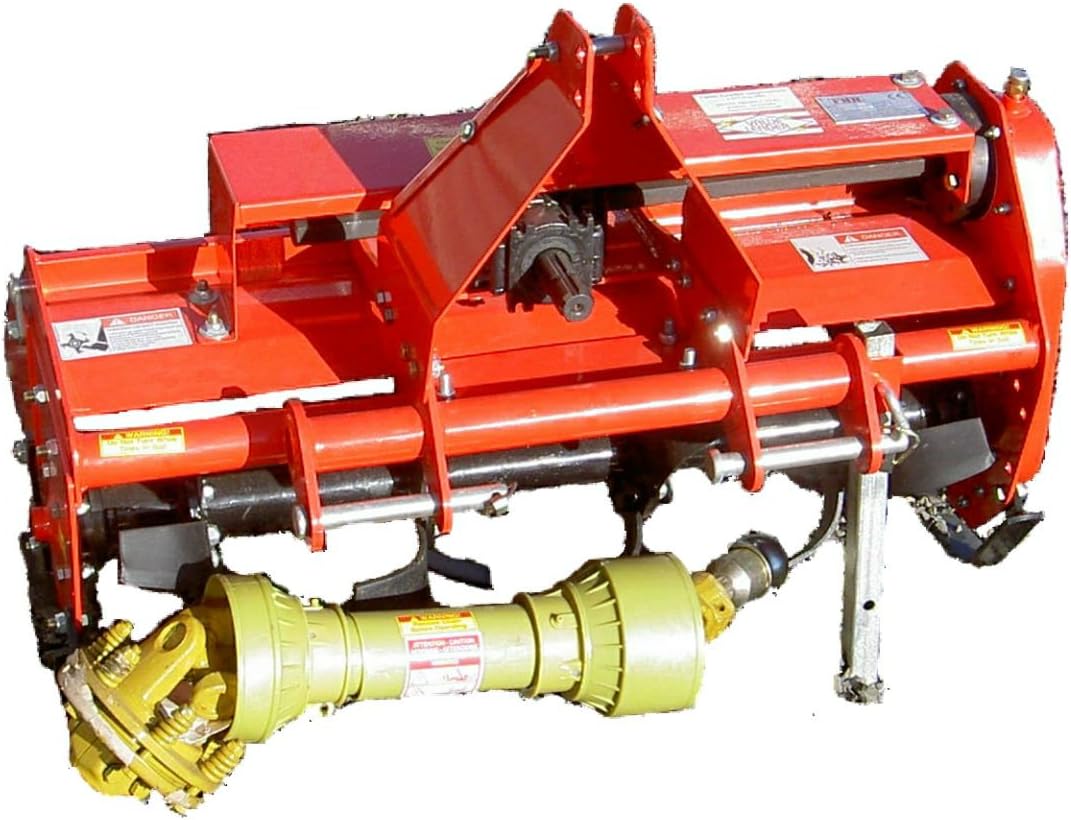
The Farmer Helper FH-TL95 is a PTO-driven 3-point rotary tiller built for subcompact tractors and homeowner to small-farm use. It tills a 37-inch swath with a 12-inch right offset so you can avoid compacted tire tracks while producing a smooth seedbed. The unit uses 16 hardened tool-steel L-shaped tines and a 16-inch rotor swing diameter to penetrate soil, and adjustable side runners let you control working depth between about 2 and 4 inches. Power is transmitted through a heavy oil-bath chain drive with automatic tensioning plus a slip clutch driveline and overrunning clutch gearbox to protect the tractor and tiller from shock loads and backdrive. Practical benefits include straightforward field adjustments, replaceable sharpenable tines, and a rear deflector that helps leave a level finish. Limitations are its weight and PTO power requirement — the tiller is heavy and needs a tractor with roughly 14 to 35 HP at the PTO, so it is not a standalone unit and requires proper tractor matching and lifting capacity.
Best for: Buyers who prioritize a durable, low-maintenance 3-point tiller for reliable seedbed preparation on small hobby farms, nurseries, or homeowner tractors and who plan to match the tiller to an appropriate tractor.
Less Ideal for: Someone who needs a handheld, walk-behind, or light-duty standalone tiller or who lacks a tractor with sufficient PTO power and lift capacity.
- Robust chain-driven oil-bath transmission with automatic tensioning for lower maintenance
- Slip clutch driveline and overrunning clutch gearbox protect equipment from shock loads
- Hardened tool-steel L-shaped tines that are sharpenable and replaceable for longevity
- Adjustable right-side offset prevents compacted tire tracks and improves finish quality
- Requires a tractor with 14–35 HP at the PTO so it cannot be used without compatible tractor power
- At about 330 pounds it is heavy and requires adequate tractor lift capacity and transport planning
Verdict: Choose this tiller if you want a rugged, tractor-mounted 3-point unit built to protect itself and your tractor while delivering a consistent seedbed.
Titan Attachments 72" 3-Point Rotary Tiller Attachment (Cat 1)

| Power Requirement | 20-45 HP |
|---|---|
| Tilling Width | 72" |
| Tilling Depth | Up to 5" |
| Power Source | PTO Driven |
| Operation Mode | PTO Driven |
This Titan 72" 3-point rotary tiller hooks to Category 1 tractors and uses the tractor PTO and included heavy-duty shaft to churn soil into a seedbed up to about 5 inches deep. It is typically used for field prep, vegetable plots, orchards, and small-acreage jobs where you need to break compacted topsoil, mix residues, and level beds. Notable features include a 540 RPM gearbox, replaceable hardened L-shaped tines on a rotating shaft, five adjustable ski settings for depth/level control, sealed bearings, and an alloy-steel powder-coated frame built to resist moisture and soil chemicals. In practice the single-speed unit is straightforward to hook up and robust enough for regular garden and light farm use, and replaceable tines make maintenance manageable. Important limitations are its single speed PTO setup and a 20–45 HP rating, so it will not suit higher-power tractors or jobs needing deeper or variable-speed tilling; the unit is heavy and requires proper tractor capacity and handling during transport and hookup.
Best for: Buyers who want a heavy-duty, straightforward PTO-driven tiller to prepare small farms, large gardens, or orchards with proven mechanical components and who value durability and repairability.
Less Ideal for: Gardeners with subcompact tractors under the recommended HP range or those who need variable-speed tilling or deeper cultivation should consider other attachments or powered tillers.
- Wide 72-inch working width covers more ground in fewer passes
- PTO-driven 540 RPM gearbox provides reliable single-speed power transfer
- Replaceable hardened L-shaped tines extend service life and simplify maintenance
- Adjustable ski settings allow basic control of working depth and surface leveling
- Sealed bearings and powder-coated alloy steel frame improve durability in wet, dirty conditions
- Single-speed gearbox limits flexibility for different soil conditions
- Requires a tractor in the 20–45 HP range and proper three-point hitch capacity
Verdict: A robust, serviceable 72" PTO-driven tiller that covers wide swaths and reliably prepares seedbeds for small farms and large gardens.
Choosing the Right 3Pt Garden Tiller: Key Factors to Consider
Tractor Compatibility
Confirming hitch category, PTO speed, and recommended horsepower is the first practical step. A tiller must match your tractor's three-point hitch class and be rated for the tractor's PTO rpm to avoid overstressing the drive. Horsepower recommendations are equally important because a unit that is too large for the tractor can stall the engine, while an undersized tiller may not deliver the desired soil turnover.
Attachment points, safety shields, and driveline length are also part of compatibility. Check that the driveline or PTO shaft length suits your tractor and that safety guards are present or available. Proper matches reduce wear and improve field control, making tilling safer and more efficient.
Tine Type and Materials
Tine shape, spacing, and steel grade determine how the tiller severs roots, pulverizes clods, and mixes organic matter. L-shaped or flap-style tines tend to dig aggressively and are better for breaking compacted soil, while curved or helical designs can provide smoother mixing and less power draw. Hardness and heat treatment of the steel influence how long tines hold an edge before bending or wearing out.
Consider the ease of replacing individual tines versus needing full rotor swaps. Gardens with frequent rocks or heavy root systems benefit from tines that are thicker, replaceable, and made from higher-grade steel. Tine spacing affects finish quality; closer spacing gives a finer seedbed but increases power requirements.
Gearbox and Driveline Durability
The gearbox transfers PTO torque to the rotor and is often the most failure-prone assembly if undersized. Look for gearboxes with published torque ratings and accessible service points for oil changes and inspection. A gearbox with standard, replaceable seals and bearings will be easier and cheaper to maintain in the long run.
Universal joints, driveline shielding, and slip clutches are additional driveline considerations. A robust driveline with a shear or slip protection can prevent expensive damage when hitting an immovable object. Regular maintenance intervals and clear lubrication points keep the powertrain running reliably season after season.
Working Width and Transport Considerations
Working width should match the size of the area you plan to cultivate and your tractor's maneuverability. Wider tillers cover more ground per pass but require more horsepower and can be harder to position in tight beds or orchards. Consider how you will transport and store the tiller between uses; folding or swing-up features make longer units easier to move on trailers or down narrow farm lanes.
Weight distribution matters for three-point balance. Heavy rear-mounted machines can affect lift capacity and tractor stability. Check if the manufacturer provides guidance on counterweights or front ballast to maintain safe handling and consistent tilling depth.
Depth Control and Finish Quality
Depth control mechanisms such as adjustable skids, rear rollers, or depth shoes directly impact how consistently your seedbed is prepared. Precise depth adjustment helps when transitioning between different crops, from shallow seedbeds for small seeds to deeper cultivation for root crops.
Finish quality is influenced by rotor speed, tine layout, and rear leveling devices. A tiller that offers fine depth adjustment and a rear packer or roller will produce a more uniform surface, reduce erosion risk, and reduce the need for hand raking after tilling.
Serviceability and Parts Availability
A tiller that is easy to service reduces downtime during peak planting seasons. Check how accessible wear parts are, whether common items like tines, belts, seals, and bearings are sold separately, and how straightforward routine tasks are such as greasing fittings and changing gearbox oil.
Consider the local availability of replacement components and whether common fasteners and bearings conform to standard sizes. Equipment with modular components and straightforward assembly will save time and repair costs over multiple seasons.
Matching Tiller Size to Your Land
Assess the scale of the area you intend to till and match the working width to how much ground you want to cover per hour. Smaller gardens and rows benefit from narrower units that are easier to maneuver, while larger plots and small farms gain efficiency from wider rotors.
Also consider field obstacles such as trees, raised beds, and fences. A flexible plan that uses a mix of narrow pass-throughs and wider primary passes can speed up work without sacrificing access.
- Narrow units are easier to position in tight spaces and on slopes
- Wider units reduce passes but require more tractor horsepower
- Factor in turning radius and gate widths when choosing width
Operating Techniques for Longer Component Life
Operate at recommended PTO speeds and avoid lugging the tractor. Keeping engine RPM within the specified range reduces stress on the gearbox and bearings. Shift into an appropriate gear to maintain steady RPM through the work.
When encountering rocks or stumps slow down and lift briefly rather than forcing through obstructions. Use a slip clutch or shear protection on the driveline to protect the gearbox and rotor if it is available.
- Maintain steady PTO RPMs to avoid shock loads
- Lift and reposition instead of forcing through immovable obstacles
- Inspect tines after each rough field to catch early wear
Preparing Soil Before Power Tilling
Remove large debris, limb clippings, and substantial root masses before using a 3Pt Garden Tiller to prevent premature wear. For very compacted ground consider a preliminary pass with a subsoiler or a series of shallower passes to reduce strain on the tiller.
Moisture level matters. Too wet and the tiller will smear soil; too dry and it will create excessive dust and poor mixing. Aim for a crumbly, slightly damp consistency when possible for the best results.
- Clear debris and large roots before tilling
- Avoid tilling when soil is either waterlogged or bone dry
- Use preliminary shallow passes for extremely compacted areas
Routine Maintenance Checklist
Regular maintenance prevents small issues from turning into failures. Check gearbox oil level before each season and top up or change as recommended. Grease all fittings and inspect tines, bolts, and driveline components after heavy use.
Keep spare tines, a set of common fasteners, and basic bearings on hand to minimize downtime. Record serial numbers and part sizes so you can source replacements quickly when needed.
- Pre-season gearbox oil and inspection
- Grease fittings and check driveline shields
- Inspect and replace worn tines promptly
Safety Practices and Shielding
Always ensure PTO shields and rotor guards are in place before operation. Loose clothing and bystanders increase risk, so keep a safe perimeter and never step behind the tiller while the PTO is engaged.
Follow safe hitching procedures and use proper pinning and locking devices on three-point attachments. Confirm all safety decals are legible and consider adding reflective markers if you transport the tiller on public lanes.
- Never operate without driveline and rotor shields
- Keep bystanders well clear during operation
- Use recommended hitch pins and locking hardware
How We Chose the Best 3Pt Garden Tiller
We selected 3Pt Garden Tillers by focusing on the attributes that directly affect field performance and long-term reliability. Key evaluation criteria included tractor hitch and PTO compatibility to ensure safe, efficient power transfer; tine design and material to assess how well the unit breaks clods and cuts through roots; gearbox robustness and serviceability because failures are costly and time-consuming to repair; and overall build quality including frame and attachment points for longevity under load. We also considered depth control and adjustability since consistent working depth affects seedbed quality, plus transport and storage features that matter for seasonal use. Products were excluded if they lacked clear hitch or PTO specifications, had limited information about tine material or gearbox ratings, or showed evidence of poor parts availability for common repairs. We favored units that balance field effectiveness with straightforward maintenance and that list compatible tractor horsepower ranges. These filters produced a shortlist that reflects what gardeners and smallholders need in the field rather than marketing claims.
FAQ
What tractor horsepower do I need for a 3Pt Garden Tiller?
Horsepower needs depend on the tiller's working width and tine aggressiveness. Narrow, light-duty models can run on small tractors, while wider, heavy-duty units require higher horsepower to avoid lugging. Check the tiller's recommended tractor HP range and match it to your typical field conditions.
How deep can a 3Pt Garden Tiller till in a single pass?
Most tillers offer adjustable working depths through skids or rear rollers and commonly handle shallow to moderate depths suited to seedbed prep. Very deep cultivation usually requires specialized equipment or multiple passes to avoid excessive strain on the driveline.
How often should tines be checked or replaced?
Inspect tines after each heavy-use session and more frequently in rocky or root-filled soil. Replace tines as soon as you notice significant bending, cracking, or thinning to maintain tilling quality and reduce stress on the gearbox.
Can I use a 3Pt Garden Tiller on rocky ground?
Tilling rocky ground increases wear and the risk of driveline shock. Use a unit with replaceable tines and a slip clutch or shear protection, take shallower passes, and remove larger stones beforehand to reduce damage.
What maintenance keeps a tiller reliable season after season?
Regular gearbox inspections and oil changes, greasing fittings, tightening fasteners, and checking tines are the core maintenance tasks. Keeping spare wear parts on hand and following the manufacturer's service intervals help avoid downtime.
Is it better to do multiple shallow passes or one deep pass?
Multiple shallow passes usually produce a better seedbed and are gentler on the equipment. They reduce the risk of smearing and require less instantaneous torque, which prolongs drivetrain life and improves finish quality.
Final Verdict
A 3Pt Garden Tiller is a substantial time saver when matched to your tractor and soil conditions. Prioritize hitch and PTO compatibility, tine construction, and a gearbox that can handle your field's typical loads. Balance width against available horsepower and maneuvering needs, and factor in ease of maintenance and parts availability. With the right combination of size, durable components, and routine care you can achieve consistent seedbeds while minimizing downtime and repair costs.
