

Note: This article contains affiliate links. If you click on these links and make a purchase, I may earn a small commission at no extra cost to you. This helps support my research and content. Read my full affiliate disclosure here.
If you manage a small vegetable patch, patio beds, or tight backyard borders, the right small gas garden tiller makes a big difference in how quickly and easily you prepare soil. These compact gas-powered machines are designed to reach into narrow rows, break up compacted earth, and mix organic matter without the bulk and cost of full-size tillers. This guide covers our shortlisted picks for small gas garden tillers and explains the practical tradeoffs you should expect, including engine strength, tine design, and handling in confined spaces. We evaluated machines across real gardener concerns like maneuverability, durability, and maintenance so you can pick the best tool for compact plots. Read on for the evaluation criteria and decision pointers that informed our selections.
Top Picks at a Glance
| Best Overall The best all-around choice for most situations | SENIX 4QL 46cc 4-Cycle Gas Tiller Cultivator (15" Width, Foldable Handles) |  |
| Best Quality Built to a higher standard if you want something more solid | Mantis 7940 4-Cycle Tiller/Cultivator with Honda Engine |  |
| Best Value The sweet spot between price and what you get | GardenTrax Mini Gas Cultivator 33cc 2-Cycle |  |
| Best Budget The cheapest option that still gets the job done reliably | Ubnffsv 52cc Gas-Powered Mini Tiller (1.9 kW) with 0.2 gal Fuel Tank |  |
| Most Popular A crowd favorite that many people choose with confidence | BILT HARD 46cc 4-Cycle Gas Tiller Cultivator, 16" Tilling Width |  |
SENIX 4QL 46cc 4-Cycle Gas Tiller Cultivator (15" Width, Foldable Handles)

| Power Source | Gas Powered |
|---|---|
| Engine | 46 cc 4-Cycle full crank |
| Tines | 6 steel forward-rotating tines |
| Tilling Capacity | Up to 15-inch width, 8-inch depth |
| Includes | Engine oil, foldable handles |
The SENIX 4QL 46cc gas tiller is a compact cultivator aimed at homeowners who need a powerful yet manageable machine for small to medium garden plots. Its full-crank 4-cycle engine means you do not mix oil and gas, and the patented 4QL design allows all-directional operation so the engine stays lubricated when maneuvering tight beds. Six forward-rotating steel tines deliver up to a 15-inch tilling width and about 8 inches depth, making it useful for preparing vegetable rows, breaking light sod, and mixing compost into raised beds. Practical features include an auto choke and compression release for easier starting and foldable handles for space-saving storage. Expect typical gas-tiller traits though, such as engine noise, routine maintenance, and the need for fuel and oil checks. Its 31.7-pound weight and modest tilling capacity mean it is best for small yard jobs rather than heavy-duty acre-scale work.
Best for: Home gardeners who want a reliable, easy-to-start gas tiller for prepping vegetable beds, flower borders, and small lawn patches and who value straightforward operation and compact storage.
Less Ideal for: Landscapers or property owners who need a high-capacity machine for large acreages or consistently heavy sod removal should consider larger commercial tillers.
- 4-cycle full-crank engine that does not require mixing gas and oil
- Patented 4QL technology allows all-directional use and consistent lubrication
- Six steel forward-rotating tines for effective 15-inch width and up to 8-inch depth
- Auto choke and compression release simplify cold starts
- Foldable handles for compact storage
- Not intended for heavy-duty or large-area tilling due to modest width and power
- Gas engine requires regular maintenance, fuel handling, and generates noise
Verdict: A compact, easy-to-start gas tiller that delivers practical power and convenience for small garden beds and homeowner use.
Mantis 7940 4-Cycle Tiller/Cultivator with Honda Engine
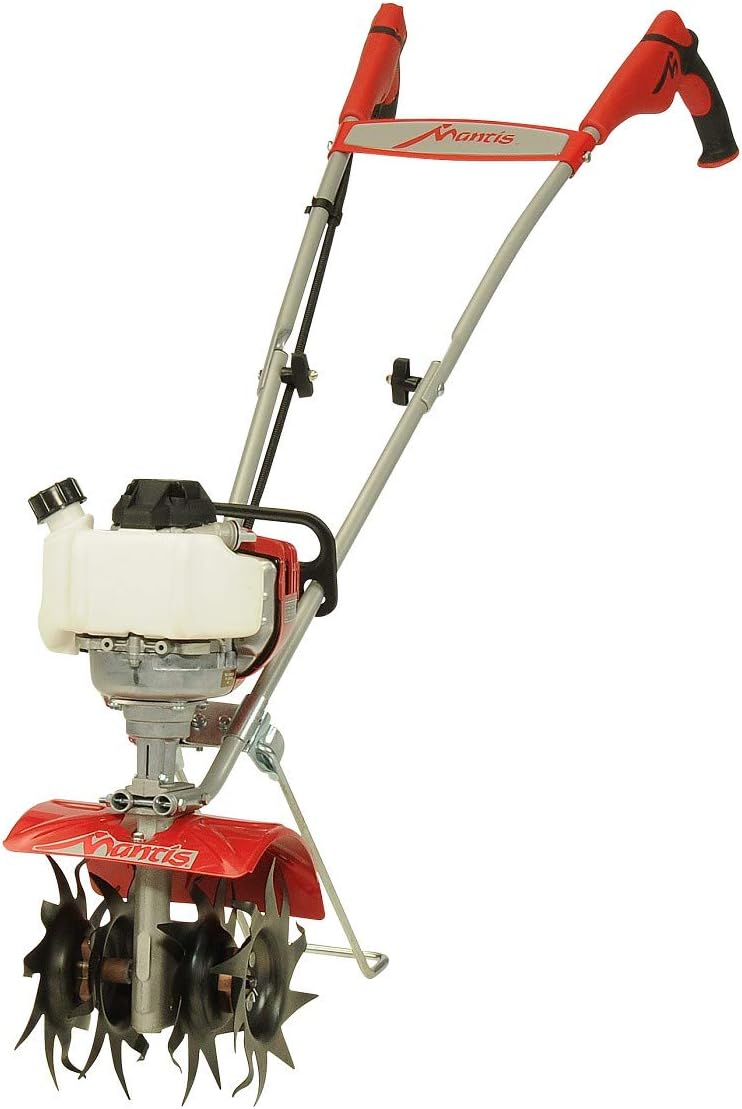
| Power Source | gas-powered |
|---|---|
| Material Type | Metal |
| Manufacturer Warranty Description | 2-year limited |
The Mantis 7940 is a compact, performance-focused mini tiller that uses a Honda 4-cycle engine to deliver strong tilling power without the need for fuel mixing. It is typically used to break sod, loosen compacted soil, and prepare planting beds where a full-size tiller would be overkill. Notable features include a high-tine speed (up to 240 rpm), finger-controlled throttle for infinite speed adjustment, ergonomic sure-grip handles, folding handlebars for storage, and a standard kickstand for easy staging. In practice the machine is easy to start and maneuver thanks to its light 24-pound build, yet the transmission and tine design let it dig deeply—claims note up to 10 inches—so you can tackle tougher ground and precision-weed around plants by flipping the tines. The main trade-offs are that it is a small, single-purpose tool: it is ideal for garden beds and rows but not intended to replace larger tillers for very large acreage or heavy-duty landscaping, and being gas-powered it requires routine engine maintenance and hearing/eye protection during use.
Best for: Gardeners who prioritize tilling performance in small to medium beds and want a compact, easy-to-handle machine that still delivers strong digging power for sod and compacted soil.
Less Ideal for: Landscapers or homeowners who need to cultivate large acreages or who prefer zero-emission electric tools for frequent, heavy-duty work.
- Honda 4-cycle engine provides reliable, no-mix gas power and strong tine speed.
- Lightweight 24 lb design makes it easy to carry, maneuver, and store.
- Finger-controlled throttle offers infinite speed control for delicate or aggressive work.
- Folding handlebars and a kickstand improve storage and on-site handling.
- Small, single-tine design is not suited for very large areas or heavy landscaping jobs.
- As a gas engine tool it requires regular maintenance and produces noise and emissions.
Verdict: If you want a lightweight mini tiller that punches above its size for serious bed preparation, the Mantis 7940 delivers reliable Honda-powered performance in a compact package.
GardenTrax Mini Gas Cultivator 33cc 2-Cycle

| Engine displacement | 33CC |
|---|---|
| Engine oil type | 2-cycle |
| Power source | Gas Powered |
| Tilling width | 6"–12" |
| Tilling depth | 6" maximum |
The GardenTrax Mini Cultivator is a small, gas-powered tiller built to loosen soil, mix amendments, and remove weeds in garden beds and rows. It uses a 33cc 2-cycle engine with a manual recoil start and forward-rotating tines that deliver a tilling width adjustable between about 6 and 12 inches and up to roughly 6 inches of depth. Practical features include a visible fuel tank, a worm-drive transmission for smoother tine action, and a U-turn handlebar design that helps reduce vibration during use. This machine is lightweight and easy to transport, so it is handy for quick prep work in small plots, raised beds, or between row crops. Expect quicker results than hand tools and more maneuverability than larger tillers, but be prepared to mix fuel and oil and perform basic maintenance on a 2-cycle engine. Wheels are not included on this version which makes long transfers more awkward and it is not intended for breaking very compacted or rocky ground.
Best for: Ideal for gardeners who want a compact, petrol-powered tool to quickly prep small vegetable beds, raised beds, and tight spaces without renting heavy equipment.
Less Ideal for: Not suited for users who need to break very compacted clay or rocky soil or who prefer electric or maintenance-free garden tools.
- Compact and lightweight for easy transport and storage
- 33cc 2-cycle engine provides stronger tilling than manual tools
- Adjustable tilling width (6"–12") for narrow beds and rows
- Worm-drive transmission and U-turn handlebar reduce vibration and improve control
- Requires mixing fuel and oil because it uses a 2-cycle engine
- No wheels included on this model which makes moving it between beds less convenient
Verdict: Choose this mini cultivator if you need a portable gas tiller that quickly preps small beds and rows with more power than hand tools.
Ubnffsv 52cc Gas-Powered Mini Tiller (1.9 kW) with 0.2 gal Fuel Tank

| Engine displacement | 52CC |
|---|---|
| Engine power | 1.9 kW |
| Engine type | Air-cooled two-stroke single cylinder |
| Fuel tank volume | 0.95L (0.2 gal) |
| Blade material | 65 manganese steel |
This compact Ubnffsv mini tiller uses a 52cc two-stroke engine (1.9 kW) and four sharp manganese-steel blades to loosen, turn, and weed small garden beds, sandy ground, and greenhouse rows. It is started via a hand-pull recoil and steered using anti-slip handles with a simple throttle and off switch so a single operator can quickly cultivate narrow strips or prepare planting rows. Notable features include an air-cooled design with heat sinks for longer run times, a 0.95L (0.2 gal) fuel tank for extended use between refills, and a lightweight frame that is easier to move and store than larger rototillers. Practical benefits are straightforward operation, good blade quality for slicing through loose soil, and suitability for small-scale tasks like nursery beds, orchards, or vegetable plots. Limitations are its two-stroke engine which requires a fuel-oil mix and a recoil start that can be tiring for frequent heavy use, and it is best suited to softer soils rather than rocky or compacted ground.
Best for: Budget-minded gardeners who need a small, portable gas tiller for prepping vegetable rows, greenhouse beds, or light orchard and nursery work and who prioritize low upfront cost and simple mechanics.
Less Ideal for: Large-acreage farmers or anyone who needs a powerful, heavy-duty tiller for rocky, compacted ground or frequent commercial-scale use.
- Compact 52cc two-stroke engine provides enough power for small beds and light cultivation
- Four manganese-steel blades designed to cut and turn loose soil effectively
- Air-cooled engine and heat sinks help maintain stable operation during use
- 0.95L (0.2 gal) fuel tank reduces the need for frequent refills during short jobs
- Two-stroke engine requires mixing fuel and oil, adding maintenance steps
- Recoil hand-pull start can be tiring compared with electric or self-start engines
- Not intended for heavy, rocky, or deeply compacted soils
Verdict: A simple, affordable mini gas tiller that delivers enough power and durable blades for small gardens and light cultivation tasks.
BILT HARD 46cc 4-Cycle Gas Tiller Cultivator, 16" Tilling Width

| Engine | 46cc 4-Cycle |
|---|---|
| Power | 1.9 HP |
| Tilling Width | 16 in. |
| Operation Mode | Gas |
The BILT HARD 46cc 4-cycle tiller is a straightforward gas-powered cultivator aimed at homeowners who need a capable machine for regular garden bed preparation. Its 46cc engine runs on separate gasoline and oil so there is no pre-mixing, and the unit drives six steel tines arranged for a 16-inch working width and up to roughly 8-inch depth in softer soils. Two-position adjustable wheels and foldable handles make it easier to move, store, and transport between beds. Cushioned grips and one-hand throttle control reduce operator fatigue during longer runs. Practical benefits include the 4-stroke engine's smoother operation and lower emissions compared with 2-stroke models and a tine arrangement that mixes compost or fertilizer into soil effectively. Limitations to note are its modest 1.9 hp output and relatively narrow 16-inch width, which mean the machine is best for medium to large garden plots rather than large acreage or very hard, compacted ground where a heavier 24–30 inch tiller would be faster. Routine engine maintenance and safe fueling practices are required for reliable performance.
Best for: Gardeners who want a reliable, easy-to-maintain gas tiller to prepare and maintain medium to large vegetable beds and borders without dealing with gas-oil mixing.
Less Ideal for: Property owners needing high-capacity tilling for several acres or contractors who require a wider, heavier-duty commercial tiller for hardpan or rocky ground.
- 46cc 4-stroke engine with separate oil reservoir avoids gas-oil mixing and runs smoother than 2-stroke units
- Six steel tines and 16-inch cutting width provide thorough soil mixing for garden beds
- Foldable handles and 2-position transport wheels simplify storage and movement
- Cushioned grips and one-hand throttle control reduce operator fatigue during extended use
- Relatively low horsepower and narrow width make it slower on very large or heavily compacted areas
- Not suited for breaking heavy clay or rocky soil without multiple passes
Verdict: A practical, easy-to-maintain 4-stroke gas tiller for homeowners who want efficient soil preparation for medium to large garden beds.
Choosing the Right Small Gas Garden Tiller: Key Factors to Consider
Engine Size and Performance
Engine displacement and torque determine how well a small gas garden tiller penetrates compacted or clay-heavy soil. Higher torque helps the tines bite into hard ground without bogging down, while adequate displacement prevents the engine from laboring at low speeds. For small plots you do not need the largest engine available, but choosing an engine with enough low-end power makes single-pass cultivation more effective and reduces the need for multiple passes.
Fuel type and simple carburetor designs make maintenance easier for home gardeners. Consider whether the engine supports straightforward servicing, like access to spark plugs and a user-friendly choke, because reliable starting and basic upkeep extend the life of a tiller used regularly in a small garden.
Tine Configuration and Material
Tine number, shape, and material control how aggressively the tiller chops and mixes the soil. Curved tines tend to pull and lift soil for better mixing, while straight tines cut more aggressively and may be better for breaking sod. Hardened steel tines or tines with replaceable blades last longer when you hit small stones or compacted root mats.
For compact beds, adjustable tine width is valuable because it lets you match the working width to narrow rows or wider beds. Also consider whether the tines are reversible or easy to replace; that affects maintenance costs and uptime when you hit abrasive soil.
Machine Weight, Balance, and Handling
A small gas tiller should be light enough to maneuver in tight beds but heavy enough to let the tines dig without the operator forcing the machine. Weight distribution matters: a front-heavy unit can dig in more readily, while a rear-heavy machine may be harder to steer between plants. Look for designs with ergonomic handles, easy-turn steering, and a compact footprint to fit between raised beds or rows.
Consider handle height and control placement because you may need to steer in short bursts around obstacles. Foldable or adjustable handles help with storage and transporting the tiller to different plots.
Starting Reliability and Routine Maintenance
Small gas engines are only useful if they start reliably. Factors that influence this include choke design, recoil starter quality, and whether the engine has modern features like a primer bulb. A unit that starts easily saves time and frustration during frequent short sessions in a small garden.
Maintenance items such as air filter cleaning, spark plug access, and simple fuel system care should be straightforward. Easy access to common service points and availability of replacement parts or aftermarket tines reduces downtime and keeps the tiller performing season after season.
Adjustability and Accessory Options
Adjustable depth and tine-width controls let you adapt a small gas garden tiller to multiple tasks, from light aeration to preparing a fresh seedbed. Depth control prevents overworking a small plot and helps protect shallow-rooted plants when you need to cultivate near established beds.
Accessory compatibility, such as optional furrowing attachments, wheel kits for transport, or tine guards, increases the tool's versatility. For gardeners with multiple small beds or variable soil conditions, the ability to change the working width and add simple accessories extends the tiller's usefulness.
Best Uses for Small Gas Tillers
Small gas tillers are ideal for breaking new beds, mixing compost into topsoil, and maintaining vegetable rows where a full-size tiller is too large. Their compact size lets you work close to edges and between existing plantings without damaging roots or stems.
Use a compact gas tiller to revive neglected patches where grass and light sod need to be broken up, or to incorporate amendments into raised beds. For repeat light cultivation during the growing season, a small engine provides reliable power without the electrical cord or limited run-time of battery units.
- Breaking compacted soil in small plots
- Mixing compost and soil amendments
- Creating narrow rows and seedbeds
- Working in raised beds and between obstacles
Preparing Your Garden Before Tilling
Clearing surface debris, rocks, and large roots reduces wear on tines and prevents sudden jams. If the soil is extremely wet, wait until it dries slightly; wet soil clumps and compacts instead of crumbling, which makes tilling less effective and can damage the machine.
Mark any irrigation lines, bulbs, or buried utilities before you till. For perennial beds or beds with nearby established plants, use physical barriers or hand tools to protect roots and stems while the tiller handles the open rows.
- Remove stones and large sticks
- Avoid tilling very wet soil
- Protect irrigation and plant roots
Routine Maintenance Tips
After each use, clean the tines and undercarriage to remove caked soil and organic matter. Inspect tines for bends, chips, or excessive wear and replace or rotate them if they are reversible. Check and tighten bolts, nuts, and tine mounts regularly to prevent failures.
Follow the engine manufacturer's guidance for oil changes and air filter service intervals. At the start and end of the season, stabilize fuel if the engine will sit idle, or drain the carburetor to prevent gum buildup. Store the tiller in a dry, sheltered spot to protect metal parts from corrosion.
- Clean and inspect tines after use
- Follow oil and filter maintenance
- Stabilize or drain fuel for long storage
Safety Practices for Gas-Powered Tillers
Wear sturdy footwear and eye protection when operating a small gas garden tiller. Tines can throw debris, and protective gear reduces injury risk. Keep bystanders and pets clear of the working area, especially in confined yards where splatter zones are reduced.
Always stop the engine and disconnect the spark plug before performing maintenance or clearing jams. Allow the engine to cool before refueling and use a funnel or rigid container to avoid spills. Be mindful of carbon monoxide and operate outside or in well-ventilated spaces only.
- Use protective eyewear and footwear
- Keep others clear of the work area
- Disconnect spark plug before maintenance
Working Techniques for Small Plots
Make multiple shallow passes rather than a single deep cut when working near roots or in compacted soil. Shallow passes reduce strain on the tiller and produce a finer crumb structure that is better for seedbeds. For new beds, a couple of passes from different directions helps break clods. When steering in tight rows, use short bursts of throttle and gentle guidance rather than forcing the machine. Allow the tines to do the work and reposition the unit between passes to avoid stressing the engine or losing control in narrow spaces.
- Use several shallow passes for best results
- Steer with short throttle bursts in tight rows
- Reposition between passes to protect plants
How We Chose the Best Small Gas Garden Tiller
We focused on attributes that matter for gardeners working in small plots, raised beds, and tight backyard spaces. Key evaluation criteria included engine power and torque for effective soil penetration, tine design and durability to evaluate how well a tiller breaks compacted soil and resists wear, machine weight and balance for maneuvering in narrow beds, and ease of starting and routine maintenance because small engines are only useful when they run reliably. Additional criteria were noise and vibration levels for comfortable use in residential areas, and accessory compatibility such as adjustable tine widths or depth controls that adapt the machine to different tasks. We excluded full-size rear-tine machines and electrically powered models to keep the list focused on compact, gas-powered units suited to small gardens. We also filtered out units that lacked available maintenance parts or clear documentation about engine displacement and tine configuration. The final selections reflect a balance of power, compactness, durable components, and practical serviceability for backyard gardeners.
FAQ
How wide should the working width be for a small garden?
Most small gardens benefit from adjustable working widths between about 12 and 24 inches. Narrower widths are easier to maneuver between rows and in raised beds, while wider settings speed work on open patches. Choose a model with adjustable tines if you need both options.
Can a small gas tiller handle clay soil?
Small gas tillers can handle clay if they have sufficient engine torque and durable tines, but clay often requires multiple passes and proper moisture timing. Work when soil is slightly moist, not wet, and consider adding organic matter to improve long-term structure.
How often do tines need to be replaced?
Tine life depends on soil type and how often you hit rocks or roots. Inspect tines after each season; in abrasive soils they may need replacement annually, while in lighter soils they can last several seasons. Replace or rotate tines when they show significant wear or damage.
Is a front-tine or rear-tine layout better for small plots?
Front-tine tillers are typically better for small plots because they are compact and easier to maneuver near plants. Rear-tine machines are more powerful and better for large or very compacted areas, but they are larger and harder to use in confined spaces.
What maintenance matters most for reliable starting?
Regular spark plug checks, clean air filters, and fresh fuel are the most important items for reliable starting. Also inspect the recoil starter and primer if present. Seasonal tune-ups that include carburetor inspection help prevent hard-starting issues.
Final Verdict
For gardeners with small plots, raised beds, or narrow rows, prioritize engine torque, tine durability, and compact handling when choosing a small gas garden tiller. Expect tradeoffs between weight and digging ability: a slightly heavier unit may dig better, but too much mass reduces maneuverability in tight spaces. Focus on models with adjustable width and depth controls, easy access to maintenance points, and durable tine materials. By matching engine strength and tine configuration to your soil type and garden layout, you will pick a tiller that speeds prep work and stays reliable season after season.
