

Note: This article contains affiliate links. If you click on these links and make a purchase, I may earn a small commission at no extra cost to you. This helps support my research and content. Read my full affiliate disclosure here.
If you want to keep vegetables, herbs, or ornamentals productive through frost and short winter days, the right cold weather greenhouse makes a big difference. You need a structure that holds heat on chilly nights yet vents when midday sun spikes, resists snow and wind, and still lets you work easily inside. This guide shortlists six top cold weather greenhouses suited for extended-season growing and harsh-site durability. We evaluated options for insulation, ventilation, frame strength, and usable interior layout to help you pick a shelter that matches your winter gardening goals. Below are practical notes and decision tools to help you choose the best greenhouse for your cold climate and growing plan.
Top Picks at a Glance
| Best Overall The best all-around choice for most situations | EAGLE PEAK 8×6 Pop-Up Walk-In Greenhouse with Gable Roof |  |
| Best Quality Built to a higher standard if you want something more solid | IDEALHOUSE 6×8 ft Walk-In Greenhouse with Polycarbonate Panels and Aluminum Frame |  |
| Best Value The sweet spot between price and what you get | VEVOR Walk-In Tunnel Greenhouse 9.6 x 6.4 x 6.2 ft Galvanized Steel Frame |  |
| Highest Rated A top-rated pick with lots of positive feedback | Pipleo Garden Dome Tent — 12 ft Geodesic Outdoor Bubble Greenhouse |  |
| Most Popular A crowd favorite that many people choose with confidence | EAGLE PEAK 8×6 Pop-Up Walk-In Greenhouse |  |
| Best Seller A high-volume bestseller chosen again and again | EAGLE PEAK 6×4 Pop-Up Walk-In Greenhouse |  |
EAGLE PEAK 8×6 Pop-Up Walk-In Greenhouse with Gable Roof

| Cover material | PE (water-resistant, UV-resistant) |
|---|---|
| Frame material | Powder-coated reinforced steel |
| Assembly | Pop-up center lock, tool-free |
| Doors | Roll-up zippered doors |
This EAGLE PEAK 8×6 pop-up walk-in greenhouse is built for gardeners who want a quick-to-assemble, sheltered space for starting seed trays and protecting plants through colder months. The patented Peak Push Center Lock system lets one person open and secure the frame in seconds without tools, and the gable roof creates usable headroom and better airflow than dome-style covers. The PE cover is water- and UV-resistant and pairs with mesh windows and roll-up zippered doors to manage humidity and reduce overheating. A powder-coated, reinforced steel frame plus included guy ropes, stakes, and weight bags gives the structure solid anchoring for typical backyard conditions. For cold-weather use it provides a reliable microclimate for seedlings and container plants, though it is not a rigid insulated structure so performance in extreme freeze without supplemental heat will be limited. Setup speed and the roomy interior make it a practical choice for gardeners who want seasonal protection and easy access for potting and shelving.
Best for: Gardeners who want a quick, roomy seasonal greenhouse that a single person can erect and use for seed starting, potting, and winter protection without complex installation.
Less Ideal for: Those needing a permanently installed, heavily insulated or heated greenhouse for extreme cold climates should consider a rigid, insulated structure instead.
- One-person pop-up frame with center lock enables tool-free, fast assembly
- Gable roof adds headroom and improves airflow for a more usable interior
- Water-resistant and UV-resistant PE cover protects plants from sun and rain
- Reinforced powder-coated steel frame and multiple anchoring options increase stability
- PE cover is not rigid insulation so additional heating may be needed for severe cold
- Anchoring components are suitable for typical yards but may not suffice in very high winds
Verdict: If you want a fast, one-person setup greenhouse that provides roomy, seasonal protection and good airflow for cold-weather seed starting, this pop-up gable greenhouse is a practical choice.
IDEALHOUSE 6×8 ft Walk-In Greenhouse with Polycarbonate Panels and Aluminum Frame
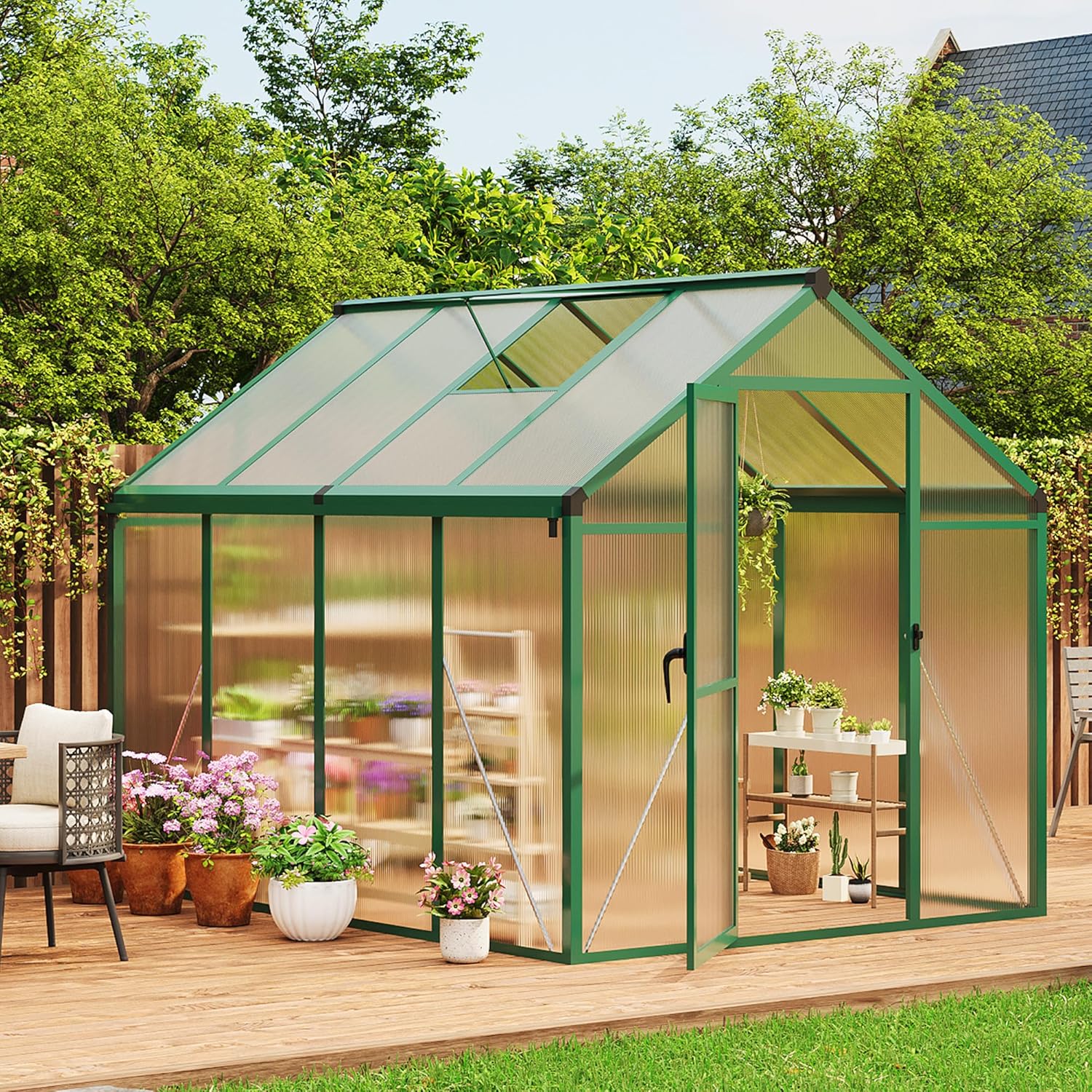
| Size | 6×8 FT |
|---|---|
| Cover Material | Polycarbonate (PC) |
| Frame Material | Aluminum Steel |
| Number Of Vents | 1 |
| Indoor Outdoor Usage | Outdoor |
This IDEALHOUSE 6×8 walk-in greenhouse is designed for gardeners who want a durable, easy-to-assemble sheltered growing space. It uses reinforced 720 g/m² polycarbonate panels that transmit light while blocking most UV and slide into an aluminum-steel frame with a slide-in assembly system that speeds setup. The greenhouse includes a roof vent and adjustable ventilation to help control temperature and airflow, plus a gutter-style water management feature for rainwater collection. In practice the structure provides a roomy footprint for seed-starting, overwintering tender plants, or extending the growing season for vegetables and ornamentals. Expect relatively straightforward assembly if you follow the instructions, but plan to handle heavy components carefully and allow for two shipments. The main limitations are the single roof vent for airflow control and the need to anchor the unit properly in exposed sites; the frame and panels are sturdy for typical garden conditions but may require additional bracing in high-wind locations.
Best for: Serious hobby gardeners who prioritize a robust, season-extension structure and want a relatively fast-build walk-in greenhouse for regular cultivation and overwintering of plants.
Less Ideal for: People needing a lightweight, ultra-portable tunnel-style greenhouse for quick seasonal use or gardeners in very windy coastal sites without plans to add extra anchoring or bracing.
- Reinforced 720 g/m² polycarbonate panels provide strong light transmission while blocking most UV
- Aluminum-steel frame offers solid structural support for outdoor use
- Slide-in panel assembly and clear instructions speed setup compared with conventional builds
- Integrated gutter system enables simple rainwater drainage and collection
- Top roof vent and adjustable ventilation help regulate internal temperature
- Only one roof vent limits fine-grained airflow control for larger heat loads
- Heavy components and sharp edges require careful handling during assembly
Verdict: A sturdily built, performance-focused 6×8 walk-in greenhouse that speeds assembly while providing durable protection for season-extension and overwintering.
VEVOR Walk-In Tunnel Greenhouse 9.6 x 6.4 x 6.2 ft Galvanized Steel Frame

| Cover Material | Polyethylene (PE) |
|---|---|
| Frame Material | Alloy Steel |
| Number Of Vents | 6 |
| Closure Type | Roll Up Zipper |
This VEVOR walk-in tunnel greenhouse is a budget-conscious, practical option for extending your outdoor growing season into winter. The kit uses 1" galvanized steel pipes with added diagonal braces, U-shaped stakes, and tie-downs to create a stable hoop structure that resists deformation in wind and light snow. A thick 140 g/m² polyethylene cover with double-stitched seams and reinforced window areas helps retain heat and block sun while the roll-up zipper door and six Velcro-window vents provide adjustable airflow and insect protection. Inside the roomy walk-in footprint you can fit shelving or move around to tend plants, seedlings, and overwintering containers. Assembly requires time and at least two people to align pipes and secure the cover; the PE cover will still need winter anchoring and occasional tightening to stay taut. It is a strong, no-frills greenhouse for gardeners who want reliable frost protection without specialty materials or rigid panels.
Best for: Gardeners who want a practical, low-cost way to protect vegetables and potted plants through cold months and who prioritize stability and usable interior space over premium glazing.
Less Ideal for: Users seeking a permanent, rigid greenhouse with glass or polycarbonate panels or those who need a solution rated for heavy snow loads.
- Reinforced galvanized steel frame with diagonal bars and stakes for improved stability
- Thick 140 g/m² PE cover with double-stitched seams for better insulation and durability
- Walk-in interior large enough for multiple shelves and easier plant access
- Six mesh windows plus a roll-up zipper door for adjustable ventilation and pest control
- PE cover requires regular anchoring and may need replacement sooner than rigid glazing
- Assembly is time-consuming and typically requires two people to complete properly
Verdict: A sturdy, cost-effective tunnel greenhouse that gives practical winter protection and roomy walk-in access for gardeners who want reliable frost-cover without premium glazing.
Pipleo Garden Dome Tent — 12 ft Geodesic Outdoor Bubble Greenhouse

| Weight Capacity Maximum | 100 pounds |
|---|---|
| Frame Material | ABS |
| Number of Items | 1 |
The Pipleo Garden Dome is a freestanding geodesic greenhouse-style dome built for all-season backyard use. It combines a clear TPU cover with a rigid ABS frame to create a sheltered, bug-free space that can serve as a greenhouse, relaxation room, or outdoor dining pod. Typical setup uses include starting seedlings in spring, creating a warm microclimate for tropical plants in summer, or sheltering people and plants through cold weather when paired with a heat source. Notable features are the military-grade TPU that resists yellowing, a sturdy ABS framework that snaps together for straightforward assembly, and 14 sandbags for extra wind anchoring. Practical benefits include the large 109.6 ft² floor area and tall headroom for working inside, plus a claimed ability to resist winds around 31 MPH and carry up to 100 pounds of snow. Important limitations are its reliance on the cover and frame for weatherproofing rather than a permanent foundation and the need to manage ventilation and heating carefully in true cold climates to prevent condensation and protect sensitive plants.
Best for: Buyers who prioritize a dependable, reusable cold-weather shelter for plants or backyard gatherings and want a robust, easy-to-assemble dome that performs across seasons.
Less Ideal for: People seeking a permanent greenhouse foundation or insulated growing rooms for highly cold-sensitive crops should consider rigid, foundation-mounted greenhouses instead.
- High-clarity TPU cover resists yellowing for longer-term outdoor visibility
- Durable ABS geodesic frame designed for straightforward assembly
- Includes 14 sandbags for additional wind anchoring
- Rated to hold up to 100 pounds of snow and resist winds around 31 MPH
- Not a permanent structure so long-term thermal performance depends on supplemental heating
- Large footprint requires significant flat outdoor space and occasional maintenance of the cover
Verdict: A sturdy, all-season geodesic dome that gives reliable cold-weather protection and a clear, long-lasting cover for year-round backyard greenhouse use.
EAGLE PEAK 8×6 Pop-Up Walk-In Greenhouse

| Size | 8×6 |
|---|---|
| Cover Material | Polyethylene (PE) |
| Frame Material | Alloy Steel |
| Number of Doors | 1 |
| Number Of Vents | 2 |
The EAGLE PEAK 8×6 pop-up greenhouse is a walk-in shelter aimed at extending the growing season and protecting plants from frost and light weather. Its preassembled alloy-steel frame uses extra steel reinforcement and a patented PeakPush center lock so one person can set it up quickly without tools. The PE cover is water-resistant and UV-filtering to help retain warmth and humidity, while the roll-up zippered door and mesh vents let you manage airflow and pest access. It includes stakes and guy ropes for added stability and a ground skirt you can weight down for windy conditions. Practical benefits include ample interior space for shelving or multiple pots, straightforward seasonal use for seed starting or fall protection, and replaceable covers or frames if components wear. Important limitations are that pop-up greenhouses are not engineered for heavy snow loads or sustained high winds so you will need to clear snow and add extra anchoring or weights during storms, and the PE cover will age faster than rigid glazing in strong sun over many seasons.
Best for: Gardeners who want an easy-to-assemble, walk-in greenhouse to start seeds, protect pots, and extend the growing season with minimal setup time and hands-on maintenance.
Less Ideal for: People needing a permanent, year-round structure for heavy snow loads or high-wind exposed sites should choose a rigid-glazed or anchored greenhouse instead.
- One-person, tool-free setup with patented center lock for fast assembly.
- Sturdy alloy-steel frame reinforced for better stability than typical pop-ups.
- Water-resistant, UV-filtering PE cover that traps warmth for season extension.
- Zippered roll-up door and mesh vents for adjustable ventilation and pest control.
- Not built to withstand heavy snow or severe winds without additional reinforcement.
- PE cover will wear faster than rigid glazing and may need replacement after prolonged sun exposure.
Verdict: Buy this if you want a roomy, one-person pop-up greenhouse that balances easy setup with a stronger steel frame for reliable seasonal protection.
EAGLE PEAK 6×4 Pop-Up Walk-In Greenhouse

| Size | 6×4 |
|---|---|
| Cover Material | Reinforced Polyethylene Film |
| Frame Material | Alloy Steel |
| Number of Doors | 1 |
| Number Of Vents | 2 |
The EAGLE PEAK 6×4 pop-up walk-in greenhouse is a compact, easy-to-use shelter for starting seeds, protecting tender plants from frost, and extending fall or early-winter growth. Its pre-assembled pop-up frame and patented center lock let one person erect the structure quickly without tools, and the reinforced polyethylene cover holds warmth and humidity while filtering light. Mesh windows and a roll-up zippered door provide straightforward ventilation and access, and included stakes and guy ropes help stabilize the unit in light to moderate winds. The alloy steel frame and powder-coated finish add durability compared with flimsy hobby tents, but because it is a lightweight pop-up design it still needs care in heavy snow or high winds and can require additional anchoring or weight bags for stormy weather. The greenhouse is best for patios, balconies, and small backyards where a simple, portable shelter is desirable rather than a permanent heavy-duty structure.
Best for: Buyers who want a small, reliable portable greenhouse they can set up alone to start seeds, overwinter plants, or extend the growing season in a patio or small yard with minimal fuss.
Less Ideal for: Gardeners needing a permanent, heavy-duty greenhouse for large crops or those in exposed, high-wind or heavy-snow climates should choose a framed, rigid structure instead.
- One-person, tool-free pop-up frame for quick setup
- Reinforced PE cover that retains warmth and is UV and water resistant
- Alloy steel frame with powder-coated finish for improved durability
- Zippered roll-up door and mesh windows for ventilation and easy access
- Pop-up design is not suited to heavy snow loads or extreme wind without extra anchoring
Verdict: A compact, one-person pop-up greenhouse that delivers easy setup and season-extension performance for small-space gardeners.
Choosing the Right Cold Weather Greenhouse: Key Factors to Consider
Glazing and Insulation
Glazing type is the primary driver of how well a cold weather greenhouse holds heat. Rigid multiwall panels trap insulating air layers and reduce nighttime radiative loss compared with single-layer film. Thicker panels and multiple layers increase R-value but also reduce light transmission; balance is needed so crops still receive adequate winter light.
Insulation extends beyond glazing. Look at edge seals, door fit, and options for thermal curtains or removable insulating panels. Even small gaps increase overnight heat loss and raise frost risk for vulnerable plants.
Structural Strength and Snow Load Capacity
Winter structures must cope with snow weight, ice, and wind-driven loads. A greenhouse with a robust frame and steep roof pitch sheds snow more easily and reduces roof sag risk. Steel or heavy-duty aluminum frames rated for higher snow loads are safer in regions with frequent accumulation.
Consider how attachment points anchor the structure to the ground. A strong foundation or proper anchoring prevents uplift in storms and keeps frames aligned so doors and vents close properly when needed.
Ventilation and Climate Management
Cold-weather greenhouses still need reliable ventilation to prevent overheating and fungal issues on sunny winter days. Roof vents, louvered side vents, and the option to add low-power fans help you manage midday temperatures and air exchange without losing too much heat.
Also evaluate passive heating strategies such as thermal mass placement, compost heat, or heat-retaining benches. These tactics smooth temperature swings and reduce reliance on active heating when power is limited or costly.
Interior Layout and Accessibility
A greenhouse that is easy to work in during cold months improves productivity. Wider walkways, adequate headroom, and a layout that accommodates benches, shelving, and heat sources let you tend crops without dragging in snow or exposing plants to drafts while you move.
Doors should allow for boot cleaning and quick access when weather is poor. Consider the placement of vents and doors relative to benches so opening them does not blast tender seedlings with cold air.
Durability and Maintenance
Long winter seasons accelerate wear on seals, glazing, and fasteners. Durable glazing resists cracking from freeze-thaw cycles, and corrosion-resistant frames stand up to wet conditions. Check how easy it is to replace panels or parts; long-term serviceability reduces lifecycle headaches.
Regular maintenance tasks include clearing snow, checking seals, lubricating hinges, and inspecting anchors. A greenhouse designed for easy access to these components will save time and prevent bigger repairs.
Ease of Assembly and Modularity
If you plan to install the greenhouse yourself, assembly complexity matters. Modular systems with clear instructions and predrilled parts reduce installation time and errors. Some cold-weather greenhouses allow for future upgrades such as added vents, insulation kits, or reinforced framing.
Ease of disassembly or expanding the structure can be useful if you relocate or want to increase capacity. Consider available accessories and how they integrate with the base structure.
Sizing for Winter Production
Think about what you want to grow through the cold months and how much space those crops need. Taller crops and staging for overwintering potted plants require higher eaves and peak height so you can work comfortably without crowding plants.
Plan circulation routes for daily tasks like watering and harvesting. A narrow greenhouse may be harder to organize for shelving plus benches. Choose a size that leaves room for thermal mass and air movement around plant racks.
- Allow space for thermal mass such as water barrels or stone.
- Reserve a clear path for moving plants and tools during snowy weather.
- Consider future expansion when selecting footprint and placement.
Placement and Microclimate Considerations
Location affects sun exposure, wind stress, and snow accumulation. Aim for maximum winter sun by siting the greenhouse where it will receive unobstructed southern exposure. Avoid low spots where cold air pools.
Wind-protected sites reduce heat loss and structural stress. If you cannot avoid a windier area, choose a greenhouse with stronger anchoring and consider windbreaks like hedges or fences to soften prevailing gusts.
- Place greenhouse on level ground with good drainage.
- Orient long axis east-west for even sun penetration in winter.
- Keep doors and ventilation away from prevailing wind directions when possible.
Passive Heating Strategies
Passive heating lowers heating needs and keeps temperatures steadier. Thermal mass such as barrels of water, stone, or concrete absorbs daytime heat and releases it at night. Position mass where it receives direct sun and where it can radiate into the growing area.
Compost bins placed inside or adjacent to the structure add heat and nutrients but require management to avoid odors and excess moisture. Combining passive mass with insulating curtains at night gives a strong balance between warmth retention and daytime light.
- Place thermal mass centrally to distribute heat evenly.
- Use insulated covers at night only when plants tolerate lower ventilation.
- Monitor humidity when using compost heat to prevent fungal growth.
Ventilation Setup and Automation Options
Automatic vent openers that respond to temperature are helpful in winter because they prevent midday overheating without manual intervention. Low-power fans with thermostats maintain airflow during stagnant conditions and reduce disease risk.
Balance automated systems with simple manual overrides. In stormy weather you may want to lock vents closed quickly, but on clear sunny days the automation will protect plants when you are not at the greenhouse.
- Use thermostatic vent openers for roof vents.
- Add small circulation fans to prevent cold pockets and condensation.
- Choose controls that are simple to override in extreme conditions.
Snow and Ice Management
Clear snow promptly from roofs to prevent overload and reduce light loss. Designs with steeper roof pitches shed snow more readily, while flatter roofs need frequent clearing. Use a soft broom or roof rake to avoid scratching glazing.
Ice near doors can block access and damage seals. Keep entry areas shoveled and consider a small overhang or vestibule to protect the main door from direct snowfall and drifting.
- Inspect roof and frame after heavy snow for signs of stress.
- Install drip edges or gutters to control meltwater and icing near doors.
- Have a safe plan for snow removal that avoids standing on fragile glazing.
How We Chose the Best Cold Weather Greenhouse
We prioritized characteristics that matter to gardeners who want reliable winter performance rather than just temporary frost protection. Core evaluation criteria included thermal retention and glazing type, because how a greenhouse holds heat determines how long plants stay safe each night. Frame strength and snow load capacity were tested conceptually, since winter structures must resist heavy wet snow and wind without warping. Ventilation and passive temperature management were assessed to avoid midday overheating and to preserve humidity levels. Usable interior layout and access were considered so the structure supports shelving, staging, and winter maintenance. Ease of assembly and durability of materials were also weighed because long seasons and extreme conditions magnify installation and maintenance burdens. We excluded lightweight, temporary hoop covers and simple cold frames that cannot withstand sustained snow or high winds. We also set aside unvented mini tents that fail to moderate humidity or temperatures. The shortlist reflects greenhouses that balance insulation, airflow, structural resilience, and practical interior space for winter production.
FAQ
Can I grow warm-season crops in a cold weather greenhouse during winter?
Often you can grow some warm-season crops if you supplement heat and provide adequate light. Success depends on how low nighttime temperatures fall in your region and whether you can maintain minimum night temperatures with passive mass or supplemental heat.
How much insulation do I need for a greenhouse in very cold climates?
Insulation needs depend on your lowest expected night temperatures and how long you want to extend the season. Multiwall glazing and insulated curtains significantly reduce heat loss, but in very cold climates you may still need supplemental heat on the coldest nights.
Is it better to use rigid panels or poly film for winter greenhouses?
Rigid multiwall panels usually perform better in winter because they offer higher R-value and resist snow damage more than thin film. However, panels transmit slightly less light. Poly film can work if framed and tensioned properly, but it often requires more maintenance in harsh weather.
How should I protect the greenhouse during heavy snow or ice storms?
Clear accumulated snow promptly using nonabrasive tools, check anchors and frame connections after storms, and avoid standing on glazing. If possible, reinforce vulnerable seams and make sure vents and doors close tightly to prevent inward leaks during melt.
Do I need electricity in a cold weather greenhouse?
Electricity is useful for running fans, automated vent openers, supplemental lights, and heaters if you plan to maintain warmer crops. In many cases, a combination of passive strategies and minimal electric controls provides a reliable, low-energy solution.
How do I manage humidity in a greenhouse during winter?
Control humidity with ventilation during daytime warmth, reduce overwatering, and use circulation fans to prevent stagnant, damp pockets. Removing excess humidity helps prevent fungal diseases and keeps plants healthy in cooler temperatures.
Final Verdict
Prioritize thermal retention, structural resilience, and controllable ventilation when choosing a cold weather greenhouse. Expect tradeoffs between maximum light transmission and insulation, and plan your layout to include thermal mass and easy access for snow management. Focus on a shelter that fits your winter crop plans and local climate so you balance heat retention with airflow. Choose a greenhouse that makes it simple to add passive heat, ventilate automatically, and perform routine maintenance. That approach will give you the most reliable winter growing environment and the fewest surprises over the colder months.
