

Note: This article contains affiliate links. If you click on these links and make a purchase, I may earn a small commission at no extra cost to you. This helps support my research and content. Read my full affiliate disclosure here.
If your plot sits in a breezy spot, a standard greenhouse can become a maintenance headache or worse for your plants. You need a structure that stands firm in gusts, vents predictably, and keeps delicate seedlings protected without constant repairs. This guide covers six shortlisted greenhouses built to handle windy garden conditions and explains the features that matter most for durability and plant health. We'll evaluate wind resistance, anchoring systems, ventilation, and material choices so you can pick the right design for your yard or allotment. Read on for practical guidance that helps you match site conditions to greenhouse features before you decide.
Top Picks at a Glance
| Best Overall The best all-around choice for most situations | SPECILITE 56×56×78 Inch Walk-in Greenhouse with Thick PE Cover and Metal Frame |  |
| Best Quality Built to a higher standard if you want something more solid | Garvee 6 x 10 ft Polycarbonate Greenhouse with Aluminum Frame and Adjustable Roof Vent |  |
| Best Value The sweet spot between price and what you get | Velway Walk-In Portable Greenhouse with 12 Shelves |  |
| Highest Rated A top-rated pick with lots of positive feedback | Ohuhu 6×8 ft Walk-In Pop-Up Greenhouse — Upgraded Wind-Ready Frame |  |
| Most Popular A crowd favorite that many people choose with confidence | Greengro Small Walk-In Greenhouse with PE Cover and Zippered Door |  |
| Best Seller A high-volume bestseller chosen again and again | EAGLE PEAK 6×8 Easy-Setup Pop-Up Greenhouse with Roll-Up Door |  |
SPECILITE 56×56×78 Inch Walk-in Greenhouse with Thick PE Cover and Metal Frame

| Number of Doors | 1 |
|---|---|
| Number Of Vents | 2 |
| Indoor Outdoor Usage | Outdoor |
| Cover Material | Polyethylene (PE) |
| Frame Material | Metal |
This SPECILITE walk-in greenhouse is a budget-friendly, portable shelter for outdoor seedlings, potted plants, and small vegetable beds. It assembles without tools from a metal tube frame and a thick polyethylene cover and includes a roll-up zipper door plus two screened side windows for ventilation. In practice it provides a warmer, protected microclimate that keeps rain and light snow off plants while the zippered roller door makes access easy and the screened windows let you manage airflow to reduce humidity. The frame is described as rust resistant and the unit supports typical seed trays and pots, so you can set up shelves or hanging lights inside. Because it is lightweight and all parts are detachable you can relocate or store it between seasons. Expect limitations in heavy weather and wind since the design is not a permanent structure and the PE cover can degrade over time with prolonged sun exposure, so anchoring and seasonal storage are recommended for long service life.
Best for: Buyers who want an inexpensive, movable greenhouse to extend the growing season for pots and seedlings and who prioritize easy setup and flexible placement.
Less Ideal for: Those who need a permanent, heavy-duty greenhouse for large-scale production or for use in very windy or snowy climates should consider a sturdier, fixed-frame alternative.
- Thick PE cover provides basic protection from rain and light snow
- Roll-up zipper door and two screened windows allow easy access and adjustable ventilation
- Metal frame with rust-resistant tubes for reasonable durability
- Detachable parts and tool-free assembly make it easy to move and store
- Lightweight design is vulnerable in high winds or heavy snow loads
- PE cover will eventually degrade under prolonged UV exposure
Verdict: A low-cost, easy-to-assemble walk-in greenhouse that gives practical season extension and movable protection for small-scale gardeners.
Garvee 6 x 10 ft Polycarbonate Greenhouse with Aluminum Frame and Adjustable Roof Vent

| Cover Material | Polycarbonate (PC) |
|---|---|
| Frame Material | Aluminum Steel |
| Size | 6x10FT |
| Number Of Vents | 1 |
| Indoor Outdoor Usage | Outdoor |
This Garvee 6 x 10 ft greenhouse is a walk-in kit designed to protect plants in exposed yards while keeping assembly straightforward. It uses reinforced 720 g/m² polycarbonate panels that slide into an aluminum-steel frame, which the manufacturer says speeds installation and gives a snug fit for better weather resistance. A single top vent is height-adjustable to manage heat and airflow, and an integrated gutter system channels rainwater for collection or drainage. The structure is intended for outdoor use and includes guidelines for anchoring, which is important in windy sites. Practical benefits include strong light transmission with UV blocking, reduced assembly time thanks to slide-in panels, and usable rainwater capture. Limitations are the single vent for ventilation control on hot days and the need to anchor the unit well in gusty conditions because lightweight panels and frame sections can still catch wind; assembly may require two people and attention to the instructions for a secure build.
Best for: Gardeners who prioritize a durable, performance-focused greenhouse for exposed or windy yards and want fast, secure panel installation without complex construction.
Less Ideal for: Those needing extensive ventilation control or a heavy-duty commercial-grade structure for extreme weather should look at multi-vent or steel-frame alternatives.
- Reinforced 720 g/m² polycarbonate panels that transmit light while blocking most UV
- Aluminum-steel frame offers stronger support than thin tubing
- Slide-in panel design speeds assembly and improves panel retention
- Integrated guttering for rainwater management and simpler maintenance
- Height-adjustable roof vent for basic airflow control
- Only one vent limits fine-tuned ventilation across the whole interior
- Requires proper anchoring and careful assembly to withstand very strong winds
Verdict: Choose this greenhouse when you want a compact, performance-oriented walk-in that balances strong polycarbonate protection with faster slide-in assembly for windy garden locations.
Velway Walk-In Portable Greenhouse with 12 Shelves

| Cover Material | Polyethylene (PE) |
|---|---|
| Frame Material | Alloy Steel |
| Number of Doors | 1 |
| Number Of Vents | 1 |
| Indoor Outdoor Usage | Indoor, Outdoor |
This Velway walk-in greenhouse is built to give reliable, no-fuss plant protection for small backyard gardens. It assembles without tools using snap connectors and a zip-on 130g PE mesh cover, and the electro-coated iron frame helps resist rust for season-to-season use. The unit is large enough to step inside for watering and pruning while the 12 mesh shelves organize pots, trays, and tools; each shelf is rated to hold about 22 lb so it supports typical seedling flats and medium pots. Ventilation is practical: two mesh side windows plus a roll-up zippered door let you create crossflow on warm days to avoid overheating. Anchoring options include four wind ropes, four stakes, and a 4-inch skirt you can weigh down, which helps keep the structure steady in gusts. Expect straightforward benefits for extending the growing season and protecting tender plants from light frost. Important limitations are that the PE cover and plastic connectors are best for moderate weather and the shelter should be taken down or extra-anchored for heavy snow or very strong winds.
Best for: Gardeners who prioritize a dependable, low-maintenance shelter for starting seedlings and protecting small plants through spring and fall, and who want something that stands up to regular outdoor use.
Less Ideal for: Those needing a heavy-duty, permanent greenhouse for year-round use in harsh winter climates or for large plants that require rigid, load-bearing structures.
- Tool-less click-together assembly with zip-on cover for fast setup
- Electro-coated iron frame resists rust for longer outdoor life
- Twelve mesh shelves provide organized storage and each supports up to 22 lb
- Mesh cover with UV protection and roll-up door plus two vents for good airflow
- Includes wind ropes, stakes, and a weigh-down skirt for improved anchoring
- PE mesh cover and plastic connectors are not intended for heavy snow loads or prolonged severe weather
- Relatively lightweight overall so it still needs extra anchoring on exposed sites
Verdict: Choose this greenhouse if you want an easy-to-assemble, rust-resistant walk-in shelter that reliably extends the growing season for seedlings and small container plants.
Ohuhu 6×8 ft Walk-In Pop-Up Greenhouse — Upgraded Wind-Ready Frame

| Cover material | 3-layer 140g PE |
|---|---|
| Frame supports | 8 steel roof supports |
| Doors | 2 roll-up doors |
| Usage | Outdoor |
This Ohuhu walk-in pop-up greenhouse provides quick, reliable protection for backyard plants and small collections. The one-action top frame pops up in seconds, so you can set it up or fold it down without tools and move it between spots as seasons change. Notable features include eight steel roof supports (instead of the usual six) and guy lines that attach to the frame rather than the cover, which helps reduce roof sagging and tearing in wind. The 3-layer 140g PE cover has UV and freeze-resistant treatment plus double-stitched seams to retain warmth and resist aging. Two roll-up doors and two zippered mesh windows let you manage ventilation while still keeping out pests and dust. Important limitations are that the cover and frame are typical of portable greenhouses, so extreme winds or heavy, prolonged snow may require extra anchoring or removal, and the PE cover is not as long-lasting as rigid glazing. Still, for gardeners who need dependable, seasonal shelter without permanent construction this model balances sturdiness and fast, tool-free convenience.
Best for: Gardeners who want a dependable, easy-to-deploy walk-in shelter for overwintering plants, seed starting, or seasonal protection without permanent construction.
Less Ideal for: People seeking a permanent, high-durability greenhouse with rigid glazing or those who need an all-weather structure for frequent heavy snow or hurricane-strength winds.
- Fast tool-free pop-up and fold-down setup for quick seasonal use
- Eight steel roof supports and frame-attached guy lines improve roof load distribution and wind stability
- 3-layer 140g PE cover with UV and freeze resistance and double-stitched seams for better weather protection
- Walk-in interior with two doors and mesh vents for easy access and ventilation
- PE cover is less durable long-term than glass or polycarbonate glazing
- Portable design may need additional anchoring or removal in extreme wind or heavy snow
Verdict: Buy this if you want a reliable, quick-deploy walk-in greenhouse that prioritizes wind-ready frame strength and seasonal convenience.
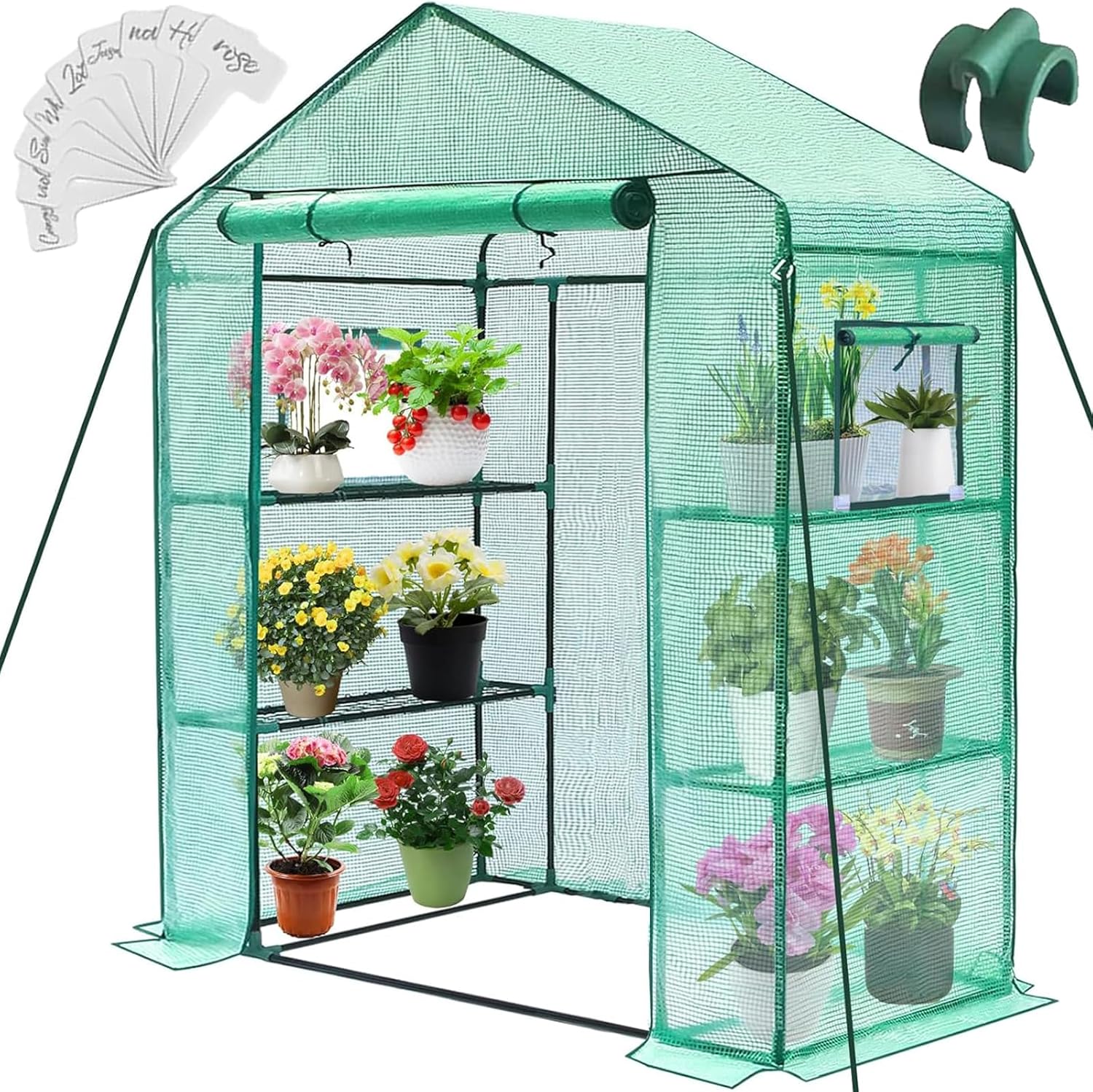
Greengro Small Walk-In Greenhouse with PE Cover and Zippered Door
| Cover Material | Polyethylene (PE) |
|---|---|
| Frame Material | Metal |
| Closure Type | Zipper |
| Nominal Wall Thickness | 16 millimeters |
This Greengro small walk-in greenhouse creates a sheltered microclimate for potted plants, seedlings and herbs by combining a metal framework with a thick PE cover and zippered access. It is typically used on a patio, balcony or in a backyard to extend the growing season, shield plants from wind and rain, and keep pests out. Notable features include screened ventilation windows, a roll-up zippered door, four internal shelves for staging pots, and guy ropes with ground stakes for added stability. Practical benefits are straightforward setup without tools, portability for repositioning, and weather-resistant protection that lets you start seeds earlier or overwinter tender plants. Important limitations are its small footprint and modest shelf weight capacity, so it is best for small to medium pots rather than heavy planters, and the lightweight frame and cover remain less durable than rigid greenhouse structures in long-term, high-wind exposure.
Best for: Buyers who want an efficient, moveable solution to protect and organize several small to medium potted plants and seedlings without investing in a permanent structure.
Less Ideal for: Gardeners who need a long-term, heavy-duty greenhouse for large pots, full-size vegetables, or locations regularly exposed to very strong winds should consider sturdier, permanent options.
- Thick polyethylene cover with reinforced edging offers waterproofing and UV reduction
- Zippered roll-up door and screened windows provide ventilation and easy access
- Tool-free assembly and detachable design for quick setup and relocation
- Integrated shelves create organized vertical growing space for multiple pots
- Small size limits capacity to small and medium pots and seed trays
- Lightweight frame and cover are not as long-lasting as permanent rigid greenhouses
Verdict: A compact, easy-to-assemble micro greenhouse that protects and organizes small to medium potted plants while staying portable and budget friendly.
EAGLE PEAK 6×8 Easy-Setup Pop-Up Greenhouse with Roll-Up Door

| Size | 6×8 |
|---|---|
| Cover Material | Polyethylene (PE) |
| Frame Material | Alloy Steel |
| Number of Doors | 2 |
| Number Of Vents | 2 |
This EAGLE PEAK 6×8 pop-up greenhouse is built for gardeners who want a quick, sturdy shelter for winter protection and seed starting. The preassembled alloy steel frame uses a patented center-lock that lets one person raise the structure without tools, while the powder-coated finish, wind ropes, and stakes improve outdoor stability. The PE cover is water- and UV-resistant, which helps retain humidity and filter sunlight through cold months. Two roll-up zippered doors and mesh windows provide adjustable ventilation and keep small animals out. Practical benefits include fast setup, walk-in access for tending plants, and compatibility with optional shelving to increase growing capacity. Limitations to consider are that the PE cover is less durable than polycarbonate in heavy snow or prolonged abrasion, and pop-up frames generally need careful anchoring in high winds; long-term outdoor exposure may require occasional cover replacement. For a risk-averse buyer wanting simple winter protection and easy assembly, this greenhouse delivers predictable, straightforward performance.
Best for: Buyers who want a low-effort, dependable winter greenhouse for frost protection and seed starting and who prefer easy single-person setup and predictable performance.
Less Ideal for: Growers needing a permanent, heavy-duty greenhouse for heavy snow loads or long-term all-season use should consider rigid-frame polycarbonate or wood greenhouses instead.
- One-person pop-up setup with patented center-lock for fast assembly
- Alloy steel frame with powder coating and included wind ropes and stakes for improved outdoor stability
- Water-resistant and UV-resistant PE cover that helps retain humidity for winter protection
- Walk-in size with two zippered roll-up doors and mesh windows for ventilation and access
- PE cover is less impact- and snow-resistant than rigid panels and may need replacement over time
- Pop-up frames require good anchoring and may not perform as well in very high winds
Verdict: A fast, one-person pop-up greenhouse that reliably extends the growing season with simple setup and practical winter protection.
Choosing the Right Greenhouse for Windy Garden: Key Factors to Consider
Wind Resistance & Frame Geometry
How the frame handles gusts matters because wind forces multiply with speed and can create uplift and racking. A greenhouse with triangular geometry, pitched roof, or cross-bracing reduces oscillation and spreads loads through the frame rather than concentrating stress at joints. Continuous rails and reinforced corners help prevent twisting, and a lower profile reduces the sail effect on exposed sites.
When evaluating designs, look for visible bracing, thicker-section extrusions, and roof shapes that shed wind rather than catch it. Good geometry reduces the chance of frame deformation during gusts and extends the working life of the structure.
Anchoring and Foundation Options
A greenhouse is only as stable as its attachment to the ground. Shallow stakes are often insufficient on windy sites; anchored base channels, ground screws, concrete pads, or bolted foundations significantly increase resistance to uplift and sliding. Some greenhouses include adjustable base rails that accept multiple types of anchors so you can upgrade as needed.
Consider soil type when planning anchors. Sandy or loose soils need deeper, wider anchors or a compacted footing, while firm clay can accept heavy-duty ground anchors. A bolt-down option to a concrete edge or a timber sleeper foundation gives the best long-term stability in high-wind locations.
Panel Material and Impact Resistance
Panel choice affects both wind performance and plant microclimate. Twin-wall polycarbonate is common for windy sites because its ribbed structure adds stiffness and resists impacts better than single-pane glass. Thicker panels reduce flexing and maintain insulation value when winds cause vibration. Tempered safety glass is durable but heavier and needs a robust frame to support it.
Also check how panels are fixed to the frame. Continuous gaskets, clamped channels, or overlapping edges reduce wind-driven loosening. Panels that rattle or bow under load are more likely to fail or leak over time.
Ventilation and Wind Management
Good ventilation balances plant needs with wind exposure. On windy sites, passive vents with adjustable latches let you control airflow without creating damaging drafts. Roof vents and louvre-style vents deflect gusts while releasing hot air; side vents can be opened partially to create gentle cross-breezes when conditions allow.
Mechanical fans may be useful for precise control but require power and a plan for wind-driven variability. Aim for venting systems that seal tightly when closed and provide staged openings to avoid exposing seedlings to sudden cold drafts.
Size, Shape, and Siting Considerations
The footprint and proportions of the greenhouse change how it reacts to wind. Narrower, lower structures present less surface area to lateral gusts, while taller greenhouses capture more wind and need stronger bracing. Long eaves and tall gables can increase uplift risk if not well-anchored.
Site selection can mitigate exposure. Position the long axis parallel to prevailing winds, use existing walls or hedges as windbreaks, and place the greenhouse on a slightly elevated, well-drained area to avoid water pooling around anchors. Consider modular expansions carefully because added length changes wind loads.
Assembly, Maintenance, and Repairability
A greenhouse that is easy to assemble correctly reduces the risk of weak joints or improperly seated panels that become failure points in wind. Clear instructions, labeled parts, and accessible fastenings help you achieve the rated stability. Also consider how simple it is to replace damaged panels or reinforce the frame later-this determines lifecycle cost and downtime after severe weather.
Regular maintenance such as retorquing fasteners, checking seal integrity, and clearing gutters can prevent small issues from becoming major failures during a windy season.
Planning the Site to Reduce Wind Exposure
Before you buy, evaluate microclimates around your garden. Natural and built features such as fences, hedges, buildings, and berms can lessen peak gusts and turbulent eddies. Planting a staggered windbreak or siting the greenhouse behind a low wall shifts the worst forces away from the structure and reduces long-term wear.
- Orient the long side parallel to prevailing winds to reduce broadside loading.
- Keep at least a few meters of clearance upwind to avoid funnelling between objects.
- Avoid siting on ridge tops or abrupt drop-offs where gusts accelerate.
Anchoring Techniques That Work in Different Soils
Match anchors to soil and expected wind loads. Ground screws and helical anchors are effective in loamy soils and can be installed with handheld tools. In sandy ground, use deeper anchors or a concrete strip footing to resist uplift. For permanent installations, bolting the base frame to a concrete pad or timber foundation is the most secure option.
- Use longer anchors in loose soils and expand the anchor footprint where possible.
- Consider corrosion-resistant anchors in salty coastal locations.
- Check local codes if you plan a permanent foundation.
Managing Ventilation Without Compromising Stability
Vent design should allow staged opening so you can provide gentle airflow on blustery days and fuller circulation on calm ones. Roof vents with stays or friction hinges often allow safer partial openings than full-width side doors that act like sails. Seal quality around vents matters to avoid water and wind ingress when vents are closed.
- Install automatic vent openers rated for your expected temperature range to reduce manual adjustments.
- Use adjustable louvres or partially open vents to prevent sudden drafts to seedlings.
- Ensure vent fastenings are easy to secure quickly if conditions worsen.
Reinforcements and Aftermarket Upgrades
Even sturdy greenhouses benefit from targeted reinforcement. Cross-bracing kits, additional base anchors, and corner gussets add stiffness where needed. If your greenhouse uses thinner panels, adding internal battens or exterior trim can reduce panel flutter. Check manufacturer tolerances so upgrades do not void warranties if that matters to you.
- Add diagonal bracing between vertical posts for improved racking resistance.
- Upgrade to thicker polycarbonate panels if the original spec feels marginal.
- Fit storm straps or cable anchors for temporary heavy-wind protection.
Seasonal Care for Windy Locations
Wind exposure often coincides with seasonal storms. Before high-wind seasons, inspect all fixings, tighten loose bolts, and replace worn seals. Remove or securely fasten lightweight shelving and hanging pots that become projectiles in gusts. Consider temporary windbreaks during storms, such as tarps tied to ground anchors, to shield vulnerable sides.
- Keep gutters and downspouts clear to prevent wind-driven water loads.
- Store loose items and delicate plants overnight when severe weather is predicted.
- Make a simple checklist for pre-storm inspections.
How We Chose the Best Greenhouse for Windy Garden
We shortlisted greenhouses that demonstrably address strong-exposure garden situations and practical gardener needs. Selection prioritized structural wind resistance, tested anchoring solutions, and frame material durability alongside panels that resist impact and flexing in gusts. We also evaluated ventilation performance under variable wind so plants get stable airflow without draft damage. Ease of assembly and routine maintenance were included because a complex install or frequent repairs undermines long-term protection in windy locations. Size and shape variety were considered to match common backyard and allotment footprints while still offering sufficient headroom and shelving options. We excluded lightweight, pop-up styles and any designs that rely solely on shallow stakes for stability. We also set aside purely aesthetic structures with thin frames that are unlikely to survive regular high winds. The final picks reflect a balance of anchoring options, cross-bracing or reinforced framing, panel resilience, ease of venting, and realistic installation demands for gardeners facing persistent wind.
FAQ
What foundation is best for a greenhouse in a windy garden?
A bolted concrete pad or a timber sleeper foundation offers the most reliable resistance to uplift and sliding. For less permanent installations, deep ground screws or helical anchors are effective if matched to soil type and installed to the recommended depth.
Can polycarbonate panels survive constant strong winds?
Thicker, multiwall polycarbonate is well suited to windy sites because its ribbed structure adds stiffness and absorbs impact better than single-pane glazing. Proper fixing and edge sealing are essential to prevent flexing and loosening under repeated gusts.
Do vents make greenhouses weaker in high winds?
Vents can increase wind forces if left wide open, but staged or partially opened vents provide necessary airflow without creating harmful drafts. Roof vents and controlled louvres reduce the need for full side openings that act like sails.
How can I improve an existing greenhouse for better wind performance?
Add diagonal bracing, increase anchor depth or count, and upgrade panel fixings. Reinforcing corners and installing storm straps or cable anchors will reduce racking and uplift risk. Regularly check and tighten fastenings as part of seasonal maintenance.
Is it better to choose a low-profile greenhouse for windy sites?
Lower, narrower greenhouses present less surface area to wind and are generally easier to secure, but they also limit headroom and shelving. Balance profile with your need for space and the expected wind speeds at your site.
Should I rely on mechanical fans for ventilation in a windy garden?
Mechanical fans provide precise control but they do not solve wind exposure and need power and protection from driven rain. Use fans as part of a system that also includes controllable passive vents and good sealing when vents are closed.
Final Verdict
For gardeners in exposed, windy locations, prioritize structural stability and anchoring above cosmetic features. Choose frames with bracing and robust connections, pair them with suitable anchors or a proper foundation, and select panel materials that resist flex and impact. Also plan for adjustable ventilation so you can manage airflow without exposing plants to sudden drafts. Weigh tradeoffs between profile and usable space, and remember that site planning and seasonal maintenance are as important as the greenhouse design. Focus on wind resistance, anchoring, and repairability to find a durable solution that keeps plants protected year after year.
