

Note: This article contains affiliate links. If you click on these links and make a purchase, I may earn a small commission at no extra cost to you. This helps support my research and content. Read my full affiliate disclosure here.
If you grow orchids you already know they thrive on stable humidity, dappled light, and good air movement. A greenhouse designed for orchids gives you controlled humidity, protection from temperature swings, and space to manage staged watering and pot placement. This guide presents six top greenhouse options selected for orchid culture across home and hobbyist settings. We shortlisted structures that make daily care practical and that support critical factors like humidity control, light diffusion, ventilation, and benching layout. Below you will find concise explanations of what matters, plus practical sections on siting, staging plants, and seasonal care to help you pick the right greenhouse for your orchids.
Top Picks at a Glance
| Best Overall The best all-around choice for most situations | MOLLYAIR 4-Tier Indoor Orchid Greenhouse with 3 Full-Spectrum T8 Grow Lights and Timer |  |
| Best Quality Built to a higher standard if you want something more solid | VEVOR 4-Tier Indoor Greenhouse Plant Stand with 180W Full-Spectrum Grow Lights and Clear Cover |  |
| Best Value The sweet spot between price and what you get | Greengro Small Walk-In Greenhouse with PE Cover and Zippered Door |  |
| Highest Rated A top-rated pick with lots of positive feedback | Inzlume 5-Tier Indoor Greenhouse with 4-Panel Grow Lights |  |
| Most Popular A crowd favorite that many people choose with confidence | Pure Garden 4-Tier Mini Greenhouse with PVC Cover and Locking Wheels |  |
| Best Seller A high-volume bestseller chosen again and again | EAGLE PEAK 6×4 Pop-Up Walk-In Greenhouse |  |
MOLLYAIR 4-Tier Indoor Orchid Greenhouse with 3 Full-Spectrum T8 Grow Lights and Timer

| Frame Material | Alloy Steel |
|---|---|
| Capacity | 12 load |
| Number of Grow Lights | 3 T8 full-spectrum |
| Includes | Timer, thermometer, drainage tray, wheels |
This indoor orchid greenhouse is built to give potted orchids a stable, humidity-friendly microclimate in a compact footprint. The steel-framed, four-tier stand holds up to a dozen pots and the smoked PVC front lets you view plants while moderating bright indoor light. Three full-spectrum T8 grow lights with a 24-hour timer reproduce cool, daylight, and warm spectrums to support leaf growth and flowering without daily lamp management. Dual mesh vents and a hidden drainage tray help control humidity and prevent standing water, and lockable wheels make it easy to reposition the unit for seasonal light changes. Setup and routine use are straightforward for hobbyists and collectors, and the included thermometer helps monitor conditions. Expect limitations typical of small indoor greenhouses: it will not provide the larger humidity buffer or temperature stability of a full greenhouse and the fabric cover reduces airflow compared with a solid enclosure, so close monitoring during heat waves or cold snaps is advisable.
Best for: Orchid hobbyists who want an all-in-one indoor solution that saves space and reduces daily maintenance, ideal for apartment dwellers or collectors who need consistent light and humidity control.
Less Ideal for: Large-scale growers or anyone who needs a very stable, high-volume greenhouse environment for many mature plants should look at larger, rigid greenhouses instead.
- Full-spectrum T8 grow lights with a 24-hour timer for consistent, adjustable light
- Compact four-tier design supports up to 12 orchid pots while saving floor space
- Smoked PVC front protects from harsh light while allowing easy viewing
- Dual mesh vents and drainage tray help manage humidity and prevent water buildup
- Lockable wheels allow easy repositioning for optimal light exposure
- Smaller internal volume than a greenhouse, so temperature and humidity swing more quickly
- Fabric cover limits airflow compared with rigid enclosures which may require more frequent monitoring
Verdict: For compact indoor orchid care, this 4-tier unit delivers reliable, timed full-spectrum lighting and basic humidity control in a space-saving package.
VEVOR 4-Tier Indoor Greenhouse Plant Stand with 180W Full-Spectrum Grow Lights and Clear Cover

| Power Source | Corded Electric |
|---|---|
| Number of Light Sources | 6 |
| Wattage | 180 watts |
| Color Temperature | 3000 Kelvin |
| Recommended Uses For Product | for Indoor Plants |
This VEVOR 4-tier plant stand combines a compact greenhouse cover with six full-spectrum LED fixtures to give potted orchids steady light, warmth, and humidity control in a small indoor footprint. Typical use is as a dedicated orchid station: place pots on the adjustable shelves, zip the clear cover closed to trap humidity, set the mechanical timer for daily light cycles, and monitor conditions with the built-in hygrometer. Notable features include six 30W LED light bars providing broad 3000 K output, a 24-hour rotary timer with 15-minute increments for repeatable photoperiods, powder-coated iron frame for rigidity, leak-proof drip trays that protect the lighting and electronics, and swivel casters for repositioning. The practical benefits for orchid growers are consistent, controllable light and a humid microclimate that helps reduce stress during flowering and repotting. Limitations to plan for are the fixed color temperature of 3000 K which is warmer than some orchid-specific spectra, and the enclosed cover can reduce airflow so occasional ventilation or a small fan is advisable to prevent stagnation and fungal issues.
Best for: Growers who prioritize reliable, repeatable growing conditions and want a compact, mobile orchid station that provides controlled light and humidity for multiple plants.
Less Ideal for: Collectors who need precise adjustable spectra or large mature specimen display space should consider modular systems with tunable lights or larger greenhouse options.
- Full-spectrum LED array (six 30W lights, 180W total) provides high-intensity, consistent illumination across four shelves
- Mechanical 24-hour timer with 15-minute increments enables repeatable daily light cycles without electronics setup
- Clear greenhouse cover plus hygrometer creates and lets you monitor a humid microclimate beneficial for orchids
- Sturdy powder-coated iron frame with leak-proof trays and caster wheels for durability and easy repositioning
- Color temperature is fixed at 3000 K which is warmer than the cooler spectra many orchids prefer for compact growth
- Enclosed cover limits airflow so additional ventilation or occasional airing is needed to avoid mold or rot
Verdict: Provides a compact, ready-to-use humid greenhouse with powerful, timed full-spectrum lighting ideal for growers who want consistent performance for multiple orchids.
Greengro Small Walk-In Greenhouse with PE Cover and Zippered Door
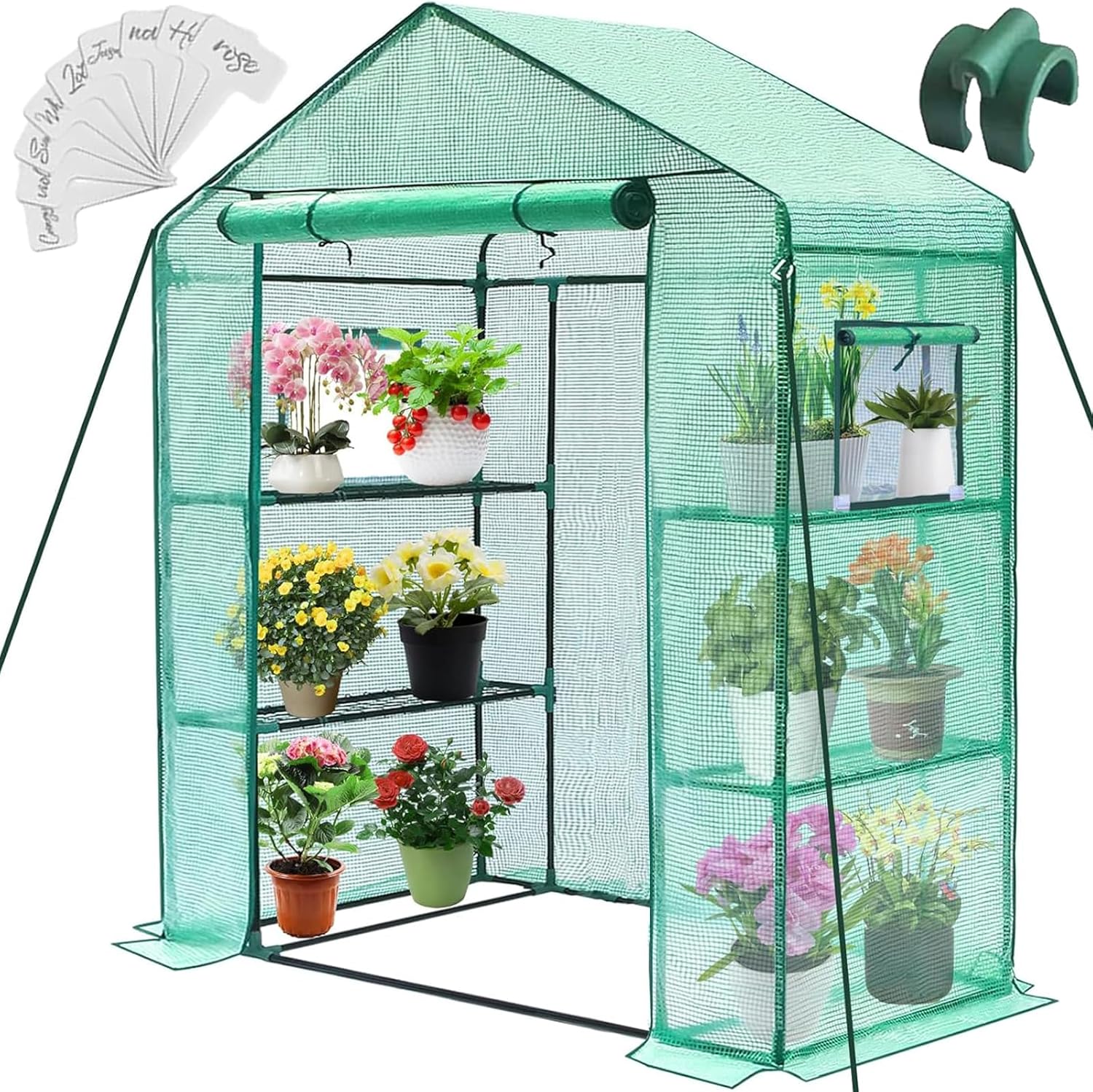
| Cover Material | Polyethylene (PE) |
|---|---|
| Frame Material | Metal |
| Closure Type | Zipper |
| Nominal Wall Thickness | 16 millimeters |
This Greengro small walk-in greenhouse creates a sheltered microclimate for potted plants, seedlings and herbs by combining a metal framework with a thick PE cover and zippered access. It is typically used on a patio, balcony or in a backyard to extend the growing season, shield plants from wind and rain, and keep pests out. Notable features include screened ventilation windows, a roll-up zippered door, four internal shelves for staging pots, and guy ropes with ground stakes for added stability. Practical benefits are straightforward setup without tools, portability for repositioning, and weather-resistant protection that lets you start seeds earlier or overwinter tender plants. Important limitations are its small footprint and modest shelf weight capacity, so it is best for small to medium pots rather than heavy planters, and the lightweight frame and cover remain less durable than rigid greenhouse structures in long-term, high-wind exposure.
Best for: Buyers who want an efficient, moveable solution to protect and organize several small to medium potted plants and seedlings without investing in a permanent structure.
Less Ideal for: Gardeners who need a long-term, heavy-duty greenhouse for large pots, full-size vegetables, or locations regularly exposed to very strong winds should consider sturdier, permanent options.
- Thick polyethylene cover with reinforced edging offers waterproofing and UV reduction
- Zippered roll-up door and screened windows provide ventilation and easy access
- Tool-free assembly and detachable design for quick setup and relocation
- Integrated shelves create organized vertical growing space for multiple pots
- Small size limits capacity to small and medium pots and seed trays
- Lightweight frame and cover are not as long-lasting as permanent rigid greenhouses
Verdict: A compact, easy-to-assemble micro greenhouse that protects and organizes small to medium potted plants while staying portable and budget friendly.
Inzlume 5-Tier Indoor Greenhouse with 4-Panel Grow Lights

| Frame Material | Metal |
|---|---|
| Inner Material | PVC |
| Light Source Wattage | 60 watts |
| Chamber Volume | 2.43 cubic feet |
This Inzlume five-tier indoor greenhouse is a compact, all-in-one kit for starting seeds and overwintering small plants indoors. It pairs a metal shelf frame and clear PVC tent with four 15W LED grow lights (5000K, 60W total) and a removable PVC base mat to trap heat and protect floors. Typical use is straightforward: assemble the frame without tools, slide on the transparent cover, place trays on the shelves, set the timer for daily lighting cycles, and monitor growth through the clear material. Notable features include the built-in timer with three scheduling options, the advertised PPFD suited for close-proximity seedlings, and a zippered roll-up door for easy access and ventilation control. Practical benefits are tidy, space-efficient staging for multiple trays, reduced mess thanks to the base mat, and consistent automated lighting that helps maintain reliable light schedules. Important limitations are the small internal volume that restricts plant size and spacing, and the PVC cover and zipper may not match heavier-duty greenhouse materials for long outdoor or heavy-use durability.
Best for: Buyers who want a reliable, low-maintenance indoor setup to start seeds or keep small plants through winter with automated lighting and minimal fuss.
Less Ideal for: Growers needing large-scale production, taller plants, or a heavy-duty outdoor greenhouse should look for larger or more rugged systems.
- Integrated 60W full-spectrum LED array with 5000K color and timer for automated daily light cycles
- Metal frame and five shelves deliver organized, space-efficient staging for multiple trays or pots
- PVC base mat protects floors and helps retain warmth and moisture while being removable for cleaning
- Clear, high-transparency PVC cover and zippered roll-up door allow easy plant monitoring and access
- Small internal volume limits the size and number of plants you can grow at once
- PVC tent and zipper are less durable than heavier commercial greenhouse materials over long-term heavy use
Verdict: A compact, dependable indoor greenhouse kit that delivers automated full-spectrum lighting and tidy staging for seed starting and small-plant winter care.
Pure Garden 4-Tier Mini Greenhouse with PVC Cover and Locking Wheels

| Number of Doors | 2 |
|---|---|
| Closure Type | Zipper |
| Weight Capacity | Maximum weight: 24 pounds |
| Cover Material | Polyvinyl Chloride (PVC) |
| Frame Material | Alloy Steel |
This 4-tier Pure Garden mini greenhouse provides a compact, movable environment for starting seedlings, growing herbs, and protecting small potted plants from frost. Assembly is tool-free and the tubular alloy steel frame plus clear PVC cover create a warm, sheltered space; the zippered roll-up door gives easy access and ventilation control. Each shelf is rated to hold up to 24 pounds, so it accommodates multiple trays, medium pots, or seed flats across four levels. Locking caster wheels make it simple to move the unit onto a porch or into a sunroom, and you can remove the wheels to keep it stationary outdoors. Practical benefits include season extension for vegetables and tender perennials and convenient organization of plants and supplies. Limitations are the lightweight PVC cover, which will need careful anchoring and protection from strong wind and prolonged sun exposure, and the modest shelf spacing that limits very large pots or tall plants.
Best for: Gardeners who want a versatile, space-efficient greenhouse to start seedlings, grow herbs, or protect small plants through cooler months and who value portability and simple setup.
Less Ideal for: Growers who need a heavy-duty, long-term outdoor greenhouse for large plants or commercial propagation should look for sturdier, larger climate-controlled options.
- Compact four-tier design fits seed trays and multiple small to medium pots
- Tool-free assembly with locking wheels for easy repositioning
- Clear PVC cover with zippered roll-up door for protection and ventilation
- Alloy steel tubular frame offers basic stability for everyday use
- PVC cover is lightweight and can deteriorate under prolonged sun or rough weather
- Shelf spacing and weight limits restrict use with large or heavy containers
Verdict: A practical, easy-to-move four-shelf greenhouse that extends the season for seed starting and small-plant growing in compact spaces.
EAGLE PEAK 6×4 Pop-Up Walk-In Greenhouse

| Size | 6×4 |
|---|---|
| Cover Material | Reinforced Polyethylene Film |
| Frame Material | Alloy Steel |
| Number of Doors | 1 |
| Number Of Vents | 2 |
The EAGLE PEAK 6×4 pop-up walk-in greenhouse is a compact, easy-to-use shelter for starting seeds, protecting tender plants from frost, and extending fall or early-winter growth. Its pre-assembled pop-up frame and patented center lock let one person erect the structure quickly without tools, and the reinforced polyethylene cover holds warmth and humidity while filtering light. Mesh windows and a roll-up zippered door provide straightforward ventilation and access, and included stakes and guy ropes help stabilize the unit in light to moderate winds. The alloy steel frame and powder-coated finish add durability compared with flimsy hobby tents, but because it is a lightweight pop-up design it still needs care in heavy snow or high winds and can require additional anchoring or weight bags for stormy weather. The greenhouse is best for patios, balconies, and small backyards where a simple, portable shelter is desirable rather than a permanent heavy-duty structure.
Best for: Buyers who want a small, reliable portable greenhouse they can set up alone to start seeds, overwinter plants, or extend the growing season in a patio or small yard with minimal fuss.
Less Ideal for: Gardeners needing a permanent, heavy-duty greenhouse for large crops or those in exposed, high-wind or heavy-snow climates should choose a framed, rigid structure instead.
- One-person, tool-free pop-up frame for quick setup
- Reinforced PE cover that retains warmth and is UV and water resistant
- Alloy steel frame with powder-coated finish for improved durability
- Zippered roll-up door and mesh windows for ventilation and easy access
- Pop-up design is not suited to heavy snow loads or extreme wind without extra anchoring
Verdict: A compact, one-person pop-up greenhouse that delivers easy setup and season-extension performance for small-space gardeners.
Choosing the Right Greenhouse for Growing Orchids: Key Factors to Consider
Humidity Control and Retention
Orchids generally prefer consistently high relative humidity without prolonged leaf wetness. The greenhouse must allow you to raise and hold humidity with minimal daily adjustment. That can come from a tight-sealing covering, an interior humidifier, or the ability to group plants and staging benches to create localized humid microclimates.
Consider how the structure behaves on dry, windy days and how easily it accepts passive or active humidification. Materials that wick or shed moisture differently will change how often you need to top up humidity. Also think about drainage and condensate management so excess moisture does not cause crown rot or fungal issues.
Light Diffusion and Shade Management
Most orchids thrive in bright, indirect light rather than direct sun. The greenhouse should provide even, diffused illumination or the ability to add shade cloth and light-diffusing covers. Look for coverings and framing that reduce hotspots and allow for layered shading to match varied species needs.
Think about orientation and how much light enters at midday in summer. The ability to adjust shade levels seasonally and to hang plants at different heights matters for mixing species with different light tolerances.
Ventilation and Air Movement
Good air exchange prevents stagnant pockets that lead to fungal disease while still preserving humidity. Choose a greenhouse with adjustable vents, operable windows, or the option to add screened openings and fans. Cross ventilation is particularly important for controlling temperature peaks and for drying foliage when needed.
Also consider quiet, low-speed circulation fans versus high-speed fans that remove humidity too quickly. Vent placement affects how evenly air moves through benches and hanging racks.
Bench, Hanging, and Staging Flexibility
Orchid care often requires both bench space for pots and hanging space for baskets. A greenhouse that offers modular benching, adjustable shelf heights, and secure hanging points will let you arrange plants by moisture and light needs. Easy access for repotting and inspecting roots is essential, so benches should be at comfortable heights and designed to allow water drainage and airflow under pots.
Consider whether benches are removable or fixed, whether they accept trays for running water, and how plants will be grouped for common watering schedules.
Temperature Moderation and Insulation
While many orchids like warm days and cooler nights, rapid temperature swings stress plants. Evaluate how the greenhouse moderates daytime heat and retains warmth overnight. Double-layer coverings, polycarbonate panels, or insulated framing can reduce extremes, while ventilated ridge vents and shade systems help prevent overheating.
Also think about how easy it is to add passive thermal mass, heaters, or thermostatic controls if your local climate requires supplemental regulation.
Maintenance, Cleaning, and Longevity
Orchid growers need to clean regularly to prevent pests and fungal buildup. Materials that resist staining, are easy to wipe down, and resist UV degradation reduce long-term upkeep. Fasteners and frames that tolerate humid, warm conditions without corroding will extend the greenhouse life.
Also consider how easily you can replace coverings or panels and whether replacement parts are straightforward to install. The easier the routine maintenance, the less disruption to your plants.
Siting Your Orchid Greenhouse
Choose a location that receives bright, indirect light for most of the day. Avoid spots with prolonged direct midday sun unless you plan to add robust shading. Consider morning sun exposure for plants that tolerate brighter light and afternoon shade for more sensitive species.
Place the greenhouse where you can route water, electrical power for humidifiers or fans, and where you have easy access for moving plants and supplies. Proximity to the house simplifies monitoring and makes winter heating easier if needed.
- Aim for morning sun and afternoon shade when possible
- Keep a level surface with good drainage to prevent standing water
- Allow room for door swing and plant access on all sides
Staging and Potting Workflow Inside the Structure
Plan bench layout so you can group orchids by watering schedule and light needs. Leave aisle space for potting and inspection and designate an area for messy tasks like repotting and cleaning pots.
Include hanging options for basket culture and adjustable shelving for seedlings or nursery stock. A dedicated misting or humidifier zone helps create higher-humidity pockets without raising humidity across the entire structure.
- Create a potting bench near a utility sink or water source
- Use rolling carts or lightweight benches for flexible layout
- Designate quarantine space for new or sick plants
Seasonal Climate Management
Modify ventilation and shading as seasons change. In summer prioritize ventilation and partial shading to prevent leaf burn. In cooler months focus on retaining warmth at night while avoiding prolonged wet foliage.
Plan for supplemental systems you might add, such as thermostatic heaters, timed fans, or humidifiers. These allow you to maintain orchid-friendly day/night differentials and steady humidity with minimal daily input.
- Use thermostats to automate heaters and fans
- Employ removable shade cloth for summer control
- Monitor humidity and temperature daily until patterns are established
Common Pest and Disease Prevention
Good airflow, regular cleaning, and prompt removal of spent blooms cut down on pests and fungal issues. Avoid overhead watering that leaves foliage wet for long periods. Instead, water at pot level and ensure pots drain fully.
Inspect new plants in quarantine and keep a small toolkit of treatments on hand. Sanitize tools between plants and remove debris from benches and gutters to reduce habitat for insects and fungal spores.
- Quarantine new or returning plants for a minimum period
- Sanitize pots and tools after treating pests
- Keep floor and bench drains clear to prevent standing water
Accessories That Complement an Orchid Greenhouse
Certain accessories make orchid care easier: adjustable shade cloth, small humidifiers, thermostatic controllers for heaters and fans, and hanging baskets with secure anchors. Tray systems and saucers help manage irrigation runoff and protect benches.
Choose accessories sized to your structure and compatible with its materials. Lightweight fans and filtered misting systems can raise humidity and air movement without causing abrupt drying.
- Match humidifiers to greenhouse volume for even humidity
- Use low-velocity circulation fans to avoid drying plants
- Select shade cloth with appropriate percent shading for your species
How We Chose the Best Greenhouse for Growing Orchids
We focused on features that directly affect orchid health and routine care. Evaluation prioritized humidity management capability, how well the structure diffuses or filters light, ventilation options that prevent stagnant air while preserving moisture, benching and shelving layouts that allow staged potting and drainage, and build durability for long-term climate control. We examined materials for covering and framing that influence temperature swings and humidity retention. Practical installation and maintenance factors were included, such as access for moving plants, ease of cleaning, and whether the design accepts common greenhouse accessories like humidifiers and shade cloth. Products were excluded if they lacked adjustable ventilation or if their coverings produced harsh specular light unsuitable for shade-loving orchids. We also excluded greenhouses whose design would prevent routine tasks like repotting or inspecting root health. The result is a list that favors structures and configurations suited to orchid microclimates and everyday grower workflows.
FAQ
How much humidity do orchids need inside a greenhouse?
Many orchids prefer relative humidity between 50 and 80 percent depending on species. Consistency is more important than absolute numbers, so aim for stable humidity with occasional brief dips rather than large daily swings.
Do orchids need direct sunlight in a greenhouse?
Most orchids do not need direct midday sun. They perform best in bright, indirect light or morning sun with afternoon shade. Use diffusing covers or shade cloth to prevent leaf scorching.
How should I ventilate a small orchid greenhouse?
Provide operable vents or screened windows for passive cross ventilation and add low-speed circulation fans to prevent pockets of stagnant air. Venting strategy should balance airflow with humidity retention.
Can I use a humidifier in a greenhouse for orchids?
Yes, small humidifiers or foggers are commonly used to maintain stable humidity. Place them so they raise humidity evenly but avoid directing mist onto foliage for long periods to reduce fungal risk.
What bench height works best for repotting orchids?
Benches at waist height make repotting and inspection easier and reduce back strain. Include at least one lower bench or cart for heavier pots and a dedicated potting area with good drainage.
How do I prevent overheating in summer?
Use shade cloth, increase ventilation, and add timed fans to pull hot air out at peak temperatures. Plant placement and reflective coverings can also reduce heat buildup.
Final Verdict
When choosing a greenhouse for growing orchids, prioritize humidity control, even light diffusion, and adjustable ventilation. The best structure for you will balance ease of daily care with the microclimate needs of the species you grow. Tradeoffs are inevitable: tighter coverings retain humidity better but can increase the need for ventilation, while open-frame designs cool quickly but require more humidification. Focus on the features you will use most often and on layouts that simplify watering, repotting, and pest management to keep your orchids thriving.
