

Note: This article contains affiliate links. If you click on these links and make a purchase, I may earn a small commission at no extra cost to you. This helps support my research and content. Read my full affiliate disclosure here.
If you want to extend your growing season, protect tender plants, or start more seedlings earlier, choosing the right greenhouse matters. The right structure changes how you manage temperature, moisture, and light in a small yard or patio, and it affects setup time, maintenance, and how much you can grow. This guide covers seven shortlisted greenhouses suited to backyard gardeners. We evaluate each option on the factors that matter most in home gardens, including structural durability, light transmission, ventilation and climate control, and ease of setup and maintenance. Use the next sections to match a greenhouse to your space, climate, and gardening goals.
Top Picks at a Glance
| Best Overall The best all-around choice for most situations | IDEALHOUSE 6×8 ft Walk-In Greenhouse with Polycarbonate Panels and Aluminum Frame |  |
| Best Quality Built to a higher standard if you want something more solid | Aoxun 6×8 ft Wooden Walk-In Greenhouse with Polycarbonate Panels and Adjustable Roof Vent |  |
| Best Value The sweet spot between price and what you get | SPECILITE 56×56×78 Inch Walk-in Greenhouse with Thick PE Cover and Metal Frame |  |
| Best Budget The cheapest option that still gets the job done reliably | ToBoom Mini Transparent Pop-Up Greenhouse (Medium) |  |
| Highest Rated A top-rated pick with lots of positive feedback | Backyard Discovery Savannah Chalet-Style Cedar and Polycarbonate Walk-In Greenhouse |  |
| Most Popular A crowd favorite that many people choose with confidence | EAGLE PEAK 8×6 Pop-Up Walk-In Greenhouse |  |
| Best Seller A high-volume bestseller chosen again and again | EAGLE PEAK 6×4 Pop-Up Walk-In Greenhouse |  |
IDEALHOUSE 6×8 ft Walk-In Greenhouse with Polycarbonate Panels and Aluminum Frame
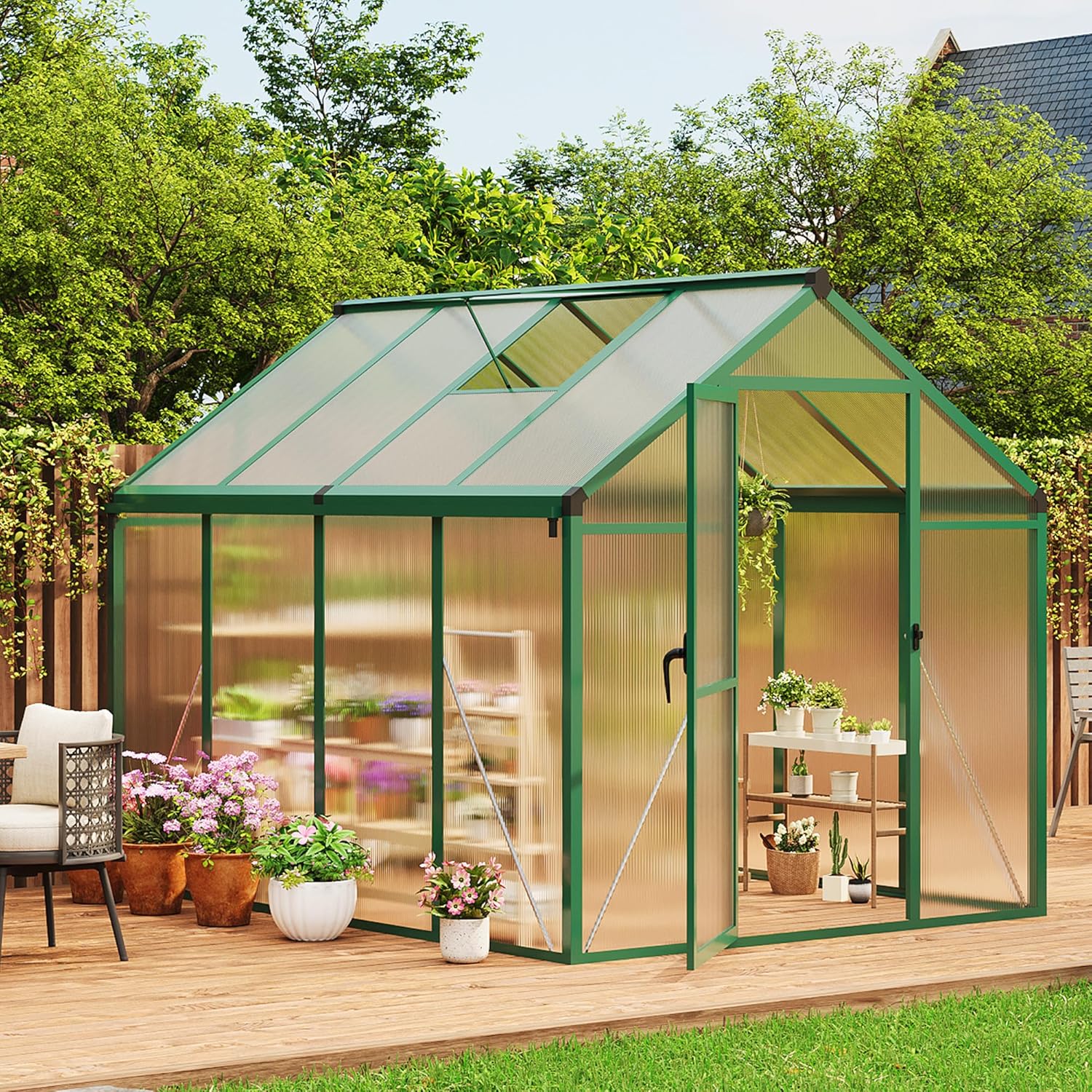
| Size | 6×8 FT |
|---|---|
| Cover Material | Polycarbonate (PC) |
| Frame Material | Aluminum Steel |
| Number Of Vents | 1 |
| Indoor Outdoor Usage | Outdoor |
This IDEALHOUSE 6×8 walk-in greenhouse is designed for gardeners who want a durable, easy-to-assemble sheltered growing space. It uses reinforced 720 g/m² polycarbonate panels that transmit light while blocking most UV and slide into an aluminum-steel frame with a slide-in assembly system that speeds setup. The greenhouse includes a roof vent and adjustable ventilation to help control temperature and airflow, plus a gutter-style water management feature for rainwater collection. In practice the structure provides a roomy footprint for seed-starting, overwintering tender plants, or extending the growing season for vegetables and ornamentals. Expect relatively straightforward assembly if you follow the instructions, but plan to handle heavy components carefully and allow for two shipments. The main limitations are the single roof vent for airflow control and the need to anchor the unit properly in exposed sites; the frame and panels are sturdy for typical garden conditions but may require additional bracing in high-wind locations.
Best for: Serious hobby gardeners who prioritize a robust, season-extension structure and want a relatively fast-build walk-in greenhouse for regular cultivation and overwintering of plants.
Less Ideal for: People needing a lightweight, ultra-portable tunnel-style greenhouse for quick seasonal use or gardeners in very windy coastal sites without plans to add extra anchoring or bracing.
- Reinforced 720 g/m² polycarbonate panels provide strong light transmission while blocking most UV
- Aluminum-steel frame offers solid structural support for outdoor use
- Slide-in panel assembly and clear instructions speed setup compared with conventional builds
- Integrated gutter system enables simple rainwater drainage and collection
- Top roof vent and adjustable ventilation help regulate internal temperature
- Only one roof vent limits fine-grained airflow control for larger heat loads
- Heavy components and sharp edges require careful handling during assembly
Verdict: A sturdily built, performance-focused 6×8 walk-in greenhouse that speeds assembly while providing durable protection for season-extension and overwintering.
Aoxun 6×8 ft Wooden Walk-In Greenhouse with Polycarbonate Panels and Adjustable Roof Vent

| Cover Material | Polycarbonate (PC) |
|---|---|
| Frame Material | Wood |
| Number Of Vents | 2 |
| Indoor Outdoor Usage | Outdoor |
This 6×8 cedar greenhouse is designed as a compact, walk-in growing space that balances light transmission, ventilation, and durability for backyard growers. The wood frame gives a sturdy, natural look while the multi-layer polycarbonate panels let diffuse light in and filter UV, which helps even seedling and plant growth without direct sun scorch. The adjustable roof vent (up to about 45 degrees) plus two vents offer useful airflow control for temperature and humidity management. Assembly requires time and care because of the heavy components and anchoring hardware, but the included hooks, stakes, and expansion bolts add practical mounting and wind/snow support. Practical advantages are a roomy interior for pots and shelves and cedar's insect resistance for outdoor use. Limitations are that the wooden frame will need periodic upkeep compared with all-aluminum kits and assembly may be challenging for a single person. For gardeners who value a durable, attractive backyard greenhouse and are willing to invest time in setup and maintenance, this model performs well.
Best for: Backyard gardeners who want a durable, attractive walk-in greenhouse that provides controlled light and ventilation and are prepared to spend time on careful assembly and upkeep.
Less Ideal for: Gardeners seeking a maintenance-free, lightweight kit or a quick, one-person setup should consider metal-frame or smaller portable options instead.
- Cedar frame offers natural durability and some insect resistance for outdoor use
- Multi-layer polycarbonate panels diffuse light while filtering UV to protect plants
- Adjustable roof vent plus two vents provide effective airflow and temperature control
- Includes anchoring stakes, expansion bolts, and heavy-duty hooks for secure installation and hanging needs
- Wooden frame requires periodic maintenance compared with metal alternatives
- Assembly involves heavy components and detailed anchoring that can be time-consuming
Verdict: Aoxun's 6×8 cedar greenhouse is a well-ventilated, UV-filtering walk-in option for backyard gardeners who want a durable, attractive growing space and are willing to invest in assembly and maintenance.
SPECILITE 56×56×78 Inch Walk-in Greenhouse with Thick PE Cover and Metal Frame

| Number of Doors | 1 |
|---|---|
| Number Of Vents | 2 |
| Indoor Outdoor Usage | Outdoor |
| Cover Material | Polyethylene (PE) |
| Frame Material | Metal |
This SPECILITE walk-in greenhouse is a budget-friendly, portable shelter for outdoor seedlings, potted plants, and small vegetable beds. It assembles without tools from a metal tube frame and a thick polyethylene cover and includes a roll-up zipper door plus two screened side windows for ventilation. In practice it provides a warmer, protected microclimate that keeps rain and light snow off plants while the zippered roller door makes access easy and the screened windows let you manage airflow to reduce humidity. The frame is described as rust resistant and the unit supports typical seed trays and pots, so you can set up shelves or hanging lights inside. Because it is lightweight and all parts are detachable you can relocate or store it between seasons. Expect limitations in heavy weather and wind since the design is not a permanent structure and the PE cover can degrade over time with prolonged sun exposure, so anchoring and seasonal storage are recommended for long service life.
Best for: Buyers who want an inexpensive, movable greenhouse to extend the growing season for pots and seedlings and who prioritize easy setup and flexible placement.
Less Ideal for: Those who need a permanent, heavy-duty greenhouse for large-scale production or for use in very windy or snowy climates should consider a sturdier, fixed-frame alternative.
- Thick PE cover provides basic protection from rain and light snow
- Roll-up zipper door and two screened windows allow easy access and adjustable ventilation
- Metal frame with rust-resistant tubes for reasonable durability
- Detachable parts and tool-free assembly make it easy to move and store
- Lightweight design is vulnerable in high winds or heavy snow loads
- PE cover will eventually degrade under prolonged UV exposure
Verdict: A low-cost, easy-to-assemble walk-in greenhouse that gives practical season extension and movable protection for small-scale gardeners.
ToBoom Mini Transparent Pop-Up Greenhouse (Medium)

| Indoor Outdoor Usage | Indoor, Outdoor |
|---|---|
| Special Features | Pop-Up, Portable, Transparent |
| Closure Type | Zipper |
| Cover Material | Polyvinyl Chloride (PVC) |
| Frame Material | Metal |
This ToBoom mini pop-up greenhouse is a simple, budget-friendly shelter for seedlings, small pots, and short-season vegetables. The transparent PVC cover traps warmth and lets you observe plants without opening it, while the metal pop-up frame snaps into shape for fast, tool-free setup. A zippered D-shaped door gives easy access for watering and tending, and the included vents and mesh help reduce pests and allow some airflow. Its portability and included storage tote make it easy to move around the yard or tuck away when not needed. Expect good short-term protection from light frost, wind, and pests, but the thin PVC and lightweight frame are best for sheltered spots rather than exposed locations or heavy snow. Assembly and anchoring require care because of sharp metal edges noted in safety guidance, and larger plants will quickly outgrow the 31.5-inch cube interior.
Best for: Gardeners who want an inexpensive, easy-to-deploy cover for starting seedlings and protecting small plants in a backyard or on a patio.
Less Ideal for: Those needing a permanent, heavy-duty greenhouse for large plants, year-round cold climates, or exposed windy sites should choose a sturdier structure.
- Fast pop-up setup for tool-free assembly
- Transparent PVC cover preserves heat and allows plant observation
- Zippered door and vent provide easy access and basic ventilation
- Lightweight and portable with a storage tote for off-season storage
- Lightweight frame and thin cover are not suited for heavy wind or snow loads
- Limited internal space restricts use to seedlings and small pots
Verdict: A very affordable, quick-to-set-up pop-up mini greenhouse that protects seedlings and small plants in sheltered backyard spots.
Backyard Discovery Savannah Chalet-Style Cedar and Polycarbonate Walk-In Greenhouse

| Floor Area | 161 square_feet |
|---|---|
| Material Type | Cedar |
| Top Material Type | Polycarbonate |
| Water Resistance Level | Water Resistant |
| Weight Capacity Maximum | 9950 pounds |
The Backyard Discovery Savannah is a roomy, chalet-style walk-in greenhouse aimed at gardeners who want a durable, all-in-one backyard growing space. It combines a cedar frame with commercial four-wall polycarbonate panels to improve heat retention and light transmission, and the interior is laid out with extensive staging shelves, plant hooks and a built-in stainless-steel sink so you can pot, rinse, and store supplies in one place. Ventilation is handled by four casement windows for passive airflow plus two temperature-activated exhaust fans for forced ventilation when temperatures rise. Practical conveniences include interior/exterior hose hookups and a PowerPort with three outlets and three USB ports to run fans, lights, or small tools. The greenhouse is engineered for heavy loads and severe weather when properly anchored, and it ships as pre-cut, pre-drilled, and pre-stained pieces to simplify assembly. Important trade-offs are the size and weight, which mean this is a major installation requiring multiple people to lift and anchor, and the need to provide your own external power source.
Best for: Gardeners who want a long-term, weather-resilient greenhouse with built-in workstations and utilities so they can grow year-round with minimal retrofitting.
Less Ideal for: People seeking a small, portable, or budget greenhouse for a balcony or temporary use should consider lighter, simpler options instead.
- Commercial-grade 4-wall polycarbonate panels for improved heat retention and sunlight transmission
- Durable cedar construction designed to resist decay and handle heavy snow and wind when anchored
- Integrated workstation with extensive upper and lower shelving and plant hooks for organized growing
- Built-in stainless-steel sink and interior/exterior hose hookups for convenient plant care
- Temperature-activated exhaust fans plus multiple casement windows for effective ventilation
- Large size and heavy components require multiple people and anchoring for safe installation
- Requires external power source to use the PowerPort and fans
- Pre-finished stain saturation may vary, so appearance can differ unit to unit
Verdict: If you want a sturdy, fully equipped backyard greenhouse built to withstand serious weather and support year-round growing, the Savannah delivers the most reliable, ready-to-use solution.
EAGLE PEAK 8×6 Pop-Up Walk-In Greenhouse

| Size | 8×6 |
|---|---|
| Cover Material | Polyethylene (PE) |
| Frame Material | Alloy Steel |
| Number of Doors | 1 |
| Number Of Vents | 2 |
The EAGLE PEAK 8×6 pop-up greenhouse is a walk-in shelter aimed at extending the growing season and protecting plants from frost and light weather. Its preassembled alloy-steel frame uses extra steel reinforcement and a patented PeakPush center lock so one person can set it up quickly without tools. The PE cover is water-resistant and UV-filtering to help retain warmth and humidity, while the roll-up zippered door and mesh vents let you manage airflow and pest access. It includes stakes and guy ropes for added stability and a ground skirt you can weight down for windy conditions. Practical benefits include ample interior space for shelving or multiple pots, straightforward seasonal use for seed starting or fall protection, and replaceable covers or frames if components wear. Important limitations are that pop-up greenhouses are not engineered for heavy snow loads or sustained high winds so you will need to clear snow and add extra anchoring or weights during storms, and the PE cover will age faster than rigid glazing in strong sun over many seasons.
Best for: Gardeners who want an easy-to-assemble, walk-in greenhouse to start seeds, protect pots, and extend the growing season with minimal setup time and hands-on maintenance.
Less Ideal for: People needing a permanent, year-round structure for heavy snow loads or high-wind exposed sites should choose a rigid-glazed or anchored greenhouse instead.
- One-person, tool-free setup with patented center lock for fast assembly.
- Sturdy alloy-steel frame reinforced for better stability than typical pop-ups.
- Water-resistant, UV-filtering PE cover that traps warmth for season extension.
- Zippered roll-up door and mesh vents for adjustable ventilation and pest control.
- Not built to withstand heavy snow or severe winds without additional reinforcement.
- PE cover will wear faster than rigid glazing and may need replacement after prolonged sun exposure.
Verdict: Buy this if you want a roomy, one-person pop-up greenhouse that balances easy setup with a stronger steel frame for reliable seasonal protection.
EAGLE PEAK 6×4 Pop-Up Walk-In Greenhouse

| Size | 6×4 |
|---|---|
| Cover Material | Reinforced Polyethylene Film |
| Frame Material | Alloy Steel |
| Number of Doors | 1 |
| Number Of Vents | 2 |
The EAGLE PEAK 6×4 pop-up walk-in greenhouse is a compact, easy-to-use shelter for starting seeds, protecting tender plants from frost, and extending fall or early-winter growth. Its pre-assembled pop-up frame and patented center lock let one person erect the structure quickly without tools, and the reinforced polyethylene cover holds warmth and humidity while filtering light. Mesh windows and a roll-up zippered door provide straightforward ventilation and access, and included stakes and guy ropes help stabilize the unit in light to moderate winds. The alloy steel frame and powder-coated finish add durability compared with flimsy hobby tents, but because it is a lightweight pop-up design it still needs care in heavy snow or high winds and can require additional anchoring or weight bags for stormy weather. The greenhouse is best for patios, balconies, and small backyards where a simple, portable shelter is desirable rather than a permanent heavy-duty structure.
Best for: Buyers who want a small, reliable portable greenhouse they can set up alone to start seeds, overwinter plants, or extend the growing season in a patio or small yard with minimal fuss.
Less Ideal for: Gardeners needing a permanent, heavy-duty greenhouse for large crops or those in exposed, high-wind or heavy-snow climates should choose a framed, rigid structure instead.
- One-person, tool-free pop-up frame for quick setup
- Reinforced PE cover that retains warmth and is UV and water resistant
- Alloy steel frame with powder-coated finish for improved durability
- Zippered roll-up door and mesh windows for ventilation and easy access
- Pop-up design is not suited to heavy snow loads or extreme wind without extra anchoring
Verdict: A compact, one-person pop-up greenhouse that delivers easy setup and season-extension performance for small-space gardeners.
Choosing the Right Greenhouse for Backyard Gardeners: Key Factors to Consider
Frame Material and Strength
Frame choice determines how well a greenhouse stands up to wind, snow, and repeated seasonal use. Metal frames offer higher load capacity for snow and stronger resistance to wind, but they can corrode in coastal gardens unless properly finished. Plastic frames are lightweight and easier to move or reposition, but they can flex in high winds and degrade under prolonged UV exposure.
Mounting and anchoring options change a frame's practical strength in a backyard setting. Look for bolt-on base rails, ground anchors, or ability to fasten to a concrete or timber base. The frame design also affects how easy it is to add shelving, hanging supports, and external covers later on.
Glazing Type and Light Behavior
Glazing controls how much light and heat enter the greenhouse and how evenly light spreads across plants. Polycarbonate panels are common for backyard greenhouses because they balance light diffusion with impact resistance and some insulating value. Single-layer glass gives excellent light clarity but offers poor insulation unless paired with secondary glazing or thermal measures.
Diffuse glazing reduces hotspots and helps lower burning risk on sunny days, which matters for bench-grown seedlings and potted ornamentals. Consider whether the glazing transmits the wavelengths your plants need and whether it is rated for UV stability to avoid rapid yellowing or brittleness.
Ventilation and Climate Control
Backyard greenhouses often rely on passive ventilation, so vent placement and size significantly affect plant health. Roof vents or ridge vents remove hot air where it accumulates, while side vents and screened openings let cooler air enter. Manual vents are cheap and simple, but automatic vent openers that react to temperature reduce the risk of midday overheating if you are not present.
Think about additional shading, evaporative cooling, or small fans if you garden in a hot climate. In cooler climates, consider the greenhouse's ability to retain heat overnight, such as thermal mass placement and sealing quality around doors and panels.
Usable Space and Layout
The interior footprint determines how many benches, shelving units, and seed trays you can fit. Taller greenhouses with clear spans let you use vertical space for trellised crops and hanging baskets. Narrow, long models fit along fences or patios while wider models provide more flexible bench arrangements.
Measure door openings, internal headroom, and passage width to ensure you can move large pots or equipment inside. Check whether the design allows modular shelving or if the internal supports interfere with usable growing area.
Site Preparation and Anchoring
A greenhouse performs best on a level, well-drained site with good sun exposure. Site prep can be as simple as a compacted gravel pad or as involved as a concrete slab. Proper anchoring is crucial to prevent uplift and shifting, especially in exposed yards.
Consider access for delivery and assembly, proximity to water for irrigation, and whether you need a frost edge or raised beds inside. Drainage planning prevents standing water under benches and reduces corrosion or rot at the base of the structure.
Assembly, Maintenance, and Repairability
Ease of assembly matters for backyard gardeners who plan to build the greenhouse themselves. Modular kits with clear instructions and labeled parts reduce setup time and make seasonal disassembly feasible. Check whether replacement glazing panels and frame parts are commonly available.
Maintenance tasks include cleaning glazing to maintain light transmission, checking seals and fasteners, and replacing worn weatherstripping. Designs with accessible panels and removable trim speed routine maintenance and small repairs.
Matching Greenhouse Size to Your Garden
Start by mapping available space and sun patterns. Even a compact greenhouse can noticeably extend your season if it sits in a sunny spot and is sized to your seed-starting and transplanting workload. Think through how much bench space you need during peak use and whether you will dedicate part of the structure to storage or potting.
Small footprint models work well on patios and balconies, while medium to large structures suit homeowners who plan to grow vegetables and larger container-grown ornamentals. Account for door clearance and workspace for moving pots and soil bags.
- Measure sunlight hours on the intended site during spring and fall.
- Allow room for future shelving or a potting table.
- Plan access for bringing soil, pots, and tools in and out.
Climate-Specific Considerations
Your local climate determines the most important greenhouse features. In cool, short-season areas, prioritize rigid glazing that adds insulation and a frame that can bear snow loads. In hot, sunny regions, prioritize ventilation, reflective shading, and diffuse glazing to prevent overheating and leaf scorch.
Humid climates require good airflow and pest monitoring because still, moist air encourages fungal disease. Coastal gardens should factor salt spray and corrosion resistance into frame and fastener selection.
- Add thermal mass, such as water barrels or stone, to moderate night temperatures in cool climates.
- Use shade cloth and roof vents during heat waves.
- Choose corrosion-resistant finishes if you garden near the ocean.
Anchoring, Foundations, and Ground Options
A stable foundation keeps the greenhouse square and protects glazing seals. Gravel pads are economical and provide good drainage. A timber perimeter or small concrete footing can simplify attachment of base rails and improve wind resistance. For soft ground, long ground anchors or screw-in earth anchors are often necessary.
Consider frost depth in your area. Foundations that penetrate the frost line or use insulated bases reduce soil heave and maintain seal integrity around the base.
- Check local codes for required footings if you are attaching to a permanent base.
- Avoid siting over low spots where water pools after rain.
- Slope the ground slightly or install channels to direct runoff away from the greenhouse.
Seasonal Use and Crop Planning
Decide whether the greenhouse will be used mainly for seed starting, overwintering potted plants, or year-round vegetable production. Seed starting needs brighter light and more bench space per seed tray, while overwintering often requires greater thermal protection and frost tolerance.
Plan crop rotation and staging so you can move plants between benches and outside as weather allows. Think about companion use of cold frames and row covers to expand capacity without changing the greenhouse.
- Keep a staging area near the door for hardening off seedlings.
- Group plants with similar temperature and humidity needs together.
- Use shelving to increase capacity for small pots and trays.
Simple Climate Control Upgrades
Even modest upgrades can greatly improve control. Automatic vent openers remove heat peaks without manual intervention. Small thermostatically controlled fans help move air on still days and reduce humidity pockets. For winter, a compact, thermostatically controlled heater rated for greenhouse use and safety features provides predictable frost protection.
Shading the outside of the glazing with removable shade cloth is often safer than interior shading because it reduces heat gain before it enters the space. Reflective insulation on north walls helps retain heat where needed.
- Use adjustable vents at ridge and side walls for layered airflow control.
- Install a simple thermometer and hygrometer to monitor conditions.
- Consider plug-and-play electric heaters that operate with a thermostat for timed frost protection.
How We Chose the Best Greenhouse for Backyard Gardeners
We focused on criteria that affect everyday backyard use and seasonal performance. Structural durability and frame material were examined because wind, snow, and yard placement determine how long a greenhouse will last and how well it protects plants. Light transmission and glazing type were evaluated to understand how much usable sunlight reaches plants and how evenly it distributes inside the structure. Ventilation and passive climate control measures were included because backyard greenhouses rely on airflow, shading, and natural vents more than complex HVAC systems. Ease of assembly and required maintenance were considered for gardeners who may set up the structure themselves and want predictable upkeep. Usable interior space and shelving adaptability were assessed to show how much productive growing area each design provides for common backyard tasks. We excluded commercial-scale or specialist research greenhouses that require professional installation or industrial utilities. Items with vague materials or missing key specs were not considered. The final picks balance practical backyard installation, predictable seasonal performance, and manageable upkeep.
FAQ
How much sun does a backyard greenhouse need?
Most vegetables and seedlings need at least six hours of direct sun in the growing season. Aim for a spot that gets morning sun and is not shaded by trees or buildings during peak hours. Diffuse glazing can help distribute light when direct sun is limited.
Can I put a greenhouse on a lawn or soft soil?
You can, but you will need proper anchoring and site prep. A compacted gravel pad or timber base improves drainage and stability. Use long anchors or ground screws for soft soil to prevent uplift in wind.
How do I prevent overheating in summer?
Provide cross ventilation with roof and side vents, add shade cloth during heat waves, and consider automatic vent openers to respond to temperature spikes. Small fans improve air movement and reduce hot spots on still days.
What glazing works best for seedlings?
Diffuse glazing such as twin-wall polycarbonate offers a good balance of light diffusion and some insulation, which reduces scorching and creates more even light for seed trays. Single-pane glass gives high clarity but can create hotspots without shading.
Do I need a foundation for a backyard greenhouse?
A full concrete slab is not always necessary for backyard greenhouses. A level, well-drained base such as compacted gravel or timber perimeter often suffices and makes anchoring simpler. Choose a foundation based on local wind, frost, and soil conditions.
How much maintenance do greenhouses require?
Routine maintenance includes cleaning glazing to maintain light, checking seals and fasteners, and replacing weatherstripping as needed. Inspect the frame annually and address corrosion or loose bolts promptly to extend service life.
Final Verdict
For backyard gardeners, the best greenhouse balances structural strength, light management, and airflow with a size and layout that fits your site and goals. Tradeoffs are unavoidable: heavier, more durable frames and insulated glazing increase longevity and winter performance but add cost and assembly time, while lighter kits are easier to install but need careful anchoring and maintenance. Decide first on the functions you need most-seed starting, overwintering, or year-round vegetable production-then choose a design that matches your climate and available space. Prioritize frame durability, ventilation, and usable bench area to get the most reliable results in a backyard setting.
