

Note: This article contains affiliate links. If you click on these links and make a purchase, I may earn a small commission at no extra cost to you. This helps support my research and content. Read my full affiliate disclosure here.
Picking the right ground cover for a tulip bed matters for bulb health, tidy spring displays, and lower maintenance through the growing season. The wrong ground cover can smother emerging shoots or hold too much moisture when bulbs need drier conditions. This guide focuses on ground cover options appropriate for a tulip bed and explains how each type behaves in a real garden setting. We shortlisted the top options and evaluated them on factors that matter to tulip growers, including spring drainage, light tolerance, and how easily bulbs can emerge. Below you will find practical notes to help you choose a cover that protects bulbs while keeping the bed attractive and low-effort.
Top Picks at a Glance
| Best Overall The best all-around choice for most situations | PLANTMEW Lemon Thyme Seeds (10,000+) |  |
| Best Quality Built to a higher standard if you want something more solid | SURVIVAL GARDEN SEEDS Flowering Ground Cover Seeds — 5-Variety Collection |  |
| Best Value The sweet spot between price and what you get | KVITER Aubrieta (Rock Cress) Flower Seeds — 2,000 Purple Seeds |  |
| Best Budget The cheapest option that still gets the job done reliably | 22000‑count Creeping Thyme (Thymus serpyllum) Seeds |  |
| Highest Rated A top-rated pick with lots of positive feedback | Isotoma fluviatilis (Blue Star Creeper) Groundcover, 1 Quart |  |
| Most Popular A crowd favorite that many people choose with confidence | HOME GROWN Verbena Moss Seeds (6,000 Seeds) |  |
PLANTMEW Lemon Thyme Seeds (10,000+)

| Unit Count | 1.05 Ounce |
|---|---|
| Sunlight Exposure | Full Sun |
| USDA Hardiness Zone | 4-11 |
| Expected Blooming Period | Summer to Fall |
| Moisture Needs | Moderate Watering |
These PLANTMEW lemon thyme seeds provide a large quantity of creeping thyme suitable for creating fragrant, pollinator-friendly ground cover in sunny, well-drained spots. Typically sown in summer into sandy or well-draining soil, the seedlings form low mats about 3 inches tall that tolerate drought once established and release a lemony aroma when crushed. The listing highlights high germination, perennial habit in USDA zones 4 to 11, and summer to fall bloom that attracts bees and butterflies, which makes it useful for pathways, rock gardens, borders, and containers. Practical benefits include low ongoing maintenance, resistance to hot dry conditions, and multiuse landscaping value as both an herb and a groundcover. Limitations to plan for are the slow, creeping spread compared with aggressive groundcovers and the need for full sun and good drainage to avoid rot in heavy soils. If you want quick instant cover you will need to combine seeding with plugs or mats, but for a budget-friendly, long-term full-sun groundcover this seed packet is a sensible choice.
Best for: Gardeners who want an economical, low-maintenance perennial ground cover for sunny, well-drained beds or paths and who are prepared to seed and wait for plants to establish.
Less Ideal for: People needing immediate, dense coverage or working with heavy, poorly drained soils should consider plugs, mats, or different species better suited to shade or wet conditions.
- Large seed quantity (over 10,000) suitable for seeding sizable areas
- Tolerates full sun and drought once established, reducing watering needs
- Attracts pollinators with summer to fall flowers, supporting garden ecology
- Heirloom seed variety with reportedly high germination rate
- Requires well-drained, sandy soil and full sun to perform well
- Spreads slowly compared with faster-establishing groundcovers
Verdict: A cost-effective seed option for establishing fragrant, drought-tolerant ground cover in full-sun, well-drained areas.
SURVIVAL GARDEN SEEDS Flowering Ground Cover Seeds — 5-Variety Collection

| USDA Hardiness Zone | 3-9 |
|---|---|
| Sunlight Exposure | Full Sun |
| Expected Blooming Period | Spring to Fall |
| Moisture Needs | Moderate Watering |
| Seed Treatment Method | Untreated |
This seed collection bundles five low-growing flowering ground covers—white and purple sweet alyssum, crimson clover, white clover, and Roman chamomile—intended to create fragrant, pollinator-friendly mats that replace or reduce turf. Each packet is untreated, heirloom, and non-GMO, and includes variety-specific planting instructions for depth, soil temperature, sunlight, and moisture, which makes it straightforward for gardeners to sow in spring through fall. The mix works well for pathways, borders, lawn alternatives, and open sunny spots where you want low maintenance color and reduced mowing. Practical benefits include attractive blooms that draw bees and beneficial insects, drought tolerance once established, and the ability to save seeds for future seasons. Expect modest height and gradual fill-in rather than instant turf coverage, so some patience is required for dense mats to form. This set is best for gardeners who want ecological value and low upkeep rather than an instant, uniform lawn replacement.
Best for: Gardeners who want a low-maintenance, pollinator-friendly alternative to turf and value heirloom, seed-saving varieties for pathways, borders, and small open areas.
Less Ideal for: People needing immediate, uniform lawn coverage or those working in consistently wet, poorly drained sites where these varieties will struggle.
- Includes five complementary low-growing varieties for continuous spring-to-fall blooms
- Heirloom, open-pollinated and non-GMO seeds suitable for seed saving
- Each packet provides detailed, variety-specific planting and care instructions
- Untreated seeds with no chemical coatings
- Attracts pollinators and supports beneficial insects
- Not an instant turf replacement; some varieties take time to fill in and form a dense cover
- Best performance requires well-drained loam soil and full sun to partial shade conditions
Verdict: A practical, low-maintenance heirloom seed mix for gardeners who want fragrant, pollinator-friendly ground cover as a lawn alternative.
KVITER Aubrieta (Rock Cress) Flower Seeds — 2,000 Purple Seeds

| USDA Hardiness Zone | 3-10 |
|---|---|
| Expected Blooming Period | Spring to Summer |
| Sunlight Exposure | Full Sun |
| Unit Count | 2000 Count |
| Material Features | GMO Free, Heirloom |
These KVITER aubrieta (Aubrieta deltoidea) seed packets are aimed at creating low, purple ground cover in sun‑exposed areas. The seeds are heirloom and non‑GMO and come with a step‑by‑step growing guide; germination is expected in 10–14 days at 60–65°F and established plants reach about 6 inches high. Typical uses are edging beds, filling rock gardens, stabilizing slopes, or creating an airy carpet between pavers. Notable features include drought tolerance, deer resistance, and heat tolerance, which make it easy to maintain once established and attractive to pollinators. The large 2,000 seed count lets you cover a lot of ground or experiment with succession planting. Limitations to consider are that aubrieta prefers sandy or well‑drained soils and full sun, so it will not perform well in heavy clay or deep shade, and as a low matting perennial it will not provide vertical interest or tall blooms. For mixed borders you may need to pair it with taller plants for contrast.
Best for: Home gardeners who want an easy, low‑maintenance sun-loving ground cover to fill borders, rock gardens, or slopes and prioritize pollinator-friendly, deer-resistant plants.
Less Ideal for: Gardeners seeking tall or vertical flowering specimens or those with heavy clay soils and shaded sites should consider other plant choices.
- Large 2,000 seed count for broad coverage or repeat plantings
- Heirloom non‑GMO seeds with a detailed growing guide included
- Drought and heat tolerant once established, reducing watering needs
- Attracts pollinators while being deer resistant, useful for low‑maintenance gardens
- Performs best in sandy, well‑drained soils and full sun so site selection is important
- Low growth habit (about 6 inches) means it will not add height or strong vertical structure
Verdict: Buy this if you need an affordable, sun-loving, drought-tolerant ground cover to quickly carpet sunny borders and rock gardens.
22000‑count Creeping Thyme (Thymus serpyllum) Seeds

| Indoor Outdoor Usage | Outdoor |
|---|---|
| Other Special Features of the Product | Attracts Pollinators |
| Expected Blooming Period | Year Round |
| Sunlight Exposure | Full Sun |
| Material Features | GMO Free |
This seed packet supplies a very large quantity of Thymus serpyllum seeds for establishing creeping thyme as a groundcover. It is typically broadcast over prepared soil in spring or fall, lightly covered, and kept moist until germination; plants prefer full sun and will tolerate some light shade. Notable product points are the non‑GMO seed source, a stated attraction for pollinators, and year‑round blooming potential in favorable climates. In practice the variety works well between bulbs or in rock garden edges where a low, fragrant mat is desired and it suppresses weeds once established. Because the packet is extremely large it is cost‑efficient for covering bigger areas or for multiple beds, but buyers should allow time for seedlings to fill in and plan for initial watering during establishment. Seed quality and germination can vary with cheap bulk lots, so expect uneven patches and be ready to reseed thin areas or overseed in subsequent seasons.
Best for: Gardeners working on a budget who want an inexpensive way to cover a tulip bed or larger sunny area with a low, pollinator‑friendly groundcover and who are willing to oversee initial establishment.
Less Ideal for: Those who need an instant, fully filled planting right away or who prefer guaranteed high germination rates from premium, tested seed lots.
- Very high seed count makes it economical for large areas or multiple beds
- Non‑GMO seeds and plants that attract pollinators
- Suitable for dry, sunny sites and useful between bulbs or in rock gardens
- Can form a low, weed‑suppressing mat once established
- Germination and seedling uniformity can be inconsistent in bulk packets
- Requires patience and extra watering during establishment before it fully fills in
Verdict: If you need a very affordable way to establish a low, sun‑loving groundcover across a tulip bed or larger area, this bulk packet delivers the seed quantity to do it.
Isotoma fluviatilis (Blue Star Creeper) Groundcover, 1 Quart
| Manufacturer | Perennial Farm Marketplace |
|---|---|
| Pot size | 1 Quart |
| Flower color | Sky-blue |
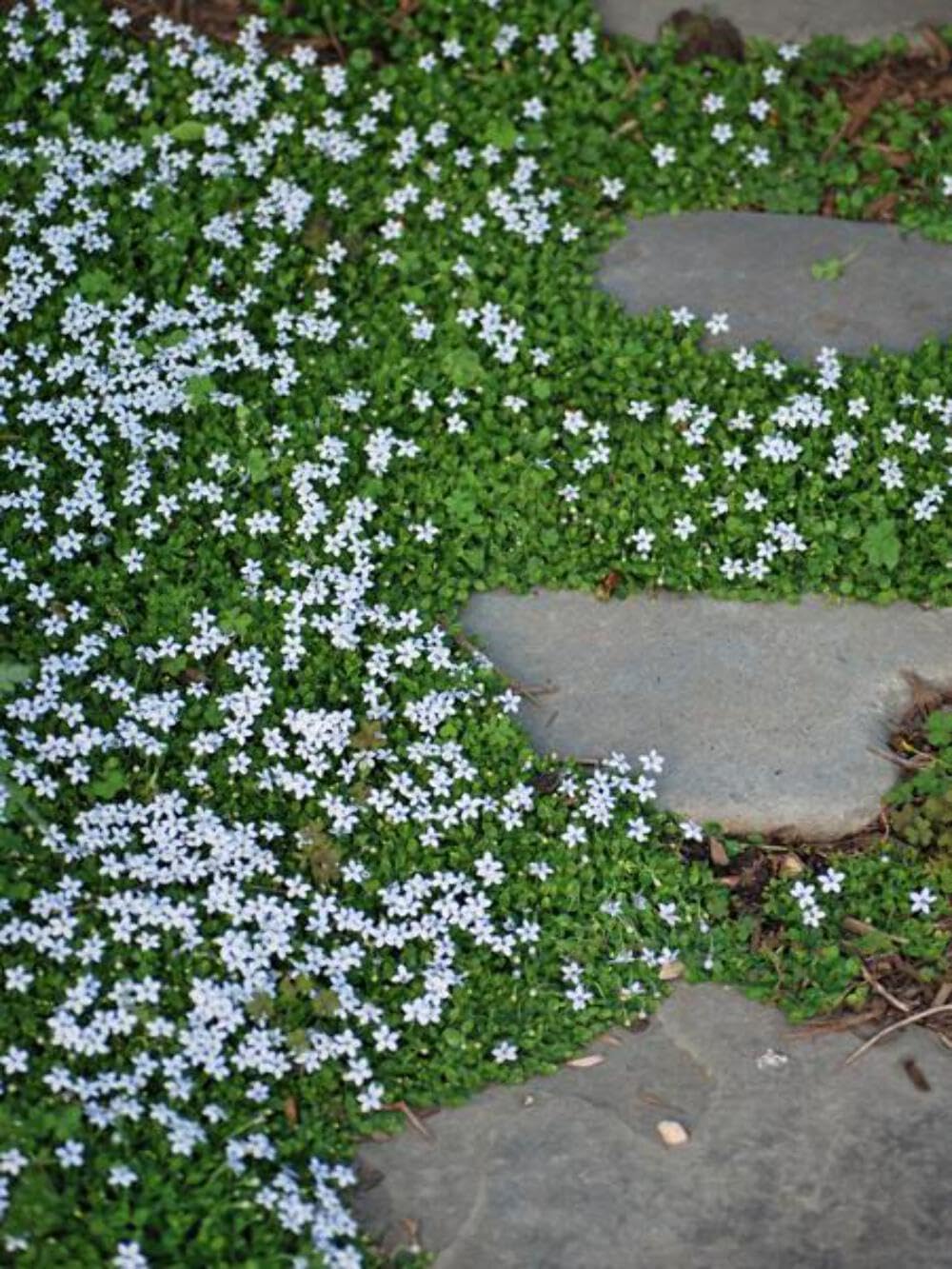
Isotoma fluviatilis (Blue Star Creeper) is a hardy, low-growing groundcover that forms a 2–3 inch dense mat dotted with sky-blue, star-shaped flowers from late spring through summer. It is typically planted in 1-quart pots around stepping stones, in small sunny patches, or as a replacement for small lawn areas where a fine-textured groundcover is desired. Key features are its tolerance of varied moisture levels and heavy foot traffic, plus its ability to creep into tight joints which helps suppress weeds and soften pathways. The immediate benefit is quick visual fill-in and seasonal color without frequent mowing. Limitations are that this is a shallow, mat-forming plant so it is best for small areas rather than large lawns, and it requires establishment time before it can handle regular traffic at full density. Expect to give it a season to spread and occasional trimming at edges to keep it neat.
Best for: Gardeners who need a tough, low-growing groundcover for sunny spots and want quick seasonal blooms and a durable mat for pathways or small lawn replacements.
Less Ideal for: People looking to cover large lawn areas quickly or those who need a tall, plush turf substitute for heavy continuous use.
- Produces sky-blue star-shaped flowers from late spring through summer for seasonal interest
- Forms a dense 2–3 inch mat that creeps between stepping stones to reduce weed growth
- Tolerant of heavy foot traffic once established, suitable for pathways and small lawn replacements
- Adapts to a range of moisture levels and soil types, easing site selection
- Slow to fully establish across larger areas so not ideal for instant full coverage
- Best suited to small patches rather than large lawns due to low mat height
Verdict: Choose this Blue Star Creeper when you want a durable, flowering low mat that fills gaps between stepping stones and handles occasional foot traffic in sunny small areas.
HOME GROWN Verbena Moss Seeds (6,000 Seeds)

| Expected Blooming Period | Spring to Fall |
|---|---|
| Sunlight Exposure | Full Sun |
| USDA Hardiness Zone | 2, 3, 4, 5, 6, 7, 8, 9, 10, 11 |
| Number of Pieces | 6000 |
| Moisture Needs | Moderate Watering |
These HOME GROWN Verbena Moss seeds provide a high-count mix (6,000 seeds) of Verbena tenuisecta designed for mass planting as a colorful ground cover. Intended for full‑sun sites, the seeds produce compact, feathery foliage topped by rounded clusters of tiny star-shaped flowers in shades from white to purple, blooming from spring through fall. The packet is marketed as heirloom and non-GMO and comes with an online grow guide, which helps with sowing, establishing, and basic care. In practice this mix is useful for filling borders, rock gardens, slopes, or bare patches to create a continuous floral carpet and to attract pollinators. Strengths are the very high seed count for wide coverage, long blooming season, and low maintenance once established. Expect moderate watering and loam soil for best results, and treat it as a perennial only where frost is mild; in colder zones it behaves more like an annual. Buyers should allow time for germination and establishment before judging density, and plan for deadheading or light pinching to keep plants tidy and encourage reblooming.
Best for: Gardeners who want an easy, showy ground cover for sunny beds and borders and who value social proof and guidance when trying a larger scale planting.
Less Ideal for: Shade gardeners or those needing an immediate, fully established lawn‑like cover; also unsuitable for planting sites where winter survival is critical and perennial habit is mandatory.
- Very high seed count suitable for large beds or mass plantings
- Heirloom non-GMO seed mix with an included online grow guide to support success
- Long bloom window from spring to fall for sustained garden color
- Low maintenance once established and attractive to pollinators
- Suitable for poor soils and erosion control on slopes
- Perennial performance depends on local winter hardiness so may behave as an annual in cold climates
- Requires full sun and moderate watering so not suited to shade or very dry xeric sites
Verdict: Choose this large non‑GMO seed pack when you want an affordable, pollinator‑friendly ground cover that delivers long, low‑maintenance color across large sunny areas.
Choosing the Right Ground Cover for Tulip Bed: Key Factors to Consider
Spring Drainage and Soil Moisture
Tulips need well-drained soil and a relatively dry dormant period. A ground cover that traps water or requires frequent irrigation can raise soil moisture and increase the risk of bulb rot. Choose covers that allow rapid surface drying in spring and do not form a dense mat that holds moisture against the soil.
When evaluating drainage, consider how the cover behaves after heavy rain or snowmelt. Shallow-rooted, loose-canopied covers tend to shed water more quickly than thick, spongy mats. Also think about your site: clay soils or low spots need especially free-draining covers or added soil amendments to prevent water pooling around bulbs.
Light Tolerance and Canopy Height
Tulip shoots need access to light as soon as they break the soil. A ground cover with a low, open canopy or one that goes dormant in spring lets shoots pass through unimpeded. Covers that keep dense foliage low to the ground but with gaps allow light to the emerging foliage; taller, evergreen covers may overshadow young shoots and delay bloom.
Assess the cover's seasonal behavior. Some species green up after tulip foliage has finished, while others remain fully leafed and will compete for light. Prioritize covers with brief spring leaf-out or those that stay low and sparse until after bulbs finish flowering.
Bulb Compatibility and Root Competition
Ground covers differ in root depth and aggressiveness. Deep or highly competitive roots can deprive bulb roots of nutrients and moisture. For tulip beds, pick covers with shallow root systems or that establish slowly so bulbs can access resources during the critical growth window.
Also consider whether the cover will interfere with future bulb maintenance. Covers that are easy to lift or thin make seasonal bulb tasks like dividing and replanting simpler. Avoid covers that form thick rhizomes or runners that entwine bulbs and make lifting difficult.
Weed Suppression and Mulch Behavior
One benefit of a ground cover is reducing weeds that compete with tulips for resources. Effective covers form a consistent layer that shades out annual weeds without smothering bulbs. Consider how quickly a cover fills gaps and whether it requires supplemental mulching to hold out weeds in the first season.
Think about how the cover interacts with organic mulches. Some covers tolerate a light layer of compost or shredded bark, while others become smothered if covered. If you plan to use seasonal mulches for winter protection, choose a cover that remains visible and functional beneath the mulch.
Maintenance Effort and Seasonal Management
Consider how much pruning, mowing, or lifting the cover will need through the year. Low-maintenance covers that only require one quick trim after bulb foliage dies back are preferable. Covers that need frequent clipping or chemical control add work and may disturb bulbs.
Also factor in winter and summer behavior. A cover that dies back after spring bloom can simplify post-bloom cleanup, while a perennial evergreen cover might require careful trimming to avoid nicking bulb foliage. Choose covers whose maintenance schedule fits your gardening rhythm.
Cover Types That Work Well With Tulips
Different kinds of ground covers behave differently around bulbs. Low, early-spring-flowering herbaceous covers and seasonal foliage plants often give the best balance between protection and bulb emergence. Creeping plants with thin leaves form a breathable carpet that suppresses weeds while allowing shoots to push through.
Alternatively, covers that go dormant or remain sparse during early spring avoid shading bulbs at their most vulnerable stage. Consider combinations of short-lived covers and thin mulches for sites with heavier weed pressure.
- Low, mat-forming herbaceous plants with small leaves
- Seasonal covers that green up after bulbs finish
- Loose mulch or gravel used in tandem with plant covers
Establishing Ground Cover Without Disturbing Bulbs
Plant or install ground cover carefully to avoid damaging existing bulbs. When planting plugs or seed in an established bed, work around the bulbs and distribute plants in open spaces rather than crowding the crown of each bulb. Thinly spaced plantings can fill in over one to two seasons without smothering shoots.
If you are introducing a cover at the same time as bulbs, stagger planting depth and timing. Put bulbs slightly deeper if the cover will form a dense mat, or allow the cover to establish for a season before planting bulbs if practical.
- Work by hand near bulbs to avoid root damage
- Start with modest cover density to watch bulb response
- Consider transplanting small plugs instead of sowing heavy seed mixes
Seasonal Care: Spring, Bloom, and Aftercare
In spring monitor soil moisture carefully. Reduce supplemental watering during bulb dormancy and resume light watering only as shoots emerge and the soil is actively drying. Avoid heavy topdressings while shoots are pushing through the cover.
After tulips finish flowering, allow the foliage to yellow naturally before cutting back the ground cover. If the cover is vigorous, a light trim can be done once bulb leaves have fully died back to make room for bulb lifting or dividing in summer.
- Watch for signs of rot in poorly drained sites
- Delay heavy trimming until bulb foliage has senesced
- Use gentle hand tools when lifting bulbs to avoid root tangling
Dealing With Pests and Disease Around Bulbs
Dense covers can sometimes harbor slug and snail activity or provide shelter for rodents. Choose covers that keep ground drier and avoid persistent damp microclimates. Inspect beds regularly during the critical emergence period to catch pest damage early.
For fungal issues, prioritize covers that encourage air movement at soil level. Improving drainage and spacing plants to reduce humidity around crowns lowers disease risk without chemical measures.
- Inspect for chewing and slug trails during early growth
- Thin covers if humidity around crowns remains high
- Improve soil structure to cut disease pressure
Designing a Tulip Bed That Looks Good All Season
Think beyond the spring show. Choose covers that provide attractive foliage or texture after tulips finish to keep beds visually pleasing into summer and fall. Ground covers with contrasting leaf color or seasonal bloom can extend interest without interfering with bulb growth.
Layering works well: place low covers between bulb clumps and taller perennials at the bed edge. This approach creates structure and helps covers fill gaps more predictably while leaving bulbs room to perform.
- Combine low-texture covers with seasonal perennials at the border
- Use groupings of bulbs to create open spaces for cover plants
- Select covers that offer summer or autumn interest after tulips fade
How We Chose the Best Ground Cover for Tulip Bed
We evaluated ground covers specifically for use with spring-blooming bulbs and prioritized traits that protect tulip health without blocking shoots. Selection focused on suitability for early-spring emergence, not on general landscaping uses. Editors filtered candidates by how they affect bulb development, weed suppression performance, and maintenance needs. Concrete evaluation criteria included spring drainage and soil moisture management because tulips need a dry dormant period and good drainage during growth. Light tolerance and canopy height were examined to ensure covers do not prevent shoots from reaching sunlight. Root competitiveness and invasiveness were considered so covers do not outcompete bulbs over several seasons. Ease of establishment and seasonal appearance were used to estimate labor and aesthetic impact. Durability through mowing or trimming and compatibility with common bulb care tasks like lifting and dividing were also weighed. We excluded ground covers that require heavy irrigation, deep mulch layers, or that reliably suppress bulb emergence. Highly invasive species and covers that demand frequent chemical control were not considered suitable for a tulip bed and were therefore left out of the shortlist.
FAQ
Can ground cover harm tulip bulbs?
Ground cover can harm bulbs if it forms a dense, moisture-retaining mat or is highly competitive belowground. Choosing low, open-canopy covers and monitoring soil moisture reduces risk. Establish covers conservatively and observe the bed during the first spring.
When is the best time to plant ground cover in a tulip bed?
Plant ground cover either a season before planting bulbs or after bulbs are established to avoid crowding shoots. If installing at the same time, space plantings sparsely so bulbs have room to emerge and adjust planting depths accordingly.
How should I water a tulip bed with ground cover?
Keep watering light during bulb dormancy and increase only as shoots emerge and the soil dries. Avoid prolonged wetness; good drainage and brief, infrequent watering prevent rot while supporting healthy leaf growth.
Will I still be able to lift bulbs if the bed has ground cover?
Yes, but choose covers with shallow roots or that establish slowly to make lifting easier. Timing is important: lift bulbs after foliage has died back and trim the cover only enough to access bulbs without heavy root entanglement.
How do I manage weeds if the ground cover does not fill in quickly?
Use light mulch and hand-weeding to manage early weeds while the cover establishes. Avoid thick mulches that smother bulbs and choose quick-establishing plugs or repeat sowing in sparse spots to speed cover development.
Final Verdict
When choosing a ground cover for a tulip bed, prioritize spring drainage, light access, and low root competition. These traits protect bulbs and support strong spring displays while reducing maintenance. Expect tradeoffs between weed suppression and bulb accessibility. Favor covers that stay low or go dormant in spring, establish slowly enough to avoid crowding, and require minimal seasonal trimming. With those priorities in mind you can pick a cover that keeps bulbs healthy and makes the bed easier to manage over multiple seasons.
