

Note: This article contains affiliate links. If you click on these links and make a purchase, I may earn a small commission at no extra cost to you. This helps support my research and content. Read my full affiliate disclosure here.
If you want low-growing plants that scent paths and fill gaps, choosing a ground cover with tiny fragrant flowers makes a big difference in the garden experience. These plants can suppress weeds, provide continuous bloom, and add subtle fragrance near seating areas, walkways, and foundation plantings. Picking the right variety matters because fragrance strength, spread rate, sun and shade tolerance, and maintenance needs vary widely. This guide shortlists seven top ground covers with tiny fragrant flowers suited to different sun exposures and garden styles. We evaluated each option for scent performance, growth habit, and climate resilience so you can match a choice to your space and maintenance plans.
Top Picks at a Glance
| Best Overall The best all-around choice for most situations | SURVIVAL GARDEN SEEDS Flowering Ground Cover Seeds — 5-Variety Collection |  |
| Best Quality Built to a higher standard if you want something more solid | Seed Needs Alyssum Seeds Variety Pack — 4 Pack |  |
| Best Value The sweet spot between price and what you get | Seed Kingdom Alyssum 'Carpet of Snow' Flower Seeds (60,000 seeds) |  |
| Best Budget The cheapest option that still gets the job done reliably | Carpet Creeping Creeping Thyme Seeds (Ground Cover, 145,000 count) |  |
| Highest Rated A top-rated pick with lots of positive feedback | Wivolibe Sweet Alyssum Seeds (Carpet of Snow) — 10,000 Non‑GMO Heirloom Seeds |  |
| Most Popular A crowd favorite that many people choose with confidence | KVITER Royal Carpet Sweet Alyssum Heirloom Flower Seeds (5000 Count) |  |
| Best Seller A high-volume bestseller chosen again and again | Outsidepride Sweet Alyssum (Lobularia maritima) White Perennial Flower Seeds, 5000-Pack |  |
SURVIVAL GARDEN SEEDS Flowering Ground Cover Seeds — 5-Variety Collection

| USDA Hardiness Zone | 3-9 |
|---|---|
| Sunlight Exposure | Full Sun |
| Expected Blooming Period | Spring to Fall |
| Moisture Needs | Moderate Watering |
| Seed Treatment Method | Untreated |
This seed collection bundles five low-growing flowering ground covers—white and purple sweet alyssum, crimson clover, white clover, and Roman chamomile—intended to create fragrant, pollinator-friendly mats that replace or reduce turf. Each packet is untreated, heirloom, and non-GMO, and includes variety-specific planting instructions for depth, soil temperature, sunlight, and moisture, which makes it straightforward for gardeners to sow in spring through fall. The mix works well for pathways, borders, lawn alternatives, and open sunny spots where you want low maintenance color and reduced mowing. Practical benefits include attractive blooms that draw bees and beneficial insects, drought tolerance once established, and the ability to save seeds for future seasons. Expect modest height and gradual fill-in rather than instant turf coverage, so some patience is required for dense mats to form. This set is best for gardeners who want ecological value and low upkeep rather than an instant, uniform lawn replacement.
Best for: Gardeners who want a low-maintenance, pollinator-friendly alternative to turf and value heirloom, seed-saving varieties for pathways, borders, and small open areas.
Less Ideal for: People needing immediate, uniform lawn coverage or those working in consistently wet, poorly drained sites where these varieties will struggle.
- Includes five complementary low-growing varieties for continuous spring-to-fall blooms
- Heirloom, open-pollinated and non-GMO seeds suitable for seed saving
- Each packet provides detailed, variety-specific planting and care instructions
- Untreated seeds with no chemical coatings
- Attracts pollinators and supports beneficial insects
- Not an instant turf replacement; some varieties take time to fill in and form a dense cover
- Best performance requires well-drained loam soil and full sun to partial shade conditions
Verdict: A practical, low-maintenance heirloom seed mix for gardeners who want fragrant, pollinator-friendly ground cover as a lawn alternative.
Seed Needs Alyssum Seeds Variety Pack — 4 Pack

| Expected Blooming Period | Summer to Fall |
|---|---|
| Sunlight Exposure | Partial Sun |
| Expected Planting Period | Spring |
| USDA Hardiness Zone | 3,4,5,6,7,8,9,10 |
| Moisture Needs | Moderate Watering |
This Seed Needs alyssum seed pack supplies multiple heirloom, open-pollinated varieties intended for quick, low-growing blooms that work well in containers, hanging baskets, rock gardens, or as a groundcover. Typical use is direct sowing in spring with sowing instructions printed on each packet; plants establish quickly, bloom through summer and into fall, and emit a sweet fragrance that attracts bees and butterflies. Notable features include heirloom seed stock, adaptability to several soil types, suitability for partial sun to full sun sites, and a packet count sized for sharing or multiple containers. Practical benefits are fast floral cover for hanging baskets and edging, pollinator support, and forgiving moisture needs once established. Important limitations are that these are annuals in many climates so they need reseeding each year, germination depends on correct sowing and local conditions, and the pack does not specify exact seed counts per variety which makes precise planning harder for larger displays.
Best for: Gardeners who prefer proven, pollinator-friendly annuals for quick color in hanging baskets and containers and who value seed quality backed by many other buyers.
Less Ideal for: People seeking permanent perennial plantings or those who want guaranteed germination without doing any seed starting work should consider live plants or plug transplants instead.
- Heirloom, open-pollinated seeds suitable for preserving true-to-type blooms
- Quick to establish and blooms profusely from summer into fall
- Attracts pollinators such as bees and butterflies, enhancing garden ecology
- Versatile use in hanging baskets, containers, rock gardens, and as groundcover
- Annual habit in most regions requires reseeding each year
- Germination and performance depend on correct sowing and local climate
- Seed counts per individual variety are not specified for exact planning
Verdict: A reliable heirloom seed pack that delivers fast, fragrant blooms ideal for filling full-sun hanging baskets and attracting pollinators.
Seed Kingdom Alyssum 'Carpet of Snow' Flower Seeds (60,000 seeds)
| Expected Blooming Period | all season.it |
|---|---|
| Sunlight Exposure | Full Sun |
| Expected Planting Period | Winter |
| USDA Hardiness Zone | 4 |
| Moisture Needs | Moderate Watering |
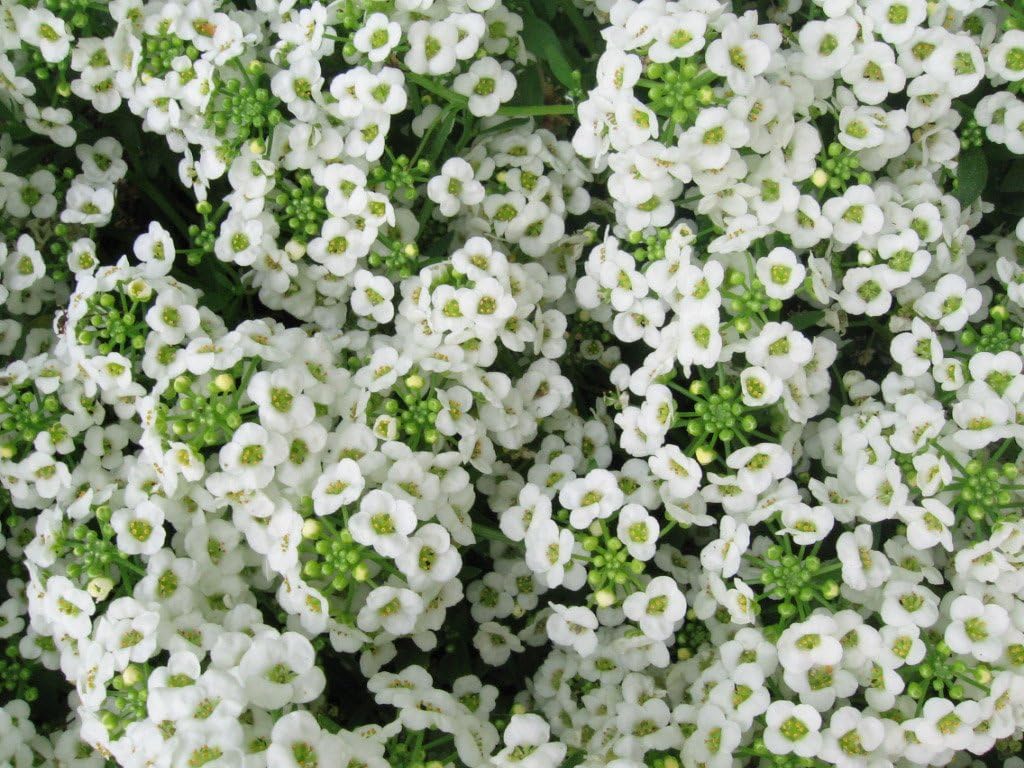
Seed Kingdom’s Alyssum Carpet of Snow is a bulk packet of Lobularia maritima seeds intended to create a low, fragrant groundcover of small white blossoms. It is typically sown in cooler months for early, continuous bloom and is used along borders, between pavers, or to fill sunny patches where a quick, low mat is wanted. Notable attributes are its intense sweet honey fragrance, fast flowering habit, and ability to blanket the ground with tight clusters of tiny white florets through the season in USDA zone 4 and warmer. The seeds are offered in very large quantity, so a single packet can cover a substantial area or allow repeated plantings. Expect moderate water needs and best results in loam soils with full sun exposure; heavy shade or very wet soils will limit performance. As an annual, it will need reseeding each year if you want continuous coverage, and plants remain low and compact rather than forming taller structure.
Best for: Buyers who want an inexpensive way to establish a fragrant, low-growing groundcover quickly across sunny garden areas and prioritize efficient coverage and scent.
Less Ideal for: Gardeners seeking a permanent perennial groundcover, shade-tolerant solutions, or those who prefer low-maintenance, no-reseeding options should look elsewhere.
- Large seed count suitable for covering broad areas or multiple plantings
- Fragrant, honey-like scent that attracts pollinators and adds sensory interest
- Quick to flower and forms a low, dense mat useful as a groundcover or border
- Performs in full sun and tolerates typical garden loam with moderate watering
- Annual habit requires reseeding each year for persistent coverage
- Performs best in full sun so it is not ideal for shaded sites
Verdict: If you want a fast, fragrant, low annual groundcover for sunny spots, this large-seed packet covers a lot of ground and delivers big floral impact.
Carpet Creeping Creeping Thyme Seeds (Ground Cover, 145,000 count)

| Indoor Outdoor Usage | Outdoor |
|---|---|
| Other Special Features of the Product | Attracts Pollinators, Fragrant, High Germination Rate |
| Expected Blooming Period | Spring to Fall |
| Sunlight Exposure | Full Sun |
| Moisture Needs | Moderate Watering |
These creeping thyme seeds are intended for establishing a fragrant, pollinator-friendly ground cover that blooms from spring through fall. They are typically sown in sandy, well-drained soil in full sun during the recommended planting period and will germinate in about two to four weeks. The listing emphasizes high germination, organic non-GMO seed stock, and suitability for dry, low-water sites, which makes it practical for rock gardens, between pavers, and large areas where a low mat of flowers is desired. Because the packet is a very large unit count, it suits budget-conscious gardeners covering wide areas or restoring erosion-prone slopes. Expect to maintain moderate watering while plants establish and occasional trimming to keep a neat carpet. Limitations are that thyme prefers full sun and sandy soils so it will perform poorly in heavy clay or dense shade, and establishing a uniform stand requires patience through the germination window and proper site prep.
Best for: Buyers who need an affordable way to establish a wide swath of flowering ground cover and prefer low-water, pollinator-friendly plantings in sunny sites.
Less Ideal for: Gardeners who want a ground cover for shady, moisture-retentive soils or those seeking a small packet for container-only planting.
- Very large seed count suitable for covering large areas on a single purchase
- Non-GMO, heirloom, organic seed sourcing
- Adapted to dry, sandy soils and full sun for low-water landscaping
- Attracts pollinators and produces fragrant blossoms across spring to fall
- Not well suited to heavy clay soils or shaded locations
Verdict: A budget-friendly, high-count seed option for quickly establishing a drought-tolerant, pollinator-attracting flowering carpet in sunny, sandy sites.
Wivolibe Sweet Alyssum Seeds (Carpet of Snow) — 10,000 Non‑GMO Heirloom Seeds

| Expected Blooming Period | Summer to Fall |
|---|---|
| Sunlight Exposure | Full Sun |
| Indoor Outdoor Usage | Indoor, Outdoor |
| Other Special Features of the Product | High Germination Rate, Non-GMO |
| Number of Pieces | 10000 |
These Sweet Alyssum seeds are a straightforward choice for establishing a reliable, low-growing flowering groundcover. Sow the tiny, light-dependent seeds on the soil surface in spring and keep them moist; germination typically occurs in 5 to 15 days and plants bloom from summer into fall. The cultivar produces masses of small, honey-scented white flowers that form a carpet just a few inches high and spread to fill gaps between shrubs, along paths, or in containers and hanging baskets. Notable features are the very large seed count (10,000+), non-GMO heirloom seed stock, and stated tolerance for heat, drought once established, wind and salt exposure, which make it useful in exposed or coastal sites. Practical benefits include quick coverage, pollinator attraction, and the ability to naturalize without much fuss. Limitations are that seeds need light to germinate so they must not be buried, and plants are short-lived in frost so they perform as an annual in cooler climates or need reseeding for continuous coverage.
Best for: Buyers who want an easy-to-establish, fragrant flowering carpet that reliably fills borders, rock gardens, and containers with minimal ongoing care and can be reseeded as needed.
Less Ideal for: Gardeners seeking a permanent perennial groundcover or those who prefer plants that tolerate deep burial at sowing should consider different species.
- Very large seed count for covering broad areas or repeated sowings
- Non-GMO heirloom seed with a high germination rate as stated
- Sweet, honey-like fragrance that attracts beneficial pollinators
- Tolerant of heat, drought, wind and salt once established, suitable for coastal or exposed sites
- Requires light at sowing so seeds must be surface-sown and kept moist until germination
- Short-lived in frost-prone areas and will need reseeding or succession sowing for season-long cover
Verdict: A dependable, high-count packet of fragrant Sweet Alyssum ideal for quickly establishing a low, pollinator-friendly flowering carpet.
KVITER Royal Carpet Sweet Alyssum Heirloom Flower Seeds (5000 Count)

| Unit Count | 5000 Count |
|---|---|
| Sunlight Exposure | Full Sun |
| Expected Blooming Period | Spring to Fall |
| USDA Hardiness Zone | 1-12 |
| Material Features | GMO Free, Heirloom |
These KVITER sweet alyssum seeds are sold in a 5000-count pack intended for creating a low, fragrant ground cover or border. The seeds produce dense mats about 4 inches tall that bloom continuously from late spring through early fall, and they are described as attractive to pollinators and deer resistant. Use them for surface-sowing in loam soil, pressing the tiny seeds into moist soil and keeping light exposure consistent for germination. The packet includes a step-by-step growing guide which helps reduce guesswork for less experienced gardeners. Practical benefits include fast coverage of bare spots, long bloom duration, and appeal to bees and butterflies, making these useful in pollinator-friendly beds and containers. Limitations are the small seed size which requires careful sowing and consistent moisture at the start, and as an annual in most gardens the plants will need reseeding each year to maintain a carpet effect.
Best for: Gardeners who want a low-maintenance, pollinator-friendly ground cover that reliably fills borders and containers through the growing season and prefer clear growing instructions to reduce risk.
Less Ideal for: People who want a permanent perennial groundcover or who prefer large plug plants to instant coverage without sowing from seed.
- Very large 5000-count packet suitable for covering extensive areas or multiple beds
- Heirloom non-GMO seed with a step-by-step growing guide included
- Long bloom period from spring through fall for extended color
- Attracts pollinators while being described as deer resistant
- Tiny seeds require careful surface sowing and initial moisture management
- Annual habit means beds need reseeding next season to maintain coverage
Verdict: A cost-effective choice for gardeners who want an easy-to-follow seed option to establish fragrant, pollinator-attracting ground cover across large areas.
Outsidepride Sweet Alyssum (Lobularia maritima) White Perennial Flower Seeds, 5000-Pack

| Expected Blooming Period | Spring to Summer |
|---|---|
| Sunlight Exposure | Partial Sun |
| USDA Hardiness Zone | 7 |
| Moisture Needs | Little To No Watering |
| Unit Count | 5000 Count |
These Outsidepride Sweet Alyssum seeds are intended as an easy-to-establish ground cover that produces dense clusters of fragrant white flowers from spring into summer. Sow on the soil surface in early spring and the small, fast-growing plants form a compact carpet 8–12 inches tall that is useful for edging beds, filling bare patches, or planting in containers. The packet describes heirloom, non-GMO seed that tolerates heat and drought, does well in full sun to partial shade, and attracts bees and butterflies while being unpalatable to deer. Practical benefits include continuous blooms if you deadhead spent flowers, low watering needs once established, and enough seed to cover large areas at broadcast rates. Limitations are that it is recommended for USDA zones 7–9 only and performs best on well-drained loam; very cold climates or heavy, waterlogged soils will reduce success. Also, establishing a uniform stand requires careful surface sowing and light thinning when seedlings emerge.
Best for: Gardeners who want a low-maintenance, fragrant white ground cover that attracts pollinators and quickly fills borders, containers, or bare spots in mild to warm climates.
Less Ideal for: Gardeners in cold USDA zones below 7 or those with heavy, poorly drained soil who need a ground cover tolerant of frost or waterlogged conditions.
- Large 5000-count packet suitable for covering lawns, borders, or multiple containers
- Honey-scented, continuous white blooms that attract pollinators
- Drought and heat tolerant once established, reducing watering needs
- Low-growing habit makes it a neat edging or ground-cover solution
- Heirloom non-GMO seed with deer resistance noted
- Recommended for USDA zones 7–9, so not ideal for colder zones
- Performs best in well-drained loam so heavy clay or poorly drained sites may struggle
Verdict: Choose these seeds when you need an easy, fragrant, pollinator-friendly white ground cover that establishes quickly in sunny, warm gardens.
Choosing the Right Ground Cover with Tiny Fragrant Flowers: Key Factors to Consider
Fragrance Strength and Timing
Fragrance varies widely among scented ground covers, from barely there to strongly perfumed. Consider whether you want a plant that perfumes an entire patio or one you only notice at close range. Also note when the scent is strongest; some plants release fragrance in the morning, others on warm afternoons or at night. Timing affects placement-put stronger-scented varieties near seating areas or walkways so you and visitors can best enjoy the aroma.
Seasonal duration matters too. Some ground covers have short, intense bloom windows while others offer repeated flushes through the growing season. If continuous scent is important, prioritize varieties with longer blooming periods or those that rebloom after light pruning.
Growth Habit and Spread Rate
Ground covers range from tight mats under a few inches tall to runners that send out stolons or rhizomes over wide areas. Match the growth habit to the planting site: slow-spreading mats are better for confined beds and containers, while vigorous spreaders suit erosion control on slopes. Consider how quickly the plant will fill space and whether it needs edge control to prevent unwanted encroachment.
Also think about how dense the foliage becomes. Dense evergreen mats suppress weeds effectively and provide winter structure, while sparse or seasonal covers may leave bare soil that requires mulch or companion plants to look tidy between blooms.
Sun and Shade Tolerance
Light conditions have a major influence on flowering and scent production. Some fragrant ground covers thrive in full sun and produce the most blooms and strongest scent under bright conditions. Others are adapted to part shade or deep shade and will perform poorly if planted in hot afternoon sun. Evaluate the exact light pattern where you plan to plant, including reflected heat from walls or pavement, and choose varieties whose tolerance matches that microclimate.
Plants struggling with the wrong light often produce fewer flowers and weaker fragrance, so matching tolerance reduces wasted effort and replacements.
Soil, Water Needs, and Climate Resilience
Soil type, drainage, and local climate determine long-term success. Many scented ground covers prefer well-drained soil and can tolerate periods of dryness once established, while others need consistent moisture to maintain bloom. Check whether a variety handles your winter lows, summer heat, and humidity levels-hardiness influences whether a plant will persist or behave like a short-lived perennial.
Also factor in susceptibility to common local pests and diseases. Choosing resilient species reduces the need for interventions and keeps the ground cover performing as intended with minimal inputs.
Maintenance and Cultural Care
Maintenance needs influence where a ground cover is practical. Low-maintenance species that only need occasional trimming or division are ideal for large sweeps or low-care gardens. Some fragrant ground covers respond well to light shearing to encourage rebloom, while others require lifting and dividing every few years to maintain vigor.
Consider how you will manage edges, reseeding or reseating bare spots, and winter clean-up. Also weigh whether the scent-producing flowers drop noticeable debris that must be raked or whether they are tidy enough to use beneath shrubs and along paths without frequent cleanup.
Companion Planting and Landscape Use
Think about how the ground cover will interact with surrounding plants. Some fragrant ground covers are good underplantings for taller perennials and shrubs, providing a scented carpet without competing heavily for light. Others can be used in rock gardens, between paving stones, or as lawn alternatives where foot traffic is light.
Consider seasonal interest beyond scent, such as foliage color, evergreen habit, and seed heads. A well-chosen ground cover can contribute structure and year-round texture in addition to fragrant flowers.
Best Planting Locations and Placement Tips
Place scented ground covers where people will notice the fragrance: along garden paths, near patios, beside doorways, or beneath windows where breeze can waft scents indoors. Avoid planting highly fragrant mats only in distant corners where their aroma is lost.
Consider ground-level microclimates. Warm, sunny spots amplify scent release but also increase water needs. In cooler or shaded sites, pick varieties known to bloom reliably in lower light so you still get fragrant flowers.
- Cluster plants in groups to amplify scent rather than scattering individual plants.
- Keep taller plants upwind or staggered so airflow carries fragrance toward seating areas.
- Use edging or root barriers for aggressive spreaders to protect adjacent beds.
Establishing and Watering Newly Planted Ground Covers
Young ground covers need regular watering until roots establish. Water deeply but infrequently to encourage deeper rooting. Overhead watering can encourage disease in dense mats, so consider drip irrigation or soaker hoses.
Mulch lightly around new plants to retain moisture and suppress weeds but avoid piling mulch against stems where rot can occur. Monitor for stress in the first season and adjust irrigation as the plant transitions to its mature water needs.
- Water schedule: frequent shallow waterings for the first two weeks, then shift to deeper, less frequent soakings.
- Reduce irrigation for drought-tolerant varieties after they are established to encourage resilience.
Pruning, Dividing, and Long-Term Care
Most ground covers benefit from occasional renewal. Light shearing after a major bloom can encourage a second flush and keep the mat tidy. For stoloniferous species, selective pruning controls spread and keeps runners from smothering nearby plants.
Divide crowded patches every few years to rejuvenate growth and prevent decline in the center. Dividing also provides material for expanding plantings elsewhere in the garden.
- Time pruning after peak bloom to avoid removing flower buds.
- Divide in spring or fall when temperatures are moderate and moisture is available.
Using Ground Covers to Support Pollinators
Tiny fragrant flowers often attract bees, hoverflies, and other beneficial insects. Planting a mix of species with staggered bloom times sustains pollinators through the season. Avoid broad-spectrum insecticides near flowering ground covers to preserve these beneficial visitors.
Even small patches can be valuable habitat when planted with nectar-rich companions. Groupings near native shrubs and herbaceous plants create richer foraging corridors across the garden.
- Choose species with open-faced flowers for easy insect access.
- Provide nearby water and shelter to make patches more attractive to pollinators.
Design Uses: Edging, Between Pavers, and as Lawn Alternatives
Scented ground covers make charming edging plants along walkways and flower beds. Low-growing mats with a tight habit work well between pavers where foot traffic is light. For a low-mow or no-mow area, some fragrant ground covers can replace small lawn sections, offering scent and bloom instead of grass.
Match plant height and spread to the intended use. Choose hardy, compact varieties for between-paver joints and slightly taller, more rambling types for informal borders.
- Test a small patch when using as a lawn substitute to ensure it tolerates occasional trampling.
- Use a mix of species to create extended bloom periods and visual interest.
How We Chose the Best Ground Cover with Tiny Fragrant Flowers
We focused on traits that determine how a scented ground cover performs across real garden situations. Key evaluation criteria included scent intensity and duration, spread habit and ground coverage speed, sun and shade tolerance, winter hardiness and drought resilience, and maintenance demands like pruning or division. We looked for plants that reliably produce noticeable fragrance without needing specialty care and that integrate with typical garden beds, borders, and containers. Plants were excluded if they are primarily annuals, aggressively invasive in most regions, or require greenhouse conditions to bloom. We also filtered out cultivars that need frequent chemical inputs to thrive. The final shortlist emphasizes durable, fragrant ground covers that suit a range of soil types and microclimates. Each pick was assessed on how well it balances scent, garden behavior, and upkeep so gardeners can choose based on site conditions and desired impact.
FAQ
How do I place fragrant ground covers near seating areas without overpowering the space?
Plant scented varieties a few feet from seating rather than directly beneath it and group plants to create pockets of scent. Monitor after planting and thin if the aroma becomes too strong for comfort.
Will fragrant ground covers attract too many pollinators close to the house?
They will attract pollinators, but most are beneficial and not problematic. If you are sensitive to insects, keep a buffer of nonflowering plants next to doorways and windows and avoid leaving food outside during peak bloom.
Can I use scented ground covers between stepping stones?
Yes. Choose low, compact species with shallow root systems and the ability to tolerate light foot traffic. Ensure soil between stones has good drainage to prevent rot and check plant labels for tolerance to occasional trampling.
How much maintenance do fragrant ground covers need yearly?
Maintenance varies. Many are low-maintenance, needing only occasional trimming, division every few years, and minimal irrigation once established. Others that rebloom or spread quickly may require light pruning and edge control more frequently.
Do fragrant ground covers need special soil to produce scent?
Not usually. Most simply need soil appropriate for their species-well-drained for many Mediterranean types, evenly moist for woodland species. Proper nutrition and light conditions have more effect on flowering and scent than soil type alone.
When is the best time to plant ground covers for quick establishment?
Plant in spring or fall when temperatures are moderate and moisture is more reliable. This gives roots time to establish before extreme summer heat or winter cold sets in.
Final Verdict
Choosing a ground cover with tiny fragrant flowers means balancing scent, spread, and siting. Prioritize varieties whose fragrance strength and bloom timing match where you want the scent to be noticed, and pick a growth habit that fits the planting area to avoid future containment problems. Give attention to light and soil needs to ensure consistent flowering and fragrance. A practical approach is to select a low-maintenance, appropriately hardy variety for the planting microclimate and plan for occasional renewal through pruning or division. That way you get lasting scent and coverage with manageable upkeep.
