

Note: This article contains affiliate links. If you click on these links and make a purchase, I may earn a small commission at no extra cost to you. This helps support my research and content. Read my full affiliate disclosure here.
Planting the right ground cover on a sunny hillside changes how that slope performs through drought, storms, and the gardening season. You want plants that anchor soil, spread reliably without becoming invasive, and stay attractive with minimal watering and trimming. This guide highlights the top shortlisted ground covers for sunny hillsides and explains how each was judged for drought tolerance, root stability, establishment speed, and landscape compatibility. Read on to understand the tradeoffs so you can pick a planting that controls erosion, reduces maintenance, and suits your site conditions.
Top Picks at a Glance
| Best Overall The best all-around choice for most situations | Florida Foliage Blue Rug Juniper (10 Live Plants) |  |
| Best Quality Built to a higher standard if you want something more solid | Florida Foliage Asiatic Jasmine Minima — 60 Live Plants |  |
| Best Value The sweet spot between price and what you get | Outsidepride Perennial White MiniClover Seed (4 oz) |  |
| Best Budget The cheapest option that still gets the job done reliably | Carpet Creeping Creeping Thyme Seeds (Ground Cover, 145,000 count) |  |
| Highest Rated A top-rated pick with lots of positive feedback | Green Promise Farms Juniperus horizontalis 'Blue Chip' Creeping Juniper, 2-Size Container |  |
| Most Popular A crowd favorite that many people choose with confidence | HOME GROWN Verbena Moss Seeds (6,000 Seeds) |  |
| Best Seller A high-volume bestseller chosen again and again | KVITER Purple Rock Cress (Aubrieta deltoidea) Heirloom Flower Seeds — 1,000 Count |  |
Florida Foliage Blue Rug Juniper (10 Live Plants)

| Indoor Outdoor Usage | Outdoor |
|---|---|
| Other Special Features of the Product | Drought Tolerant, Low Maintenance |
| Sunlight Exposure | Full Sun |
| Soil Type | Sandy Soil |
| Moisture Needs | Moderate Watering |
The Florida Foliage Blue Rug Juniper comes as a 10-plant pack of Juniperus horizontalis intended to form a dense, silvery-blue carpet across rock gardens, slopes, borders, and other sunny areas. It is typically planted in full sun in well-draining or sandy soils and used for erosion control, weed suppression, and low-maintenance ground coverage. Notable features include drought tolerance, year-round evergreen foliage, and a prostrate spreading habit that creates continuous coverage with minimal pruning. In practice these junipers establish quickly in the right site and reduce maintenance compared with turf or high-care perennials, while the dense mat helps hold soil on banks and underplant slopes. Important limitations are site specificity and appearance: they need full sun and good drainage to keep their color and health, and they will not do well in shade or persist in wet, poorly drained soils. Also, as a slow-to-moderate spreader they may take a season or two to fully fill gaps, so plan spacing accordingly.
Best for: Gardeners who want a low-maintenance evergreen groundcover for sunny, well-drained sites and who prioritize soil stabilization and year-round color.
Less Ideal for: If you need groundcover for shaded areas, waterlogged soils, or want immediate full coverage without time for plants to spread, choose a different species or a pre-established mat.
- Drought tolerant and low maintenance, reducing irrigation and routine care.
- Evergreen, providing year-round ground cover and visual interest.
- Spreading, mat-forming habit good for erosion control on slopes and banks.
- Adaptable to sandy and rocky soils where many plants struggle.
- Requires full sun and good drainage to perform and keep its blue color.
- Will not establish well in shaded or consistently wet sites.
Verdict: A practical, low-care evergreen groundcover that stabilizes soil and delivers year-round blue-green color on sunny, well-drained sites.
Florida Foliage Asiatic Jasmine Minima — 60 Live Plants

| Indoor Outdoor Usage | Outdoor |
|---|---|
| Other Special Features of the Product | Drought Tolerant, Low Maintenance |
| Sunlight Exposure | Full Sun |
| USDA Hardiness Zone | 3 |
| Unit Count | 60 Count |
Asiatic Jasmine Minima is a dense, evergreen ground cover that spreads to form a thick mat, making it well suited for stabilizing sunny slopes and filling large bare areas. The plants are typically used in long runs or mass plantings where erosion control, low upkeep, and quick visual coverage are priorities. Key features from the listing are full-sun tolerance, drought resistance once established, and adaptability to sandy or poor soils. In practice this means you can plant a hillside, water during establishment, then rely on the jasmine to suppress weeds and reduce soil wash with minimal ongoing maintenance. Limitations include the time needed for the plants to knit together into a continuous cover and the potential need for occasional trimming where it meets pathways or desired edges. Because it is a living ground cover, success depends on proper initial spacing and establishment watering, and it will not provide instant coverage the way sod or landscape fabric might.
Best for: Gardeners who prioritize performance and long-term erosion control on sunny slopes and want a low-maintenance, drought-tolerant living ground cover that will thicken over time.
Less Ideal for: People needing immediate bare-ground coverage or a temporary solution for heavy foot-traffic paths should consider alternatives like sod or hardscaping.
- Evergreen, dense foliage that suppresses weeds and provides ongoing coverage
- Drought tolerant once established, reducing long-term irrigation needs
- Tolerates full sun and poor sandy soil common on hillsides
- Sold in a 60-plant pack for planting larger areas efficiently
- Requires time and proper spacing to form a continuous mat rather than instant coverage
- Needs regular watering during establishment before drought tolerance develops
Verdict: Choose Asiatic Jasmine Minima when you need a hardy, drought-tolerant evergreen ground cover that will reliably stabilize and green a sunny hillside over time.
Outsidepride Perennial White MiniClover Seed (4 oz)

| Indoor Outdoor Usage | Outdoor |
|---|---|
| Other Special Features of the Product | Drought Tolerant |
| Expected Blooming Period | Summer |
| Soil Type | Sandy Soil |
| Moisture Needs | Moderate Watering |
Outsidepride Perennial White MiniClover is a small-leaved micro clover sold for use as a lawn alternative, mix-in with grass seed, or standalone ground cover in full sun. It germinates quickly, produces stolons to form a dense mat, and reaches only about 4 to 6 inches, which makes it compatible with low-mow lawns and paths. Key features include nitrogen-fixing that improves soil fertility naturally, seasonal white flowers that attract pollinators if left unmowed, and good drought tolerance once established. Typical uses are overseeding thin turf, filling bare patches, stabilizing slopes for erosion control, or creating a low-maintenance green cover where regular mowing and watering are undesirable. Limitations to consider are that it is a perennial clover rather than a turf grass so it will produce flowers and a clover texture that differs from fine-bladed lawns, and it may not match the look of manicured turf. It prefers well-drained, sandy soils and moderate watering during establishment, and performance can vary by climate and how much it is mowed or mixed with other seeds.
Best for: Home gardeners and property owners who want a low-maintenance, pollinator-friendly ground cover for sunny areas and prefer reducing watering and fertilizer inputs over achieving a formal turf look.
Less Ideal for: People seeking a traditional, high-traffic turf with a fine-bladed, uniform appearance or those with consistently waterlogged soil conditions.
- Forms a dense, low-growing mat via stolons for effective ground cover and erosion control
- Nitrogen-fixing habit improves soil fertility and reduces need for fertilizer
- Drought-tolerant once established, reducing watering requirements
- Small leaves and low height tolerate lower mowing heights compared with standard clover
- Different appearance and texture than fine-bladed turf so it may not suit formal lawns
- Performs best in well-drained, sandy soils and may need attention in heavy clay or poorly drained sites
Verdict: Choose this miniclover seed if you want an easy-care, drought-tolerant ground cover for sunny spots that improves soil fertility and reduces mowing and watering.
Carpet Creeping Creeping Thyme Seeds (Ground Cover, 145,000 count)

| Indoor Outdoor Usage | Outdoor |
|---|---|
| Other Special Features of the Product | Attracts Pollinators, Fragrant, High Germination Rate |
| Expected Blooming Period | Spring to Fall |
| Sunlight Exposure | Full Sun |
| Moisture Needs | Moderate Watering |
These creeping thyme seeds are intended for establishing a fragrant, pollinator-friendly ground cover that blooms from spring through fall. They are typically sown in sandy, well-drained soil in full sun during the recommended planting period and will germinate in about two to four weeks. The listing emphasizes high germination, organic non-GMO seed stock, and suitability for dry, low-water sites, which makes it practical for rock gardens, between pavers, and large areas where a low mat of flowers is desired. Because the packet is a very large unit count, it suits budget-conscious gardeners covering wide areas or restoring erosion-prone slopes. Expect to maintain moderate watering while plants establish and occasional trimming to keep a neat carpet. Limitations are that thyme prefers full sun and sandy soils so it will perform poorly in heavy clay or dense shade, and establishing a uniform stand requires patience through the germination window and proper site prep.
Best for: Buyers who need an affordable way to establish a wide swath of flowering ground cover and prefer low-water, pollinator-friendly plantings in sunny sites.
Less Ideal for: Gardeners who want a ground cover for shady, moisture-retentive soils or those seeking a small packet for container-only planting.
- Very large seed count suitable for covering large areas on a single purchase
- Non-GMO, heirloom, organic seed sourcing
- Adapted to dry, sandy soils and full sun for low-water landscaping
- Attracts pollinators and produces fragrant blossoms across spring to fall
- Not well suited to heavy clay soils or shaded locations
Verdict: A budget-friendly, high-count seed option for quickly establishing a drought-tolerant, pollinator-attracting flowering carpet in sunny, sandy sites.
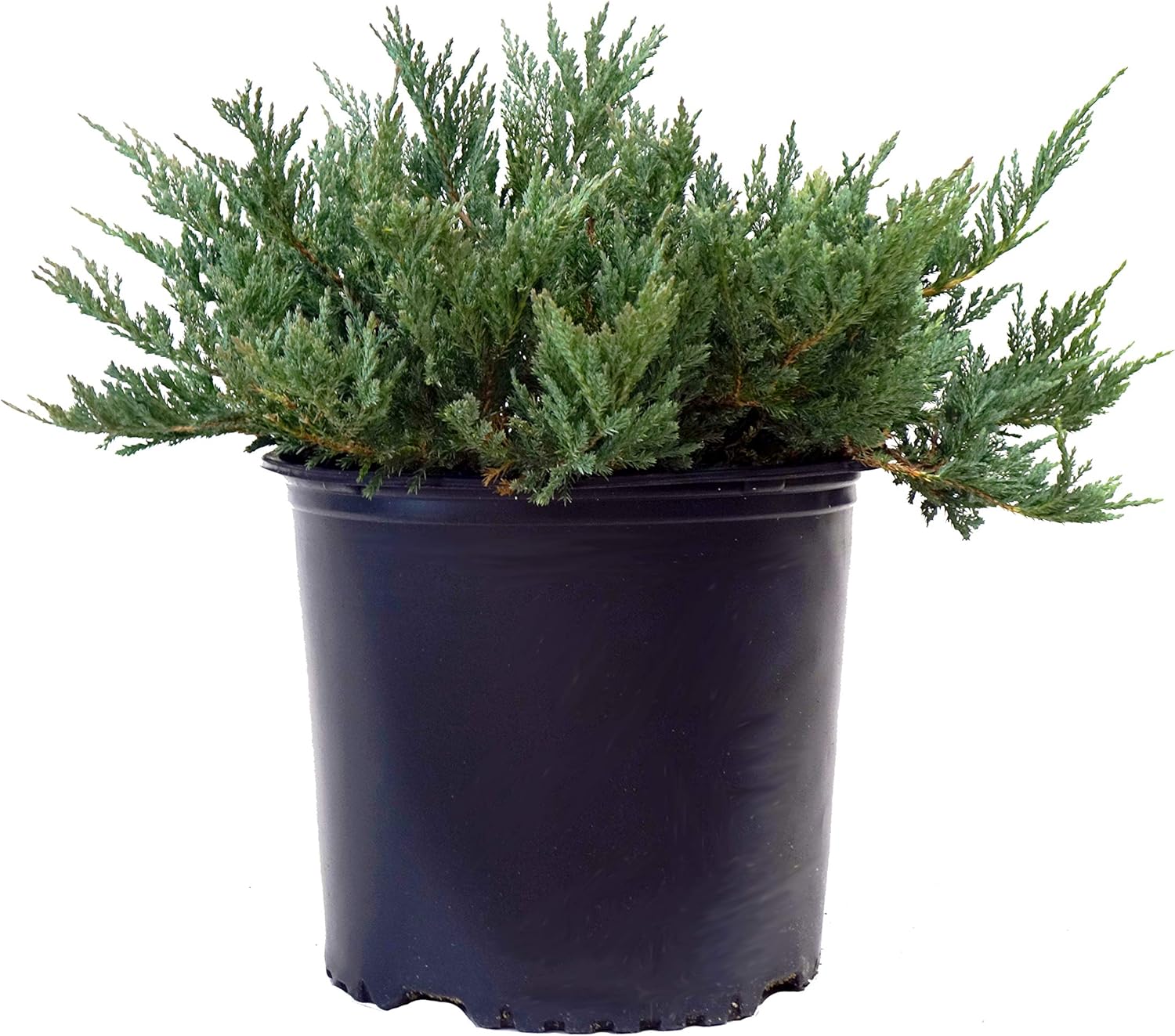
Green Promise Farms Juniperus horizontalis 'Blue Chip' Creeping Juniper, 2-Size Container
| Sunlight Exposure | Full Sun |
|---|---|
| Expected Planting Period | Spring |
| USDA Hardiness Zone | 3-8 |
| Soil Type | Sandy Soil |
Green Promise Farms Blue Chip is a hardy, low-growing juniper intended for quick ground cover on sunny slopes and exposed sites. It is typically planted in spring and used in massings on hillsides, banks, or between rockwork where you want erosion control and year-round color. Notable features include its aggressive, prostrate habit that establishes quickly and its tolerance for sandy, rough soils and road salt, which reduces maintenance and replacement needs. Because it thrives in full sun and USDA zones 3 to 8, it adapts across a wide climate range and requires little supplemental care once established. Limitations are that it can spread broadly so placement matters if you want tighter spacing, and like most junipers it prefers well-drained sites so heavy clay or poorly drained pockets will require amendment or avoided. Planting instructions are provided with the shipment to help ensure reliable establishment.
Best for: Buyers who need a dependable, low-maintenance ground cover for sunny hillsides or slopes and prioritize plants that establish reliably in poor or salty soils.
Less Ideal for: Those seeking a compact, slow-spreading border plant or gardeners with persistently wet, poorly drained planting sites should consider alternatives.
- Aggressive prostrate growth covers ground quickly for erosion control
- Tolerant of sandy soils and road salt, reducing site constraints
- Vivid steel-blue foliage provides year-round visual interest
- Adapted to full sun and a wide USDA zone range (3–8) for reliability
- Can spread widely, so may require spacing management to avoid crowding
- Not suited to poorly drained or heavy clay sites without soil improvement
Verdict: Blue Chip juniper is a reliable, fast-establishing groundcover for sunny slopes where low maintenance and tolerance of sandy or salty soils are priorities.
HOME GROWN Verbena Moss Seeds (6,000 Seeds)

| Expected Blooming Period | Spring to Fall |
|---|---|
| Sunlight Exposure | Full Sun |
| USDA Hardiness Zone | 2, 3, 4, 5, 6, 7, 8, 9, 10, 11 |
| Number of Pieces | 6000 |
| Moisture Needs | Moderate Watering |
These HOME GROWN Verbena Moss seeds provide a high-count mix (6,000 seeds) of Verbena tenuisecta designed for mass planting as a colorful ground cover. Intended for full‑sun sites, the seeds produce compact, feathery foliage topped by rounded clusters of tiny star-shaped flowers in shades from white to purple, blooming from spring through fall. The packet is marketed as heirloom and non-GMO and comes with an online grow guide, which helps with sowing, establishing, and basic care. In practice this mix is useful for filling borders, rock gardens, slopes, or bare patches to create a continuous floral carpet and to attract pollinators. Strengths are the very high seed count for wide coverage, long blooming season, and low maintenance once established. Expect moderate watering and loam soil for best results, and treat it as a perennial only where frost is mild; in colder zones it behaves more like an annual. Buyers should allow time for germination and establishment before judging density, and plan for deadheading or light pinching to keep plants tidy and encourage reblooming.
Best for: Gardeners who want an easy, showy ground cover for sunny beds and borders and who value social proof and guidance when trying a larger scale planting.
Less Ideal for: Shade gardeners or those needing an immediate, fully established lawn‑like cover; also unsuitable for planting sites where winter survival is critical and perennial habit is mandatory.
- Very high seed count suitable for large beds or mass plantings
- Heirloom non-GMO seed mix with an included online grow guide to support success
- Long bloom window from spring to fall for sustained garden color
- Low maintenance once established and attractive to pollinators
- Suitable for poor soils and erosion control on slopes
- Perennial performance depends on local winter hardiness so may behave as an annual in cold climates
- Requires full sun and moderate watering so not suited to shade or very dry xeric sites
Verdict: Choose this large non‑GMO seed pack when you want an affordable, pollinator‑friendly ground cover that delivers long, low‑maintenance color across large sunny areas.
KVITER Purple Rock Cress (Aubrieta deltoidea) Heirloom Flower Seeds — 1,000 Count

| Unit Count | 1000 Count |
|---|---|
| USDA Hardiness Zone | 3-10 |
| Sunlight Exposure | Full Sun |
| Expected Blooming Period | Spring to Summer |
| Material Features | GMO Free, Heirloom |
These KVITER Aubrieta (purple rock cress) seed packets supply 1,000 heirloom seeds for establishing a low, drought-tolerant ground cover. The seeds are surface-sown and need light to germinate, typically sprouting in 10–14 days around 60–65°F, and can be started indoors about six weeks before the last frost. Once established the plants form 6-inch mats with a cascading habit that works well in rock gardens, along paths, or on low walls. Key product features include a detailed growing guide in each packet, non-GMO heirloom seed, and suitability across USDA zones 3–10. Practical benefits are long seasonal color in late spring, low maintenance after establishment, and good tolerance of well-drained, sandy soils, which matches drought-tolerant plantings. Limitations to expect are the need for careful surface sowing and consistent moisture during germination, and that it performs best in full sun to part sun so shadier sites may underperform. Seed quantity is generous but germination rates in real gardens can vary, so plan accordingly.
Best for: Buyers who want a low-growing, drought-tolerant ground cover for rock gardens or sunny slopes and prefer a straightforward seed option with clear instructions and broad climate tolerance.
Less Ideal for: Gardeners seeking instant mature cover or those with heavily shaded, clay or poorly drained sites should consider plugs or different shade-tolerant species instead.
- Large 1,000-count pack suitable for covering larger areas or multiple plantings
- Heirloom non-GMO seeds with a growing guide included for step-by-step planting
- Adapted to USDA zones 3–10, making it usable across a wide range of climates
- Forms low, spreading mats that work well as drought-tolerant ground cover in well-drained soils
- Requires light for germination and consistent moisture during the seedling stage
- Performs best in full sun to part sun so heavily shaded spots may not thrive
Verdict: A cost-effective seed option for establishing low, drought-tolerant purple ground cover across a wide range of climates when planted in sunny, well-drained spots.
Choosing the Right Ground Cover for Sunny Hillside: Key Factors to Consider
Soil Stability and Rooting Habit
On a sunny hillside the ability of a plant to hold soil is the primary function of ground cover. Look for species with fibrous or deep root systems that bind the topsoil and resist shallow erosion from rainfall. Some ground covers send out stolons or rhizomes that knit the surface quickly, while others establish a dense mat of fibrous roots that lock particles in place.
Understanding the rooting habit also helps with long-term slope management. Aggressive runners can stabilize quickly but may need edge control; non-spreading clump-formers may require closer spacing or mulching during establishment to prevent bare patches.
Drought Resistance and Water Needs
Sunny hillsides often dry out faster than flat beds, so drought resistance is essential. Choose plants adapted to low water once established to reduce irrigation and the risk of washouts during dry spells. Consider how long a plant can tolerate intermittent drought during the first year of establishment versus after it is established.
Water needs during establishment matter because young plants are most vulnerable to runoff and desiccation. Budget time for initial watering or temporary erosion-control measures if you select a cover that needs more moisture early on.
Growth Rate and Coverage Speed
Speed of coverage affects how long soil is exposed to erosion risk. Fast-spreading ground covers reduce bare soil quickly but can crowd other plants or escape intended bounds. Slower-growing species may be neater and easier to manage, but they leave gaps longer and may need companion erosion control such as biodegradable mats or denser planting.
Balance your tolerance for early maintenance against how quickly you need the slope stabilized. For newly graded or highly erodible slopes, faster establishment is generally safer.
Maintenance and Long-Term Management
Different ground covers demand different ongoing tasks. Some require periodic pruning or thinning to keep them from smothering adjacent plants, while others are essentially hands-off once established. Consider how often you are willing to trim, transplant, or replace sections after harsh winters or droughts.
Also factor in how easy it is to repair small washouts or replace lost plants. Low-maintenance covers that propagate from cuttings or runners allow quicker patching without replanting entire beds.
Sun, Heat, and Microclimate Compatibility
A sunny hillside can be hotter and windier than a level garden bed. Choose plants rated for full sun and heat tolerance; some ground covers will scorch or desiccate if they cannot handle reflected heat from walls or pavement. Pay attention to microclimate features such as afternoon sun, prevailing winds, and reflected heat, because those affect plant stress more than general zone maps.
Select plants whose leaf structure and physiology suit your microclimate. Thick, waxy, or silvered leaves often indicate better performance in hot, sunny exposures.
Invasiveness Risk and Neighbor Impact
Ground covers that spread via runners or seeds can escape into adjacent beds, lawns, or natural areas. On slopes this risk increases because runners can travel downhill or seeds can wash into other plantings. Consider whether you need a species that stays tidy or one that will colonize aggressively.
If invasive potential is a concern, plan for containment measures such as root barriers, edge trimming, or choosing lower-risk cultivars. Responsible selection protects native plants and reduces future maintenance headaches.
Preparing a Sunny Hillside for Planting
Proper site preparation sets the stage for successful ground cover. Begin by assessing slope angle, existing soil texture, and any compaction. Lightly roughen compacted slopes to improve water infiltration and root penetration.
Address erosion risk before planting by installing temporary measures if rainfall is expected during establishment. Biodegradable erosion-control mats or wattles can protect young plants while roots develop. Also consider amending soil in planting pockets where the substrate is shallow or very poor.
- Map sun exposure and wind patterns to choose appropriate species
- Work small planting terraces or staggered pockets on steep slopes to slow runoff
- Prep planting holes with added compost where soil is thin
Planting Strategies for Faster Establishment
Spacing and planting technique affect how quickly coverage closes. Place plants at recommended densities for slope use, often tighter than flat-ground spacing, to accelerate canopy closure and root interlock. When using plug plants, plant slightly deeper on very loose soils to reduce uprooting risk.
Mulch lightly with coarse organic material to moderate surface temperature and reduce splash erosion. Avoid heavy mulch layers that can insulate soil too much and keep crowns too moist, which can harm drought-adapted covers.
- Stagger plants in offset rows to reduce straight-line runoff paths
- Water deeply but infrequently during the first season to encourage deeper roots
- Consider a mix of faster and slower spreaders for early cover and long-term stability
Seasonal Care and Troubleshooting
Once established, many hillside ground covers need only occasional attention, but you should watch for signs of stress after extreme weather. Inspect slopes after heavy rains for surface erosion and fill or repatch vulnerable areas promptly. During extended dry periods, supplemental deep watering can prevent dieback that leads to bare spots.
If a species becomes too aggressive, control it by selective trimming or by removing runners at the edge. For winter dieback in cold climates, plan for spring replanting in thin areas rather than immediate large-scale intervention.
- Monitor for pest or disease hotspots and treat early
- Use spot-planting to repair small washouts quickly
- Thin dense mats in spring to improve air circulation and reduce fungal issues
Combining Ground Cover With Other Slope Treatments
Ground cover is often most effective when combined with structural or organic slope treatments. Terracing, retaining features, or strategically placed boulders can reduce runoff velocity and create microhabitats for different plants. Mulch berms or swales help direct excess water to planted zones instead of letting it flow unchecked.
Think of planting as part of an integrated slope plan. Use shrubs or deeper-rooted perennials in key anchor positions and ground cover to fill between, creating layers that reinforce stability and biodiversity.
- Place deeper-rooted anchors at intervals on steep slopes
- Use swales or check dams to slow and capture runoff
- Layer plant types for both structural support and seasonal interest
Sourcing and Ethical Planting Practices
Choose nursery-sourced plugs or divisions that are healthy and free of pests or disease. When possible, select locally adapted stock to improve establishment success and reduce irrigation needs. Avoid using species that are listed as invasive in your region.
Practice careful sourcing and stewardship. Collect seed or cuttings only where allowed and favor cultivars or local ecotypes known to perform well in sunny, sloped sites.
- Inspect nursery stock for root-bound or stressed plants
- Ask about provenance and regional performance when buying
- Avoid wild-collecting in sensitive or protected habitats
How We Chose the Best Ground Cover for Sunny Hillside
We selected ground covers that perform well on exposed, sunlit slopes and that meet concrete gardener needs for erosion control and low upkeep. Primary evaluation criteria included drought tolerance, root system strength for soil anchoring, habit and spread pattern to assess coverage speed and invasiveness risk, sun- and heat-tolerance, and maintenance demands such as pruning or replanting. We also considered ornamental value, including seasonal leaf or bloom interest, because attractive cover is useful in visible hillside beds. Exclusions included species known to be aggressively invasive in many regions, plants that require heavy irrigation or constant fertilization, and types unsuited to sloped sites such as true ground-hugging water-loving species. We favored options with documented establishment strategies for slopes, including recommended planting densities and erosion-control techniques. The shortlisted entries met multiple criteria so gardeners can balance coverage speed, long-term stability, and maintenance workload when choosing ground cover for sunny hillsides.
FAQ
How soon will a ground cover stop erosion on a newly planted slope?
Coverage speed varies with species and planting density. Fast-spreading runners can provide visible protection within a single growing season, while slower mat-formers may take several seasons. Use temporary erosion-control measures during the first months if immediate protection is needed.
Can I plant ground cover on a very steep hillside?
Yes, but steeper slopes often need additional measures such as terracing, biodegradable erosion blankets, or anchored plant pockets. Select species with strong root systems and consider installing structural supports where runoff is concentrated.
Do ground covers for sunny hillsides need fertilizer to establish?
Most drought-tolerant hill-slope ground covers prefer leaner soils and do not need heavy fertilization. A light soil amendment or starter fertilizer can help in very poor soils, but excess nutrients can encourage weak, fast-growing shoots rather than strong root development.
How do I prevent a spreading ground cover from invading nearby beds?
Containment methods include edging barriers, regular trimming of runners, and planting buffer strips. Choosing less aggressive cultivars or root-bound planting pockets also reduces escape risk.
Will mulch help or hurt ground cover on hot sunny slopes?
Light, coarse organic mulch can conserve moisture and reduce surface erosion during establishment. Avoid thick layers that trap moisture against crowns of drought-adapted plants. Use mulch sparingly and replace as it breaks down.
Can I mix several ground-cover species on one slope?
Mixing species can combine quick coverage with long-term stability and seasonal interest. Select plants with compatible water and sun needs, and plan spacing so faster spreaders do not overwhelm slower species.
Final Verdict
Choosing ground cover for a sunny hillside means balancing rapid soil protection with long-term stability and manageable maintenance. Prioritize species with strong root systems and proven drought tolerance, and plan for tighter initial spacing or temporary erosion controls on newly disturbed slopes. Remember that combining structural measures, appropriate planting techniques, and ethically sourced stock reduces risk and improves establishment success. Decide whether you need immediate coverage or a slower, low-spread option, then match your maintenance willingness to the plant habit. With the right combination of root anchoring, heat resilience, and sensible maintenance, you can stabilize the hillside and create an attractive, sustainable planting.
