

Note: This article contains affiliate links. If you click on these links and make a purchase, I may earn a small commission at no extra cost to you. This helps support my research and content. Read my full affiliate disclosure here.
Picking the right ground cover for Zone 6A matters because winter cold, seasonal moisture, and local sun conditions determine survival and spread. The right plants reduce weeding, protect soil from erosion, and give beds a finished look without needing constant care. In this guide we shortened a long list to seven practical ground cover options suited to Zone 6A conditions. Each pick is evaluated for winter hardiness, establishment speed, maintenance needs, and typical light and moisture tolerances to help you match plants to specific garden microclimates. Read on for practical notes that will help you decide which ground cover fits your site and maintenance plans.
Top Picks at a Glance
| Best Overall The best all-around choice for most situations | Outsidepride White Dutch Clover Seed, 5 lb |  |
| Best Quality Built to a higher standard if you want something more solid | Groundcover Pachysandra terminalis Japanese Spurge — 100 Bare Root Plants |  |
| Best Value The sweet spot between price and what you get | Pennington Clover & Grass Seed Mix, 7 lb |  |
| Best Budget The cheapest option that still gets the job done reliably | Carpet Creeping Creeping Thyme Seeds (21,500 Count) |  |
| Highest Rated A top-rated pick with lots of positive feedback | Liriope spicata Live Plants — 18 Pack of 3" Pots |  |
| Most Popular A crowd favorite that many people choose with confidence | Outsidepride White Dutch Clover Seed, 2 lb | |
| Best Seller A high-volume bestseller chosen again and again | Outsidepride White Dutch Clover Seed, 1 lb Nitrocoated & Inoculated | |
Outsidepride White Dutch Clover Seed, 5 lb

| USDA Hardiness Zone | 3 |
|---|---|
| Sunlight Exposure | Full Sun |
| Moisture Needs | Little To No Watering |
| Material Features | Heirloom |
| Expected Blooming Period | Early spring/Late summer |
Outsidepride White Dutch clover is a hardy perennial cover crop sold in a 5 lb bulk bag and treated (nitrocoated and inoculated) to support germination and soil health. It is used for quick-establishing ground cover, erosion control, lawn alternatives, pasture mixes, and deer or food plots. Typical use is broadcasting seed at the recommended rate, lightly raking it in, and keeping the soil moist until germination, which often appears within two weeks under favorable temperatures. Notable features include drought tolerance, the ability to fix atmospheric nitrogen to improve soil fertility, and fragrant white blooms that attract pollinators. Practical benefits are reduced need for watering and herbicides, faster soil stabilization on slopes, and improved soil structure when used in rotations. Limitations are that it establishes best with some site preparation and regular moisture during germination, it can be slow to outcompete aggressive weeds in very poor seedbeds, and its low stature means it is not a replacement for tall ornamental plantings. Overall it is a straightforward, low-maintenance option for durable, pollinator-friendly ground cover in dry landscapes.
Best for: Buyers who prioritize proven performance and want a low-water, pollinator-friendly ground cover with strong customer feedback to back its reliability for erosion control and lawn alternatives.
Less Ideal for: Gardeners seeking a tall, ornamental flowering display or immediate weed-free lawns should consider other perennial or turf options that provide instant height or faster weed suppression.
- Treated (nitrocoated and inoculated) seed for improved germination and soil inoculation benefits
- Drought tolerant once established, suitable for low-water landscapes
- Attracts pollinators with white flowers, supporting garden biodiversity
- Effective at crowding out weeds and stabilizing soil for erosion control
- Needs consistent moisture during germination window or establishment may be patchy
- Won't rapidly suppress very aggressive weeds without prior site prep or repeat sowing
Verdict: A drought-tolerant, treated white clover seed that delivers reliable, pollinator-friendly ground cover and soil improvement for low-water landscapes.
Groundcover Pachysandra terminalis Japanese Spurge — 100 Bare Root Plants

| Quantity | 100 heavily rooted plants |
|---|---|
| Hardiness Zone | 5 to 9 |
| Height | 6 to 12 inches |
| Spread | 1 to 1.5 feet |
| Sun | Part shade to full shade |
This offering supplies 100 heavily rooted Pachysandra terminalis (Japanese spurge) plants designed to establish a dense, low-maintenance evergreen groundcover in part to full shade. Pachysandra spreads by underground stems to form a carpet of dark green foliage 6 to 12 inches high and about 1 to 1.5 feet across, producing small white April blooms. It is typically planted on 6 to 9 inch centers to close in quickly for erosion control, borders, or under trees where grass struggles. The key practical benefits are rapid lateral spread that suppresses weeds, year-round foliage in suitable zones, and very low maintenance once established. Important limits are climate and placement: it is suited to USDA zones 5 to 9 and prefers shady conditions, so it will not perform well in full sun or outside its hardiness range. Buyers should also plan spacing and quantity carefully because the pack size and recommended spacing determine how much area these 100 plants will cover and how long it takes to fill in.
Best for: Gardeners who need a reliable, low-maintenance evergreen groundcover for shaded beds or under trees and want to establish coverage quickly with a ready supply of plants.
Less Ideal for: People seeking a sun-loving groundcover, a flowering show-plant, or those with planting areas outside USDA zones 5 to 9 should look at other options.
- Evergreen foliage that provides year-round groundcover in shaded sites
- Spreads rapidly via underground stems to form a dense, weed-suppressing carpet
- Low maintenance once established, useful for erosion control and borders
- Large quantity (100 heavily rooted plants) lets you cover a substantial area or accelerate fill-in
- Only recommended for part shade to full shade and USDA zones 5 to 9
- Pack requires planning for spacing since 100 plants may not cover very large areas at tight spacing
Verdict: A straightforward, low-maintenance choice for quickly establishing an evergreen carpet in shaded garden areas.
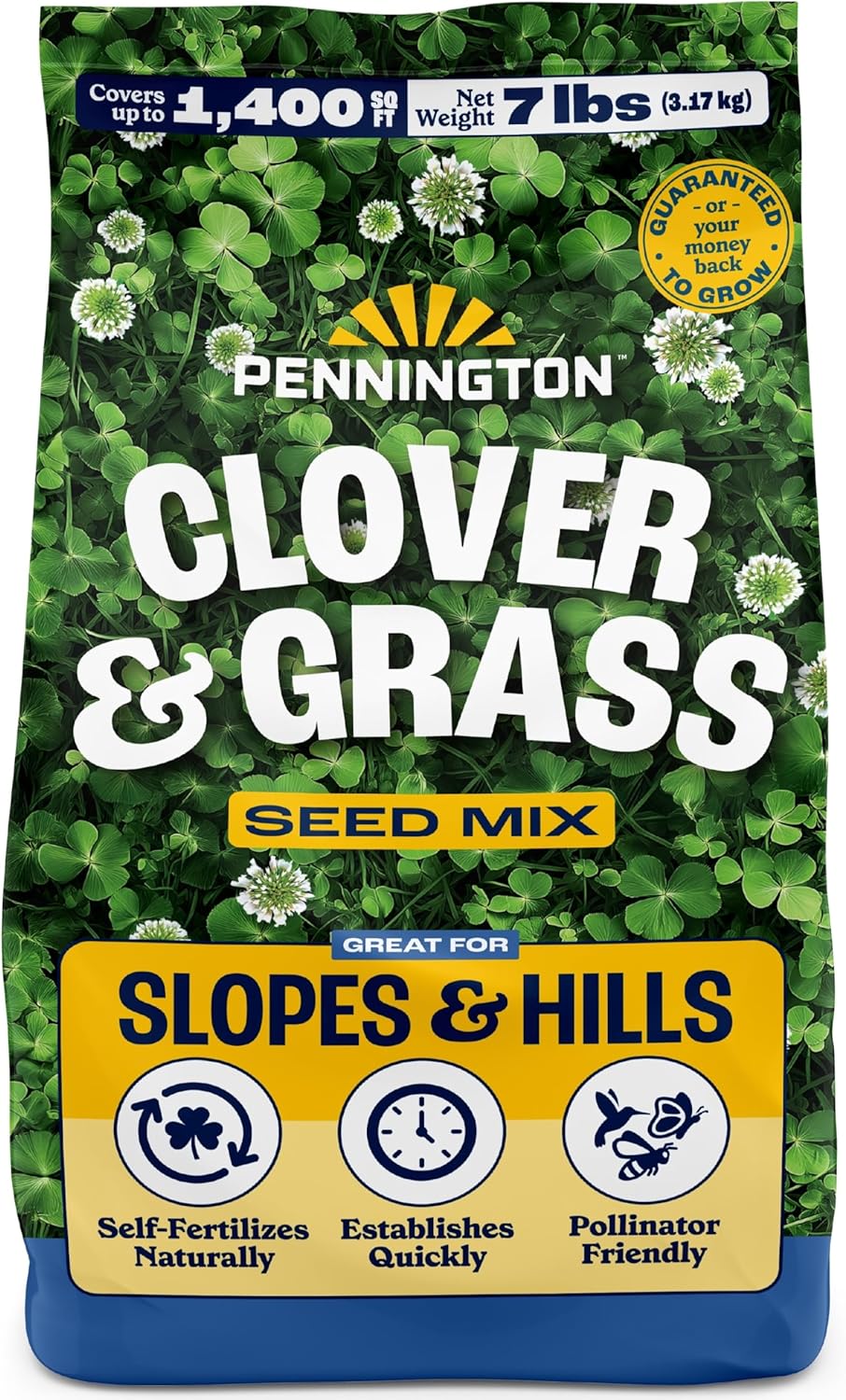
Pennington Clover & Grass Seed Mix, 7 lb
| Indoor Outdoor Usage | Outdoor |
|---|---|
| Other Special Features of the Product | Clover & Grass Mix |
| Sunlight Exposure | 4-6 Hours of Sun Per Day |
| USDA Hardiness Zone | 1-12 |
| Moisture Needs | Regular Watering |
Pennington Clover & Grass Mix combines Durana white clover with drought-tolerant grass varieties to create a naturally lower-maintenance lawn, particularly in temperate zones like USDA Zone 6A. It is applied like a standard lawn seed: prepare and firm the seedbed, broadcast the seed, rake lightly, and keep the soil consistently moist until shoots reach about 2 inches. Notable features include self-fertilizing clover that fixes nitrogen and grass varieties selected for water conservation, which together reduce the need for fertilizer and frequent irrigation. The mix is also suited to uneven terrain and slopes when used with erosion control methods during establishment. Limitations to expect are a shorter finished height (around 2 inches) and a different look and feel than a traditional turf lawn; clover may flower and attract pollinators, which some homeowners might consider less uniform. Success depends on following the recommended watering and preparation steps and accepting a meadow-like, lower-input lawn rather than a manicured turf.
Best for: Homeowners in Zone 6A who want a practical, low-input lawn that saves water and fertilizer and who prioritize ecological benefits over a formal turf appearance.
Less Ideal for: People seeking a classic, high-maintenance manicured lawn or those who need a uniformly dense turf for heavy foot traffic or sports use.
- Includes Durana white clover that fixes nitrogen and reduces fertilizer needs
- Water-conserving grass varieties designed for reduced irrigation once established
- Formulated to perform on slopes and hills with proper erosion control
- Supports pollinators by allowing clover to flower
- Produces a lower, meadow-like lawn rather than a traditional dense turf
- Requires daily moisture during establishment until seedlings reach about 2 inches
Verdict: Choose this mix if you want a water-smart, low-fertilizer ground cover that establishes into a pollinator-friendly, low-maintenance lawn for Zone 6A.
Carpet Creeping Creeping Thyme Seeds (21,500 Count)

| Indoor Outdoor Usage | Outdoor |
|---|---|
| Other Special Features of the Product | Drought Tolerant, High Germination Rate |
| Sunlight Exposure | Full Sun |
| Expected Planting Period | Summer |
| Unit Count | 21500 Count |
This pack of 21,500 creeping thyme seeds is a high-volume option for covering sunny areas with a low-growing, flowering groundcover. The seeds are marketed as non-GMO heirloom thyme that prefers full sun, sandy well-drained soil and moderate watering, and they typically germinate in about 14–28 days. Typical use is direct sowing in summer or starting indoors ahead of last frost and transplanting after hardening off; once established the plants are drought tolerant and need only occasional pruning to keep a tidy mat. The very large unit count makes it economical for reseeding paths, large beds, or creating a “magic carpet” effect between stepping stones, but getting an even stand will take patience because thyme seeds are tiny and slow to fill in. Packaging does not list detailed germination rate numbers or cultivar specifics, so expect some variability in flower color and coverage density. For budget-focused gardeners wanting a low-maintenance sun groundcover, this seed pack provides value, though it requires careful sowing and time to establish compared with instant sod or pre-grown plugs.
Best for: Buyers who prioritize low cost per square foot and want to establish a sun-loving, low-maintenance groundcover across large beds or pathways.
Less Ideal for: Gardeners who need instant cover, very fast results, or who prefer guaranteed cultivar uniformity should consider pre-grown mats or plugs instead.
- Very large seed count useful for covering wide areas economically
- Non-GMO heirloom seed suited to perennial planting in USDA zones 5–9
- Drought tolerant and suitable for full sun sites once established
- Can be sown directly outdoors or started indoors for earlier establishment
- Tiny seeds and slow germination mean it takes time and careful sowing to get a uniform cover
- Product information lacks specific germination percentage or cultivar details
Verdict: If you need the most seed for the money to establish a sun-loving, drought-tolerant groundcover over large areas, this high-count creeping thyme pack is a cost-effective choice.
Liriope spicata Live Plants — 18 Pack of 3" Pots

| Indoor Outdoor Usage | Outdoor |
|---|---|
| Sunlight Exposure | Shade |
| USDA Hardiness Zone | 6-10 |
| Unit Count | 18 Count |
| Moisture Needs | Low To Medium |
These trays deliver 18 healthy Liriope spicata plants in 3-inch pots intended for transplanting into beds or borders. Liriope spicata is used as a dense, low-growing groundcover and performs best in shade to partial shade where it forms a weed-resistant mat about 5 inches tall. Plant in well-draining soil during spring or fall, water regularly until roots establish, then reduce frequency since the plants are drought tolerant. Notable features include year-round dark green foliage, suitability for USDA zones 6–10, and a spreading habit that removes the need for mowing. For practical landscaping, the small pots make spacing and mass-planting straightforward and the plants quickly fill bare areas to create a tidy edge or under-tree cover. Limitations are that establishment requires attentive watering at first and the plants prefer shade, so they are not suited to hot, full-sun beds; buyers should also plan for time to fill very large areas since these are small starter plants.
Best for: Buyers who want a dependable, low-maintenance lily turf to establish a dense, long-lasting groundcover in shaded or partially shaded beds and borders.
Less Ideal for: Gardeners seeking an instant, full-bodied lawn substitute for sunny sites or those who need immediate large-area coverage without time for plants to spread.
- Packaged as 18 ready-to-plant 3-inch pots for easy transplanting and massing
- Shade and partial-shade tolerant, good for under trees or narrow borders
- Drought tolerant after establishment, reducing long-term watering needs
- Year-round dark green foliage provides continuous cover and curb appeal
- Small starter pots mean plants need time and care to fully fill large areas
- Best performance is in shade to partial shade so not ideal for full-sun landscapes
Verdict: A reliable, low-maintenance lily turf option for creating dense, shade-friendly groundcover that becomes drought tolerant once established.
Outsidepride White Dutch Clover Seed, 2 lb
| Indoor Outdoor Usage | Outdoor |
|---|---|
| Other Special Features of the Product | Attracts Pollinators |
| Sunlight Exposure | Full Sun |
| Moisture Needs | Little To No Watering |
| Material Features | Heirloom |
Outsidepride White Dutch Clover is a perennial clover seed sold in a 2 pound bag and treated (nitrocoated and inoculated) to support reliable germination and soil nitrogen fixation. It is typically broadcast or mixed with grass/cover-crop seed, lightly raked in, and kept moist until established; germination is expected within about two weeks under warm soil conditions. Notable features include drought tolerance from a deep root system, attractiveness to pollinators when it blooms in summer, and an ability to form dense ground cover that suppresses weeds and reduces erosion. Practical benefits for full-sun sites include low watering needs once established, weed suppression, improved soil fertility from nitrogen fixation, and a visually pleasing carpet of small white flowers. Important limitations are that it grows low to the ground (a few inches up to a foot) so it is not a turf substitute where heavy foot traffic or formal mowing height is required, and establishing a uniform stand requires correct seeding rate and initial moisture management. This seed is best used for informal lawns, slopes, pollinator strips, and pasture mixes rather than high-traffic ornamental lawns.
Best for: Gardeners and homeowners who want a low-maintenance, pollinator-friendly ground cover or lawn alternative for sunny areas and slopes and who prioritize ecological benefits and ease of establishment.
Less Ideal for: Property owners who need a formal, high-traffic turf or a grass lawn with traditional mowing and wear resistance should consider conventional grass seed blends instead.
- Treated (nitrocoated and inoculated) seed for improved germination and soil health
- Attracts pollinators with fragrant white summer blooms
- Forms dense ground cover that helps suppress weeds and control erosion
- Drought tolerant once established, suitable for low-water sites
- Not suited for heavy foot traffic or formal turf uses
- Requires initial moisture and correct seeding rate for an even stand
Verdict: A quick-establishing, pollinator-friendly ground cover seed that improves soil nitrogen and holds sunny slopes and informal lawns with minimal ongoing watering.
Outsidepride White Dutch Clover Seed, 1 lb Nitrocoated & Inoculated
| USDA Hardiness Zone | 3-10 |
|---|---|
| Sunlight Exposure | Full Sun |
| Expected Blooming Period | Summer |
| Material Features | GMO Free |
| Moisture Needs | Little To No Watering |
Outsidepride White Dutch clover seed is a perennial, low-growing legume sold as nitrocoated and inoculated seed to improve germination and soil nitrogen fixation. It is typically broadcast or mixed with grass seed and lightly raked into prepared soil, then kept moist until seedlings establish—germination is expected within about two weeks at moderate soil temperatures. The clover makes a dense, low ground cover with fragrant white blooms that attract pollinators and suppress many weeds while reducing the need for fertilizers by naturally adding nitrogen to the soil. Practical benefits include suitability across a wide range of climates (zones 3–10), drought tolerance once established, and use as a lawn alternative or erosion-control planting. Important limitations are that it grows only to about 8 inches so it will change the look of a traditional turf lawn, and establishing a uniformly dense stand may require correct seeding rates and moisture during the first weeks. This product is best for gardeners seeking an easy-to-establish, low-input ground cover that supports soil health rather than a manicured turf appearance.
Best for: Gardeners in Zone 6A who want a low-maintenance, eco-minded ground cover to reduce fertilizer use, prevent erosion, and attract pollinators without intensive care.
Less Ideal for: Homeowners expecting a formal, short-mown turf or those who need an instant uniform lawn appearance should consider traditional grass sod or turf mixes instead.
- Nitrocoated and inoculated for improved germination and soil establishment
- Fixes atmospheric nitrogen to reduce fertilizer needs
- Adaptable across USDA zones 3–10 for wide climate suitability
- Attracts pollinators with white flowers while providing dense ground cover
- Will not replace the look of a traditional mowed turf lawn
- Requires proper seeding rate and consistent moisture during initial establishment
Verdict: A reliable, low-input ground cover for Zone 6A that establishes quickly, improves soil nitrogen, and attracts pollinators while replacing high-maintenance turf.
Choosing the Right Ground Cover for Zone 6A: Key Factors to Consider
Winter Hardiness and Dormancy Behavior
Cold hardiness determines whether a ground cover survives Zone 6A winters without extra protection. Plants rated to Zone 6A will typically handle average winter lows, but microclimates such as heat-reflective walls, valley frost pockets, or exposed ridges can change outcomes.
Dormancy behavior matters because some covers die back and re-emerge in spring while others stay evergreen. Evergreen covers keep soil insulated and beds looking full, but they may suffer winter burn in exposed sites. Knowing whether a plant is evergreen, semi-evergreen, or herbaceous helps you plan winter appearance and bed protection.
Spread Pattern and Establishment Time
How a ground cover spreads affects both coverage speed and maintenance. Runners and stolons can fill a bed quickly but can also invade adjacent plantings if unchecked. Clumping or slowly spreading perennials give more control but take longer to establish full coverage.
Estimate establishment time when planning erosion control or weed suppression. Fast-establishing covers are useful on slopes and disturbed soil, while slower covers may be better for refined planting beds where containment is important.
Light Requirements and Site Match
Light tolerance ranges from deep shade to full sun. Matching a ground cover to actual site conditions-morning sun with afternoon shade, dappled shade beneath trees, or full-day sun on an exposed bank-prevents planting mistakes. Some covers bleach out or thin in heavy sun, while others become leggy in deep shade.
Consider the quality and duration of light through the seasons, not just the nominal label on a plant tag, because spring bulbs and understory trees change light levels over the growing season.
Soil Moisture Preferences and Drainage
Soil moisture tolerance ranges from drought-resistant to moisture-loving. Good drainage is critical for many species; standing water in winter or compacted soils can cause rot and winter loss. Conversely, some covers thrive in moist or boggy sites and will fail on a dry slope.
Assess your soil type and whether irrigation is available. Choosing a cover that tolerates your typical moisture regime reduces the need for soil amendments or ongoing watering.
Maintenance Level and Long-Term Upkeep
Maintenance needs include pruning, dividing, mulching, and weed control. Low-maintenance covers require little intervention beyond an occasional tidy-up, while vigorous spreaders need periodic edging or removal of runners. Evergreen covers may require winter cleanup to remove damaged foliage.
Think about long-term labor and whether you prefer an ornamental look that needs annual grooming or a more natural, hands-off ground layer.
Erosion Control and Soil Protection
On slopes or exposed soil, erosion control is a key function of ground cover. Plants with dense roots and rapid soil-binding growth are better at stabilizing banks than sparse, clumping species. Deep-rooted covers also help improve soil structure over time.
Evaluate the severity of runoff and whether you need immediate cover versus a slower-building solution. Combining ground cover with mulches or erosion control fabric can be appropriate for steep or newly graded areas.
Matching Ground Cover to Microclimates
Zone 6A contains many microclimates-sunny south-facing slopes, shaded under-canopy beds, and cold pockets near low areas. Map the light, wind exposure, and moisture behavior of the planting area across seasons before choosing a cover. A plant that thrives in a moist, shaded ravine may fail on a hot, reflective patio strip.
Consider mixing covers within a large bed to handle variable conditions. Use moisture-tolerant species in low spots and drought-tolerant ones on ridges or sunny edges. Transition zones benefit from intermediate-tolerance plants to create a natural blend.
- Test a small area before large-scale planting to confirm local performance
- Use temporary mulch to protect young plants during their first winter
- Edge beds to prevent aggressive spread into adjacent plantings
Establishing Ground Cover Successfully
Site preparation speeds establishment. Remove weeds, loosen compacted soil, and incorporate modest organic matter if soil is poor. Proper soil contact and initial watering help plugs and transplants root quickly.
Plant at the right time of year for Zone 6A, typically spring or early fall, to give roots time to develop before summer heat or winter cold. After planting, monitor moisture closely until plants are established and then taper supplemental irrigation according to each species' needs.
- Space plants according to expected mature spread to reduce early gaps
- Mulch lightly to control initial weeds but avoid heavy layers that smother young shoots
- Stake temporary erosion control on steeper slopes until roots bind
Managing Aggressive Spreaders and Containment
Some ground covers propagate by underground runners or self-seeding and can become invasive in small beds. Containment strategies include planting in shallow root barriers, maintaining a physical edge, or choosing less vigorous cultivars. Regular monitoring in the first two seasons prevents surprises.
If you prefer a tidy border, plan for periodic trimming or runner removal. For naturalized areas, allow more freedom to spread while using paths or plantings to restrict movement.
- Install edging when planting next to delicate perennials
- Trim runners back each season to control spread
- Pull unwanted seedlings early before they establish deep roots
Combining Ground Cover With Other Plants
Ground covers can serve as living mulch between shrubs and perennials, suppressing weeds and retaining moisture. Choose covers that will not outcompete desired plants for resources. Low-growing, shallow-rooted covers work well under larger shrubs.
Respect root competition and light needs. Understory covers that tolerate partial shade pair best beneath broadleaf shrubs, while sun-loving covers complement herbaceous borders and rock gardens.
- Allow root space and do not plant too densely near shallow-rooted ornamentals
- Use temporary planting mats or mulch to protect newly planted perennials until cover establishes
- Consider seasonal color and texture to enhance ornamental combinations
Practical Troubleshooting and Maintenance Tips
Monitor for thinning areas in spring and fill gaps with additional plants to prevent weed takeover. If a cover shows winter damage, trim back dead growth at the first sign of new shoots to encourage fresh growth.
Address drainage problems before replanting. For chronic wet spots, select moisture-tolerant species or improve drainage. For persistent shade thinning, consider selective pruning of overstory trees to increase light.
- Divide and transplant crowded patches in early spring or fall
- Spot-treat weeds when small rather than broad herbicide use
- Adjust watering regime seasonally to avoid over- or under-watering
How We Chose the Best Ground Cover for Zone 6A
We focused on traits gardeners in Zone 6A care about most. Cold hardiness was the first filter because winter survival is essential; we only considered species and cultivars reliably rated to Zone 6A or colder. Establishment speed and spreading habit were next, since slow-spreading plants take longer to provide full coverage and faster spreaders can become maintenance headaches. Light and moisture tolerance were evaluated to match plants to sunny slopes, part-shade beds, and moist low spots. Disease and pest resistance were considered to favor durable choices that need fewer interventions. Maintenance demands such as pruning, dividing, or reseeding were part of the assessment to highlight low-effort options for typical home gardeners. We excluded tropical, tender, or zone-incompatible species, annual-only covers, and plants that need intensive care or constant water. Nursery availability and common horticultural knowledge informed practical suitability, but we did not rely on specific brand or cultivar claims. The result is a shortlist of covers that balance winter survival, coverage rate, and routine garden upkeep for Zone 6A conditions.
FAQ
When is the best time to plant ground cover in Zone 6A?
Spring and early fall are usually best because plants can establish roots in moderate temperatures. Early fall gives cool, moist conditions that promote root growth before winter, while spring planting avoids summer stress.
How far apart should I plant ground cover to get full coverage quickly?
Spacing depends on the species and its spread rate. Fast-spreading covers can be planted farther apart, while slow or clumping types need tighter spacing. Follow spacing guidelines for mature spread and expect 1 to 2 growing seasons to close gaps in many cases.
What should I do if my chosen ground cover thins out under heavy shade?
First confirm the actual light levels through the growing season. If shade is the issue, replace with a shade-tolerant cover or thin overhead branches to increase light. Avoid overwatering and maintain light mulch to reduce competition from weeds.
Can ground covers prevent erosion on a slope in Zone 6A?
Yes, plants with dense, fibrous roots and fast establishment help stabilize soil. For steep or eroding slopes, pair planting with erosion-control fabric or terraces while covers become established for best results.
How do I maintain evergreen ground covers through winter?
Reduce watering in autumn to harden plants off, and remove heavy snow or ice from fragile foliage when possible. Light pruning in early spring removes winter-burned leaves and encourages fresh growth.
Are self-seeding ground covers a good idea in small beds?
Self-seeding covers can be useful for naturalized areas but may be problematic in small, formal beds. If you use them, plan for regular removal of seedlings near borders or choose less aggressive cultivars.
Final Verdict
When choosing ground cover for Zone 6A, prioritize winter hardiness, site-specific light and moisture tolerance, and an appropriate spread rate for the planting area. Balance immediate needs like erosion control or weed suppression with long-term maintenance you are willing to do. If you want low-effort coverage, favor hardy, disease-resistant species with moderate spread; if you need exact containment, choose clumping or slower-spreading plants and use physical edging. With the right match between plant habits and microclimate, ground cover will protect soil, reduce chores, and improve the appearance of beds across seasons.
