

Note: This article contains affiliate links. If you click on these links and make a purchase, I may earn a small commission at no extra cost to you. This helps support my research and content. Read my full affiliate disclosure here.
If you manage a medium-to-large yard or want faster mowing with strong hill-climbing ability, a gas lawn mower often delivers the power and runtime you need. Choosing the right gas model matters because engine size, deck construction, and drive options all change how the mower handles thick grass, slopes, and long mowing sessions. This guide shortlists the best options and explains the practical tradeoffs gardeners face when selecting a mower for regular lawn care. We evaluated machines for real-world yard performance, ease of maintenance, safety features, and durability. Below are the top picks and the decision factors you should weigh before buying.
Top Picks at a Glance
| Best Overall The best all-around choice for most situations | SENIX 21-Inch Gas Push Lawn Mower with 144cc 4-Cycle Engine |  |
| Best Quality Built to a higher standard if you want something more solid | YARDMAX 22 in. 201cc Select PACE CVT Self-Propelled High-Wheel Lawn Mower (YG2860) |  |
| Best Value The sweet spot between price and what you get | SENIX 20" Gas Lawn Mower — 144cc 4-Cycle Push Mower |  |
| Best Budget The cheapest option that still gets the job done reliably | SENIX 18" 144cc Gas Push Lawn Mower |  |
| Highest Rated A top-rated pick with lots of positive feedback | Husqvarna Z254F 54 in. Zero-Turn Riding Mower — 23 HP Kawasaki |  |
| Most Popular A crowd favorite that many people choose with confidence | SENIX 201cc 22" Self-Propelled 3-in-1 Gas Lawn Mower |  |
| Best Seller A high-volume bestseller chosen again and again | PowerSmart EasyCut 18-Inch Gas Push Lawn Mower (144cc 4-Cycle) |  |
SENIX 21-Inch Gas Push Lawn Mower with 144cc 4-Cycle Engine
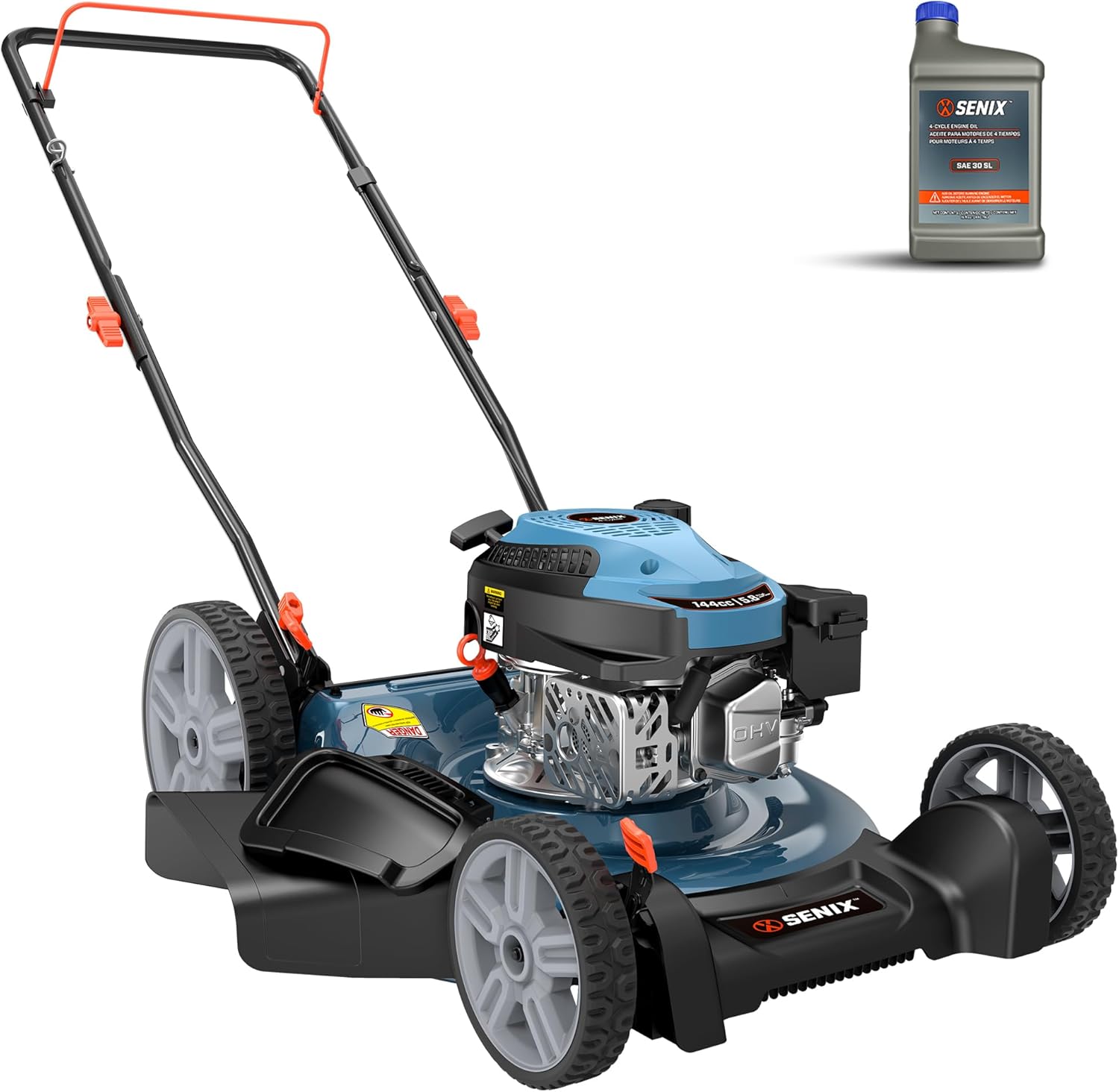
| Power Source | Gasoline-Powered |
|---|---|
| Number of Positions | 6 |
| Cutting width | 21 inches |
The SENIX 21-inch gas push mower is a straightforward, gas-powered walk-behind designed for typical homeowner lawns up to about half an acre. It uses a 144cc 4-stroke engine that maintains power under load, which helps when cutting thicker turf or gentle slopes. The 21-inch cutting deck and 2-in-1 mulching/side-discharge setup make it flexible for routine maintenance or handling taller, wetter grass. Six height settings controlled by dual levers let you change between a low trim and a taller protective cut without tools. Oversized rear wheels improve rolling over uneven ground and reduce effort when pushing. Assembly is mostly pre-done and the package includes a basic tool kit, so you can be mowing within about 30 minutes. Expect the usual gasoline mower trade-offs: you will need fuel, routine engine maintenance, and occasional tune-ups, and it is heavier and noisier than battery models. For balanced homeowners who want reliable power and simple versatility, this mower covers the essentials well.
Best for: Homeowners who want a reliable, gas-powered mower that balances power, versatility, and easy adjustments for typical suburban lawns.
Less Ideal for: People seeking the quietest or lowest-maintenance option for very small yards or those who prefer cordless, emissions-free equipment.
- 144cc 4-cycle engine provides steady power for thick grass and gentle slopes
- 21-inch cutting deck covers ground efficiently for average residential yards
- 2-in-1 mulching and side-discharge gives flexible grass-handling options
- Dual-lever 6-position height adjustment changes cut height quickly without tools
- Large rear wheels improve maneuverability over uneven terrain
- Requires gasoline and regular engine maintenance unlike electric alternatives
- Heavier and louder than battery-powered mowers which may matter for small yards
Verdict: A solid all-around gas push mower that gives homeowners dependable power, a roomy 21-inch deck, and simple height and discharge options for everyday yard care.
YARDMAX 22 in. 201cc Select PACE CVT Self-Propelled High-Wheel Lawn Mower (YG2860)

| Engine displacement | 201cc OHV |
|---|---|
| Drive type | Front wheel drive (FWD) self-propelled |
| Cutting width | 22 in. |
| Transmission | Continuously variable transmission (CVT) with 6 speeds |
| Warranty | 2-Year Residential |
The YARDMAX YG2860 is a performance-focused 22-inch gas walk-behind mower built to make regular yard work faster and more controllable. It uses a 201cc OHV engine with an automatic choke for easy starting and a continuously variable transmission (CVT) with a 6-speed selector that adapts to your walking pace, which helps maintain steady ground speed on slopes and varied terrain. High rear wheels with aggressive spiked tread and double ball bearings improve traction and maneuverability on uneven lawns while the MaxFlow volute deck promotes longer airflow for better mulching or bagging. A single-lever deck height adjustment and a deck washout port simplify setup and cleanup. The unit ships fully assembled and folds compactly for storage. Expect a sturdy cutting performance and good uphill control, though the mower is relatively heavy and focused on gas maintenance needs. If you want a consistently fast, controllable mow and are comfortable with routine engine care, this model delivers strong real-world performance for medium to large yards.
Best for: Buyers who prioritize consistent cutting performance and precise ground-speed control for medium to large lawns and want a gas-powered mower that handles uneven terrain well.
Less Ideal for: Those who prefer near-silent operation, minimal maintenance, or very small urban yards where a lightweight electric mower would be more convenient.
- Continuously variable transmission with 6-speed selector for smooth speed control matching walking pace
- 201cc OHV engine with automatic choke for easier starting
- High rear wheels and spiked tread tires that improve traction and maneuverability on uneven terrain
- MaxFlow deck design that supports effective mulching and clean bagging
- Deck washout port and single-lever height adjustment for faster cleaning and setup
- Heavier build which can make maneuvering and lifting more difficult for some users
- Requires regular gas engine maintenance unlike cordless electric models
Verdict: Choose the YARDMAX YG2860 for strong gas-powered mowing performance with CVT speed control and high-wheel traction that keeps pace on uneven, medium to large lawns.
SENIX 20" Gas Lawn Mower — 144cc 4-Cycle Push Mower

| Power Source | Gas Powered |
|---|---|
| Maximum Adjustable Cutting Height | 3.15 inches |
| Minimum Adjustable Cutting Height | 1.35 inches |
| Number of Positions | 3 |
| Material Type | Stainless Steel |
The SENIX 20" gas lawn mower is a straightforward push mower built for everyday yard maintenance on small to medium lawns. Its 144cc 4-cycle engine delivers consistent power for cutting thicker grass and modest slopes, while the 20-inch cutting width balances coverage and maneuverability for tighter yards. The mower offers three height settings (1.35 to 3.15 inches), letting you adapt blade height for seasonal or turf needs. Large 7-inch wheels front and rear make it easier to push over uneven terrain and reduce arm strain compared with smaller-wheel models. Construction uses stainless steel components and the unit is presented as quick to assemble with clear instructions and a two-year manufacturer warranty. Limitations to note are that it is a manual push model with only three height positions and lacks bagging or mulching features listed in the core specs, so it is not optimized for very large properties or users wanting self-propelled drive or advanced grass management options. For routine residential mowing, it is a practical, no-frills gas mower that prioritizes reliable cutting power and simple operation.
Best for: Homeowners who want a durable, straightforward gas mower to keep a small to medium lawn neatly trimmed without extra features or complex maintenance.
Less Ideal for: Large properties, users who prefer a self-propelled mower, or those who need built-in bagging or advanced mulching systems for heavy grass management.
- 144cc 4-cycle engine provides steady power for thicker grass and small slopes
- 20-inch cutting width balances efficiency and maneuverability for typical yards
- 7-inch front and rear wheels improve ease of pushing over uneven ground
- Three adjustable cutting heights let you adapt to seasonal turf needs
- Stainless steel construction and included two-year warranty support durability
- Manual push operation offers no self-propel or drive assistance
- Only three height positions limit fine-tuned cutting adjustments
Verdict: A practical, no-frills gas push mower that delivers reliable power and simple operation for routine residential lawn care.
SENIX 18" 144cc Gas Push Lawn Mower

| Power Source | Gas Powered |
|---|---|
| Cutting width | 18 |
| Maximum Adjustable Cutting Height | 3.15 inches |
| Minimum Adjustable Cutting Height | 2.16 inches |
| Number of Positions | 3 |
The SENIX 18" push mower is a lightweight gas mower aimed at small lawns and first-time owners. It uses a 144cc 4-cycle engine driving an 18-inch blade to cut quickly across modest turf, while a side-discharge vortex tunnel spreads clippings instead of bagging them. The mower is easy to push and steer thanks to a compact frame, ergonomic handle, and 7-inch rear wheels that help with tight turns around beds and pathways. Height is adjusted across three positions (about 2.16 to 3.15 inches) so you can change cut height for different grass conditions, but the range is limited compared with multi-position decks. The steel and plastic deck keeps weight down for storage and handling, though the overall build is basic. This model is a straightforward, no-frills choice for quarter-acre or smaller lots where simplicity, maneuverability, and gasoline power are priorities, but it lacks advanced features like mulching or a collection bag and is best for light to moderate mowing tasks.
Best for: A buyer who needs an affordable, easy-to-use gas mower for a small yard and values simple operation and maneuverability over extra features.
Less Ideal for: Not a good fit for buyers with large lawns, heavy or tall grass, or those who want mulching or bagging capabilities and more precise height control.
- Decent cutting width for small yards with an 18-inch blade
- 144cc 4-cycle engine provides reliable gas power for efficient mowing
- Lightweight design and ergonomic handle make it easier to push and store
- 7-inch rear wheels improve maneuverability around obstacles
- Simple three-position height adjustment for quick setup
- Only three height positions with a limited adjustment range
- No bagging or mulching system included
- Basic construction without premium features or advanced debris control
Verdict: A budget-friendly, lightweight gas push mower that delivers straightforward, reliable cutting for small yards.
Husqvarna Z254F 54 in. Zero-Turn Riding Mower — 23 HP Kawasaki

| Power Source | Gasoline |
|---|---|
| Cutting width | 54 inches |
| Operation Mode | Automatic |
| Maximum Adjustable Cutting Height | 4.5 inches |
| Number of Positions | 6 |
The Husqvarna Z254F is a heavy-duty zero-turn mower built around a 23 HP Kawasaki engine and a 54-inch ClearCut deck for fast, professional-style mowing. It uses a hydrostatic, no-maintenance transmission that simplifies operation and reduces routine service points, while the ergonomic control panel, comfortable seat, and anti-slip foot area make longer jobs less fatiguing. The deep deck design and high-performance blades improve airflow for cleaner cuts and better bagging or mulching when accessories are added. Practical benefits include a wide cutting swath to reduce pass count on medium to large lawns and straightforward height adjustment via the deck lift. The mower is large and purpose-built, so it needs adequate storage and is not aimed at tiny yards. Optional mulching kit and bagger are sold separately, so expect extra cost if you want those functions out of the box. If reliability and low transmission upkeep are priorities, this model focuses on those strengths but requires typical gas-engine care and space for parking.
Best for: Buyers who prioritize a dependable, low-maintenance workhorse for medium to large lawns and want a mower that minimizes transmission upkeep and downtime.
Less Ideal for: People with very small properties, tight storage, or those who need an electric or cordless model for zero local emissions.
- 23 HP Kawasaki engine provides strong, consistent power for wide-area mowing
- Hydrostatic no-maintenance transmission reduces routine service and simplifies operation
- 54 in. ClearCut deck lowers pass count and improves cut quality with deep-deck airflow
- Ergonomic controls and comfortable seating reduce operator fatigue during extended use
- Mulching kit and bagger sold separately, adding to total cost for full-function setups
- Large footprint requires substantial storage space and is not suited to very small yards
Verdict: Choose this mower if you want a rugged, low-transmission-maintenance zero-turn that covers large lawns quickly and reliably.
SENIX 201cc 22" Self-Propelled 3-in-1 Gas Lawn Mower

| Power Source | Gas Powered |
|---|---|
| Cutting width | 22 inches |
| Operation Mode | Automatic |
| Number of Positions | 6 |
| Maximum Adjustable Cutting Height | 4 inches |
The SENIX mower pairs a 201cc OHV gas engine with a 22-inch steel deck to give reliable power and reasonable coverage for medium to large yards. It is self-propelled with 11-inch rear wheels, so it eases work on slight slopes and uneven ground while the single-lever six-position height adjustment (1.25" to 4") makes it straightforward to dial in the grass height for different seasons. The 3-in-1 system lets you switch between bagging, mulching, and side discharge depending on cleanup preferences. Practical benefits include a wider cut than many 20-inch mowers, sturdy construction, and easier maneuvering thanks to rear-wheel drive. Important limitations are that it is a gas-powered machine, which requires fuel, periodic maintenance, and more storage consideration than electric models, and at 79 pounds it is heavier to lift or transport. For buyers who prioritize power and traditional gas performance this mower is a sensible, no-frills choice; those seeking quieter or zero-emission options should consider cordless or electric alternatives.
Best for: Buyers who want a tried-and-true gas mower with enough power and a wider cutting deck to handle medium to large yards and who value straightforward mechanical reliability over electric convenience.
Less Ideal for: Those who prioritize low noise, zero emissions, or minimal maintenance should look at cordless or electric models instead.
- Powerful 201cc 4-cycle OHV engine suitable for medium to large lawns
- 22-inch steel cutting deck covers more ground than a 20-inch mower
- Rear-wheel self-propelled design with 11-inch wheels improves traction and maneuverability
- 3-in-1 bagging, mulching, and side discharge offers versatile grass management
- Single-lever six-position height adjustment for quick changes between 1.25" and 4"
- Gas engine requires fuel, regular maintenance, and produces emissions
- Relatively heavy at 79 pounds which makes lifting or storing more difficult
Verdict: If you need a robust, self-propelled gas mower with a wider 22-inch deck and versatile 3-in-1 cut options, this SENIX model delivers dependable performance for medium to large lawns.
PowerSmart EasyCut 18-Inch Gas Push Lawn Mower (144cc 4-Cycle)

| Engine displacement | 144cc |
|---|---|
| Power source | Gas Powered |
| Cutting width | 18-Inch |
| Cutting height range | 1.5 – 3.9 Inch |
| Start type | Pull Cord |
This PowerSmart EasyCut is a straightforward gas push mower designed for everyday lawn maintenance on small, flat yards. It uses a 144cc OHV 4-cycle engine with a primer bulb and pull-start that aim to make starting predictable, and the 18-inch steel deck with a specialized blade delivers an even cut for routine passes. The mower offers five height positions from 1.5 to 3.9 inches and side-discharge only, which keeps the design simple and reduces parts to maintain. Large 7-inch front and 8-inch rear wheels help it roll smoothly around beds and obstacles, and the quick-fold handle makes it easier to store in a garage or shed. Important limitations are the manual push operation and absence of a grass bag, so it is not suited to large properties or users who need bagging or mulching built in. Owners should also be comfortable with basic small-engine upkeep like fuel, oil, and seasonal winterization.
Best for: A practical homeowner who wants a simple, dependable gas mower for regular upkeep of a small, flat yard and prefers a no-frills, serviceable machine over extra features.
Less Ideal for: Not a good choice for owners of larger lawns, steep or uneven terrain, or anyone who needs built-in bagging, mulching, or self-propelled drive.
- Reliable 144cc OHV 4-cycle engine with primer for straightforward starting
- Durable 18-inch steel deck and specialized blade for a clean, even cut
- Five cutting-height positions to handle common lawn heights
- Folding handle for compact storage in shed or garage
- 7" front and 8" rear wheels for easier maneuverability around obstacles
- No bagging or mulching attachment included, only side discharge
- Manual push operation can be tiring on larger or sloped lawns
- Fuel and oil require regular small-engine maintenance
Verdict: If you want a straightforward, dependable gas push mower for routine care of a small flat yard, this PowerSmart EasyCut delivers reliable performance with minimal complexity.
Choosing the Right Gas Lawn Mower: Key Factors to Consider
Engine Size and Starting
Engine displacement and design determine torque, top mowing speed, and how well the mower handles thick or wet grass. Larger engines are helpful for heavy lawns and slopes because they resist bogging down and maintain blade speed under load. Consider whether the mower has a recoil start, push-button electric start, or hybrid arrangement; easier starting reduces frustration, especially in colder or damp conditions.
Reliable starting and a proven engine platform mean fewer visits to a mechanic and more consistent mowing sessions. Also check whether routine service points are accessible so oil and spark plugs can be changed without special tools.
Cut Quality and Deck Construction
The deck size and material affect cut width, airflow, mulching capability, and how evenly clippings are discharged. Wider decks reduce passes but may be harder to maneuver in tight yards. Steel decks tend to be more durable and resist warping, while stamped decks are lighter and adequate for most homeowners.
Look at deck height adjustment range and whether the mower offers side discharge, rear bagging, or mulching plugs. The blade design and mounting method also influence how cleanly the mower cuts and how easy it is to balance or replace blades.
Drive System and Maneuverability
Self-propelled drive systems take strain off the operator and make mowing hills and larger yards less tiring. Rear-wheel drive provides traction on slopes and rough ground, while front-wheel drive can improve turning in flat, obstructed lawns. Manual push mowers are lighter and simpler but require more effort for larger properties.
Consider wheel size and steering geometry, which affect how the mower turns around obstacles and handles uneven turf. Adjustable drive speeds and cruise control-like features enhance comfort during long mowing jobs.
Durability and Construction
Durable materials and sound assembly extend a mower's useful life and reduce repair needs. Look for reinforced deck edges, robust wheel bearings, and corrosion-resistant finishes if you store the mower outdoors or in damp conditions. Controls and cables should be routed to avoid snags and wear.
A well-built frame and quality fasteners mean the mower tolerates bumps and frequent use. Replaceable wear parts and clear access to the underside of the deck make long-term ownership simpler.
Serviceability and Routine Maintenance
Gas mowers require regular oil changes, air filter cleaning or replacement, spark plug service, and occasional carburetor attention. Models that provide easy access to the oil fill, a tool-free air filter cover, and a conveniently located spark plug reduce the time and skill needed for upkeep.
Also consider parts availability and whether routine components can be replaced by a competent DIYer. Simpler carburetor and choke systems are easier to troubleshoot in the backyard, saving service bills over time.
Choosing the Right Deck Size for Your Yard
Deck width directly affects how many passes you must make. For small to medium yards, a mid-size deck balances maneuverability and efficiency. Larger yards benefit from wider decks that reduce mowing time but may limit access between tight garden beds and patios.
Think about obstacles and storage space when selecting deck size. A wide deck that saves time on open turf can become a nuisance if you frequently need to navigate around trees, planters, or narrow gates.
- Smaller decks: easier to store and maneuver in tight spaces
- Wider decks: fewer passes and faster mowing on open lawns
- Check gate width and shed dimensions before choosing a wider deck
Safety Features and Operator Comfort
Look for features that protect the operator and bystanders, such as blade kill levers, dead-man controls, and clear guards on discharge areas. Comfortable grips, vibration-damping handles, and accessible controls reduce fatigue during longer sessions.
Raising and lowering the cutting height should be intuitive and secure. A stable stance and predictable stopping behavior are essential when working on slopes or around landscaping features.
- Blade stop mechanism for quick shutdowns
- Ergonomic handle height and reachable controls
- Stable braking and traction on slopes
Storage and Winterizing Best Practices
Proper storage extends the life of a gas lawn mower. Before long-term storage, drain or stabilize fuel, change oil, and clean clippings from the deck and cooling fins. Store the mower in a dry, covered space to reduce corrosion and protect cables and controls.
Winterizing also includes removing or treating the battery if present and fogging cylinders or running a fuel stabilizer if fuel left in the system is unavoidable. Regular off-season checks prevent surprises in spring.
- Clean the underside of the deck to prevent rust
- Top off or drain fuel and change oil before storage
- Lubricate pivot points and check cables for wear
Mulching, Bagging, and Clipping Management
Decide whether you need mulching capability, a bagging system, or both. Mulching chops clippings finely and returns nutrients to the lawn, reducing bagging frequency. Bagging systems are useful for sites where clippings are undesirable, such as ornamental beds.
Compatibility and ease of attachment affect how often you will use these features. Some mowers offer dedicated mulching blades or plug inserts that are simple to switch out, while others require more effort to convert between modes.
- Mulching: returns nutrients, best for regular mowing
- Bagging: useful for tall or weedy growth and clean finishes
- Check how simple it is to swap between discharge modes
Handling Slopes and Rough Terrain
Not all gas lawn mowers handle slopes equally. Rear-wheel drive and larger traction-focused tires help maintain control uphill and downhill. For steep or uneven ground, slower cutting speeds and a more powerful engine help prevent bogging and ensure a consistent cut.
Consider whether a walk-behind model offers enough traction, or if you need a self-propelled system with variable speeds. Assess the yard's worst-case conditions and choose a mower that can handle them without constant stalling or excessive wheel slip.
- Rear-wheel drive for traction on slopes
- Large, treaded tires for rough or uneven turf
- Lower gear/slow speed settings improve control on inclines
How We Chose the Best Gas Lawn Mower
We focused on attributes that make a gas lawn mower reliable and easy to use across typical home lawns. Key evaluation criteria included engine reliability and starting consistency, which determines how often you will need maintenance and whether the mower starts cleanly in varied conditions. Cutting performance and deck design were assessed to understand how evenly the mower handles healthy and overgrown turf. Drive system and maneuverability were considered for yards with slopes, tight corners, or lots of obstacles. Durability of key components such as deck material, wheels, and handle assembly influenced longevity and repair frequency. Ease of maintenance and access to routine service points were reviewed since oil, spark plug, and air filter changes are recurring tasks. We excluded lightweight or electric-only models and commercial-only mowers outside typical homeowner use. Products were filtered for reasonable homeowner serviceability and safety features. The shortlist reflects machines that balance dependable engines, practical cutting decks, and maintainability for average yard sizes.
FAQ
How often should I change oil in a gas lawn mower?
Usually oil should be changed after the first five hours of use for a new engine, then every 25 to 50 hours of operation or at least once per season. Heavy use or dusty conditions may require more frequent changes.
Can I store fuel in the mower over winter?
Storing fuel long-term is not ideal. You can use a fuel stabilizer if leaving fuel in the tank, or drain the fuel system before storage. Stabilizer-treated fuel can keep the system cleaner and prevent gum buildup.
Is self-propelled drive necessary for a small yard?
Self-propelled drive is not always necessary for small, flat yards. It reduces operator effort, which helps on uneven terrain or for users who prefer less physical strain. For very small or flat lawns, a push mower may be sufficient and lighter to handle.
How do I know what deck material I need?
Steel decks are durable and resist warping, making them suitable for heavier use. Lighter stamped decks are adequate for typical homeowner mowing and can make the mower easier to push or lift. Match the deck material to your mowing frequency and storage conditions.
What maintenance extends blade life and cut quality?
Keep blades sharp and balanced, inspect for nicks or bends, and replace when necessary. Regularly cleaning debris from under the deck and ensuring proper blade height helps maintain a consistent cut and reduces stress on the engine.
Final Verdict
When choosing a gas lawn mower, prioritize the attributes that match your yard and how you mow. Engine reliability and a properly sized deck matter most for heavy or large lawns, while drive system and maneuverability are critical for slopes and tight spaces. Balance durability and serviceability against the comfort features you value. Decide first on deck width and drive type, then check maintenance accessibility and safety features. By focusing on those tradeoffs you can pick a mower that delivers consistent cuts, fewer service headaches, and comfortable operation over the long term.
