

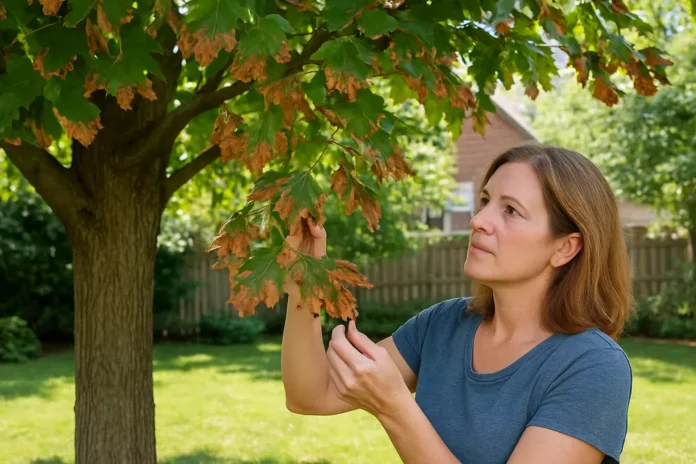
Maple tree leaves usually turn brown because of drought stress, leaf scorch, root damage, heat, salt exposure, or disease. Browning can also be part of normal seasonal decline if it happens late in the year.
Seeing maple tree leaves turning brown can be alarming, especially when the tree has been a reliable part of the yard for years. In my experience, brown leaves on a maple do not always mean the tree is dying, but they do mean the tree is under some kind of stress.
The tricky part is that several different problems can produce very similar symptoms. Dry weather, compacted soil, root injury, fungal leaf diseases, winter salt, and hot reflected heat from pavement can all leave a maple with crispy edges or fully browned leaves.
The good news is that the pattern of damage usually gives you useful clues. If you look closely at where the browning starts, when it appeared, and whether the whole tree or just one section is affected, you can usually narrow down the real cause of brown maple leaves and respond appropriately.
What Brown Maple Leaves Usually Mean
Brown leaves are a symptom, not a diagnosis. A maple may develop brown edges, tan patches between veins, curled leaf tips, or entire leaves that dry up and hang on the branches. Each pattern points to a slightly different type of stress.
When browning starts at the margins and moves inward, I usually suspect leaf scorch related to water stress, heat, or root trouble. When leaves show scattered spots before browning, a disease issue becomes more likely. If only one side of the tree is affected, exposure to wind, reflected sun, herbicide drift, or root damage on that side may be involved.
- Brown edges with a dry, crispy feel often point to drought stress or scorch.
- Soft, dark, or blotchy brown tissue can suggest disease or rot-related stress.
- Leaves browning suddenly after a weather shift may be tied to heat, wind, or late frost injury.
- Browning mostly on lower branches can happen when roots are stressed or soil stays too wet.
- Browning in late summer or fall may be part of seasonal aging rather than a serious problem.
When I diagnose a maple, I compare leaves from several parts of the canopy before I assume the cause. If every damaged leaf looks nearly identical, I lean toward weather or watering stress. If the symptoms vary a lot from branch to branch, I start looking harder at roots, trunk injury, or disease.
Drought Stress and Leaf Scorch Are the Most Common Causes
Why Dry Conditions Brown Maple Leaves
One of the most common reasons maple leaves turn brown is simple lack of moisture. Maples move a lot of water during warm weather, and when the roots cannot keep up, the leaf edges often dry out first. This is especially common during hot spells, windy weather, and periods with little rainfall.
Leaf scorch happens when the roots cannot supply enough water to the leaves, even if the soil is not bone dry. That means a tree can scorch during drought, but also when roots are limited by compacted soil, construction damage, or a too-small planting area.
Typical Signs of Scorch on Maples
- Brown or tan margins along the outer edge of the leaf
- A yellow band between healthy green tissue and the dead brown edge
- Leaves that feel papery or brittle
- Damage that appears first on the sunniest or windiest side of the tree
- Premature leaf drop during summer
Japanese maples, red maples, and young newly planted maples are especially prone to scorch. Trees near driveways, sidewalks, brick walls, or street-facing lawns also suffer more because those surfaces reflect heat and dry the root zone faster.
How to Help a Drought-stressed Maple
- Water deeply rather than lightly. A slow soak is much better than frequent shallow sprinkling.
- Moisten the soil across the root zone, not just right at the trunk.
- Apply 2 to 3 inches of mulch over the root area, keeping it a few inches away from the trunk.
- Avoid fertilizing during active stress, since that can push tender growth the tree cannot support well.
- Give the tree time. Burned leaves usually do not recover, but healthy new growth next season is a good sign.
I do not judge recovery by the damaged leaves already on the tree. With maples, the best clue is whether new growth stays cleaner and the canopy stops worsening after watering improves.
Root Problems Can Mimic Drought Even when the Soil Is Wet
Overwatering and Poor Drainage
Home gardeners often assume brown leaves mean the tree needs more water, but saturated soil can cause the same symptom. When roots sit in wet, airless soil, they cannot function properly. The canopy then shows stress because the damaged roots cannot move moisture upward efficiently.
This kind of stress is common in heavy clay, low spots, lawns with frequent irrigation, and areas where downspouts empty near the tree. A maple with wet feet may show wilted leaves, browning edges, poor growth, and early leaf drop.
Compacted Soil and Root Injury
Maples have broad, active root systems that dislike disturbance. If the tree started declining after trenching, patio work, driveway repair, grade changes, or heavy traffic over the root zone, root damage may be the real issue. Even repeated mowing and foot traffic can compact the soil enough to reduce oxygen around the roots.
- Symptoms appear after landscaping or construction work
- Only one side of the canopy browns, especially the side where digging occurred
- The soil stays hard, crusted, or puddled after rain
- The tree produces smaller-than-normal leaves
- Branch dieback begins after one or more stressful seasons
What to Do for Root-related Stress
If the soil stays soggy, reduce supplemental watering and improve drainage where possible. If compaction is the issue, widen the mulched area under the tree and stop mowing right up to the trunk. Keep traffic off the root zone. For severe root loss or repeated decline, it is worth having an arborist inspect the tree, especially if large limbs are starting to die back.
Avoid piling soil or mulch over exposed surface roots. That is a common mistake and often makes conditions worse. Maple roots need oxygen near the surface, and burying them can increase long-term decline.
Heat, Wind, Salt, and Weather Extremes Also Damage Leaves
Hot Sun and Reflected Heat
Not every maple is equally tolerant of intense summer exposure. Japanese maples, in particular, often develop brown edges or scorched patches when planted in harsh afternoon sun. Even larger shade maples can show browning during long heat waves if they are growing beside pavement or walls that radiate heat.
If the tree looks worse on the south or west side, heat exposure is a strong possibility. This is especially true when the browning appears quickly during a string of hot, dry days.
Wind and Dry Air
Strong wind pulls moisture out of leaves faster than roots can replace it. That is why a maple can scorch even if the soil was watered recently. Drying winds are rough on exposed trees, container-grown young maples, and trees planted in narrow strips between sidewalk and street.
Salt Injury From Roads or De-icing Products
In many U.S. yards, road salt is an overlooked cause of brown maple leaves. Salt spray can damage buds and twigs, while salt in the soil interferes with the roots' ability to take up water. The result often looks like scorch, with brown edges and weak spring growth.
- Trees close to salted streets or driveways are most at risk
- Damage may be heavier on the street-facing side
- Leaves can emerge smaller or distorted before turning brown
- Symptoms often show up in spring or early summer after winter exposure
Late Frost and Sudden Weather Shifts
If tender new leaves were hit by a late spring freeze, they may turn brown, blacken, or shrivel soon after emerging. This kind of damage looks dramatic, but established maples often recover by pushing a second flush of growth. The main concern is repeated stress rather than a single isolated frost event.
When browning follows a sharp weather change, I look at the newest leaves first. Frost, heat blast, and wind burn usually hit tender fresh growth hardest, while deeper root problems tend to show a broader pattern across both old and new leaves.
Pests and Diseases That Can Make Maple Leaves Brown
Leaf Spot and Anthracnose
Several fungal diseases can cause brown areas on maple leaves, especially during cool, wet spring weather. Anthracnose often starts as irregular brown blotches along veins or leaf margins. Leaf spot diseases can begin with small dark lesions that enlarge and merge.
These diseases are usually more cosmetic than fatal on mature trees, but repeated heavy infections can weaken young or already stressed maples. Wet conditions, dense canopies, and poor air circulation increase the odds of infection.
Verticillium Wilt and Vascular Problems
A more serious possibility is Verticillium wilt, a soilborne disease that affects the water-conducting tissue inside the tree. This can cause sudden browning, wilting, and dieback, sometimes on just one branch or one side of the canopy. Maples are among the trees that can be vulnerable.
If a branch wilts rapidly while other sections still look normal, or if you see streaking in the sapwood after a branch dies, this moves higher on the suspect list. A certified arborist or diagnostic lab can help confirm it.
Insects and Mites
Sap-feeding insects and mites can stress maple leaves enough to cause bronzing, browning, stippling, or premature drop. Spider mites are more common during hot, dry weather, while scale insects can weaken branches over time. In most home landscapes, insects are a secondary issue rather than the main cause, but they can add to drought and heat stress.
- Check the undersides of leaves for fine webbing, speckling, or tiny moving dots
- Inspect twigs for bumps or crusty scale insects
- Look for patterns of damage on specific branches rather than the whole canopy
- Avoid broad pesticide use unless you know the pest involved
When Disease Treatment Matters Most
For many maple leaf diseases, sanitation and reducing stress do more good than spraying. Rake and remove heavily infected fallen leaves, prune dead wood when appropriate, and keep the tree watered properly. Fungicides are usually only worth considering when a disease is confirmed, the tree has a history of repeat problems, and timing is right for prevention.
How to Tell if the Browning Is Serious
A maple can lose some leaves or show a lot of browning and still recover well, especially after temporary weather stress. What matters most is whether the tree is otherwise stable. A tree that leafs out normally next season and maintains good twig growth is often fine despite one rough summer.
On the other hand, repeated browning year after year, thinning canopy, dead branch tips, trunk cracks, mushrooms near the base, or sections of bark sloughing off suggest a deeper problem. Those signs point beyond simple scorch and deserve closer evaluation.
- Usually less serious: browned leaf edges in a hot, dry spell, followed by otherwise healthy branches
- More concerning: one-sided dieback, repeated wilting, sparse leafing, or branch death
- Urgent concern: large dead limbs, trunk wounds, root flare buried under soil, or fungal growth near the base
Good Care Practices That Support Recovery
- Water deeply during dry periods, especially for young trees and shallow-rooted maples.
- Mulch the root zone to stabilize soil moisture and temperature.
- Keep lawn fertilizer and weed-and-feed products away from the root area.
- Do not prune heavily during active summer stress unless removing dead or hazardous wood.
- Avoid injuring the trunk with mowers or string trimmers.
- Monitor next season's new growth before deciding the tree is in major decline.
If you planted the maple recently, give extra attention to watering consistency during the first few years. Newly planted trees often develop brown leaves simply because the root system has not expanded far enough yet to handle heat and dry spells on its own.
FAQ
Will Brown Maple Leaves Turn Green Again?
No. Brown tissue on a leaf will not turn green again. What you are watching for is healthy new growth and the tree's ability to hold the rest of its canopy.
Should I Cut Off All the Brown Leaves on My Maple?
Usually no. It is rarely helpful to remove individual damaged leaves from a large maple. Let the tree keep as much functional foliage as it can, unless leaves are diseased and dropping heavily in a small ornamental tree where cleanup matters.
How Often Should I Water a Maple Tree with Brown Leaves?
Watering depends on soil, weather, and tree age, but deep, slow watering is better than frequent shallow watering. Young trees need more consistent moisture than established ones, and soggy soil can be just as harmful as dry soil.
Can Too Much Fertilizer Make Maple Leaves Turn Brown?
Yes. Excess fertilizer or lawn chemicals can burn roots and lead to brown leaf edges, weak growth, or stress symptoms that resemble scorch. This is especially common when fertilizer is applied heavily over the root zone.
Why Are Only the Leaves on One Side of My Maple Turning Brown?
One-sided browning often points to exposure or localized damage. Heat reflection, wind, salt spray, herbicide drift, or root injury on that side of the tree are common explanations.
Is It Normal for Maple Leaves to Turn Brown in Late Summer or Fall?
It can be. Some late-season browning happens as leaves age, especially after a stressful summer. If the tree otherwise looks healthy and the timing is close to fall color and leaf drop, it may not indicate a serious problem.
When Should I Call an Arborist for a Maple with Brown Leaves?
Call an arborist if the canopy is thinning, large branches are dying, only part of the tree leafs out, the trunk is damaged, mushrooms appear at the base, or the tree has declined for more than one season.
Need a clearer diagnosis or the right treatment tools? Read our guide to tree watering methods, mulch options, and arborist-approved products to help stressed maples recover faster.
