

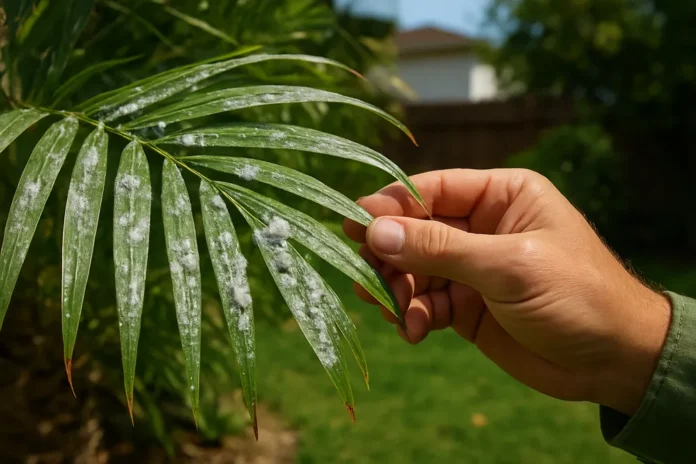
White powder on a palm tree is usually either a natural waxy coating, mineral residue, fungal growth, or a pest problem such as mealybugs or scale. The exact cause depends on whether it wipes off cleanly, looks fuzzy, or comes with sticky sap and insects.
If you have spotted a dusty white coating on your palm, do not assume the tree is dying. I have seen palm tree white powder turn out to be everything from a normal protective wax to a pest outbreak that needed quick attention.
The key is to look at where the white material shows up and what it feels like. A flat, chalky film on leaves can mean something very different from cottony clumps tucked along stems, leaf bases, or the undersides of fronds. Some causes are mostly cosmetic. Others weaken the plant over time by stealing sap or encouraging disease.
In this guide, I will walk through the most common reasons a palm develops white powder on leaves or stems, how to tell them apart, and what to do next without treating the wrong problem.
What the White Powder Usually Is
On palms, white powder typically falls into four categories: natural wax, mineral or salt residue, fungal growth, or sap-sucking insects covered in white fluff or wax. Those last two are the ones most likely to affect plant health.
- Natural waxy bloom: a thin, even coating that helps protect plant tissue from sun and moisture loss.
- Mineral residue: white spotting or film left behind by hard water, fertilizer splash, or evaporated salts.
- Fungal growth: a powdery or dusty layer that may spread across leaf surfaces, especially in still, humid conditions.
- Mealybugs or scale insects: white cottony masses, waxy flecks, or crusty bumps often paired with sticky honeydew and sooty mold.
When I diagnose this in the garden, I look for pattern before I look for product. If the white coating is evenly spread on many leaves, I lean toward wax or residue. If it is clumped in creases, around leaf bases, or along the midrib, I start suspecting insects.
How to Tell Whether It Is Normal or a Problem
A quick inspection usually narrows it down fast. You do not need a lab test to separate harmless residue from an active infestation. Focus on texture, location, and any other symptoms your palm is showing.
Signs of Harmless White Coating
- The white layer is thin and fairly even across large areas.
- It looks more dusty or chalky than fuzzy or cottony.
- Leaves otherwise look healthy, green, and firm.
- There is no sticky sap, black mold, webbing, or visible insects.
- The coating is strongest after overhead watering or fertilizer application.
Signs the White Powder Points to Pests or Disease
- You see white tufts, cottony blobs, or waxy bumps in clusters.
- The material is concentrated where fronds meet stems or along veins.
- Leaves are yellowing, curling, weakening, or dropping too early.
- There is sticky residue on the plant, patio, or nearby furniture.
- Black sooty mold is growing on leaves or stems.
- The white material seems to spread from one part of the plant to another.
If you are unsure, wipe a small area with a damp cloth. Mineral residue often smears or dissolves. Natural wax may partly rub off but tends to be very uniform. Mealybugs crush into a sticky mess, and scale insects may stay attached as small bumps even after wiping.
Natural Wax on Palm Leaves and Stems
Some palms naturally produce a pale, powdery wax on leaves, petioles, or trunk tissue. This is often called a bloom or glaucous coating. It helps reduce water loss and can reflect some sunlight, which is useful in hot, bright conditions.
This wax is usually not a problem unless you mistake it for disease and start spraying treatments the plant does not need. If the palm is growing well and the coating is even, stable, and not associated with yellowing or sticky residue, I usually leave it alone.
- Looks like a soft, matte dusting rather than raised fuzz
- Appears on newer and older growth in a fairly consistent way
- Does not cause spots, dead patches, or collapsing tissue
- Comes back naturally after gentle washing
Mineral Deposits and Hard Water Residue
Palms grown outdoors near sprinklers or indoors with regular misting can develop white residue from mineral-rich water. Hard water leaves calcium and other salts behind as droplets evaporate. Fertilizer spray and salt accumulation can do the same thing.
This type of white powder is cosmetic more than dangerous, but heavy buildup can dull leaves and make it harder to spot real pest problems. It is especially common on broad palm leaflets that catch water repeatedly.
Clues That Residue Is the Cause
- The white marks follow droplet patterns or sit on upper leaf surfaces
- Buildup is worst near sprinkler reach or after foliar feeding
- There are no visible insects, sticky spots, or active leaf damage
- The film wipes away more easily with a damp cloth than insect wax does
If residue is the issue, switch to watering at the soil line when possible. For indoor palms, using filtered or distilled water for occasional leaf rinsing can help prevent repeat spotting. Flush container soil now and then if fertilizer salts may be building up.
Powdery Mildew and Other Fungal Growth
True powdery mildew is less common on palms than on roses, cucumbers, or zinnias, but it can show up under the right conditions. Poor air circulation, crowding, shade, and long periods of surface moisture all make fungal problems more likely.
Fungal white growth tends to look more like a superficial dusting spread over leaf tissue rather than isolated cottony pockets. In early stages it may seem harmless, but severe infections can weaken the plant by interfering with photosynthesis.
How Fungal Powder Differs From Residue or Wax
- It can spread over time into larger patches
- Affected tissue may yellow or develop a dull, unhealthy look
- It often shows up where airflow is poor
- The coating may return quickly after wiping
If fungal growth seems likely, improve airflow first. Thin nearby plants if they are crowding the palm, avoid wetting foliage late in the day, and remove heavily affected fronds if they are truly declining. A labeled fungicide can help in persistent cases, but cultural fixes matter more than a one-time spray.
I try not to jump straight to fungicide when a palm has white film. If the plant is packed into a humid corner, the coating often comes back until the airflow and watering pattern change.
Mealybugs on Palm Trees
Mealybugs are one of the most common reasons gardeners notice white, powdery, or cottony material on palms. These small sap-sucking insects hide in protected spots such as leaf axils, new growth, and along stems. Their white wax coating makes them look like bits of cotton or powder clinging to the plant.
As they feed, mealybugs drain plant energy and excrete honeydew, a sticky substance that attracts ants and supports black sooty mold. A mild infestation may look mostly cosmetic at first, but larger populations can lead to yellowing, slowed growth, and general decline.
Common Mealybug Symptoms on Palms
- Cottony white clusters in creases and sheltered areas
- Sticky leaf surfaces or drips below the plant
- Ant activity moving up and down the palm
- Black soot-like fungus growing over honeydew
- Weak or distorted new growth
For light infestations, you can remove isolated clusters with a cotton swab dipped in rubbing alcohol or by rinsing them off with a firm stream of water. For larger outbreaks, insecticidal soap or horticultural oil labeled for palms is usually more practical. Thorough coverage matters because these insects hide well.
Scale Insects That Look Like Powder or Flakes
Scale is another frequent culprit. Some scale insects look brown and shell-like, but others produce pale waxy coverings that can be mistaken for white dust, small flakes, or crusty powder. On palms, scale often settles along stems, undersides of leaves, and leaf midribs.
Like mealybugs, scale insects feed on sap. Heavy infestations cause yellow speckling, poor vigor, sticky residue, and sooty mold. Because adult scale attach themselves firmly, they can be harder to remove than mealybugs.
How to Check for Scale
- Gently scrape one white or tan bump with your fingernail
- If it pops off like a tiny shell, scale is likely
- Look closely for clusters along veins and protected stem areas
- Check for yellowing leaves and sticky honeydew nearby
One of the easiest ways I separate scale from residue is by scraping just one spot. Residue smears. Scale lifts off in little disks or bumps, and once you have seen that texture, it is hard to miss the next time.
Treatment is similar to mealybugs, but you may need repeated applications because oils and soaps work best on the crawler stage, not on heavily armored adults. If a few fronds are badly infested, pruning them out can reduce the population fast.
What to Do Based on What You Find
The best treatment depends on the cause. Spraying every white substance with the same product wastes time and can stress the palm unnecessarily.
If It Is Natural Wax
Leave it alone. Avoid aggressive scrubbing, leaf shine products, or unnecessary sprays. The coating is part of the plant's normal protection.
If It Is Mineral or Fertilizer Residue
Rinse leaves gently, reduce overhead watering, and adjust fertilizer practices so salts are not drying on the foliage. In containers, flush the potting mix thoroughly to reduce salt buildup.
If It Is Fungal Growth
Improve airflow, prune only dead or badly affected tissue, and avoid keeping leaves wet for long periods. Use a palm-safe fungicide only if the problem continues or spreads.
If It Is Mealybugs or Scale
Isolate potted palms if possible, wash down the plant, then apply insecticidal soap or horticultural oil according to the label. Repeat as directed, because one treatment rarely catches every life stage. Control ants too, since they often protect honeydew-producing pests from natural predators.
- Inspect the entire palm, including undersides and leaf bases.
- Remove the heaviest clusters by hand or with water first.
- Apply the correct treatment for the actual cause.
- Recheck the plant weekly for several weeks.
- Judge progress by healthy new growth, not by instant cosmetic perfection.
When the White Powder Means Your Palm Is in Real Trouble
Most white powder issues are manageable, but a few warning signs tell you the problem is moving beyond cosmetic. If a large palm is declining fast, or if the crown and newest growth are heavily involved, it is worth acting quickly.
- The newest fronds are emerging weak, deformed, or discolored
- Large sections of the plant are yellowing or browning
- Sticky honeydew is widespread and sooty mold covers leaves
- The white material keeps returning after multiple weeks
- The palm also shows trunk softening, rot, or spear decline
A palm with severe decline may have more than one issue at once. I have seen stressed palms carry both scale and nutrient problems, which is why treatment works best when you also address watering, soil drainage, and overall care.
How to Prevent White Buildup and Repeat Infestations
Prevention is mostly about reducing stress and catching small problems early. Palms that get the right light, drainage, and airflow are less likely to develop stubborn pest and fungal issues.
- Water at the base instead of wetting leaves whenever possible
- Avoid overcrowding palms with dense neighboring plants
- Inspect leaf undersides, stems, and leaf bases every couple of weeks
- Rinse dust and residue off occasionally so pests are easier to spot
- Do not overfertilize, especially in containers
- Quarantine new houseplants or patio palms before placing them near others
- Manage ants if you notice honeydew-producing pests
If your palm lives indoors, low airflow and dry stress can make mealybugs harder to prevent. Outdoors, sprinkler overspray and crowding are more common triggers. Small changes in routine often stop the problem from coming back.
FAQ
Can I Just Wipe the White Powder Off My Palm Tree?
Yes, if you are dealing with dust, mineral residue, or a light coating of natural wax. Wiping can also help you inspect for pests, but it will not solve mealybugs, scale, or fungal issues on its own.
Is White Powder on a Palm Always Powdery Mildew?
No. On palms, white material is often something else, especially mealybugs, scale, natural wax, or hard water residue. Powdery mildew is possible, but it is not the only explanation.
How Do I Know if the White Stuff Is Mealybugs?
Mealybugs usually look cottony and gather in clusters where leaves join stems or along sheltered veins. They are often paired with sticky honeydew, ants, and black sooty mold.
Will Rain Wash the White Powder Away?
Rain may remove dust or some mineral residue, but it usually does not eliminate scale, mealybugs, or established fungal growth. In some cases, humidity and moisture can even help fungal problems linger.
Are Insecticidal Soap and Horticultural Oil Safe for Palms?
They can be, if the product label lists palms or ornamental plants and you follow the directions carefully. Always test a small area first and avoid spraying during extreme heat or bright midday sun.
Should I Cut Off Affected Palm Fronds?
Only remove fronds that are badly infested, heavily damaged, or mostly dead. Keeping healthy green fronds helps the palm recover, so avoid overpruning.
Can White Residue Come From Tap Water?
Yes. Hard tap water can leave pale spots or a chalky film on palm leaves, especially with misting or overhead watering. This is common indoors and around sprinkler systems.
When Should I Call a Professional for a Palm with White Powder?
Consider expert help if the palm is large, the crown is affected, the plant is declining quickly, or repeated pest treatments are not working. Large landscape palms can be difficult to inspect and treat thoroughly without the right equipment.
Need the right product for mealybugs, scale, or fungal buildup on palms? Check our treatment guide and top-rated palm-safe sprays so you can choose the fix that actually matches the problem.
