

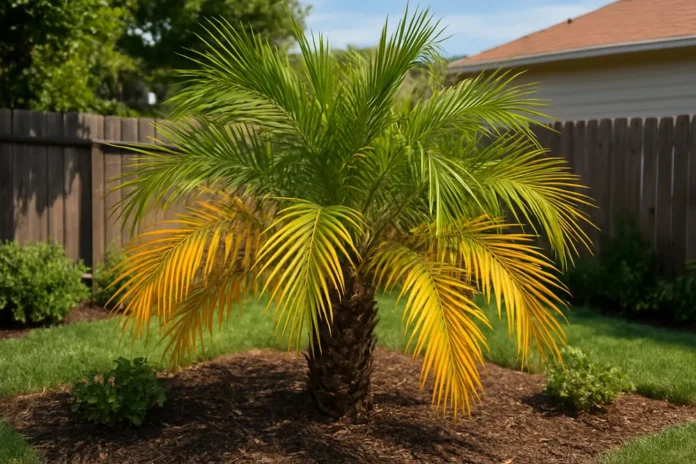
Palm tree leaves usually turn yellow because of overwatering, underwatering, nutrient deficiencies, poor drainage, cold stress, pests, or simple age. The exact cause often shows up in which fronds yellow first and how the discoloration spreads.
Seeing palm tree leaves turning yellow can make even an established plant look tired fast. In my experience, yellowing fronds are not one single problem but a signal that something in the palm's growing conditions is off, or that an older frond is simply reaching the end of its life.
The trick is to look at the pattern before you do anything. A few lower fronds yellowing slowly is very different from a whole canopy fading at once. Some palms yellow from soggy roots, some from dry soil, and many from a shortage of magnesium, potassium, or manganese, especially in sandy soils and containers.
If you slow down and read the clues, you can usually figure out whether your yellow palm leaves are normal, nutritional, environmental, or pest-related. Below, I will walk through the most common causes and the fixes that actually help.
When Yellow Palm Leaves Are Normal
Not every yellow frond means your palm is in trouble. Palms naturally shed their oldest lower leaves over time. These older fronds often fade from green to pale yellow, then tan or brown, while the newer growth in the center stays healthy and upright.
This kind of yellowing is gradual and limited. If only one or two of the oldest fronds are affected and the rest of the palm looks strong, you are probably seeing normal aging rather than a major health issue.
- Yellowing is limited to the oldest, lowest fronds
- New central growth looks green and vigorous
- The yellowing happens slowly, not all at once
- There are no spots, mushy stems, or widespread wilt symptoms
When I diagnose palms, I look at the spear and newest fronds first. If the center is strong and green, I worry less about a few yellow lower fronds because palms regularly retire old foliage as they grow.
If the yellowing is moving into newer fronds, appearing on many leaves at once, or paired with browning tips, drooping, spotting, or slowed growth, it is time to look deeper.
Watering Problems Are the Most Common Cause
Overwatering and Poor Drainage
Palms dislike sitting in wet soil for long stretches. When roots stay waterlogged, they struggle to take up oxygen and nutrients. The result is often widespread yellowing, limp fronds, slow growth, and sometimes a general washed-out color across the canopy.
Container palms are especially prone to this because decorative pots, compacted potting mixes, and saucers full of water trap moisture around the roots. In the ground, heavy clay and low spots can create the same problem.
- Soil stays wet for several days after watering
- The pot feels heavy and drains slowly
- Fronds yellow broadly instead of just at the tips
- Roots may smell sour if root rot has started
Underwatering and Drought Stress
Dry conditions can also turn palm leaves yellow. When a palm is not getting enough moisture, the oldest fronds often fade first, then tips and edges brown and crisp up. The whole plant may look dull, folded, or droopy in hot weather.
Newly planted palms are particularly vulnerable because their roots have not spread far enough to search for moisture. Indoor palms near heating vents or in very dry rooms can show a similar response.
- Soil pulls away from the sides of the pot
- Frond tips are dry and brittle, not soft
- Yellowing starts with an overall dry, faded look
- Growth slows during hot or windy periods
I do not water palms by the calendar alone. I check soil moisture a few inches down and judge the pot weight or soil feel first, because yellowing from too much water and too little water can look surprisingly similar from across the yard.
How to Correct Watering Issues
If the soil is staying soggy, reduce watering frequency, improve drainage, and make sure the plant is not sitting in runoff. For outdoor palms, a broad mulch ring can help moderate moisture, but keep mulch away from the trunk. For container palms, switch to a well-draining palm or cactus-style mix if the current soil stays dense and wet.
If the soil is going bone dry, water deeply so moisture reaches the root zone, then allow the top layer to dry slightly before watering again. Deep, thorough watering works better than frequent light sprinkles.
Nutrient Deficiencies Often Show Up as Yellow Fronds
Palms are famous for showing nutritional problems in their foliage. In many parts of the U.S., especially where soils are sandy or heavily leached by rain, palms commonly run short on magnesium, potassium, manganese, or iron. Each one can create a slightly different yellowing pattern.
Magnesium Deficiency
Magnesium deficiency usually shows up on older leaves first. The edges or outer portions of the fronds may turn yellow while the center area stays greener, creating a banded or outlined look.
Potassium Deficiency
Potassium deficiency also starts on older fronds, but it often causes yellowing along with orange or brown spotting, tip burn, and a scorched look. In severe cases, lower fronds become badly discolored and ragged.
Manganese Deficiency
Manganese deficiency affects new growth and can be serious for palms. Young fronds may emerge weak, yellow, frizzled, or distorted. This is especially important because many gardeners assume yellowing always starts with older leaves, but manganese shortage flips that pattern.
Iron Deficiency
Iron deficiency usually appears as yellowing in newer leaves while the veins may remain somewhat greener. It is often triggered not only by low iron availability, but by cold soil, poor drainage, root damage, or high soil pH that blocks uptake.
- Older fronds yellow first often points to magnesium or potassium issues
- Newer fronds yellow first can suggest manganese or iron problems
- Yellowing with browned tips and spotting often leans toward potassium deficiency
- Distorted new growth is more concerning than a few fading old leaves
Use a fertilizer made specifically for palms when possible, because palm formulas are designed to supply key micronutrients in the right balance. A general lawn fertilizer often has too much nitrogen and not enough magnesium, potassium, or manganese for palms.
Apply fertilizer according to label directions and give it time. Nutrient corrections do not usually turn old yellow leaves green again. The real sign of success is healthier new growth.
Soil and Root Conditions Can Block Nutrient Uptake
Sometimes a palm has enough nutrients in the soil but still cannot use them well. Root stress, compacted soil, improper planting depth, salt buildup, or high pH can all interfere with uptake and lead to yellowing.
Compacted or Poorly Aerated Soil
Roots need oxygen as much as moisture. In compacted ground, especially around construction sites or high-traffic areas, palms may decline gradually because the root zone is starved of air. Yellowing can be broad and stubborn even when watering seems reasonable.
Planted Too Deep
A palm planted too deep may struggle because the root flare and base stay too wet and poorly ventilated. This can mimic overwatering and may slow the whole plant.
Salt Buildup in Containers
Indoor and patio palms sometimes yellow because fertilizer salts accumulate in the potting mix. This is more likely if white crust forms on the soil surface or pot rim, or if you fertilize lightly but often without occasional flushing.
High Soil pH
Alkaline soil can tie up iron and some other micronutrients. The palm may look hungry even after feeding. If you garden in an area with naturally alkaline soil or irrigate with hard water, this is worth considering.
I have seen gardeners keep adding fertilizer when the real issue was root stress or pH. If feeding does not improve the next flush of growth, I start looking harder at the soil environment rather than assuming the plant needs more product.
Improving drainage, loosening compacted surface soil carefully, repotting into fresh mix, or testing soil pH can often do more than another round of fertilizer.
Temperature Swings, Light, and Transplant Stress Also Matter
Palms can react to environmental stress with yellow leaves even when watering and nutrition are mostly on track. Cold snaps, sudden sun exposure, indoor low light, and transplant shock are all common triggers.
Cold Stress
Many palms are sensitive to chilly nights and frost. After a cold event, fronds may turn yellow, bronze, or patchy before browning later. Tender species often show damage first on exposed outer leaves.
Too Little Light Indoors
Indoor palms in dim rooms often lose their rich green color and develop pale yellow fronds over time. Growth becomes sparse, stems may stretch, and the plant generally looks thin rather than full.
Sudden Direct Sun
A palm moved from shade to strong direct sun can bleach or yellow, especially if it spent time indoors or in a protected nursery setting. This kind of stress may appear as faded patches rather than uniform yellowing.
Transplant Shock
Recently planted or recently repotted palms often pause while they rebuild root function. During that adjustment period, some older fronds may yellow as the plant redirects energy.
- Cold damage often follows a weather event
- Low light yellowing tends to be gradual and paired with weak growth
- Sun shock usually affects exposed leaf surfaces
- Transplant stress often appears within weeks of moving the palm
The fix depends on the trigger: protect tender palms during cold snaps, increase indoor light gradually, acclimate plants to stronger sun over a week or two, and give newly planted palms steady care without overreacting.
Pests and Disease Can Cause Yellowing Too
Although watering and nutrition cause more yellow palms than pests do, insects and disease should still be on your checklist. Spider mites, scale, mealybugs, and root diseases can all weaken a palm and lead to yellowing.
Spider Mites
Spider mites are common on indoor palms, especially in dry air. Their feeding creates fine stippling, a dusty yellow cast, and eventually declining fronds. You may see faint webbing on the undersides of leaves.
Scale and Mealybugs
Scale insects and mealybugs suck sap and can gradually cause yellowing, stickiness, and weak growth. Look along stems, leaf bases, and undersides of fronds for bumps, cottony clusters, or shiny residue.
Root Rot and Fungal Decline
If a palm stays too wet for too long, root rot can set in. Yellowing may be widespread, growth stalls, and the plant may look wilted even though the soil is damp. Once roots are damaged, the palm cannot move water well, so symptoms can be confusing.
Pest control usually starts with physically cleaning the plant, pruning badly damaged fronds, and using insecticidal soap or horticultural oil where appropriate. For suspected root disease, drying the root zone and improving drainage are more important than adding more water.
How to Diagnose the Real Cause Before You Treat It
The fastest way to make yellow palms worse is to throw every fix at them at once. More fertilizer, more water, and extra pruning can compound the stress. A simple diagnostic routine works better.
- Check which fronds are yellowing first, older outer ones or newer center growth.
- Feel the soil several inches down or inspect the potting mix for sogginess or bone-dry conditions.
- Look for tip burn, spotting, distortion, webbing, sticky residue, or pests clustered on stems and leaf undersides.
- Think about recent changes such as repotting, weather swings, moving the palm, or a new fertilizer routine.
- Review drainage, pot size, and whether water is collecting around the root zone.
- If the pattern remains unclear, consider a soil test or compare symptoms with a palm-specific nutrient guide.
Once you identify the most likely cause, change one major variable at a time. That makes it much easier to tell whether the palm is actually improving.
Remember that damaged fronds rarely turn deep green again. What you are watching for is steadier growth and healthier new leaves.
What to Do Right Now for a Yellowing Palm
If your palm is actively yellowing and you want a practical starting point, begin with the basics. Confirm soil moisture, inspect the newest growth, and rule out standing water. Those three checks solve a surprising number of cases.
- Do not remove every yellow frond right away unless it is fully dead
- Correct obvious overwatering or underwatering first
- Feed with a palm-specific fertilizer if deficiency seems likely
- Move indoor palms into brighter indirect light if they are sitting in a dark room
- Inspect closely for mites, scale, and mealybugs
- Be patient and judge recovery by new growth, not old damaged leaves
Prune only fronds that are mostly brown, fully yellow and spent, or clearly diseased. Palms still draw resources from partly green fronds, so removing too much foliage can slow recovery.
FAQ
Should I Cut Off Yellow Palm Leaves?
Only remove fronds that are fully dead, mostly brown, or clearly beyond recovery. Partly green fronds still help feed the plant, so removing them too early can add stress.
Can Yellow Palm Leaves Turn Green Again?
Usually no. Once a palm frond has yellowed, it often stays that way. Improvement shows up in healthier new growth rather than old fronds regaining color.
How Often Should I Water a Palm Tree with Yellow Leaves?
Watering depends on the soil, pot size, weather, and whether the palm is indoors or outside. The best approach is to water based on soil moisture and drainage rather than a fixed schedule.
What Nutrient Deficiency Causes Yellow Leaves on Palms?
Magnesium, potassium, manganese, and iron deficiencies are all common causes. The key clue is whether older or newer fronds yellow first and whether the leaves also show spots, tip burn, or distorted growth.
Do Coffee Grounds Help Yellowing Palms?
Not reliably. Coffee grounds are not a balanced palm fertilizer and can create moisture and texture issues in some soils. A palm-specific fertilizer is a better choice when nutrition is the problem.
Why Is My Indoor Palm Turning Yellow Even Though I Water It?
Indoor palms often yellow from low light, soggy potting mix, dry air, salt buildup, or spider mites. Watering alone will not fix the issue if the root zone or light level is the real problem.
Can Cold Weather Make Palm Leaves Yellow?
Yes. Chilly nights and frost can cause yellow, bronze, or patchy fronds, especially on tender palm species. Damage often appears shortly after the cold event.
Need help choosing the right palm fertilizer, potting mix, or pest treatment? Read our palm care guides and product roundups to pick the fix that matches your yellowing fronds.
