

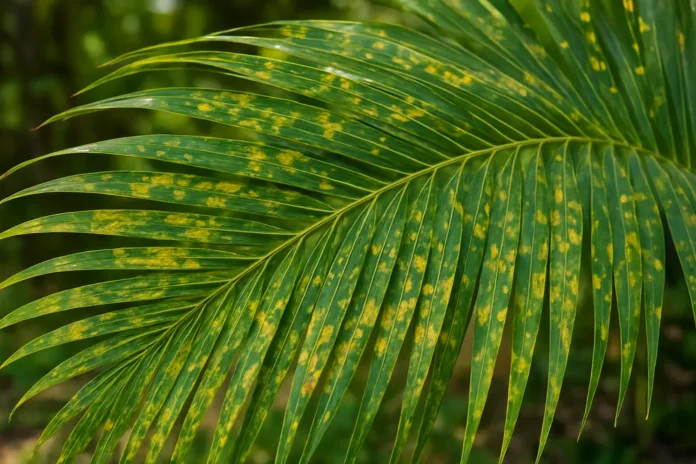
Palm tree leaves usually get yellow spots from watering stress, nutrient deficiencies, pests, fungal disease, or weather damage. The exact cause depends on where the spots appear, how fast they spread, and whether the leaf also browns, curls, or drops.
Seeing palm leaves with yellow spots can be unsettling, especially when the rest of the plant looked fine a week ago. In my experience, these spots are often an early warning sign rather than a random cosmetic issue. Palms tend to show stress in their older fronds first, but pests, disease, and nutrient trouble can mark both old and new growth depending on the cause.
The tricky part is that several common problems can look similar at first glance. Overwatering, underwatering, magnesium or potassium deficiency, spider mites, scale, fungal leaf spot, and even sudden weather swings can all leave some version of yellow spotting behind. The best diagnosis comes from looking at the pattern, not just the color.
If your palm tree yellow spots are small and scattered, start by asking where they are showing up, whether they are dry or soft, and whether the spots are staying yellow or turning brown. That combination usually narrows the issue quickly and helps you avoid treating the wrong problem.
What Yellow Spots on Palm Leaves Usually Mean
Yellow spots are a symptom, not a diagnosis. On palms, they commonly show up when the plant is under stress and chlorophyll production is disrupted in parts of the leaf. Sometimes that stress is internal, like poor roots or a nutrient imbalance. Other times it is external, like mites feeding on the foliage or fungal spores infecting damp leaves.
I usually sort palm spotting into five broad buckets: watering and drainage problems, nutrient deficiencies, pest feeding, fungal or bacterial disease, and environmental injury. Once you know which bucket the problem falls into, the fix becomes much more straightforward.
- Spots on older fronds first often suggest mobile nutrient deficiencies such as potassium or magnesium, or normal aging combined with stress.
- Spots on newer growth can point more toward manganese or iron issues, cold injury, chemical burn, or active pests and disease.
- Tiny pale speckles that merge together often come from spider mites or other sap-feeding insects.
- Larger round or irregular yellow lesions with dark centers often suggest fungal leaf spot.
- Yellow spotting combined with limp stems, sour soil, or blackened roots often traces back to overwatering and root stress.
When I diagnose a palm, I do not start with the worst-looking frond. I compare an old leaf, a middle-aged leaf, and the newest fully opened one. That age pattern often tells me more than the spots themselves.
Watering and Drainage Problems
Overwatering and Root Stress
One of the most common reasons palms develop yellow spots is chronically wet soil. Palms need moisture, but most do not like sitting in waterlogged ground or a pot that stays soggy for days. When roots cannot get enough oxygen, they stop taking up nutrients efficiently, and the leaves may develop mottled yellow areas, overall paling, or brown tips shortly after.
This is especially common in container palms, palms planted in heavy clay, and newly planted palms that are being watered on a rigid schedule rather than according to weather and soil conditions. If the base smells sour, the soil feels wet several inches down, or the palm is yellowing from the lower canopy upward, wet feet are high on the suspect list.
Underwatering and Inconsistent Moisture
Palms can also spot yellow when they repeatedly dry out too far between waterings. Instead of a steady supply of moisture, the leaves go through stress cycles. You may see yellow flecking, crisp tips, curling leaflets, or fronds that look dull and dusty even when clean. Outdoor palms in hot reflected heat and indoor palms near vents are especially prone to this.
- Check whether the soil is staying wet for too long or drying bone dry too often.
- Make sure containers have open drainage holes and are not sitting in a saucer full of water.
- Water deeply, then allow the upper soil to dry somewhat before watering again, depending on the palm type and season.
- For in-ground palms, improve drainage if water puddles around the root zone after rain or irrigation.
If you are unsure whether a palm is getting too much or too little water, use a trowel or moisture probe instead of guessing from the soil surface. I have seen the top inch look dry while the root zone underneath stayed soggy for a week.
Nutrient Deficiencies That Cause Yellow Spotting
Palms are famous for showing nutrient problems in distinctive ways, and yellow spotting is often part of the picture. The exact pattern matters because different deficiencies affect different leaves and produce different kinds of discoloration.
Potassium Deficiency
Potassium deficiency is very common in landscape palms. Older leaves may develop yellow to orange spotting, translucent flecks, or necrotic spotting that later turns brown. In some species, leaflet tips wither first, and the frond takes on a scorched look over time. This problem tends to build gradually rather than appearing overnight.
Magnesium Deficiency
Magnesium deficiency usually shows as broad yellow bands along the margins of older leaves while the center stays greener, but some palms also show patchy chlorosis that gardeners describe as yellow spots. It is often worse in sandy soils or where palms have not been fertilized with a palm-specific product.
Manganese and Iron Issues
Manganese and iron deficiencies usually affect newer growth. New fronds may emerge weak, pale, or spotted, and severe manganese deficiency can distort the leaf. These deficiencies are often tied to alkaline soil, cold wet soil, damaged roots, or poor uptake rather than a complete lack of the nutrient in the ground.
- Older fronds with yellow spotting usually suggest potassium or magnesium problems first.
- New fronds with chlorosis or spotting suggest iron or manganese should be considered.
- General-purpose lawn fertilizer is often not enough for palms and can make nutrient balance worse.
- Palms in Florida-type sandy soils and other low-nutrient sites benefit from a slow-release palm fertilizer with potassium, magnesium, and micronutrients.
If deficiency is the cause, do not expect damaged leaves to turn fully green again. The goal is to correct the feeding program so new growth emerges healthy. That is the real measure of success with palms.
Pests That Leave Yellow Speckles and Spots
Several common palm pests feed by piercing the leaf and sucking out plant juices. That creates tiny yellow dots or stippling at first, which can blend into larger faded patches if the infestation grows.
Spider Mites
Spider mites are a frequent cause of fine yellow speckling, especially on indoor palms and outdoor palms during hot, dry weather. The damage often looks dusty or sandblasted from a distance. If you look closely at the underside of the leaflets, you may find faint webbing or tiny moving dots.
Scale Insects
Scale can cause yellow patches or spots where insects cluster along stems or leaf undersides. Some scale are easy to see as little bumps, while others blend into the plant. Heavy infestations may also leave sticky honeydew, which can lead to sooty mold.
Thrips and Other Sap Feeders
Thrips and similar pests can scar palm foliage and create pale yellow or silvery spotting. New leaves may emerge marked if the insects fed while the leaf was still folded. This kind of damage often appears more streaked or streak-speckled than the random stippling caused by mites.
- Inspect both upper and lower leaf surfaces in bright light.
- Look along the midrib and where leaflets join the frond.
- Shake a leaflet over white paper if you suspect mites or thrips.
- Treat only after confirming pests, since nutrient and watering issues can mimic feeding damage.
Uniform tiny speckling across many leaflets usually makes me think pests before nutrients. Nutrient problems on palms tend to follow frond age and leaf structure more predictably, while mite damage often looks scattered and finely peppered.
Fungal and Bacterial Leaf Spot Diseases
If the yellow spots are distinct lesions rather than diffuse discoloration, disease becomes more likely. Fungal leaf spot is especially common when palms stay wet for long periods, have poor air circulation, or are crowded with other plants.
These spots often begin yellow, tan, or water-soaked, then develop brown or black centers. Some have a yellow halo around the darker center. They may stay small and numerous or enlarge and merge into blighted sections of leaf. Splashing water can spread spores from one frond to another.
Conditions That Encourage Leaf Spot
- Overhead watering late in the day
- Dense planting with poor airflow
- Persistently humid weather
- Old infected foliage left on or under the palm
- Stress from poor nutrition or root problems
Mild leaf spot is often more cosmetic than deadly, but it should not be ignored if it is spreading quickly. Remove badly affected fronds only if the palm still has plenty of healthy foliage. Avoid stripping too many leaves, since palms need that canopy to keep growing and recover from stress.
Sunburn, Cold Damage, and Chemical Injury
Not every yellow spot is caused by pests or disease. Palms can also show spotting after a sudden environmental shock. A plant moved from low light into strong direct sun may develop bleached yellow patches that later turn tan. Cold snaps can leave scattered yellow or bronze spotting, especially on tender species grown near the edge of their hardiness range.
Chemical injury is another possibility. Fertilizer salts, foliar sprays applied in heat, soap or oil products used too strongly, or drift from lawn herbicides can all mark leaves. Chemical damage often appears fairly soon after an application and may affect the most exposed side of the plant more heavily.
- Recent move to brighter light suggests sun scorch.
- Damage after a frost or cold night suggests temperature stress.
- Spots appearing after spraying or fertilizing suggest chemical burn.
- One-sided spotting can point to exposure rather than a systemic root problem.
How to Tell Which Cause Is Most Likely
When gardeners send me photos of yellow-spotted palms, I ask a short list of questions before recommending anything. The answers usually narrow the issue fast enough to avoid unnecessary sprays or fertilizers.
- Look at which leaves are affected first: old, middle, or new.
- Check the spot shape: tiny speckles, round lesions, broad patches, or margin yellowing.
- Feel the soil below the surface, not just on top.
- Inspect for visible pests on the undersides of leaves and along stems.
- Think back over recent changes in weather, watering, fertilizer, repotting, or location.
- Notice whether the spots are expanding, turning brown, or staying stable.
A palm with tiny pale stippling, dry air, and webbing points toward mites. A palm with lower fronds showing yellow-orange spotting and slow decline often points toward potassium deficiency. A palm with circular yellow lesions after rainy weather leans more toward fungal leaf spot. A palm sitting in soggy soil with generalized chlorosis may simply have stressed roots.
What to Do to Help Your Palm Recover
Once you have a likely cause, keep your response targeted. Palms do not respond well to being hit with multiple random treatments at once. Correct the root issue, feeding issue, or pest problem you have actually confirmed.
If Watering Is the Issue
Adjust your watering schedule so the root zone gets a deep soak and then has time to breathe. Improve drainage in containers and avoid letting pots stand in water. For in-ground palms, redirect irrigation if the area stays constantly wet.
If Nutrients Are the Issue
Use a slow-release fertilizer formulated for palms, following the label for your region and season. This is usually more effective than quick doses of general fertilizer. Severe micronutrient problems may need a more specific correction, especially in alkaline soils.
If Pests Are the Issue
Start by washing the foliage thoroughly if the palm is small enough, especially for mites. Then use an appropriate horticultural soap, oil, or other labeled treatment for the confirmed pest. Repeat applications may be needed because eggs and hidden insects often survive the first round.
If Disease Is the Issue
Improve airflow, keep water off the leaves when possible, and remove badly infected fallen debris. Fungicides can help protect new growth in some cases, but they work best when paired with better growing conditions rather than used alone.
If Weather or Chemical Stress Is the Issue
The main fix is prevention and patience. Protect tender palms from cold snaps, acclimate them gradually to stronger light, and avoid spraying in midday heat. Damaged tissue will not heal, but stable care gives the palm the best chance to push clean new fronds.
Judge recovery by the next leaf or two, not by the damaged one in front of you. With palms, old fronds often keep their scars for the rest of their life, so improvement shows up in new growth first.
When Yellow Spots Are a Sign to Act Quickly
Most yellow spotting problems are manageable, but some situations deserve prompt attention. If the newest central spear is affected, if the growing point feels soft, or if the palm is declining rapidly from the crown downward, the problem may be more serious than simple leaf spotting. Likewise, widespread spotting combined with trunk rot, foul odor, or spear pull calls for immediate action and often professional help.
Large specimen palms are expensive to replace, so it is worth getting a firm diagnosis if the plant is valuable or the symptoms are moving fast. The earlier you distinguish a mild nutrient issue from a root or crown problem, the better your odds of saving the plant.
FAQ
Will Yellow Spots on Palm Leaves Turn Green Again?
Usually no. Once a palm leaf is visibly damaged, the spots often remain. Focus on correcting the cause so new fronds come in healthy.
Should I Cut Off Palm Leaves with Yellow Spots?
Only remove fronds that are mostly dead, badly diseased, or clearly spent. Palms need as much healthy green tissue as possible, so avoid over-pruning lightly damaged leaves.
Can Too Much Sun Cause Yellow Spots on a Palm?
Yes. A palm moved suddenly into harsher sun can develop bleached yellow patches that later dry out and turn tan or brown.
Do Spider Mites Cause Yellow Spots on Palm Trees?
Yes. Spider mites commonly cause fine yellow stippling or speckling, especially on indoor palms or outdoor palms in hot, dry conditions.
What Deficiency Causes Yellow Spots on Palm Leaves?
Potassium deficiency is one of the most common causes, especially on older fronds. Magnesium, iron, and manganese problems can also create yellowing or spotted chlorosis depending on the palm and the leaf age affected.
Can Overwatering Make Palm Leaves Spot Yellow?
Yes. Soggy soil stresses roots and reduces nutrient uptake, which can lead to yellow spotting, overall chlorosis, browning tips, and decline.
Are Yellow Spots on Palms a Fungal Disease?
Sometimes. If the spots are distinct lesions with tan, brown, or black centers and seem to spread in humid or wet conditions, fungal leaf spot is a strong possibility.
How Long Does It Take a Palm to Recover After Yellow Spotting?
Recovery depends on the cause and the season, but palms are rarely fast. You may need to wait for one or two new fronds to judge whether your correction worked.
Need the right fix for a stressed palm? Explore our palm care guides and palm fertilizer recommendations so you can treat yellow spotting with confidence and avoid making the problem worse.
