

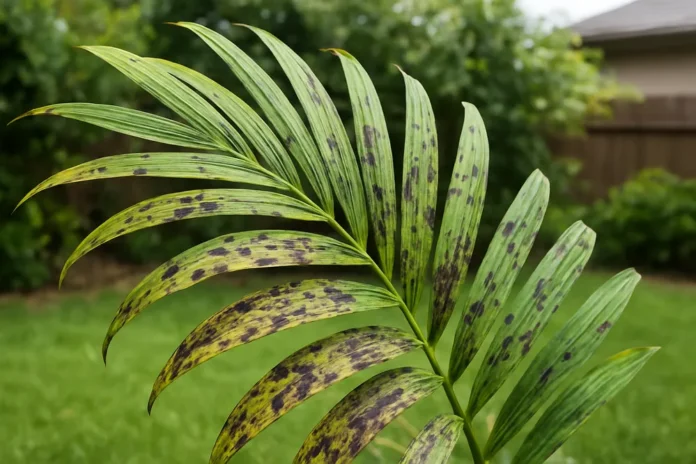
Palm tree leaves usually get black spots from fungal leaf spot, pest activity, moisture stress, or tissue damage that darkens as it dies. In some cases, older fronds also develop dark spotting as they naturally decline.
Seeing palm tree leaves with black spots can be unsettling, especially when the rest of the plant looked healthy just days earlier. In my experience, black spotting on palms is one of those symptoms that can come from several different problems that look similar at first glance. The good news is that the pattern of the spots, where they show up, and how fast they spread usually tell the real story.
Some palms get a few harmless dark flecks on aging fronds, while others develop spreading lesions from fungal disease, scale insects, or chronic moisture problems. If you look closely at the size, shape, and placement of the spots, you can often separate a minor cosmetic issue from a problem that needs quick treatment.
This guide walks through the most common reasons palm leaves have black spots, how to diagnose each one, and what I would do to help the plant recover without making the problem worse.
What Black Spots on Palm Leaves Usually Mean
Black spots are not a single diagnosis. They are a symptom of damaged leaf tissue, and that damage can come from disease organisms, insects, watering problems, cold injury, sun stress, or normal aging. On palms, the most common cause is some form of fungal leaf spot, especially when the plant stays wet for long stretches or air circulation is poor.
That said, not every dark mark is an infection. Sap-sucking pests can leave behind sticky honeydew that turns black with sooty mold. Physical injury can create blackened patches where tissue has died. Older fronds may also show dark spotting before they yellow or brown and are shed.
- Small circular or irregular lesions often point to fungal or bacterial spotting
- A black film or soot-like coating often suggests insects and sooty mold rather than tissue infection
- Dark areas near tips and edges can be tied to watering stress, salt buildup, or environmental injury
- Spots limited to older leaves may be less urgent than damage spreading across new growth
When I diagnose palms, I look at the newest leaves first. If the fresh growth is clean but the oldest fronds are spotted, I usually think stress or aging before I assume a serious disease problem.
Fungal Leaf Spot Is One of the Most Common Causes
Fungal leaf spot shows up on palms as black, dark brown, or purplish spots that may start small and expand over time. Some lesions have yellow halos around them. Others stay sharply defined and pepper the leaf surface. Humid weather, crowded planting, wet leaves, and overhead irrigation all make this more likely.
Indoor palms can also develop fungal spotting when they sit in a dim room with damp soil and little air movement. Outdoor palms are especially vulnerable after rainy spells or when fronds remain wet overnight.
Signs That Point Toward Fungal Spotting
- Spots start as small dots and gradually enlarge
- Lesions appear on several parts of the frond, not just the tips
- Spots may merge into larger blotches on heavily affected leaves
- Damage spreads faster during warm, wet weather
- Older affected leaves may yellow and decline after spotting becomes severe
Mild cases are often more cosmetic than dangerous, but severe infections can weaken the plant by reducing photosynthesis. If spotting is extensive on many fronds, the palm may struggle to push strong new growth.
Sooty Mold Can Make Leaves Look Black and Spotted
Sometimes the black material is not inside the leaf tissue at all. Sooty mold grows on the sticky honeydew left behind by pests such as scale, aphids, mealybugs, or whiteflies. On palms, scale is a common culprit. The result can look like black specks, blotches, or a soot-like coating spread across the fronds.
Unlike fungal leaf spot lesions, sooty mold often sits on the leaf surface. If you rub part of it with a damp cloth, some of the black coating may smear or come off. The real issue is the insects producing the honeydew, not the mold itself.
Clues That Pests Are Behind the Black Spotting
- Leaves feel sticky before they turn black
- You see tiny bumps, cottony clusters, or shell-like insects on stems and leaf undersides
- Black growth looks dusty, smudgy, or wipeable
- Ants are active on the plant, which often happens when honeydew-producing insects are present
If a leaf looks blackened, wipe a small patch before you spray anything. A wipe test can quickly tell you whether you are dealing with a surface coating from pests or actual dead tissue inside the leaf.
Watering Problems and Poor Drainage Can Trigger Blackened Tissue
Palms like steady moisture, but they do not like sitting in waterlogged soil. When roots stay too wet, they struggle to take up oxygen. That stress can show up as blackened tips, dark flecks, or blotches, especially if root damage starts to develop. Overwatered palms may also become more prone to fungal disease, so the symptoms can overlap.
Poor drainage is often the hidden issue. A palm in heavy clay, a decorative pot without proper drainage, or a saucer that stays full of water can all lead to stressed roots. Once the roots are compromised, the foliage becomes more vulnerable to spotting and decline.
Signs That Excess Moisture May Be Involved
- Soil stays soggy for days after watering
- Lower fronds yellow along with spotting
- Leaf tips darken before the rest of the frond declines
- The pot smells sour or the soil smells swampy
- Growth slows and new fronds emerge weak or pale
Underwatering can cause darkened tips and stressed tissue too, but it usually shows up with crisp browning, dry soil, and fronds folding or drooping rather than a spread of distinct black lesions.
Cold Damage, Sun Scorch, and Physical Injury Can Leave Black Patches
Palms exposed to sudden cold, harsh sun after a move, or rough handling can develop damaged leaf tissue that later turns dark brown or black. This kind of spotting usually looks less uniform than fungal disease. Instead of neat round lesions, you may see random patches, streaks, or edges that blacken after the tissue collapses.
Indoor palms moved outdoors too quickly often develop stress marks from sun exposure. Cold snaps can darken soft tissue on tropical palms, especially on the outer parts of the fronds. Wind abrasion can also leave blackened scarring where leaves rub against fences, walls, or each other.
How Environmental Damage Tends to Look
- Damage appears suddenly after a weather event or plant move
- Spots are irregular rather than evenly scattered
- Affected tissue may look bleached first, then turn dark
- Only the exposed side of the plant is damaged
- New growth remains normal if the stress was temporary
Nutrient Issues and Salt Buildup Can Contribute to Spotting
Palms are sensitive to nutrient imbalances, especially deficiencies in potassium, magnesium, and manganese. These problems usually show up as yellowing, streaking, or tip burn before they look black, but advanced tissue death can eventually darken and spot. Excess fertilizer or salt buildup from hard water can also burn leaf edges and create blackened necrotic areas.
This cause is more likely when spotting is concentrated at the tips or margins, the potting mix has a crusty white residue, or the palm has been fertilized heavily. Nutrient-related symptoms often show up in a more patterned way across the frond rather than as random speckling.
When to Suspect Fertilizer or Nutrient Stress
- Leaf tips and edges darken first
- You recently applied a strong fertilizer dose
- There is white crust on the soil surface or pot rim
- Multiple fronds show a similar pattern of edge burn
- The palm has not been repotted or fed appropriately for a long time
Normal Aging Can Also Explain Black Spots on Older Fronds
Palms naturally retire their oldest fronds over time. Before a frond fully yellows, browns, and dies back, it may develop scattered dark spots or patches. This is especially common on lower leaves that receive less light and are already near the end of their lifespan.
If only the oldest fronds are affected and the center growth looks healthy, this is usually not a major concern. A palm constantly replacing old fronds with clean new ones is behaving normally.
I try not to overreact to one ugly lower frond. Gardeners often start treating for disease when the palm is simply cycling out old leaves, and unnecessary sprays or extra watering can create a real problem where there was not one before.
How to Tell Which Cause Is Most Likely
The fastest way to narrow this down is to match the symptom pattern with the plant's recent conditions. Start with where the spots are, whether they wipe off, whether the soil is staying wet, and whether the newest fronds are affected.
Ask These Questions While You Inspect the Palm
- Are the black marks part of the leaf tissue, or do they smear off like soot?
- Are the spots scattered circles, larger blotches, or darkened tips and edges?
- Do you see pests on stems, leaf bases, or undersides of fronds?
- Has the palm been staying too wet, sitting in a saucer, or growing in compacted soil?
- Did the problem show up after rain, cold, a heat wave, or moving the plant?
- Are only old fronds affected, or is new growth showing the same issue?
If the black coating wipes off and pests are present, think sooty mold. If the marks are distinct lesions that do not wipe off and the plant has been staying damp, fungal leaf spot rises to the top of the list. If tips and margins are darkening in a repeated pattern, look at watering and fertilizer habits.
How to Fix Black Spots on Palm Leaves
The right fix depends on the cause, but most palms improve when you reduce leaf wetness, improve airflow, correct watering, and remove the trigger. Already damaged tissue usually will not turn green again, so focus on stopping new spots from forming.
If Fungal Leaf Spot Is the Problem
- Remove heavily infected fronds if the palm has enough healthy foliage left
- Water the soil directly instead of wetting the leaves
- Space nearby plants to improve air circulation
- Avoid watering late in the day when leaves stay wet overnight
- Use a garden fungicide labeled for ornamental palms if the infection is spreading quickly
If Pests and Sooty Mold Are Involved
- Treat the insects first with insecticidal soap, horticultural oil, or another product labeled for the pest and palm
- Rinse or wipe leaves after pest numbers drop
- Inspect leaf undersides, stems, and leaf bases where scale often hides
- Repeat treatment as directed because eggs and protected insects can survive a single spray
If Watering Stress Is the Cause
- Let the top portion of the soil dry appropriately before watering again, based on the palm type and container size
- Make sure containers drain freely and never sit in standing water
- Amend or rework poorly drained planting sites if the palm is in the ground
- Cut back on watering frequency during cool or low-light periods
If Fertilizer or Salt Stress Is Involved
- Flush container soil thoroughly to leach excess salts
- Pause fertilizer until the plant stabilizes
- Use a palm-specific fertilizer at the recommended rate going forward
- If your tap water is very hard, occasional deep flushing can help reduce mineral buildup
Do not prune every spotted leaf at once unless the plant is severely infected and still has plenty of healthy green fronds. Palms rely on their leaves for energy, and over-pruning can slow recovery.
When Black Spots Mean a Bigger Palm Health Problem
Black spots deserve closer attention when they are spreading into the newest fronds, when the spear leaf is affected, or when the plant is declining overall. On palms, damage to the central growing point is much more serious than spotting on a few outer leaves.
You should be more concerned if the palm also has trunk softness, foul odor near the crown, rapid yellowing, wilting despite moist soil, or collapse of new growth. Those signs may point to advanced rot or a more severe disease issue than simple leaf spot.
- New central growth is spotted, blackened, or mushy
- The spear leaf pulls out easily
- Spots are multiplying rapidly across many fronds
- The palm is losing vigor despite environmental corrections
- There are signs of root rot, crown rot, or serious pest infestation
How to Prevent Black Spots From Coming Back
Prevention is mostly about keeping the palm dry where it matters and healthy enough to resist stress. Most recurring black spot problems trace back to moisture sitting too long on leaves, roots staying too wet, or pests being missed until they become established.
- Water deeply but only as often as the palm and season require
- Keep foliage as dry as practical, especially in humid weather
- Provide enough spacing or airflow around the plant
- Inspect regularly for scale, mealybugs, and other sap-sucking pests
- Use balanced palm nutrition rather than frequent high-dose feeding
- Remove dead or heavily diseased fronds with clean tools
- Avoid stressing indoor palms with abrupt changes in light or temperature
I find that palms recover best when you make one or two targeted changes and then watch the next round of growth. Clean new fronds are the best sign that you solved the problem, even if the older damaged leaves still show scars.
FAQ
Should I Cut Off Palm Leaves with Black Spots?
Remove leaves only if they are heavily damaged, mostly dead, or clearly diseased and the palm still has plenty of healthy green foliage left. Lightly spotted fronds can still help feed the plant, so avoid over-pruning.
Can Black Spots on Palm Leaves Go Away on Their Own?
Existing spots usually do not disappear because that tissue is already damaged. What you are looking for is healthy new growth and a stop to the spread of new spotting.
Are Black Spots on Palm Leaves Always a Fungus?
No. Fungal leaf spot is common, but black spotting can also come from sooty mold on pest honeydew, watering stress, salt burn, cold damage, sun injury, or normal aging on older fronds.
How Do I Know if It Is Sooty Mold or Leaf Spot?
Sooty mold often forms a black coating on the leaf surface and may wipe or smear off. True leaf spot is part of the tissue itself and does not rub away easily.
Will Overwatering Cause Black Spots on a Palm?
Yes. Overwatering and poor drainage can stress roots, darken leaf tissue, and make palms more vulnerable to fungal disease, which can lead to black spots or blotches.
Can I Spray Neem Oil on a Palm with Black Spots?
Neem oil may help if pests are involved, but it will not fix every cause of black spotting. Always confirm the likely problem first and follow the label, since some palms can react poorly if oils are used in strong sun or high heat.
Do Black Spots Mean My Palm Is Dying?
Not usually. A few spotted older fronds are often manageable, but widespread spotting on new growth, spear damage, or a declining crown is more serious and needs quick attention.
Need the right treatment fast? Read our guide to the best fungicides, insecticidal soaps, and palm care products so you can stop black spotting before it spreads.
