

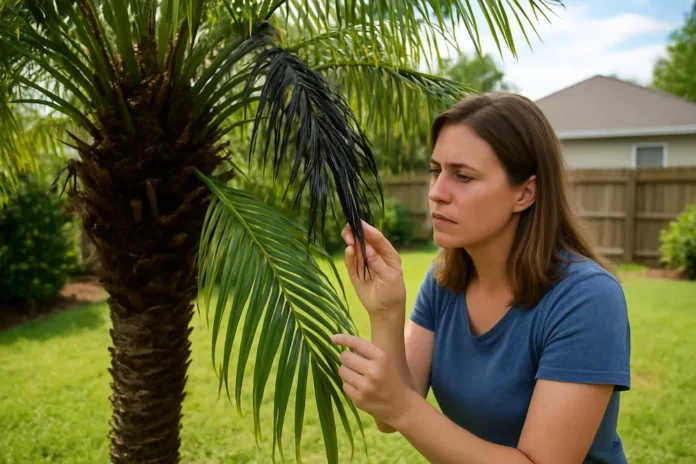
A palm tree usually turns black because of rot, fungal disease, sooty mold from sap-sucking pests, or cold-damaged tissue. In some cases, the black color is dead plant tissue rather than a surface coating.
When a palm tree turning black catches your eye, it can look alarming fast. Sometimes the black area is just a coating on the leaf surface, and other times it means the tissue itself has died. That difference matters, because a palm with sooty mold needs a very different fix than a palm with crown rot.
I usually start by asking a simple question: is the black color sitting on top of the plant, or is the leaf, trunk, or spear actually turning dark and collapsing? Once you look at where the blackening starts and how it spreads, the possible causes get much easier to narrow down.
The good news is that not every black palm is a lost cause. Some problems are cosmetic and reversible, while others need quick action to save the growing point before the damage moves into the heart of the palm.
What Black Discoloration on a Palm Usually Means
Blackening on a palm is not one single problem. It can show up as a dusty or sticky coating, black spots on fronds, mushy dark tissue at the crown, a blackened spear leaf, or dark streaking on the trunk. Each pattern points toward a different issue.
- A surface coating that wipes off often suggests sooty mold growing on honeydew left by insects like scale, aphids, or mealybugs.
- Soft, dark, foul-smelling tissue near the center of the palm often suggests crown rot or bud rot.
- Black spots or blotches on leaves can point to fungal leaf spot diseases, especially when air flow is poor or foliage stays wet.
- Blackened leaf tips or entire fronds after a cold snap often indicate freeze damage.
- Dark, collapsing roots and a generally declining plant can be tied to overwatering and root rot.
Palms grow from a central growing point, often called the bud or crown. If damage stays mostly on older fronds, the palm often has a fair chance of recovery. If the spear leaf or crown is turning black, that is much more serious because the plant may be losing its only active growing point.
Most Common Causes of a Palm Turning Black
Sooty Mold Growing on Insect Honeydew
One of the most common and least deadly reasons a palm looks black is sooty mold. This fungus grows on the sticky waste produced by sap-sucking pests, not inside the palm tissue itself. The fronds may look dirty, smoky, or almost charcoal-colored, and the coating often rubs off on your fingers or a damp cloth.
Look for scale insects lined up along stems and leaf midribs, cottony mealybugs tucked into leaf bases, or aphids on tender growth. Ant activity is another clue, because ants often protect honeydew-producing insects.
Crown Rot and Bud Rot
If the center of the palm is dark, wet, or soft, rot is a major concern. Crown rot and bud rot often develop after prolonged wet weather, poor drainage, cold damage, mechanical injury, or overhead irrigation that keeps the center wet. The newest spear may discolor, pull out easily, or smell sour and rotten.
This is the cause I take most seriously. Palms do not have multiple dormant buds waiting to replace the main one the way many shrubs do. Once the central growing point is gone, recovery is limited or impossible depending on the species and severity.
When I am diagnosing a palm, I pay closest attention to the newest growth, not the oldest fronds. Old leaves can blacken for many reasons, but a blackening spear or a spear that slides out with a tug usually means the problem has moved into the palm’s core.
Fungal Leaf Spot and Blight
Fungal leaf diseases can create black, brown, or dark purple spots that enlarge into blotches. These are more common when palms are crowded, foliage stays wet for long periods, or the plant is stressed by nutrient issues or poor site conditions. Older leaves are often affected first.
Leaf spot looks bad, but it is often more cosmetic than fatal unless the palm is already weak. The pattern is usually scattered spotting rather than complete blackening of the center crown.
Overwatering and Root Rot
Palms planted in heavy, soggy soil can develop root rot. The first signs may be general yellowing, wilting, or stunted growth, but advanced cases can lead to darkened bases, blackened roots, and secondary crown problems. Container palms are especially vulnerable when pots do not drain well.
If the soil stays waterlogged, roots cannot breathe. Damaged roots stop supporting the top growth, and weakened tissue becomes more susceptible to pathogens.
Cold and Freeze Damage
Palms that are marginally hardy in your area may turn black after a freeze. Fronds can look water-soaked at first, then dry down into blackened or dark brown tissue over several days. Tender species often show the worst damage in the crown and newest leaves.
Freeze injury can also set the stage for rot. Damaged cells leak moisture and become easy entry points for disease organisms, especially in cool, wet weather.
Sunburn, Fertilizer Burn, and Chemical Injury
Less often, blackened patches come from tissue that was burned by an abrupt move into strong sun, overapplied fertilizer, deicing salts, or a spray that was too concentrated. This kind of damage is often sharply defined and tied to a recent change in care.
How to Tell Which Problem Your Palm Has
A close inspection usually tells you more than the color alone. Focus on the location, texture, and timing of the blackening.
- If the black material wipes off, suspect sooty mold.
- If the tissue is soft, wet, or smelly, suspect rot.
- If the blackening follows a cold night or freeze event, suspect weather damage.
- If the leaves have individual spots or lesions, suspect fungal leaf spot.
- If a potted palm has blackening along with constantly wet soil and a sour smell, suspect root trouble.
Also inspect where the problem starts. A disease that begins on older outer fronds is different from one that starts in the center spear. Check whether the trunk feels firm, whether pests are present on the undersides of leaves, and whether the soil drains freely after watering.
Signs That Point Strongly to Sooty Mold
- Black film on leaves or stems
- Sticky residue before or under the black coating
- Visible scale, mealybugs, or aphids
- Ants crawling over the palm
- Leaf tissue underneath is still green once cleaned
Signs That Point Strongly to Rot
- Soft crown tissue
- Newest spear leaf turning dark
- Spear pulls out easily
- Bad odor from the center
- Collapse of new growth rather than just old fronds
Do not prune aggressively before you know the cause. I have seen gardeners remove half the canopy from a stressed palm, only to leave it with less energy to recover from the real problem.
What to Do if Your Palm Tree Is Turning Black
If It Is Sooty Mold
Start by controlling the insects that are producing honeydew. Spray small infestations with a strong stream of water, then use insecticidal soap or horticultural oil according to label directions. Coverage matters, especially on the undersides of fronds and in leaf axils where pests hide.
Once the insects are under control, the black coating will gradually weather away or can be gently washed off. The mold itself is usually secondary. If you only wash the leaves without dealing with the pests, the black coating usually returns.
If It Is Crown Rot or Bud Rot
Reduce excess moisture around the crown immediately. Stop overhead watering, improve drainage if possible, and remove only clearly dead, collapsed tissue. Some gardeners apply a labeled fungicide for ornamental palms, but results depend heavily on how early the problem was caught and whether the bud is still alive.
If the spear leaf pulls out and the interior is mushy and foul-smelling, the prognosis is poor. In mild cases where the center is still firm and some healthy tissue remains, the palm may push new growth after the area dries and conditions improve.
If It Is Fungal Leaf Spot
Trim off badly affected fronds if the palm still has plenty of healthy foliage, and clean up fallen debris around the base. Improve air circulation, avoid wetting the leaves late in the day, and water at the soil level instead of over the top. Fungicides can help slow spread when disease pressure is high, but sanitation and drier conditions matter just as much.
If It Is Root Rot From Overwatering
Let the root zone dry appropriately between waterings and correct any drainage issue you can. For container palms, empty saucers, use a fast-draining mix, and make sure the pot has open drainage holes. For in-ground palms, redirect downspouts, raise the planting area if needed, and avoid frequent shallow watering.
Do not fertilize a badly stressed palm right away. Damaged roots cannot use the nutrients properly, and extra fertilizer can make the stress worse.
If It Is Cold Damage
Wait until the weather warms before removing damaged fronds unless they are fully collapsed and hazardous. Partly damaged leaves still provide some insulation and photosynthesis. Once growth resumes, cut back tissue that is clearly dead and watch the spear closely for delayed rot.
After a freeze, I avoid rushing in with fertilizer or heavy pruning. The better move is to wait for signs of new growth, because palms often look worse before you can tell which tissue is truly dead.
Care Mistakes That Make Blackening Worse
A stressed palm can often survive the original problem, but it may decline quickly if a few common mistakes pile on afterward.
- Keeping the soil constantly wet after rot is suspected
- Watering directly into the crown or leaf bases
- Removing too many green fronds at once
- Applying strong fertilizer to a root-stressed palm
- Ignoring pest infestations while cleaning only the black coating
- Using unproven home remedies inside the crown
- Leaving the palm in a pot that stays soggy for days
Palms recover best when the environment is steady. That usually means appropriate watering, good drainage, enough light for the species, and minimal extra stress while the plant decides whether it can push healthy new growth.
How to Prevent Black Problems on Palms in the Future
Prevention depends on growing the palm in conditions that keep the crown dry enough, roots healthy, and pests under control. A well-sited palm has far fewer blackening issues than one that is cold-stressed, overwatered, and crowded.
- Plant palms in soil that drains well.
- Match the species to your climate so winter cold is less damaging.
- Water deeply but not constantly, especially once established.
- Avoid overhead irrigation when possible.
- Inspect regularly for scale, mealybugs, and aphids.
- Space palms and nearby plants so air can move through the canopy.
- Remove fallen diseased debris around the base.
- Use a palm-appropriate fertilizer only when the plant is actively growing and not under severe stress.
I also like to check the spear leaf every so often on palms that have been through a rough winter or rainy spell. Catching crown problems early gives you the best chance of intervention before the central bud is lost.
When a Black Palm Can Recover and when It May Not
Recovery depends less on how ugly the palm looks today and more on whether the growing point is still alive. A palm covered in sooty mold can often recover very well once pests are controlled. A palm with blackened old fronds after a cold snap may also rebound if the spear remains solid and new growth resumes.
The outlook is much worse when the center crown is mushy, the spear has rotted, or the trunk near the crown feels soft. If the newest growth has fully collapsed and no firm tissue remains, replacement may be more realistic than waiting for a recovery that will not happen.
If you are unsure, give the palm a little time during warm weather and watch for a healthy new spear. New growth is the best sign that the plant still has a viable core.
FAQ
Can a Black Palm Tree Come Back to Life?
Yes, if the blackening is limited to old fronds, surface sooty mold, or mild cold damage. Recovery is much less likely if the central spear and crown have rotted.
Is Black Stuff on Palm Leaves Always a Disease?
No. Black material on palm leaves is often sooty mold, which grows on sticky honeydew from insects rather than infecting the leaf tissue directly.
Should I Cut Off Black Palm Leaves Right Away?
Only remove leaves that are clearly dead or badly diseased. Keeping some partly green fronds helps the palm keep producing energy while it recovers.
Why Is the Center Spear of My Palm Turning Black?
A blackening spear often points to crown rot, bud rot, or severe cold injury. This is one of the most serious warning signs because the spear emerges from the palm's main growing point.
Will Sooty Mold Kill My Palm?
Sooty mold by itself usually does not kill a palm, but the insects causing the honeydew can weaken the plant over time. Heavy mold can also reduce light reaching the leaves.
Can Overwatering Make a Palm Turn Black?
Yes. Overwatering can lead to root rot, which weakens the palm and may eventually cause dark, collapsing tissue at the base or crown.
How Do I Know if My Palm Has Freeze Damage or Rot?
Freeze damage usually follows a known cold event and often affects exposed fronds first. Rot is more likely when the crown is soft, wet, foul-smelling, or the spear pulls out easily.
Need help choosing the right palm treatment or pest control product? Read our guide to the best fungicides, horticultural oils, and palm care supplies so you can act quickly and protect new growth.
