

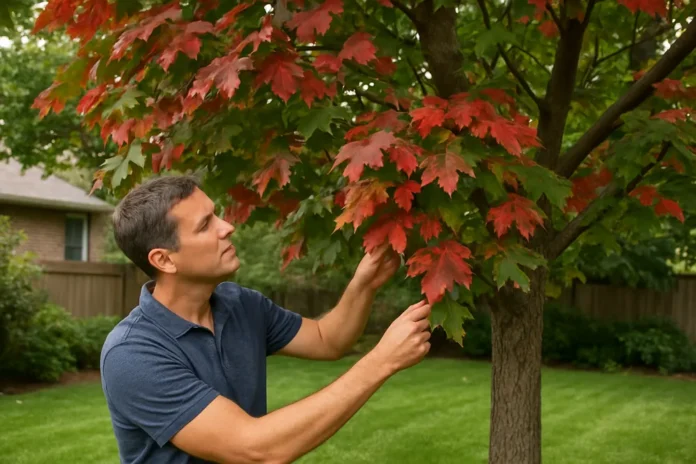
A maple tree may turn red because it is entering its normal seasonal color change or because stress is triggering early pigment changes in the leaves. Drought, root damage, transplant shock, nutrient imbalance, pests, and disease can all cause leaves to redden sooner than expected.
When a maple tree turning red catches your eye, the cause can be completely harmless or a sign that the tree is under pressure. Maples are famous for red fall color, but they can also produce reddish leaves in summer or much earlier than expected when something is off.
In my garden, the timing and pattern tell me a lot. A whole canopy coloring evenly in autumn usually points to normal seasonal change. A tree that starts showing patchy red leaves in midsummer, especially with browning edges, curling, or sparse growth, is more likely dealing with stress.
The good news is that leaf color alone does not automatically mean your tree is dying. If you look at when the color appeared, where it shows up, and what other symptoms came with it, you can usually narrow down the reason and decide whether the tree needs help.
When Red Leaves Are Completely Normal
Some maple trees simply turn red as part of their natural growth habit. Red maple, sugar maple, and many ornamental Japanese maples can produce red or reddish-orange foliage in fall, and some cultivars carry red leaves for much of the season.
If your tree is coloring up in late summer or fall and the change is fairly even across the canopy, normal seasonal transition is the most likely explanation. Cooler nights, shorter days, and slowing growth reduce chlorophyll production and allow red pigments called anthocyanins to become more visible.
- Leaves are changing color at the expected time for your region
- The canopy is coloring fairly evenly rather than in isolated branches
- Leaves look healthy overall, without major spotting, scorch, or distortion
- The tree is putting on normal growth and does not appear sparse or wilted
I usually compare the timing to nearby maples before I worry. If several neighborhood maples are blushing at the same time, I lean toward normal seasonal color rather than a serious problem.
Early Red Color Often Points to Stress
When a maple starts turning red well before fall, stress is often involved. Trees under strain may produce red pigments earlier because photosynthesis and nutrient movement are being disrupted. This is especially common after hot, dry weather or a rough planting season.
Stress-related reddening is often uneven. You may see one side of the tree change first, one branch color up early, or leaves redden along the edges before developing brown scorch. In many cases, red color is the tree's first visible warning before more obvious decline shows up.
- Premature red or purple leaves in midsummer
- Leaf edges turning crisp or brown after reddening
- Wilting during the hottest part of the day
- Smaller-than-normal leaves or sparse new growth
- Early leaf drop
Water Stress Is One of the Most Common Causes
Drought and Inconsistent Watering
A dry maple often develops premature red, orange, or brown tones because it cannot keep foliage fully supplied with water. This is common in newly planted trees, shallow-rooted maples, and trees growing in turf that gets frequent light watering instead of deeper soaking.
Heat and drought stress usually affect outer or upper leaves first because those areas lose moisture fastest. If the soil is dusty several inches down and the tree has had little deep watering, drought is a strong suspect.
Poor Drainage and Overwatering
Too much water can cause similar color changes. Saturated soil pushes out oxygen, and maple roots need oxygen to function. When roots stay wet for long stretches, leaves may redden, yellow, wilt, or drop because the roots are suffocating rather than feeding the canopy properly.
- Dry stress is more likely when soil dries quickly and leaf edges look scorched
- Overwatering is more likely when soil stays soggy and leaves look limp without crisping
- Newly planted maples are vulnerable to both extremes
- Heavy clay soil increases the risk of waterlogged roots
I do not judge moisture by the soil surface alone. For a maple, I check several inches down near the root zone because the top inch can look dry while the root area is still wet, or vice versa.
Root Problems Can Trigger Red Leaves Fast
Maples are very sensitive to root disturbance. If your tree started turning red after construction, trenching, grade changes, new patio work, or repeated soil compaction from vehicles, root injury may be the reason.
Damaged roots cannot deliver enough water and nutrients to the crown, so leaves may redden early, stay small, or drop ahead of schedule. Trees with girdling roots can show the same symptoms more gradually. In those cases, roots wrap around the base of the trunk and slowly choke off flow.
Another common issue is planting depth. A maple planted too deep often struggles because the root flare is buried. That leads to poor oxygen exchange, chronic stress, and unusual leaf color changes, including reddening.
- Recent digging or landscaping near the drip line
- Mounded mulch or soil against the trunk
- No visible root flare at the base
- Hard, compacted ground over the root zone
- Decline that affects the whole tree rather than a few leaves
Nutrient Imbalances and Soil Issues
Although red leaves are less classic than yellowing for nutrient deficiency, a maple under nutrient stress can still redden or develop purple-red tones. Phosphorus problems, restricted root function, poor soil pH, and general low vigor can all interfere with normal green growth.
This is especially common in urban soils where compaction, disturbed topsoil, and alkaline conditions limit nutrient uptake. A tree may technically have nutrients in the soil but still be unable to absorb them well because the roots are stressed or the pH is off.
If the reddening is accompanied by weak annual growth, small leaves, or longstanding poor performance, soil conditions deserve a closer look. Mature trees can often tolerate minor deficiencies, but younger maples show stress faster.
- Stunted new growth
- Small or undersized leaves
- General pale foliage mixed with red or purple tones
- Poor growth year after year
- Tree planted in heavily disturbed fill soil
Pests and Diseases That Can Make Maple Leaves Redden
Leaf Spot, Anthracnose, and Scorch-like Disease Symptoms
Some fungal diseases can cause reddish, brown, or blotchy discoloration before leaves drop. Anthracnose is more common in cool, wet springs and may create irregular dead patches along veins or margins. Leaf spot diseases can also make leaves look red-speckled or blotched, especially when stress is already present.
Verticillium Wilt
Verticillium wilt is one of the more serious problems on maples. It can cause leaves to scorch, wilt, yellow, or redden, often on one section of the tree first. Branch dieback may follow. Because the fungus affects water movement inside the tree, symptoms can look a lot like drought even when soil moisture is adequate.
Sap-feeding Insects
Aphids, scale, and other sap-feeding insects usually cause yellowing, curling, or sticky honeydew more than true red color, but heavy infestations can stress the tree enough to trigger premature color change. Spider mites may also contribute during hot, dry weather.
- Spotting, blotches, or streaks that are not evenly distributed
- One branch or one side of the tree declining before the rest
- Wilting despite reasonably moist soil
- Dead twigs, branch dieback, or sudden thinning
- Honeydew, sooty mold, or visible insect clusters on leaves and stems
When only one limb turns red early while the rest of the canopy stays greener, I pay closer attention to wilt and dieback. That one-sided pattern makes me think beyond simple fall color and toward vascular stress or branch-specific damage.
Sun, Heat, and Site Stress
A maple growing in reflected heat from pavement, walls, or driveways may redden earlier than the same tree would in a cooler site. Hot exposures can intensify water loss and leaf scorch, especially on shallow-rooted species and young trees that have not fully established.
Japanese maples are especially prone to reddening, bronzing, and edge burn in harsh afternoon sun or drying wind. In some cases the color starts as attractive red tones, then shifts into crispy margins and leaf drop once heat stress worsens.
- Leaves on the sunniest side of the tree change color first
- Redness is followed by dry, brittle edges
- The tree sits near concrete, asphalt, or reflective siding
- Symptoms worsen during heat waves or windy weather
How to Tell Whether Your Maple Needs Action
A red maple is not always a problem, so focus on the full picture. The two biggest clues are timing and associated symptoms. Normal color change is seasonal, even, and not accompanied by serious decline. Stress color tends to be early, patchy, and paired with other warning signs.
- Notice when the color change began compared with a normal year in your area.
- Look for pattern. Is the whole canopy changing, or only one side, one branch, or scattered leaves?
- Check leaves for scorch, spots, wilting, curling, or insect residue.
- Look at the soil and root zone for drought, sogginess, mulch piled on the trunk, or recent disturbance.
- Review recent events such as planting, pruning, construction, storms, or extreme heat.
If the tree is otherwise healthy and the timing fits the season, monitoring may be all you need. If the tree is reddening in spring or midsummer, dropping leaves early, or showing branch dieback, it deserves closer attention.
What Helps a Stressed Maple Recover
Treatment depends on the cause, but most stressed maples benefit from reducing further strain. Give the tree steady care rather than making several aggressive changes at once. Trees recover more slowly than perennials, so improvement is usually measured in next season's growth and leaf quality.
- Water deeply during dry spells instead of giving frequent shallow sprinklings
- Keep 2 to 3 inches of mulch over the root zone, but pull it back from the trunk
- Avoid fertilizing unless a soil test or clear deficiency points to a need
- Protect the root zone from digging, compaction, and mower damage
- Prune out dead branches, but avoid heavy pruning during stress
- Call a certified arborist if you suspect verticillium wilt, girdling roots, or major root injury
If your maple was planted recently, transplant shock may be a major factor. New trees often show off-color leaves while they rebuild roots. Consistent moisture, correct mulch, and patience are usually more helpful than fertilizer in that situation.
If I am unsure whether a maple is improving, I watch the newest leaves rather than the damaged ones. Old leaves rarely recover their color, but healthy new growth tells you the tree is moving in the right direction.
FAQ
Is It Normal for a Maple Tree to Turn Red in Summer?
Sometimes, but it is less often normal than red color in fall. Summer reddening usually points to stress such as drought, root problems, heat, transplant shock, or disease, especially if the change is uneven or paired with scorch and early leaf drop.
Can Too Much Water Make Maple Leaves Turn Red?
Yes. Overwatered or poorly drained roots can become oxygen-starved, which stresses the tree and may lead to red, yellow, or wilted leaves. Soggy soil that stays wet for long periods is a common clue.
Why Is Only One Branch on My Maple Turning Red?
One red branch often suggests a branch-specific problem rather than seasonal color change. Possible causes include root damage affecting that side, wilt disease, injury, or a branch that is dying back.
Will Fertilizer Fix a Maple Tree That Is Turning Red?
Not always. If the real issue is drought, poor drainage, root injury, or disease, fertilizer may do little or even add stress. It is best used when there is evidence of a nutrient problem or a soil test shows a need.
Can Transplant Shock Cause Red Leaves on a Maple?
Yes. Newly planted maples often redden early because the root system has not yet re-established enough to support the canopy well. Consistent watering and root-zone protection usually help more than feeding.
When Should I Worry About a Maple Turning Red?
Worry more if the color change happens far before fall, appears only on part of the tree, or comes with wilting, brown edges, branch dieback, stunted growth, or heavy leaf drop. Those signs suggest stress beyond normal seasonal color.
Can Disease Make a Maple Tree Turn Red?
Yes. Fungal leaf diseases and more serious issues like verticillium wilt can cause red, brown, or scorched-looking leaves. Disease is more likely when discoloration is blotchy, one-sided, or followed by dieback.
Need help matching leaf color changes to the right fix? Read our maple tree care and problem-solving guides to choose the best watering tools, mulch, and treatments before the damage spreads.
