

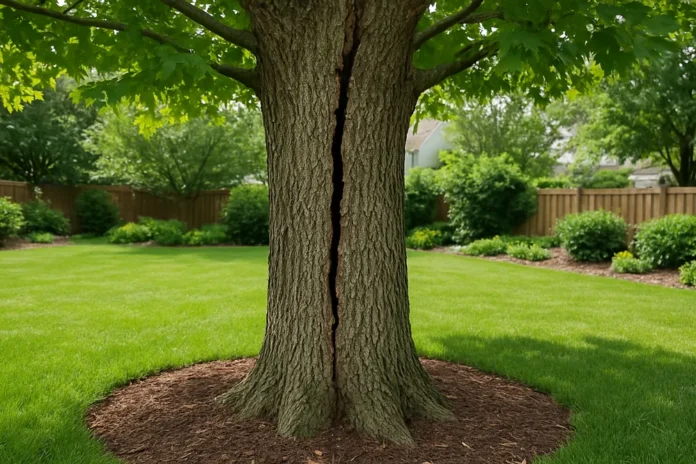
A maple tree trunk usually splits because rapid temperature swings, sunscald, old injuries, or internal stress cause the bark and wood to crack open. Some splits are cosmetic, but deep or widening cracks can point to structural damage or decay.
Finding a long crack running up the bark of a maple can be alarming, especially if the tree looked fine just weeks earlier. In many yards, a maple tree trunk splitting is tied to weather stress rather than a sudden disease, but the exact cause matters because some cracks heal while others weaken the tree for years.
When I look at a split trunk, I do not assume the worst right away. Maples are prone to bark injury from winter sun, freeze and thaw cycles, rapid growth, and old wounds that finally open up. The key is figuring out whether the crack is shallow and likely to seal over, or whether it reaches deep into the wood and affects the tree's stability.
What Trunk Splitting Usually Means on a Maple
A trunk split is a physical crack in the bark and wood. Sometimes it starts as bark separation on the south or southwest side of the trunk, then becomes a longer vertical opening. In other cases, the split follows an old pruning wound, storm injury, mower damage, or branch attachment problem.
Maples have relatively thin bark compared with some other landscape trees, especially when young. That makes them more vulnerable to temperature swings and sun injury. A split can look dramatic even when the tree still has enough healthy tissue around the trunk to survive, but if the crack is deep, fresh, and extends far into the wood, the tree may be structurally compromised.
- Vertical cracks are often associated with frost cracking, sunscald, or internal stress.
- Splits at a branch union may point to included bark or weak attachment.
- Cracks that ooze sap or have dark, sunken bark may involve a canker or decay issue.
- Repeated splitting in the same area usually means the tree never fully recovered from an earlier injury.
When I inspect a cracked maple, I pay close attention to the edges of the wound. Clean, lighter-colored wood with firm bark often suggests a more recent environmental crack, while crumbly wood, mushrooms, or soft tissue make me much more concerned about hidden decay.
Common Reasons a Maple Trunk Splits
Frost Cracks and Winter Temperature Swings
One of the most common causes is a frost crack. On sunny winter days, the bark on one side of the trunk warms up. After sunset or during a sudden cold snap, that tissue cools and contracts quickly. The outer bark and inner wood do not always shrink at the same rate, so the trunk can split vertically. This is especially common on younger maples and trees exposed to open winter sun.
Sunscald on Thin-barked Trunks
Sunscald is closely related to frost cracking. It happens when winter sunlight warms bark enough to wake up living cells, then freezing temperatures kill that tissue. The damaged area may first look discolored or sunken, then crack as the tree grows. On maples, this often shows up on the south or southwest side of the trunk.
Rapid Growth and Internal Stress
Fast growth can create internal strain, particularly if the tree is getting lots of water and fertilizer after a period of slower development. The bark sometimes cannot stretch evenly with the expanding wood beneath it. This is not the most common reason, but it can contribute to splitting in vigorous young maples.
Old Wounds Reopening
A trunk does not always split because of a brand-new event. An injury from years ago can remain a weak spot. Storm damage, pruning cuts, string trimmer nicks, staking ties, lawn mower hits, and deer rubs can all injure bark and cambium. As the trunk expands, the weakened area may reopen into a long visible crack.
Weak Branch Unions and Included Bark
If the split starts where two stems meet, the issue may be structural rather than seasonal. Maples commonly develop codominant stems, where two main trunks grow side by side. When bark gets trapped between them, called included bark, the union becomes weak. Over time the trunks push against each other until the seam opens.
Wind, Ice, and Storm Loading
Heavy wind, wet snow, or ice can force the trunk or a major branch beyond what the wood can flexibly handle. Even if the canopy does not break apart dramatically, the stress may create a hidden crack that becomes obvious later. Fresh storm splits often come with torn bark, hanging limbs, or a canopy that suddenly leans.
Cankers, Decay, and Disease-related Weakening
Sometimes the trunk splits because a disease or decay issue weakened the bark and wood first. Cankers can kill patches of bark, leaving a sunken or dead area that eventually cracks. Internal decay may hollow or soften wood so the trunk fails under stress that a healthy tree would tolerate.
How to Tell Whether the Split Is Minor or Serious
The size and location of the crack matter, but so does the overall condition of the tree. A narrow vertical split on an otherwise healthy maple can sometimes close over with callus growth around the wound. A deep split that reaches into a major branch union or extends through much of the trunk is more serious.
- The crack is narrow, not widening, and the bark around it is still firmly attached.
- The canopy leafs out normally with good color and no large dead branches.
- There is no foul smell, soft wood, mushroom growth, or extensive peeling bark.
- The tree stands upright with no new leaning or root plate movement.
Signs of a more severe problem include a split that you can insert a finger into, separation at a trunk union, oozing sap from a dark wound, hollow-sounding wood when tapped, large dead sections in the canopy, or a crack that keeps lengthening. If the tree is close to a house, driveway, play area, or sidewalk, even moderate structural damage deserves faster attention.
Take clear photos now and compare them every few weeks through the season. What matters most is not just how bad the crack looks today, but whether the wound margins are slowly sealing or the split is actively opening wider.
What to Do Right Now for a Split Maple Trunk
Start by resisting the urge to seal the crack with paint, tar, concrete, or wound dressing. Those old remedies do not help the tree heal and can trap moisture where decay organisms thrive. Trees heal by compartmentalizing damage, not by having the wound covered over.
If the split is fresh but the trunk is still stable, support the tree with good basic care. Water during dry spells so the root zone stays evenly moist but not soggy. Add a 2 to 3 inch mulch layer over the root area, keeping it several inches away from the trunk itself. This moderates soil temperature and moisture without keeping bark wet.
- Do not wrap the wound tightly with tape or wire.
- Do not nail, screw, or bolt hardware into the tree yourself unless directed by a certified arborist.
- Do not overfertilize in hopes of forcing recovery.
- Do not prune heavily right after the split unless there are broken or hazardous limbs.
If bark is loose and hanging in ragged strips, it is usually fine to trim only the clearly detached, dead pieces with a clean sharp knife. Avoid cutting into live bark to make the wound look neat. The more living tissue you preserve around the crack, the better the tree's chances of closing over the injury.
For major structural splits, especially at codominant stems, an arborist may recommend cabling, bracing, selective weight reduction pruning, or in some cases removal. These decisions depend on how much sound wood remains and what the tree could hit if it fails.
How Maples Heal After a Trunk Crack
A tree does not heal the way skin heals. Instead, it grows new wood and bark around the damaged area to isolate it. On a recovering maple, you may see raised ridges along the crack edges. That is callus growth forming as the tree tries to seal the wound.
Recovery can take several years. A small crack may gradually narrow and become less visible as the trunk expands. A large split may never fully close, but the tree can still survive if enough healthy tissue remains and decay does not spread aggressively.
Success depends on species, age, vigor, and site conditions. Japanese maples and young red maples with thin bark can be particularly sensitive to winter injury. Mature shade maples may tolerate a superficial split better, but once a large trunk has significant internal decay, the margin for safety gets smaller.
I judge recovery by what the tree does on the outside of the wound and in the canopy above it. If the crack edges stay dry and firm while new growth in spring looks normal, I am much more optimistic than when the wound looks stagnant and the top of the tree starts thinning.
How to Prevent Future Trunk Splitting
Prevention starts with reducing stress, especially on young maples. Trees that go into winter drought-stressed or that are planted in harsh reflective sites are more likely to develop bark injury. Good placement and steady care matter more than any one product.
Protect Young Trunks in Winter
For young thin-barked maples, use a light-colored commercial tree wrap or trunk guard during late fall and remove it in spring. This helps reduce winter sun injury and temperature swings. Do not leave wraps on year-round, since trapped moisture and insects can become a problem.
Water Deeply Before Winter if the Soil Is Dry
A well-hydrated tree handles winter stress better than one entering dormancy dry. In fall, give the tree a deep watering during dry weather before the ground freezes, especially if it is newly planted.
Mulch Correctly
Mulch buffers soil moisture and temperature, but it should never touch the trunk. Volcano mulching keeps bark damp and weakens the base of the tree, inviting pests, rot, and additional bark injury.
Prune for Strong Structure While the Tree Is Young
Early structural pruning can reduce codominant stems and weak branch angles before they become major trunk problems. This is one of the best long-term ways to prevent trunk and union splits in maples. The goal is a single dominant leader or well-spaced scaffold structure, depending on the variety.
Avoid Bark Injuries
Keep string trimmers, mowers, stakes, and ties away from the trunk. Mechanical damage is a very common starting point for later cracks. Even a narrow wound can expand into a significant weakness over time.
When to Call an Arborist Right Away
Some trunk splits can be watched. Others need professional evaluation as soon as possible. If the maple is large, close to people or structures, or showing clear structural failure, it is safer to bring in a certified arborist than to wait and see.
- The split is deep, wide, or suddenly expanding.
- The tree has started leaning or the soil around the roots is lifting.
- A major stem is separating from another stem.
- There are large dead branches, canopy dieback, or poor leaf-out above the crack.
- You see mushrooms, conks, or obvious rotted wood near the wound.
- The maple could strike a home, parked car, fence, patio, or walkway if it fails.
An arborist can assess whether the wood around the crack is still sound, whether the split can be managed with pruning or support systems, and whether removal is the safer option. For mature landscape trees, this is one of those situations where a professional opinion is worth the cost.
FAQ
Will a Split Maple Trunk Heal on Its Own?
Sometimes, yes. A shallow vertical crack on a healthy tree may gradually seal with callus growth around the edges. A deep structural split will not truly mend back together, but the tree may still survive if enough sound wood remains.
Should I Seal a Maple Trunk Crack with Paint or Tree Wound Sealer?
No. Modern tree care does not recommend sealing trunk wounds with paint, tar, or wound dressing. These products do not help the tree compartmentalize the injury and may trap moisture.
Can a Maple Split From Cold Weather Alone?
Yes. Frost cracks and sunscald are common on maples, especially young or thin-barked trees exposed to winter sun and rapid temperature drops. The damage often appears as a vertical crack on the trunk.
Is a Split Trunk Always a Sign the Tree Should Be Removed?
No. Many splits look worse than they are, especially if the canopy is healthy and the crack is narrow and stable. Removal becomes more likely when the split is deep, the tree is leaning, decay is present, or a major trunk union is failing.
Can I Wrap the Trunk to Help It Close?
A tight wrap on an active wound is not a good fix. Seasonal trunk wrap can help prevent winter sun injury on young trees, but it is a preventive step, not a treatment to pull a crack back together.
How Long Does It Take a Maple to Recover From Trunk Splitting?
It depends on the tree's age, vigor, and the size of the wound. Small cracks may begin showing callus growth within one growing season, while larger injuries can take several years to stabilize.
Why Did My Maple Split Where Two Trunks Meet?
That usually points to a weak union, often caused by codominant stems and included bark. As the stems enlarge, they press against each other until the seam opens, especially during storms or under heavy canopy weight.
Need the right next step for a damaged tree? Read our guide to tree wound care and arborist-approved support options so you can protect your maple before the crack gets worse.
