

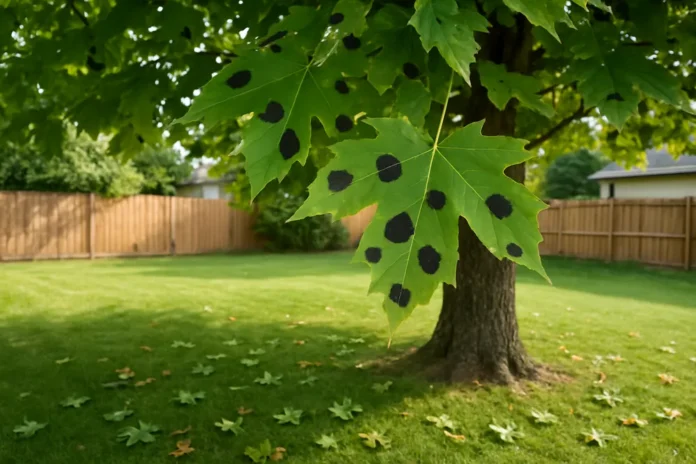
Maple tree leaves usually get black spots from tar spot fungus, a very common disease that shows up after cool, wet spring weather. It looks alarming, but it rarely causes serious harm to established maples.
If your maple tree leaves have black spots, the most likely culprit is tar spot, a fungal disease that shows up on many landscape maples across the U.S. It often starts as pale yellow spots in late spring or early summer, then darkens into raised, black blotches that look almost like someone dripped asphalt on the leaves.
The good news is that this problem is usually more cosmetic than dangerous, especially on mature trees that are otherwise healthy. Even so, black spotting can be unsettling when a tree that looked fine a few weeks ago suddenly starts dropping blotchy leaves all over the yard.
I usually tell gardeners to look at the pattern before they panic. If the spots are fairly round, dark, and spread across many leaves while the tree otherwise seems vigorous, tar spot on maple is the most likely answer. A few other diseases and stress problems can mimic it, though, so it helps to know what you are actually seeing.
What Black Spots on Maple Leaves Usually Mean
In most home landscapes, black spots on maple leaves are caused by tar spot, a group of fungal diseases in the genus Rhytisma. Silver maple, Norway maple, red maple, and their relatives can all be affected, though some species show symptoms more dramatically than others. The fungus infects leaves during cool, moist conditions, then the visible spots become more obvious as the season progresses.
Tar spot is common after rainy springs and in yards where infected leaves were left on the ground the previous fall. The fungus overwinters in fallen foliage, then releases spores that infect new leaves the next season. Once those spores land on susceptible leaves under the right weather conditions, the disease cycle starts again.
- Spots often begin as light green or yellow areas before turning black.
- The black areas are usually round to irregular and can look slightly raised or crusty.
- Symptoms tend to appear on many leaves rather than just one branch tip.
- Leaves may yellow and drop a bit earlier than normal when infection is heavy.
When I diagnose this in a yard, I look at several fallen leaves and several still on the tree. If the black patches have that ink-like, tarry look on otherwise normal-sized leaves, I lean toward tar spot long before I suspect a serious decline issue.
How to Tell if It Is Tar Spot or Something Else
Not every black mark on a maple leaf is tar spot. Sooty mold, anthracnose, leaf scorch, insect residue, and even physical damage can create darkened areas. The difference is in the shape, texture, and timing of the symptom.
Signs That Point to Tar Spot
- Distinct black spots or blotches with fairly clear edges
- Yellowing tissue around the black spot, especially earlier in the season
- Spots that feel embedded in the leaf rather than sitting on the surface
- Symptoms on many leaves across the canopy or on leaves beneath the tree
Problems That Can Look Similar
Anthracnose can create dark brown to black blotches, but it usually follows leaf veins and may distort young leaves. Sooty mold looks dark too, but it grows on sticky honeydew left by sap-sucking insects such as aphids or scale, so it tends to wipe or smear off more easily. Leaf scorch causes brown or blackened edges, often from heat, drought, or root stress, and usually does not form the classic tar-like circles.
Simple Clues You Can Check at Home
- Rub the spot gently. If it smudges like surface grime, think sooty mold rather than tar spot.
- Look at the leaf shape. If leaves are twisted, puckered, or stunted, anthracnose or herbicide injury may be involved.
- Check where the damage is worst. Margins and tips often suggest scorch, while scattered blotches suggest disease.
- Notice the season. Tar spot becomes more obvious as summer goes on, even though infection happened earlier.
Why Tar Spot Develops on Maple Trees
Tar spot is driven by a mix of fungal presence, susceptible foliage, and weather that favors infection. The spores are often already present in the yard if the tree had symptoms last year. Cool, damp spring conditions let the fungus infect young leaves, and shaded sites with poor air movement can help leaves stay wet long enough for spores to take hold.
This is why one year can look much worse than another. A dry spring may keep symptoms light, while repeated rain and heavy dew can make spotting much more noticeable. Even neighboring maples can look different depending on species, sun exposure, and how much infected leaf litter remains nearby.
- Wet spring weather
- Dense canopy or low air circulation
- Maple species that are more susceptible
- A history of infected leaves left on the ground
- Shady, humid planting sites
A bad tar spot year does not always mean your tree is getting sicker. I have seen the same healthy maple look lightly spotted one summer and heavily blotched the next simply because spring stayed cool and rainy.
How Serious Black Leaf Spots Are for Your Maple
For most established maples, tar spot is mostly a cosmetic issue. It can make the tree look rough by late summer and may trigger some early leaf drop, but it rarely kills a healthy tree on its own. The fungus affects photosynthesis to some degree, yet mature trees usually tolerate it well unless they are already weakened by drought, root damage, soil compaction, or other chronic stresses.
Young trees, newly planted maples, and trees under significant stress deserve closer attention. A single season of tar spot still usually is not catastrophic, but repeated defoliation combined with poor watering, trunk injury, or construction damage can reduce vigor over time.
When Black Spots Are Usually Not an Emergency
- The tree leafed out normally in spring
- New growth looks normal in size and color
- The canopy is still mostly full
- There is no major branch dieback
- The trunk and bark look sound
When to Take the Problem More Seriously
- A young maple is losing leaves early in summer
- The canopy is thinning year after year
- Branches are dying back at the tips
- Leaves are very small, pale, or misshapen in addition to being spotted
- The tree has obvious root-zone stress from drought, flooding, or compacted soil
If you see black spots plus significant dieback, bark cracking, mushrooms at the base, or large dead limbs, do not assume tar spot is the whole story. Those signs suggest a broader health problem that deserves a closer look.
What to Do Now if Your Maple Leaves Have Black Spots
Once spots are visible on the current season's leaves, you cannot reverse that damage. Your best approach is to reduce stress on the tree now and lower fungal carryover for next year. For home gardeners, sanitation and basic tree care matter much more than trying to rescue already infected leaves.
Focus on Supportive Care This Season
- Water during dry spells, especially for younger trees
- Apply mulch 2 to 3 inches deep over the root zone, but keep it away from the trunk
- Avoid heavy summer fertilizing unless a soil test shows a need
- Do not prune aggressively just because leaves look spotted
- Keep lawn equipment away from the trunk and surface roots
Clean Up Fallen Leaves in Autumn
This is the single most useful step for most homeowners. Since the fungus overwinters in fallen leaves, removing and disposing of infected foliage can reduce the number of spores available next spring. Rake thoroughly, remove leaves from planting beds if practical, and avoid leaving thick mats of infected foliage under the tree through winter.
If local rules allow composting leaf litter, only do it if your pile gets hot enough to break down diseased material effectively. Otherwise, municipal yard waste pickup is often the safer option.
If I can only do one thing for tar spot, I choose fall cleanup over almost everything else. It is not glamorous, but reducing infected leaf litter gives you the best chance of seeing fewer spots next year.
When Fungicides Might Be Considered
Fungicides are rarely necessary for established landscape maples unless the tree is highly valued, repeatedly defoliated, or under enough stress that additional leaf loss is a real concern. Even then, sprays must be timed preventively in spring before symptoms appear, which makes them less practical for many home gardeners. They also usually require complete coverage on a large tree, something that often calls for a licensed arborist.
How to Prevent Black Spots on Maple Leaves Next Year
Prevention is mostly about reducing fungal pressure and keeping the tree vigorous. You may not eliminate tar spot entirely, especially in neighborhoods full of maples, but you can often make it much less severe over time.
Smart Prevention Steps
- Rake and remove infected leaves every fall
- Thin nearby overcrowded vegetation if airflow is poor
- Water deeply during drought instead of frequent shallow sprinkling
- Maintain an even mulch ring over the root zone
- Avoid damaging roots with trenching, repeated parking, or heavy foot traffic
- Monitor in spring so you can compare symptom timing from year to year
It also helps to be realistic about location. In older neighborhoods with many mature maples, spores can blow in from nearby trees even if you clean your own yard carefully. That means sanitation reduces pressure, but it may not produce a spotless canopy every year.
If You Are Planting a New Maple
Choose a species or cultivar suited to your region and give it enough room for good air circulation. A healthy tree in the right spot handles leaf diseases better than a stressed tree planted too deep, watered poorly, or crowded between hardscape and turf.
When to Call an Arborist Instead of Waiting It Out
Tar spot alone usually does not require professional treatment, but some situations do warrant expert help. A certified arborist can confirm the diagnosis, check for additional stress factors, and tell you whether disease management is even worthwhile for your specific tree.
- The tree is newly planted and declining quickly
- Large branches are dead or dying
- Leaves have black spotting plus severe wilting or distortion
- The trunk has cracks, cankers, or oozing areas
- Construction, grade changes, or root cutting happened recently
- You are considering fungicide treatment for a large specimen tree
I also recommend getting a professional opinion if the tree has looked weaker for several seasons in a row. Black spots may be the symptom you notice, but the real problem could be root stress, girdling roots, poor drainage, or another disease working in the background.
FAQ
Will Black Spots Kill My Maple Tree?
Usually no. Tar spot is mostly cosmetic on established maples and rarely kills a healthy tree by itself. The bigger concern is when the tree is already stressed by drought, root damage, or other health problems.
Can I Spray Something Once I See Black Spots on the Leaves?
Not effectively for the current leaves. Once symptoms show, the infection is already established. Preventive fungicide treatments, when used at all, have to be applied in spring before spots become visible.
Should I Remove Spotted Leaves From the Tree Right Now?
No, not usually. Pulling leaves off a tree does little to solve the problem and can add stress. Focus on keeping the tree healthy now and cleaning up fallen leaves in autumn.
Is Tar Spot Contagious to My Other Trees?
It can spread to susceptible maples nearby because spores move from infected leaf litter to new leaves in spring. It does not typically infect unrelated tree species the way it infects maples.
Why Does My Maple Get Black Spots Every Year?
The fungus survives in fallen leaves and reinfects new growth when spring weather is cool and wet. If there are many maples in your area, spores can also come from neighboring properties.
Can I Compost Leaves with Tar Spot?
Only if your compost pile reliably gets hot enough to break down diseased leaves thoroughly. If you are not sure it does, yard waste disposal is the safer choice.
Are Some Maple Trees More Prone to Black Leaf Spots than Others?
Yes. Different maple species and cultivars vary in susceptibility, and site conditions matter too. Trees in shady, humid areas with poor airflow often show worse symptoms than those in sunnier, more open spots.
Want to keep your maple healthier through disease season? Read our tree care guide and best mulch picks to protect roots, reduce stress, and support cleaner foliage next year.
