

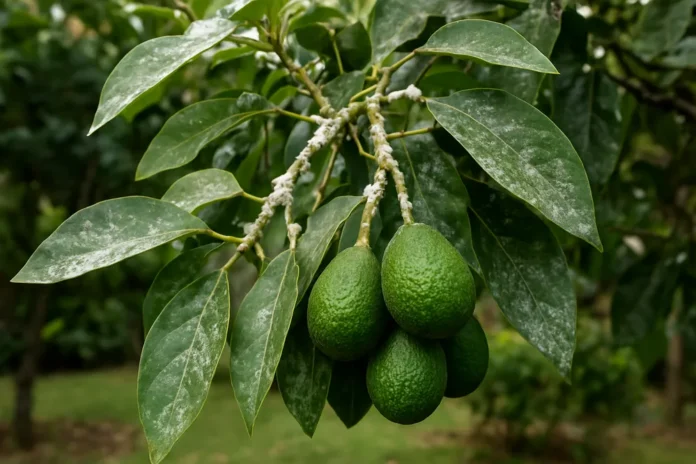
The white stuff on an avocado tree is most often mealybugs, scale insects, powdery mildew, or dried mineral residue. Sometimes it is also sun damage or natural bark changes that make parts of the tree look pale or chalky.
When gardeners say their avocado tree has white stuff on it, they can mean several very different things. I have seen cottony clusters on stems, powdery film on leaves, crusty residue on soil, and pale patches on bark, and each one points to a different cause.
The good news is that the appearance and location of the white material usually narrow it down fast. If it looks fluffy and stuck around leaf joints, think insects. If it looks like dust on leaves, think fungus. If it looks chalky on soil or the trunk after watering, think salts or mineral buildup. Avocado tree problems are much easier to solve once you match the symptom to the right category.
What the White Material Usually Is
On avocado trees, white material most commonly falls into four groups: sap-sucking pests, fungal growth, mineral or salt residue, and non-living bark or sun-related changes. The texture matters a lot. Cottony, fuzzy, or waxy patches usually suggest insects like mealybugs or scale. A fine coating that looks like flour often points to powdery mildew. Hard crusty white buildup on the soil surface or pot rim is usually from salts in water or fertilizer. Bleached or pale bark can come from sunburn, especially on young trees or trees that were pruned hard.
- Cottony clumps on stems, leaf joints, or fruit: usually mealybugs
- Small white or gray waxy bumps stuck to stems: often scale insects
- Dusty white coating on leaves: often powdery mildew
- Crusty white deposits on soil, trunk splash zone, or pot edges: usually mineral salts
- Pale chalky or bleached bark on exposed limbs: often sunburn or bark damage
When I diagnose this on avocados, I look at whether the white material wipes off cleanly, smears, or stays hard and stuck. That one small test often separates fungus, insects, and mineral residue in under a minute.
Mealybugs Are One of the Most Common Causes
Mealybugs are small sap-sucking insects covered in a white, cottony wax. On avocado trees they often gather where leaves join stems, along tender shoots, under leaves, around fruit stems, and in protected crevices. From a distance, they can look like bits of lint or mold, but up close you will usually see soft oval insects hiding inside the fluff.
These pests weaken the tree by feeding on sap. They also excrete honeydew, a sticky substance that can lead to black sooty mold. If you see white cotton plus sticky leaves or ants climbing the tree, mealybugs become much more likely. Ants protect these insects because they feed on the honeydew, so heavy ant activity is a strong clue.
Signs That Point to Mealybugs
- White cottony masses clustered at leaf nodes or stem joints
- Sticky residue on leaves, branches, patio, or fruit
- Ants moving up and down the trunk
- Distorted new growth or yellowing leaves
- Black sooty mold developing on honeydew-coated surfaces
Small infestations can often be managed by blasting the insects off with water, pruning out heavily infested tips, or wiping clusters with a cotton swab dipped in rubbing alcohol. Larger infestations may need horticultural oil or insecticidal soap, applied thoroughly to hidden spots where the insects collect. Repeat treatments are usually necessary because eggs and protected individuals can survive the first pass.
Scale Insects Can Look Like White Bumps or Crusts
Scale insects are another common culprit. Unlike mealybugs, scale often looks less fluffy and more like tiny waxy shells glued to twigs, leaves, or fruit stems. Some species are white, gray, or pale tan. Gardeners sometimes mistake them for harmless bark texture because they do not move much once attached.
Like mealybugs, scale feeds on plant sap and may produce honeydew. A tree with scale may show yellowing leaves, reduced vigor, leaf drop, and sticky surfaces below the infestation. If the white material does not brush away like powder and instead feels like little hard bumps, scale is a strong possibility.
How Scale Differs From Mealybugs
- Scale looks like attached bumps or shells
- Mealybugs look cottony and soft
- Scale often lines stems and leaf midribs
- Mealybugs often cluster in protected joints and folds
- Both can attract ants and lead to sticky honeydew
If I suspect scale, I gently scrape one spot with a fingernail. A true scale insect usually pops off as a little shell or smears slightly underneath, while a mineral spot or bark scar does not.
Treatment is similar to mealybug control but often takes more persistence. Horticultural oil is especially useful because it coats and suffocates the insects. Good coverage matters more than strength. Spray the undersides of leaves, small twigs, and crotches where stems meet.
Powdery Mildew Causes a Dusty White Film
If the white stuff looks like flour or talcum powder on leaves, especially on the upper leaf surface, powdery mildew may be the cause. This fungal disease thrives when air circulation is poor and humidity is high, even if the weather is not rainy. It is usually more of a leaf-surface problem than a bark or trunk problem.
On avocado trees, powdery mildew can start as small pale spots and spread into a thin white coating. Affected leaves may curl, distort, or drop if the problem becomes severe. Young growth is usually more vulnerable than older, tougher leaves.
Clues That Suggest Powdery Mildew
- White or gray powder on leaf surfaces
- Coating wipes off more like dust than cotton
- Leaves may curl or pucker
- Problem often starts in dense shady growth
- No obvious sticky honeydew or crawling ants
Mild cases often improve with better airflow, selective pruning, and avoiding overhead watering late in the day. If needed, sulfur or other labeled fungicides can help, but timing and local temperature restrictions matter, especially on sensitive plants. Always check the product label for avocado use and weather precautions.
Mineral Deposits and Salt Buildup Can Leave a White Crust
Not all white material is a living problem. In many yards, especially where irrigation water is hard or fertilizers are used heavily, salts and minerals dry into a white crust. This is common on potting soil, around the rim of containers, on saucers, and sometimes on the lower trunk or nearby mulch where water splashes and evaporates.
This residue usually looks chalky rather than fuzzy. It does not resemble insects, and it will not be accompanied by sticky leaves or distorted growth in the same pattern caused by pests. However, excess salts in the root zone can still stress an avocado tree over time, leading to brown leaf tips, slowed growth, and overall decline.
When White Residue Is Probably Salts
- Crust on the soil surface or pot edge
- White rings where water dries repeatedly
- No insect bodies, cotton, or shell-like bumps
- Common in container-grown avocados
- Often paired with brown leaf edges from salt stress
To reduce buildup, flush the soil deeply from time to time so salts move below the root zone, assuming the container or planting site drains well. Cut back on excess fertilizer, and if possible use lower-mineral water. In containers, replacing the top inch or two of potting mix can also help.
Sunburn and Bark Changes Can Make the Trunk Look White
Avocado bark is sensitive, especially on young trees and on limbs suddenly exposed after pruning. If the white area is on the trunk or major branches and looks bleached, papery, or cracked rather than fuzzy, sunburn may be the issue. Strong afternoon sun can damage bark tissue, which later turns pale or chalky.
Sun injury is more likely after heavy thinning, limb loss, transplant shock, or a quick shift from protected nursery conditions to full sun. You may also see splitting bark, sunken patches, or later signs of dieback on the exposed side of the tree.
Protecting exposed bark is important. Many growers use a diluted interior white latex paint mixed with water, usually one part paint to one part water, to reflect sunlight on trunks and major limbs. Shade cloth and gentler pruning practices also help prevent repeat damage.
Less Common but Possible White Growths and Residues
A few other issues can create white material on or around an avocado tree. Lichens may grow on older branches and appear pale green, gray, or whitish. They are usually harmless and are more of a sign of surface moisture and slow bark turnover than a direct problem. Bird droppings, dried spray residue, or leftover kaolin clay products can also leave white marks that look alarming at first glance.
Sometimes natural wax on very young growth or fruit can look whitish under certain light. That is not a disease. The key is whether the material is expanding, associated with decline, or clearly made of living pests or fungal growth. If the tree otherwise looks healthy and the white marks are stable, the cause may be cosmetic rather than serious.
I try not to diagnose from color alone. White can mean insect wax, fungal spores, mineral residue, sun injury, or something completely harmless, so texture and location always tell the real story.
How to Tell Which Problem You Have
If you are unsure, a simple close inspection usually gets you most of the way there. Use your phone camera, a hand lens, or just bright morning light. Look at where the white material sits, how it feels, and what other symptoms show up around it.
- Check the location. White stuff on leaf joints and stems suggests insects. White stuff spread across leaf surfaces suggests mildew. White crust on soil or pot edges suggests salts.
- Test the texture. Cottony and soft points to mealybugs. Hard bumps point to scale. Dusty film points to powdery mildew. Chalky crust points to mineral residue.
- Look for companion signs. Sticky honeydew, ants, and black sooty mold often come with sap-sucking pests. Curling dusty leaves may come with mildew. Brown leaf tips often show up with salt stress.
- See whether it wipes off. Powdery mildew usually wipes like dust. Mealybugs smear or crush. Scale may scrape off as little shells. Mineral deposits may flake or dissolve with water.
If the tree is badly declining, if branch dieback is progressing, or if you cannot confidently identify the issue, a local cooperative extension office or nursery with avocado experience can be very helpful. A clear close-up photo plus one wider shot of the whole tree often speeds up identification.
What to Do Next Based on the Cause
If It Is Mealybugs or Scale
- Prune out heavily infested twigs if practical
- Wash pests off with a firm water spray
- Use horticultural oil or insecticidal soap labeled for the situation
- Treat ants so they stop protecting the pests
- Repeat applications as needed to catch new hatchlings
If It Is Powdery Mildew
- Improve airflow by thinning crowded growth carefully
- Avoid keeping foliage damp late in the day
- Remove badly affected leaves when feasible
- Use a labeled fungicide only if the problem is spreading significantly
If It Is Mineral or Salt Buildup
- Leach the soil with deep watering if drainage is good
- Reduce fertilizer intensity
- Use better quality water when possible
- Refresh the top layer of soil in containers
If It Is Sunburn or Bark Damage
- Shade exposed bark when heat is intense
- Apply diluted white interior latex paint to protect trunks and limbs
- Avoid sudden heavy pruning that exposes inner wood
- Keep the tree evenly watered so heat stress is lower
Try not to stack multiple treatments at once unless you are sure they all fit the problem. A tree dealing with pest stress, heat, and over-fertilizing at the same time can worsen if every product and fix gets applied at once.
How to Prevent White Problems on Avocado Trees
Healthy avocado trees are less likely to develop serious pest and disease pressure. Prevention mostly comes down to steady care rather than fancy products. Keep the tree growing evenly, avoid extremes, and inspect new growth regularly so small issues do not become large infestations.
- Water deeply but do not keep roots constantly soggy
- Avoid overfeeding, especially in containers
- Check the undersides of leaves and stem joints every week or two
- Control ants around the tree
- Prune lightly for airflow without exposing major limbs suddenly
- Protect young bark from intense afternoon sun
- Rinse leaves occasionally if dust and residue build up
In my experience, the biggest preventable issue is letting a small insect colony build quietly in dense growth. Once honeydew, ants, and sooty mold enter the picture, cleanup takes much longer than early intervention would have.
FAQ
Is White Stuff on an Avocado Tree Always a Disease?
No. It can be pests, fungus, mineral residue, sunburned bark, harmless lichens, or even dried spray residue. The texture and location matter more than the color alone.
How Do I Know if the White Stuff Is Mealybugs?
Mealybugs usually look like soft cottony clumps in leaf joints, on tender stems, or around fruit stems. They are often accompanied by sticky honeydew, ants, and sometimes black sooty mold.
Can Powdery Mildew Kill an Avocado Tree?
It usually does not kill a mature tree by itself, but it can weaken young or stressed plants and damage leaves and new growth. Severe or repeated infections are worth addressing.
Why Is There a White Crust on the Soil of My Potted Avocado?
That is often salt or mineral buildup from hard water or fertilizer. Over time it can stress roots, so flushing the pot and reducing excess fertilizer usually help.
Are Lichens on Avocado Branches Harmful?
Usually no. Lichens are generally harmless surface growers and do not feed on the tree. They may indicate moist conditions or slow bark growth, but they are not the same as insect infestations.
Should I Wash White Pests Off Before Spraying?
Yes, if practical. A strong water spray can knock down mealybugs and some scale, which makes follow-up treatment more effective and reduces the pest load right away.
Can Ants Make the White Bug Problem Worse?
Yes. Ants protect mealybugs and scale because they feed on the honeydew these pests produce. If ants are active, controlling them often improves pest control results.
What if the White Area Is Only on the Trunk?
If it is pale, chalky, or bleached rather than fuzzy, sunburn or bark damage is more likely than pests or mildew. This is especially common on young trees or after heavy pruning.
Need the right fix fast? Read our avocado pest and disease treatment guide to compare the best sprays, oils, and recovery steps for mealybugs, scale, mildew, and more.
