

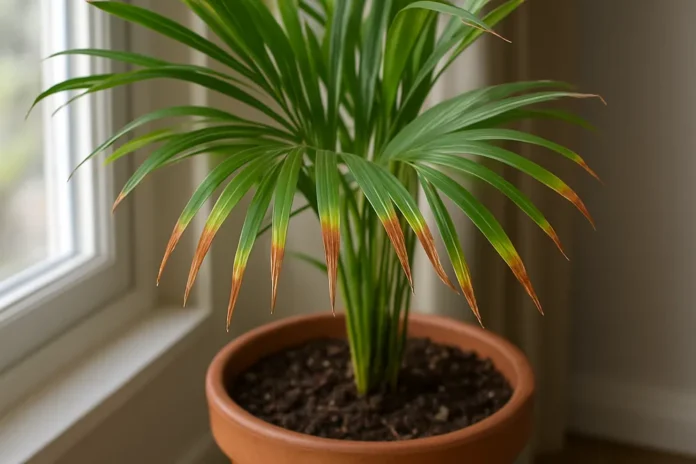
Palm tree leaf tips usually turn brown because the plant is under moisture stress or dealing with salt buildup, dry air, cold damage, or root trouble. In many cases, the browned tip is old tissue that cannot turn green again.
Seeing palm tree leaf tips turning brown is frustrating because palms can look healthy overall while the ends of the fronds slowly crisp up. In my experience, brown tips are usually a stress signal rather than proof that the whole plant is dying. The challenge is figuring out which kind of stress is behind it.
Palms respond noticeably to inconsistent care, especially when watering, humidity, fertilizer, and temperature swing around. Indoor palms often brown at the tips from dry air and salts in the potting mix, while outdoor palms are more likely to show damage from weather, poor drainage, or nutrient problems. The good news is that once you narrow down the cause, you can usually stop the browning from spreading to newer growth.
What Brown Tips Usually Mean on a Palm
Brown tips on palm fronds are a symptom, not a diagnosis. The plant is telling you that the farthest part of the leaf, which is the first place stress often shows, has dried out or been damaged. Because leaf tips are at the end of the plant's water pathway, they are especially vulnerable when moisture delivery is interrupted by dry soil, soggy roots, salt buildup, heat, cold, or low humidity.
It also helps to know that damaged palm tips do not heal. Once the tip has turned tan or brown, that tissue stays brown. Your goal is not to make the old frond look perfect again. Your goal is to protect the rest of that leaf and make sure new growth comes in cleaner and greener.
When I diagnose a palm, I look first at which fronds are browning. If only the oldest leaves have minor dry tips, I usually suspect normal aging or mild care stress. If newer leaves are browning quickly, I take it more seriously because that often points to root, watering, or environmental trouble.
Underwatering and Inconsistent Moisture
One of the most common reasons for brown palm tips is soil that gets too dry, especially if it happens repeatedly. Palms generally like steady moisture, not sharp swings between bone dry and soaking wet. When the root ball dries too far, the plant cannot keep moisture moving out to the end of each frond, and those tips start to crisp.
This is common with indoor areca palms, majesty palms, parlor palms, and kentia palms, especially in heated homes or in containers that dry out quickly. Outdoor palms in hot, windy weather can show the same symptom if irrigation is too shallow or too infrequent.
- The brown area starts at the very tip and slowly works inward
- Leaf edges may also look dry or papery
- Soil pulls away from the sides of the pot
- Fronds look limp, dull, or slightly folded before they brown
- The pot feels unusually light between waterings
If this sounds familiar, the fix is consistency. Water thoroughly enough that the entire root zone gets moist, then water again when the top layer has dried to the appropriate depth for that palm and container size. Do not rely on a tiny splash every few days. That often wets the surface while leaving the center of the root ball dry.
Overwatering and Root Stress
It sounds backward, but palms can also get brown tips from too much water. When soil stays soggy, roots lose oxygen and begin to decline. Once roots are damaged, they cannot move water efficiently, so the leaves can show the same dry-looking tip burn you would expect from drought.
This is especially common in decorative pots without drainage, heavy soils, or outdoor planting sites where water sits after rain. Majesty palms are notorious for struggling when they are either too dry or too wet, so the moisture balance has to be right.
- Brown tips appear along with yellowing leaves
- Soil stays wet for days at a time
- The pot smells sour or swampy
- Growth slows down even during the active season
- Lower fronds decline first, then more leaves follow
If overwatering is the cause, simply watering less often is only part of the answer. You may also need better drainage, a faster-draining mix, a pot with open drainage holes, or a different planting location outdoors. A palm sitting in waterlogged soil will keep declining even if you cut the damaged tips off.
Low Humidity and Dry Indoor Air
Indoor palms often develop brown tips because household air is much drier than what many species prefer. This tends to show up in winter when furnaces run constantly, but it can happen year-round near heating vents, air conditioners, fireplaces, and sunny windows that intensify drying.
In low humidity, the leaf loses moisture faster than the roots can replace it. The tip dries out first, then the damaged area slowly widens. This is very common with areca palms and majesty palms, while parlor palms may tolerate dry air a bit better but can still show browning.
- Tips are brown but the rest of the leaf stays mostly green
- Damage is worse on the side facing a vent or sunny glass
- The palm sits in otherwise acceptable soil moisture
- Other tropical houseplants nearby also show crisp edges
If I am choosing between more misting and a humidifier, I pick the humidifier every time. Misting gives short-lived surface moisture, while steady room humidity does much more to prevent ongoing tip burn on palms.
Grouping plants together, moving the palm away from direct hot airflow, and raising ambient humidity can make a visible difference over time. Just remember that existing brown tips remain brown, so judge progress by the condition of newly emerging fronds.
Salt Buildup From Fertilizer or Tap Water
Another very common cause of palm tip burn is excess salts in the soil. These salts can come from too much fertilizer, fertilizer applied too often, softened water, or mineral-heavy tap water. As salts accumulate around the roots, they make it harder for the palm to take up water properly, and the leaf tips begin to brown.
This problem is especially likely in container-grown palms because salts have nowhere to go unless water drains freely through the pot. If you tend to feed on a strict schedule even when the plant is not actively growing, or if you rarely flush the potting mix, salt stress moves higher on the suspect list.
- Brown tips appear soon after feeding
- A white crust forms on the soil surface or pot rim
- The palm is watered regularly but still looks scorched at the tips
- Leaf edges may yellow before turning brown
- The plant is in the same potting mix for a long time without repotting
To correct this, reduce fertilizer to an appropriate level for the species and season, and occasionally flush container soil with enough water to carry excess salts out through the drainage holes. If your tap water is very hard or softened with sodium, switching to rainwater or filtered water may help prevent repeated browning.
Cold Damage, Heat Stress, and Sudden Environmental Change
Palms can react strongly when temperatures fall outside their comfort zone. Indoor palms may get brown tips after sitting too close to a cold window, being exposed to a drafty doorway, or spending time outdoors during a chilly night. Outdoor palms can show tip burn after frost, wind exposure, or sudden heat paired with dry soil.
Environmental shock also happens when a palm is moved abruptly from a shaded store or indoor room into direct sun. The fronds may show scorched tips or larger bleached patches, especially if the plant was already mildly stressed.
- Damage appears shortly after a weather event or move
- Tips and outer edges look dry all at once rather than gradually
- Some fronds may have patchy tan spots in addition to brown ends
- The exposed side of the plant looks worse than the sheltered side
Try to keep indoor palms away from cold glass, winter drafts, and blasts of hot dry air. When moving a palm outdoors for summer or into a brighter spot, harden it off gradually so the foliage has time to adapt.
Nutrient Deficiencies and Aging Fronds
Not every brown tip comes from watering or humidity. Palms can also show browning from nutrient imbalances, especially deficiencies involving potassium, magnesium, or manganese depending on the species and growing conditions. Outdoor landscape palms are more likely to show true deficiency patterns than indoor palms in fresh potting mix.
A mild brown tip on the oldest fronds can also be part of natural aging. As palms mature, older leaves gradually decline and are replaced by new growth from the center. If the plant is pushing healthy new fronds and only the lowest, oldest leaves have minor dry ends, that is much less concerning than browning on the newest leaves.
- Potassium issues may show yellow-orange spotting or necrosis on older fronds
- Magnesium deficiency often causes broad yellow bands along leaf margins with greener centers
- Manganese problems affect new growth more severely and can become serious quickly
- Normal aging usually stays limited to the oldest fronds at the bottom of the plant
I am cautious about blaming every palm problem on a nutrient deficiency because it is easy to overcorrect and create salt burn. If the pattern is vague and the plant is in a container, watering and root conditions are often the better first suspects.
Pests and Disease That Can Contribute to Browning
Pests are not the most common cause of simple brown tips, but they can contribute. Spider mites, scale, and mealybugs stress palms by feeding on the foliage and weakening the plant. When infestations are bad, fronds may develop stippling, yellowing, or general decline that makes tip browning worse.
Disease is less likely if the symptom is limited to dry tips, but root rot can certainly lead to browning because damaged roots cannot support the fronds. Leaf spot diseases usually create distinct spots or blotches rather than neat brown tips at the end of many leaflets.
- Spider mites often leave fine webbing and a dusty or speckled look
- Scale insects appear as small bumps on stems and leaves
- Mealybugs cluster in cottony patches near leaf bases
- Root rot is more likely when wet soil and yellowing accompany the browning
If you suspect pests, inspect the undersides of the fronds and along the stems rather than assuming the issue is only environmental. Correct identification matters because palms already under watering stress can decline faster when pests are also feeding.
How to Fix Brown Leaf Tips Without Making the Problem Worse
The best fix depends on the underlying cause, but there are a few safe principles that work in most cases. First, stabilize the palm's environment instead of making several drastic changes at once. Second, focus on the root zone and the newest growth. Third, resist the urge to keep adding fertilizer or extra water just because the leaves look damaged.
- Check soil moisture several inches down, not just at the surface.
- Confirm that the pot or planting site drains well.
- Adjust watering so the root zone stays evenly moist, not constantly dry or waterlogged.
- Reduce salt stress by easing up on fertilizer and flushing containers when needed.
- Raise humidity for indoor palms and move them away from vents, heaters, and cold drafts.
- Inspect for pests if browning comes with speckling, sticky residue, or overall decline.
- Watch new fronds for improvement before deciding whether your changes are working.
You can trim brown tips for appearance, but do it carefully. Use clean scissors and follow the natural shape of the leaf, leaving a very thin margin of brown rather than cutting into healthy green tissue. If you cut into live tissue, the fresh edge can dry out and create a larger brown area later.
When Brown Tips Are a Warning Sign of a Bigger Problem
Small brown tips on older fronds are common and often manageable. But there are times when tip burn points to a larger issue that needs quick attention. If the palm is browning rapidly, losing many fronds, producing weak new growth, or showing stem softness, the problem goes beyond cosmetic damage.
- New center growth is brown, collapsed, or distorted
- Multiple fronds are yellowing and browning at the same time
- The soil smells rotten or the trunk base feels soft
- Outdoor palms decline after prolonged standing water
- The plant stops producing healthy new leaves during the active season
Those signs suggest more serious root damage, nutrient issues, cold injury, or crown problems. If you are dealing with a valuable landscape palm, it can be worth getting a local extension service or certified arborist involved, especially if the newest growth is affected.
Preventing Brown Tips on Palms Long Term
Long-term prevention comes down to matching the palm's care to its species and growing spot. A majesty palm in a dry living room needs different handling than a windmill palm in the yard or a parlor palm in moderate indoor light. Still, the main prevention habits stay pretty consistent.
- Use a potting mix that drains well but does not become hydrophobic when dry
- Water deeply and consistently rather than lightly and often
- Empty saucers and cachepots so roots do not sit in water
- Feed modestly during active growth instead of year-round heavy fertilizing
- Flush containers occasionally to reduce accumulated salts
- Protect indoor palms from vents, drafts, and cold window glass
- Increase humidity if your home air is especially dry
- Remove only fully dead fronds rather than overpruning
In my own plant care routine, consistency fixes more palm tip problems than any special product. A palm that gets stable moisture, decent humidity, and moderate feeding usually keeps its fronds much cleaner than one that is constantly being overcorrected.
FAQ
Should I Cut the Brown Tips Off My Palm?
Yes, if the appearance bothers you, but trim carefully. Remove only the dead brown portion, follow the natural shape of the leaf, and avoid cutting into green tissue.
Will Brown Palm Tips Turn Green Again?
No. Once the tip tissue has turned brown, it stays brown. Look for improvement in new growth and in whether the damaged area stops spreading.
Can Tap Water Cause Brown Tips on Palms?
Yes. Hard water or softened water can leave mineral and salt buildup in the soil, which may lead to tip burn over time, especially in potted palms.
Do Indoor Palms Need More Humidity to Prevent Brown Tips?
Many do. Areca and majesty palms are especially prone to brown tips in dry indoor air, while some other palms are a little more forgiving.
Is Epsom Salt Good for Brown Palm Tips?
Not automatically. Epsom salt supplies magnesium, but brown tips are often caused by watering issues, dry air, or salt buildup instead. Adding it without confirming a deficiency can make the problem worse.
Why Does My Palm Have Brown Tips but Still Look Mostly Healthy?
That usually means the stress is mild or chronic rather than severe. Slight dryness, low humidity, normal aging, or minor salt buildup can brown the tips while the rest of the palm remains green.
Can Too Much Fertilizer Burn Palm Leaf Tips?
Yes. Excess fertilizer leaves salts in the soil, and palms often show that stress as brown tips or scorched leaf edges, especially in containers.
Want a healthier, greener palm? Read our guide to the best palm fertilizers, watering tools, and humidity boosters so you can fix brown tips and prevent them from coming back.
