

Note: This article contains affiliate links. If you click on these links and make a purchase, I may earn a small commission at no extra cost to you. This helps support my research and content. Read my full affiliate disclosure here.
If you keep a lawn, driveway, or large patio, a good home gas leaf blower can cut weekend cleanup time dramatically. Gas models deliver higher sustained airflow and longer runtimes than most battery units, which matters when you have a larger property, wet leaves, or tight crevices to clear. This guide shortlisted seven top options built for residential use and evaluates them by the real gardener concerns that matter: usable airflow, runtime and fuel efficiency, vibration and handling, and long-term durability. Read on for what each blower does well, plus practical buying guidance to match a blower to your yard and chores.
Top Picks at a Glance
| Best Overall The best all-around choice for most situations | Schröder SR-6400L Backpack Gas Leaf Blower |  |
| Best Quality Built to a higher standard if you want something more solid | Husqvarna 350BT 50.2-cc Gas Backpack Leaf Blower |  |
| Best Value The sweet spot between price and what you get | Relxxon R1 26cc 2-Cycle Handheld Gas Leaf Blower |  |
| Best Budget The cheapest option that still gets the job done reliably | Sarkoyar 63cc 665 CFM Backpack Gas Leaf Blower |  |
| Highest Rated A top-rated pick with lots of positive feedback | Houltune 72cc Gas Backpack Leaf Blower — 760 CFM, 235 MPH |  |
| Most Popular A crowd favorite that many people choose with confidence | NEO-TEC NTEB809A 52cc Gas Backpack Leaf Blower |  |
| Best Seller A high-volume bestseller chosen again and again | Husqvarna 150BT 51cc Gas Backpack Leaf Blower |  |
Schröder SR-6400L Backpack Gas Leaf Blower

| Power Source | Gas Powered |
|---|---|
| Form Factor | Backpack |
| Air Flow Capacity | 920 cfm |
| Noise Level | 65 db |
The Schröder SR-6400L is a backpack gas leaf blower built for heavy-duty clearing while keeping operator fatigue low. It pairs a 63.3 cc, 3.7 HP two-stroke engine with a backpack harness and padded support so a single operator can move through large areas without the constant strain of a handheld unit. With up to 920 CFM airflow and 230 MPH airspeed it handles wet and dry debris, and the large 65 oz fuel tank reduces refill interruptions on long jobs. Noise is moderate at 65 dB for its class, and the unit is substantially lighter than many commercial backpacks at the listed weight, which helps for multi-hour shifts. Practical downsides are typical of gas models: you will need fuel mixing, routine engine maintenance, and the vibration and emissions that come with a two-stroke motor. For someone who prioritizes performance and endurance in a professional or demanding home setting, this blower delivers strong clearing power while minimizing carry fatigue.
Best for: Buyers who need a powerful, endurance‑focused blower for large yards or commercial jobs and who prioritize clearing performance and reduced carry fatigue over electric convenience.
Less Ideal for: Those who want a near-silent, low-maintenance, or emission-free option for small yards should consider battery or electric models instead.
- High airflow and speed with 920 CFM and 230 MPH for moving wet and dry debris
- Backpack form with padded shoulder straps reduces operator fatigue during long jobs
- Large 65 oz fuel tank allows longer run times between refuels
- Commercial-grade construction intended for frequent, demanding use
- Two-stroke gas engine requires fuel mixing and regular maintenance
- Emissions and vibration are higher than electric alternatives
Verdict: Choose the SR-6400L if you need a lightweight backpack blower that delivers commercial-level power and long run time for large or repetitive clearing tasks.
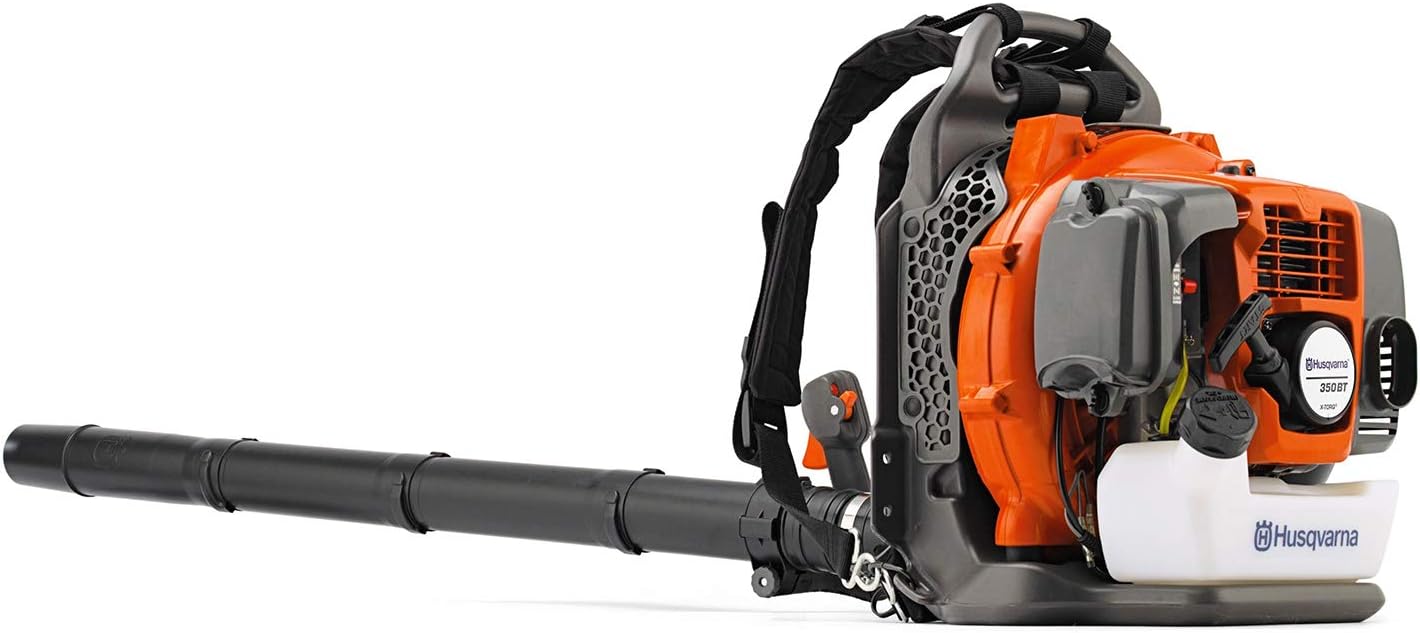
Husqvarna 350BT 50.2-cc Gas Backpack Leaf Blower
| Power Source | Gas Powered |
|---|---|
| Form Factor | Backpack |
| Air Flow Capacity | 692.17 cfm |
| Maximum Speed | 180 miles_per_hour |
| Additional Features | Anti-Vibration |
The Husqvarna 350BT is a purpose-built backpack leaf blower for regular yard cleanup on medium to large properties. Its 50.2-cc X-Torq two-cycle engine produces up to 180 MPH and about 692 CFM, giving it the power to move leaves, grass clippings and light debris quickly. The unit uses a padded ergonomic harness, hip belt and weight-leveling system so you can run it for extended periods with less strain, and LowVib technology reduces felt vibration. Practical features include an air purge for easier starting, tube-mounted throttle and cruise control for steady operation. The blower favors dependable, proven gas power over quieter electric alternatives, so you should expect regular fuel mixing, periodic two-cycle maintenance and typical engine noise. For buyers who prioritize robust clearing performance and an established brand, the 350BT balances power and operator comfort, but it is not the quietest or lowest-maintenance option available.
Best for: A cautious buyer who wants a reliable, proven gas backpack blower for regular yard maintenance and values operator comfort during longer jobs.
Less Ideal for: Those who need a near-silent, low-maintenance solution or who prefer cordless electric operation for small urban yards.
- Strong clearing power (around 692 CFM and 180 MPH) suitable for medium to large yards
- Ergonomic harness with padded straps and hip belt reduces operator fatigue during long runs
- LowVib technology and weight-leveling harness for improved comfort and control
- Air purge system and tube-mounted throttle with cruise control make starting and steady operation easier
- Gas two-cycle engine requires fuel mixing and routine maintenance
- Significant engine noise compared with battery-powered blowers
Verdict: Choose the Husqvarna 350BT if you want a comfortable, dependable gas backpack blower that delivers professional-level clearing power for medium to large properties.
Relxxon R1 26cc 2-Cycle Handheld Gas Leaf Blower

| Power Source | Gas Powered |
|---|---|
| Form Factor | Handheld |
| Air Flow Capacity | 380 cfm |
| Noise Level | 60 db |
| Maximum Speed | 180 miles_per_hour |
The Relxxon R1 is a lightweight 26cc gas handheld blower designed for weekend yard cleanup where battery runtime is a concern. Its 2-cycle engine produces up to 180 MPH and 380 CFM, which is enough to move damp leaves, grass clippings, sawdust, and light snow from driveways, patios, and sidewalks. The blower uses a reduced-pull recoil system to make starting easier and a soft-grip handle to reduce vibration during use. Because it is gas powered you get continuous runtime without battery swaps, and the focused tube lets you direct airflow into tight spots around beds and vehicles. Practical limitations are the typical fuel mixing and maintenance required for 2-cycle engines, and the 60 dB noise rating is moderate but louder than many battery models. The unit is sold with an extension nozzle and basic manual support and is best for homeowners who need stronger, on-demand power for occasional heavy clearing rather than quiet daily tidying.
Best for: Buyers who prioritize continuous, stronger on-demand power for weekend or seasonal yard cleanup and who prefer proven tool types over the newest battery models.
Less Ideal for: People who need the quietest option, want low maintenance, or prefer zero-emission electric tools for daily light tidying.
- Strong airflow for a handheld gas model at 380 CFM and 180 MPH for moving damp or compacted debris
- Reduced-pull recoil system that lowers effort when starting the 2-cycle engine
- Lightweight handheld control and soft-grip handle for easier maneuvering and reduced vibration
- Gas power provides continuous runtime without battery charging or mid-job swaps
- Concentrated nozzle design for precise airflow in tight spaces
- Requires fuel mixing and routine maintenance typical of 2-cycle gas engines
- Higher noise level and emissions compared with battery-powered blowers
Verdict: Choose the Relxxon R1 when you want a compact, gas-powered blower that delivers strong, uninterrupted airflow for budget-conscious weekend yard work.
Sarkoyar 63cc 665 CFM Backpack Gas Leaf Blower

| Air Flow Capacity | 665 cfm |
|---|---|
| Engine Displacement | 63 CC |
| Rated Power | 3hp/2.3KW |
| Fuel Tank Capacity | 1.7 L |
| Noise Level | 69 db |
The Sarkoyar 63cc backpack leaf blower is a gas-powered tool built for clearing leaves, debris and light snow across yards, sidewalks and small properties. It pairs a 63cc two-stroke engine with a 665 CFM airflow and a backpack form factor so the engine load sits on your shoulders instead of a handheld grip, which makes longer jobs less tiring. Notable features include an adjustable outlet tube for targeting tight spots, a 1.7 L fuel tank for extended run time between refills, and ABS plus metal construction for durability. Practical benefits are strong blowing power that handles damp leaves and light snow better than many handheld electric models and ergonomic straps that improve comfort during continuous use. Important limitations are the noise, the need to mix and store two-stroke fuel, and the heavier overall package compared with handheld blowers which can be cumbersome for users who only need occasional light-duty cleanup.
Best for: Buyers who need a budget-friendly, higher-power blower for regular yard cleanups and who prioritize efficient results and longer run times over minimal weight.
Less Ideal for: People who only need occasional light leaf blowing, or who prefer low-maintenance, quiet electric or battery models for small urban yards.
- High airflow (665 CFM) provides strong moving power for leaves, yard debris and light snow
- Backpack form factor reduces arm fatigue for longer jobs compared with handheld blowers
- Adjustable outlet tube helps direct airflow for edging and tight areas
- 1.7 liter fuel tank supports longer run times between refills
- Rugged ABS and metal construction for durability in outdoor use
- Two-stroke engine requires mixing fuel and oil and periodic maintenance
- Heavier and bulkier than handheld electric blowers which can limit maneuverability
- Reported noise level around 69 dB makes hearing protection advisable
Verdict: A cost-conscious choice for homeowners who want backpack-style power and longer run time to clear heavy leaves and light snow efficiently.
Houltune 72cc Gas Backpack Leaf Blower — 760 CFM, 235 MPH

| Power Source | Gas Powered |
|---|---|
| Form Factor | Backpack |
| Air Flow Capacity | 760 cubic_centimeters_per_minute |
| Noise Level | 70 db |
| Maximum Speed | 235 miles_per_hour |
This Houltune 72cc backpack blower is built to move heavy leaves, pine needles, and light snow across large yards or commercial lots. Worn on the back with padded dual pads and an adjustable harness, it puts the engine weight off your arms so you can work longer without shoulder fatigue. In use the unit delivers up to 760 CFM and 235 MPH, and variable speed plus cruise control make it straightforward to switch between sweeping debris and finer control near borders or plants. Practical features include a primer-assisted easy start, upgraded air filter for longer engine life, and a pivoting tube that reaches tighter angles. The 1.8L tank gives roughly 35 to 50 minutes of runtime per fill, which suits multi-zone yards when combined with quick refueling. Important limits are that it is a two-stroke gas engine so you must mix fuel and do routine maintenance, and it is louder and emits exhaust compared with battery models. For buyers prioritizing reliable, no-battery continuous power and heavy-duty clearing, this is a solid budget option.
Best for: Buyers who need continuous, gas-powered performance to clear large yards, orchards, or commercial lots and who prefer a comfortable backpack setup to reduce arm fatigue during multi-hour jobs.
Less Ideal for: Small-plot owners who want quiet, low-maintenance electric operation or buyers who prefer zero-emission, battery-powered tools.
- High airflow and speed (760 CFM, 235 MPH) suitable for heavy, wet debris
- Backpack form with padded harness and anti-vibration mounts for extended use comfort
- Variable speed plus cruise control for controlled, efficient clearing
- Primer-assisted easy start and supplied tools make startup user-friendly
- Upgraded air filter to help engine longevity in dusty or orchard conditions
- Requires two-stroke fuel mixing and regular engine maintenance
- Produces exhaust and higher noise than electric blowers despite 70 dB spec
Verdict: A rugged, easy-start 72cc backpack blower that delivers commercial-level airflow and comfort for large properties without relying on batteries.
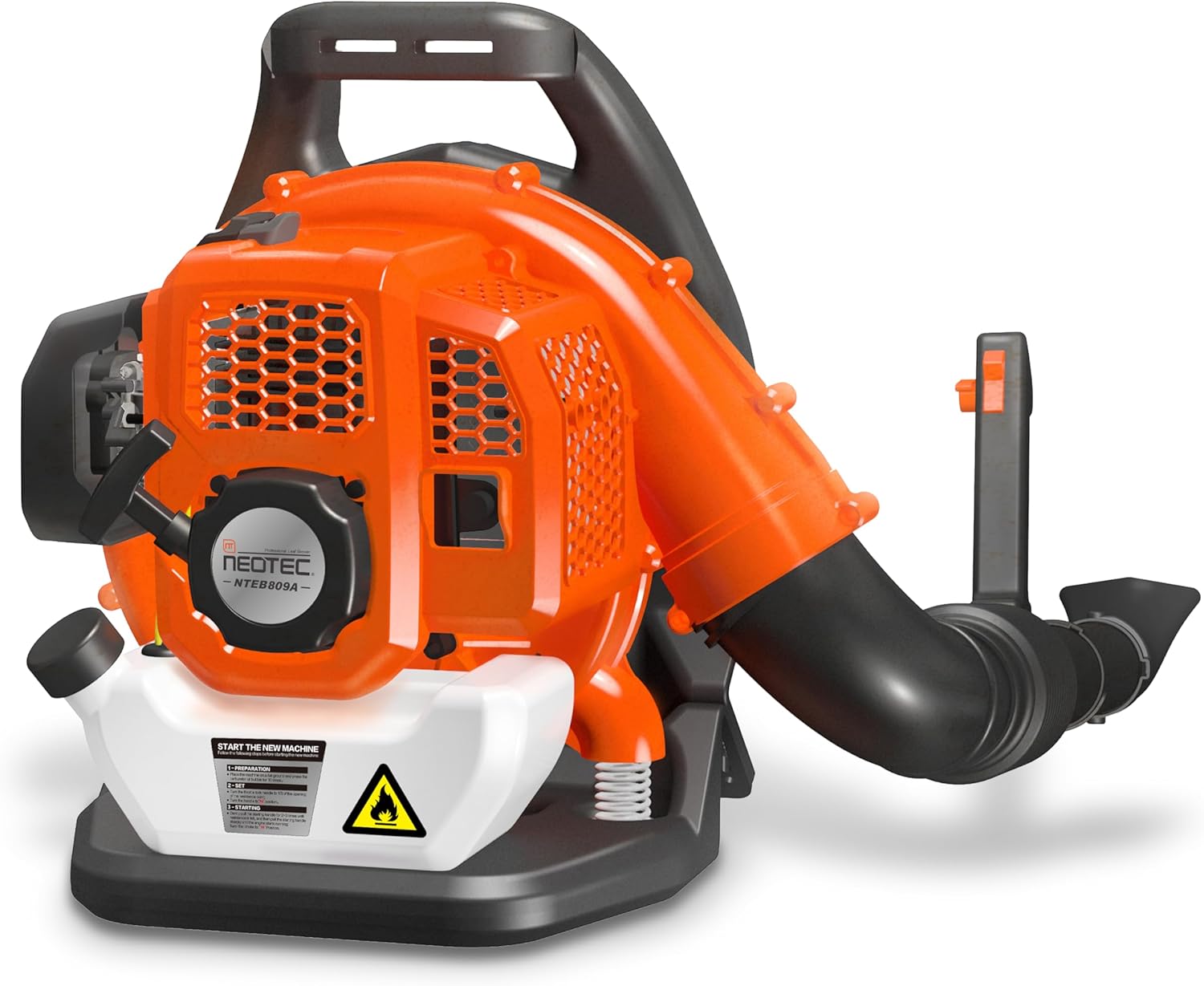
NEO-TEC NTEB809A 52cc Gas Backpack Leaf Blower
| Power Source | Gas Powered |
|---|---|
| Form Factor | Backpack |
| Additional Features | Adjustable Speed, Anti-Vibration, Throttle Lock |
| Air Flow Capacity | 564 cfm |
The NEO-TEC NTEB809A is a gas backpack blower built for heavy-duty yard work where power and continuous use matter. It produces up to 564 CFM and 216 MPH from a 52cc 2-cycle engine, so it clears wet, matted leaves, construction debris, and light snow faster than handheld units. The padded commercial-style harness and anti-vibration mount make it easier to wear for longer jobs, and features like an air purge for easier starts, variable-speed throttle, and throttle lock let you dial in performance and maintain a steady speed. With a 1.3L tank and backpack form factor it is best suited to large lawns or commercial tasks rather than quick, small-garden touchups. Expect typical gas-blower maintenance such as mixing fuel, occasional tune-ups, and louder operation compared with electric models. Its reported weight and harness design aim to reduce fatigue, but users sensitive to vibration or seeking near-silent operation should consider battery alternatives.
Best for: Buyers who need a powerful, high-capacity blower for large yards or professional jobs and who prioritize proven performance and documented user satisfaction over absolute lightest weight.
Less Ideal for: Casual gardeners with small yards, those who need near-silent operation, or users who prefer low-maintenance, cordless units should look elsewhere.
- High airflow (564 CFM) and strong airspeed (216 MPH) for moving wet or compacted debris
- Padded commercial-style backpack harness and anti-vibration mount for longer comfortable use
- Variable-speed throttle with cruise/throttle lock for controlled, continuous operation
- Air purge/easy-start system reduces pull-start difficulty and prime issues
- 1.3L fuel tank supports longer run times between refills
- Gas engine requires fuel mixing, periodic maintenance, and is louder than electric options
- Backpack form and fuel engine are heavier and more complex than handheld battery blowers
Verdict: Choose this NEO-TEC backpack blower when you need sustained, commercial-style blowing power and comfortable harnessing for large or demanding cleanup jobs.
Husqvarna 150BT 51cc Gas Backpack Leaf Blower

| Power Source | Gas Powered |
|---|---|
| Form Factor | Backpack |
| Air Flow Capacity | 765 cfm |
| Maximum Speed | 270 miles_per_hour |
| Additional Features | Adjustable Speed |
The Husqvarna 150BT is a gas-powered backpack leaf blower built for large yards and frequent clearing jobs. Its 51 cc 2-cycle engine produces up to 765 CFM and 270 MPH, which moves heavy or wet leaves quickly while the padded harness, hip belt, and weight-leveling system help distribute load for longer use. Variable speed throttle with cruise control lets you hold a steady speed without constant throttle input, and the air purge feature makes starting easier after refueling. In practice this blower is best for contractors or homeowners with many trees or large properties who need sustained blowing power and durability. Expect steady high performance and fewer passes on dense debris, but plan for routine maintenance typical of gas engines such as fuel mixing, spark plug checks, and quieter alternatives if noise or emissions are a concern. It comes with basic assembly items and a user manual so you can start using it right away.
Best for: Buyers who need sustained, professional-level blowing power for large yards or frequent heavy cleanups and who prioritize performance and durability over low-maintenance convenience.
Less Ideal for: Small-lot owners, noise-sensitive neighborhoods, or users who prefer low-emissions, low-maintenance electric or battery blowers.
- High clearing power: up to 765 CFM and 270 MPH for moving heavy or wet debris quickly.
- Ergonomic backpack harness with padded straps, hip belt, and weight-leveling for extended comfortable use.
- Variable speed throttle with cruise control for consistent operation without constant hand input.
- Air purge system to simplify starting after refueling and reduce pull-start issues.
- Gas engine requires regular fuel mixing and routine maintenance.
- Louder and higher-emission operation compared with electric or battery models.
Verdict: Choose the Husqvarna 150BT when you need professional backpack blower power and an ergonomic harness to clear large properties quickly.
Choosing the Right Home Gas Leaf Blower: Key Factors to Consider
Usable Airflow and Velocity
Airflow (CFM) and airspeed (MPH) are the two numbers manufacturers publish, but what matters in the garden is how that airway translates into moving wet leaves, stuck debris, and material in corners. High CFM helps move large volumes of dry leaves, while higher airspeed is useful for dislodging wet or compacted debris. Consider the combination: for wide-open lawns, prioritize higher CFM; for driveways and tight spots, prioritize airspeed.
Also pay attention to how the blower channels that air. A well-designed nozzle and motor layout deliver usable force where you need it instead of just inflating numbers on paper.
Fuel Efficiency and Real-World Runtime
A blower that drinks gas quickly becomes a chore to use. For homeowners, fuel efficiency translates to fewer stops to refill and less mixing of fuel for two-stroke engines. Consider engines that balance displacement and tuning to give longer continuous run times under typical loads.
Runtime also depends on throttle behavior and whether the blower performs well at partial throttle. A model that maintains good airflow without needing to run at full throttle will save fuel and be easier to manage across varied tasks.
Handling, Weight, and Vibration
How a blower feels in your hands determines how long you can work without fatigue. Weight distribution is as important as overall mass; a well-balanced unit feels lighter and reduces strain on wrists and shoulders. Check whether the blower offers adjustable handles or ergonomic grips for different user heights and hand sizes.
Vibration control is essential for comfort and control. Excess vibration not only makes the job unpleasant but can reduce accuracy when nudging leaves into piles or working around plants and hardscape.
Durability and Ease of Maintenance
Gas blowers face dirt, moisture, and seasonal use patterns. Durable plastics, sealed seals around the engine, and accessible service points for spark plugs and air filters extend a blower's useful life. Consider how easy it is to clean or replace the air filter, access the spark plug, and perform routine spark-arrestor or carburetor adjustments.
Also think about storage needs. Models that drain easily or have simple winterization steps are less likely to suffer carburetor gumming or fuel-related problems after months of inactivity.
Noise and Local Use Considerations
Gas blowers are typically louder than battery models, and noise may limit when you can operate the tool in neighborhoods. Look for models with built-in muffling or noise-reduction features and be aware of local restrictions on allowable times for operation.
Lower noise can also mean less stress on the user. If you have noise-sensitive neighbors or small children, an efficient muffler and a quieter engine tune make a practical difference.
Matching Blower Type to Yard Size
Choose blower power relative to the area and common tasks. Small yards with light, dry leaves do well with lower-displacement models that are lighter and easier to handle. Medium to large lawns benefit from higher CFM to speed up wide-area work.
If you routinely clear gutters, tight landscaping beds, or wet leaves after storms, prioritize models with higher airspeed and a narrow nozzle option. For general-purpose property maintenance where you also move grass clippings and debris, a balance of CFM and velocity is the best compromise.
- Small yards: lighter, easier-to-start units.
- Medium yards: balanced airflow and comfort.
- Large properties: higher CFM for coverage and longer runtime.
Single-Stage Vs Tuned Output Features
Some residential gas blowers offer simple single-speed operation while others include variable throttle control or cruise settings. Variable control helps when you need a gentle push near plants and a stronger blast in open areas.
Tuned features like boost modes or adjustable nozzle shapes improve versatility without forcing the user to run the engine at full power all the time.
- Variable throttle reduces fuel use during light tasks.
- Nozzles and extensions change airflow pattern for specific jobs.
Practical Noise Reduction Tips
Beyond choosing a model with decent muffling, change how and when you use a gas blower to reduce annoyance. Work mid-morning rather than early morning, and avoid prolonged idling near neighbors. A well-timed sequence-clear sidewalks first, then lawns-shortens total runtime and noise exposure.
Use personal hearing protection and consider lower-rpm settings for light work to preserve hearing and comfort.
- Operate during acceptable hours for your neighborhood.
- Use lower throttle for light debris to reduce noise.
Maintenance Schedule That Keeps Blowers Reliable
A simple seasonal routine extends life dramatically: clean or replace the air filter, inspect and replace the spark plug if worn, check and clean the fuel system, and verify that fasteners and housings are secure. Two-stroke engines need correct fuel mix and careful winter storage to avoid carburetor problems.
Store the blower dry and off the ground. If you expect months of inactivity, drain fuel or run the engine until empty and fog the cylinder with appropriate stabilizer or oil according to manufacturer recommendations.
- Quarterly filter and spark plug checks during heavy use season.
- End-of-season fuel care prevents starting issues in spring.
Attachment and Accessory Options
Some home gas blowers accept nozzle attachments, concentrator tubes, or vacuum mulching kits. Think about whether you want a blower purely for leaf movement or as a multi-function tool for light mulching and bagging. Attachments can increase versatility but may add weight and complexity.
If you plan to use attachments, check mounting compatibility and whether the blower still offers stable balance when accessories are fitted.
- Nozzles for focused power in crevices.
- Mulching or vacuum kits for combined cleanup and bagging.
How We Chose the Best Home Gas Leaf Blower
We focused on features and real-world attributes that determine day-to-day usefulness for homeowners. Criteria included usable airflow and velocity because raw CFM numbers can be misleading unless the output converts into real leaf movement. We weighed engine efficiency and runtime so a blower can finish typical yard jobs without repeated refuels. Handling and vibration control were judged to reflect comfort during longer sessions and to reduce fatigue for older gardeners. Durability and maintenance complexity were considered to estimate how a blower holds up across seasons with basic care. Noise and emissions were evaluated because sound levels and local ordinances affect when and where you can use a gas blower. We excluded commercial-grade backpack and high-hour professional equipment that are overbuilt for residential needs, and we did not consider battery-only or corded electric models. The final short list emphasizes balance: enough power for wet or compacted debris, manageable weight and vibration, straightforward serviceability, and reasonable fuel economy for typical homeowner use.
FAQ
How loud are home gas leaf blowers compared with battery models?
Gas blowers are generally louder than battery models and can vary by engine size and muffling. Expect higher decibel readings at full throttle; choosing a model with noise-control features and using lower throttle for light tasks reduces exposure.
Can a gas blower handle wet leaves and heavy debris?
Yes, gas blowers typically deliver the airflow and velocity needed for wet or compacted debris better than lower-power battery units. Higher airspeed and a good nozzle design are important for dislodging stuck material.
What routine maintenance keeps a gas blower reliable?
Regular air filter cleaning or replacement, spark plug inspection, and proper fuel handling are the main items. Two-stroke engines need correct fuel mixing and occasional carburetor attention. Store the unit dry and prepare fuel systems for long storage.
Are gas blowers allowed in all neighborhoods?
Local ordinances or homeowner association rules often restrict hours or types of equipment allowed. Check local noise regulations and HOA rules before operating during early morning or late evening.
How do I reduce vibration and fatigue when using a gas blower?
Choose a model with balanced weight distribution and vibration-dampening features. Use both hands when practical, take short breaks during long sessions, and select lower-rpm settings for tasks that do not require full power.
Final Verdict
Pick a home gas leaf blower that matches the scale and typical conditions of your yard. Prioritize usable airflow and airspeed for the kinds of debris you handle most often, then balance that against fuel efficiency, handling, and noise. Expect tradeoffs: heavier, more powerful units clear large areas faster but may be harder to manage for long periods. For most homeowners, the best choice is the blower that delivers enough power to handle wet and stubborn debris while remaining comfortable to use and easy to maintain. Focus on real-world runtime, vibration control, and simple service access when choosing between models.
