

Note: This article contains affiliate links. If you click on these links and make a purchase, I may earn a small commission at no extra cost to you. This helps support my research and content. Read my full affiliate disclosure here.
If you have limited outdoor space but still want to compost kitchen scraps and yard waste, choosing the right patio compost bin matters. The ideal bin contains odors, manages moisture and airflow, and fits a balcony, small patio, or tight backyard corner so you can compost without creating nuisances for neighbors. This guide covers seven shortlisted patio compost bins that suit different space and maintenance preferences. We evaluate each option for airflow and moisture control, build and durability, and how easy it is to maintain in real garden conditions. Read on for practical buying guidance and clear criteria to help you pick the best fit for your outdoor space.
Top Picks at a Glance
| Best Overall The best all-around choice for most situations | Maygrove 53-Gallon Dual-Chamber Outdoor Compost Tumbler |  |
| Best Quality Built to a higher standard if you want something more solid | Miracle-Gro Dual Chamber Compost Tumbler (2 × 18.5 gal) |  |
| Best Value The sweet spot between price and what you get | F2C 80 Gallon Outdoor Compost Bin with Top Lid and Bottom Exit Door |  |
| Best Budget The cheapest option that still gets the job done reliably | JupiterForce 80 Gallon Garden Compost Bin (Polypropylene) | |
| Highest Rated A top-rated pick with lots of positive feedback | DIAMONDFORGE 43‑Gal Dual‑Chamber Rotating Compost Tumbler |  |
| Most Popular A crowd favorite that many people choose with confidence | VIVOSUN Outdoor Tumbling Composter, Dual-Chamber 43 Gallon |  |
| Best Seller A high-volume bestseller chosen again and again | GEOBIN Backyard Compost Bin, Expandable Plastic Composter |  |
Maygrove 53-Gallon Dual-Chamber Outdoor Compost Tumbler

| Capacity | 53 gallons |
|---|---|
| Material Type | Polypropylene + Steel |
| Item Highlight | 360° Rotating, Sliding Doors, Soil Tester and Thermometer |
| Unit Count | 1 Count |
The Maygrove 53-gallon dual-chamber compost tumbler is designed for continuous backyard composting: add fresh scraps to one chamber while the other matures. It rotates 360 degrees on a steel frame with an ergonomic gear-assist handle and internal mixing bars, so you can aerate and mix without manual digging. Adjustable air vents and an extra-large sliding door make loading and controlling moisture straightforward, and the included waterproof thermometer plus a 3-in-1 soil tester help you monitor temperature, moisture, and pH for better results. Construction pairs UV-resistant polypropylene with reinforced steel supports to resist cracking and sagging in outdoor conditions. Setup uses snap-together panels and a few screws, so assembly is quick for most homeowners. Important limitations are that the unit is a stationary tumbler rather than a countertop or worm composting system, and it requires regular turning and correct moisture balance to reach finished compost in the advertised time frame. For a patio or small backyard this model balances capacity and convenience while offering tools that help beginners learn hot composting practices.
Best for: Homeowners with a patio or small backyard who want a low-fuss outdoor tumbler that supports continuous composting and provides monitoring tools to learn and manage the process.
Less Ideal for: People who need an indoor, very small-space, or odor-free worm composting solution should consider other compact systems instead.
- Dual-chamber design allows continuous loading while other material finishes composting
- 360° tumbling with gear-assisted handle and internal mixing bars reduces manual turning
- Adjustable air vents and large access doors simplify airflow control and harvesting
- Includes compost thermometer and 3-in-1 soil tester for monitoring key composting variables
- UV-resistant polypropylene with steel frame and reinforced legs improves outdoor durability
- Requires regular use and attention to moisture/airflow to achieve faster decomposition
- Not suitable as an indoor or small-space counter-top composter
Verdict: A practical, weather-resistant dual-chamber tumbler that combines easy rotation and monitoring tools for continuous patio composting.
Miracle-Gro Dual Chamber Compost Tumbler (2 × 18.5 gal)

| Capacity | 37 gallons |
|---|---|
| Material Type | Alloy Steel (frame) and UV-protected plastic (barrel) |
This dual-chamber Miracle-Gro tumbler is a user-friendly solution for gardeners who want a steady supply of finished compost without manual turning. Each chamber holds 18.5 gallons, so you can load one side while the other finishes curing; the barrel rotates on a galvanized steel frame for easy turning and faster aeration. The molded, UV-protected plastic and side-locking seals are designed to resist weather and help keep pests out, and the maker claims finished compost in roughly 4 to 6 weeks under good conditions. Typical use is adding balanced green and brown materials, rotating the tumbler every few days, then unlocking the sliding door to remove cured compost. Practical benefits include reduced physical labor compared with pile turning and a continuous workflow from dual chambers. Limitations to note are modest total capacity for very large gardens and reliance on correct moisture and feedstock balance to hit the faster decomposition times; very cold winters will slow processing. Assembly and placement on a level spot are important for smooth rotation.
Best for: Gardeners who value steady, low-effort compost production backed by a well-known brand and want the assurance of a proven dual-chamber system for regular use.
Less Ideal for: People needing very large-volume commercial composting or those who prefer an open windrow or in-ground hot compost system for maximum throughput.
- Dual-chamber design lets you add fresh material while another batch cures for continuous compost supply
- Rotating barrel on a galvanized steel frame makes aeration easy with minimal physical effort
- UV-protected plastic and tight side locks help resist weather and reduce pest access
- Produces finished compost relatively quickly when fed and moistened correctly
- 37-gallon combined capacity may be small for very large or heavy-production gardens
- Performance depends on proper moisture, material mix, and ambient temperature to reach claimed speed
Verdict: Choose this dual-chamber tumbler if you want a simple, low-labor way to produce a steady stream of finished garden compost with reliable pest protection.
F2C 80 Gallon Outdoor Compost Bin with Top Lid and Bottom Exit Door

| Capacity | 80 gallons |
|---|---|
| Material Type | Polypropylene (PP) |
| Vents | 48 vents (advertised) |
The F2C 80 gallon compost bin is a straightforward, no-frills outdoor composter aimed at reducing trips to smaller containers while producing usable compost. You load scraps from the top into a tall, rectangular PP bin; its many vents and internal fins promote passive aeration so you do not have to turn the pile manually. A tight-fitting, one-handed lid helps keep pests and wind out and a pull-up bottom door makes removing finished compost easier than digging from the top. The black polypropylene body retains heat and is weather resistant for year-round backyard use. Assembly is quick and requires minimal tools. Important limitations are that this is a stationary, non-tumbling bin with no insulated base, so it relies on mass and ventilation for heat rather than active mixing, and it must sit directly on the ground for drainage and worm access. For gardeners who want low-maintenance, higher-volume composting without complex hardware, this unit delivers practical performance at a modest footprint.
Best for: Home gardeners who want a practical, high-volume bin for low-effort backyard composting and prefer a simple top-in, bottom-out workflow over tumblers or mechanically mixed systems.
Less Ideal for: People who need rapid hot-composting with frequent turning or who want a portable or insulated tumbler for small patios or balconies should consider other options.
- High 80 gallon capacity reduces how often you need to empty or transfer material
- 48+ vents and deep internal fins provide passive aeration to speed decomposition
- Top-loading lid with a secure lock helps keep pests and wind out
- Bottom pull-out door makes harvesting finished compost easier than digging from the top
- Stationary design requires ground contact for drainage and worm access and cannot be tumbled for faster mixing
- No insulated base or active heating so performance in very cold climates may be slower
Verdict: If you want a high-capacity, low-maintenance backyard composter that reduces handling and reliably produces usable compost, this F2C 80 gallon bin is a practical choice.
JupiterForce 80 Gallon Garden Compost Bin (Polypropylene)
| Capacity | 80 gallons |
|---|---|
| Material Type | Polypropylene (PP) |
| Compost Completion Time | 4 to 5 weeks |
This JupiterForce compost bin is a basic, budget-friendly outdoor composter designed to turn kitchen scraps and yard waste into usable soil over several weeks. It assembles without tools and sits directly on the ground so you load materials through the top lid, rely on molded ventilation panels for airflow, and retrieve finished compost via a sliding bottom door. The molded polypropylene construction makes the unit lightweight and weather resistant while the included gloves are a helpful touch for handling material. Because it lacks a base, the bin depends on contact with soil and moisture for decomposition and will be easiest to use on bare ground rather than a hard patio. The relatively large 80 gallon capacity means less frequent emptying for small to medium gardens, but the plastic construction is basic compared with heavier-duty metal or insulated tumblers, so it will not retain heat as well in cold climates. For gardeners who want an inexpensive, simple way to compost and collect finished material, this does the job with minimal fuss.
Best for: Gardeners on a tight budget who need an easy, low-maintenance way to compost kitchen scraps and yard waste and who will place the bin on soil or garden beds.
Less Ideal for: People who need a compost system for a paved patio, require rapid high-heat composting year-round, or prefer heavy-duty insulated tumblers for faster results.
- Generous 80 gallon capacity reduces how often you need to empty it
- Tool-free assembly makes setup quick and straightforward
- Top lid plus sliding bottom door simplifies loading and removing finished compost
- Molded ventilation on each side improves airflow to speed decomposition
- Lightweight, weather-resistant polypropylene construction resists rot and rust
- No integrated base so it must sit on soil to compost efficiently
- Plastic construction offers limited insulation so composting slows in cold weather
Verdict: A simple, inexpensive 80‑gallon polypropylene composter that lets budget-minded gardeners turn yard and kitchen waste into usable compost with minimal setup.
DIAMONDFORGE 43‑Gal Dual‑Chamber Rotating Compost Tumbler

| Capacity | 43 gallons |
|---|---|
| Material Type | Metal, Polypropylene (PP) |
This DIAMONDFORGE compost bin is a 43‑gallon, dual‑chamber tumbler built for steady, year‑round garden use. The two chambers let you compost actively in one side while adding fresh scraps to the other so you can maintain a continuous supply of finished compost. The barrel spins 360 degrees on a steel frame, making turning and mixing easy without digging or a pitchfork, and the molded aeration fins plus vents improve airflow to speed breakdown and reduce odors. Construction combines BPA‑free polypropylene panels with a steel support frame for weather resistance and durability in an outdoor patio setting. Assembly is straightforward and marketed as quick, so you can have it running the same day. Expect faster results than a static bin thanks to the black finish that helps absorb heat, but note the capacity is moderate at 43 gallons so very large yards will need multiple units or more frequent emptying. Overall it is a practical, reliable choice for gardeners who want low‑effort, continuous composting on a patio or small yard.
Best for: Gardeners who prioritize a dependable, low‑maintenance compost solution for a patio or small yard and want continuous output without manual mixing.
Less Ideal for: Owners of very large gardens or landscapers who need high‑volume composting or industrial‑scale throughput should consider larger or multiple systems.
- Dual‑chamber design supports continuous composting so you can add scraps while other material finishes
- 360° rotating drum and aeration fins make turning easy and promote even decomposition
- Steel frame with polypropylene body provides weather resistance for outdoor year‑round use
- Aeration vents and black finish help speed composting and reduce odors
- 43‑gallon capacity is modest for large properties and may require more frequent emptying
- Metal frame and plastic panels could corrode or degrade over many seasons in harsh coastal climates
Verdict: Choose this tumbler if you want a reliable, weather‑resistant dual‑chamber system that delivers continuous, low‑effort compost for a patio or small yard.
VIVOSUN Outdoor Tumbling Composter, Dual-Chamber 43 Gallon
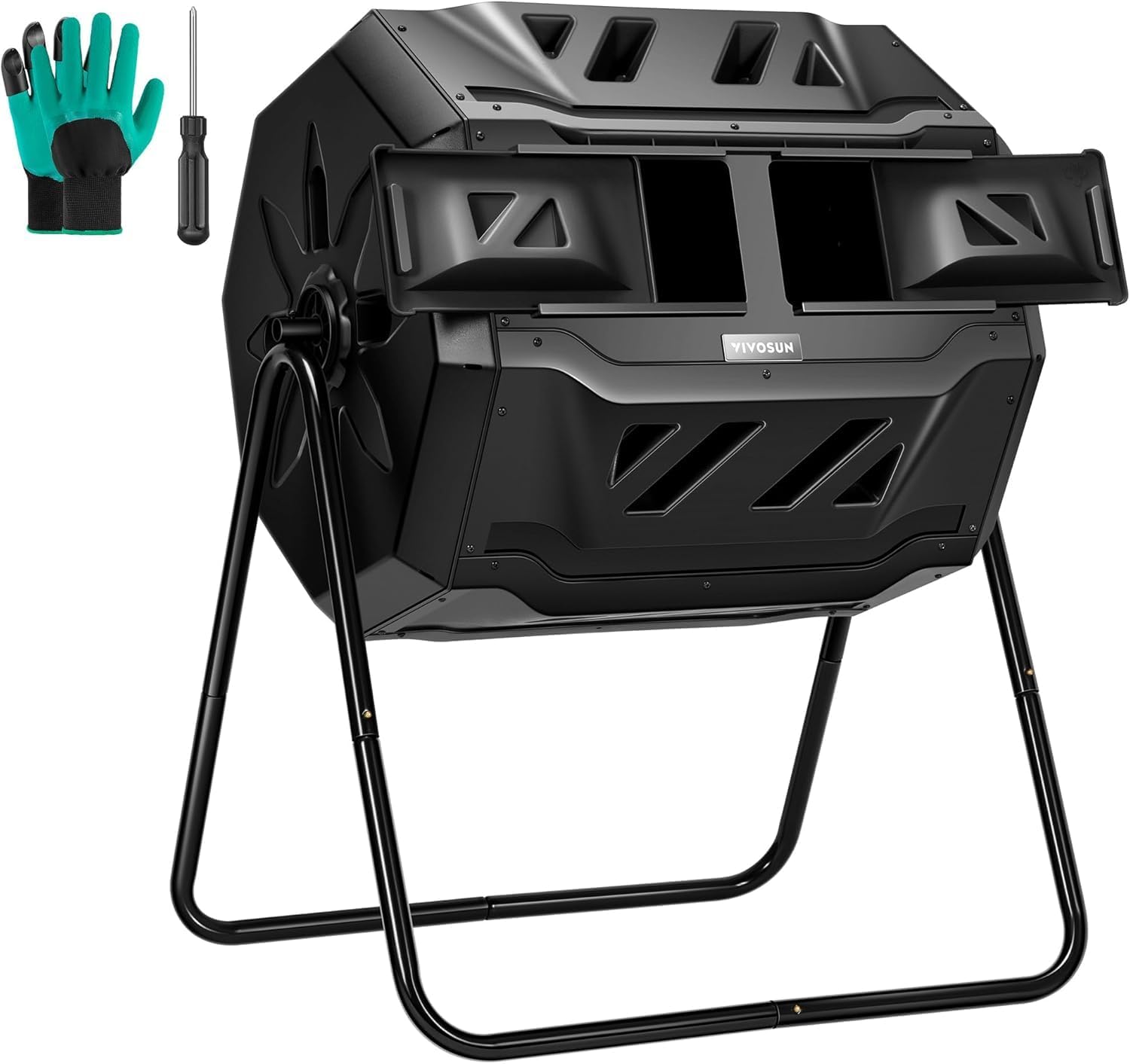
| Material Type | galvanized steel |
|---|---|
| Capacity | 43 gallons |
This VIVOSUN tumbling composter is a practical backyard unit built around two rotating chambers so you can add fresh waste to one side while the other finishes breaking down. The 360 degree tumbling design with deep internal fins makes turning the pile simple and helps break up clumps without digging. Ventilation slots around the drum promote airflow for aerobic decomposition, and the metal frame with a PP plastic barrel is designed to resist corrosion and outdoor weathering. It comes with waterproof garden gloves and small digging claws to make loading and aerating easier. At 43 gallons it is sized for a family garden or vegetable patch but is compact enough for a patio or small yard. Limitations to note are that it requires occasional manual turning to maintain activity and that the plastic drum means it will warm less in cold climates than insulated models, so composting speed will vary by season. Assembly and placement on a level spot are also important for smooth rotation.
Best for: Gardeners who want a hands-on, efficient system to produce regular batches of compost without digging a pile and who prioritize continuous output and easy turning.
Less Ideal for: People who need a completely hands-off hot composter or who compost only very large volumes; those in very cold climates seeking year-round rapid breakdown should consider insulated or electric options.
- Dual chambers let you load new material while another batch finishes, ensuring continuous compost production
- 360 degree tumbling with deep fins makes mixing and aeration easy without manual digging
- Galvanized steel frame and PP plastic barrel designed for outdoor durability and corrosion resistance
- Ventilation slots support aerobic breakdown for faster, less smelly composting
- Plastic drum offers less insulation than insulated or fully metal units, slowing composting in cold weather
- Requires manual turning and regular management to maintain heat and moisture for fast results
Verdict: If you want steady, manageable batches of compost with easy tumbling and continuous use, this dual-chamber VIVOSUN tumbler delivers practical, durable performance.
GEOBIN Backyard Compost Bin, Expandable Plastic Composter

| Capacity | 216 gallons |
|---|---|
| Material Type | Plastic |
| Shape | Cylindrical |
The GEOBIN Backyard Compost Bin is a lightweight, cylindrical plastic composter designed for straightforward backyard use. It assembles quickly with a few closure keys and expands to increase capacity, so you can start with a small footprint and add volume as your kitchen scraps and yard waste grow. The open-structure design gives excellent ventilation, which helps speed up decomposition when you layer greens and browns and turn the pile occasionally. Because it is low-tech and portable, it is easy to move, empty, or reassemble if you relocate it in the yard. The practical benefits are its affordability, ease of setup, and versatility for beginners and experienced gardeners who want a no-fuss system. Limitations are that it is a basic ring-style bin with no insulated walls or built-in access door, so it will not retain heat as well as tumblers or insulated bins and requires manual turning and occasional maintenance to keep the process active.
Best for: Budget-conscious gardeners who want a low-cost, low-effort way to compost yard trimmings and kitchen scraps without complicated setup.
Less Ideal for: People who need fast, high-temperature composting or a bin with a convenient bottom access door for frequent harvests should consider other designs.
- Expandable capacity up to 216 gallons (listed) to handle increasing compost volume
- Very easy assembly with simple closure keys
- Lightweight and portable for repositioning or storage
- Good ventilation that helps organic material break down faster
- No insulated walls or built-in access door for easy compost removal
- Basic plastic construction offers less heat retention than enclosed designs
Verdict: A very affordable, easy-to-assemble composter that gives budget gardeners a simple, expandable solution for backyard composting.
Choosing the Right Patio Compost Bin: Key Factors to Consider
Odor Containment and Pest Resistance
A patio compost bin will usually sit close to living areas and neighbors, so controlling smell and preventing pests is essential. Look for tight-fitting lids, seals, and designs that separate fresh scraps from finished material to limit odor emission. Active ventilation systems or charcoal filters can reduce smells, but passive design choices like enclosed chambers and narrow access points are also effective.
Pest resistance matters because bins on patios and balconies attract flies, rodents, and other animals if not properly sealed. Check for features such as raised bases, secure latches, and fine-mesh vents that block insects while allowing air movement. These design details directly affect how often you need to tend the bin and whether it remains an acceptable addition to shared outdoor spaces.
Ventilation and Airflow
Good airflow keeps aerobic bacteria active and reduces rotten smells. Patio bins vary between sealed containers with small vents and ventilated designs that encourage steady aeration. Consider whether the bin relies on passive vents, an internal mixing mechanism, or a more open structure with screens. Each approach changes maintenance: sealed bins may need manual turning or aeration inserts, while ventilated models can decompose faster with less intervention.
Airflow choices also affect moisture balance. Excessive airflow can dry material out, slowing decomposition, while too little leads to anaerobic conditions and odors. Matching ventilation to your typical kitchen scrap mix and local climate will improve results and reduce the need for corrective actions.
Moisture Management and Drainage
Patio composting often deals with wetter kitchen scraps and limited exposure to rain, so managing moisture is a frequent concern. Look for bins with drainage channels, removable drip trays, or bottom perforations that let excess liquid escape without creating leaks onto decking or balcony floors. Some designs include absorbent pads or charcoal layers to trap excess moisture and odors.
Managing moisture affects decomposition speed and smell. If a bin traps too much liquid you will need to add more dry browns and turn the contents frequently. Conversely, bins that dry out quickly may require extra watering or wetter inputs. Consider how often you can tend the bin and whether built-in drainage or moisture control features match that schedule.
Size, Footprint, and Placement
Patio compost bins must fit the available footprint while providing enough capacity for your household waste. A too-small bin fills quickly and needs frequent emptying, while a too-large unit may be hard to move or fit in constrained spaces. Measure the spot where the bin will sit and consider access for regular additions and occasional emptying.
Also think about sun, shade, and airflow at the chosen location. Direct sun can speed decomposition but may dry material out faster. Placing a bin against a wall or under eaves can protect it from rain but may reduce ventilation. Consider how placement interacts with odor, pests, and maintenance routines.
Material and Weather Resistance
Materials affect longevity and maintenance. Plastic bins are lightweight, resistant to rot, and easy to clean, but lower-grade plastics can become brittle in cold or fade in UV. Metal bins are sturdy but can rust if not treated, and wood has natural insulation but may degrade faster in damp climates. Evaluate whether a material will withstand seasonal temperature swings, UV exposure, and humidity in your area.
Surface finish and construction details matter too. Removable liners, reinforced hinges, and rust-resistant hardware make long-term care easier. For balcony use, consider weight when full and whether the material could stain or damage decking surfaces.
Ease of Use and Maintenance
Practical everyday use determines whether you will keep composting. Look for bins with easy-access lids, removable trays for liquid separation, and straightforward ways to retrieve finished compost. A design that minimizes heavy lifting and awkward angles will be easier to tend regularly.
Maintenance includes cleaning, turning, and harvesting. Systems that require frequent manual turning or complex assembly may be less suitable for busy gardeners. Features such as rotating barrels or tumblers can speed mixing but add moving parts that may need upkeep. Choose a balance between hands-on control and low-effort operation that fits your routine.
Small-Space Placement Tips
Find a spot that balances access and discretion. A shaded corner near the kitchen door shortens carrying distance, but avoid placing the bin directly under a balcony neighbor if odor is a concern. Check building rules or HOA guidelines for rules about composting on patios or balconies.
If you have a balcony, consider using a tray or mat underneath to protect the floor from drips. Elevating the bin on a small stand improves airflow beneath the container and reduces contact with damp surfaces that accelerate material breakdown.
- Measure the maximum footprint and doorways to ensure the bin fits.
- Place bins away from doors opening directly onto living spaces.
- Use a drip tray or waterproof mat on decking or balcony floors.
Balancing Green and Brown Inputs
Successful patio composting depends on maintaining a good balance between nitrogen-rich greens and carbon-rich browns. Kitchen scraps, coffee grounds, and fresh grass clippings are high in moisture and nitrogen; add shredded paper, dry leaves, or small wood chips to absorb excess wetness and keep the pile porous.
Because bins on patios often have limited volume, chop bigger items into small pieces to speed breakdown. Layering materials and adding a dry cover layer after each addition helps reduce smells and fruit flies.
- Chop or shred large scraps to speed decomposition.
- Keep a small supply of dry browns near your kitchen for quick additions.
- Avoid putting meat, dairy, or oily food in a patio bin to reduce pests.
Seasonal Care and Winter Use
Cold weather slows biological activity, so expect reduced decomposition in winter. To keep a patio compost bin working, add warmer scraps, increase the proportion of greens, and insulate the bin with a blanket or place it against a warm wall. Some bins retain heat better due to thicker walls or insulated designs.
In rainy seasons, protect the bin from excess water to prevent soggy, anaerobic conditions. Use lids and drainage features and remove excess leachate promptly. Regular turning during active seasons helps maintain heat and microbial activity.
- Insulate or group bins to retain heat in cold months.
- Reduce additions if decomposition stalls to avoid overfilling.
- Use drainage features or empty drip trays after heavy rains.
Simple Troubleshooting
If the bin smells sour, it is likely too wet or anaerobic. Open vents, add dry browns, and mix the contents to reintroduce air. For persistent odors consider adding a layer of finished compost or a charcoal filter if the design allows.
If the pile is not breaking down, check particle size and moisture. Larger pieces and dry material slow the process. Increase mixing and add some wet greens, or place the bin in a slightly sunnier spot to raise internal temperatures.
- Smell indicates moisture or lack of oxygen; add browns and aerate.
- Slow breakdown often means material is too large or too dry.
- Pest activity usually results from accessible food or gaps in the lid.
Compost Uses and Harvesting
Finished compost from a patio bin is excellent for container gardens, potted plants, and small raised beds. Because volumes are smaller, harvests tend to be modest but rich in nutrients for houseplants and balcony planters.
Plan where you will store or use finished compost so you can empty the bin without creating a temporary mess. A small scoop and sieve help separate coarse bits from ready-to-use humus.
- Use finished compost as a top dressing for pots or a mix-in for potting soil.
- Sieve compost for fine material and return oversized bits to the bin.
- Store harvested compost in a breathable container until use.
How We Chose the Best Patio Compost Bin
We shortlisted patio compost bins that perform well in compact outdoor settings and demand realistic maintenance from daily users. Selection focused on containment, ventilation, and ease of use rather than brand recognition. Primary evaluation criteria included odor control and seal integrity, ventilation and airflow management, moisture handling and drainage, construction materials and weather resistance, and ease of access for adding scraps and removing finished compost. We also considered how heavy a bin is to move when full and whether the design fits balcony rails, narrow patios, or small yard corners. Excluded items included large backyard tumblers and open bins designed for heavy yard waste; those do not suit the space-limited situations this article targets. We favored designs that reduce pest entry and limit frequent turning needs, and we prioritized models whose material and construction are appropriate for outdoor exposure. The final list reflects products that balance containment, decomposition performance, and low-maintenance operation for urban and small-space gardeners.
FAQ
Can I compost meat or dairy in a patio compost bin?
Usually avoid meat and dairy because they attract pests and create strong odors in small enclosed bins. If you must compost them, use an insulated, sealed system designed to handle such scraps and add enough browns to absorb moisture.
How often should I turn or mix a patio compost bin?
It depends on the design and how quickly you want compost. Many enclosed patio bins need mixing every 1 to 3 weeks to maintain airflow. Tumblers often require less frequent attention because their rotation mixes contents more thoroughly.
Will a patio compost bin leak or create a mess on my balcony?
Some liquid, called leachate, can form. Choose bins with drip trays or drainage channels and always place a waterproof mat underneath if you are on a balcony. Empty drip trays regularly to prevent staining or odors.
How much space do I need for a useful patio compost bin?
A compact bin can work in a small footprint, but you need enough room to access the lid and perform occasional turning and harvesting. Measure the area, including space for a small mat or stand, and pick capacity that suits how much kitchen waste you produce.
Can I compost year-round on a patio?
Often yes, but decomposition slows in cold weather. You can maintain activity by insulating the bin, adding warmer scraps, and increasing mixing. In freezing conditions decomposition may nearly stop until temperatures rise.
Final Verdict
When choosing a patio compost bin, prioritize odor containment, sensible ventilation, and moisture control for your specific outdoor setting. Balance capacity with the available footprint so you are not forced to maintain an overfull bin or one that sits unused. Consider material durability and how much hands-on maintenance you are willing to do. Focus on the tradeoffs between low-effort sealed systems and more ventilated designs that decompose faster but require a bit more tending. With the right match to your space and routine, a patio compost bin can convert kitchen scraps into valuable soil amendment while staying tidy and neighbor-friendly.
