

Note: This article contains affiliate links. If you click on these links and make a purchase, I may earn a small commission at no extra cost to you. This helps support my research and content. Read my full affiliate disclosure here.
If you garden in a city yard, balcony, or small patio, the right urban compost bin makes it practical to turn kitchen scraps into usable soil amendment without taking up precious space. You want a system that reduces smell, fits limited footprint, and encourages the faster breakdown of food and yard waste. This guide covers five shortlisted urban compost bins that suit small-space living and busy routines. We evaluated each option on airflow and odor control, ease of turning and maintenance, build and material durability, and how well it fits constrained urban spaces. Read on for what to look for and which features matter most before you bring composting into your urban garden.
Top Picks at a Glance
| Best Overall The best all-around choice for most situations | Miracle-Gro Dual Chamber Compost Tumbler (2 × 18.5 gal) |  |
| Best Value The sweet spot between price and what you get | VEVOR 18.5‑Gal Compost Tumbler — Compact Single‑Chamber Rotating Composter |  |
| Best Budget The cheapest option that still gets the job done reliably | MyLifeUNIT 34‑Gallon Reusable Compost Bin Bags (2 Pack) |  |
| Highest Rated A top-rated pick with lots of positive feedback | Cozurra 45‑Gallon Dual‑Chamber Compost Tumbler |  |
| Most Popular A crowd favorite that many people choose with confidence | VIVOSUN Outdoor Tumbling Composter, Dual-Chamber 43 Gallon |  |
Miracle-Gro Dual Chamber Compost Tumbler (2 × 18.5 gal)

| Capacity | 37 gallons |
|---|---|
| Material Type | Alloy Steel (frame) and UV-protected plastic (barrel) |
This dual-chamber Miracle-Gro tumbler is a user-friendly solution for gardeners who want a steady supply of finished compost without manual turning. Each chamber holds 18.5 gallons, so you can load one side while the other finishes curing; the barrel rotates on a galvanized steel frame for easy turning and faster aeration. The molded, UV-protected plastic and side-locking seals are designed to resist weather and help keep pests out, and the maker claims finished compost in roughly 4 to 6 weeks under good conditions. Typical use is adding balanced green and brown materials, rotating the tumbler every few days, then unlocking the sliding door to remove cured compost. Practical benefits include reduced physical labor compared with pile turning and a continuous workflow from dual chambers. Limitations to note are modest total capacity for very large gardens and reliance on correct moisture and feedstock balance to hit the faster decomposition times; very cold winters will slow processing. Assembly and placement on a level spot are important for smooth rotation.
Best for: Gardeners who value steady, low-effort compost production backed by a well-known brand and want the assurance of a proven dual-chamber system for regular use.
Less Ideal for: People needing very large-volume commercial composting or those who prefer an open windrow or in-ground hot compost system for maximum throughput.
- Dual-chamber design lets you add fresh material while another batch cures for continuous compost supply
- Rotating barrel on a galvanized steel frame makes aeration easy with minimal physical effort
- UV-protected plastic and tight side locks help resist weather and reduce pest access
- Produces finished compost relatively quickly when fed and moistened correctly
- 37-gallon combined capacity may be small for very large or heavy-production gardens
- Performance depends on proper moisture, material mix, and ambient temperature to reach claimed speed
Verdict: Choose this dual-chamber tumbler if you want a simple, low-labor way to produce a steady stream of finished garden compost with reliable pest protection.
VEVOR 18.5‑Gal Compost Tumbler — Compact Single‑Chamber Rotating Composter

| Capacity | 18.5 gallons |
|---|---|
| Material Type | Plastic (PP) |
| Load bearing capacity | 44 lbs |
This VEVOR compost tumbler is built for small-space composting on balconies, patios, and urban yards. The single 18.5‑gallon chamber uses a 360° tumbling drum with internal grooves and vents to mix materials, add oxygen, and reduce odors without frequent manual turning. A sliding door with a secure seal makes adding kitchen scraps and removing finished compost straightforward while keeping pests out. The unit is molded from UV‑resistant PP and mounted on a metal frame, so it is lighter to move but still claims a modest 44 lb load capacity. Setup includes gloves and a screwdriver which helps first‑time users. Expect faster results than a static bin — the manufacturer says usable compost in about 4 to 6 weeks if managed properly. Limitations are the small single chamber, which restricts batch size and continuous turning workflows, and the plastic drum and light frame may feel less durable than heavier steel tumblers for long term heavy use. For city gardeners who need a compact, easy way to convert kitchen waste into compost, this tumbler is a practical choice.
Best for: Urban gardeners and space‑conscious homeowners who want a low‑effort way to turn kitchen scraps into usable compost without a large bin or frequent manual stirring.
Less Ideal for: Gardeners who need high‑volume or continuous composting for large gardens or those who prefer heavy‑duty metal tumblers for maximum durability.
- Compact 18.5‑gallon capacity fits balconies, patios, and small yards
- 360° tumbling drum with internal grooves and vents promotes faster, odor‑controlled decomposition
- Detachable sliding door with a secure seal for easy loading and pest protection
- UV‑resistant, BPA‑free PP construction with a metal support frame keeps it weatherproof and lightweight
- Single small chamber limits batch size and prevents continuous composting workflows
- Plastic drum and light frame may be less durable under heavy long‑term use
Verdict: A compact, easy‑to‑use tumbler that speeds up small‑batch composting for urban gardeners who prioritize convenience and space savings.
MyLifeUNIT 34‑Gallon Reusable Compost Bin Bags (2 Pack)

| Capacity | 34 gallons |
|---|---|
| Number of Items | 2 |
| Material Type | Polyethylene |
These MyLifeUNIT compost bags are lightweight, reusable containers intended to turn kitchen scraps and garden waste into compost in a compact, portable format. You use them like a small outdoor compost tumbler: add layered green and brown materials through the zippered top, monitor progress through the top opening, and release finished compost through the bottom self‑adhesive flap. Notable features include thickened PE material for water resistance and UV exposure, double webbing handles for moving filled bags, a zippered top to contain moisture and speed fermentation, and a bottom fertilizer gate to extract finished compost without emptying the whole bag. Practical benefits are easy storage when not in use, quick setup, and a simple option for gardeners who do not want a permanent bin. Limitations are that flexible bags can be less insulating and less pest‑resistant than rigid bins, capacity is modest at 34 gallons so frequent turning or multiple units are needed for larger waste volumes, and the bottom adhesive closure requires careful use to avoid soil contact with the strip.
Best for: Buyers who want an inexpensive, space‑saving way to compost kitchen scraps and small amounts of garden waste without installing a permanent bin.
Less Ideal for: People who need high‑volume composting, heavy insulation for cold climates, or strong pest control should consider a rigid tumbler or sealed hot compost system instead.
- Reusable, waterproof polyethylene resists tears and outdoor exposure
- Zippered top and bottom discharge flap let you add waste and remove finished compost without dumping
- Strong webbing handles make it portable when full
- Collapsible design stores flat when not in use
- Flexible bag design offers less insulation and pest protection than rigid compost bins
- 34 gallon capacity may be small for households with large amounts of yard waste
Verdict: A low‑cost, portable composting option for small gardens that makes turning kitchen and yard waste into usable compost simple and space efficient.
Cozurra 45‑Gallon Dual‑Chamber Compost Tumbler

| Capacity | 45 gallons |
|---|---|
| Material Type | Polypropylene (PP) |
This Cozurra compost tumbler is a dual‑chamber, 45‑gallon spinner built to make backyard composting straightforward. You use one chamber for fresh scraps while the other side breaks down, so you can produce compost continuously without waiting to empty a single bin. Rotation is easy thanks to the 360° tumbling system and interior mixing ribs that break up clumps and improve aeration; adjustable vents further help control moisture and odors. The unit snaps together for tool‑free assembly and sits on a reinforced steel frame for stability when turning. Constructed from BPA‑free polypropylene, it resists weathering and is sized to handle kitchen waste, grass clippings, and leaves for an average household. Limitations to note are that plastic construction can feel less heavy‑duty than metal alternatives and the two smaller 22.5‑gallon chambers may require frequent turning in very large gardens to keep decomposition active. The tumbler works best when you follow recommended turning and moisture guidelines to speed composting and avoid smells.
Best for: A gardener who wants an easy, low‑effort system to convert kitchen and yard waste into usable compost on a regular schedule and values continuous output over maximum single‑load capacity.
Less Ideal for: Large properties or commercial users who need very high single‑batch capacity or a metal industrial tumbler should consider heavier duty alternatives.
- Dual 22.5‑gallon chambers allow continuous composting without downtime
- 360° tumbling with internal mixing ribs makes turning simple and improves breakdown
- Adjustable vents and airflow control reduce odors and help regulate moisture
- Snap‑together assembly and ergonomic openings simplify setup and loading
- Weather‑resistant BPA‑free polypropylene on a reinforced steel frame for year‑round outdoor use
- Plastic body is less robust than heavy gauge metal and may be more prone to UV wear over many years
- Total capacity split across two chambers means each chamber fills faster than a single large drum
Verdict: Choose this dual‑chamber Cozurra tumbler if you want a simple, weather‑resistant spinner that makes continuous home composting easy and low maintenance.
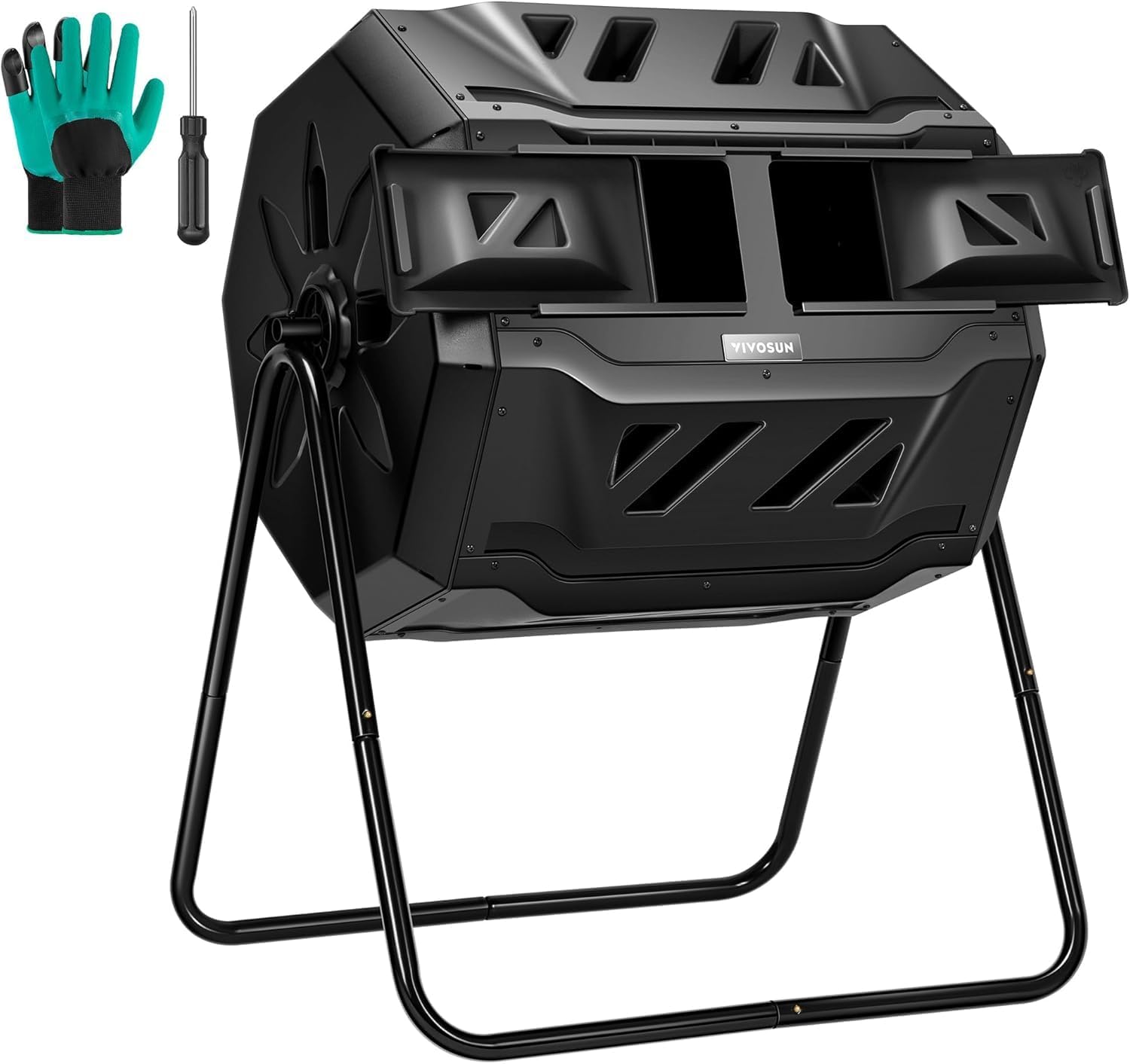
VIVOSUN Outdoor Tumbling Composter, Dual-Chamber 43 Gallon
| Material Type | galvanized steel |
|---|---|
| Capacity | 43 gallons |
This VIVOSUN tumbling composter is a practical backyard unit built around two rotating chambers so you can add fresh waste to one side while the other finishes breaking down. The 360 degree tumbling design with deep internal fins makes turning the pile simple and helps break up clumps without digging. Ventilation slots around the drum promote airflow for aerobic decomposition, and the metal frame with a PP plastic barrel is designed to resist corrosion and outdoor weathering. It comes with waterproof garden gloves and small digging claws to make loading and aerating easier. At 43 gallons it is sized for a family garden or vegetable patch but is compact enough for a patio or small yard. Limitations to note are that it requires occasional manual turning to maintain activity and that the plastic drum means it will warm less in cold climates than insulated models, so composting speed will vary by season. Assembly and placement on a level spot are also important for smooth rotation.
Best for: Gardeners who want a hands-on, efficient system to produce regular batches of compost without digging a pile and who prioritize continuous output and easy turning.
Less Ideal for: People who need a completely hands-off hot composter or who compost only very large volumes; those in very cold climates seeking year-round rapid breakdown should consider insulated or electric options.
- Dual chambers let you load new material while another batch finishes, ensuring continuous compost production
- 360 degree tumbling with deep fins makes mixing and aeration easy without manual digging
- Galvanized steel frame and PP plastic barrel designed for outdoor durability and corrosion resistance
- Ventilation slots support aerobic breakdown for faster, less smelly composting
- Plastic drum offers less insulation than insulated or fully metal units, slowing composting in cold weather
- Requires manual turning and regular management to maintain heat and moisture for fast results
Verdict: If you want steady, manageable batches of compost with easy tumbling and continuous use, this dual-chamber VIVOSUN tumbler delivers practical, durable performance.
Choosing the Right Urban Compost Bin: Key Factors to Consider
Odor Control and Sealing
In urban settings neighbors and indoor spaces are close by, so controlling odors is essential. Look for bins with tight-fitting lids, integrated charcoal filters, or internal baffling that keeps fermenting material sealed away from living areas. Good odor control is also about airflow balance; too little ventilation promotes anaerobic breakdown and bad smells, while well-designed vents allow oxygen in and gases out without letting odors escape readily.
If you plan to keep the bin on a balcony or in a compact yard, frequent monitoring and a system that minimizes surface exposure will reduce complaints and help maintain neighbor-friendly composting routines.
Airflow and Aeration Design
Proper aeration speeds decomposition and limits anaerobic pockets that produce foul smells. Urban compost bins use passive vents, internal channels, or tumbling mechanisms to keep material oxygenated. Evaluate whether the design allows you to stir or turn the pile easily, or if it relies on passive airflow alone. Passive systems can work well if the bin has a layered airflow path and coarse bulking agents are added regularly.
Consider how accessible vents are for cleaning and whether the bin's shape promotes even airflow through the whole mass. In small volumes, compaction is a real risk, so features that prevent compaction help maintain consistent aeration and faster, cleaner composting.
Size, Footprint, and Placement Flexibility
Urban gardeners need compost solutions that match the available space. Compact, vertical designs take up little floor area but still hold a useful volume of material. Low-profile or stackable options can fit under tables or in corner spaces. Think about where you will place the bin: sheltered balconies, small patios, laundry rooms, or garages all have different constraints for moisture and access.
Also consider harvest access. A bin that requires you to empty large volumes from the top can be cumbersome in small spaces. Designs with bottom-access doors or removable trays make it easier to retrieve finished compost without spilling or dragging the entire unit around.
Material, Durability, and Weather Resistance
Materials determine how long the bin will last outdoors and how it responds to temperature swings and moisture. Durable plastics resist rot and rust, while metal components should be treated or stainless to avoid corrosion. UV-stabilized materials help prevent cracking from sun exposure on open balconies. If you plan to keep the bin under cover, lighter materials are acceptable, but fully outdoor placements need more robust construction.
Check for sturdy fastenings and simple replaceable parts like lids or filters. A well-built bin reduces maintenance time and avoids mid-season failures that are hard to repair in dense urban settings.
Maintenance and Ease of Harvest
Urban gardeners benefit from low-maintenance systems that do not require daily attention. Consider how easy it is to add scraps, turn or mix the pile, and remove finished compost. Features that reduce contact with decomposing material, such as removable liners, slides, or trays, make upkeep cleaner and faster.
Also evaluate how straightforward cleaning and sanitizing vents, filters, or internal components will be. Systems that require special tools or difficult disassembly create friction for busy city dwellers and often lead to neglected maintenance.
Pest Resistance and Sanitation
Close proximity to neighbors means pests can be a real concern. Choose bins with secure lids and designs that limit access for rodents, raccoons, or flies. Elevated or sealed openings, fine-mesh venting, and internal barriers help reduce pest attraction. Regularly burying food scraps, keeping a good mix of browns, and avoiding problematic items like large amounts of meat will also limit pest issues.
Sanitation also matters for shared or multi-family buildings. Surfaces that wipe clean and parts that can be rinsed make the system easier to maintain in communal spaces and reduce unwanted smells or residues.
Types of Urban Compost Bins and How They Work
Urban compost bins come in several basic forms: compact tumblers, vertical stacking bins, lidded barrel-style bins, and counter-top systems for smaller volumes. Tumblers speed mixing and are convenient when you can rotate the drum, while vertical and barrel designs maximize capacity in a small footprint. Counter-top or worm-composting setups are ideal for indoor processing of kitchen scraps.
Understanding how each design moves air and mixes material helps you match a bin to your routine. Tumblers require manual turning but reduce the need to dig or scoop, stackable bins allow staging of active and curing material, and enclosed barrels balance containment with airflow to limit smells.
- Tumblers: Good for quick mixing and aeration, require space to turn and some effort.
- Vertical bins: Save floor space and allow layering, often offer bottom access for harvest.
- Barrel-style: Simple containment with passive vents, best for sheltered outdoor spots.
- Indoor and worm systems: Best for apartments and for processing small amounts of food waste.
Setting Up an Urban Compost Routine
Create a straightforward routine to keep your urban compost bin healthy. Start by balancing green kitchen waste with brown carbon material such as shredded paper, dry leaves, or cardboard. In small systems, avoid adding large quantities of wet food waste at once to prevent compaction and odors.
Place the bin on a stable, level surface with some airflow underneath if possible. Rotate or turn the material according to the design: daily or several times a week for tumblers, weekly for active piles, and as-needed for passive bins. Keep a small stash of bulking material nearby to add when scraps get too wet.
- Balance greens and browns to control moisture and odor.
- Chop or shred larger items to speed breakdown in small volumes.
- Monitor moisture; the mix should feel like a damp sponge, not dripping wet.
Common Troubleshooting in Small-Scale Composting
Smell, slow decomposition, and pests are the most common problems for urban composters. Bad smell usually signals too little air or too much wet material. Adding coarse dry carbon, increasing aeration, and reducing wet additions will help. If decomposition is slow, check that the pile is warm enough and not overly compacted.
For pest issues, secure the lid, avoid meat and oily foods, and consider placing the bin on a raised, enclosed base. If flies are a problem, bury new food under a layer of brown material and consider a fine mesh around vents to prevent entry without restricting airflow.
- Fixing odors: add dry carbon and increase aeration.
- Improving speed: chop scraps, monitor temperature, and avoid compaction.
- Pest prevention: secure lids and avoid attractants like meat and dairy.
Compost Uses and How to Apply It in Urban Gardens
Finished compost is a nutrient-rich soil amendment for potted plants, raised beds, and container gardens. In urban settings, it improves water retention and reduces the need for frequent fertilizing. Use a thin top-dressing on container mixes or blend compost into potting soil at low rates to enrich planting media without overloading salts or nutrients.
Cure compost fully before use to avoid transferring unfinished material to sensitive plants. Sift or screen compost for a finer texture if you will use it in seed starting or delicate container mixes.
- Top-dressing houseplants: apply a thin layer to provide slow-release nutrients.
- Mixing with potting soil: use up to 20 percent finished compost for containers.
- Mulching garden beds: apply a light layer to improve soil structure over time.
Legal and Building Considerations for City Composting
Check local regulations and building rules before installing a bin, especially in multi-family complexes. Some buildings restrict outdoor storage or limit types of waste that can be processed due to pest control or sanitation policies. Batteries, large amounts of meat, and certain oils are usually discouraged regardless of rules.
If you live in a rental or strata, discuss placement and maintenance plans with property managers and neighbors. Shared responsibilities for upkeep and clear routines help avoid complaints and ensure the compost system remains an asset rather than a nuisance.
- Confirm local codes and building rules related to outdoor waste handling.
- Communicate placement and maintenance to neighbors in shared spaces.
- Keep a simple record of maintenance to demonstrate responsible use when needed.
How We Chose the Best Urban Compost Bin
We prioritized features that matter in compact, often odor-sensitive urban settings. Our evaluation focused on airflow and ventilation because steady oxygen flow speeds decomposition and reduces anaerobic smells. We assessed ease of use including access for adding scraps, turning or mixing material, and how simple it is to harvest finished compost in tight spaces. Build materials and durability were considered to ensure a bin withstands outdoor exposure on balconies or patios without degrading quickly. Footprint and storage flexibility was a key filter so bins that fit narrow corners, small decks, or under counters were favored. We also checked odor control design elements such as sealed lids, charcoal filtering options, or internal baffling that isolates smells from living spaces. Products were excluded if they required large outdoor plots, substantial assembly that is impractical in apartments, or used materials unsuitable for prolonged outdoor urban exposure. We did not consider setups that depend entirely on large-scale tumblers or backyard-only systems. The final picks represent a balance of low-odor performance, manageable size for city living, straightforward maintenance, and durable construction.
FAQ
Can I compost food scraps in an apartment?
Yes. Small indoor systems like worm bins or compact counter-top digesters work well for apartments. Keep material balanced with dry carbon, maintain ventilation, and empty or harvest regularly to prevent odors.
How often should I turn a tumbler-style urban compost bin?
Often it depends on temperature and activity, but turning a tumbler every few days speeds breakdown and keeps material aerated. In cooler seasons, less frequent turning is fine; monitor smell and moisture for cues.
What should I avoid putting in an urban compost bin?
Avoid large meat scraps, bones, oily foods, and large amounts of dairy since they attract pests and create strong odors. Also limit citrus and onion in large quantities if you have sensitive plants or living spaces nearby.
How do I control flies and fruit flies around a small compost bin?
Bury fresh food under a layer of browns, use a tight lid, and consider a fine mesh over vents. Keeping the mix drier and adding coarse material reduces fly attraction.
Is finished compost safe to use in potted plants?
Cured compost is generally safe and beneficial for potted plants when blended properly. Screen for large particles and mix at moderate ratios with potting mix to avoid nutrient imbalances or excess moisture retention.
Final Verdict
Choosing the right Urban Compost Bin means balancing odor control, aeration, and a compact footprint that fits your city lifestyle. Prioritize a design with good airflow and simple access for turning and harvest, plus materials that stand up to balcony or patio conditions. Expect tradeoffs between capacity and space; pick the system that matches the volume of scraps you produce and the maintenance routine you will realistically keep. With the right bin and a simple composting routine, you can turn kitchen waste into valuable soil amendment even in the smallest urban settings.
