

Note: This article contains affiliate links. If you click on these links and make a purchase, I may earn a small commission at no extra cost to you. This helps support my research and content. Read my full affiliate disclosure here.
If you are starting an indoor garden, the right beginner grow tent defines how easy and successful those first cycles will be. A tent creates a controlled microclimate that makes temperature, humidity, and light easier to manage than an open room. For newcomers, the best options are easy to set up, offer effective light containment, and have accessible ventilation and access points. This guide covers our shortlist of top beginner grow tents and explains the practical features that matter for small-scale, low-complexity grows. We evaluated tents for build convenience, light control, airflow management, and durability to help you pick a setup that fits your space and goals. Read on to see the tents that meet those criteria and what to consider when choosing one.
Top Picks at a Glance
| Best Overall The best all-around choice for most situations | VIVOSUN 2×2 ft Smart Grow Tent Kit with 100W Full-Spectrum LED |  |
| Best Quality Built to a higher standard if you want something more solid | VIVOSUN Smart Grow Tent Kit 2x4x6 with 200W Full-Spectrum LED and GrowHub Controller |  |
| Best Value The sweet spot between price and what you get | VIVOSUN 2x4x6 Grow Tent (48" x 24" x 72") |  |
| Best Budget The cheapest option that still gets the job done reliably | MELONFARM 24 x 16 x 24 in Grow Tent with Double Viewing Door and Reflective Lining |  |
| Highest Rated A top-rated pick with lots of positive feedback | Spider Farmer 4.6×2.3 Grow Tent (55×28×80) – Master Series |  |
| Most Popular A crowd favorite that many people choose with confidence | VIVOSUN 30 x 18 x 36 Inch Small Grow Tent with Reflective Mylar Interior |  |
| Best Seller A high-volume bestseller chosen again and again | MELONFARM Small Grow Tent for Hydroponics, 18 x 18 x 36 in |  |
VIVOSUN 2×2 ft Smart Grow Tent Kit with 100W Full-Spectrum LED

| Frame Material | Metal |
|---|---|
| Inner Material | Mylar |
| Outer Material | 1680D Oxford Polyester Fabric |
| Light Source Wattage | 100 watts |
| Chamber Volume | 16 cubic feet |
This VIVOSUN kit is designed as an easy-to-run starter system for someone setting up a small indoor garden. The package combines a heavy-duty 1680D grow tent lined with reflective Mylar, a 100W full-spectrum LumaLight for seedling-to-harvest use, a 4" inline R4 fan with carbon filter for ventilation, and a WiFi-enabled GrowHub A22 controller to schedule and monitor devices. Typical setup is straightforward: assemble the tent, hang the light with included straps, connect the fan and filter, place grow bags and trellis, then link devices to the app. The practical benefits are clear for beginners — components are matched for a small two-plant footprint, the smart controller simplifies timers and basic environmental on/off control, and the tent fabric and Mylar help retain and reflect light efficiently. Important limitations are the compact internal volume, which restricts plant size and number, and the 100W light while capable for small grows may be marginal for very light-hungry crops or denser canopies. Users should plan plant selection and training to fit the tent height and footprint.
Best for: Growers who want a balanced, ready-to-use starter system that simplifies setup and control for a small indoor grow and prefer app-based scheduling over building components separately.
Less Ideal for: Experienced growers planning a larger multi-plant or high-yield flowering setup or anyone needing tall vertical space should look at larger, more powerful systems.
- Complete kit includes tent, 100W full-spectrum LED, inline fan, carbon filter, GrowHub controller and basic accessories for immediate setup
- Smart GrowHub A22 enables WiFi scheduling and remote on/off control for simpler environment management
- Durable 1680D outer fabric with reflective Mylar interior maximizes light efficiency
- Included ventilation components and carbon filter support odor control and steady airflow for healthier plants
- Compact 2x2x4 ft size limits plant number and vertical space for taller varieties
- 100W LED may be underpowered for very light-demanding crops or heavy flowering in this footprint
Verdict: A compact, all-in-one smart starter kit that gives beginners everything needed to run a small, easy-to-manage indoor grow.
VIVOSUN Smart Grow Tent Kit 2x4x6 with 200W Full-Spectrum LED and GrowHub Controller

| Included components | 200W LED, 2×4 grow tent, 4" ventilation kit |
|---|---|
| Frame material | Alloy Steel |
| Inner material | High Reflective Mylar |
| Outer material | 600D Oxford Canvas, PE |
| Light wattage | 200 watts |
This VIVOSUN kit packages a 2x4x6 grow tent with a 200W full-spectrum LumaLight LED, GrowHub E42A+ smart controller, AeroZesh inline fan and a full set of accessories to get a beginner growing quickly. It is typically used as a self-contained environment for starting seedlings through to small-scale vegetative and flowering cycles for up to two to four plants in pots. The integrated controller and app let you schedule light cycles and monitor temperature and humidity without separate devices, while the tent's reflective mylar and strong alloy-steel frame help concentrate light and stay stable. Practical benefits include a matched light and ventilation system that reduces guesswork, included carbon filter and ducting for odor control, and starter gear like grow bags and a trellis net. Limitations are the mid-range 200W light which is fine for small grows but may be marginal for high-intensity flowering, and the tent footprint restricts larger plant counts or big pots. Assembly and setup are straightforward but beginners should plan for additional monitoring as plants get bigger.
Best for: A performance-minded beginner who wants a matched, smart-controlled grow environment to learn proper light and airflow management without sourcing parts separately.
Less Ideal for: Experienced growers who need larger canopy area or very high-light flowering setups or gardeners who plan to scale to many plants.
- All-in-one kit includes light, tent, inline fan, controller and common accessories for quick setup
- GrowHub E42A+ provides WiFi monitoring and automated control of light and ventilation
- Durable construction with alloy-steel frame and high-reflective mylar improves light efficiency
- Includes carbon filter and ducting for odor control and clean ventilation
- Starter accessories such as grow bags, trellis net and pruning shears reduce additional purchases
- 200W LED is suitable for seedlings and small grows but may be underpowered for large flowering yields
- Tent size limits number and pot size of plants for growers who want to scale up
Verdict: Buy this kit if you want a performance-focused beginner setup with smart control and matched light and ventilation that gets a small indoor grow up and running quickly.
VIVOSUN 2x4x6 Grow Tent (48" x 24" x 72")

| Number Of Vents | 9 |
|---|---|
| Frame Material | Metal |
| Item Highlight | Smooth Zippers. View Window, 1680D Oxford Canvas, Multi-Port Indoor Environmental Control, Heavy-Duty Metal Support |
This VIVOSUN 2x4x6 grow tent provides a practical, no-frills grow space for beginners who want a durable, controllable environment. The interior uses hexagon-pattern mylar to maximize light diffusion and reduce hotspots, while 1680D Oxford fabric and thick inner layers block light and resist tears. Metal frame connectors and top bars give secure support for lights and inline fans, and the tent includes multiple duct ports and cable openings to fit ventilation and climate control gear. A clear viewing window and removable mesh covers make monitoring and cleaning easier without disturbing plants. Setup is tool-free and straightforward, and the layout accommodates a basic hydroponic or soil setup for a few medium pots. Limitations to note are the modest footprint, which suits small grows but not larger multi-tier systems, and that the listing focuses on tent structure only so buyers must choose compatible lights, fans, and controllers separately. For a beginner focused on reliability and easy equipment integration, this tent covers the essentials well.
Best for: Gardeners who want a compact, durable tent to set up a controlled beginner grow with straightforward integration of lights and fans and minimal fuss during assembly and maintenance.
Less Ideal for: Growers planning large canopies, multi-tier racks, or complete plug-and-play systems that include lights and controllers should look for larger tents or full kits instead.
- High-reflectivity hexagon-pattern mylar for more even light distribution
- Sturdy 1680D Oxford fabric and reinforced inner layers for durability and light blocking
- Multiple duct ports and cable openings for easy integration of ventilation and climate gear
- Metal frame connectors and top hanging bars that support heavy lights and equipment
- Tool-free assembly and removable mesh covers for simpler setup and maintenance
- Footprint is limited to a small 2×4 area, so it is not suitable for larger or multi-tier grows
- Does not include lighting, ventilation, or controller components which must be purchased separately
Verdict: A tough, easy-to-assemble 2x4x6 tent that gives beginners a reliable, well-supported grow space designed for straightforward climate equipment integration.
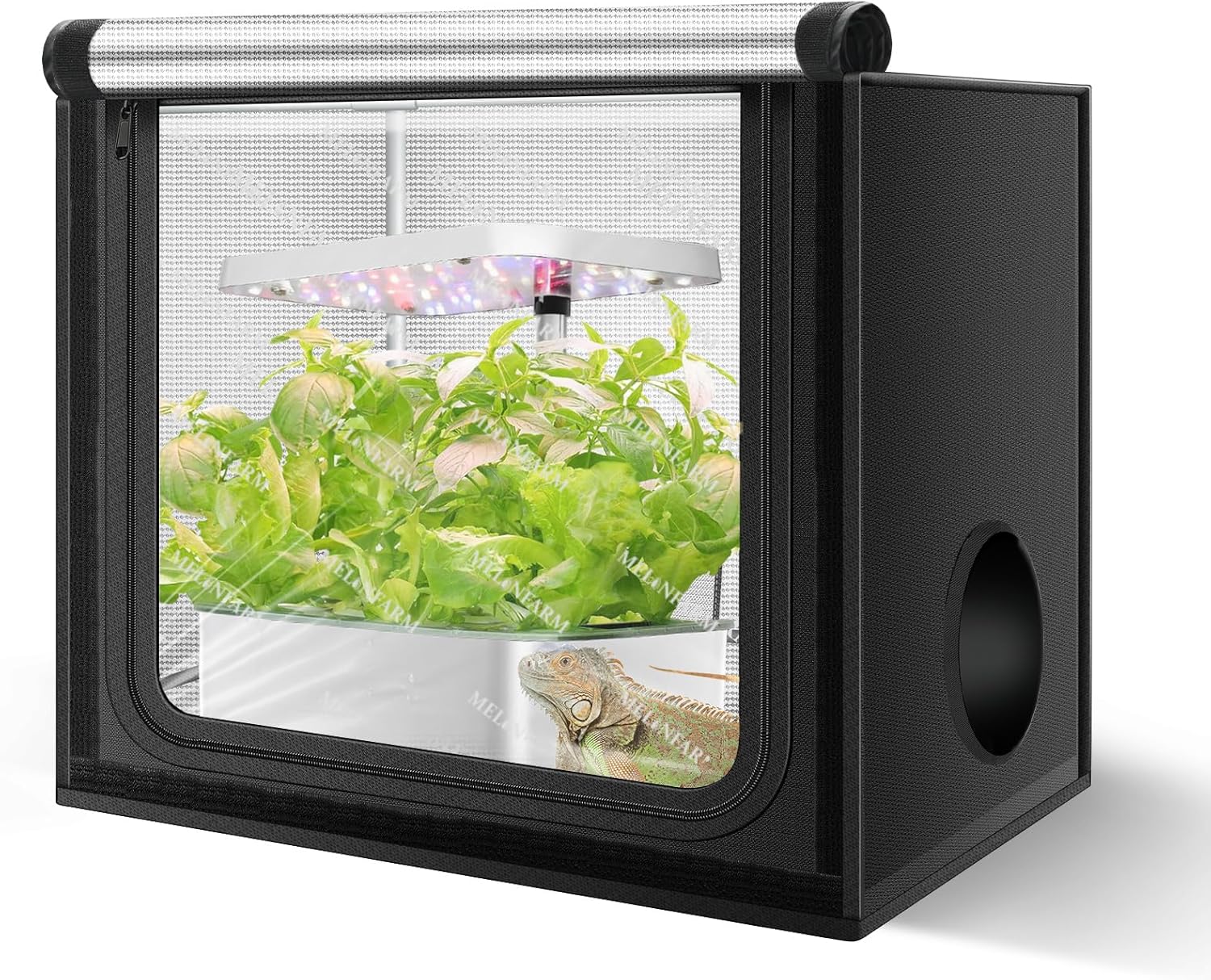
MELONFARM 24 x 16 x 24 in Grow Tent with Double Viewing Door and Reflective Lining
| Capacity | 7.68 cubic feet |
|---|---|
| Frame Material | Iron |
| Inner Material | Polyethylene Terephthalate (PET) |
| Includes | Floor tray and storage bag |
This small MELONFARM grow tent creates a controlled microclimate for seed starts, herbs, or a single small crop. It uses a 2100D high-reflective PET lining to boost light efficiency from grow lamps and a reinforced iron frame with double-stitched canvas for easier setup and reasonable durability. The double-layer observation door includes a transparent panel so you can check plants without opening the tent and disturbing temperature or humidity, while the opaque layer adds privacy and light control. The included removable floor tray keeps spills and mess contained and the zippered access makes placing and removing plants straightforward. Because of its compact footprint it is best for a countertop, closet, or spare corner rather than full-scale rooms. Buyers should expect modest internal space that limits the number and size of plants and may need to add a small fan or controller for active ventilation and temperature control. For a beginner on a budget this tent covers the essential features needed to start indoor growing with minimal setup fuss.
Best for: Beginners who want an affordable, compact grow space to start seeds, grow herbs, or run a single small hydroponic setup in an apartment or spare room.
Less Ideal for: Growers who want to run multiple large plants, small-scale commercial grows, or setups that require significant ventilation and environmental control should choose a larger, more feature-rich tent.
- Highly reflective 2100D PET lining increases light utilization for indoor lamps
- Reinforced iron frame and double-stitched canvas improve stability and durability
- Double-layer observation door lets you check plants without repeatedly opening the tent
- Removable floor tray and zipper access simplify cleaning and plant maintenance
- Small internal volume restricts number and size of plants
- No built-in ventilation fan or ports for integrated climate control
Verdict: A budget-friendly, compact grow tent that gives beginners the reflective lining and simple access features needed to start indoor growing easily.
Spider Farmer 4.6×2.3 Grow Tent (55×28×80) – Master Series

| Chamber Volume | 70 cubic feet |
|---|---|
| Frame Material | Steel |
| Inner Material | Mylar |
| Outer Material | Mylar |
| Capacity | 140 pounds |
This Spider Farmer Master Series grow tent provides a durable, lightproof environment for beginners who want a dependable indoor setup. Constructed from high-density 1680D Oxford canvas and reflective mylar, the tent is built to lock out light and maximize internal light use. It includes reinforced steel poles and adapters rated to support heavy lights and filters, a removable waterproof floor tray for easy cleaning, an enlarged observation window, and multiple cable pass-throughs for tidy wiring and smart gear integration. Setup is tool-free and straightforward: assemble the metal frame, pull the tent over it, add the tray and hanging bars, and you can start using it quickly. Practical benefits for new growers include solid stability for midweight fixtures, good light control for consistent plant cycles, and organized cable routing for app‑controlled devices. Limitations to note are its compact footprint suited for one to a few plants and the lack of bundled ventilation or lighting equipment, so you will need to plan for a compatible fan and light separately.
Best for: Buyers who prioritize a reliable, lightproof, and stable tent for consistent indoor grows and want a solid foundational enclosure to pair with their chosen lights and ventilation.
Less Ideal for: Gardeners needing a full starter kit with included fan and lights or those who require a much larger footprint for numerous plants.
- Thick 1680D canvas and diamond mylar maximize light reflectivity and reduce leaks
- Reinforced steel poles and adapters support up to roughly 150 lb for heavy lights and filters
- Tool-free assembly speeds setup for first-time growers
- Multiple cable pass-throughs and hooks simplify wiring and smart gear integration
- Removable waterproof floor tray and enlarged observation window improve maintenance and monitoring
- Does not include ventilation or lighting components so you must purchase compatible fan and lights separately
- Relatively small internal area limits plant count to a few pots
Verdict: A rugged, lightproof tent that gives beginners a stable, no-nonsense enclosure to build a reliable indoor grow around.
VIVOSUN 30 x 18 x 36 Inch Small Grow Tent with Reflective Mylar Interior

| Frame Material | Metal |
|---|---|
| Inner Material | Polyethylene Terephthalate (PET) |
| Item Highlight | Metal Frame and Metal Corners, Heavy-duty Zippers, 100% Reflective Mylar Interior, Observation Window |
| Light Source Wattage | 100 watts |
This 30 x 18 x 36 inch VIVOSUN grow tent is a straightforward small-scale shelter for starting seeds, growing one to two plants, or containing a compact hydroponic setup. It uses a reinforced 600D Oxford canvas with a PE backing and 100% reflective mylar interior to maximize light use while the metal poles and tool-free corner connectors create a stable frame that is simple to assemble. The tent includes heavy-duty SBS zippers, multiple duct and cord ports, an observation window and a removable floor tray that makes maintenance and cleaning easier. The top bar is rated to hold hanging equipment and straps are provided for mounting smaller filters or lights. For a beginner this tent keeps light and odors contained, simplifies environmental control in a closet or garage, and fits small spaces where a larger tent would not. Limitations are its small footprint, which restricts plant count and larger equipment, and the modest 100 watt recommended light spec—buyers wanting multi-plant or larger automated systems will need a bigger tent and stronger lighting.
Best for: A cautious beginner who values reliable construction and wants a compact, easy-to-assemble tent to learn indoor gardening in a closet, balcony, or small spare room.
Less Ideal for: Experienced growers who need space for multiple large plants, extensive equipment, or high-wattage lighting should look at larger tents and professional systems.
- 100% reflective mylar interior improves light efficiency for small setups
- Sturdy metal frame with tool-free corner connectors for quick assembly
- Heavy-duty zippers and black inner lining provide effective lightproofing
- Removable floor tray and observation window simplify maintenance
- Small internal volume limits it to one to two plants and compact equipment
- Recommended light wattage is modest, so higher-output lights may require a larger tent
Verdict: A compact, well-built beginner tent that maximizes light use and simplifies setup for one to two plants in small indoor spaces.
MELONFARM Small Grow Tent for Hydroponics, 18 x 18 x 36 in

| Frame Material | Metal |
|---|---|
| Inner Material | Polyester |
| Outer Material | Oxford Cloth |
| Chamber Volume | 0.15 cubic feet |
The MELONFARM small grow tent provides a simple, no-frills enclosure for indoor hydroponic or soil-based plants in tight spaces. Sized for a single Aerogarden-style system or a couple of small pots, the tent uses a 600D diamond mylar canvas with a waterproof polyester film lining to reflect light and help retain heat and humidity. It has a heavy-duty zipper door, two clear observation windows and a removable floor tray for easy cleanup. Assembly is tool-free and straightforward, so you can have a working grow space set up quickly in a closet, balcony corner, or basement. Because it is compact and light, ventilation options and larger lighting rigs are limited, so it works best with low-power LED setups and small fans. Build materials are adequate for casual hobbyists but not as robust as higher-end, commercial tents, so expect normal wear if used intensively over years.
Best for: Buyers who need an affordable, compact grow space for one or two small hydroponic systems or a few starter plants and who prioritize quick setup and efficient light use.
Less Ideal for: Not a good fit for growers planning multiple larger plants, full-size lighting rigs, or heavy-duty continuous use where a sturdier, larger tent is required.
- Highly reflective 600D inner lining improves light efficiency for small LEDs
- Compact footprint fits closets, balconies, and other tight indoor spaces
- Tool-free assembly and heavy-duty zipper door make setup and access easy
- Clear observation windows let you check plants without opening the tent
- Included floor tray simplifies watering cleanup and protects surrounding surfaces
- Limited internal space restricts the size and number of plants and larger light or ventilation equipment
- Materials and frame are basic compared with premium grow tents, so longevity may be lower with heavy use
Verdict: A low-cost, compact grow tent that boosts light efficiency and sets up quickly, making it an easy choice for beginners and small-space hydroponic setups.
Choosing the Right Beginner Grow Tent: Key Factors to Consider
Tent Size and Footprint
Pick a tent that fits the space you actually have available and matches the number of plants you plan to grow. Smaller tents are easier to light evenly and are less demanding on ventilation, which helps beginners keep environmental variables under control.
Consider how much headroom you need for lights and plant height through a full cycle. A tent that is too tall or too wide for your room creates wasted space and can complicate airflow. Conversely, a tent that is too small will crowd plants and make routine tasks like pruning and watering awkward.
Light Control and Interior Reflectivity
Good light containment stops leaks that waste light and disturb dark-period requirements. Interior reflective lining improves the efficiency of your lighting so you use less power to achieve the same light intensity at canopy level.
Pay attention to the quality of the internal reflective fabric and whether seams or zipper areas are potential weak points for light leaks. For seedlings and vegetative stages, consistent light distribution matters more than extreme intensity.
Ventilation Options and Port Placement
Proper airflow prevents heat and humidity buildup, reduces the risk of mold, and supplies fresh CO2 to plants. Check how many ports the tent has, their sizes, and locations to ensure they line up with your fan and filter plan.
Duct ports placed high allow heat to exit, while lower intake ports help bring in cooler air. Having several ports of varying sizes gives flexibility for different fan and filter combinations and simplifies installation as your ventilation needs change.
Frame Construction and Stability
A sturdy frame supports lights, filters, and accessory clips without sagging. For beginners, a simple interlocking pole design with solid connectors reduces assembly frustration and minimizes wobble when accessing the grow area.
Consider how the frame connects at corners and whether poles are metal or plastic-reinforced. Heavier gauge poles resist bending under the weight of hanging fixtures, which is important if you add equipment later.
Access, Maintenance, and Usability Features
Doors, observation windows, removable trays, and internal hang points make daily tasks easier. Wide zippered doors and additional access panels reduce the need to reach past plants, making watering and training safer and less stressful for fragile seedlings.
Removable floor trays help with spill containment and cleaning, while observation windows let you check plants without disturbing the internal environment. These conveniences can significantly shorten the learning curve for first-time indoor growers.
Durability and Component Quality
Material strength and zipper quality determine how long a tent will maintain light seals and structural integrity under repeated use. Durable fabric resists tears and punctures, and heavy-duty zippers are less likely to split when doors are opened frequently.
Look for thick canvas or Mylar-backed fabrics and reinforced stitching at stress points. Durable components reduce the need for repairs and replacements that can interrupt grow cycles.
Choosing a Starter Setup Size
For a first tent, think about the number of plants you want to manage simultaneously and the space you have available. Common beginner-friendly footprints fit into a closet or spare corner and support a handful of plants from seedling to early flowering.
Smaller setups lower the barrier for environmental control. With a compact tent you can use a single modest light and a small inline fan without creating excessive heat or humidity issues. If you expect to scale up later, plan your initial tent location so it can be swapped for a larger one without major rearrangement.
- Measure the intended location before buying to confirm clearance for door swing and ventilation.
- Allow headroom for lights and future plant height.
- Start small if you are experimenting with techniques like training or hydroponics.
Setting Up Ventilation for Stable Conditions
A proper ventilation plan balances intake and exhaust so air cycles without creating large temperature swings. For tight beginner tents, a small exhaust fan paired with passive intakes often suffices. Position exhaust high and intake low to support natural convection.
Ducting, carbon filters, and fan speed control are elements you may add gradually. Avoid overcomplicating the initial build; instead prioritize a clear airflow path and moderately sized ports that fit common inline fans.
- Match port diameters to your fan and filter specifications.
- Include a small oscillating clip fan inside for gentle air movement around foliage.
- Use ducting with minimal bends to preserve fan efficiency.
Lighting Choices and Mounting Considerations
For beginners, lights with simple mounting systems and consistent light spread are easiest to work with. Hang lights from the tent's internal support points and keep the height adjustable so you can lower or raise the fixture as plants grow.
Consider cooling needs when choosing a light type; higher-output units may require stronger ventilation. Ensure hanging hardware is rated for the fixture weight and provides fine height adjustments for safe canopy management.
- Confirm the tent has reinforced hang points for lights.
- Use adjustable ratchet hangers for precise height control.
- Monitor canopy distance to avoid light burn or stretch.
Organizing Accessories and Cables
Keeping power cables, timers, and controllers tidy reduces hazards and simplifies daily routines. Use external power bar access and route cables through designated ports to maintain light seals and reduce clutter within the tent.
Group time- and environment-control devices near the tent for easy adjustments and visibility. Labeling cords and using simple cable management saves time during maintenance and reduces the chance of accidental disconnection.
- Route cables through utility ports rather than unzipping doors.
- Place timers and controllers outside the tent to protect them from spills.
- Secure loose cords away from damp areas.
Maintenance Tips to Keep Environment Stable
Regular cleaning of the interior floor tray, zippers, and ports helps prevent mold and pests. Inspect seams and corners for light leaks and re-seal or patch small tears promptly to preserve light containment.
Maintain a simple log of temperature and humidity readings during the first few cycles to learn normal ranges for your setup. That data helps you tune fan speed, intake, and light height for consistent plant performance.
- Clean removable trays and wipe interior reflective surfaces monthly.
- Lubricate zippers with a dry fabric-safe product if they start to stick.
- Keep a small hygrometer and thermometer inside the tent for monitoring.
How We Chose the Best Beginner Grow Tent
We focused on traits that directly affect early success for indoor gardeners using a beginner grow tent. Key evaluation criteria included light containment and reflectivity because seedlings and vegetative plants need consistent, efficient lighting. Ventilation and port access were assessed to ensure tents accommodate common inline fans and filters without complex modification. Build quality and frame strength were considered for frequent door access and multi-season use, plus ease of assembly for users without tool experience. Material quality and zipper durability matter for long-term light seals and pest exclusion. Usability features like observation windows, removable floor trays, and internal hanging points were counted as beneficial for routine tasks. We excluded oversized, specialty, or commercial-grade tents that are impractical for a starter indoor garden and equipment bundles that bundle lights or extractors as inseparable products. The remaining selections prioritize compact footprints, clear ventilation layouts, and straightforward assembly so a new grower can set up, maintain, and learn without unnecessary complexity.
FAQ
What size grow tent should a beginner start with?
A small tent that fits in a spare closet or corner is usually best, such as footprints that support two to six plants. Smaller tents are simpler to light and ventilate and make environmental control more manageable for first-time growers.
Do beginner tents need a carbon filter right away?
Not always. Carbon filters are useful if odor control is needed or if you are running a high-output light that increases airflow. For modest starter setups, good exhaust and passive intake often suffice until you decide odor management is necessary.
How important are observation windows and access panels?
They are helpful conveniences. Observation windows let you check plants without disturbing conditions, and extra access panels make watering and training less awkward. These features save time and reduce stress on plants during routine care.
What ventilation setup works for a compact beginner tent?
A small inline exhaust fan with properly sized ports and a passive intake is usually adequate. Adding a small circulation fan inside the tent prevents heat pockets and encourages stronger stems without heavy airflow that stresses plants.
How do I avoid light leaks in a grow tent?
Inspect zipper areas and seams and keep doors fully closed during light periods. Use light traps on ports and check for pinholes or seam gaps. Repair small tears promptly and reposition internal fixtures that might press fabric against zippers.
How often should I clean the inside of a grow tent?
Wipe down interior surfaces and clean removable trays monthly or whenever you notice spills or visible residue. More frequent cleaning may be needed if you see pests, mold, or sticky buildup from foliar feeds.
Final Verdict
Choose a beginner grow tent that fits your space and keeps environmental variables simple to manage. Size, light containment, and ventilation layout should guide your decision because they determine how easy it is to maintain steady temperature, humidity, and light for seedlings and young plants. Accept tradeoffs between compactness and future expansion; smaller tents are easier to control, while larger tents provide flexibility as skills grow. Prioritize sturdy construction, accessible ports, and user-friendly features so you can focus on learning cultivation techniques rather than troubleshooting the environment.
