

Note: This article contains affiliate links. If you click on these links and make a purchase, I may earn a small commission at no extra cost to you. This helps support my research and content. Read my full affiliate disclosure here.
If you need an indoor grow space but have limited floor area, a small grow tent creates a controlled microclimate without taking over the room. The right tent preserves light, stabilizes temperature and humidity, and makes ventilation and odor control manageable in small apartments, balconies, or closets. This guide covers seven shortlisted Small Grow Tents chosen for their usable interior volume, build quality, and ease of setup. We evaluate each option for light containment, airflow and ventilation, durability, and ease of maintenance so you can pick the tent that fits your space and crop goals.
Top Picks at a Glance
| Best Overall The best all-around choice for most situations | VIVOSUN 2x2x4 Grow Tent with Reflective Mylar and Removable Floor Tray |  |
| Best Quality Built to a higher standard if you want something more solid | ATOUR 18×18×32 in Grow Tent with Observation Window and Floor Tray |  |
| Best Value The sweet spot between price and what you get | zazzy 24 x 24 x 55 in 600D Mylar High-Reflective Grow Tent |  |
| Best Budget The cheapest option that still gets the job done reliably | MELONFARM 24 x 16 x 24 in Indoor Grow Tent with Double Viewing Door and Reflective Mylar |  |
| Highest Rated A top-rated pick with lots of positive feedback | AC Infinity CLOUDLAB 422 Advance Grow Tent 2×2 (24" x 24" x 48") |  |
| Most Popular A crowd favorite that many people choose with confidence | VIVOSUN 30 x 18 x 36 in Small Grow Tent with Reflective Mylar |  |
| Best Seller A high-volume bestseller chosen again and again | MELONFARM Small Grow Tent for Hydroponics, 18 x 18 x 36 in |  |
VIVOSUN 2x2x4 Grow Tent with Reflective Mylar and Removable Floor Tray

| Capacity | 100 pounds |
|---|---|
| Frame Material | Metal |
| Inner Material | Mylar |
| Outer Material | Oxford Fabric, PE |
The VIVOSUN 2x2x4 grow tent is a compact indoor enclosure for hobby growers wanting a controlled microclimate for seedlings, herbs, or a single mature plant. It creates a lightproof space lined with hexagon-pattern mylar that reflects and diffuses light to reduce hotspots and improve uniform growth. The metal frame and reinforced connectors make the tent stable and able to support hanging lights and basic equipment, while multiple duct ports and cable openings simplify adding an inline fan or small filter. Practical details include an easy-view window to check plants without unzipping, upgraded zippers, and a removable floor tray and mesh covers that speed cleaning. For small setups the tent assembles quickly with no tools and keeps conditions predictable for hydroponic or soil grows. Limitations are its small footprint, which restricts plant count and larger equipment, and the tent does not include lighting or ventilation, so budget in those components when planning a complete system.
Best for: A practical grower who wants a compact, reliable tent to produce a consistent small harvest or to run a single-plant/hobby setup while keeping maintenance simple.
Less Ideal for: Growers planning multi-plant, large-pot, or commercial setups should choose a larger tent or a complete kit that bundles lighting and ventilation.
- High-reflectivity mylar interior improves light distribution and efficiency
- Sturdy metal frame and reinforced corners support hanging lights and equipment
- Multiple duct ports and cable openings for easy integration of fans and controllers
- Removable floor tray and mesh covers simplify cleaning and maintenance
- Transparent viewing window lets you inspect plants without disturbing the environment
- Small internal volume limits number and size of plants that can be grown simultaneously
- Does not include lights, fans, or filtration so additional purchases are required
Verdict: For small indoor gardens this tent delivers durable construction and highly reflective interior to maximize light efficiency in a compact footprint.
ATOUR 18×18×32 in Grow Tent with Observation Window and Floor Tray
| Frame Material | Metal |
|---|---|
| Inner Material | Polyester |
| Outer Material | Canvas, Polyester |
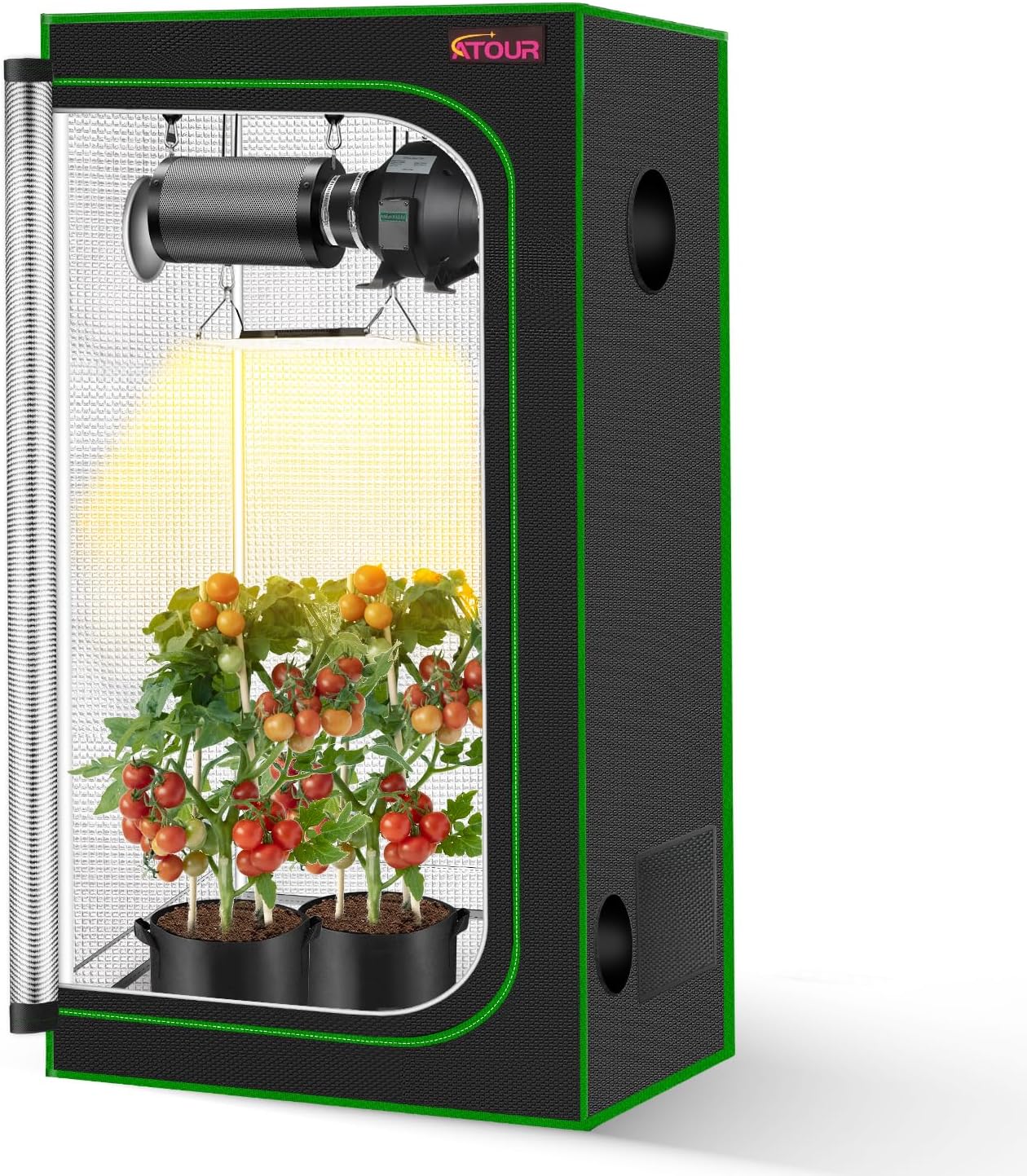
This ATOUR grow tent is built for small-scale, performance-focused indoor growing where light management and a sealed environment matter. The interior uses a highly reflective waterproof mylar lining to maximize lamp efficiency, while the 600D double-stitched canvas shell and metal frame help keep light and odor contained. Use it for single-plant or small multi-plant setups with a compact light, ventilation ducting and a small reservoir on the included floor tray. The large zipper door and clear observation window let you inspect plants without fully exposing the interior, and the storage bag keeps tools or nutrients nearby. Setup is straightforward and tool-free for most users. Limitations are its compact footprint, which constrains plant size and the number of fixtures you can mount, and the basic frame means heavy rigs or large inline fans will need careful support or external mounting solutions.
Best for: Serious small-space growers who prioritize light efficiency and a tightly controlled microclimate for single plants or compact setups.
Less Ideal for: Not a good choice for growers who need to run multiple large lights, big inline fans, or cultivate full-size plants that require more vertical space.
- Highly reflective mylar interior improves light utilization from grow lamps
- 600D double-stitched canvas and metal frame provide solid light and odor containment
- Observation window and large zipper door allow easy monitoring and access
- Includes floor tray and storage bag to keep runoff contained and tools organized
- Small internal volume limits plant size and the number of accessories you can install
- Frame and mounting points are basic so heavy equipment may require additional support
Verdict: Choose this tent when you need a compact, light-efficient growing chamber that maximizes lamp output for single-plant or small-space performance.
zazzy 24 x 24 x 55 in 600D Mylar High-Reflective Grow Tent

| Inner Material | Mylar |
|---|---|
| Frame Material | Metal |
| Chamber Volume | 18.33 cubic feet |
| Weight Capacity Maximum | 75 pounds |
This 24 x 24 x 55 inch zazzy grow tent is built for small-scale indoor growers who need a contained, efficient space. It uses a heavy 600D canvas shell with a 98 percent reflective mylar interior to boost light distribution and improve lamp efficiency, while heavy-duty zippers and double stitching help keep the tent lightproof. The metal frame with reinforced PA corner connectors supports hanging lights and a modest amount of equipment and the removable floor tray makes cleanup after nutrient spills or pruning easier. Multiple vent openings, a ducting window with mesh, and an observation window give practical access for fans, filters, and monitoring without compromising the interior environment. Setup is tool-free and straightforward for a single person. Limitations are the small internal volume, which restricts plant count and larger equipment, and the modest 75 pound stated weight capacity that limits very heavy lighting rigs or large filters. For a small grow aimed at efficiency and neatness this tent covers the essentials well.
Best for: Buyers who want a compact, efficient tent to run a one- to two-plant setup or a single small tray and who prioritize light efficiency, easy assembly, and tidy maintenance.
Less Ideal for: People planning a multi-plant, large canopy, or heavy-equipment setup should choose a larger tent with higher load capacity and more internal space.
- 600D canvas with 98% reflective mylar interior improves light use and helps yields
- Heavy-duty zippers and double-stitched seams provide effective lightproofing
- Tool-free assembly with reinforced corner connectors and metal poles for easy setup
- Multiple vents, ducting window with mesh, and observation window for ventilation and access
- Removable floor tray simplifies cleaning and spill containment
- Small internal volume limits number and size of plants that can be grown
- 75 pound maximum weight capacity restricts oversized lights or heavy accessories
Verdict: A compact, well-built grow tent that maximizes light efficiency and keeps a small indoor grow tidy and easy to manage.
MELONFARM 24 x 16 x 24 in Indoor Grow Tent with Double Viewing Door and Reflective Mylar
| Frame Material | Iron |
|---|---|
| Inner Material | Polyethylene Terephthalate (PET) |
| Capacity | 7.68 cubic feet |
| Chamber Volume | 125.85 cubic inches |
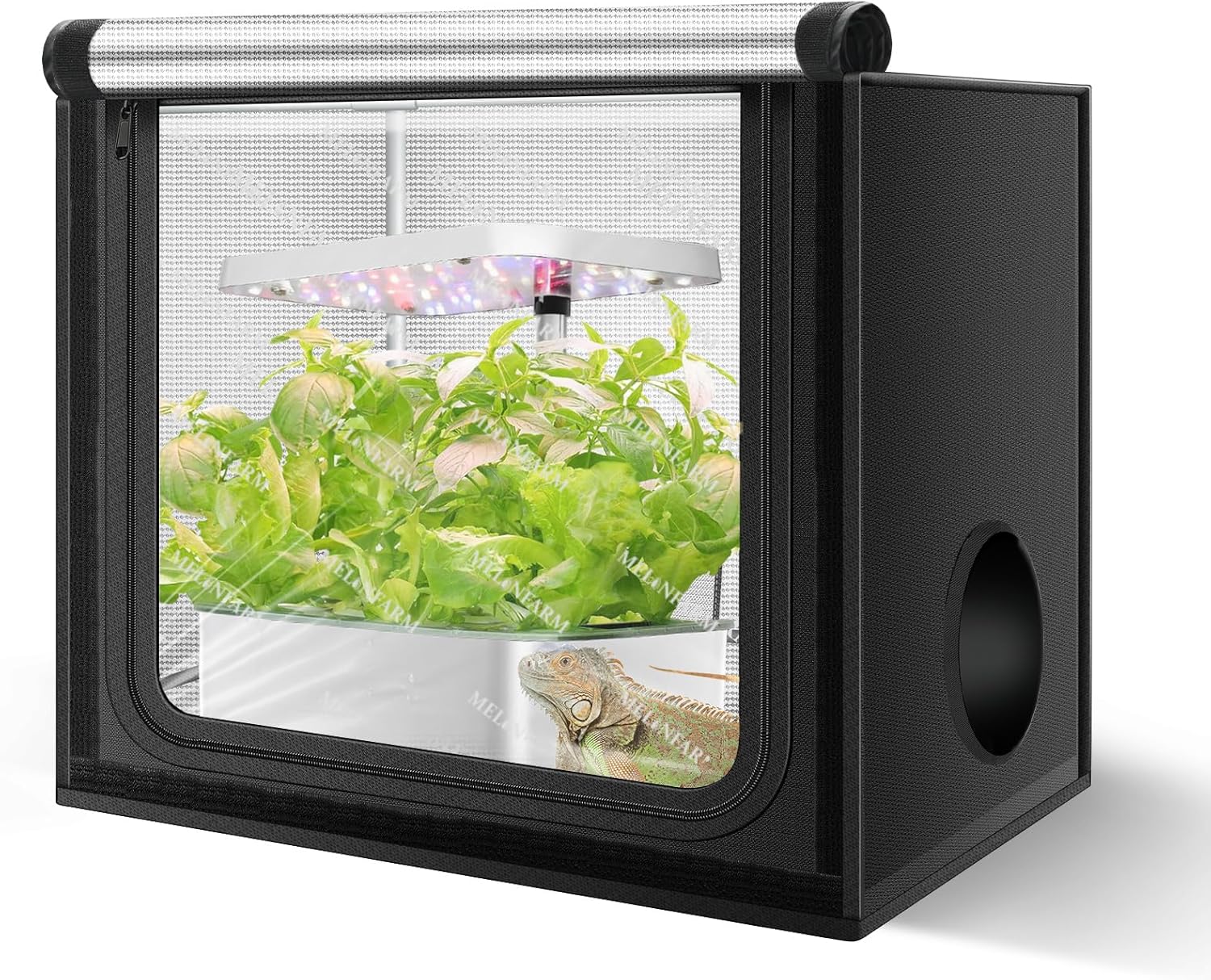
This compact MELONFARM grow tent is designed for hobbyists who need a small, contained environment for indoor plants or hydroponics. It uses a highly reflective PET/mylar interior to improve light distribution from grow lamps and a reinforced iron frame with heavy canvas exterior to reduce light leakage and odors. The tent includes a double-layer observation door with a clear window for quick checks without opening the tent and a removable floor tray to keep the area clean. Setup is tool-free and straightforward, which is useful for beginners or renters working in closets, dorms, or small rooms. Because it is a small footprint model, it is best for seedlings, a few small plants, or a single compact system rather than larger crop cycles. Buyers should expect limited headroom and staging space and may need to upgrade to a larger tent if they scale up. For the price-conscious grower this tent balances reflective performance and basic durability in a very small package.
Best for: Budget-minded growers who need a compact, easy-to-assemble tent for seedlings, a few small plants, or a single small hydroponic setup in tight indoor spaces.
Less Ideal for: Gardeners planning to run multiple mature plants, canopy-level crops, or who need heavy-duty, long-term commercial-grade equipment should choose a larger or more robust tent.
- High-reflective PET/mylar lining improves light utilization from grow lamps
- Reinforced iron frame and double-stitched canvas reduce light leak and add durability
- Double-layer observation door lets you monitor plants without breaking the microclimate
- Includes floor tray for cleaner maintenance and faster setup
- Very limited internal space makes it unsuitable for larger plants or multi-plant grows
- Materials and construction are adequate for budget buyers but not heavy-duty commercial use
Verdict: A compact, cost-conscious grow tent that delivers strong light reflection and easy setup for small-scale indoor growing.
AC Infinity CLOUDLAB 422 Advance Grow Tent 2×2 (24" x 24" x 48")

| Chamber Volume | 16 cubic feet |
|---|---|
| Capacity | 150 pounds |
| Frame Material | Alloy Steel |
| Inner Material | Mylar |
| Outer Material | Oxford canvas |
The AC Infinity CLOUDLAB 422 is a compact 2×2 grow tent built for dependable indoor gardening. It uses 1-inch alloy steel poles and a 2000D Oxford canvas shell with a lab-tested high-reflectivity mylar interior, which boosts light efficiency and keeps the internal environment stable. Typical use is a single-plant setup in 5-gallon pots or a small hydroponic system where space is limited; the tent includes multiple duct ports and a controller mounting plate so you can add ventilation, humidifiers, or controllers without hacks. Practical features include large front zipper windows for easy access and observation, reinforced corners and extra hanging bars for heavier lights or filters, and a removable catch tray that resists staining. The design prioritizes durability and light control, so setup feels solid and stays light-tight. The main limitations are its small footprint and modest height, which restricts multi-plant setups or tall trellising, and the capacity is tuned to single-plant use rather than larger grows.
Best for: Buyers who prioritize a durable, light-tight small grow space and want a tent that integrates with ventilation and controller hardware for a reliable single-plant setup.
Less Ideal for: Gardeners planning multi-plant racks, tall varieties, or larger-scale indoor grows should choose a larger tent with more vertical and floor space.
- Heavy-duty construction with 1" alloy steel poles and thick 2000D canvas for long-term durability.
- Lab-tested high-reflectivity mylar interior that improves light distribution and efficiency.
- Multiple integrated duct ports and a controller mount for clean ventilation and environmental control installation.
- Large zipper window and extra hanging bars for easy access and secure mounting of lights or filters.
- Small internal volume and limited height restricts plant count and vertical training options.
- Designed for single-plant capacity so not suitable for larger multi-plant grows.
Verdict: Choose the CLOUDLAB 422 if you want a rock-solid, professionally built small grow tent that prioritizes durability, light efficiency, and clean integration with ventilation and controllers.
VIVOSUN 30 x 18 x 36 in Small Grow Tent with Reflective Mylar

| Frame Material | Metal |
|---|---|
| Inner Material | Polyethylene Terephthalate (PET) |
| Light Source Wattage | 100 watts |
| Item Highlight | Metal corners, heavy-duty zippers, observation window |
This VIVOSUN 30" x 18" x 36" grow tent is a straightforward solution for small indoor grows where control over light and environment matters. The tent uses a reinforced 600D fabric with an inner PE lining and fully reflective mylar walls to prevent light leak and improve light distribution, while heavy-duty zippers and tool-free metal corner connectors make setup quick and sturdy. It includes a removable floor tray, hanging straps for lights or a carbon filter, multiple duct and cord openings, and a small observation window for monitoring without unzipping. Practical benefits include easy assembly, robust support for hanging equipment, and a compact footprint that fits closets, balconies, or laundry rooms. Limitations are its small interior space, which restricts cultivation to one or two small pots and limits larger equipment placement, and the observation window is modest in size so frequent hands-on checks may still be needed. For growers who value dependable light containment and simple installation, this tent covers the essentials without extra complexity.
Best for: Buyers who want a compact, dependable tent to run a single small grow or a couple of pots in limited indoor space and who prioritize light containment and easy setup.
Less Ideal for: Gardeners planning larger multi-plant grows or those who need extensive interior space for bigger lighting and ventilation systems should choose a larger tent.
- 100% reflective mylar interior improves light efficiency and distribution
- Sturdy metal frame and tool-free corner connectors for quick, stable assembly
- Multiple duct and cord openings plus hanging straps for lights and filters
- Removable floor tray and observation window simplify maintenance
- Interior is small and only suitable for one to two small plants
- Observation window is relatively small for detailed checks
Verdict: A compact, well-built grow tent that gives risk-conscious small-space growers reliable lightproofing and easy setup for one to two plants.
MELONFARM Small Grow Tent for Hydroponics, 18 x 18 x 36 in

| Frame Material | Metal |
|---|---|
| Inner Material | Polyester |
| Outer Material | Oxford Cloth |
| Chamber Volume | 0.15 cubic feet |
The MELONFARM small grow tent provides a simple, no-frills enclosure for indoor hydroponic or soil-based plants in tight spaces. Sized for a single Aerogarden-style system or a couple of small pots, the tent uses a 600D diamond mylar canvas with a waterproof polyester film lining to reflect light and help retain heat and humidity. It has a heavy-duty zipper door, two clear observation windows and a removable floor tray for easy cleanup. Assembly is tool-free and straightforward, so you can have a working grow space set up quickly in a closet, balcony corner, or basement. Because it is compact and light, ventilation options and larger lighting rigs are limited, so it works best with low-power LED setups and small fans. Build materials are adequate for casual hobbyists but not as robust as higher-end, commercial tents, so expect normal wear if used intensively over years.
Best for: Buyers who need an affordable, compact grow space for one or two small hydroponic systems or a few starter plants and who prioritize quick setup and efficient light use.
Less Ideal for: Not a good fit for growers planning multiple larger plants, full-size lighting rigs, or heavy-duty continuous use where a sturdier, larger tent is required.
- Highly reflective 600D inner lining improves light efficiency for small LEDs
- Compact footprint fits closets, balconies, and other tight indoor spaces
- Tool-free assembly and heavy-duty zipper door make setup and access easy
- Clear observation windows let you check plants without opening the tent
- Included floor tray simplifies watering cleanup and protects surrounding surfaces
- Limited internal space restricts the size and number of plants and larger light or ventilation equipment
- Materials and frame are basic compared with premium grow tents, so longevity may be lower with heavy use
Verdict: A low-cost, compact grow tent that boosts light efficiency and sets up quickly, making it an easy choice for beginners and small-space hydroponic setups.
Choosing the Right Small Grow Tent: Key Factors to Consider
Footprint Efficiency
In small-space growing, every square inch counts. Footprint efficiency looks at how much usable growing area you get relative to the tent's external dimensions and how easily the tent fits into closets, balconies, or spare corners.
A tent with well-designed corner supports and minimal internal obstructions lets you place more pots or a small tray of seedlings. Also consider door and zipper placement; side-opening doors that clear the interior let you reach plants without stepping into the tent. If you plan to move the tent through narrow doorways, factor in the packed dimensions as well.
Light Tightness and Interior Reflectivity
Preventing light leaks is essential for plant health and for running alternate light cycles. A Small Grow Tent should have tightly sewn seams, overlapping flaps over zippers, and an interior mylar or reflective lining to maximize light distribution.
Higher reflectivity increases usable light so you can run lower-wattage fixtures while maintaining good canopy penetration. Check stitching and overlap quality, because small leaks near zippers or ports interfere with blackout cycles and attract pests if interior light is visible from outside.
Ventilation Options and Odor Control
Good airflow controls temperature, humidity, and odor. For small tents, placement and size of ports determine how easily you can attach an inline fan, carbon filter, ducting, and passive intake. A tent with multiple port sizes and locations gives you flexibility for fan placement and exhaust routing.
Because small spaces heat up quickly, you may need stronger circulation for lights or heat-producing equipment. Consider how easily you can mount a clip fan or hang an extractor, and whether the tent provides support points for filters and ducting without straining the frame.
Structural Strength and Hanging Capacity
Even compact tents need to support lights, filters, cameras, and possibly trellises. Structural strength covers pole thickness, corner joiners, and how well the frame resists sagging when loaded.
Stronger frames reduce vibration and wear on zippers over time. Also look for rated hanging points and the ability to attach accessories like light hangers or trellis netting. A flimsy frame can make daily maintenance harder and shorten the tent's usable life.
Access, Maintenance, and Cleaning
Small tents require frequent access for watering and pruning, so door design and zipper smoothness matter. Wide, well-placed entryways and observation windows reduce the need to cram your arm inside and disturb plants.
Materials that resist mildew and are easy to wipe down help when humidity spikes. Removable floor trays or waterproof bases simplify cleaning spills and prevent water damage to floors beneath the tent.
Choosing the Right Size for Your Space
Measure available floor area and clearance before you choose a Small Grow Tent. Account for ducting and fan clearance behind or above the tent and leave room for accessing doors and controls.
Think vertically as well as horizontally. A taller tent often lets you use vertical growing techniques like low-stress training or scrogging in the same footprint, but be realistic about ceiling height and where the tent will sit.
- Allow a few inches around the tent for airflow and maintenance access
- Factor in the extra space required by exhaust ducting and filters
- Consider a slightly narrower tent if you need to pass it through tight doorways
Setting Up Ventilation in a Compact Tent
In a small tent, efficient airflow prevents heat and humidity from spiking. Place an exhaust fan near the tent ceiling and use passive or active intake near the floor to pull fresh air through the canopy.
Short, insulated duct runs reduce extra heat gain or loss. Use duct clamps and vibration isolation where possible to reduce noise and wear on the frame.
- Match fan size to the tent's internal volume, allowing for filters and bends in ducting
- Keep duct runs as short and straight as practical
- Position intake to create consistent air movement through the canopy
Lighting Choices for Small Grow Rooms
Small Grow Tents benefit from compact, efficient lights that deliver high usable PAR without excess heat. Pay attention to fixture mounting options and hanging points so you can raise or lower lights as plants grow.
Consider light spread in relation to tent dimensions; a light that is too narrow will leave edge plants underlit, while one that is too large may waste energy. Diffusers, reflectors, and interior lining also affect canopy uniformity.
- Use adjustable hangers to fine-tune canopy height
- Consider full-spectrum fixtures designed for small-area coverage
- Monitor canopy uniformity and move smaller plants into brighter zones when needed
Maintaining Temperature and Humidity
Compact spaces change temperature rapidly, especially under lights. Use a combined thermometer-hygrometer to track conditions in real time and adjust fan speed, light schedule, or supplemental heat as needed.
If humidity consistently runs high, increase ventilation or add a small dehumidifier sized for the tent's volume. For dry indoor air, a small humidifier or water trays can help maintain steady levels for sensitive growth stages.
- Place sensors at canopy height, not at the floor or ceiling
- Adjust ventilation incrementally and observe plant response
- Use water-resistant materials at the tent base to protect floors
Keeping a Clean, Pest-Resistant Environment
Small tents are easier to clean if they have smooth, accessible interiors and removable trays. Regularly inspect for signs of pests and treat infestations early when contained within a small footprint.
Quarantine new plants outside the tent, sanitize tools before entry, and avoid overwatering to reduce humidity-driven pest issues like fungus gnats.
- Wipe down interior walls and frame joints between grows
- Use sticky traps and regular inspections for early detection
- Keep watering and feeding records to spot conditions that promote pests
How We Chose the Best Small Grow Tent
We selected these Small Grow Tents using practical gardener-focused filters that reflect real small-space growing. Key evaluation criteria included light containment and interior reflectivity to prevent light leaks and maximize usable PAR inside a compact footprint. Ventilation performance and port placement were assessed to ensure effective air exchange, temperature control, and odor management when paired with typical small inline fans and filters. Build quality was judged by frame stiffness, zipper durability, and seam construction so tents can support lights, filters, and a few pounds of hanging equipment. Ease of setup and access considered zipper layout, observation windows, and how simple it is to reach plants for pruning and watering in a confined area. Interior usable height and footprint efficiency were reviewed to ensure small tents still allow for common plant training methods. We excluded tents intended for large commercial racks or heavy industrial use and any enclosures lacking manufacturer-specified light-blocking interiors. The resulting list focuses on compact, practical tents that suit hobby growers and apartment setups.
FAQ
What ventilation rate do I need for a small grow tent?
Ventilation needs depend on the tent's internal volume, heat from lights, and desired air exchanges per hour. As a rule of thumb, choose a fan that can exchange the tent volume several times per minute, then increase capacity to account for filters and duct bends.
Can I use any grow light in a small tent?
Most compact full-spectrum fixtures work well, but consider heat output and light spread. Low-heat LEDs are often a good fit because they reduce temperature swings and allow lights to sit closer to the canopy.
How much headroom do I need inside a small grow tent?
Headroom depends on your training technique and final plant height. Leave enough space to raise and lower lights and to do routine maintenance without cramping the canopy. Taller tents offer flexibility but check ceiling clearance first.
How do I control odor in a compact tent?
Odor control typically uses an activated carbon filter paired with a properly sized exhaust fan. Ensure the filter mounts securely and that ducting directs exhaust away from living spaces to minimize smell.
Are small tents harder to clean than larger ones?
Small tents can be easier to clean because of limited surface area, but cramped access can make reaching corners harder. Look for removable trays, wide doors, and smooth interior linings to simplify maintenance.
Final Verdict
For small-space growers, the right Small Grow Tent balances compact footprint with good light containment, ventilation, and a sturdy frame. Prioritize tents that give you usable interior height, flexible port locations, and durable zippers so maintenance and training are straightforward. Accept tradeoffs between absolute internal volume and portability; choose the tent that fits your space and the growing techniques you intend to use. With those priorities in mind, you can pick a compact tent that delivers stable environmental control and reliable daily handling.
