

Note: This article contains affiliate links. If you click on these links and make a purchase, I may earn a small commission at no extra cost to you. This helps support my research and content. Read my full affiliate disclosure here.
Picking the right large grow tent matters because size, light control, ventilation, and build quality directly affect plant health and harvests. A properly matched tent gives you stable environmental control, easier setup, and less time troubleshooting pests and humidity swings. This guide covers six shortlisted large grow tents that fit a range of indoor setups and goals. We focus on the practical features that matter in a working grow space, including light containment, airflow and ventilation options, material durability, and ease of access. Read on to see which tent attributes are most relevant to your setup and why those factors influenced our selections.
Top Picks at a Glance
| Best Overall The best all-around choice for most situations | AC Infinity CLOUDLAB 811 Advance 10×10 Grow Tent |  |
| Best Quality Built to a higher standard if you want something more solid | AC Infinity CLOUDLAB 894 Advance Grow Tent (96 x 48 x 80) |  |
| Best Value The sweet spot between price and what you get | Spider Farmer 8×4 Grow Tent (96 x 48 x 80) — Master Series |  |
| Highest Rated A top-rated pick with lots of positive feedback | AC Infinity CLOUDLAB 816 Advance Grow Tent (120 x 60 x 80 inches) |  |
| Most Popular A crowd favorite that many people choose with confidence | VIVOSUN S848 4×8 Grow Tent (96 x 48 x 80) |  |
| Best Seller A high-volume bestseller chosen again and again | VIVOSUN S105 10×5 Grow Tent (120x60x80) |  |
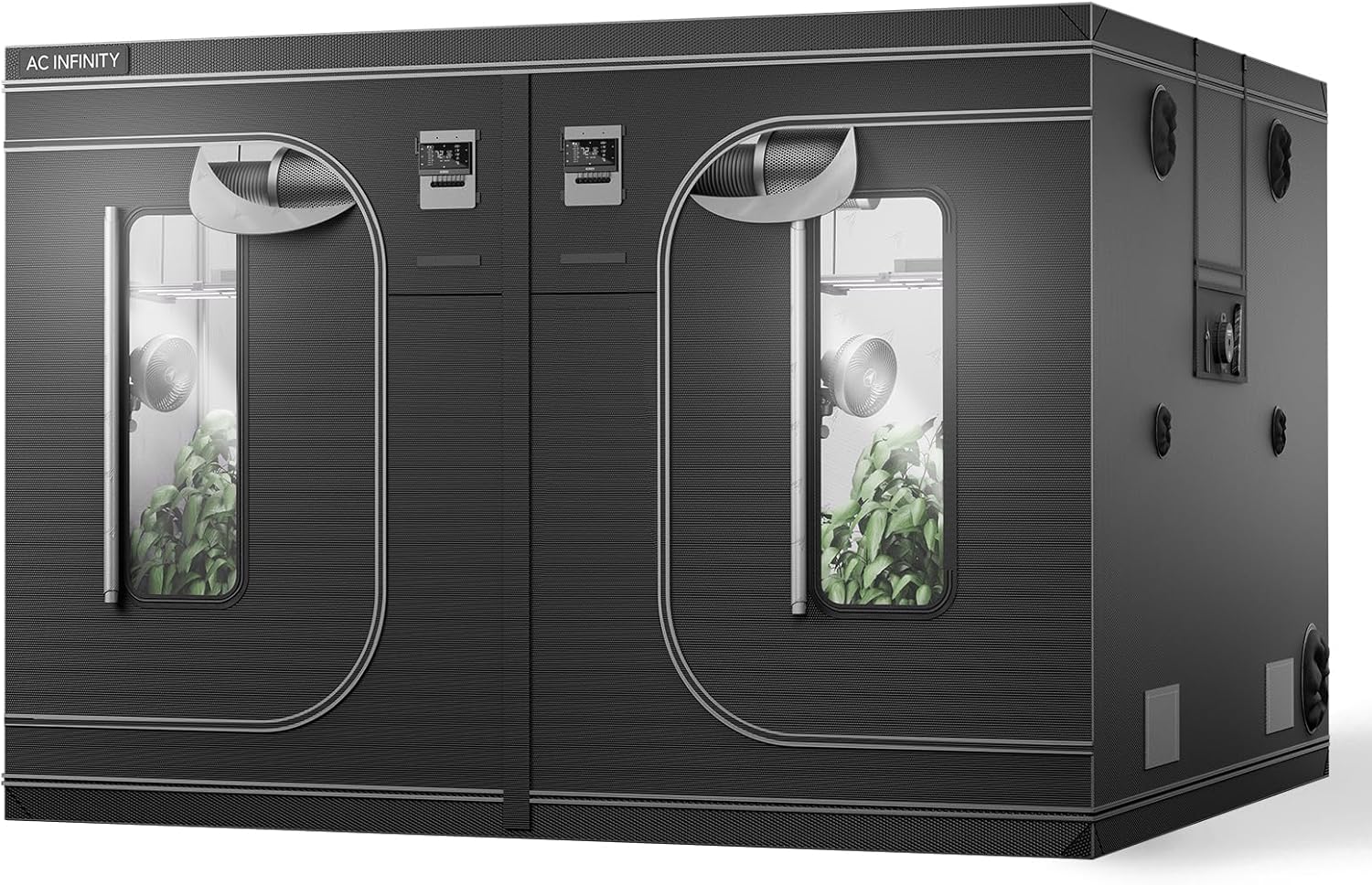
AC Infinity CLOUDLAB 811 Advance 10×10 Grow Tent
| Frame Material | Alloy Steel |
|---|---|
| Inner Material | Mylar |
| Item Highlight | Largest Zipper Window, 2000D Mylar Canvas, 1" Poles, Highest Reflectivity |
| Weight Capacity Maximum | 250 pounds |
The AC Infinity CLOUDLAB 811 is a premium 10×10 grow tent aimed at serious indoor gardeners who need a large, durable enclosure. It provides a highly reflective 2000D mylar interior and reinforced alloy steel poles that help maximize light efficiency and keep a stable structure under multiple fixtures and hanging gear. The tent includes oversized zipper windows for easy inspection, multiple hanging bars and duct ports sized for ventilation, and a reinforced catch tray to protect floors from spills. A controller mounting plate and lightproof cable passthrough make integrating fans, filters, and environmental controllers neater and simpler. The trade-offs are its size and heft — assembly and placement require space and at least two people, and the tent is overbuilt for casual hobbyists with only a couple of plants. For growers who plan multi-plant setups, continuous lighting, and substantial ventilation equipment, the CLOUDLAB delivers reliable build quality and features that simplify long-term maintenance and climate control.
Best for: Growers who need a spacious, long-term indoor growing space and value durable construction and easy equipment integration for multi-plant runs.
Less Ideal for: Casual or space-limited hobbyists who only want a compact tent for one or two plants or who need something lightweight and highly portable.
- Very thick 2000D mylar interior for high light reflectivity
- Reinforced alloy steel poles and strengthened corners for stable structure under heavy loads
- Multiple large duct ports and extra hanging bars for flexible ventilation and lighting layouts
- Integrated controller mount and lightproof cable passthrough for tidy equipment installation
- Large and heavy which makes assembly and positioning more difficult
- Designed for multi-plant setups so smaller single-plant growers may not need its capacity
Verdict: If you want a large, rugged tent that maximizes light efficiency and accommodates substantial ventilation and lighting equipment, the CLOUDLAB 811 is a top choice.
AC Infinity CLOUDLAB 894 Advance Grow Tent (96 x 48 x 80)

| Frame Material | Alloy Steel |
|---|---|
| Inner Material | Polyethylene Terephthalate (PET) |
| Outer Material | Oxford Canvas |
| Capacity | 18 load |
The AC Infinity CLOUDLAB 894 is a purpose-built large grow tent for growers who need a durable, high-performance environment. It uses 1-inch alloy steel poles and reinforced corners to support multiple lights and accessories, while the lab-tested high-reflectivity PET mylar and 2000D outer canvas keep light inside the tent and improve uniformity. The tent includes large zipper viewing windows, SBS zippers, extra hanging bars and a mounted controller plate with cable passthroughs so you can integrate environmental controls and inline fans cleanly. Practical touches such as multiple duct ports, a stain-resistant catch tray and an included tool bag make setup and maintenance easier. Expect a roomy layout that fits multi-plant or multi-light configurations, with fewer light leaks thanks to front zipper flaps. The trade-offs are the tent's substantial weight and large footprint, which require a dedicated indoor space and two people to assemble and move; also advanced growers will need to buy lights, fans, and controllers separately to complete a full system.
Best for: Serious growers who need a large, durable tent to run multi-light setups and integrate environmental controls for consistent high-yield grows.
Less Ideal for: Casual hobbyists, beginners, or renters who lack a dedicated indoor space or who want an out-of-the-box kit that includes lights and fans.
- Robust 1-inch alloy steel pole frame for strong structural support
- 2000D canvas and lab-tested PET mylar for high light reflectivity and durability
- Integrated controller mount and multiple duct ports for neat environmental system integration
- Large zipper windows and extra hanging bars to simplify access and flexible light/fixture placement
- Heavy and bulky to assemble or relocate
- Does not include lighting, ventilation, or environmental controllers
Verdict: Buy this tent if you want a heavy-duty, high-reflectivity large grow tent built to support multi-light and integrated environmental systems.
Spider Farmer 8×4 Grow Tent (96 x 48 x 80) — Master Series

| Item Type Name | Tent |
|---|---|
| Frame Material | Metal, Steel |
| Inner Material | Alloy Steel |
| Item Highlight | Cable pass-through, Enlarged viewing window, Removable floor tray |
| Weight Capacity Maximum | 240 pounds |
This Spider Farmer 8×4 Master Series tent gives you a large, lightproof chamber built for serious indoor growing. It uses high-density 1680D Oxford canvas backed by diamond mylar to maximize reflectivity and SBS zippers with double stitching and a zipper flap to limit light leaks. The reinforced metal frame and hardened steel poles together with sturdy corner adapters create a stable platform rated to support heavy lights and filtration up to the listed roof capacity. Practical integrations like multiple cable pass-throughs, an enlarged observation window, hanging hooks, a removable waterproof floor tray, and a tool bag make routing equipment and routine maintenance straightforward. Setup is tool-free and reasonably fast: assemble the frame, slip the cover on, insert trays and bars, and you are ready to install lighting and ventilation. Expect a tent that prioritizes durability and organization for multi-plant or multi-light setups; if you need ultra-compact portability or the lightest possible weight, this heavier, pro-oriented tent is less appropriate.
Best for: Buyers who want a durable, well-organized large grow space for multiple plants or multi-light setups and who value stability and equipment integration over lightweight portability.
Less Ideal for: People needing a compact or highly portable tent for occasional small-scale grows or users who have very limited indoor space.
- Thick 1680D canvas with reflective mylar for strong light containment and reflectivity
- Reinforced hardened steel poles and adapters provide high stability for heavy lights and filters
- Multiple cable pass-throughs and hooks simplify routing and mounting of controllers and equipment
- Enlarged zippered observation window and removable waterproof floor tray make monitoring and cleaning easier
- Heavier construction makes it less portable and slower to move between locations
- Large footprint requires a dedicated indoor space and may not fit small rooms
Verdict: Choose this tent if you need a robust, pro-grade large grow space that keeps light sealed, supports heavy gear, and organizes complex setups.
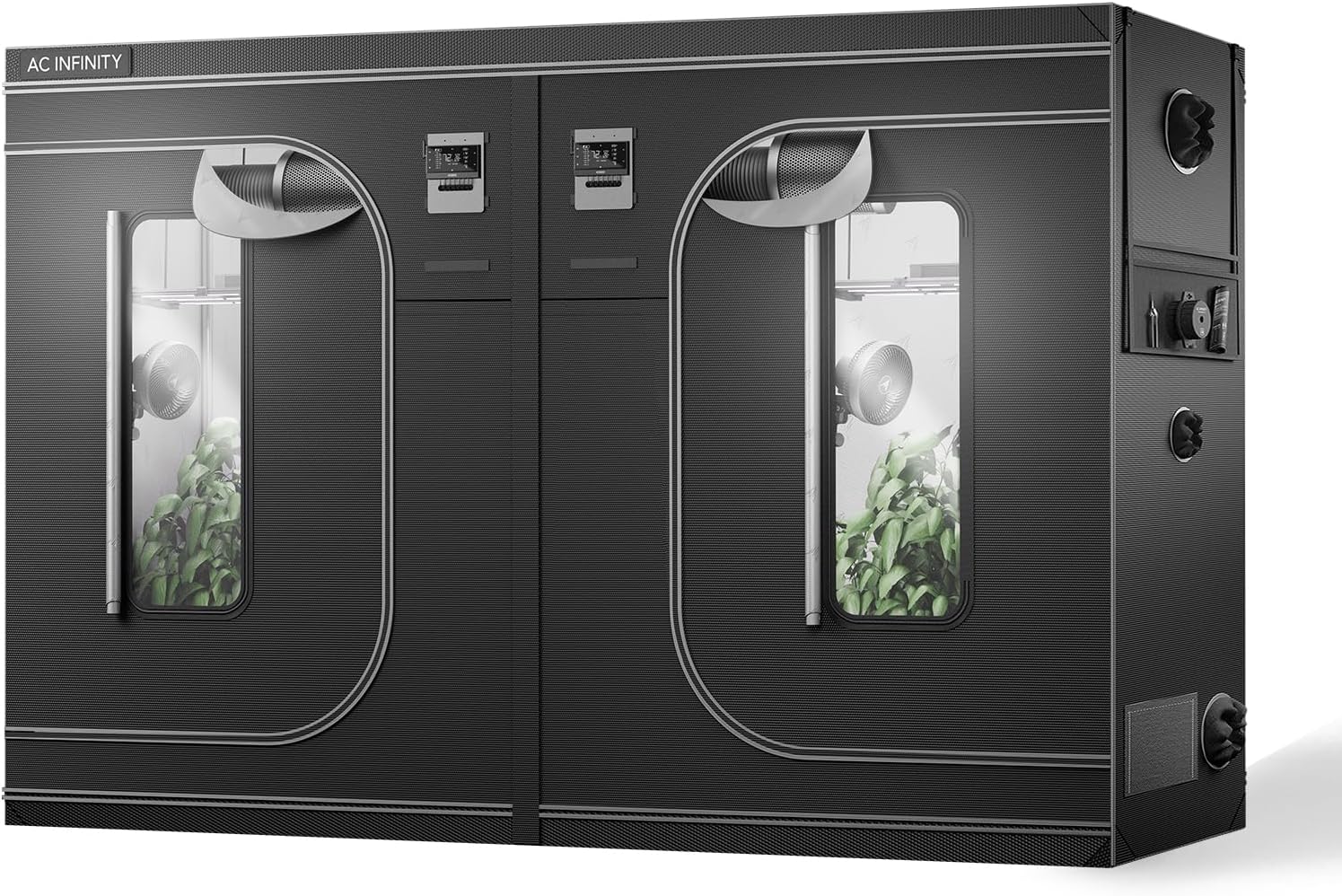
AC Infinity CLOUDLAB 816 Advance Grow Tent (120 x 60 x 80 inches)
| Chamber Volume | 333 cubic feet |
|---|---|
| Capacity | 333 cubic feet |
| Weight Capacity Maximum | 100 pounds |
| Frame Material | Alloy Steel |
| Inner Material | Mylar |
The AC Infinity CLOUDLAB 816 is a large, reliability-oriented grow tent designed to handle multi-plant setups and heavy equipment. It uses 1-inch alloy steel poles and reinforced corners to create a rigid frame, a thick 2000D outer canvas for durability, and lab-tested mylar inside for maximum light reflectivity. Practical touches include oversized zipper windows for easy viewing, multiple hanging bars and extra duct ports to accommodate large exhaust, humidifiers or air conditioning, and an integrated controller mount with lightproof cable passthrough for tidy wiring. The interior catch tray is stain resistant and the tent supports a hefty equipment load, which makes it well suited to multi-pot or commercial-style layouts. The tent is large and robust, so it requires a dedicated indoor space and two people to assemble comfortably, and its size and materials make it less suitable for casual hobbyists who need a compact or portable option.
Best for: Buyers who prioritize a durable, long-lasting large grow space for multi-plant or small commercial grows and want an installation that supports serious ventilation and control equipment.
Less Ideal for: People who need a compact, lightweight, or highly portable grow solution or those with minimal space for setup and storage.
- Very sturdy 1" alloy steel pole frame and reinforced corners for long-term structural reliability
- 2000D canvas and lab-tested mylar interior for high durability and excellent light reflectivity
- Multiple duct ports and extra hanging bars to support larger ventilation and lighting setups
- Integrated controller mount and lightproof cable passthrough for neater, safer equipment installation
- Large footprint requires a dedicated indoor space and makes the tent heavy to move
- Assembly is easier with two people and can be time consuming due to robust materials
Verdict: If you need a heavy-duty, spacious tent that reliably supports multi-plant grows and substantial ventilation and control gear, the CLOUDLAB 816 is the top choice.
VIVOSUN S848 4×8 Grow Tent (96 x 48 x 80)

| Chamber Volume | 6.04 cubic_meters |
|---|---|
| Weight Capacity Maximum | 100 pounds |
| Frame Material | Metal |
| Inner Material | Polyethylene Terephthalate (PET) |
The VIVOSUN S848 is a full-size 4×8 grow tent built for multi-plant setups and hydroponic systems. It creates a lightproof, highly reflective interior using hexagon-pattern Mylar to diffuse light evenly and reduce hotspots, which helps plants develop more uniformly. The exterior uses thick 1680D Oxford fabric with reinforced PE layers and metal frame connectors that make the structure sturdy and able to hold hanging lights and equipment. Multiple duct ports, cable openings and bottom vents simplify integration of inline fans, filters and humidifiers so you can control airflow, temperature and humidity. A transparent viewing window lets you check plants without breaking the tent seal and removable mesh covers and a floor tray make routine cleaning easier. Assembly is tool-free and relatively fast, but the tent is large and needs a dedicated indoor space and proper ventilation gear to perform as intended. If you want a compact, simple shelter without adding fans or lights the capacity of this tent will be underused.
Best for: Growers who need a durable, high-capacity indoor tent for multiple plants or hydroponic setups and who plan to add proper lighting and ventilation systems.
Less Ideal for: Casual hobbyists with limited space or those seeking a self-contained, low-effort solution without separate fans or lights.
- Large 4×8 footprint suitable for multi-plant or multi-tier setups
- 100% reflective hex-pattern Mylar interior for more even light distribution
- Heavy-duty 1680D Oxford fabric and reinforced PE for durability and light blocking
- Multiple duct ports and cable openings for easy integration of ventilation and climate equipment
- Tool-free assembly with reinforced metal frame connectors and top hanging bars
- Requires separate ventilation and lighting components to use its full potential
- Large footprint needs a dedicated indoor space and may be hard to move once set up
Verdict: Buy this tent if you want a rugged, highly reflective 4×8 grow space that integrates easily with full ventilation and lighting systems for large indoor grows.
VIVOSUN S105 10×5 Grow Tent (120x60x80)

| Chamber Volume | 9.29 cubic_meters |
|---|---|
| Weight Capacity Maximum | 160 pounds |
| Frame Material | Metal |
| Inner Material | Mylar |
| Outer Material | 1680D Oxford Polyester Fabric |
The VIVOSUN S105 is a 10x5x6.7 ft grow tent built for large indoor setups where light control and durability matter. It uses 1680D Oxford fabric with a 100% reflective mylar interior and reinforced metal poles and connectors to create a lightproof, stable chamber for multiple plants or larger lighting rigs. Practical features include an extra-large observation window with hook-and-loop closure, a removable floor tray for easy cleaning, several vent ports for ducting fans and filters, and top bars rated to hold heavy equipment. Assembly is straightforward with tool-free connectors and included hanging straps. For cautious buyers the heavy fabric, sealed zippers, and visible window make it easy to monitor plants while keeping light leaks to a minimum. The trade-offs are size and space needs — this tent requires a dedicated indoor area and additional ventilation and lighting purchases to run a complete system, and moving it when set up can be cumbersome. If you need a robust, lightproof environment for a larger home grow, this tent covers the essentials with room to expand.
Best for: Buyers who want a dependable, lightproof large grow space for multiple plants and who prioritize durable construction and easy maintenance over portability.
Less Ideal for: People with very limited indoor space, casual users who want an all-in-one kit, or anyone who needs a highly portable setup.
- Extra-large interior with 100% reflective mylar interior for efficient light use
- Heavy-duty 1680D Oxford fabric and reinforced metal frame for durability and lightproofing
- Removable floor tray and observation window for easier maintenance and monitoring
- Multiple vent ports and top hanging bars to support ventilation, filters, and lighting
- Tool-free connectors and included hanging straps make assembly straightforward
- Large footprint requires a dedicated indoor space and can be awkward to move once assembled
- Tent is a shell only so fans, filters, and lights must be purchased separately
Verdict: Choose this tent if you need a roomy, heavy-duty, lightproof grow chamber that makes monitoring and maintenance easy.
Choosing the Right Large Grow Tent: Key Factors to Consider
Tent Size and Internal Layout
Size determines how many plants you can grow and what equipment will fit inside. A large tent should provide enough floor space and height to accommodate your chosen lamps, stands, and trellis systems without crowding. Consider internal layout options like removable dividers or multiple entrances which let you manage separate light cycles or ease plant access.
Height is especially important if you plan to use hanging lights, tall plants, or multi-tier shelving. A tent that looks spacious when empty can feel cramped once plants and equipment are inside, so plan for mature plant size and any lighting or ventilation gear you will suspend from the frame.
Light Containment and Reflective Interior
Effective light containment prevents leaks that can disturb dark periods and reduce yields. Look for opaque outer fabric, sealed seams, and overlapping door flaps to minimize stray light. The interior reflective lining should be high-coverage and uniformly reflective to maximize usable light and reduce hotspots.
A quality reflective interior boosts lamp efficiency, allowing more uniform growth and potentially fewer fixtures. Poor reflection leads to wasted light energy and uneven canopies, which complicates training and plant spacing.
Ventilation Ports and Airflow Management
Proper airflow keeps temperature and humidity within target ranges and reduces pest and mold risk. Check the number, size, and placement of duct ports and fan openings so you can route exhaust, intake, and carbon filters without kinks or tight bends. Multiple port options make it easier to position fans and filters optimally for even air exchange.
Also evaluate passive intake options such as screened vents or passive flaps. A tent that supports flexible airflow setups gives you room to tune circulation as plants grow and heat loads change.
Frame Construction and Load Capacity
The frame must support hanging lights, carbon filters, and other heavy equipment without sagging or collapsing. Look for thick-walled metal poles, secure corner connectors, and stable cross-bracing that resist swaying during fan operation. A strong frame improves safety and lets you hang equipment at the correct heights for light and air distribution.
Pay attention to how components join together; metal connectors that lock or screw in deliver more long-term reliability than thin friction-fit parts. If you plan to add shelving or trellises, confirm the frame can handle the additional load.
Access, Doors, and Interior Maintenance
Frequent plant care means you will open and move through the tent often. Wide, well-placed doors and smooth zippers make daily tasks less awkward and reduce accidental damage to stems and branches. Look for door styles that allow full access or roll-away panels for easier pruning and training.
Maintenance aspects include removable floor trays, interior hook points for lights and hoses, and fabric that wipes clean. A tent designed for easy cleaning and quick access reduces downtime and keeps the grow area sanitary between cycles.
Material Quality and Longevity
Durable outer fabric and strong internal linings extend a tent's usable life and reduce the chance of tears that create light leaks or pest entry points. Reinforced stitching, robust zippers, and double-layered corners are indicators of better long-term performance. Higher quality materials also withstand repeated assembly and breakdown cycles if you rotate tents between locations.
Consider how the tent holds up in humid environments and whether the lining resists peeling or degradation from routine cleaning. Longevity matters because replacing a tent repeatedly can be more disruptive and costly than choosing a slightly better-built option upfront.
Sizing for Different Indoor Setups
Large grow tents serve a range of indoor uses from single large specimens to multi-plant racks. Match tent dimensions to the ceiling height and footprint you actually have available, not just the space you think might fit. Account for clearance above fixtures and space for ductwork and fans.
If you are working with limited vertical height, consider a wider, shallower layout rather than a tall narrow tent. Conversely, tall tents let you use vertical training and multi-tier systems more effectively.
- Measure doorways and stairwells for delivery and placement.
- Leave room for service access around the tent.
- Plan duct routing so exhaust can exit without sharp bends.
Managing Heat and Humidity in Large Tents
Heat and humidity scale with lamp wattage, plant mass, and tent volume. Larger tents reduce temperature swings if ventilation is adequate but also require more powerful fans and possibly larger carbon filters to keep air exchanges effective. Choose equipment sized to the tent volume and lamp load.
Use circulating fans to prevent stagnant pockets and ensure even canopy temperatures. Monitor humidity closely during vegetative and flower stages and plan for dehumidification if you expect persistently high moisture.
- Position intake low and exhaust high to make use of natural convection.
- Balance fan speed with noise considerations in living areas.
- Account for seasonal changes in ambient room temperature.
Setting Up Lighting and Accessories
Large tents make it easier to space fixtures for even canopy coverage, but you still need to plan lamp placement to avoid hotspots. Adjustable hanging systems and crossbars help fine-tune height and spread as plants grow.
Think about accessory routing such as power strips, timers, and sensor cables. Seal any cable passthroughs to maintain light containment and reduce pest access.
- Use reflectors or additional interior reflectivity to reduce shadowed zones.
- Keep electrical equipment off the tent floor and away from moisture.
- Label cords and circuits to simplify maintenance.
Portability and Long-Term Use
Consider whether the tent will stay in one spot or need moving. Lightweight tents are easier to relocate but may compromise on frame strength and durability. If you plan to reuse the tent across rooms or during moves, prioritize robust connectors and replaceable parts.
Long-term use also means considering spare part availability for zippers, poles, and corner connectors. Tents with modular parts let you repair damage without replacing the whole enclosure.
- Check manufacturer guidance on replacement parts and warranties.
- Inspect seams and zippers annually to catch wear early.
- Store the tent dry and folded to preserve the fabric lining.
Noise and Odor Control Considerations
Fans and filters can create noticeable noise, especially when sized up for a large tent. Plan fan placement and use ducting or silencers to reduce sound in living spaces. Vibration isolation for inline fans can cut resonance transmitted through the frame.
Effective odor control relies on proper carbon filter sizing and sealing. Ensure filter housings and duct joins are tight and routed to minimize odor escape points.
- Place fans on vibration pads when near living areas.
- Route exhaust to an exterior wall or well-ventilated room.
- Inspect duct seals periodically and replace worn tape or clamps.
How We Chose the Best Large Grow Tent
We prioritized features that make a real difference in an indoor garden using large grow tents. Our editorial filters emphasized durable materials and light-blocking interiors, because tears, weak seams, or light leaks undermine long-term environmental control. We evaluated ventilation and ducting compatibility to ensure tents support common fan and filter setups and allow efficient air exchanges. Other key criteria included frame strength and assembly stability for heavier rigs, entry and access layout for regular plant care, and interior layout flexibility for shelving, multiple lamps, or multi-tiered setups. We also considered ease of cleaning and replacement parts availability since long-term maintenance needs matter in a reuse scenario. We excluded any tents that lacked clear ventilation ports, omitted robust reflective interiors, or used underspecified framing that would not safely support typical indoor lighting systems. Final selections balanced practical durability, environmental control, and user-friendly features relevant to hobbyist and serious indoor gardeners alike.
FAQ
How tall should a large grow tent be for taller plant varieties?
A tall tent gives more headroom for hanging lights and vertical training, so choose a height that accommodates mature plant height plus clearance for lights. If ceiling height is limited, use lower-profile lighting or plan training techniques that keep plants compact.
Can I run multiple lights in a large tent without overheating?
You can run multiple fixtures if ventilation is sized to remove the added heat. Calculate the total lamp heat load and match fan capacity and ducting to the tent volume. Circulation fans also help distribute heat so hotspots do not form.
What is the best way to prevent light leaks in a large tent?
Inspect seams, zipper tracks, and door overlaps during setup and use blackout tape or fabric flaps on any weak spots. Position the tent so doors do not face external light sources when possible, and check for light leaks at night to catch small issues.
How often should I clean the interior of a grow tent?
Clean the interior between cycles and spot-clean as needed during a run. Wipe down reflective lining, remove dead plant material, and disinfect trays and surfaces to reduce pest and disease pressure. Frequency depends on crop density and pest history.
Are taller frames more unstable in a large tent?
Taller frames can be less stable if the connectors and poles are undersized. Look for reinforced cross-bracing and solid corner connectors to reduce sway. Anchoring the bottom or using a stable floor tray can also increase overall stability.
Will a larger tent always give better yields than a smaller one?
Not necessarily. Larger space offers potential for more plants, but yields depend on light intensity, airflow, and grower practices. A well-managed smaller tent with optimized lighting and ventilation can outperform a poorly configured larger tent.
Final Verdict
When choosing a large grow tent, prioritize light containment, ventilation capacity, and a sturdy frame that matches the gear you intend to hang. Size matters, but so does how the tent supports airflow, maintenance access, and long-term durability. Balance the tradeoffs between portability and strength, and pick a tent that leaves room for planned equipment and mature plant size. Focusing on those core criteria will make it easier to set up a stable, productive indoor growing environment.
