

Note: This article contains affiliate links. If you click on these links and make a purchase, I may earn a small commission at no extra cost to you. This helps support my research and content. Read my full affiliate disclosure here.
If you want bigger spring flower displays and a healthier climbing structure, picking the right wisteria fertilizer matters. Wisteria responds to specific nutrient balances and to how and when you feed it in the garden, on a patio arbor, or in a large container. The wrong formula can encourage leafy growth at the expense of blooms or create salt build-up in the root zone. This guide shortlists seven top options for Best Wisteria Fertilizer that suit common garden situations and maintenance rhythms. We evaluated each pick against practical criteria gardeners care about, such as nutrient composition, ease of use, and suitability for established vines versus young plants. Read on to find fertilizers that match your pruning plan, soil type, and desired bloom goals.
Top Picks at a Glance
| Best Overall The best all-around choice for most situations | TPS Nutrients Wisteria Liquid Fertilizer, 32 oz |  |
| Best Quality Built to a higher standard if you want something more solid | Osmocote Smart-Release Plant Food Plus Outdoor & Indoor, 1 lb |  |
| Best Value The sweet spot between price and what you get | Miracle-Gro Water Soluble Bloom Booster Flower Food, 4 lb |  |
| Best Budget The cheapest option that still gets the job done reliably | Miracle-Gro Water Soluble Bloom Booster Flower Food 10-52-10, 1 lb |  |
| Highest Rated A top-rated pick with lots of positive feedback | TreeHelp Premium Liquid Fertilizer for Wisteria (52.9 oz) |  |
| Most Popular A crowd favorite that many people choose with confidence | Nelson NutriStar 17-7-10 Granular Plant Food for Flowering Vines (2 lb) |  |
| Best Seller A high-volume bestseller chosen again and again | Miracle-Gro Shake 'N Feed Flowering Trees & Shrubs Plant Food, 8 lb |  |
TPS Nutrients Wisteria Liquid Fertilizer, 32 oz

| Item Form | Liquid |
|---|---|
| Specific Uses For Product | Wisteria Bloom Promotion |
| Application Method | Watering can or hose-end sprayer |
| Unit Count | 32 Fluid Ounces |
| Target Species | Wisteria |
This TPS Nutrients liquid formula is made specifically to promote heavier blooming and stronger vine growth on wisteria. It is a water-soluble, kelp-based feed with added calcium and magnesium plus a blend of macro- and micronutrients; you apply it with a watering can or hose-end sprayer according to the label. Typical use is a spring and summer program of applications every one to two weeks and reduced feeds in fall and winter, or as a lighter foliar mist for periodic leaf feeding. The low nitrogen focus and bloom-promoting balance make it useful where you want long flower clusters rather than excessive leafy growth. Practical benefits include easy mixing and coverage with common garden tools, targeted directions for different application methods, and ingredients that supply trace elements many soils lack. Important limitations are that coverage is described as low so larger plantings will need proportionally more product, and users should follow safety guidance because the concentrate contains salts and micronutrient sulfates that can irritate skin or eyes.
Best for: Gardeners who want to prioritize showy wisteria flowering and healthy climbing structure and who prefer an easy-to-apply liquid feed that fits into regular watering routines.
Less Ideal for: People managing very large commercial plantings or those seeking an all-purpose balanced fertilizer for mixed garden beds should consider broader-coverage or higher-volume products instead.
- Formulated specifically to encourage abundant wisteria blooms and long flower clusters
- Kelp-based mix with added calcium, magnesium, and trace micronutrients for vine and root health
- Multiple application methods supported including watering can, hose-end sprayer, and foliar misting
- Clear seasonal directions for more frequent spring and summer feeding and reduced winter use
- Coverage rated as low so treating many large vines requires multiple bottles
- Concentrated salts and micronutrient sulfates require careful handling and precise dilution
Verdict: Choose this liquid feed if your main goal is richer, longer wisteria blooms and stronger climbing vines applied easily with common garden watering tools.
Osmocote Smart-Release Plant Food Plus Outdoor & Indoor, 1 lb
| Item Form | Granules |
|---|---|
| Specific Uses For Product | Plant Food |
| Application Method | sprinkle around the base and work into the soil |
| Target Species | Plants |
| Unit Count | 16 Ounce |
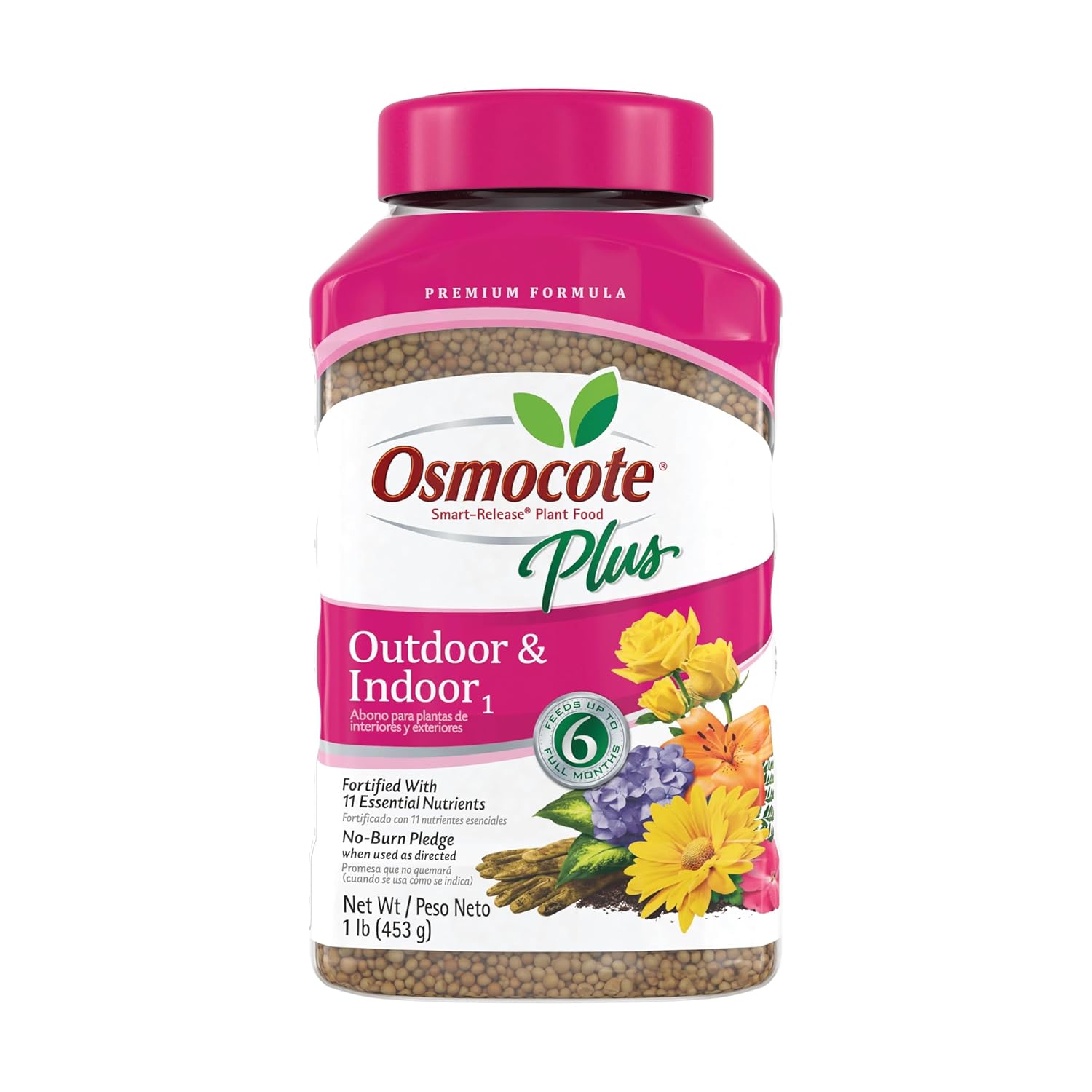
This Osmocote Smart-Release Plant Food Plus is a concentrated granular fertilizer designed for both container and in-ground use that supplies 11 essential nutrients on a controlled schedule. You apply it by sprinkling the recommended scoop into the top inch or so of soil and watering; the resin-coated granules release nutrients gradually so you do not need frequent feedings and the manufacturer recommends reapplication every six months. The product is versatile for houseplants, flowers, vegetables, shrubs and trees, and includes a no-burn pledge when used as directed, which reduces the chance of damaging roots from overfertilizing. Practical benefits include predictable, low-maintenance feeding cycles and easy measurement for different pot sizes or garden areas. Limitations are that a small 1 lb container covers only about 37 sq ft so frequent repurchasing may be necessary for larger gardens, and the fixed nutrient formula means you cannot tweak individual NPK ratios for specific crop needs.
Best for: Gardeners who prioritize steady, reliable performance and want a low-maintenance, long-lasting feed for a mix of indoor and outdoor plants without frequent applications.
Less Ideal for: Growers who need precise control of nutrient ratios for specialist crops or those managing large landscape areas where a higher-volume product would be more economical.
- Controlled-release resin coating feeds plants up to six months for low-maintenance feeding
- Works for both indoor and outdoor plants including containers and in-ground beds
- Contains 11 essential nutrients in a single granular formula
- No-burn pledge when used as directed reduces risk of fertilizer damage
- Small 1 lb container covers roughly 37 sq ft, so larger gardens need frequent repurchases
- Fixed nutrient blend does not allow tailoring NPK ratios for specific plant needs
Verdict: Choose this product when you want a dependable, low-maintenance fertilizer that feeds a wide range of indoor and outdoor plants for up to six months.
Miracle-Gro Water Soluble Bloom Booster Flower Food, 4 lb

| Item Form | Powder |
|---|---|
| Application Method | Water Soluble |
| Target Species | flowers |
| Mixing Ratio | 1 tablespoon per gallon |
Miracle-Gro Bloom Booster is a water‑soluble flower fertilizer designed to increase bloom production and color in container and in‑ground flowering plants. You mix the powder into a watering can (1 tablespoon per gallon for outdoor use) or use it with the Miracle‑Gro Garden Feeder and apply every 7 to 14 days during the growing season. The standout feature is its high phosphorus formulation, which encourages more and bigger blooms relatively quickly after application. In practice it is easy to measure and dissolve, so feeding multiple containers or flower beds is straightforward, and it works well for roses, hydrangeas, hibiscus and mixed annuals. The product comes in a sizable 4 pound pack that will cover many feedings. Limitations to keep in mind are the need for regular reapplication through the season and the fact that it is a synthetic, high‑phosphorus formula, so gardeners aiming for organic inputs or very infrequent feeding schedules may prefer alternative products. Also follow label directions to avoid overfeeding, especially on more delicate plants.
Best for: A practical gardener who wants a simple, measurable way to boost bloom yield in containers and flower beds and is willing to feed regularly during the season.
Less Ideal for: Gardeners who prefer organic, slow‑release fertilizers or who want a set‑and‑forget feeding schedule should consider different products.
- High phosphorus formula targets bigger, more abundant blooms
- Easy to mix and apply with a watering can or Garden Feeder
- Clear dosing instructions for outdoor and indoor use
- Large 4 lb package provides many feedings across the season
- Requires regular feeding every 7 to 14 days to maintain results
- Not formulated as an organic or slow‑release option
Verdict: Use this if you want an easy, high‑phosphorus soluble fertilizer that reliably increases flower production with regular feedings.
Miracle-Gro Water Soluble Bloom Booster Flower Food 10-52-10, 1 lb

| Item Form | Liquid |
|---|---|
| Application Method | Water Soluble |
| Coverage | 500 square feet |
| Target Species | all blooming plants |
| Mixing Ratio | 1 tablespoon/gallon (1.5 tsp/gal indoor) |
Miracle-Gro Bloom Booster is a water-soluble flower fertilizer designed to deliver a phosphorus-rich feed that encourages more blooms and stronger color in flowering annuals and perennials. It is mixed with water (1 tablespoon per gallon for outdoor use, a lighter indoor rate suggested) and can be applied with a watering can or the Miracle-Gro garden feeder to treat roughly 500 square feet per refill. The concentrated 10-52-10 formula acts quickly and is safe when used as directed, feeding through roots and foliage and intended for use every 7 to 14 days during bud set and bloom. For gardeners on a budget, the product’s concentrated nature and straightforward mixing guidance make it an easy way to boost flowering without complicated routines. Limitations to consider are that it is specifically targeted at flowering plants rather than general feeding needs and regular repeat applications are required during the season to maintain effects.
Best for: Gardeners who want an affordable, no-nonsense way to boost blooms on annuals and perennials and who prefer straightforward mixing and feeder use over specialty formulations.
Less Ideal for: People seeking an all-purpose or slow-release fertilizer for foliage growth or continuous feeding throughout the season should consider broader-spectrum products instead.
- High-phosphorus formula specifically formulated to increase bloom production and color.
- Water-soluble and fast-acting when mixed for immediate feeding through roots and leaves.
- Concentrated mixing rates provide coverage for large areas, helping stretch a single container across many plants.
- Simple application options: watering can or compatible garden feeder for ease of use.
- Focused on flowering performance so it is not a complete balanced fertilizer for non-flowering nutritional needs.
- Requires frequent reapplication every 7 to 14 days during the blooming period to see results.
Verdict: A concentrated, easy-to-use bloom booster that delivers fast, visible flower increases for budget-minded gardeners.
TreeHelp Premium Liquid Fertilizer for Wisteria (52.9 oz)
| Item Form | Liquid |
|---|---|
| Specific Uses For Product | Root Development |
| Coverage | Full |
| Target Species | Wisteria |
| Mixing Ratio | 1:0:0 |
This TreeHelp liquid fertilizer is designed specifically for wisteria and is used to encourage strong root development and steady growth over the season. It is applied as a diluted liquid per the included mixing instructions and is intended to treat one large wisteria or several smaller plants. Notable features include a formulation targeting root development and a slow-release nitrogen component that supplies ongoing nutrients rather than a single quick flush. Practical benefits are easier application compared with granular feeds, targeted support for establishing plants, and guidance included for correct dosing. Important limitations are its narrow target species focus, so it may not be ideal for a mixed garden of many different plants, and the product carries standard safety cautions that require careful handling to avoid ingestion or skin contact. Users seeking a general-purpose fertilizer for diverse beds should compare alternatives, while those growing or establishing wisteria will appreciate the species-specific formulation and season-long nutrient delivery.
Best for: Gardeners growing wisteria who prioritize reliable, species-focused nutrition and prefer a liquid feed they can apply with clear dosing instructions.
Less Ideal for: Gardeners wanting a single fertilizer for many different plant types or those who prefer solid/organic granular fertilizers for soil improvement.
- Formulated specifically for wisteria to support root development
- Liquid form allows easy mixing and application according to instructions
- Contains slow-release nitrogen for sustained feeding through the season
- Includes dosing guidance to treat one large tree or multiple smaller plants
- Targeted to wisteria rather than a broad range of garden plants
- Requires careful handling due to safety hazards if swallowed or absorbed
Verdict: Choose this liquid fertilizer if you want a dependable, wisteria-specific feed that promotes root development and delivers season-long nitrogen.
Nelson NutriStar 17-7-10 Granular Plant Food for Flowering Vines (2 lb)

| Item Form | Granules |
|---|---|
| Application Method | Granular |
| Target Species | bougainvillea vines and flowering |
| Mixing Ratio | 17:7:10 |
| Coverage | Medium |
This 17-7-10 granular formula is designed for flowering vines and works as a straightforward, low-maintenance feed. You apply the slow-release granules to the soil every 14 days until blooming starts, then drop to monthly feedings while plants are in bloom. The blend includes four nitrogen sources plus sulfur and gypsum to help acidify soil and improve structure around roots, which can encourage larger, more frequent blooms in bougainvillea, mandevilla, trumpet vine and similar species. Its granular form makes it tidy to use on potted, hanging, or in-ground vines without mixing liquids, and the medium coverage suits small beds and containers. Expect steady growth and improved bloom color with regular use, though results depend on correct application frequency and existing soil conditions. The small 2 pound jar is convenient for trialing on a few plants but means repeat purchases for larger plantings. For gardeners who prefer measured, repeatable feeding and want an easy, bloom-focused option, this is a practical choice.
Best for: Gardeners who want a simple, bloom-focused fertilizer they can apply to a few bougainvillea or other flowering vines and prefer predictable, low-effort feeding.
Less Ideal for: Those managing large beds, commercial plantings, or gardeners who need a single product to address broad soil nutrient deficiencies across many plant types.
- Slow-release granules reduce the need for frequent liquid feeding and are easy to apply
- 17-7-10 NPK with multiple nitrogen sources and added sulfur and gypsum to support blooming and soil structure
- Suitable for indoor, potted, hanging, and outdoor vines for flexible use
- Clear feeding schedule provided: every 14 days until bloom then monthly during bloom
- Small 2 lb package will require multiple purchases for larger gardens
- Performance depends on starting soil pH and fertility so additional soil amendments may be needed
Verdict: Choose this slow-release 17-7-10 granular fertilizer when you want an easy, bloom-enhancing feed for bougainvillea and similar flowering vines.
Miracle-Gro Shake 'N Feed Flowering Trees & Shrubs Plant Food, 8 lb

| Item Form | Granules |
|---|---|
| Application Method | shake evenly onto the soil |
| Coverage | Medium |
| Target Species | flowering trees, shrubs and other acid-loving plants |
| Mixing Ratio | 18:6:12 |
This granular Shake 'N Feed formula is designed to nourish flowering trees and shrubs with an 18-6-12 N-P-K blend and natural amendments like kelp, bone meal and feather meal to support soil microbes and root development. You apply it by shaking evenly onto the soil under the plant canopy or working it into potting mix for containers, then watering to activate the release. It supplies both quick-acting and slow-release nutrition to maintain greener foliage and more consistent blooms through the season, with a recommended reapplication every three months. Practical benefits include ease of use for in-ground beds and containers, medium coverage suitable for small landscapes, and ingredients intended to improve soil biology rather than only supplying salts. Important limitations are that it is targeted to acid-loving and flowering species rather than a universal formula, and granular application requires care to avoid contact with foliage or trunk; it will not replace targeted soil testing or specialized fertilizers for nutrient deficiencies.
Best for: Buyers who want a low-effort, reliable feeding option for established flowering trees and shrubs and who prefer products that support soil biology as well as plant nutrition.
Less Ideal for: Gardeners who need a universal all-purpose fertilizer for mixed plantings or who require tailored nutrient correction based on soil tests should look elsewhere.
- Continuous-release formula feeds plants for up to three months, reducing application frequency
- Includes organic amendments such as kelp, bone meal and feather meal to support soil microbes
- Simple shake-on application works for both in-ground and container plants
- N-P-K ratio (18-6-12) provides balanced nitrogen for foliage and nutrients for blooms
- Formulated specifically for flowering trees, shrubs and acid-loving plants so not ideal as a one-size-fits-all fertilizer
- Granules must be kept off trunks and foliage and watered in, which adds a small application risk if not applied carefully
Verdict: A convenient three-month continuous-release granular fertilizer that makes low-effort feeding of flowering trees and acid-loving shrubs simple and effective.
Choosing the Right Wisteria Fertilizer: Key Factors to Consider
Nutrient Ratio and Timing
Wisteria needs balanced feeding that encourages blooms more than leafy growth. High nitrogen late in the season will push vegetative growth and reduce flower production the next spring.
Look for formulations with lower nitrogen relative to phosphorus and potassium during bloom-set times. Timing also matters: a light early-spring feed followed by a controlled summer application supports both shoots and flower buds without overstimulating the vine.
Application Method and Accessibility
How you apply fertilizer affects both how well it reaches roots and how easy it is to maintain vines on tall supports. Granular fertilizers can be worked into the root zone and release over weeks, which is useful for large established plants. Liquid feeds and water-soluble formulas offer faster uptake and can be applied to established roots from the ground or via watering cans for container-grown specimens.
Consider how often you want to treat the plant and whether you can safely reach the root flare at the base of large climbers. Slow-release or controlled-release products reduce the need to climb or use ladders repeatedly.
Soil Type and pH Compatibility
Wisteria tolerates a range of soils but flowers best when nutrients are available at the correct pH. Some fertilizers include liming materials or acidifying components; choose a formula that complements your existing soil pH to avoid locking up nutrients.
If your soil is heavy clay or very sandy, nutrient retention and leaching differ. Clay retains fertilizer longer but can build salts; sandy soils need more frequent, lighter feedings to maintain availability.
Salt Accumulation and Root Health
Repeated applications of high-salt fertilizers can damage root tissue and reduce long-term vigor. This is especially important for container-grown wisteria where salts concentrate more quickly than in open ground.
Organic and low-salt formulations reduce the risk of buildup, but they may release nutrients more slowly. Flush container soils occasionally and monitor older in-ground planting sites for salt crusts or poor bud set that can indicate accumulation.
Suitability for Young Vs Established Vines
Young wisteria plants have different needs than mature, flowering specimens. Juvenile vines benefit from balanced nutrients that support root and stem development without forcing heavy flowering too early. Established vines require feeding strategies that favor bud set and woody health.
Check product directions for recommended rates by plant age and adjust applications accordingly. Overfeeding young plants can create weak, floppy growth, while underfeeding mature vines can limit flower production.
Organic Vs Synthetic Choices
Organic fertilizers tend to supply nutrients more slowly and improve soil structure over time, which benefits long-term vine health. Synthetic fertilizers deliver immediately available nutrients and are useful when you need a quick correction, such as after heavy pruning or poor bud set.
Decide whether you prefer the soil-building benefits of organic options or the precision and speed of synthetic formulas. You can combine approaches seasonally, but avoid overapplication and follow label guidance for woody shrubs and climbers.
When to Feed Wisteria
Wisteria has distinct growth phases that respond differently to fertilizer. Feed lightly in early spring as new shoots emerge to support initial growth, then use a bloom-promoting formula as flower buds form. Avoid high-nitrogen applications late in the growing season because they encourage tender growth that may not harden off before winter.
If you perform heavy pruning, give a modest feed afterward to help the vine recover and rebuild reserves. For container plants, split the seasonal feeding into several smaller doses to avoid salt stress and to maintain steady nutrient availability.
- Early spring: balanced or bloom-support feed
- Bud formation: emphasize phosphorus and potassium
- Post-pruning: moderate feeding to aid recovery
Feeding Techniques for Large Climbers
Reaching the root zone around a large wisteria trained on an arbor can be challenging. Spread granular material evenly under the dripline rather than concentrating it near the trunk; this targets the feeder roots farther out. Water in thoroughly to move nutrients downward and toward roots.
For very large specimens, consider injecting water-soluble fertilizer into irrigation or using deep-root feeding where appropriate. For containers, apply liquid feeds at lower concentrations more frequently to prevent buildup.
- Apply granular fertilizer under the dripline
- Water well after application to reduce salt concentration
- Use frequent low-dose liquids for containers
Soil Testing and Adjustments
A simple soil test reveals pH and the baseline levels of phosphorus and potassium, which directly influence the choice of fertilizer. If phosphorus is already high in your soil, selecting a product with extra phosphorus will not help and may harm long-term balance.
Adjust soil pH only when tests indicate a problem. Small changes in pH can affect nutrient availability more than changing fertilizer brands, so correct imbalances first and then match your fertilizer to the amended soil.
- Test soil for pH and available phosphorus
- Match fertilizer to existing nutrient levels
- Amend soil pH before changing feeding strategy
Special Considerations for Containers and Bonsai-Style Wisteria
Container-grown wisteria has shallower, more concentrated roots, so feedings must be lighter and more frequent compared with in-ground plants. Use low-salt, water-soluble feeds or dilute organic teas to keep nutrients available without risking burn.
Monitor for signs of nutrient stress and flush the potting mix occasionally. Repotting every few years with fresh mix and a tailored feeding plan will support both flowering and structural growth in confined root spaces.
- Use dilute liquid feeds for containers
- Flush potting soil periodically to prevent salt build-up
- Repot at intervals to refresh nutrient supply
How We Chose the Best Wisteria Fertilizer
We focused on attributes that directly affect how wisteria grows and flowers in real garden conditions. Evaluation criteria prioritized nutrient ratio and bioavailability, application method and frequency, suitability for planting stage, salt and residue risk, and compatibility with soil pH and organic practices. Each candidate had to show a nutrient profile appropriate for promoting flowering without excessive nitrogen-driven leaf growth. Ease of application was important because many gardeners feed vines on ladders or trellises. We excluded formulas that are intended only for lawns or broad-purpose houseplants if their ratios and instructions were inappropriate for woody climbers. We also filtered out products with unclear labeling or those that recommend unsafe application rates for established trees and large shrubs. The result is a list of fertilizers that match the distinct needs of wisteria: encouraging flower set, maintaining woody structure, and minimizing soil salt accumulation. Scoring emphasized measurable specs and practical use patterns rather than marketing claims.
FAQ
How often should I fertilize established wisteria?
Often a couple of targeted applications per year are sufficient: a light early-spring feed and another around bud formation. Frequency depends on soil fertility, plant vigor, and whether you use slow-release products.
Can too much fertilizer prevent wisteria from blooming?
Yes. Excessive nitrogen encourages leafy growth at the expense of flower buds. Follow recommended rates and choose formulas with a lower nitrogen-to-phosphorus ratio when encouraging blooms.
Is organic fertilizer good enough for wisteria?
Organic fertilizers can be very effective because they improve soil structure and release nutrients steadily. They may act slower than synthetics, so gardeners sometimes use organics for maintenance and quick-release products for acute corrections.
Should I feed wisteria after heavy pruning?
A moderate feed after heavy pruning helps the plant rebuild reserves, but avoid high-nitrogen applications that promote soft growth. Use a balanced or bloom-support formula at reduced rates until new wood matures.
How do I avoid salt buildup in container-grown wisteria?
Use low-salt formulations, apply smaller, more frequent liquid feeds, and flush the potting mix periodically with plain water. Repotting with fresh mix every few years also prevents accumulation.
Final Verdict
Prioritize nutrient ratio and application method when choosing a wisteria fertilizer. Matching the feed to soil conditions, plant age, and your pruning schedule will have a bigger impact on bloom quantity and vine health than the product label alone. Focus feeding on promoting bud set rather than leafy growth, use slow-release options if you want fewer applications, and choose low-salt formulas for containers. With those tradeoffs in mind, you can select a fertilizer that fits your maintenance style and delivers more consistent spring displays.
