

Note: This article contains affiliate links. If you click on these links and make a purchase, I may earn a small commission at no extra cost to you. This helps support my research and content. Read my full affiliate disclosure here.
If you trim hedges in a small yard, on a patio, or around a townhouse garden, choosing lightweight hedge shears matters for comfort and control. The right pair reduces wrist and shoulder fatigue, improves precision on shaping cuts, and fits into your seasonal pruning routine without feeling bulky. This guide covers the top shortlisted lightweight hedge shears suited to home gardeners and evaluates them by blade performance, ergonomic handling, durability, and maintenance needs. Read on to see which features matter most so you can pick a pair that keeps hedges neat with less effort.
Top Picks at a Glance
| Best Overall The best all-around choice for most situations | Kimura Pro Heavy Duty Hedge Shears with Patented Gearing Technology |  |
| Best Quality Built to a higher standard if you want something more solid | FELCO F250-57 22" Swiss Made Hedge Shears with Aluminum I-Beam Handles |  |
| Best Budget The cheapest option that still gets the job done reliably | GARDENWORK 16" Hedge Clippers with Teflon-Coated High-Carbon Steel Blades |  |
| Highest Rated A top-rated pick with lots of positive feedback | ARS HS-KR1000 Professional Hedge Shears |  |
| Most Popular A crowd favorite that many people choose with confidence | Fiskars Power-Lever Extendable Hedge Shears, 10" Blades |  |
Kimura Pro Heavy Duty Hedge Shears with Patented Gearing Technology

| Blade Material | Japanese SK5 Steel |
|---|---|
| Handle Material | Thermoplastic Rubber (TPR) |
| Blade Type | Bypass |
| Cutting width | 25 millimeters |
These Kimura Pro hedge shears are designed for everyday hedge trimming and shaping where comfort and clean cuts matter. The 22" shears pair lightweight aluminum handles with soft TPR grips to reduce hand fatigue during longer sessions, and the patented gearing multiplies cutting force so you need less wrist strength on thicker stems. Japanese SK5 steel blades hold a sharp edge and the PTFE coating reduces sap build-up and corrosion for smoother repeated use. The bypass, single-bevel blade geometry and wavy edge make it suitable for precise shaping and for cutting stems up to about 25 mm. In practice they work well for small to medium hedges, formal shaping, and general shrub maintenance, offering a noticeable ease-of-use compared with standard manual shears. Expect better durability than basic consumer models, but like other high-carbon blades they will need occasional sharpening and proper storage to avoid rust over many seasons.
Best for: Gardeners who want a comfortable, easy-to-use manual shear that balances power and weight for routine hedge trimming and shaping.
Less Ideal for: People who need to cut very large branches or who prefer powered hedge trimmers for extensive or commercial hedging jobs.
- Lightweight aluminum handles with TPR grips reduce hand and arm fatigue
- Patented gearing multiplies cutting power for easier cuts on thicker stems
- Japanese SK5 steel blades with PTFE coating stay sharp and resist sap build-up
- Ambidextrous bypass design is good for precise shaping and versatile use
- Wavy blade and high-carbon steel will require occasional sharpening and care to prevent corrosion
Verdict: A lightweight, ergonomic hedge shear that gives balanced power and control for home gardeners who trim small to medium hedges.
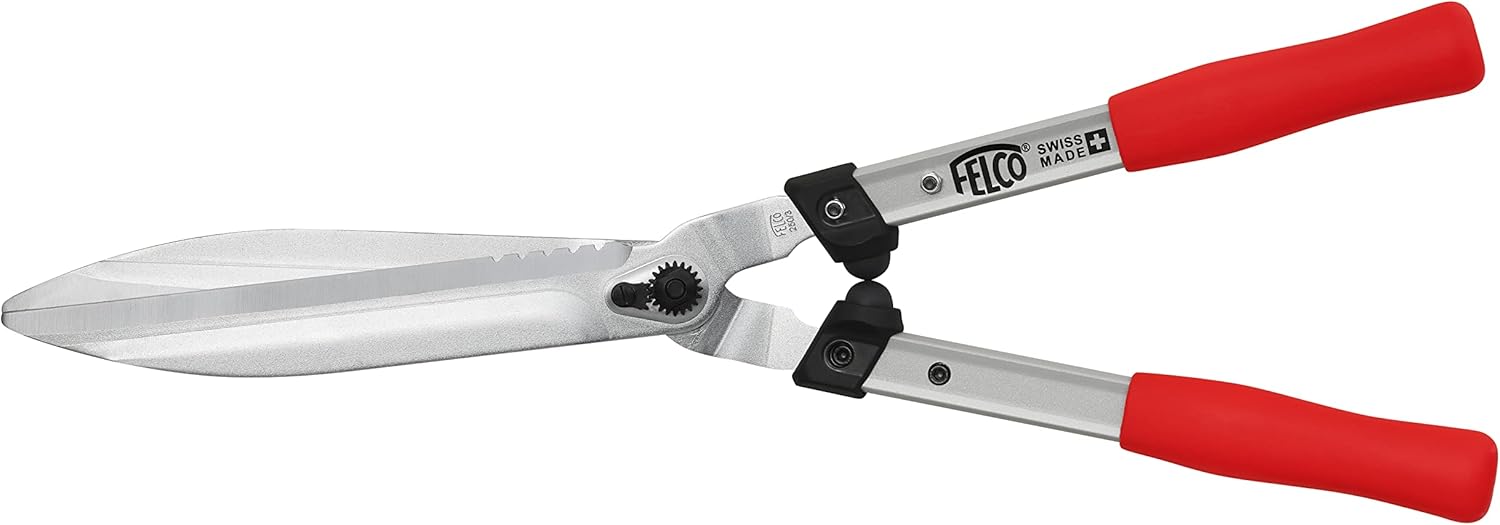
FELCO F250-57 22" Swiss Made Hedge Shears with Aluminum I-Beam Handles
| Blade Type | Bypass |
|---|---|
| Hand Orientation | Ambidextrous |
| Blade Material | Carbon Steel |
| Handle Material | Aluminum |
These FELCO F250-57 hedge shears are built for gardeners who want precise, long-lasting cutting performance without a heavy tool. The carbon steel bypass blades hold a keen edge for clean cuts on live growth, while the micrometric adjustment mechanism makes blade alignment and replacement straightforward. The aluminum I-beam handles keep weight down so you can trim longer without fatigue, and ambidextrous grips fit either hand. In practice they excel on shaped hedges, formal topiary, and routine shrub maintenance where neat, single-pass cuts matter. Maintenance is practical too because most parts are replaceable and the blades can be sharpened. Limitations are that the 0.59 inch cutting width and straight blade geometry make these shears best for branches and stems within that capacity rather than heavy woody limbs, and a quality tool like this rewards periodic sharpening and proper storage to retain performance.
Best for: Gardeners who prioritize cutting quality and durability for shaped hedges and frequent shrub maintenance and who want a lighter shear that still delivers professional results.
Less Ideal for: People who need a heavy-duty tool for large, woody branches or those seeking a no-maintenance disposable shear.
- Carbon steel bypass blades provide clean, precise cuts and good edge retention
- Lightweight aluminum I-beam handles reduce user fatigue during extended trimming
- Micrometric adjustment mechanism simplifies blade alignment and replacement
- Ambidextrous design and replaceable parts extend the tool's service life
- 0.59 inch cutting width limits use to small-to-medium stems and not thick woody branches
- Requires periodic sharpening and maintenance to maintain peak cutting performance
Verdict: Choose these shears if you want a lightweight, Swiss-made hedge tool that delivers precise, long-lasting cuts for routine trimming and shaped hedges.
GARDENWORK 16" Hedge Clippers with Teflon-Coated High-Carbon Steel Blades

| Cutting width | 16 inches |
|---|---|
| Blade Type | Bypass |
| Blade Material | High Carbon Steel |
| Hand Orientation | Ambidextrous |
These GARDENWORK 16-inch hedge clippers are a straightforward, budget-friendly tool for shaping hedges, trimming shrubs, and light yard cleanup. The blades are high-carbon steel with a teflon coating, which helps reduce sap sticking and resists corrosion while providing a reasonably sharp cut for small to medium growth. The bypass blade style gives cleaner cuts than anvil types, and the ambidextrous design suits right- or left-handed users. Rubber handles and a shock-absorbing buffer reduce hand fatigue during longer sessions, and the hollow triangular steel pipe construction keeps the tool light enough for repeated use. Limitations to note are the 16-inch cutting width and consumer-grade materials, which make these shears best for routine maintenance rather than heavy-duty branches or commercial use. Some buyers may want a larger or telescoping model for taller hedges, but for everyday residential trimming this set offers good value and comfortable handling.
Best for: Ideal for homeowners who want an affordable, easy-to-handle shear for regular trimming and shaping of small to medium hedges in a typical yard.
Less Ideal for: Not a good choice for professional landscapers or users who need to cut thick woody branches or reach high hedges without an extended pole tool.
- Teflon-coated high-carbon steel blades resist sap buildup and corrosion
- Bypass blade design produces cleaner cuts on live stems
- Lightweight hollow steel construction reduces user fatigue
- Rubber ergonomic grips and shock-absorbing buffer improve comfort during extended use
- 16-inch cutting width limits efficiency on very large hedges or thick branches
- Designed for light to medium residential use rather than heavy commercial pruning
Verdict: A lightweight, no-frills 16-inch bypass shear that delivers comfortable, effective trimming for everyday residential hedges.
ARS HS-KR1000 Professional Hedge Shears

| Blade Type | Bypass |
|---|---|
| Blade Material | Alloy Steel |
| Hand Orientation | Ambidextrous |
| Blade Edge | Flat |
The ARS HS-KR1000 is a professional-grade pair of bypass hedge shears built for precise, repeated trimming of hedges and shrubbery. It uses hardened alloy steel blades with a flat edge and a pivot bolt that lets you fine-tune blade alignment for continued sharpness and clean scissor-like cuts. The all-steel construction and balanced design make the tool feel steady in hand and suited to long sessions without feeling flimsy. Typical use is shearing live growth and shaping formal hedges where a clean, healthy cut matters; the ambidextrous handles accommodate either hand and the replaceable blades extend service life. Important limitations are its fixed blade length and non-telescoping handles, which mean this is best for medium-height hedges worked from close range rather than for tall or hard-to-reach branches. It is a specialist, high-performance hand tool that focuses on cut quality and durability rather than reach or ultra-lightweight portability.
Best for: Gardeners who prioritize cutting performance and durability for shaping and maintaining formal hedges and want a tool that produces clean, professional cuts.
Less Ideal for: Casual gardeners who need extendable reach or very lightweight tools for long sessions or high hedges should consider alternatives better suited to those tasks.
- Hardened alloy steel bypass blades deliver clean, scissor-like cuts that promote healthy regrowth
- Pivot bolt allows blade adjustment to maintain sharp alignment over time
- All-steel construction and balanced design for professional feel and durability
- Ambidextrous handles suit both left- and right-handed users
- Replaceable blades extend usable life of the tool
- Fixed-length handles limit reach for tall or distant branches
- Heavier all-steel build may be tiring for users who prefer ultra-light tools
Verdict: Choose the HS-KR1000 when you need a durable, precision hedge shear that delivers consistently clean, professional cuts.
Fiskars Power-Lever Extendable Hedge Shears, 10" Blades

| Cutting width | 10 inches |
|---|---|
| Blade Edge | Serrated |
| Blade Type | Bypass |
| Blade Material | Alloy Steel |
| Product Style | 25-33" Power-Lever |
These Fiskars Power-Lever extendable hedge shears pair a telescoping handle with a leverage mechanism to make trimming shrubs and hard-to-reach branches easier. The handles flip up to extend and lock, letting you reach higher stems without a ladder while the power-lever system multiplies cutting force so thicker shoots require less effort. The 10-inch bypass blades are serrated and self-sharpening, which helps keep cuts clean and reduces frequent sharpening. Steel construction and a low-friction blade coating add durability and resistance to gumming and surface rust. In practice they work well for shaping hedges, trimming ornamental shrubs, and tidying larger perennials, but the steel handles and overall weight mean they are heavier than lightweight aluminum models. Also the telescoping range is modest, so extremely tall hedges may still need a pole pruner. For gardeners who value proven design and reliable results, these shears offer durable performance and easier cutting backed by strong user feedback.
Best for: Gardeners who prefer a reliable, proven hedge shear that reduces cutting effort and offers documented user satisfaction for routine hedge shaping and medium-reach pruning.
Less Ideal for: People who need an ultra-lightweight shear for long sessions or those who must reach very tall hedges without using a ladder or separate pole pruner.
- Power-lever mechanism doubles cutting force for easier trimming of thicker stems
- Telescoping handles lock in place to extend reach for higher or awkward cuts
- 10-inch serrated, self-sharpening blades maintain a clean cut and reduce maintenance
- Durable alloy steel construction with low-friction blade coating resists gumming and surface rust
- Steel handles make the tool heavier than some lightweight alternatives
- Telescoping range is limited, so very tall hedges may still require a pole tool
Verdict: A durable, user-trusted hedge shear that makes medium-reach trimming easier thanks to its power-lever and self-sharpening blades.
Choosing the Right Lightweight Hedge Shears: Key Factors to Consider
Blade Material and Edge Geometry
Blade material determines initial sharpness, how long the edge stays keen, and how the blade responds to sharpening. Hardened carbon steel often takes and holds a finer edge with easier resharpening, but it needs protective coatings or regular oiling to resist rust when used outdoors.
Stainless steels resist corrosion better and reduce maintenance, but lower-grade stainless can dull faster. Edge geometry and blade thickness affect cut quality: a finely ground, slightly hollow or beveled edge slices stems cleanly without crushing plant tissue, while overly thick blades can tear softer growth.
Ergonomics and Grip Design
Ergonomics influence how long you can trim before fatigue sets in. Handle shape, diameter, and material all affect hand comfort and control. Padded or contoured grips reduce pressure points and allow firmer holds with less force.
Offset handles and angling can improve wrist posture and reduce repetitive strain. Consider the relationship between grip width and your hand size; grips that are too large or too small force awkward squeezing and fast fatigue.
Weight, Balance, and Reach
Lightweight shears are easier to wield for extended sessions, but absolute lightness should not come at the cost of poor balance. Proper balance means the tool feels steady in your hands and the blade follows where you aim without excessive wrist correction.
Reach affects how much stepping or ladder use you need. For small to medium hedges a compact, well-balanced pair is usually preferable. Long, lightweight handles increase reach but can amplify wobble if balance and rigidity are not maintained.
Joint Construction and Fasteners
The pivot area is the working heart of hedge shears. A solid, adjustable pivot lets you dial blade tension for smooth cutting and compensates for wear over time. Bolts with locking nuts or rivets that allow adjustment are preferable to permanent, fixed pins.
Loose pivots create sloppy cuts and increase the effort required for each stroke. Look for well-protected pivot areas that resist dirt and sap buildup, or designs that are easy to disassemble for cleaning and lubrication.
Corrosion Protection and Outdoor Durability
Garden tools face moisture, fertilizer salts, and sap that accelerate corrosion. Coatings, plated finishes, or inherently rust-resistant materials extend tool life and reduce maintenance chores. Handles made from fiberglass, treated wood, or corrosion-resistant alloys hold up better in damp storage than untreated steel.
Weather-resistant finishes also reduce the frequency of oiling and sharpening. Consider how and where you store tools; if you keep shears in a damp shed or outdoors, prioritize corrosion resistance.
Ease of Maintenance and Sharpening
Shears you can easily take apart, sharpen, and lubricate will stay useful for years. Simple designs with removable bolts and accessible blade faces make routine tasks like deburring, honing, and realigning a lot quicker.
If you do not plan to sharpen frequently, pick blades that are easier to keep clean and that resist nicks. Maintenance also includes blade alignment and handle care, so consider how much time you are willing to invest after each season.
When Lightweight Shears Make Sense
Lightweight hedge shears are ideal for gardeners who trim frequently, maintain small to medium hedges, or have limited upper-body strength. They reduce fatigue and let you make more precise shaping cuts without the effort required for heavy-duty tools.
If you are trimming dense, woody hedges or doing long sessions on mature shrubs, a heavier, more robust shear or a powered option may be better. For everyday shaping, tidying, and formative pruning, a well-balanced lightweight pair usually offers the best combination of control and comfort.
- Best for light to moderate woody growth and frequent maintenance
- Improves trimming precision when shaping topiary or formal hedges
- Reduces wrist and shoulder strain during repeated strokes
How to Match Shear Length to Hedge Size
Blade and handle length together determine how much material you cut with each pass and how easy it is to reach into the middle of a hedge. Shorter blades and handles give fine control for detailed work on small hedges and shrub edges. Longer blades allow quicker coverage on longer runs but require steadier control.
Think about the spaces around your hedges. Narrow paths, tight corners, and nearby plants favor compact shears that let you maneuver without bumping foliage. If you often need a bit more reach, pick a lightweight model with slightly longer handles but still good balance.
- Short blades for precision and tight spaces
- Longer blades for covering longer hedge runs more quickly
- Balance reach needs with the ability to steady the tool
Maintaining Sharpness and Clean Cuts
Regular cleaning and light honing keep blades performing well. After each use, wipe sap and debris from the blades and apply a thin oil layer to prevent rust. For small nicks, a sharpening stone or file restored along the factory bevel will bring back a clean edge.
Proper cutting technique also matters: use smooth, full strokes and avoid twisting the blades mid-cut. Clean, sharp cuts heal faster on shrubs and reduce disease risk compared with torn or crushed stems.
- Wipe blades after use and oil pivot points
- Sharpen along the original bevel to maintain edge geometry
- Avoid cutting branches beyond recommended stem thickness
Transporting and Storing Lightweight Shears
Protect blades and grips during storage to prolong tool life. Use blade covers or a workshop rack to keep edges from rubbing against other metal tools. Store shears in a dry place and, if possible, hang them to keep blades aligned and to prevent accidental damage.
When transporting in a vehicle or garden cart, secure shears so the blades do not shift and chip. For gardeners who store tools outdoors, consider additional protective coatings or a rust-preventive treatment before long-term storage.
- Use blade guards for safe storage and transport
- Store in a dry, hanging position when possible
- Apply light oil before long-term storage
Safety Tips for Manual Hedge Shearing
Always wear gloves and eye protection when shearing to guard against flying debris and sharp blades. Keep hands clear of the cutting path and avoid placing fingers between the blades, even when the tool is closed.
Inspect blades and handles for cracks, loose fasteners, or corrosion before each use. Properly adjusted pivots and secure grips reduce the chance of slippage that can cause accidents.
- Wear cut-resistant gloves and safety glasses
- Check fasteners and blade integrity before use
- Keep a firm, two-handed grip and use smooth cutting strokes
How We Chose the Best Lightweight Hedge Shears
We focused on tools that make regular hedge maintenance easier for home gardeners who want less weight without sacrificing clean cuts. Selection prioritized blade quality and retention, since a sharp, well-ground edge gives cleaner cuts that heal faster on shrubs. Ergonomics and handling were essential: we looked for comfortable grips, balanced weight distribution, and features that reduce wrist and shoulder strain during repeated use. Durability and corrosion resistance were assessed by construction materials and common design details that matter outdoors. Ease of maintenance and sharpening was another filter, because shears that are hard to service lose value quickly. We excluded heavy professional-grade hedge shears and motorized trimmers that do not match the lightweight, manual scope. The final list highlights tools that balance sharp blades, ergonomic handling, durable construction, and straightforward upkeep.
FAQ
How thick a branch can lightweight hedge shears cut?
Lightweight hedge shears usually handle small to moderate stems, often up to about thumb-thick or slightly larger depending on blade design. For consistently thicker, woody branches, a pruning saw or loppers is usually more effective.
Do lightweight shears require special sharpening tools?
Most can be maintained with a fine file or sharpening stone and a bit of practice. The important part is to follow the original bevel and keep strokes even. Some gardeners prefer a honing guide for a more consistent angle.
Are rust-resistant blades necessary for home gardeners?
Rust resistance reduces maintenance and is helpful if tools are stored in damp conditions. If you store tools in a dry shed and oil them after use, less corrosion-resistant steel can still serve well. Choose based on storage conditions and how much maintenance you want to do.
Can ergonomic handles really reduce wrist strain?
Ergonomic grips, proper handle diameter, and well-balanced weight distribution all help reduce wrist and forearm strain during repetitive trimming. The benefit depends on individual hand size and technique, so try to test grip comfort when possible.
Should I buy the lightest shears available?
Not necessarily. Extremely light shears can feel unstable if balance and rigidity are compromised. Aim for the lightest tool that still offers solid balance and a firm, precise cutting action.
Final Verdict
Choose lightweight hedge shears that match the size and density of the hedges you maintain and prioritize ergonomics if you trim often. Focus on blade material and edge geometry for clean cuts, plus a solid pivot and corrosion resistance for longevity. Balance weight and reach so the tool feels steady in use. With those tradeoffs in mind, you can pick a pair that reduces fatigue while delivering tidy, healthy cuts.
