

Note: This article contains affiliate links. If you click on these links and make a purchase, I may earn a small commission at no extra cost to you. This helps support my research and content. Read my full affiliate disclosure here.
If you shape shrubs into formal topiary, the right hedge shears make the work faster and the results cleaner. You need tools that slice cleanly without tearing, feel balanced for long trimming sessions, and hold an edge so delicate shapes stay crisp. This guide presents seven shortlisted hedge shears for topiary selected for gardeners who prioritize precision, control, and durability. We evaluated options across blade geometry, handle ergonomics, balance, and maintenance needs to surface tools that behave well around tight curves and dense foliage. Read on to see which tool characteristics matter most and how each choice fits common topiary situations.
Top Picks at a Glance
| Best Overall The best all-around choice for most situations | Kimura Pro Heavy Duty 22" Hedge Shears with Japanese SK5 Steel Blades |  |
| Best Quality Built to a higher standard if you want something more solid | FELCO F250-63 Swiss Made 26" Hedge Shears with I-Beam Handles |  |
| Best Value The sweet spot between price and what you get | BERGER 2722 Topiary and Sheep Shears, Forged Self-Sharpening Blades |  |
| Best Budget The cheapest option that still gets the job done reliably | GARDENWORK 16-inch Hedge Clippers with Teflon-Coated High-Carbon Steel Blades |  |
| Highest Rated A top-rated pick with lots of positive feedback | ARS HS-KR1000 Professional Hedge Shears |  |
| Most Popular A crowd favorite that many people choose with confidence | TABOR TOOLS B212A Telescopic Hedge Shears with Wavy Carbon Steel Blades |  |
| Best Seller A high-volume bestseller chosen again and again | Spear & Jackson Razorsharp Topiary Shears |  |
Kimura Pro Heavy Duty 22" Hedge Shears with Japanese SK5 Steel Blades

| Blade Material | Japanese SK5 Steel |
|---|---|
| Blade Type | Bypass |
| Blade Edge | Single Bevel |
| Hand Orientation | Ambidextrous |
| Cutting width | 25 millimeters |
These Kimura Pro 22" hedge shears are designed for shaping and trimming hedges, topiary, and medium‑thick shrub stems. The long SK5 steel blades with a PTFE coating slice cleanly through branches and resist sap buildup, while the bypass, single‑bevel edge supports precise, smooth cuts ideal for detailed shaping. The patented gearing multiplies cutting force so you can tackle stems up to 25 mm with less hand fatigue, and the lightweight aluminum handles with soft TPR grips help maintain control during longer sessions. Practical advantages include the wavy blade profile that helps hold stems in place and riveted construction for durability. Important limitations are that these are manual shears so they require physical effort on larger jobs and their 22" length is better for medium to large hedges rather than very tight or tiny topiary detailing. For regular maintenance and sculpting of boxwood, yew, and similar shrubs they offer a good balance of power, reach, and blade quality, but for extremely fine detailing a shorter pair of hand shears will be easier to maneuver.
Best for: A gardener who wants a durable, accurate manual shear for regular hedge maintenance and shaping of medium to large topiary forms, prioritizing clean cuts and reduced hand fatigue.
Less Ideal for: Not the best choice for someone who needs an electric trimmer for very large landscapes or a tiny pair of shears for extremely detailed, small‑scale topiary work.
- Japanese SK5 steel blades with PTFE coating for sharp, low‑friction cuts and reduced sap buildup
- Patented gearing delivers up to 3x more cutting power to reduce hand strain on thicker stems
- Lightweight aluminum handles with soft TPR grips improve comfort and control during extended use
- Wavy blade profile and bypass, single‑bevel design support precise shaping and clean cuts on live growth
- Manual operation can be tiring on very large or dense hedges compared with powered trimmers
- 22" blade length limits maneuverability for very fine or intricate topiary work
Verdict: Powerful, precision manual shears that make shaping medium to large topiary easier by combining sharp SK5 blades with gearing that reduces hand effort.
FELCO F250-63 Swiss Made 26" Hedge Shears with I-Beam Handles

| Blade Length | 10 inches |
|---|---|
| Blade Material | Carbon Steel |
| Handle Material | Aluminum |
| Hand Orientation | Ambidextrous |
The FELCO F250-63 is a performance-focused hedge shear built for precise shaping and heavy use on hedges and topiary. Its long 26-inch I-beam aluminum handles keep the tool light while resisting flex, which helps deliver controlled cuts across wider spans without tiring the user. The chrome-coated high-carbon steel bypass blades sharpen to a fine edge and resist rust, and a micrometric blade adjustment system lets you fine-tune alignment for consistent, close cuts. Practical maintenance features include a grease port and fully serviceable, replaceable parts so the shears can be rebuilt instead of replaced. Expect excellent edge retention and the ability to shape formal topiary or dense hedges, but be prepared to perform occasional sharpening and maintenance to keep the blades in top condition. The ambidextrous grips and round-point blades make it straightforward to maneuver around tight curves, though the 26-inch length is best suited to standing work rather than very small, intricate indoor pruning.
Best for: Gardeners who prioritize precise, durable tools for shaping hedges and topiary and who want a rebuildable shear they can service over years of heavy use.
Less Ideal for: Casual gardeners who only need occasional trimming or people who prefer compact shears for very detailed, small-scale topiary work.
- Lightweight I-beam aluminum handles reduce flex while keeping overall weight low for longer sessions
- Chrome-coated high-carbon steel blades offer strong edge retention and rust resistance
- Micrometric blade adjustment and integrated grease port simplify tuning and maintenance
- Fully serviceable design with replaceable parts extends usable life and lowers long-term cost
- Long 26-inch length is less nimble for very tight, small-scale sculpting
- Requires periodic sharpening and maintenance to maintain peak cutting performance
Verdict: Choose the FELCO F250-63 if you want a lightweight, serviceable hedge shear that delivers precise, long-lasting cuts for serious topiary and hedge work.
BERGER 2722 Topiary and Sheep Shears, Forged Self-Sharpening Blades

| Blade Material | Carbon Steel |
|---|---|
| Blade Type | Bypass |
| Blade Edge | Straight |
| Hand Orientation | Ambidextrous |
The BERGER 2722 is a commercial‑grade topiary and sheep shear built for precision shaping and repeated use. Its forged carbon steel, self‑sharpening bypass blades and 6.1 inch cutting edge deliver clean, accurate cuts on boxwood, ivy, and other ornamental shrubs, while the heart spring gives consistent tension and smooth opening for fine edging and shaping tasks. The ambidextrous design makes it easy to share between left‑ and right‑handed users and the alloy steel handles feel sturdy for extended sessions. Because the blades are straight and relatively long, they are best used for sculpting and finishing work rather than heavy woody pruning. The tool is simple and durable with no complex adjustments, but it lacks cushioning on the handles and interchangeable parts found on some higher‑end models. For gardeners who value a straightforward, reliable shear for regular topiary maintenance, this is a practical, no‑frills choice.
Best for: Gardeners who prioritize dependable, low‑maintenance tools for regular topiary shaping and neat edging and who prefer a simple, durable shear over feature‑rich models.
Less Ideal for: People who need a multiuse pruning tool for heavy woody pruning or those seeking cushioned, ergonomically contoured handles for long‑duration comfort.
- Forged carbon steel, self‑sharpening blades produce clean, precise cuts that reduce tearing
- Heart spring mechanism provides consistent tension and smooth blade action for control
- Ambidextrous design suits both left‑ and right‑handed users for shared use
- 6.1 inch straight cutting edge is well suited for shaping and finishing topiary work
- Handles lack ergonomic padding which can become uncomfortable during long sessions
- Not intended for cutting thick, woody branches or heavy pruning tasks
Verdict: A straightforward, commercial‑grade shear that delivers precise, low‑maintenance cuts for regular topiary shaping.
GARDENWORK 16-inch Hedge Clippers with Teflon-Coated High-Carbon Steel Blades

| Cutting width | 16 inches |
|---|---|
| Blade Type | Bypass |
| Blade Material | High Carbon Steel |
| Hand Orientation | Ambidextrous |
These GARDENWORK 16-inch hedge clippers are manual bypass shears built for routine shaping and light to medium trimming. The high-carbon steel blades are Teflon coated to reduce sap buildup and resist corrosion, and the bypass design produces cleaner cuts on live growth which helps tidy topiary edges. The ambidextrous, rubber-covered handles plus a shock-absorbing buffer make longer sessions more comfortable and reduce wrist fatigue. The hollow triangular steel pipe construction keeps the tool relatively lightweight while still feeling sturdy in use. Expect good control for shaping small hedges, boxwood, and basic topiary forms, though very thick branches will require loppers or a saw. Blade sharpening may be needed over time to maintain the best finish, and the shorter handle gives precise control but limits leverage on heavier stems. For gardeners focused on economical, frequent trimming of formal shapes, these shears deliver solid everyday performance.
Best for: Gardeners who need an affordable, reliable pair of shears for frequent shaping and light topiary work and who prioritize comfortable handling and clean cuts over heavy-duty cutting power.
Less Ideal for: People who regularly cut thick woody branches or who need extended reach for tall hedges should choose loppers or long-handled tools instead.
- Teflon-coated high-carbon steel blades resist sap build-up and corrosion
- Bypass blade design provides cleaner cuts on live growth for neater edges
- Rubber grips and shock-absorbing buffer improve comfort during extended use
- Lightweight hollow steel construction offers good control for shaping and trimming
- Short handles limit leverage on thicker branches so larger stems may need a different tool
- Blades will require periodic sharpening to maintain optimal cutting performance
Verdict: A budget-friendly, comfortable pair of bypass hedge shears that delivers clean cuts and good control for regular topiary shaping and light to medium trimming.
ARS HS-KR1000 Professional Hedge Shears

| Blade Type | Bypass |
|---|---|
| Blade Material | Alloy Steel |
| Hand Orientation | Ambidextrous |
| Blade Edge | Flat |
The ARS HS-KR1000 is a professional-grade pair of bypass hedge shears built for precise, repeated trimming of hedges and shrubbery. It uses hardened alloy steel blades with a flat edge and a pivot bolt that lets you fine-tune blade alignment for continued sharpness and clean scissor-like cuts. The all-steel construction and balanced design make the tool feel steady in hand and suited to long sessions without feeling flimsy. Typical use is shearing live growth and shaping formal hedges where a clean, healthy cut matters; the ambidextrous handles accommodate either hand and the replaceable blades extend service life. Important limitations are its fixed blade length and non-telescoping handles, which mean this is best for medium-height hedges worked from close range rather than for tall or hard-to-reach branches. It is a specialist, high-performance hand tool that focuses on cut quality and durability rather than reach or ultra-lightweight portability.
Best for: Gardeners who prioritize cutting performance and durability for shaping and maintaining formal hedges and want a tool that produces clean, professional cuts.
Less Ideal for: Casual gardeners who need extendable reach or very lightweight tools for long sessions or high hedges should consider alternatives better suited to those tasks.
- Hardened alloy steel bypass blades deliver clean, scissor-like cuts that promote healthy regrowth
- Pivot bolt allows blade adjustment to maintain sharp alignment over time
- All-steel construction and balanced design for professional feel and durability
- Ambidextrous handles suit both left- and right-handed users
- Replaceable blades extend usable life of the tool
- Fixed-length handles limit reach for tall or distant branches
- Heavier all-steel build may be tiring for users who prefer ultra-light tools
Verdict: Choose the HS-KR1000 when you need a durable, precision hedge shear that delivers consistently clean, professional cuts.
TABOR TOOLS B212A Telescopic Hedge Shears with Wavy Carbon Steel Blades

| Blade Material | Carbon Steel |
|---|---|
| Handle Material | Alloy Steel |
| Cutting width | 84 centimeters |
| Blade Edge | Serrated |
| Hand Orientation | Ambidextrous |
These TABOR TOOLS B212A shears are a manual, extendable tool intended for precision trimming of hedges, boxwood, and topiary. The wavy forged carbon steel blades are serrated and cut to the tip, which helps with precise shaping and clean cuts that support healthy regrowth. Telescopic alloy steel handles extend from about 25" to 33" to reach taller or deeper parts of a shrub without a ladder, and shock-absorbing bumpers reduce jarring during repeated cuts. An adjustable pivot bolt lets you tune blade tension for different plant types and to compensate for wear. In practice the shears are best for detailed shaping and light-to-moderate trimming rather than heavy-duty limb removal. They are ambidextrous and have non-slip grips for comfortable use, but the metal handles and manual action mean longer sessions can still tire your arms compared with powered trimmers. Build materials are solid for a manual shear, though routine sharpening and occasional tension adjustment will keep performance sharp over seasons.
Best for: Gardeners who prioritize clean, controlled cuts for topiary and detailed hedge shaping and who value a reliable manual tool with extendable reach.
Less Ideal for: People needing a tool for heavy pruning, removing thick woody limbs, or those who prefer powered trimmers to save time and effort on large hedges.
- Wavy forged carbon steel blades provide precise, tip-to-tip cutting for detailed shaping
- Telescopic alloy steel handles extend reach to trim taller or deeper shrubs without climbing
- Shock-absorbing bumpers reduce vibrations and make repeated cuts more comfortable
- Adjustable pivot bolt allows tuning blade tension for different plant densities and wear
- Ambidextrous design with non-slip grips suits both left and right handed users
- Manual operation can cause fatigue during long sessions compared with powered tools
- Not designed for cutting very thick branches or heavy-duty pruning tasks
Verdict: A precise, extendable manual shear that gives control for topiary and detailed hedge shaping without needing power tools.
Spear & Jackson Razorsharp Topiary Shears
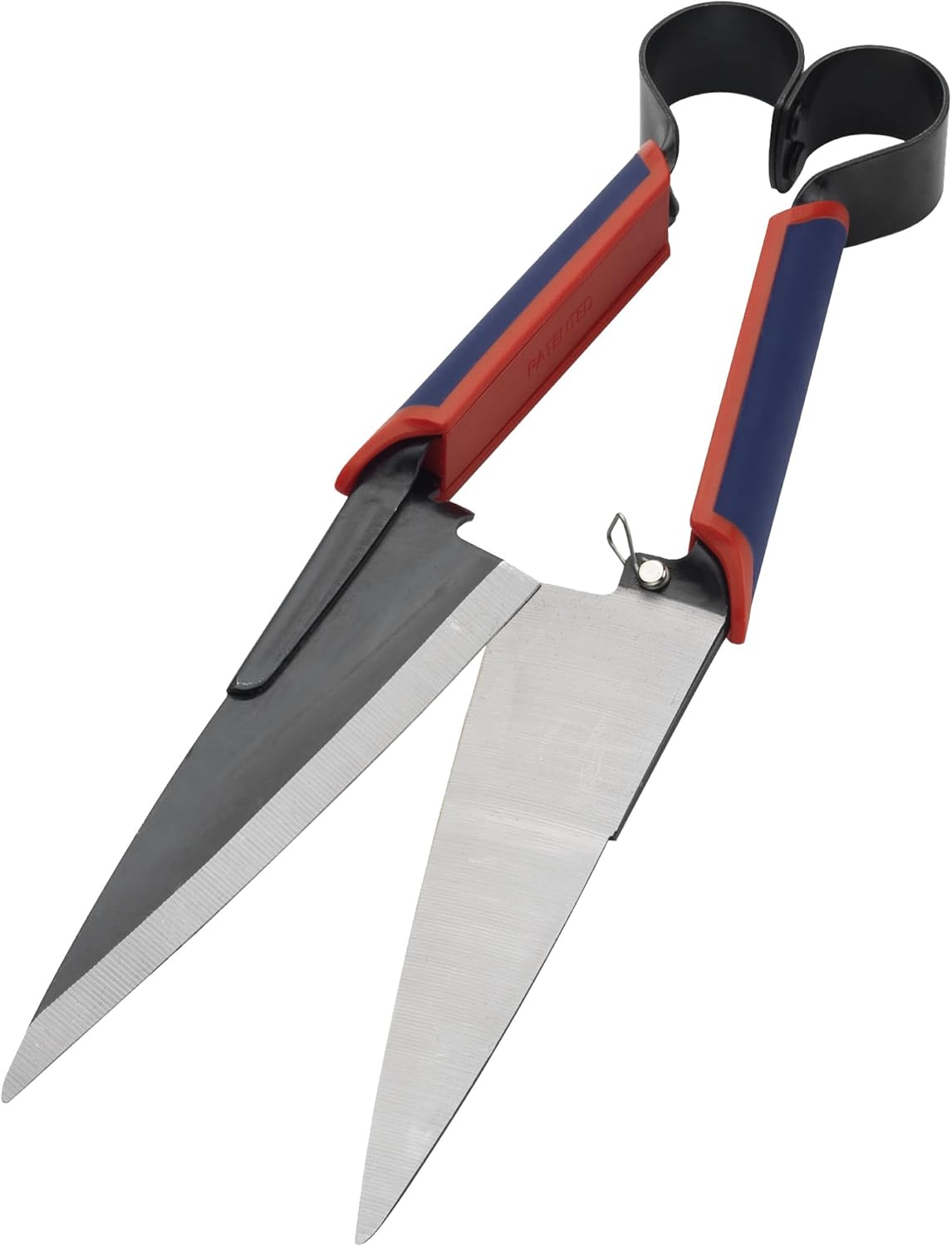
| Blade Edge | Scandinavian |
|---|---|
| Blade Type | Bypass |
| Hand Orientation | Ambidextrous |
| Blade Material | High Carbon Steel, Metal |
These Spear & Jackson Razorsharp Topiary Shears are built for accurate shaping and regular topiary maintenance. The high-carbon steel Scandinavian-edged blades deliver clean bypass cuts that reduce tearing on small stems and hedging growth, while the 6.5 inch overall blade length gives enough reach for shaping small to medium topiary forms. Soft-feel, ergonomically shaped handles improve comfort during longer sessions and the ambidextrous design suits left- or right-handed users. A locking catch keeps the blades closed for safe storage. Construction from durable metals and a long company track record suggest reasonable longevity with basic care, though high-carbon steel will need occasional sharpening and drying after use to avoid rust. These are not heavy-duty loppers for thick branches but are well suited to precision trimming, edging, and maintaining formal shapes in hedges and shrubs. For gardeners who prioritize dependable, comfortable tools for regular topiary work, these shears cover the essentials without unnecessary complexity.
Best for: Gardeners who want a reliable, comfortable shear for routine topiary shaping and precise trimming and who prefer straightforward, proven tools over experimental designs.
Less Ideal for: Those needing heavy-duty cutting for large branches or landscapers who require longer-reach shears for very large hedges should consider more robust or long-handled alternatives.
- High-carbon steel blades provide precise, clean bypass cuts for healthy pruning.
- Soft-feel ergonomic handles reduce hand fatigue during extended shaping sessions.
- Ambidextrous design accommodates left- and right-handed users.
- Safety lock catch secures blades for safer storage.
- High-carbon steel requires regular drying and occasional sharpening to prevent corrosion and maintain performance.
- Blade length is suited to small and medium topiary but not ideal for thicker branches or very large hedges.
Verdict: A dependable, comfortable set of topiary shears that delivers precise cuts for routine shaping and maintenance.
Choosing the Right Hedge Shears for Topiary: Key Factors to Consider
Blade Sharpness and Edge Geometry
Sharp, well-ground blades make clean, single-pass cuts that seal quickly and reduce tearing. For topiary, thin blades with a finely honed edge and a slight beveled grind allow precise slicing of small stems and close trimming of leaf edges.
Blade geometry also affects how the tool moves through dense foliage. A narrow profile minimizes drag and helps you follow tight curves without forcing the plant. Consider how often you will need to resharpen the blades and whether the steel accepts a consistent bevel when maintained.
Balance and Weight Distribution
Good balance reduces fatigue during repetitive shaping and improves control over delicate contours. A shear that feels front-heavy will require extra wrist effort to guide, while a tool that is too rear-heavy can cause jerky cuts. Look for even weight distribution along the pivot so each sweep feels smooth and predictable.
Weight matters relative to how long you trim in a session. Heavier shears can be steady for cutting thicker material but become tiring for fine detailing. Evaluate the tradeoff between stability and endurance based on whether you tend to do short touch-ups or extended sculpting sessions.
Handle Comfort and Ergonomics
Comfortable handles reduce hand strain and help maintain steady pressure for consistent cuts. Ergonomic grips that fit your hand shape and provide some shock absorption make long sessions less taxing. Look for handles with textured surfaces to prevent slipping when your hands become sweaty or when trimming damp foliage.
The handle length and clearance around the pivot also matter. Longer handles give more leverage for thicker growth but can limit fine control near tight edges. Consider glove compatibility and whether the grip diameter suits your hand size to avoid hotspots and repetitive stress.
Cutting Reach and Blade Length
Blade length determines how much material you can trim in one pass and how easily you can create long, even planes on a topiary surface. Shorter blades boost maneuverability around small shapes and details, while longer blades speed up removal of larger sections. Choose blade length that matches the scale of your topiary work.
Also consider the pivot spacing and how far the blades open. A wider opening can remove more material per stroke but may be harder to control for fine shaping. Think about the distance between your hands and the cutting edge to ensure you can reach interior areas without awkward wrist positions.
Material Quality and Corrosion Resistance
Shears used outdoors face moisture and sap that accelerate corrosion. Blades and fasteners made from stainless or well-coated steels hold up better with minimal care. Corrosion-resistant finishes reduce the need for aggressive maintenance and help blades glide through foliage rather than catching.
Pay attention to rivet or bolt quality at the pivot. A solid, adjustable pivot resists loosening and keeps blade alignment true. Materials used for handles should also resist cracking from sun or cold if you store tools in an unheated shed.
Ease of Maintenance and Sharpening
Regular sharpening and occasional pivot adjustment keep a shear performing at topiary-grade precision. Tools with blades that accept standard files or whetstones are simpler to maintain at home. Consider whether blades have hollow grinds or complex profiles that require specialized sharpening tools.
Also evaluate how easily blades can be disassembled for thorough cleaning and whether replacement parts such as pivot bolts or springs are accessible. The less fiddly the maintenance, the more likely you are to keep the tool in optimal condition.
Best Shear Styles for Different Topiary Tasks
Different shears suit different stages of topiary work. Short-bladed, lightweight shears are ideal for final detailing and crisp edge work. They let you make small, controlled cuts along contours and around decorative openings.
Longer-bladed shears speed up the removal of bulk and help create flat planes on larger forms. Some gardeners keep two pairs: one for rough shaping and another for finishing.
- Short-bladed shears for detailing and small shapes
- Longer blades for large planes and removing material quickly
- Keep one pair sharp for detailing and one slightly heavier for rough cuts
Sharpening and Edge Care for Topiary Precision
A consistently sharp edge is essential for crisp topiary lines. Use a fine file or whetstone and maintain the original bevel angle to preserve cutting performance.
After sharpening, strop or hone the edge lightly to remove burrs. Regular light maintenance between major sharpening sessions will keep the blades slicing cleanly and minimize damage to plant tissue.
- Use a fine file or whetstone at the original bevel
- Strop or hone to remove burrs after sharpening
- Wipe sap and apply a light oil to prevent rust
Storing and Protecting Shears Between Sessions
Store shears in a dry place to slow corrosion. A simple protective sleeve or wall-mounted rack keeps blades separated from other tools and prevents accidental dulling.
Before long-term storage, clean sap and debris from the blades, lubricate the pivot, and apply a thin film of rust inhibitor. For seasonal storage, consider slightly loosening the pivot to relieve tension on springs and fasteners.
- Clean sap and debris after use
- Lubricate pivot and lightly oil blades
- Use a protective sleeve or dedicated rack
Using Shears Without Damaging Plant Tissue
Make deliberate, single-pass cuts when shaping topiary. Avoid sawing motions that tear bark or strip foliage. When cutting back older wood, ensure cuts are clean to encourage healthy regrowth.
Work from the top down and step back regularly to check symmetry. Trimming in small increments reduces the risk of overcutting and maintains the plant's natural structure.
- Use single-pass cuts for clean edges
- Step back frequently to check overall shape
- Trim small amounts and repeat rather than removing large sections at once
Adapting Your Technique to Different Shrub Types
Evergreen shrubs with dense foliage respond best to precise, frequent trimming to maintain sharp lines. Broadleaf shrubs with softer growth may need lighter pressure to avoid crushing new shoots.
Some topiary subjects have brittle stems that split easily. For those, use the sharpest possible blades and take many small cuts rather than trying to remove large pieces in one pass.
- Dense evergreens: frequent, precise cuts
- Broadleaf shrubs: gentler pressure and finer blades
- Brittle-stem plants: very sharp blades and incremental cuts
How We Chose the Best Hedge Shears for Topiary
We prioritized characteristics that directly affect shaping accuracy and ease of repeated use in topiary work. Blade sharpness and edge geometry were weighted heavily because clean slicing prevents ragged cuts that hinder plant recovery. Balance and handling were evaluated to reduce wrist strain during long shaping sessions and to improve the operator's ability to follow tight contours. Cutting reach and blade length were assessed for access to deep hedges and for controlled removal of material in one motion. Build quality and corrosion resistance were tested as stand-ins for longevity in outdoor conditions. Finally, ease of sharpening and maintenance determined whether a tool stays effective season after season. We excluded shears clearly designed only for heavy hedge reduction or for ornamental pruning that require power tools. We also filtered out garden scissors and secateurs, focusing only on hand hedge shears suitable for precise trimming and sculpting. Our selection reflects real-world gardening needs: tools that balance precision cutting, operator comfort, and straightforward upkeep.
FAQ
How often should I sharpen shears used for topiary?
Often depends on use, but frequent light honing is better than infrequent heavy sharpening. For regular topiary work, hone edges after every few sessions and do a full file or stone once or twice per season.
Are longer blades always better for topiary shapes?
Not always. Longer blades remove more material per stroke and make large planes faster, but they sacrifice maneuverability for tight curves and detailing. Many gardeners keep both long and short blades for different tasks.
What is the best way to prevent shears from rusting?
Wipe blades dry after use, remove sap, and apply a light coat of oil. Store tools in a dry place and consider a rust-inhibiting product if you live in a humid area.
Should I choose a heavier shear for thicker stems?
Heavier shears provide more leverage and can handle thicker stems, but they increase fatigue during detailed work. For mixed tasks, choose a mid-weight tool or use a heavier pair for rough cuts and a lighter pair for finishing.
Can I sharpen shears myself at home?
Usually yes. Most hedge shears accept a standard file or whetstone if you maintain the original bevel. Practice on a small section first and keep consistent angles for the best results.
Final Verdict
Prioritize blade sharpness, balance, and handle comfort when choosing hedge shears for topiary. Those three factors govern how cleanly you can shape plants and how long you can work without fatigue. Be prepared to trade a bit of weight for cutting power on larger forms while keeping a lighter, more maneuverable pair for fine detailing. Focus on materials and ease of maintenance to ensure consistent performance season after season. With the right combination of blade profile and ergonomics you can shape precise, healthy topiary without excessive effort.
