

Note: This article contains affiliate links. If you click on these links and make a purchase, I may earn a small commission at no extra cost to you. This helps support my research and content. Read my full affiliate disclosure here.
When weeds are established, choosing a potent herbicide changes how quickly and thoroughly you regain planted beds, borders, or hardscape edges. The right product gives rapid knockdown of tough annuals and perennials while matching your tolerance for residual soil activity and nearby desirable plants. This guide covers seven shortlisted potent herbicides chosen for different garden situations and use preferences. We evaluate efficacy against common weed types, how long control lasts, application safety and drift risk, and cleanup considerations so you can pick the best fit for your yard or planting area.
Top Picks at a Glance
| Best Overall The best all-around choice for most situations | Syngenta Tenacity Turf Herbicide, 8 oz |  |
| Best Quality Built to a higher standard if you want something more solid | RM43 Concentrated Extended Control Weed Killer (1 gallon) |  |
| Best Value The sweet spot between price and what you get | Spectracide Weed & Grass Killer with AccuShot Power Sprayer, 1.33 Gal |  |
| Best Budget The cheapest option that still gets the job done reliably | Ortho GroundClear Super Weed & Grass Killer with Comfort Wand, 0.5 gal | 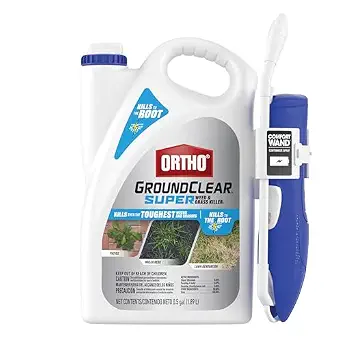 |
| Highest Rated A top-rated pick with lots of positive feedback | Target 6 Plus MSMA 48.3% Post-Emergent Turf Herbicide, 2.5 Gallon |  |
| Most Popular A crowd favorite that many people choose with confidence | Compare-N-Save 75324 Herbicide, 1-gallon (glyphosate concentrate) |  |
| Best Seller A high-volume bestseller chosen again and again | Roundup Weed & Grass Killer with Comfort Wand, 1.33 gal. |  |
Syngenta Tenacity Turf Herbicide, 8 oz

| Unit Count | 8 Fluid Ounces |
|---|---|
| Item Form | Liquid |
| Coverage | 2000 ft^2 per 1sp of product |
| Active Ingredients | Mesotrione |
Tenacity Turf Herbicide is a concentrated mesotrione-based liquid designed for both pre-emergent and post-emergent control of common lawn weeds including crabgrass, clover, chickweed and dandelions. You apply it diluted according to label rates with a handheld or hose-end sprayer to target problem areas or broadcast across the lawn; when used as a pre-emergent it is taken up as weeds emerge and when applied post-emergent it acts systemically for selective control. The product covers a large area per bottle and the active ingredient provides residual control so you can expect longer suppression than a contact-only herbicide. Important practical points are that it is turf-selective so follow the label for grass species and mixing instructions to avoid turf injury, and results can take several days to appear. Also this is a concentrated chemical intended for careful, measured application rather than spot-use by people who prefer non-chemical methods.
Best for: Gardeners focused on strong, reliable crabgrass and broadleaf weed control who are comfortable using concentrated herbicides and following label directions for turf safety.
Less Ideal for: People seeking organic, mechanical, or spot-only solutions or those unwilling to follow detailed mixing and application instructions should consider other options.
- Systemic mesotrione active ingredient controls both pre- and post-emergent weeds
- Selective to turf when used per label, allowing treatment without killing desirable grass species
- Concentrated 8 oz liquid provides wide coverage per bottle
- Provides residual suppression, reducing frequency of repeat applications
- Requires careful mixing and adherence to label for turf safety
- Not a non-chemical or organic option for weed control
Verdict: Choose Tenacity when you want a concentrated, turf-selective herbicide that delivers pre- and post-emergent control of crabgrass and other common lawn weeds.
RM43 Concentrated Extended Control Weed Killer (1 gallon)

| Unit Count | 128 Fluid Ounces |
|---|---|
| Item Form | Spray |
| Coverage | 17297 square feet |
| Active Ingredients | glyphosate |
RM43 is a concentrated glyphosate‑based weed killer blended for broad, long‑lasting vegetation control on noncrop areas. You mix it with water and apply through a sprayer to drive down perennial weeds, fence lines, gravel areas, and other places where you want no plant growth. The formula pairs glyphosate with a second herbicide and a surfactant so it kills to the root and claims prevention of new growth for up to a year while becoming rainfast in about two hours. A single gallon treats a large area, making it suitable for larger properties or professional use. Important practical limits are safety and site restrictions: it must not be used near desirable plants or crops and requires cautious handling to avoid drift and contact with skin and eyes. For routine spot treatments it is concentrated enough that careful measuring is needed, and it is intended only for areas where total vegetation removal is acceptable.
Best for: Buyers who need a powerful, long‑lasting solution for clearing and keeping large nonplant areas free of vegetation, including property managers and professional landscapers focused on durable results.
Less Ideal for: Gardeners who need selective weed control around ornamentals or vegetable beds or those who want an organic or low‑toxicity option should choose a different product.
- Concentrated one‑gallon formula treats large areas, reducing trips to refill
- Combination of glyphosate and a second herbicide for deeper, longer control
- Rainfast in about two hours so results are less affected by light rainfall
- Designed for total vegetation control and claims up to 12 months of prevention
- Not selective so will kill desirable plants and must be applied only to noncrop areas
- Requires careful mixing and handling because of strong active ingredients
Verdict: Choose RM43 when you need a concentrated, professional‑strength herbicide that kills to the root and provides long‑term vegetation control on noncrop areas.
Spectracide Weed & Grass Killer with AccuShot Power Sprayer, 1.33 Gal

| Unit Count | 170 Fluid Ounces |
|---|---|
| Item Form | Spray |
| Coverage | 1 gallon |
| Active Ingredients | Diquat Dibromide 0.12%, Fluazifop-p-butyl 0.06%, Dicamba 0.04% |
Spectracide Weed & Grass Killer pairs a concentrated non-selective formula with a battery-powered AccuShot sprayer to clear weeds from driveway cracks, patios and around foundations. The product is used by aiming and spraying foliage until leaves are covered; the active ingredients move through the leaf to the root and can show visible die-back in as little as three hours. The AccuShot wand is extendable and provides continuous spray without manual pumping, which improves accuracy for narrow cracks and reduces hand fatigue during larger jobs. It is rainproof within 15 minutes, so treated areas are protected quickly. Practical benefits include fast results that let you replant or resume use of the area within a day and a reusable sprayer for follow-up applications. Important limitations are that the herbicide is non-selective so it will kill any plant it contacts, it requires careful handling and PPE to avoid skin or eye exposure, and the sprayer runs on four AA batteries that must be replaced periodically. Follow label directions to avoid runoff into water.
Best for: Buyers who want a fast, no-nonsense solution for weeds growing in driveways and hard surfaces and who prioritize tools with clear user feedback and proven results.
Less Ideal for: Gardeners who need a selective lawn-safe treatment, people unwilling to follow pesticide safety precautions, or those treating areas adjacent to water features.
- AccuShot battery-powered wand gives continuous spray for accurate application in tight cracks
- Formula moves through foliage to kill weeds down to the root with visible results in about three hours
- Rainproof after 15 minutes so treatments are not easily washed away by brief showers
- Covers approximately 300 square feet per gallon, suitable for multiple crack-treatment sessions
- Non-selective herbicide will damage any desirable plants it contacts
- Sprayer requires four AA batteries and occasional replacement to maintain function
- Product is toxic to aquatic life and must not be used near water or allowed to run off
Verdict: A fast-acting, easy-to-aim non-selective herbicide with a battery-powered wand that is well suited to reliably clear weeds from driveway cracks and other hard surfaces.
Ortho GroundClear Super Weed & Grass Killer with Comfort Wand, 0.5 gal

| Unit Count | 64 Fluid Ounces |
|---|---|
| Item Form | Spray |
| Coverage | Broad spectrum coverage |
| Liquid Volume | 0.5 gallons |
Ortho GroundClear Super Weed & Grass Killer is a ready-to-use spray intended for spot treatment of weeds and grasses in landscape beds, along walkways, driveways, and around structures. The bottle’s attached Comfort Wand delivers a continuous spray for targeted application, which helps avoid overspray on nearby plants. The formula combines a contact ingredient for rapid burn-down with systemic actives that penetrate to the root, so you can see visible effects within hours and full control in days to a couple of weeks. It is rainfast in about 15 minutes, so treatments hold up quickly after application. Practical benefits include ease of use without mixing, broad-spectrum control of common tough weeds, and suitability for prepping areas for renovation. Important limitations are that it is nonselective so care is required near desirable plants, it should not be used on edible crops, and protective gear is recommended during application because of the herbicidal strength.
Best for: Homeowners who want an easy, no-mix solution to remove persistent weeds from landscape beds, hardscapes, and around structures and who prioritize quick, visible results with precise application.
Less Ideal for: Gardners maintaining vegetable beds, pollinator or mixed planting areas where nonselective chemistry risks desirable plants, or users seeking an organic or granular spot-treatment method.
- Ready-to-use spray needs no mixing and the attached Comfort Wand enables targeted continuous application
- Dual-action formula gives quick visible burn-down and systemic root kill for longer control
- Rainfast in 15 minutes so treatments are less likely to wash off in light showers
- Nonselective herbicide that can damage desirable plants if not applied carefully
- Not labeled for use on edible crops so unsuitable for vegetable gardens
Verdict: Choose this ready-to-use spray when you need fast, targeted knockdown and root-level control of tough weeds in landscape beds without mixing or special equipment.
Target 6 Plus MSMA 48.3% Post-Emergent Turf Herbicide, 2.5 Gallon

| Active Ingredients | Monosodium acid Methanearsonate MSMA |
|---|---|
| Unit Count | 320 Fluid Ounces |
| Item Form | Liquid |
| Coverage | Selective: Crabgrass, Dallisgrass, Johnsongrass, Nutsedge, Pigweed, Chickweed |
Target 6 Plus MSMA is a concentrated post-emergent herbicide intended for selective control of crabgrass, dallisgrass, johnsongrass, nutsedge, pigweed, and chickweed in turf. It is mixed at about 2 ounces per gallon and applied as a coarse spray, so most users will use it with a pump sprayer to spot-treat or cover larger areas such as golf course turf, sod farms, or established lawns. The primary strength is its active ingredient, monosodium acid methanearsonate (MSMA), which is effective on weeds that many general lawn products struggle to suppress. The product comes in a 2.5 gallon jug, which provides a substantial supply for repeated treatments across medium to large lawns. Important practical considerations are safety and label directions: the product can be harmful if absorbed or swallowed and must not be applied where food is grown, and protective equipment and careful handling are required. This makes it suitable for experienced users or contractors who follow label instructions, while casual gardeners should exercise caution or seek professional application.
Best for: Buyers who prioritize reliable, contractor-grade control of stubborn post-emergent turf weeds and who are comfortable following strict label safety and application procedures.
Less Ideal for: Casual gardeners, small-plot vegetable or edible growers, or anyone unwilling to use personal protective equipment or follow restricted-use safety guidance.
- High concentration of MSMA effective on hard-to-control grassy weeds
- Large 2.5 gallon volume supports multiple treatments for medium to large turf areas
- Selective post-emergent activity targets both grassy and some broadleaf weeds listed on the label
- Simple mix rate (2 oz per gallon) makes dilution and repeat applications straightforward
- Contains an arsenical active ingredient that requires strict safety precautions and may have regulatory restrictions
- Not intended for use where food is grown and requires protective equipment during handling and application
Verdict: Choose this concentrated MSMA formulation when you need proven, contractor-grade post-emergent control of tough turf weeds and will follow label safety and application requirements.
Compare-N-Save 75324 Herbicide, 1-gallon (glyphosate concentrate)

| Active Ingredients | glyphosate |
|---|---|
| Liquid Volume | 1 gallons |
| Item Form | Spray |
| Coverage | 25000 square_feet |
This one-gallon Compare-N-Save concentrate uses glyphosate to kill a wide range of annual and perennial weeds and grasses by foliar uptake down to the roots. It is mixed with water to create ready-to-use spray: the label recommends about 1.5 ounces per gallon for general use and up to 2.5 ounces per gallon for tougher perennials, with the full gallon making multiple gallons of spray for larger areas. Typical uses include clearing driveways, walkways, fence lines, garden preparation, lawn renovation, and stump or brush treatment. Notable features are fast visible results in 2 to 4 days, rainproofing within about two hours, and broad area coverage when diluted (manufacturer states it can cover thousands of square feet at recommended rates). Important limitations are that glyphosate will kill any green plant it contacts so careful targeting and protective gear are required, it has no residual pre-emergent activity, and label directions must be followed for safe use around edible gardens. For commercial lawn work, its concentration and economy make it effective but it demands disciplined application to avoid off-target damage.
Best for: Commercial landscapers or property managers who need an economical, fast-acting nonselective herbicide for clearing large areas and preparing sites for renovation while following safety protocols.
Less Ideal for: Home gardeners seeking a selective lawn-safe product or people who need a long-lasting pre-emergent should consider alternatives.
- Concentrated formula stretches to many gallons of ready-to-use spray for large-area work.
- Fast visible control with results often in 2 to 4 days and rainproofing in about two hours.
- Broad-spectrum activity against annual and perennial weeds and grasses, including root kill.
- Simple dilution instructions let crews mix strength for general or tougher targets.
- Nonselective glyphosate will damage or kill desirable plants if drift occurs.
- No residual activity so repeat treatments or follow-up prevention are required for long-term control.
Verdict: A cost-effective, concentrated glyphosate concentrate that delivers fast, large-area weed and grass control when used with proper precautions.
Roundup Weed & Grass Killer with Comfort Wand, 1.33 gal.

| Item Form | Liquid |
|---|---|
| Coverage | 400 sq. ft. |
| Liquid Volume | 1.33 gallons |
This Roundup package pairs a 1.33 gallon liquid formulation with a Comfort Wand for easier spraying around beds, walkways, and foundations. It is formulated to kill common broadleaf weeds and grasses down to the root, with visible wilting in hours and rainfast protection in about 30 minutes, so treated areas are less likely to wash away after a brief rain. The wand offers one-touch continuous spray, which reduces hand fatigue during spot treatments and makes edging and targeted applications simpler than using a separate sprayer. Coverage is listed at about 400 sq. ft., appropriate for small yards, beds, or multiple spot-treatment sessions. Important limitations are that this is a nonselective herbicide so it will damage desirable plants if contacted and the product directions include replanting wait times of 1 to 30 days depending on use. Users should follow label precautions about keeping people and pets away until spray has dried and applying only in calm conditions to avoid drift.
Best for: Buyers who want a straightforward, ready-to-use herbicide for targeted spot treatments and edging where quick, reliable weed control is the priority and minimizing application fuss matters.
Less Ideal for: Large properties or users who need selective lawn-safe control should consider professional application methods or products formulated specifically for turf.
- Fast visible results in hours and rainproof in as fast as 30 minutes
- Comfort Wand with one-touch continuous spray reduces hand fatigue and improves targeting
- Kills a wide range of broadleaf weeds and grasses to the root
- Ready-to-use liquid requires no mixing and covers up to 400 sq. ft.
- Nonselective formula will damage desirable plants if contacted
- Container and wand limit treatment area per refill compared with larger tank sprayers
Verdict: A convenient, ready-to-use herbicide with a Comfort Wand that delivers fast, reliable spot control of broadleaf weeds and grasses for homeowners who want an easy, low-fuss solution.
Choosing the Right Potent Herbicide: Key Factors to Consider
Target Weed Types
Different herbicides are formulated for grasses, broadleaf weeds, or both. Knowing the dominant weed type in the area helps you select a product that will actually stop regrowth. For example, some active ingredients quickly brown broadleaf plants while leaving grasses relatively untouched, which means you might need a separate grass-focused treatment.
Consider whether you are treating seedlings, mature flowering weeds, or perennial roots. Perennials often need systemic herbicides that translocate to roots, while contact products work best on small, actively growing plants. Matching the mode of action to the weed lifecycle reduces repeat applications and lowers the chance of resistance.
Residual Soil Activity
Residual activity describes how long a herbicide remains active in the soil and prevents new weeds from establishing. Longer residual control can reduce repeat spot treatments but may restrict planting of sensitive ornamentals or vegetables for a season.
If you plan to replant within months, choose a lower-residual option or one with labeled planting intervals that match your schedule. For mulch-covered beds or paths where you want extended weed-free surfaces, a product with longer soil persistence can be advantageous. Always follow label directions for soil types and organic matter levels, which influence how long residues last.
Application Timing and Weather Sensitivity
Herbicide effectiveness depends heavily on timing relative to weed growth stage and weather conditions. Most products work best on actively growing weeds, so early morning or late afternoon applications during mild temperatures often improve uptake.
Avoid applying before rain unless the label specifies rainfast times. Wind and temperature inversion increase drift risk, so calm, cool days reduce off-target damage. Plan applications when desirable plants are dormant or protected, and account for seasonal growth cycles to maximize control and minimize repeat treatments.
Safety and Drift Management
Potent herbicides can damage nearby desirable plants through spray drift or root uptake. Understand label warnings about buffer distances, droplet size recommendations, and nozzle choices to limit drift. Personal protective equipment and careful mixing reduce exposure risks during application.
For sensitive landscapes, use targeted application methods such as wicking, shielded sprayers, or spot treatments to confine contact. Also pay attention to reentry intervals and pet access recommendations to keep people and animals safe until residues have settled.
Compatibility With Planting Plans
Consider how herbicide residues interact with future planting. Some active ingredients require months before allowing transplanting or direct seeding of vegetables, flowers, or turf. Review labeled planting intervals for the specific crop types you intend to establish after treatment.
If you have mixed beds with desirable perennials, choose a product with selective activity or use spot treatment techniques to avoid harming established plants. When in doubt, delay aggressive residual treatments until after major planting windows or use physical methods like solarization for short-term control.
Ease Of Application And Cleanup
Mixing rates, required equipment, and cleanup needs affect how likely you are to achieve correct application. Concentrates that call for precise dilution and handheld sprayers with good calibration reduce dosing errors. Conversely, products that require complex tank mixes or multiple surfactants increase the chance of misuse.
Consider disposal and washout requirements for sprayers to avoid contaminating water sources. If you prefer a low-hassle routine, look for formulations designed for homeowner sprayers or those that come premeasured for simple mixing.
When To Use Contact Versus Systemic Control
Contact herbicides scorch the foliage they hit and deliver the fastest visible knockdown, which is useful for clearing topgrowth before bed preparation. They are most effective on small, actively growing weeds and reduce seed production quickly. However, contact products rarely translocate to roots, so perennials may resprout unless follow-up action is taken.
Systemic herbicides move within the plant to roots and crowns, giving more reliable control of established perennials and deep-rooted weeds. They take longer to show visible effects but reduce regrowth potential. For long-term management of stubborn species, systemic options are often a better choice.
- Use contact products for quick cleanup of annuals and small weeds.
- Choose systemic products for perennials and root-sprouting species.
- Combine spot systemic treatment with mechanical removal for maximum control.
Application Methods That Minimize Off-target Damage
The way you apply a potent herbicide matters as much as which active ingredient you select. Handheld spray bottles allow precise spot treatment in ornamental beds, while larger pump sprayers work for driveways, paths, and fence lines. Shielded wipers and wick applicators confine product to the target, greatly reducing drift risk.
Calibrating your sprayer for correct output, using the recommended nozzle type, and maintaining appropriate spray pressure all reduce fine mist that causes drift. When treating near desirable plants, consider physical barriers or low-volume application to keep contact localized.
- Calibrate sprayer output and check nozzle condition regularly.
- Use shielded applicators or wicks near ornamentals.
- Avoid fine droplets on windy days to reduce drift.
Integrating Herbicide Use Into Garden Management
Herbicides are one tool in an integrated weed plan that includes mulching, hand weeding, and cultural practices. Apply potent herbicides strategically: treat problem patches early in the season, then follow with mulches or groundcovers to suppress new seedlings. Rotating modes of action helps avoid resistance in perennial populations.
Record treatment dates, weather conditions, and observed effects to refine future timing. Combining chemical control for persistent roots with physical removal for surface seed banks gives better long-term outcomes while reducing overall chemical use.
- Use herbicides for stubborn infestations, not routine maintenance.
- Follow with mulches or landscape fabric to limit reseeding.
- Rotate modes of action to reduce resistance risk.
Safe Storage, Mixing, and Disposal Practices
Store concentrated herbicides in original containers in a cool, dry place out of reach of children and pets. Keep labels intact for reference to mixing rates and safety instructions. Use dedicated measuring tools and avoid transferring concentrates into food or drink containers.
When mixing and rinsing equipment, capture rinse water and dispose of it per label instructions; do not pour into storm drains or onto lawns unless allowed. Triple-rinse sprayers and add rinsate to the spray tank where permitted to avoid waste.
- Store products locked and upright in labeled containers.
- Measure accurately and avoid cross-contamination of equipment.
- Follow label guidance for rinsate and container disposal.
How We Chose the Best Potent Herbicide
We narrowed candidates by focusing on measures that matter in real garden use. Primary evaluation criteria included spectrum of control, which covers whether a product targets grasses, broadleaf weeds, or both and whether it works on established perennial roots. Speed of visible knockdown was assessed because gardeners often need quick results for prepping beds or stopping seed set. Residual activity mattered for those trying to prevent immediate regrowth versus gardeners who want minimal soil persistence near ornamentals. Application safety was judged by typical labeled precautions: drift potential, mixing and handling complexity, and reentry or planting interval guidance. Compatibility with common application tools and the accuracy of recommended rates were considered to reduce misapplication risk. Exclusions included products with insufficient labeled uses for home or small-scale garden settings and materials marketed only for industrial or aquatic treatment. We favored options with clear label directions and consistent efficacy reports across typical garden weed species.
FAQ
Can a potent herbicide be used around established ornamentals?
Often it depends on the product and application method. Selective options and targeted spot treatment reduce risk, and shielding applicators can prevent direct contact. Always read label restrictions and observe buffer distance recommendations for sensitive species.
How long after application can I plant vegetables?
That varies by active ingredient and formulation. Some materials allow short intervals of a few weeks, while residual chemistries may require months before safe planting. Check labeled planting intervals for the specific crop group you intend to establish.
Will a single treatment eliminate perennial weeds?
A single well-timed systemic treatment may significantly reduce perennial vigor, but many perennial species need repeat applications or a combination of chemical and mechanical removal to fully exhaust root reserves. Monitor treated plants and follow up as needed.
What is the best time of day to apply a potent herbicide?
Apply during calm, cool periods when weeds are actively growing, typically early morning or late afternoon. Avoid windy or hot mid-day conditions that increase drift or reduce uptake, and do not apply before expected heavy rain unless the label permits.
How can I reduce drift when treating near neighbors' plants?
Use low-drift nozzles, larger droplet settings, shielded applicators, and apply during low-wind conditions. Spot treatments and physical barriers also help keep the product on target and reduce risk to adjacent landscapes.
Final Verdict
Choose a potent herbicide based on the weed species you need to control, how long you want residual activity in the soil, and how close desirable plants or future plantings are. Prioritize application safety, correct timing, and the proper equipment to reduce off-target damage and maximize effectiveness. Balance the tradeoff between fast contact knockdown and slower systemic root control by matching product type to the infestation. With careful selection and responsible application, you can regain weed-free beds while protecting the rest of your garden.
