

Note: This article contains affiliate links. If you click on these links and make a purchase, I may earn a small commission at no extra cost to you. This helps support my research and content. Read my full affiliate disclosure here.
You need a total-kill herbicide when you want to remove dense patches of weeds, clear a planting bed, or prep a site for renovation. The right choice matters because product strength, residual activity, and selectivity determine how quickly weeds die and whether the treated area stays free of regrowth. This guide shortlists seven top options for total-kill herbicide use across home gardens, driveways, and larger yards. We evaluate spray efficacy, persistence in soil, application safety, and handling to help you choose a product that fits the location and cleanup timeline. Read on to see the factors we weighed and the practical tradeoffs for different use cases.
Top Picks at a Glance
| Best Overall The best all-around choice for most situations | Roundup Pro Concentrate Herbicide (2.5 gal) |  |
| Best Quality Built to a higher standard if you want something more solid | Control Solutions Eraser Max 2.5 Gallon Super Concentrate Weed Killer |  |
| Best Value The sweet spot between price and what you get | Spectracide Weed & Grass Killer with AccuShot Power Sprayer, 1.33 Gal |  |
| Best Budget The cheapest option that still gets the job done reliably | Ortho GroundClear Year-Long Vegetation Killer Refill, 1 gal |  |
| Highest Rated A top-rated pick with lots of positive feedback | ZYZYZK Vacate Ready-to-Use Total-Kill Herbicide, 4 Gallon |  |
| Most Popular A crowd favorite that many people choose with confidence | Compare-N-Save 75324 Herbicide, 1-gallon (glyphosate concentrate) |  |
| Best Seller A high-volume bestseller chosen again and again | Roundup Weed & Grass Killer with Comfort Wand, 1.33 gal. |  |
Roundup Pro Concentrate Herbicide (2.5 gal)

| Unit Count | 300 Fluid Ounces |
|---|---|
| Liquid Volume | 2.5 gallons |
| Coverage | Up to 435,600 sq. ft |
| Item Form | Liquid |
Roundup Pro Concentrate is a liquid herbicide intended for mixing in sprayers to treat large lawns, fields, and commercial areas. The 2.5 gallon jug is a concentrate that dilutes at rates from about 1 to 10.5 ounces per gallon of water, letting you cover up to the manufacturer-stated area without frequent refills. It is formulated to be rainfast in roughly an hour and is best applied when weeds are actively growing and temperatures are above 60°F. Practical benefits include high coverage per container and compatibility with stainless steel or plastic sprayers for standard application workflows. Important limitations are the need for careful dilution and protective handling, strict restrictions around water and runoff, and regulatory or local sale limitations in some states. Users should follow label directions for safety, keep people and pets away until spray dries, and expect that effective use requires proper equipment and basic pesticide handling practices.
Best for: Buyers who need a high‑coverage, performance-oriented herbicide for treating large yards, fields, or commercial properties and who are comfortable following pesticide mixing and safety instructions.
Less Ideal for: Casual gardeners with small beds or people unwilling to handle concentrated pesticides should choose ready-to-use alternatives or nonchemical methods.
- Concentrated formula covers very large areas from a single container
- Rainfast within about one hour which reduces loss from light rain
- Compatible with standard stainless steel or plastic sprayers for easy mixing and application
- Requires precise dilution and proper protective equipment during mixing and application
- Not for use near water or where runoff may occur and restricted in some jurisdictions
Verdict: Choose this concentrate when you need a professional-strength herbicide that treats very large areas with fewer refills.
Control Solutions Eraser Max 2.5 Gallon Super Concentrate Weed Killer

| Unit Count | 320 Fluid Ounces |
|---|---|
| Item Form | Liquid |
| Coverage | 43242.5 square feet |
| Active Ingredients | Glyphosate, Imazapyr |
Control Solutions Eraser Max is a concentrated glyphosate and imazapyr liquid herbicide designed for persistent control of grasses, broadleaf weeds, vines, brush, and unwanted vegetation in non-crop areas. Typically mixed and applied as a spot treatment or broadcast to bare ground, one application is labeled to suppress weeds for up to a year, which makes it useful for gravel driveways, fence lines, sidewalks, and parking areas. Notable features include a high coverage rating and a formula active on both grasses and woody plants, so it handles annual weeds and tougher perennial brush. Practical benefits are extended control with fewer applications and versatility on a range of surfaces where plant regrowth is a recurring problem. Important limitations are that it is intended for non-crop settings only, requires careful handling and protective gear, and will kill desirable plants it contacts, so precise application and avoidance of drift are essential.
Best for: Buyers who need dependable, long-term vegetation control on non-crop surfaces and prefer fewer applications to keep gravel driveways and similar areas clear.
Less Ideal for: Gardeners who need selective spot treatment near desirable plants or anyone wanting an herbicide safe for lawns, edible gardens, or crop areas.
- Concentrated formula covers a large area from a single container
- Active combination (glyphosate and imazapyr) controls both grasses and woody vegetation
- Label claims up to one year of control after a single application
- Suitable for common non-crop sites like gravel driveways, fence rows, and sidewalks
- Not selective and will damage or kill desirable plants on contact
- Requires safety precautions and proper protective equipment during mixing and application
- Not labeled for use in crop or lawn areas where desirable vegetation exists
Verdict: Choose this concentrated, dual‑action herbicide when you want reliable, long‑lasting clearance of weeds and brush from gravel driveways and other non‑crop areas.
Spectracide Weed & Grass Killer with AccuShot Power Sprayer, 1.33 Gal

| Unit Count | 170 Fluid Ounces |
|---|---|
| Item Form | Spray |
| Coverage | 1 gallon |
| Active Ingredients | Diquat Dibromide 0.12%, Fluazifop-p-butyl 0.06%, Dicamba 0.04% |
Spectracide Weed & Grass Killer pairs a concentrated non-selective formula with a battery-powered AccuShot sprayer to clear weeds from driveway cracks, patios and around foundations. The product is used by aiming and spraying foliage until leaves are covered; the active ingredients move through the leaf to the root and can show visible die-back in as little as three hours. The AccuShot wand is extendable and provides continuous spray without manual pumping, which improves accuracy for narrow cracks and reduces hand fatigue during larger jobs. It is rainproof within 15 minutes, so treated areas are protected quickly. Practical benefits include fast results that let you replant or resume use of the area within a day and a reusable sprayer for follow-up applications. Important limitations are that the herbicide is non-selective so it will kill any plant it contacts, it requires careful handling and PPE to avoid skin or eye exposure, and the sprayer runs on four AA batteries that must be replaced periodically. Follow label directions to avoid runoff into water.
Best for: Buyers who want a fast, no-nonsense solution for weeds growing in driveways and hard surfaces and who prioritize tools with clear user feedback and proven results.
Less Ideal for: Gardeners who need a selective lawn-safe treatment, people unwilling to follow pesticide safety precautions, or those treating areas adjacent to water features.
- AccuShot battery-powered wand gives continuous spray for accurate application in tight cracks
- Formula moves through foliage to kill weeds down to the root with visible results in about three hours
- Rainproof after 15 minutes so treatments are not easily washed away by brief showers
- Covers approximately 300 square feet per gallon, suitable for multiple crack-treatment sessions
- Non-selective herbicide will damage any desirable plants it contacts
- Sprayer requires four AA batteries and occasional replacement to maintain function
- Product is toxic to aquatic life and must not be used near water or allowed to run off
Verdict: A fast-acting, easy-to-aim non-selective herbicide with a battery-powered wand that is well suited to reliably clear weeds from driveway cracks and other hard surfaces.
Ortho GroundClear Year-Long Vegetation Killer Refill, 1 gal

| Liquid Volume | 1 gallons |
|---|---|
| Coverage | 300 square feet |
| Item Form | Spray |
Ortho GroundClear Year-Long Vegetation Killer is a 1-gallon refill designed to be used with the brand's Comfort Wand for easy, targeted spraying on driveways, patios, gravel and other areas where vegetation is unwanted. The ready-to-use spray starts working quickly and becomes rainproof in about an hour, giving visible control within a day while preventing new weed growth for up to 12 months when applied as directed. Practical features include broad surface coverage rated at about 300 square feet and instructions to apply on sunny days above 60°F for best results. The product is intended for non-planting areas only since it leaves the soil inactive for up to a year, so it is useful for long-term clearing of gravel driveways, paver joints, and walkways. Important limitations are that treated areas must remain off-limits to people and pets until dry, and the soil residual effect means you cannot replant in treated spots for months. Proper application and wand attachment are needed to avoid overspray onto desirable plants.
Best for: Buyers who want a low-effort, long-lasting solution to keep gravel areas, driveways, and walkways vegetation-free with minimal repeat maintenance.
Less Ideal for: Gardeners who need to preserve soil life or plan to replant treated areas within a year should choose a less persistent, plant-safe option instead.
- Ready-to-use formula that needs no mixing and attaches to the Comfort Wand for targeted application
- Fast-acting and rainproof in about one hour, so treatments are less likely to be washed away
- Provides up to one year of vegetation prevention, reducing repeat treatments on gravel and hardscapes
- Leaves the soil inactive for up to one year so areas cannot be replanted after treatment
- Coverage stated at 300 square feet may require multiple bottles for larger gravel driveways
Verdict: Choose this refill when you need a simple, long-lasting spray to keep gravel and hardscape areas clear of weeds for up to a year.
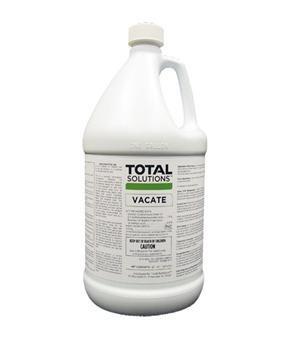
ZYZYZK Vacate Ready-to-Use Total-Kill Herbicide, 4 Gallon
| Liquid Volume | 4 gallons |
|---|---|
| Item Form | Liquid |
| Coverage | 1,000 square feet per gallon |
| Active ingredients | 1.10% 2,4-D; 0.61% Bromacil |
This 4-gallon Vacate herbicide is a ready-to-use liquid designed for broad, non-selective weed control with up to 12 months of residual activity. It combines 2,4-D and bromacil for fast knockdown plus longer-term suppression, and is intended for applications on non-cropland areas such as fence lines, storage yards, and other industrial or perimeter sites. Typical use is straightforward: shake, apply at about 1 gallon per 1,000 square feet with a tank sprayer or watering can during active growth when temperatures exceed 60°F. The VOC-compliant formula and concentrated coverage rate make it economical for treating long stretches of fence line without frequent reapplication. Important limitations are that it is non-selective so it will kill desirable vegetation if contacted, it is not labeled for cropland, and users must take standard safety precautions to avoid skin, eye, and off-target exposure. For perimeter and industrial weed control where persistence and reliability matter, this product delivers predictable, long-lasting results when applied according to directions.
Best for: Gardeners, groundskeepers, or property managers who need a dependable, long-lasting herbicide to keep fence lines and perimeter areas clear with minimal reapplication.
Less Ideal for: Home gardeners who need selective control near desirable ornamentals or anyone seeking a product labeled for use in cropland or food-producing areas.
- Ready-to-use liquid for immediate application without mixing
- Formulation combines fast knockdown with up to 12 months residual control
- High coverage rate (1,000 sq ft per gallon) makes it economical for long fence lines
- VOC-compliant formulation suitable for regulated areas
- Non-selective formula will damage or kill desirable plants on contact
- Not labeled for use on cropland or in areas where food crops are grown
Verdict: Choose this product when you need a reliable, long-lasting, ready-to-use herbicide to keep fence lines and perimeter areas clear with minimal repeat applications.
Compare-N-Save 75324 Herbicide, 1-gallon (glyphosate concentrate)

| Active Ingredients | glyphosate |
|---|---|
| Liquid Volume | 1 gallons |
| Item Form | Spray |
| Coverage | 25000 square_feet |
This one-gallon Compare-N-Save concentrate uses glyphosate to kill a wide range of annual and perennial weeds and grasses by foliar uptake down to the roots. It is mixed with water to create ready-to-use spray: the label recommends about 1.5 ounces per gallon for general use and up to 2.5 ounces per gallon for tougher perennials, with the full gallon making multiple gallons of spray for larger areas. Typical uses include clearing driveways, walkways, fence lines, garden preparation, lawn renovation, and stump or brush treatment. Notable features are fast visible results in 2 to 4 days, rainproofing within about two hours, and broad area coverage when diluted (manufacturer states it can cover thousands of square feet at recommended rates). Important limitations are that glyphosate will kill any green plant it contacts so careful targeting and protective gear are required, it has no residual pre-emergent activity, and label directions must be followed for safe use around edible gardens. For commercial lawn work, its concentration and economy make it effective but it demands disciplined application to avoid off-target damage.
Best for: Commercial landscapers or property managers who need an economical, fast-acting nonselective herbicide for clearing large areas and preparing sites for renovation while following safety protocols.
Less Ideal for: Home gardeners seeking a selective lawn-safe product or people who need a long-lasting pre-emergent should consider alternatives.
- Concentrated formula stretches to many gallons of ready-to-use spray for large-area work.
- Fast visible control with results often in 2 to 4 days and rainproofing in about two hours.
- Broad-spectrum activity against annual and perennial weeds and grasses, including root kill.
- Simple dilution instructions let crews mix strength for general or tougher targets.
- Nonselective glyphosate will damage or kill desirable plants if drift occurs.
- No residual activity so repeat treatments or follow-up prevention are required for long-term control.
Verdict: A cost-effective, concentrated glyphosate concentrate that delivers fast, large-area weed and grass control when used with proper precautions.
Roundup Weed & Grass Killer with Comfort Wand, 1.33 gal.

| Item Form | Liquid |
|---|---|
| Coverage | 400 sq. ft. |
| Liquid Volume | 1.33 gallons |
This Roundup package pairs a 1.33 gallon liquid formulation with a Comfort Wand for easier spraying around beds, walkways, and foundations. It is formulated to kill common broadleaf weeds and grasses down to the root, with visible wilting in hours and rainfast protection in about 30 minutes, so treated areas are less likely to wash away after a brief rain. The wand offers one-touch continuous spray, which reduces hand fatigue during spot treatments and makes edging and targeted applications simpler than using a separate sprayer. Coverage is listed at about 400 sq. ft., appropriate for small yards, beds, or multiple spot-treatment sessions. Important limitations are that this is a nonselective herbicide so it will damage desirable plants if contacted and the product directions include replanting wait times of 1 to 30 days depending on use. Users should follow label precautions about keeping people and pets away until spray has dried and applying only in calm conditions to avoid drift.
Best for: Buyers who want a straightforward, ready-to-use herbicide for targeted spot treatments and edging where quick, reliable weed control is the priority and minimizing application fuss matters.
Less Ideal for: Large properties or users who need selective lawn-safe control should consider professional application methods or products formulated specifically for turf.
- Fast visible results in hours and rainproof in as fast as 30 minutes
- Comfort Wand with one-touch continuous spray reduces hand fatigue and improves targeting
- Kills a wide range of broadleaf weeds and grasses to the root
- Ready-to-use liquid requires no mixing and covers up to 400 sq. ft.
- Nonselective formula will damage desirable plants if contacted
- Container and wand limit treatment area per refill compared with larger tank sprayers
Verdict: A convenient, ready-to-use herbicide with a Comfort Wand that delivers fast, reliable spot control of broadleaf weeds and grasses for homeowners who want an easy, low-fuss solution.
Choosing the Right Total Kill Herbicide: Key Factors to Consider
Kill Speed and Visible Results
How quickly a herbicide causes visible wilting and browning matters when you are timing cleanup or site prep. Fast-acting products let you see results in days, which is useful if you plan to remove dead material or replant shortly. Slower systemic products may take longer to show full plant mortality but can translocate to roots more effectively, reducing regrowth.
Consider the timeline for your project and whether rapid top-kill is sufficient. For beds going into immediate renovation you may prefer a faster contact action, while for removing deep-rooted perennials a slower systemic product with root translocation can reduce the chance of resprouting.
Breadth of Plant Families Controlled
Total-kill herbicides vary in the range of weeds they affect. Some are broad-spectrum across grasses, sedges, and broadleaf species, while others may be weaker on certain families. Knowing the dominant weed types in the area helps match the product to the infestation for more reliable control.
If you have a mixed population of grasses and broadleaves, choose a formulation or active-ingredient profile that lists both groups on the label. For single-species problems, a targeted product might be sufficient but for total-clearance projects a wide spectrum is usually preferable.
Soil Residual Life and Replanting Intervals
Residual activity determines how long a treated area remains inhospitable to new plants. Some total-kill herbicides break down quickly and allow replanting within days to weeks, while others persist and require longer waits before transplanting or sowing seed. The chemical's soil half-life and label-specified planting intervals are critical for site planning.
Think about the next step after treatment. If you plan to sow a lawn or install a vegetable bed, choose a product with short residual life or plan the schedule around the required planting interval to avoid crop damage.
Application Method and Equipment Needs
Different formulations require different application approaches: ready-to-use spray bottles, concentrated liquids for backpack or tank sprayers, or granular formulations for some situations. Ease of achieving even coverage affects effectiveness. Sprayer type, nozzle choice, and water carrier volume influence droplet size and contact with foliage.
Also consider whether you will do spot treatments or broadcast applications. For spot-killing in cracks or around ornamentals you may want a low-volume, directed sprayer. For larger clearances a pump sprayer or hose-end applicator that provides even coverage will save time and improve results.
Environmental and Safety Considerations
Total kill herbicides are powerful and require attention to drift, runoff, and off-target damage. Follow label directions for buffer zones, avoid application before heavy rain, and be aware of nearby desirable plants and water bodies. Personal protective equipment requirements vary, so select a product you are comfortable handling safely.
Also review re-entry intervals and restrictions for grazing or composting of treated vegetation. Proper disposal of leftover mix and rinsate prevents accidental damage to non-target areas.
Label Clarity and Legal Use
A clear label that specifies what species are controlled, allowable sites of use, mixing instructions, and legal use restrictions makes application less risky for home gardeners. Labels that are concise about PPE, buffer zones, and maximum application rates reduce guesswork and compliance errors.
Avoid using products in ways that are not on label. If a label requires a licensed applicator or forbids certain sites, those restrictions are decisive for residential gardeners.
When to Use a Total Kill Approach
A total kill approach is appropriate when you need a clean start: renovating beds, clearing invasive patches, preparing a site for hardscaping, or eliminating vegetation from compacted gravel or driveways. It is not generally the first choice if you only need to remove a few weeds among prized plants.
Plan the treatment so that you have time to remove dead material and let the soil condition settle. For areas near desirable plants, use physical barriers or targeted application methods to reduce accidental contact.
- Good for bed renovation and site prep
- Appropriate for persistent perennials and large infestations
- Not ideal when preservation of nearby plants is required
Timing and Weather Considerations
Apply herbicide when weeds are actively growing and not drought-stressed for best uptake. Windy or rainy conditions reduce effectiveness and increase the risk of drift and runoff.
Aim for several days of calm, dry weather after application so the product can translocate within plants or adhere to foliage. Morning or late-afternoon applications often avoid midday heat that can cause rapid evaporation of droplets.
- Avoid application before heavy rain
- Do not spray in windy conditions
- Target active growth periods for maximum uptake
Protecting Soil Health After Treatment
After vegetation is dead, remove large masses of plant material and allow the site to weather before replanting if the product has a long residual life. Incorporating organic matter and testing soil pH can help restore fertility before installing new plantings.
For products with short residual action, you can often till, amend, and reseed within a few weeks once label intervals are met. Composting of treated vegetation is sometimes restricted; check label guidance because residues can persist in compost under certain conditions.
- Wait the label-specified interval before replanting
- Remove and dispose of large dead plants if required
- Amend and test soil prior to new plantings
Spot Treatment Techniques to Protect Ornamentals
When desirable plants are nearby, use shielded or directed-spray techniques to limit drift. Low-volume spot treatment with a hand sprayer or a paint-on applicator allows you to target individual crowns without broadcast coverage.
Physical barriers such as cardboard or sheets can block spray during application. For root-based invasives, repeated spot treatments timed for active growth can be more effective and less damaging to surrounding plants than a full broadcast application.
- Use shields and directed nozzles for precision
- Consider repeated spot treatments for tough perennials
- Avoid broadcast sprays near sensitive species
Preparing Planting Plans Around Residual Restrictions
If your schedule requires prompt replanting, choose products with short replanting intervals or plan temporary groundcover that is allowed by the label. For long-residual products, delay installing new beds or choose hardscaping that is not affected by chemical persistence.
Document the product used and the date of application so future planting decisions are informed. This is especially important when switching from a treated area to food production or child-play spaces.
- Select short-residual products for quick turnaround projects
- Consider non-plant uses if long persistence is unavoidable
- Keep application records for future site management
How We Chose the Best Total Kill Herbicide
We prioritized products that deliver consistent whole-plant control while offering predictable persistence in the soil. Key evaluation criteria included speed of visible kill, breadth of plant families controlled, and soil residual life so gardeners know how long treated areas remain unsuitable for planting. We also assessed application flexibility, including tank-mix compatibility and nozzle options, since ease of coverage matters for beds, cracks, and bare-soil areas. Safety and labeling clarity were essential: products with clear PPE guidance and defined re-entry/planting intervals scored higher. Finally, practical packaging and concentration choices were considered for common residential tasks. We excluded any products intended only for selective spot control or those labeled solely for aquatic use. We also omitted specialty formulations that require licensed commercial applicators. The remaining selections focus on home and landscape-appropriate total-kill herbicides that fit typical gardener needs.
FAQ
How long after applying a total-kill herbicide can I plant vegetables?
That depends on the product's soil residual life and the label-specified planting interval. Some formulas allow replanting in a few days to weeks, while others require months. Always follow the label and, if unsure, test a small area first.
Will a total-kill herbicide prevent weed seeds from germinating?
Some formulations have pre-emergent residual activity that suppresses germination for a period, but not all do. If seedling suppression is important, choose a product with labeled residual control and plan timing accordingly.
Can I use a total-kill product around established shrubs and trees?
Broadcast application near woody plants risks off-target damage. Use directed spot treatments, physical shielding, or avoid application within the buffer zones specified on the label to protect roots and foliage.
Is it safe to compost plants that were treated with a total-kill herbicide?
Composting treated plant material may be restricted depending on the product, because some herbicide residues can persist. Check the label for composting instructions and recommended waiting periods before using debris in compost.
How can I reduce drift when applying a total-kill herbicide?
Choose a low-drift nozzle, spray at lower pressure, avoid fine droplets, and do not apply on windy days. Using shields or directed-spray wands also reduces the chance of drift to nearby plants.
Will rain wash a recent application away?
Heavy rain soon after application can reduce effectiveness and increase runoff risk. Many labels advise waiting a specific period after application before expecting normal rain events; avoid spraying if rain is forecast within that window.
Final Verdict
Choose a total-kill herbicide by balancing how quickly you need visible control with how long you can afford to wait before replanting. Match the product spectrum to the dominant weed types and pick an application method that minimizes off-target damage. Prioritize label clarity and safety instructions to protect nearby plants, soils, and water. With careful selection and timing you can clear problem areas effectively while keeping options open for the next planting phase.
