

Note: This article contains affiliate links. If you click on these links and make a purchase, I may earn a small commission at no extra cost to you. This helps support my research and content. Read my full affiliate disclosure here.
A well-chosen planter for greenhouse use changes how easily you manage humidity, watering, and root temperature. In a greenhouse every container affects airflow, evaporation, and the microclimate around plants, so choosing planters built for that environment reduces stress on seedlings and mature crops alike. This guide shortlists seven top options suited to greenhouse conditions and explains the practical tradeoffs you will face. We evaluate drainage performance, material durability, size and footprint, and how easy each planter is to move and clean.
Top Picks at a Glance
| Best Overall The best all-around choice for most situations | DUMOS Galvanized Raised Garden Bed with Clear PVC Greenhouse Cover, 6×3×2 ft |  |
| Best Quality Built to a higher standard if you want something more solid | Miory Raised Garden Bed with PE Greenhouse Cover (4 x 2.5 x 1 ft) |  |
| Best Value The sweet spot between price and what you get | GIANTEX Raised Garden Bed with Legs and Greenhouse Cover |  |
| Best Budget The cheapest option that still gets the job done reliably | Bonviee 5-Pack Seed Starter Trays with Clear Lids and Humidity Vents (5 × 12‑Cell) |  |
| Highest Rated A top-rated pick with lots of positive feedback | Outsunny Raised Garden Bed with Greenhouse Cover |  |
| Most Popular A crowd favorite that many people choose with confidence | GADI 67-Inch Galvanized Raised Garden Bed |  |
| Best Seller A high-volume bestseller chosen again and again | Bluepro Clear Nursery Pots 36-Pack (3.5, 4, 5, 7 in) with Drainage Holes |  |
DUMOS Galvanized Raised Garden Bed with Clear PVC Greenhouse Cover, 6×3×2 ft

| Material Type | Metal, Polyvinyl Chloride (PVC) |
|---|---|
| Finish Types | Galvanized |
| Open Bottom | Yes |
| Included Components | Instruction Manual, PVC Cover, Raised Garden Bed, Tools |
| Indoor Outdoor Usage | Outdoor |
This DUMOS raised garden bed combines a galvanized steel planter box with a clear PVC greenhouse cover to create a compact, year-round growing station. It is typically used for starting seedlings, protecting cool-season greens from light frosts, and growing deeper-rooted vegetables in a 6×3×2 ft footprint. Notable features include corrosion-resistant galvanized panels, an open bottom for natural drainage and root access, and a transparent, UV-resistant PVC cover with zippered sides for ventilation. Practical benefits are straightforward setup using the included tools, good drainage that reduces waterlogging, and the cover’s ability to diffuse light while retaining heat for early spring and late fall use. Limitations to expect are reduced airflow and potential overheating if the cover is left on in hot weather, and the metal panels can transmit heat or cold to soil more than insulated wood boxes. The unit is portable for repositioning in the yard but will require periodic checks for rust at seams over many seasons despite the galvanized finish.
Best for: Gardeners who want a compact, durable raised bed that doubles as a simple greenhouse for starting seedlings and extending the growing season in small yards.
Less Ideal for: Growers who need large insulated planters for heavy-duty overwintering or those who prefer low-maintenance, permanent raised beds made from wood or composite materials.
- Galvanized steel construction resists corrosion for outdoor durability.
- Clear PVC cover lets light through while retaining warmth for frost protection.
- Open bottom design promotes natural drainage and soil contact with ground.
- Includes tools and gloves for faster, user-friendly assembly.
- PVC cover can trap heat in warm weather and needs to be vented or removed.
- Metal sides offer less insulation than wooden planters, affecting soil temperature swings.
Verdict: A durable, space-efficient raised bed with a clear greenhouse cover that helps start seedlings and extend the season in small outdoor spaces.
Miory Raised Garden Bed with PE Greenhouse Cover (4 x 2.5 x 1 ft)

| Material | Galvanized steel frame with PE cover |
|---|---|
| Use modes | Raised bed, mini greenhouse, or combined protection |
This kit combines a sturdy galvanized-steel raised bed with a removable PE greenhouse cover so you can use it as an open planter, a protected mini greenhouse, or both at once. Assembly yields a rectangular 4 x 2.5 x 1 ft planter with reinforced middle supports that resist bending and a clear PE cover that traps heat and sheds rain. The cover has dual-layer zippered windows with mesh for ventilation and pest exclusion, and it can be rolled up for full airflow during warm weather. Included plant labels and gloves make it garden-ready out of the box. For performance-focused growers the main benefits are rust-resistant metal framing that holds shape season after season and the cover’s ability to extend the growing window for seedlings and cold-tolerant crops. Important limitations are that the PE cover is lightweight and may need weights or ties in windy sites, and the unit’s protected volume is modest compared with larger greenhouse options. Overall it is a practical, compact solution when you want durable structure plus simple season extension without a full greenhouse footprint.
Best for: Growers who prioritize durable structure and reliable season extension in a compact footprint and want a ready-to-use solution for starting seedlings or protecting cool-season vegetables.
Less Ideal for: Not the best choice for someone needing large-scale or fully climate-controlled greenhouse space or for gardeners who want a permanent heavy-duty greenhouse installation.
- Galvanized steel frame with reinforced center supports for strength and rust resistance
- PE greenhouse cover that retains warmth and sheds rain to extend the season
- Zippered double-layer windows with mesh for adjustable ventilation and pest protection
- Includes practical accessories (plant labels and gloves) so it is ready to use
- PE cover is lightweight and should be secured in windy conditions
- Protected interior space is limited compared with full-size greenhouse structures
Verdict: A compact, performance-oriented raised bed that adds a sturdy frame and a removable greenhouse cover to extend your growing season without a full greenhouse.
GIANTEX Raised Garden Bed with Legs and Greenhouse Cover

| Capacity | 5 cubic feet |
|---|---|
| Other Special Features of the Product | Drainage Hole, Greenhouse |
| Mounting Type | Floor Standing |
| Indoor Outdoor Usage | Indoor, Outdoor |
This GIANTEX unit combines an elevated metal planter and a mini greenhouse cover so you can start seeds, harden off transplants, and then use it as an open raised bed in warmer months. The heavy-duty metal box with reinforced crossbars and anti-slip feet gives a stable, elevated work height that reduces bending while keeping plants off the ground. The PE cover is supported by electroplated metal tubes and attaches with tool-free connectors; the roll-up zippered door makes watering, pruning, and harvesting straightforward without removing the whole cover. Built-in drainage and a weatherproof electro-coating help prevent standing water and corrosion in outdoor use. Expect a straightforward assembly and a compact footprint that fits patios and balconies. Limitations to note are the modest soil capacity compared with full-size raised beds and the PE cover will not offer the same longevity as rigid glass or polycarbonate greenhouses, so expect eventual replacement after seasons of exposure.
Best for: Gardeners who want a compact, season-extending solution that lets them start seedlings and protect small plantings without buying a separate greenhouse.
Less Ideal for: Those who need large-volume raised beds or a heavy-duty glass/polycarbonate greenhouse for year-round, large-scale production.
- Integrated greenhouse cover with roll-up zippered door for easy access
- Elevated design reduces bending and keeps plants off the ground
- Sturdy metal frame with electro-coating and reinforced crossbars for weather resistance
- Built-in drainage hole to prevent waterlogging
- PE cover is less durable long-term than rigid glazing materials
- Relatively small soil capacity compared with larger raised beds
Verdict: Use this elevated metal planter with a removable greenhouse cover when you want a compact, all-in-one seed-starting and season-extension solution for patios and small outdoor spaces.
Bonviee 5-Pack Seed Starter Trays with Clear Lids and Humidity Vents (5 × 12‑Cell)

| Unit Count | 5 Count |
|---|---|
| Included Components | 5 x 12-Cell Tray, 5 x Base Tray, 5 x Humidity Dome, 5 x Clear Lid, 10 x Plant Labels |
| Material Type | Plastic |
| Indoor Outdoor Usage | Indoor |
| Other Special Features of the Product | Drainage Hole |
These Bonviee seed starter trays are a straightforward, economical solution for starting seeds in a greenhouse or indoor germination area. The set includes five clear 12-cell insert trays, five black base trays, clear dome lids and adjustable vents so you can monitor seedlings without disturbing roots and control humidity during germination. Drainage holes in the inserts and the separate base trays make bottom watering and excess-water management simple, and the plastic construction is compatible with heat mats. Typical use is filling each cell with starting mix, placing the clear lid and adjusting vents to maintain moisture, then moving seedlings to light or larger pots as they outgrow the 1.5‑inch square cells. The plastic is lightweight and polished, so trays are easy to clean and stack for storage, but they are not heavy-duty garden pots and will eventually show wear under constant sun or very hot heat mat settings. For growers on a tight budget who need multiple small starts and easy humidity control, this kit covers the essentials without extras such as drainage saucers or thicker reusable materials.
Best for: Practical greenhouse growers who want an affordable, no-frills way to start many seedlings at once and prefer easy humidity control and clear visibility during germination.
Less Ideal for: Those seeking heavy-duty, long-lasting propagation trays or decorative planters for outdoor display should consider sturdier reusable options made from thicker materials.
- Clear lids and trays let you inspect root and shoot progress without removing the dome
- Adjustable vents provide simple humidity and airflow control during germination
- Includes bases and drainage holes for easy bottom-watering and runoff management
- Five 12-cell trays provide enough starts for a variety of vegetables and transplant schedules
- Made from lightweight plastic that will eventually degrade with prolonged UV or high-heat exposure
Verdict: A low-cost, practical five-pack of clear 12-cell starter trays that gives greenhouse growers basic humidity control and easy seed monitoring for starting many seedlings on a budget.
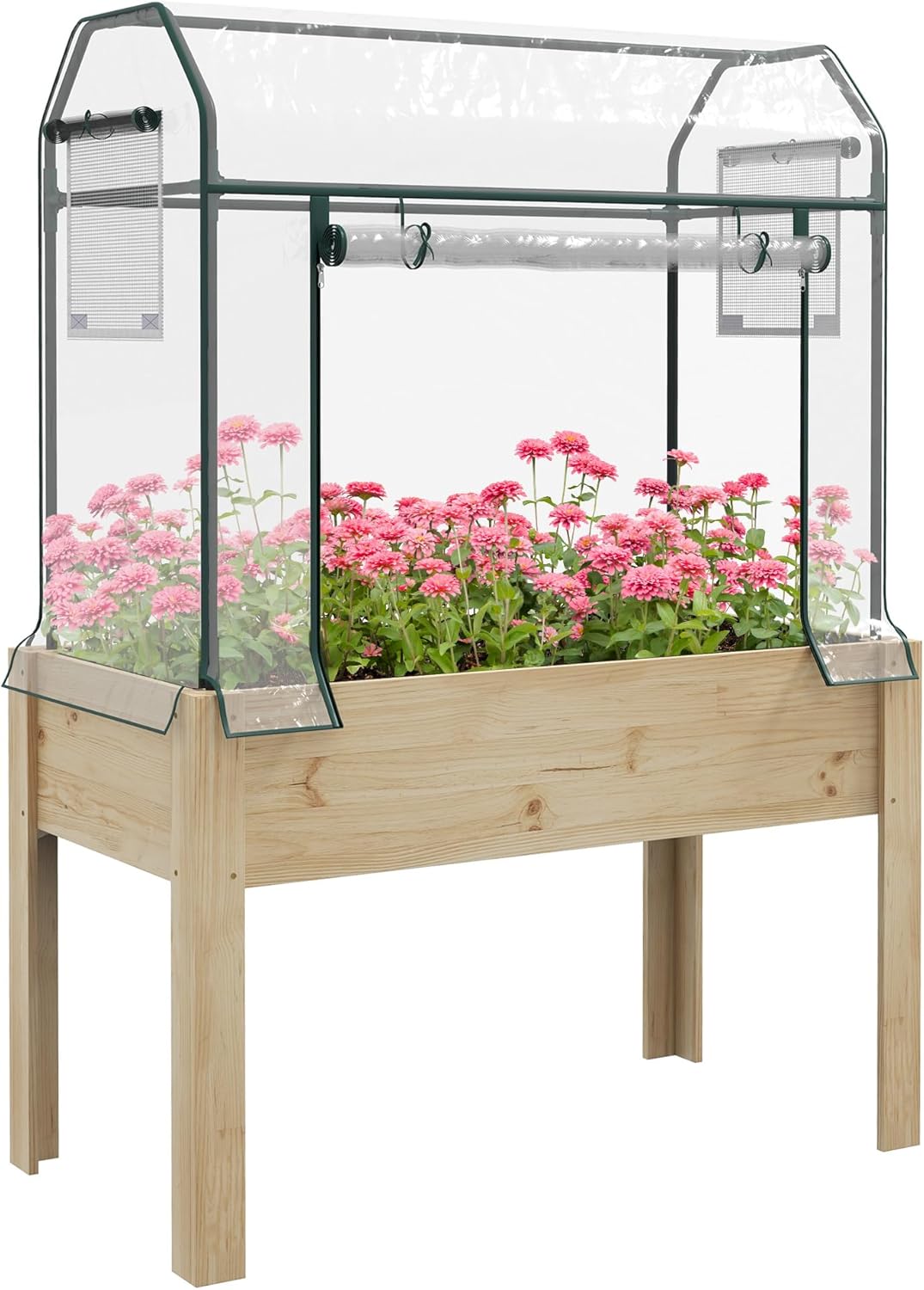
Outsunny Raised Garden Bed with Greenhouse Cover
| Maximum load | 660 lbs |
|---|---|
| Material (cover) | Plastic |
| Liner material | Non-woven fabric |
This Outsunny raised garden bed pairs a sturdy elevated wooden planter with a roll-up plastic greenhouse cover to give you a compact sheltered growing space. It is typically used on patios or in small yards to start seedlings, extend the growing season, or protect tender plants from wind and light frost. Notable features include the 29.5 inch elevated base that reduces bending, a transparent cover that admits sunlight and traps warmth, two ventilation windows for airflow, and a non-woven fabric liner that helps retain soil while allowing drainage. In practice the unit makes routine tasks like planting and harvesting easier thanks to the raised height and contained footprint, and the cover extends the usable season by creating a warmer microclimate. Expect some assembly and moderate maintenance of the wooden frame and plastic cover over time; the cover will need attention in strong sun or heavy wind, and the bed is best for small- to medium-scale plantings rather than large crops.
Best for: Gardeners who want a reliable, low-profile greenhouse solution to start seedlings and protect small plantings while minimizing bending and daily effort.
Less Ideal for: People needing large continuous growing beds or commercial-scale production should choose larger raised beds or a full greenhouse structure.
- Elevated 29.5 inch base reduces bending and improves accessibility
- Transparent plastic cover traps heat and extends the growing season
- Roll-up door and two windows provide easy access and adjustable ventilation
- Non-woven fabric liner prevents soil loss while allowing airflow
- Plastic cover may degrade or need replacement faster than rigid greenhouse panels
- Sized for small to medium plantings rather than large-scale production
Verdict: A compact, easy-access raised bed with a greenhouse cover that reliably extends the season and reduces bending for small-scale greenhouse gardening.
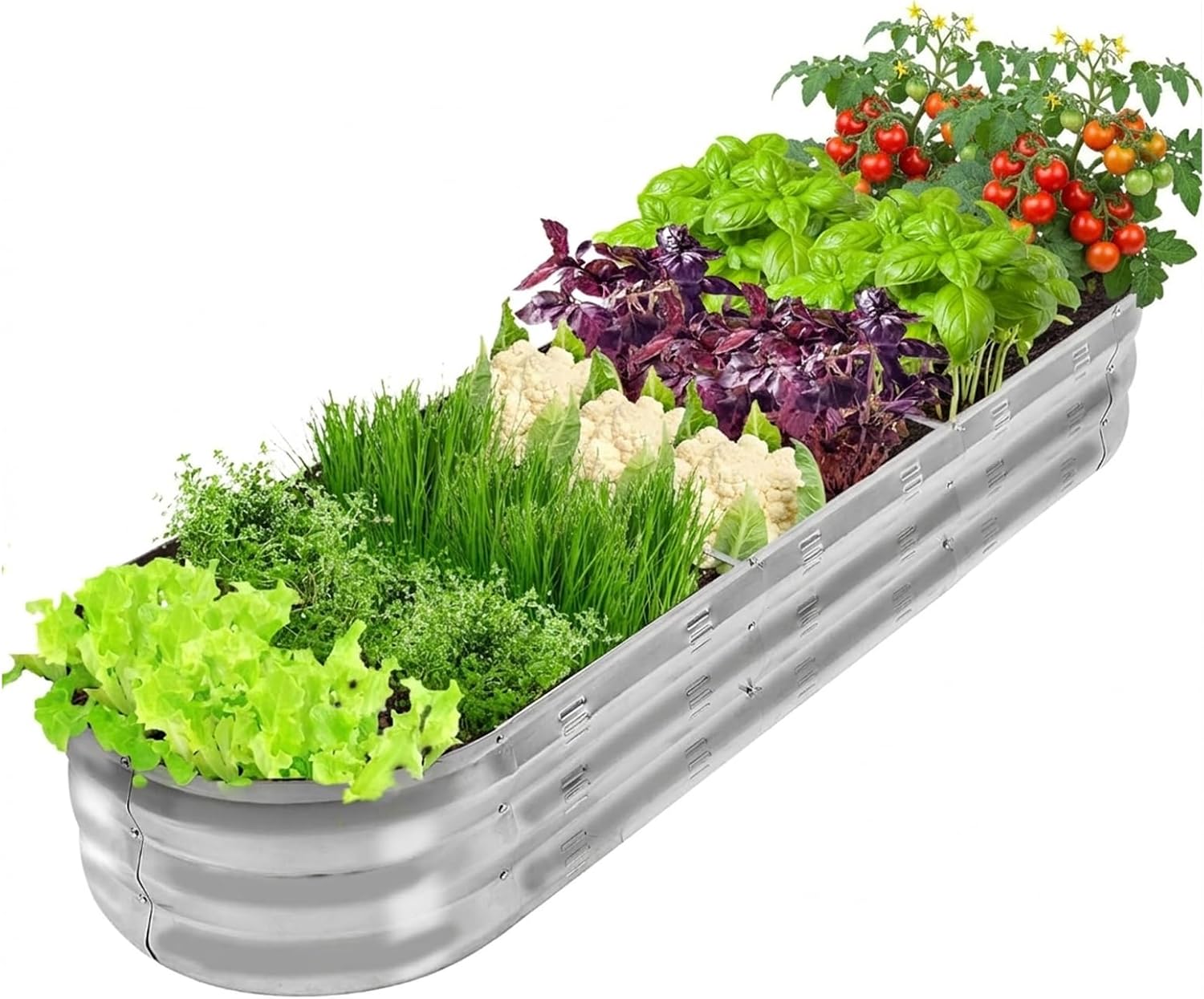
GADI 67-Inch Galvanized Raised Garden Bed
| Capacity | 7 cubic feet |
|---|---|
| Material Type | Metal |
| Finish Types | Powder Coated |
| Other Special Features | Breathable, Drainage Hole, Rust Resistant, UV Resistant, Weather Resistant |
| Mounting Type | Floor Standing |
This GADI 67-inch galvanized raised garden bed is a straightforward metal planter built for outdoor vegetable and flower gardening. It assembles quickly with the included hardware and tools into a sturdy, floor-standing bed that uses a wave-shaped metal design for added rigidity. The galvanized steel with powder-coated finish and two layers of anti-corrosion paint give it rust resistance and UV/weather protection, while the open-bottom and drainage hole design prevent waterlogging and let roots access native soil. Side vents improve airflow to roots and help prevent excess moisture buildup. At roughly 7 cubic feet capacity it suits shallow-root vegetables, herbs, and annual flowers planted in patio or backyard settings. Expect limited depth for very deep-rooted crops and the metal construction will warm and cool with ambient temperatures, which affects watering needs. If you want a low-maintenance, durable raised bed that is quick to set up and resists corrosion, this is a practical choice for an efficient vegetable plot.
Best for: Gardeners who prioritize durable, low-maintenance solutions and want a quick-to-assemble raised bed for growing vegetables, herbs, and flowers in patios or small yards.
Less Ideal for: Growers planning to cultivate deep-rooted crops like large root vegetables or small fruit trees should consider deeper, soil-retaining alternatives or wooden beds.
- Galvanized steel with powder-coated finish resists rust and weathering
- Open-bottom design and drainage hole prevent water buildup and improve root access to soil
- Wave-shaped metal panels add structural strength for stability
- Includes necessary hardware and tools for quick assembly
- Shallow depth limits suitability for deep-rooted vegetables or large perennials
- Metal walls can heat up or cool quickly, affecting soil temperature and watering frequency
Verdict: A sturdy, weather-resistant galvanized raised bed that makes it easy to set up a productive vegetable patch with minimal upkeep.
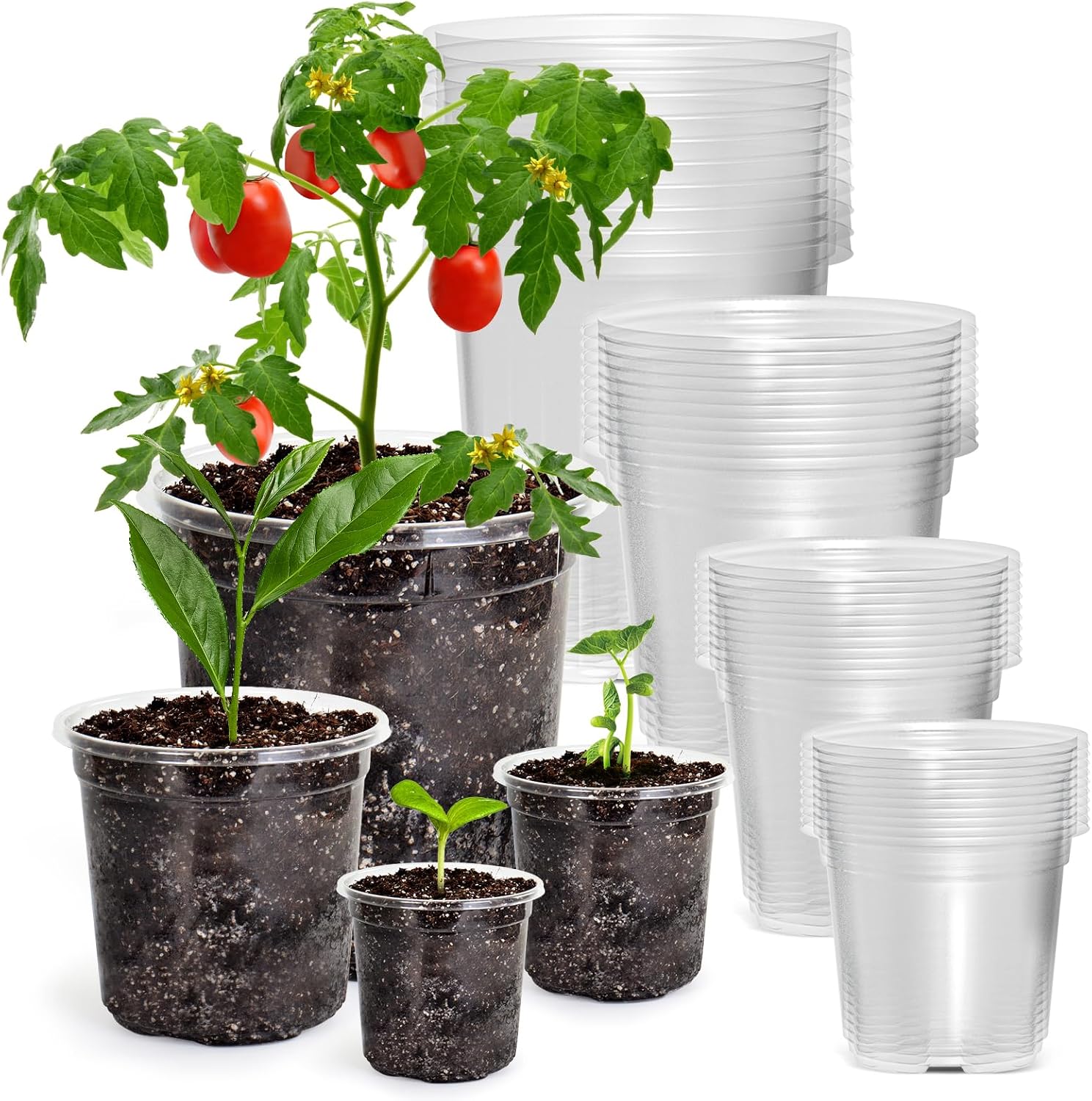
Bluepro Clear Nursery Pots 36-Pack (3.5, 4, 5, 7 in) with Drainage Holes
| Unit Count | 36 Count |
|---|---|
| Material Type | PET |
| Drainage Hole | Yes |
| Indoor Outdoor Usage | Indoor |
These Bluepro clear nursery pots are a practical starter kit for indoor houseplant care, propagation, and seed starting. The set includes nine pots each of 3.5, 4, 5 and 7 inch sizes so you can match pot size to cuttings, seedlings, or young houseplants without hunting for individual pots. Transparent PET construction makes it easy to monitor root development and soil moisture without disturbing plants, and the molded drainage openings help prevent overwatering when used with a tray or saucer. The plastic is flexible enough to ease transplanting by gently flexing the pot to release root balls, and because the material is lightweight and reusable these pots are convenient to store and move around. Limitations are that the set does not include saucers or humidity domes and the clear plastic shows soil stains over time, so plan to use trays for drainage and occasional cleaning if you want them to look tidy on display.
Best for: Buyers who want a low-risk, ready-to-use kit for propagating and raising indoor plants and who prioritize visible root monitoring and straightforward, no-fuss care.
Less Ideal for: Those wanting finished decorative pots for long-term display or outdoor heavy-duty containers should consider decorative planters or heavier materials instead.
- Assortment of four common nursery sizes suitable for seedlings through young houseplants
- Clear PET walls let you observe roots and soil moisture without disturbing plants
- Molded drainage holes reduce risk of waterlogged soil when paired with a tray
- Flexible, reusable plastic that eases transplanting and storage
- No saucers or humidity domes included so you must provide trays for drainage
- Clear plastic will show soil and water marks and may need regular cleaning
Verdict: A versatile, low-effort starter kit for indoor propagation and young houseplants that makes root and moisture monitoring simple.
Choosing the Right Planter for Greenhouse: Key Factors to Consider
Drainage and Overflow Control
Proper drainage is critical inside a greenhouse because excess moisture raises humidity and encourages fungal disease. Look for planters that offer adjustable drainage or multiple outlet options so you can tune how quickly water leaves the pot. Built-in overflow channels or raised feet help keep roots out of standing water while allowing benches and trays to stay dry.
A planter that allows you to control drainage reduces the need for constant ventilation adjustments. It also makes integrating timed irrigation or capillary watering systems simpler because you can predict how much water the container will retain between cycles.
Material Durability and Moisture Resistance
Greenhouse conditions are typically humid and often involve higher temperatures and sometimes UV exposure from light sources. Choose materials that resist cracking, warping, and fungal growth in moist environments. Rigid plastics, certain treated woods, ceramics with proper glazes, and metal with corrosion-resistant coatings each behave differently in a greenhouse.
Consider how porous a material is. Highly porous materials can absorb and retain moisture against the root ball, which may be useful for some crops but harmful for others. Nonporous materials are easier to clean and disinfect between plantings, an important consideration for disease prevention.
Thermal Behavior and Root Temperature Control
Planter material and color influence how much heat the root zone retains under greenhouse conditions. Dark, dense materials can absorb heat during sunny periods and release it overnight, which might benefit warm-loving crops but stress cool-season plants. Lighter colors and insulating materials moderate temperature swings.
Think about seasonal use and whether you need a planter that buffers temperature or one that sheds heat quickly. Inconsistent root temperatures can slow growth or increase susceptibility to pests and disease, so match thermal properties to the plants you intend to grow.
Space Efficiency and Bench Compatibility
Greenhouses have finite bench, shelf, and floor space, so container footprint and shape matter. Narrow, tall planters can save bench area but may reduce soil volume and increase watering frequency. Shallow, wide trays maximize growing area for seedlings and cuttings and work well on staging benches.
Modular designs that stack or nest for storage, or planters sized to standard bench widths, make it easier to rearrange crops and maintain good airflow. Consider whether the planter fits your existing shelving or tray systems to avoid wasted space.
Ease of Handling and Routine Maintenance
Planters that are easy to lift, clean, and repot save time in a busy greenhouse. Handles, lightweight construction, and designs that permit bottom watering or tray access reduce bending and repetitive strain during routine tasks. Smooth interior surfaces and removable liners speed up soil changes and sanitation between crops.
Evaluate how heavy a planter becomes when filled with potting mix and saturated. If you move pots frequently, choose options that remain manageable at full moisture to prevent injury and to allow quick reconfiguration of the greenhouse layout.
Compatibility With Irrigation and Pest Management
How a planter interacts with irrigation systems and pest controls affects long-term success in a greenhouse. Some containers are designed for capillary mat systems or include siphon-resistant drainage that works with timed irrigation. Others allow placement of sticky traps, root barriers, or under-pot pest guards to reduce insect and fungal pressures.
Check whether the planter design concentrates moisture in crevices where pests and pathogens can hide. Simplified geometries and accessible undersides make it easier to inspect and treat plants, reducing the need for disruptive interventions.
Sizing Planters for Different Greenhouse Tasks
Match planter dimensions to the task. Seedlings and cuttings do well in shallow trays that allow frequent, controlled waterings and quick root observation. Vegetable starts and small ornamentals usually need deeper cells or pots to develop stable root systems before transplanting.
For long-term greenhouse crops, prioritize soil volume over narrow footprints. Larger pots hold more moisture and nutrients, reducing frequent watering and feeding. If bench space is limited, consider grouping plants with similar water needs into the same sized containers to streamline irrigation.
- Seed trays and plug flats for propagation
- Medium pots for bench-grown herbs and perennials
- Large containers for fruiting vegetables and woody plants
Integrating Planters With Greenhouse Irrigation
Decide whether you will rely on hand watering, capillary mats, drip lines, or automated emitters. Some planters work better with top watering while others have features that enable reliable bottom or capillary irrigation.
When using irrigation lines, ensure the planter allows for stable placement of emitters and provides consistent runoff paths to avoid water pooling on benches. Planters with removable saucers or built-in reservoirs can simplify automated watering setups.
- Confirm access points for installing drip emitters
- Look for planters compatible with capillary mat drainage
- Choose removable trays for easy cleaning under irrigation setups
Cleaning, Sanitation, and Crop Rotation
Sanitation is vital in a greenhouse. Planters with smooth, nonporous surfaces are faster to disinfect between plantings and reduce carryover of pathogens. Design choices that minimize nooks and decorative crevices help keep pests and fungal spores from hiding.
Plan for routine cleaning by choosing containers that can be rinsed, bleach-soaked, or steam-cleaned if necessary. If you practice frequent crop rotation, lighter, stackable planters reduce the labor involved in clearing and replanting benches.
- Prioritize nonporous materials for easy disinfection
- Stackable planters save space when empty
- Removable liners speed up soil changes
Mobility and Seasonal Storage
Consider how often you will rearrange plants or move crops outside for cold frames or shade. Casters, handles, and lightweight options make seasonal movement easier and reduce strain.
For seasonal workflows, choose planters that nest or stack compactly for off-season storage. Durable finishes resist wear from repeated moving and storage under variable conditions.
- Wheels for heavy, long-term setups
- Handles or grips for frequent relocation
- Nesting designs for compact off-season storage
Sustainable Materials and Reuse
If sustainability is a priority, evaluate recycled-content plastics, sustainably sourced woods treated for greenhouse use, or long-lived ceramics. Durability reduces the need to replace containers frequently, which lowers long-term environmental impact.
Also think about end-of-life options. Materials that are recyclable or repurposable help close the loop and reduce waste from greenhouse operations.
- Recycled plastics reduce new material demand
- Treated wood can be long-lasting if kept ventilated
- Ceramics are durable but heavier to move
How We Chose the Best Planter for Greenhouse
We focused on attributes that matter in warm, humid, and space-constrained greenhouse settings. Key evaluation criteria included drainage and overflow control, material resistance to moisture and UV exposure, footprint and modular stacking or shelving compatibility, and ease of routine tasks like repotting and cleaning. We also considered thermal behavior of materials since containers that hold heat differently can influence root temperature in a greenhouse. Practical handling factors such as weight when filled, mobility options, and how simple it is to integrate irrigation or capillary mats were part of the assessment. Products were excluded if they were designed strictly for outdoor landscape use without suitable drainage options, if materials were known to degrade rapidly in humid environments, or if sizes were impractical for typical greenhouse benches and shelving. The resulting picks balance durability, water management, and space efficiency for greenhouse gardeners.
FAQ
What planter depth is best for starting seedlings in a greenhouse?
Seedlings and cuttings typically do well in shallow trays or flats 1 to 3 inches deep for early root development. For seedlings that will stay in pots longer, choose deeper cells of 4 to 6 inches to give roots room to develop before transplanting.
Can I use outdoor pots inside a greenhouse?
Often you can, but check drainage and material suitability. Outdoor pots designed without adequate drainage or made from materials that degrade in constant humidity may perform poorly. Modify them with extra drainage or choose greenhouse-suitable materials if possible.
How do I prevent root overheating in greenhouse containers?
Use lighter-colored or insulating planters, provide shading during hot periods, and avoid exposing pots on metal benches that amplify heat. Increasing ventilation and using pot sleeves or insulating wraps can reduce temperature swings around the root zone.
Are self-watering planters a good choice for greenhouses?
Self-watering planters can work well because they stabilize moisture and reduce daily watering. They require monitoring to avoid waterlogging and may concentrate salts over time, so periodic flushing and checking root health is necessary.
How often should I clean planters in a greenhouse?
Clean planters between crop cycles and sanitize if you have seen disease or pest issues. Routine rinsing during the season removes salt buildup and debris, while a thorough disinfection is recommended when rotating crops to reduce pathogen carryover.
What planter materials are easiest to disinfect?
Nonporous materials such as glazed ceramics and many plastics are easiest to clean and disinfect because they do not absorb moisture or harbor spores. Porous wood and untreated clay require more effort and may retain residues that are harder to eliminate.
Final Verdict
Selecting the right greenhouse planter means balancing drainage, material behavior, and space use against the plants you intend to grow. Prioritize containers that match your irrigation method, fit your benches or shelving, and are simple to clean to reduce disease risk. Accept tradeoffs between thermal buffering and weight or between large soil volume and footprint. Focus on the criteria that affect daily care in your greenhouse and choose a planter that reduces labor while protecting roots and maintaining predictable moisture levels.
