

Note: This article contains affiliate links. If you click on these links and make a purchase, I may earn a small commission at no extra cost to you. This helps support my research and content. Read my full affiliate disclosure here.
When you choose the right mulch for pecan trees, you control moisture, moderate soil temperature, and feed the long-lived root system that supports nut production. Young and mature pecans both benefit from a well-applied mulch ring that conserves water during dry spells, suppresses competing weeds, and slowly releases organic matter into the soil. This guide covers five top shortlisted mulches suited for pecan tree use. We focus on how each option behaves in a real yard or orchard, and we evaluate candidates for moisture retention, nutrient contribution, pest and disease considerations, and ease of maintenance. Read on to understand the tradeoffs so you can pick the right mulch for your site and management style.
Top Picks at a Glance
| Best Overall The best all-around choice for most situations | OLDCASTLE Lawn & Garden Pine Spruce Mulch, 2 cu. ft. |  |
| Best Quality Built to a higher standard if you want something more solid | Plantonix Coco Chips Mulch Brick (10 lb) – Compressed Coconut Husk Chips |  |
| Best Value The sweet spot between price and what you get | USA PINESTRAW Long Needle Pine Straw Mulch, Square Bale |  |
| Best Budget The cheapest option that still gets the job done reliably | SGTM Living Mulch Organic, 4 Quart |  |
| Highest Rated A top-rated pick with lots of positive feedback | Capital Forest Products Cedar Mulch 3.0 Cu Ft |  |
OLDCASTLE Lawn & Garden Pine Spruce Mulch, 2 cu. ft.

| Product Description | Aromatic blend from northern pine and spruce |
|---|---|
| Volume | 2 cu. ft. |
| Brand | OLDCASTLE LAWN & GARDEN |
OLDCASTLE Pine Spruce Mulch is a ready-to-use bark blend made from northern pine and spruce that provides a fragrant, rich brown ground cover for beds and around trees. Typical use is as a 2 to 3 inch layer around trunks and root zones to conserve soil moisture, suppress weeds, and moderate soil temperature. The product’s notable features are its aromatic natural fibers and uniform color that blends well under deciduous and evergreen canopies. For pecan trees it will help retain moisture through hot months and reduce surface weed competition when applied correctly a few inches away from the trunk. Limitations are that organic bark mulches gradually decompose so periodic top-ups are required and this product does not supply nutrients as quickly as composted mulch; you may need to supplement with compost or fertilizer for long-term soil improvement. Also keep mulch pulled back from direct trunk contact to avoid moisture-related bark issues.
Best for: Gardeners who want a natural-looking, moisture-retaining bark mulch for established pecan trees and prefer a low-maintenance, aromatic option to protect root zones.
Less Ideal for: Homeowners seeking a fast nutrient boost or a permanent, low-replacement groundcover should consider compost or inorganic mulches instead.
- Aromatic pine and spruce blend that improves bed appearance and releases a pleasant scent.
- Helps retain soil moisture and suppress surface weeds when applied at proper depth.
- Uniform rich brown color complements pecan tree beds and landscape plantings.
- Organic bark breaks down over time and requires periodic replenishment.
- Does not provide significant quick-release nutrients compared with composted materials.
Verdict: Choose this pine and spruce bark mulch if you want an attractive, moisture-retaining organic cover that complements pecan tree beds and is easy to apply.
Plantonix Coco Chips Mulch Brick (10 lb) – Compressed Coconut Husk Chips

| Unit Count | 160 Ounce |
|---|---|
| Item Type Name | Soil and Soil Amendments |
| Brand Name | plantonix |
| Volume | 15 gallons |
Plantonix Coco Chips arrive as a compact 10 pound brick that hydrates and expands into lightweight coconut husk chips for use as mulch, soil amendment, or terrarium bedding. You soak or wet the block to break it apart, then spread the chips over garden beds, containers, orchid pots, or raised beds to reduce evaporation and moderate soil temperature. The product is pre-screened, washed, and aged to remove dirt and rocks, and the low electrical conductivity and near-neutral pH make it safe to mix with potting mixes. Practical benefits include improved drainage and aeration compared with heavy wood mulches, long-lasting moisture retention that can reduce watering frequency, and an attractive tropical look. Important limitations are that you must rehydrate and break up the compressed brick before use which adds prep time, and coco chips do not supply nutrients so you will still need to fertilize regularly. Also note the safety warning about dust and keeping it away from children and pets during handling.
Best for: Buyers who prioritize reliable, consistent mulch performance and want a sustainable, low-maintenance material that retains moisture and improves soil structure for beds and containers.
Less Ideal for: Gardeners who need a nutrient-rich soil amendment or who prefer a no-prep, ready-to-spread loose mulch should consider alternatives.
- Made from 100% recycled coconut husks, a renewable alternative to peat and wood mulches
- Pre-screened and washed to remove dirt, rocks, and excess fiber
- Excellent at retaining moisture while maintaining airflow and drainage
- Lightweight and long-lasting so it does not compact like some organic mulches
- Requires soaking and manual breakup of the compressed brick before use
- Does not provide plant nutrients and should be used with a fertilizer plan
Verdict: A dependable, renewable mulch solution that holds moisture and improves aeration without compacting, ideal for gardeners who want consistent performance.
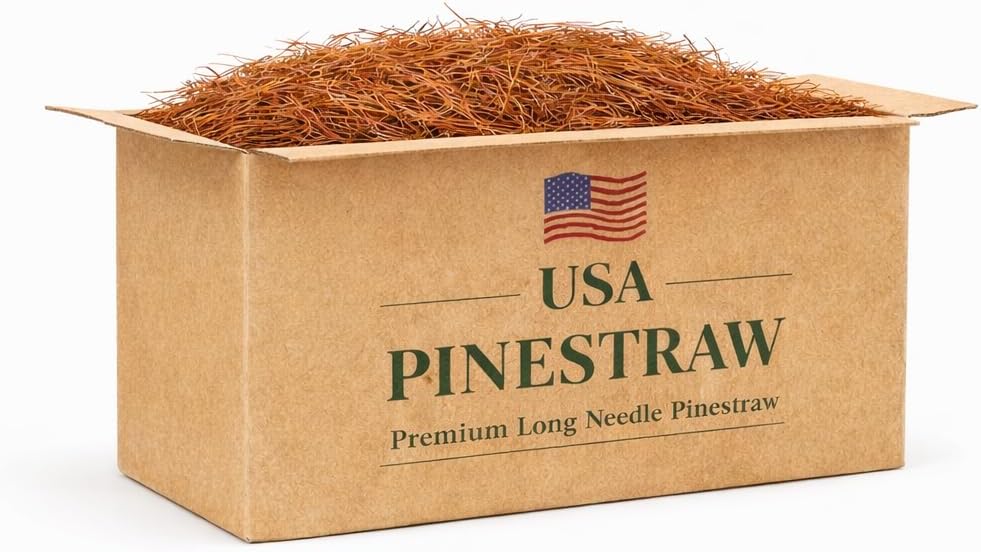
USA PINESTRAW Long Needle Pine Straw Mulch, Square Bale
| Material Type | Pine |
|---|---|
| Other Special Features of the Product | Organic |
| Package Size Name | Square Bale |
| Unit Count | 1 Count |
This product is a single premium square bale of long-needle pine straw intended for use as organic mulch around beds and shrubs. It is typically spread 2 to 4 inches deep around plants, pathways, and trees to suppress weeds, retain soil moisture, and protect roots from temperature swings. Because it is long-needle pine straw, it interlocks well and resists blowing away better than chopped mulches, and it decomposes slowly to add organic matter without dramatically altering soil texture. Practical benefits for blueberry plantings include good acidifying potential over time and excellent moisture retention, both helpful for blueberry health. Limitations are that you will need multiple bales for larger beds and periodic top-ups each season as the straw settles and decomposes. Also pine straw can be bulky to handle compared with bagged compost or wood chips, and it does not provide immediate nutrient boosts the way composted mulches do.
Best for: Gardeners seeking a low-maintenance, organic mulch for acid-loving shrubs who want better moisture retention and natural weed suppression in small to medium beds.
Less Ideal for: People who need a sterile, compacted mulch for container-grown blueberries or those wanting immediate nutrient-rich soil amendments rather than a slow-decomposing cover.
- Organic long-needle pine straw that naturally suppresses weeds
- Good moisture retention that reduces watering frequency
- Interlocking needles resist wind displacement better than loose shredded mulches
- Slow decomposition adds organic matter over time without rapid nutrient release
- Sold as single square bale so multiple purchases needed for larger beds
- Bulky to handle and store compared with bagged options
Verdict: Choose this long-needle pine straw bale if you want an organic, moisture-retaining mulch that stays put and supports acid-loving plants like blueberries.
SGTM Living Mulch Organic, 4 Quart

| Brand Name | SGTM |
|---|---|
| Unit Count | 128 Ounce |
| Volume | 4 quarts |
This living mulch is a small-batch organic ground cover intended to establish among plants and act as a low-maintenance weed barrier. It is typically used by spreading over bare soil or between rows so the cover can root and reduce light reaching weed seedlings. Notable features listed include moisture retention, weed suppression, erosion control, and soil-building benefits from added organic matter. In practice that means less frequent watering, fewer hand-weed sessions, and gradual improvement to soil structure as the material breaks down. It also attracts beneficial insects and helps moderate soil temperature, which can support plant health in both hot and cool periods. Because this is a living approach rather than an instant physical barrier, it takes time to establish and will not give immediate perfection against persistent annual weeds. Coverage per 4 quart container is limited, so plan to use multiple units for larger beds or to reapply while the mulch becomes established.
Best for: Gardeners working on a tight budget who want a low-maintenance, organic way to reduce weeds and improve soil over time in small beds or focused planting areas.
Less Ideal for: People who need instant, broad-scale weed eradication across large landscapes or who prefer nonliving hard barriers for immediate weed control.
- Suppresses weeds by crowding seedlings once established
- Helps retain soil moisture and reduce watering frequency
- Adds organic matter to improve soil fertility and structure
- Stabilizes soil to reduce erosion on slopes
- Attracts beneficial insects and supports biodiversity
- Requires time to establish and will not block all established weeds immediately
- Small 4 quart volume limits coverage for larger beds
- Not a quick-clean solution for heavily infested weed areas
Verdict: Choose this living mulch if you want an affordable, organic ground cover that steadily suppresses weeds while improving soil health in small to medium garden areas.
Capital Forest Products Cedar Mulch 3.0 Cu Ft

| Unit Count | 1 Count |
|---|---|
| Manufacturer | CAPITAL FOREST PRODUCTS |
| Item model number | CFD_1301215 |
| UPC | 742638888222 |
This cedar mulch is a straightforward, naturally aromatic ground cover intended for garden beds, foundations, and patios. Made from processed cedar, it lays down easily to help block light, reduce weed germination, slow erosion, and hold soil moisture for planted areas. Typical use is spreading a 2 to 3 inch layer around perennials, shrubs, and foundation plantings where weed suppression and moisture retention are priorities. The cedar material also gives a clean, natural appearance and a pleasant scent while resisting rapid decomposition compared with some softer mulches. Limitations are that cedar does not form the tight mat that some synthetic weed barriers provide and will need occasional replenishing as it breaks down and settles; it also does not replace mechanical weeding or pre-emergent herbicides in heavy weed situations. For gardeners seeking a low-maintenance, natural mulch that contributes to healthier soil and fewer surface weeds, this is a reliable choice.
Best for: Gardeners who prioritize a durable, natural mulch to reduce weeding and conserve moisture around beds and shrubs and who prefer a low-maintenance, long-lasting organic option.
Less Ideal for: People who need an immediate, maintenance-free impermeable barrier against weeds or who prefer a non-organic, permanent solution for high-traffic mulched areas.
- Natural cedar composition helps suppress weed germination and retain soil moisture
- Pleasant cedar scent and attractive natural appearance for beds and foundations
- Resists rapid breakdown compared with softer mulches, so it lasts longer between refreshes
- Helps reduce erosion on slopes and around plantings when applied evenly
- Does not form a solid barrier like landscape fabric and will require periodic top-up
- May be less effective alone against aggressive perennial weeds without additional control methods
Verdict: Choose this cedar mulch if you want a natural, longer-lasting organic layer that reduces surface weeds and helps retain soil moisture in garden beds.
Choosing the Right Mulch for Pecan Trees: Key Factors to Consider
Moisture Retention and Drainage
How well a mulch holds moisture matters for pecan trees because roots need consistent soil moisture through growing and nut-fill seasons. Mulches that lock in moisture reduce irrigation frequency, but overly dense or compacted layers can trap water against the trunk and limit oxygen to roots.
Consider the balance between water-holding capacity and drainage. Mulches that maintain porosity let excess water percolate while slowing evaporation. In heavy clay soils choose mulches that do not increase surface compaction. In sandy soils, look for materials that boost water-holding capacity so trees experience fewer drought stresses.
Nutrient Contribution and Soil Building
Organic mulches break down and gradually add carbon and nutrients to the soil, which matters for pecans because they are heavy feeders over time. A mulch that contributes usable organic matter can reduce the need for supplemental fertilizer and improve soil structure for root growth.
Evaluate the expected decomposition products and how quickly they become available. High-carbon mulches may temporarily tie up nitrogen during decomposition unless managed with supplemental nitrogen. Fast-decomposing materials feed soil biology quickly but require more frequent replenishment, while slow-decomposing options provide steady long-term benefits.
Decomposition Rate and Maintenance Cycle
How quickly a mulch breaks down affects labor and schedule. Fast-decomposing mulches need topping up each year or season, which can be a maintenance burden in larger yards. Slow-decomposing mulches last longer but may not supply nutrients as rapidly.
Match decomposition rate to how often you want to refresh the ring around your pecan. If you prefer low-maintenance care, choose long-lasting materials that remain effective for multiple seasons. For active soil-building goals, select mulches that decompose more quickly and plan for regular additions to maintain coverage and nutrient inputs.
Rodent, Pest, and Disease Considerations
Mulch can alter habitat for rodents, insects, and fungal pathogens. Materials that form thick, insulating layers right against trunks can provide shelter for voles or encourage collar rot under consistently wet conditions.
Keep mulch pulled away from direct trunk contact to reduce pest and disease risk, and choose materials that do not retain prolonged surface moisture in humid climates. Consider whether a mulch is likely to harbor fungal spores or attract insect pests and select options that minimize those risks for the local climate.
pH Influence and Nutrient Balance
Different mulching materials can change surface soil pH over time as they decompose. Pecan trees prefer neutral to slightly acidic soils, so select mulches that will not dramatically acidify or alkalize the root zone unless you plan to amend the soil intentionally.
Understand whether a mulch is likely to release acids or alkaline compounds and how that interacts with your existing soil. If your soil test shows deficiencies, choose mulches that complement your fertilization plan rather than complicate it.
Practical Application and Aesthetics
How easy a mulch is to spread, shape, and keep in place affects whether you will maintain the recommended mulch ring. Lightweight materials blow away on exposed sites while dense chips stay put but may be heavier to handle.
Also consider how the mulch looks in your landscape. Some gardeners prefer a neat, tidy ring for a park-like yard, while others prioritize soil function over appearance. Choose a material and layer depth that you will realistically maintain given your time and tools.
Mulch Depth and Placement Best Practices
Aim for a mulch depth of 2 to 4 inches across the root zone, spreading material out in a wide donut that extends to the tree dripline when practical. Shallower layers may not conserve moisture or suppress weeds effectively while deeper piles can limit oxygen exchange and encourage pests.
Always keep mulch a few inches away from the trunk base to prevent moisture from being trapped against bark. Reapply or fluff the mulch annually to keep the layer uniform and to check for signs of rodent activity or fungal growth.
- Maintain a 2-4 inch depth; avoid creating a volcano mound up the trunk.
- Extend mulch outward rather than concentrating it near the trunk.
- Inspect annually and top up thin areas to maintain coverage.
Seasonal Timing and Replenishment
Apply mulch in late spring after soil has warmed and weeds are controlled, or in early fall to conserve soil moisture for winter. Avoid heavy fresh applications in the wettest part of the year when surface water might remain trapped.
Plan replenishment based on decomposition rate and visible depth loss. Organic mulches are best topped up as needed rather than replaced entirely, and you can incorporate used material into planting beds or compost piles if it is largely decomposed.
- Top up annually for fast-decomposing mulches; every 2-3 years for slow-decomposing options.
- Avoid applying mulch when soil is waterlogged to reduce risk of collar rot.
Dealing with Suckers, Grass, and Competing Vegetation
Remove grass and weeds within the mulch ring before applying material. A weed-free ring reduces competition for water and nutrients and minimizes the need for herbicide use near tree trunks.
If suckers or vigorous groundcover reappear, pull or cut them before they establish deep roots. A persistent mulch layer reduces recurrence but does not eliminate the need for occasional hand removal or targeted edging.
- Clear a weed-free ring before mulching.
- Check for regrowth each season and remove before it competes with roots.
Compost and Soil-Integrated Mulching
Incorporating compost or composted organic amendments under a mulch layer gives pecan trees a more immediate nutrient supply compared with raw wood-based mulches. A thin layer of compost worked into the topsoil before mulching can jump-start microbial activity and nutrient cycling.
Use well-matured compost to avoid nitrogen drawdown and to reduce the risk of introducing weed seeds. Compost under mulch also helps bind fine soil particles and reduces erosion on sloped sites.
- Apply 1/2 to 1 inch of finished compost under mulch for a nutrient boost.
- Avoid fresh manure or uncomposted materials directly under trees.
Managing Mulch in Different Climates
In arid or drought-prone regions prioritize mulches that maximize water retention and resist wind displacement. In humid or wet climates favor materials that drain well and dry quickly at the surface to reduce fungal pressure.
Cold-climate gardeners can use mulch to buffer root-zone temperature swings in winter, but avoid very deep insulating layers that delay spring soil warming and tree emergence.
- Choose wind-stable mulches for exposed sites.
- Select quick-draining materials in high-humidity areas to minimize rot risk.
How We Chose the Best Mulch for Pecan Trees
We evaluated mulches based on criteria that directly affect pecan tree health and long-term soil condition. Priority went to materials that reliably retain moisture without creating waterlogged conditions, contribute usable organic matter or nutrients as they break down, and suppress weeds that compete with tree roots. We also looked at how different mulches affect soil temperature, the risk of rodent or insect habitat near trunks, and how easy the material is to apply or replenish during seasonal maintenance. To build the shortlist we assessed common landscape and orchard mulches that are widely available to gardeners and growers. Excluded items were decorative or non-organic coverings that offer little to no soil benefits or that could harm root oxygenation. We focused on materials with clear decomposition pathways and predictable effects on soil pH and texture. Final selections prioritized long-term soil improvement and practical handling for homeowners managing one or several pecan trees.
FAQ
How wide should the mulch ring be around a pecan tree?
A mulch ring should ideally extend as far as practical toward the tree dripline. Wider rings cover a greater portion of active roots and reduce competition. For landscape trees, a minimum of several feet in diameter is useful; for orchard settings try to reach the full dripline when feasible.
Can I pile mulch up against the trunk of a pecan tree?
No. Keep mulch pulled back a few inches from the trunk to prevent trapped moisture and bark decay. A clear gap reduces the chance of collar rot and removes convenient habitat for rodents.
Is it OK to use fresh wood chips around pecan trees?
Fresh wood chips can be used but may temporarily immobilize soil nitrogen as they decompose. To avoid nitrogen drawdown, either top-dress with a small amount of compost beneath the chips or allow chips to age for several months before applying in a thick layer.
How often should I replace or replenish mulch?
Replacement frequency depends on the material. Fast-decomposing mulches often need annual topping, while coarse wood chips can last multiple years. Check mulch depth each season and add material when coverage falls below the recommended 2 to 4 inches.
Will mulch attract rodents that damage pecan trees?
Mulch can provide cover for voles and other rodents if it is piled too deep and kept against the trunk. Prevent this by keeping mulch away from the trunk, using coarser textured materials in vulnerable areas, and maintaining a thinner profile near the base.
Final Verdict
Choose a mulch for pecan trees by balancing moisture needs, decomposition rate, and pest considerations. If your priority is water conservation, favor mulches that hold moisture without compacting. If you want to build soil quickly, select materials that decompose faster and plan for regular replenishment. Final choice depends on climate, soil texture, and how much maintenance you prefer. Keep mulch shallow near trunks, extend coverage outward into the root zone, and match material durability to your maintenance schedule to keep trees healthy and productive.
