

Note: This article contains affiliate links. If you click on these links and make a purchase, I may earn a small commission at no extra cost to you. This helps support my research and content. Read my full affiliate disclosure here.
Choosing the right mulch for planting trees matters more than you might expect. The wrong material can hold too much moisture, invite pests, or break down too quickly and leave the root zone exposed. The right mulch balances moisture retention, aeration, nutrient release, and weed suppression so your new tree establishes roots without excess stress. This guide reviews six top mulches selected for tree planting situations. We shortlisted products that suit different soils and climates and evaluated them on gardener-focused criteria like moisture control and decomposition behavior. Read on for practical guidance that helps you pick mulch suited to your planting site and maintenance routine.
Top Picks at a Glance
| Best Overall The best all-around choice for most situations | Soil Sunrise 100% Natural Pine Bark Mulch Nuggets (30 Quarts) |  |
| Best Quality Built to a higher standard if you want something more solid | BRUT Worm Farms Organic Aspen Mulch, 10 Quart |  |
| Best Value The sweet spot between price and what you get | Back to the Roots Organic Mulch, 1 Cubic Foot |  |
| Highest Rated A top-rated pick with lots of positive feedback | Home And Country USA Triple Shredded Hardwood Mulch, 2 cu ft |  |
| Most Popular A crowd favorite that many people choose with confidence | Legigo Coconut Fiber Tree Mulch Ring, 24 inch (6 pack) |  |
| Best Seller A high-volume bestseller chosen again and again | Plantonix Coco Chips Mulch Brick (10 lb) – Compressed Coconut Husk Chips |  |
Soil Sunrise 100% Natural Pine Bark Mulch Nuggets (30 Quarts)

| Volume | 30 quarts |
|---|---|
| Ingredients | Pine bark mulch |
| Unit Count | 1 Count |
Soil Sunrise pine bark mulch is a simple, single-ingredient bagged mulch made from aged pine bark broken into roughly 1/2-inch nuggets. It is used as a top dressing for potted plants, bonsai, terrariums, and acid-loving or ornamental containers, or mixed into potting media to increase aeration and drainage. The nuggets help reduce surface evaporation, shade roots, and give pots a finished reddish-brown look while breaking down slowly to add organic matter over time. Practical benefits include improved water management for indoor and container setups, reduced risk of surface compaction and root rot when blended into mixes, and an attractive natural appearance. Limitations are that the chunky nuggets are not suitable as a fine soil amendment where a uniform fine texture is needed and they will slowly decompose so periodic top-up is necessary; they also do not provide fertilizer or pH adjustments on their own. For gardeners seeking a low-maintenance, decorative mulch for containers, this delivers the expected functions without extras.
Best for: Buyers who want a low-maintenance, all-natural top dressing or amendment for container plants, bonsai, and terrariums and who value improved drainage plus an attractive finished look.
Less Ideal for: Gardeners who need a fine-textured soil conditioner for mixing into beds or who expect a fertilizing or pH-correcting product should consider other soil amendments.
- 100% natural pine bark with no additives
- Nugget size improves drainage and airflow when mixed into potting media
- Helps retain moisture at the surface and shades roots to reduce evaporation
- Attractive reddish-brown finish that tidies container tops
- Chunky 1/2-inch pieces are not suitable for applications needing fine soil texture
- Does not supply nutrients or alter soil pH
Verdict: A straightforward, all-natural pine bark mulch that improves container drainage, reduces evaporation, and gives potted plants a polished, low-maintenance top layer.
BRUT Worm Farms Organic Aspen Mulch, 10 Quart

| Unit Count | 192 Ounce |
|---|---|
| Volume | 10 quarts |
| Style Name | Moisture-retaining |
| Certified Organic | OMRI-listed |
BRUT Organic Aspen Mulch is a fine-texture aspen bark mulch formulated to hold moisture, reduce weed pressure, and slowly add organic carbon to soil. It is applied as a top dressing around garden beds, pathways, or potted plants where you spread a thin layer to protect soil and conserve water. The product is OMRI-listed and described as odor-free and lightweight, which makes it convenient for indoor containers as well as outdoor borders. Its 30% carbon content supports beneficial microbes without drawing down nitrogen, so it helps long-term soil structure while decomposing slowly. Practical benefits include reduced watering frequency, a neater bed appearance, and gentle nutrient contribution that complements regular fertilizing. Important limitations are the small 10 quart volume per bag, which means multiple bags are needed for larger beds, and that it is primarily a surface mulch so it does not replace nutrient-rich soil amendments for heavy feeding tasks.
Best for: Gardeners who want a low-maintenance, organic mulch to conserve water, tidy beds, and slowly improve soil structure in small to medium beds or containers.
Less Ideal for: Large-scale landscapers or gardeners needing bulk mulch coverage or immediate high-nutrient soil amendments should consider larger-volume or nutrient-dense products.
- Odor-free fine aspen bark suitable for indoor and outdoor use
- High moisture retention reduces watering frequency
- OMRI-listed organic material that adds carbon to soil
- Lightweight and easy to spread for quick top-dressing
- Small 10 quart unit is insufficient for large beds without buying multiple bags
- Provides mainly carbon-rich mulch rather than concentrated nutrients
Verdict: A tidy, odor-free organic aspen mulch that conserves water and improves soil health best for small to medium garden beds and containers.
Back to the Roots Organic Mulch, 1 Cubic Foot

| Brand Name | Back to the Roots |
|---|---|
| Item Highlight | Premium organic garden mulch; peat-free; 25.7 quart bag |
| Unit Count | 16 Ounce |
| Volume | 23 cubic centimeters |
This organic mulch from Back to the Roots is a peat-free, upcycled plant-matter blend intended for beds, containers, and around shrubs and trees. It includes dolomitic limestone to help balance pH, yucca extract to improve moisture control, and gypsum to aid water absorption, so it both conserves moisture around root zones and contributes modest nutrients. Typical use is spreading a 2–3 inch layer around bushes, avoiding direct trunk contact, or mixing into the topsoil when planting. Its organic base and added plant food make it a good choice for supporting healthy growth and reducing watering frequency. Limitations to keep in mind are the bag size and volume relative to larger beds and that it is formulated as a general mulch rather than a heavy-duty long-lasting bark product, so it may break down faster and need replenishing more often.
Best for: Gardeners who want an eco-conscious, peat-free mulch that improves moisture retention and supports plant health around bushes and in raised beds.
Less Ideal for: People looking for a coarse, long-lasting decorative bark mulch or a single large bag solution for extensive shrub beds.
- Peat-free organic blend made from upcycled plant matter and wood fines
- Contains yucca extract for improved moisture retention and gypsum for better water absorption
- Includes dolomitic limestone to help adjust and stabilize soil pH
- Formulated with all-purpose plant food to support growth of vegetables, herbs, and shrubs
- Bag volume is relatively small for large or multiple bush beds so more bags may be needed
- Breaks down faster than coarse bark mulches and will require periodic replenishment
Verdict: Choose this peat-free organic mulch when you want an eco-friendly, moisture-saving soil cover that also supplies mild nutrients to bushes and raised beds.
Home And Country USA Triple Shredded Hardwood Mulch, 2 cu ft
| Manufacturer | Home and Country USA |
|---|---|
| Item model number | HCM |
| Product Dimensions | 13 x 13 x 13 inches |
| ASIN | B0CVMGF4ZL |
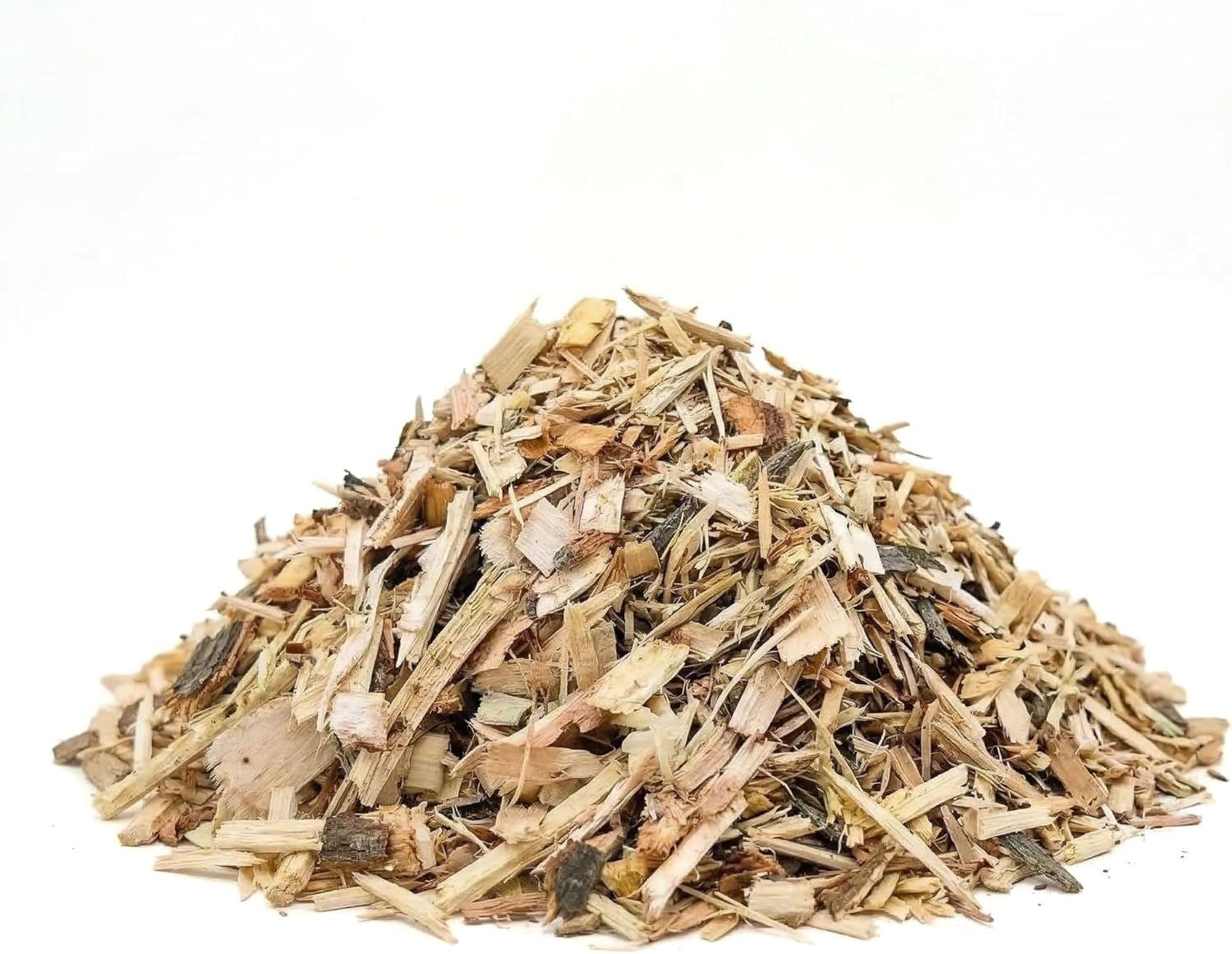
This triple-shredded hardwood mulch is a straightforward option for homeowners who want a reliable, organic ground cover around trees and garden beds. It is typically spread 2 to 4 inches deep around trunks and over root zones to reduce evaporation, block weed growth, and moderate soil temperature. The shredded texture makes it easy to work with and gives good coverage per bag while breaking down slowly to feed soil life over time. Practical benefits include improved moisture retention that can reduce watering frequency and a natural look that enhances curb appeal. Because it is organic, it will gradually decompose and contribute nutrients to the soil, so annual top-ups are recommended. Limitations are that color is natural brown rather than dyed for long-term aesthetics and that a single 2 cu ft bag covers only a small area, so larger tree projects require multiple bags and some handling effort to move and spread.
Best for: Homeowners planting or refreshing mulch around trees who prioritize dependable, low-maintenance, organic ground cover and lasting soil benefits.
Less Ideal for: Buyers seeking long-lasting colored mulch for purely decorative beds or those needing immediate large-volume coverage without multiple bags should look elsewhere.
- Organic hardwood material that adds nutrients as it decomposes
- Triple-shredded texture for good coverage and easy spreading
- Helps retain soil moisture and suppress weeds around trees and beds
- Natural brown color will fade and is not long-lasting like dyed alternatives
- 2 cubic foot bag means multiple bags needed for larger tree planting projects
Verdict: A dependable, organic hardwood mulch that reliably conserves moisture and improves soil health around newly planted and established trees.
Legigo Coconut Fiber Tree Mulch Ring, 24 inch (6 pack)
| Material | Coconut Fiber |
|---|---|
| Diameter | 24 inch |
| Thickness | 0.28 inches |
| Quantity | 6 pack |
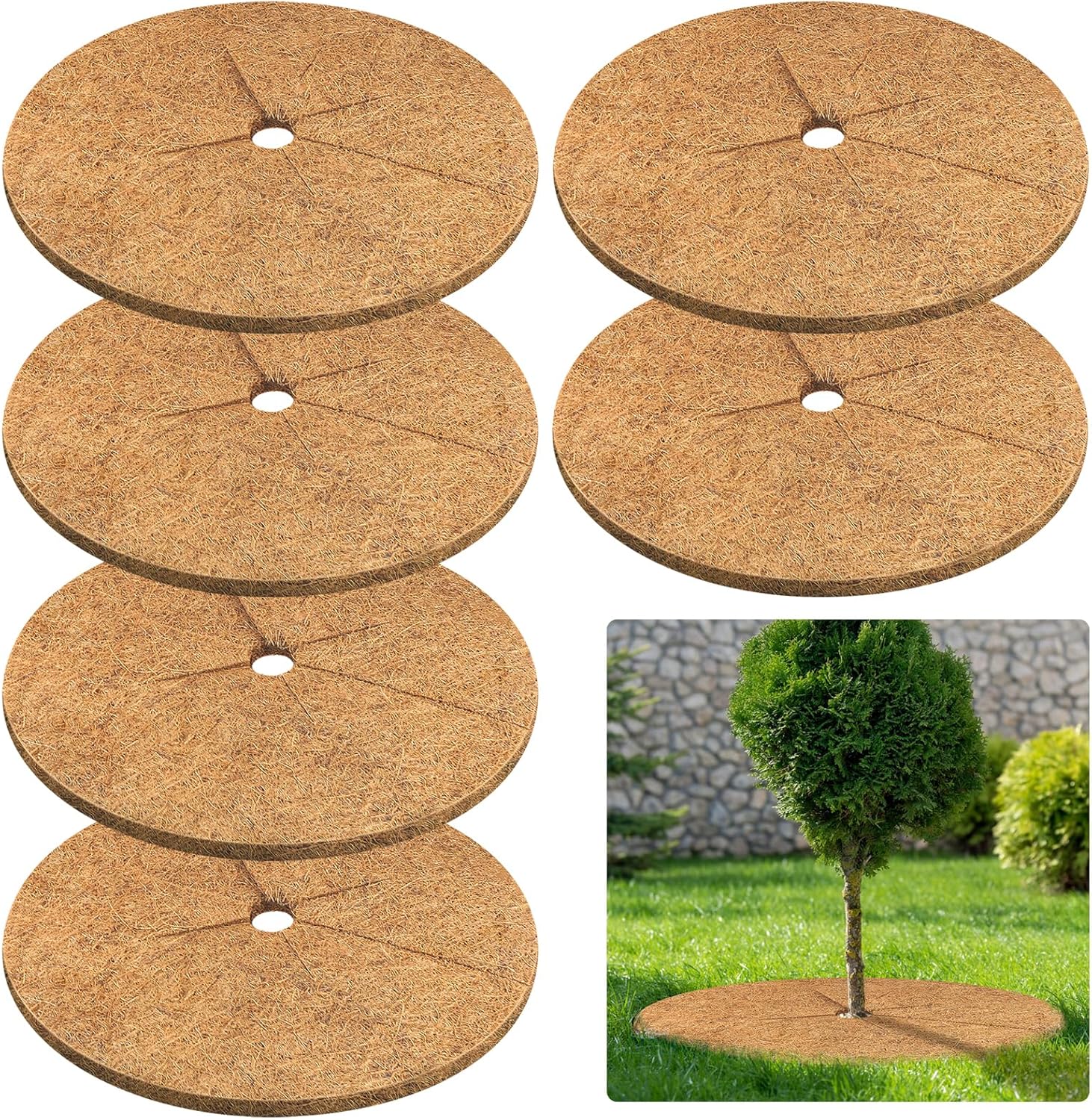
These Legigo coconut fiber mulch rings are simple, no-frills tree protectors intended to sit around trunks or pot rims to conserve soil moisture and block weeds. Each 24-inch round mat is made from dense coconut fiber about 1/4 inch thick, so you lay a ring around the base of a tree or shrub and trim the center to fit the trunk. In practice they help reduce evaporative loss, keep soil looking tidy, and create a barrier that limits grass and weed encroachment and casual digging. The mats are lightweight and easy to position, making them practical for larger landscapes, nurseries, or container groupings. Because they are natural fiber they will slowly break down over time, which is helpful for adding organic matter but means you may need to replace them after a season or two in very wet climates. They do not anchor themselves, so on steep slopes or very windy sites you may need pins or extra finish mulch to hold them in place.
Best for: Gardeners who want a low-maintenance, natural-looking way to conserve soil moisture and keep the base of trees and large pots tidy, without using synthetic materials.
Less Ideal for: People looking for a permanent, heavy-duty mulch barrier or a product that stays fixed on steep or exposed slopes should consider alternatives with anchors or heavier construction.
- Natural coconut fiber retains moisture and slowly adds organic matter as it decomposes.
- 24-inch diameter covers a broad area around trunks or pots to suppress weeds and reduce grass encroachment.
- Lightweight and easy to trim so you can fit the ring neatly around different trunk sizes or container rims.
- Thin profile lies flat and keeps the planting area looking tidy without bulky buildup.
- Natural fiber will break down over time and may need periodic replacement in very wet conditions.
- No built-in anchoring; rings can shift on slopes or in high winds without additional pinning.
Verdict: A natural, easy-to-use coconut fiber ring that conserves moisture and tidies the area under trees, ideal for gardeners who want an eco-friendly seasonal ground cover.
Plantonix Coco Chips Mulch Brick (10 lb) – Compressed Coconut Husk Chips

| Unit Count | 160 Ounce |
|---|---|
| Item Type Name | Soil and Soil Amendments |
| Brand Name | plantonix |
| Volume | 15 gallons |
Plantonix Coco Chips arrive as a compact 10 pound brick that hydrates and expands into lightweight coconut husk chips for use as mulch, soil amendment, or terrarium bedding. You soak or wet the block to break it apart, then spread the chips over garden beds, containers, orchid pots, or raised beds to reduce evaporation and moderate soil temperature. The product is pre-screened, washed, and aged to remove dirt and rocks, and the low electrical conductivity and near-neutral pH make it safe to mix with potting mixes. Practical benefits include improved drainage and aeration compared with heavy wood mulches, long-lasting moisture retention that can reduce watering frequency, and an attractive tropical look. Important limitations are that you must rehydrate and break up the compressed brick before use which adds prep time, and coco chips do not supply nutrients so you will still need to fertilize regularly. Also note the safety warning about dust and keeping it away from children and pets during handling.
Best for: Buyers who prioritize reliable, consistent mulch performance and want a sustainable, low-maintenance material that retains moisture and improves soil structure for beds and containers.
Less Ideal for: Gardeners who need a nutrient-rich soil amendment or who prefer a no-prep, ready-to-spread loose mulch should consider alternatives.
- Made from 100% recycled coconut husks, a renewable alternative to peat and wood mulches
- Pre-screened and washed to remove dirt, rocks, and excess fiber
- Excellent at retaining moisture while maintaining airflow and drainage
- Lightweight and long-lasting so it does not compact like some organic mulches
- Requires soaking and manual breakup of the compressed brick before use
- Does not provide plant nutrients and should be used with a fertilizer plan
Verdict: A dependable, renewable mulch solution that holds moisture and improves aeration without compacting, ideal for gardeners who want consistent performance.
Choosing the Right Mulch for Planting Trees: Key Factors to Consider
Moisture Retention and Drainage
Mulch influences how much water stays in the root zone and how quickly excess water drains away. For newly planted trees you want a balance: enough moisture retention to prevent drought stress but not so much that roots sit in saturated soil and develop rot. Coarser mulches like large wood chips and bark often allow better drainage while still reducing evaporation.
Consider your local rainfall and soil texture. Clay soils hold water longer, so use mulches that encourage infiltration and aeration. Sandy soils lose water quickly and benefit from denser mulches that buffer moisture swings. Check how the mulch layers behave after a heavy rain so you know whether it sheds water or holds it at the surface.
Decomposition Rate and Nutrient Release
Different mulch materials break down at different speeds, which affects nutrient cycling and how often you need to replenish the layer. Fast-decomposing organic mulches like compost and shredded leaves release nutrients that can feed young roots but may require more frequent topping up. Slow-decomposing materials such as large bark chunks provide longer-lasting coverage but contribute nutrients more slowly.
Decomposition also affects soil structure. As organic mulches break down they help build organic matter in the planting area, improving water retention and microbial activity. However, excessively rapid decomposition can temporarily tie up nitrogen near the surface, so consider combining high-carbon mulches with a light fertilizer or compost if needed.
Weed Suppression and Surface Stability
A good tree-planting mulch reduces weed pressure so young roots are not competing for water and nutrients. Dense, fine-textured mulches can create a near-impenetrable barrier for small weed seedlings, while coarse mulches suppress weeds through depth and shading. Avoid mulches that contain viable weed seeds or that form mats which prevent water and air from reaching the soil.
Also consider how the material settles. Some mulches compact and form crusts that allow water runoff and reduce infiltration. Materials that maintain a loose layer will suppress weeds while still letting water and roots move through the surface.
Impact on Soil Biology and pH
Mulches interact with soil chemistry and biology. Organic materials feed soil microbes and earthworms as they decompose, improving long-term soil structure and fertility. Some materials can temporarily change soil pH; for example, large amounts of fresh wood chips may slightly acidify the surface during decomposition. Choose mulch types that support beneficial microbial activity without causing abrupt pH swings.
If you are planting sensitive species, consider how a mulch might influence soil acidity and nutrient availability over the first few years. Also think about disease and pest considerations: well-composted materials are less likely to harbor pathogens than raw plant waste.
Depth, Particle Size, and Mulch Layer Management
Proper depth and particle size matter more than the specific brand. For tree planting an evenly applied 2 to 4 inch layer is common practice, but particle size determines how that depth translates to airflow and water movement. Fine, shredded materials create dense coverage at lower depths, while large chips require more volume to cover the same surface.
Avoid piling mulch directly against a tree trunk. A narrow ring or donut shape that leaves the trunk flare exposed prevents bark rot and pest hiding spots. Plan for maintenance: how often will you need to refresh the layer, and can you top-dress without disturbing shallow feeder roots?
Practical Considerations and Sourcing
Availability and consistency of the mulch material affect long-term maintenance. Local arborist wood chips, bagged bark, composted yard waste, and shredded leaves vary in texture and quality seasonally. Bulk materials are often more economical for larger plantings but may vary in particle size more than bagged products.
Consider delivery logistics and whether you can store surplus material without it breaking down. Also think about smell, staining of nearby hardscapes, and how the mulch looks in the landscape. These practical factors influence whether you will maintain the recommended layer over time.
Common Mulch Types and How They Behave
Different mulch materials behave in predictable ways in a tree planting. Large wood chips and bark nuggets decompose slowly, provide long-lasting coverage, and encourage aerated root zones. Shredded bark and wood hold moisture well but can compact if applied too thickly. Compost and shredded leaves break down faster and enrich soil more quickly while needing more frequent replenishment.
Understanding these behaviors helps you match a mulch to your soil and maintenance rhythm. For instance, if you prefer low-effort upkeep, choose a coarse material with a slower decay rate. If building soil quickly is a priority, select a fast-decomposing organic mulch and plan for annual additions.
- Coarse wood chips: long-lasting, good aeration
- Shredded bark: good moisture retention, moderate lifespan
- Compost and leaf mulch: fast nutrient addition, needs topping
- Rubber or inorganic mulches: long-lasting but do not improve soil
How Much Mulch to Apply and Where
Aim for an even 2 to 4 inch layer of mulch over the root zone while keeping mulch a few inches away from the trunk. A shallow, wide ring that extends toward the drip line is better than a tight circle near the trunk because roots often extend beyond the planting hole.
Measure coverage by area rather than piles. Overly deep mulch can suffocate roots, encourage voles, or hold excess moisture against the trunk. If you are establishing multiple trees, calculate total coverage to know whether to buy bulk or bagged material.
- Keep mulch 2 to 4 inches deep
- Leave a 2 to 4 inch gap around the trunk base
- Extend mulch out to the drip line when possible
Seasonal Care and Replenishment
Mulch performance changes with the seasons. In summer the primary role is conserving moisture and keeping roots cool. In winter a mulch layer insulates roots against temperature swings and frost heave. Inspect the layer in spring and fall and add material as needed to maintain effective depth without smothering the soil.
If a mulch has decomposed significantly or washed away after heavy rain, refresh it with a light top-dressing rather than ripping out the old layer. For fast-decomposing materials consider annual top-ups; slow-decomposing chips may only need replenishing every two to three years.
- Top up compost and leaf mulch annually
- Check for compaction after wet seasons
- Refresh coarse chips every 2 to 3 years
Mulch and Tree Species Sensitivities
Some tree species are sensitive to changes in soil pH or prolonged wet conditions. Acid-loving trees may tolerate certain wood-based mulches without issue, while others prefer neutral to slightly alkaline conditions. When planting species with narrow soil requirements, select mulches that minimally alter pH and provide predictable decomposition.
Also consider root depth and growth rate. Fast-rooting species benefit from mulches that moderate moisture without becoming waterlogged. Slow-rooting species can profit from a nutrient-rich mulch to stimulate gradual root development.
- Match mulch to species' soil pH tolerance
- Choose moisture-buffering mulches for fast-growing trees
- Prefer neutral, well-composted materials for sensitive species
Combining Mulches for Best Results
You can layer or combine mulch types to capture strengths from each. For example, a base layer of coarse chips improves drainage while a top layer of compost or shredded leaves supplies nutrients and fine coverage. This hybrid approach gives long-lasting structure and surface-level benefits that support seedlings and feeder roots.
When combining materials, avoid mixing fresh, high-carbon wood chips directly with high-nitrogen amendments at the surface unless you allow a composting period, because rapid decomposition can temporarily tie up nitrogen for plants.
- Base coarse material, top with compost or leaf mulch
- Avoid mixing large amounts of fresh chip with fertilizer directly
- Use well-composted inputs when possible
How We Chose the Best Mulch for Planting Trees
We evaluated mulches with tree planting in mind by focusing on gardener-relevant, measurable traits that affect establishment and long-term root health. Primary evaluation criteria included moisture retention, decomposition rate and nutrient contribution, weed suppression effectiveness, and ease of application and maintenance. These criteria reflect how a mulch behaves over the first three to five years after planting, when root systems are developing most rapidly. We favored materials that maintain consistent moisture without creating waterlogged conditions, and those whose decomposition timing aligns with typical root establishment. We excluded decorative or purely landscape-use mulches that have thin particle sizes or additives known to compact or form mats. We also filtered out materials that require specialized equipment to apply or that commonly introduce weed seeds. Across shortlisted options we compared particle size, expected lifespan in place, impact on soil pH, and potential for harboring pests or diseases. The resulting list prioritizes mulches that are practical for homeowners and landscapers planting new trees in a range of soil and climate conditions.
FAQ
How close to the trunk should I place mulch when planting a tree?
Keep mulch several inches away from the trunk and avoid piling it against the bark. A 2 to 4 inch gap at the base prevents moisture buildup on the trunk and reduces the risk of bark rot and pest habitat.
Can I use fresh wood chips around newly planted trees?
Fresh wood chips are usable but may temporarily immobilize nitrogen near the surface as they decompose. To avoid nutrient tie-up, mix a thin layer with compost or use a separate compost top-dressing rather than placing a very deep layer of fresh chips directly on the root zone.
How often should I replenish tree mulch?
Frequency depends on the material. Fast-decomposing mulches like shredded leaves or compost often need annual top-ups. Coarse chips and bark can last two to three years before needing replenishment. Inspect depth after wet seasons and add material as needed to maintain 2 to 4 inches.
Will mulch attract pests or rodents to newly planted trees?
Some mulch types can provide cover for voles and other small rodents, especially if piled deeply near the trunk. Use a moderate depth, keep mulch away from the trunk, and avoid dense mats that conceal pests. Better airflow and a tidy ring reduce pest hiding spots.
Is it better to use compost as mulch or as a soil amendment?
Compost works well both as a surface mulch and as a soil amendment. As a mulch it releases nutrients and builds organic matter but decomposes quickly and requires more frequent replacement. As an amendment, incorporate a smaller amount into backfill to improve initial soil structure while also applying a compost mulch layer on top.
Final Verdict
For planting trees, prioritize mulches that strike a balance between conserving moisture and allowing good air and water movement in the root zone. Match decomposition rate to how quickly you want to build soil organic matter and plan maintenance based on the expected lifespan of the material. Keep mulch away from the trunk, maintain an appropriate depth, and refresh layers on a schedule that reflects the chosen material. Choosing a mulch with predictable behavior and manageable maintenance is the best way to support healthy root establishment and long-term tree vigor. Focus on moisture control, decomposition behavior, and ease of upkeep when selecting mulch for new trees.
