

Note: This article contains affiliate links. If you click on these links and make a purchase, I may earn a small commission at no extra cost to you. This helps support my research and content. Read my full affiliate disclosure here.
Picking the right pruning shears for shrubs changes how you care for rounded hedges, flowering shrubs, and woody ornamentals. The right tool makes cleaner cuts that heal faster, lowers the risk of hand fatigue during longer sessions, and stands up to sticky sap and grit in everyday garden use. This guide reviews a short list of top pruning shears for shrubs selected for real gardening tasks, from light shaping to heavier seasonal pruning. Each candidate was evaluated on cutting performance, ergonomics, and durability so you can choose the best fit for your pruning style and the shrub types you tend.
Top Picks at a Glance
| Best Overall The best all-around choice for most situations | Kimura 8" Pro Bypass Pruning Shears (Japanese SK5 Steel blades) |  |
| Best Quality Built to a higher standard if you want something more solid | FELCO F5 Large All-Steel Pruning Shears |  |
| Best Value The sweet spot between price and what you get | gonicc 8" Professional Titanium-Coated Bypass Pruning Shears |  |
| Best Budget The cheapest option that still gets the job done reliably | Hungsual 7.5-inch Pruning Shears with Stainless Steel Blades |  |
| Highest Rated A top-rated pick with lots of positive feedback | wiselifetech 8" SK5 Bypass Pruning Shears |  |
| Most Popular A crowd favorite that many people choose with confidence | Fiskars Bypass Pruning Shears with Nonstick Coating |  |
| Best Seller A high-volume bestseller chosen again and again | Decerk 8.5" Bypass Pruning Shears with Titanium-Coated SK5 Blade |  |
Kimura 8" Pro Bypass Pruning Shears (Japanese SK5 Steel blades)

| Blade Material | Japanese SK5 Steel |
|---|---|
| Cutting width | 25 millimeters |
| Blade Type | Bypass |
| Hand Orientation | Ambidextrous |
| Size | 8" |
These Kimura 8" Pro bypass pruners are built for performance-focused gardeners who need a durable, precise tool for regular pruning. The SK5 Japanese steel blades are heat treated to a high hardness and PTFE coated to resist sap and reduce friction, so cuts stay clean and require less frequent sharpening. With a stated 1" cutting capacity the shears handle rose canes, woody stems and general deadheading without bogging down. The aluminum handles are lightweight, non-slip PVC coated and shaped for ergonomic control, which helps during longer sessions and for users with grip issues. Ambidextrous orientation and a simple safety lock make them easy to use and safe to carry. The construction uses riveted joints and anti-rust components aimed at longevity, though very heavy-duty or professional vineyard use may push the limits over time. Overall these pruners trade the extra features of specialty rose snips for a robust, all-purpose cutter that prioritizes sharpness and lasting edge retention.
Best for: Gardeners who prioritize clean, durable cuts for roses and mixed borders and want a dependable, ergonomic tool for frequent pruning sessions.
Less Ideal for: Those needing to cut very large woody branches or who want specialized floral snips for delicate deadheading should consider different tools.
- High-hardness Japanese SK5 steel blades for sharp, long-lasting cuts
- PTFE coating reduces sap buildup and makes slicing smoother
- Ergonomic, lightweight aluminum handles with non-slip PVC for comfortable extended use
- Ambidextrous design and simple safety lock for ease of use and transport
- Cut capacity limited to about 1 inch, so very large branches require a saw or lopper
Verdict: If you want sharp, long-lasting bypass pruners that make clean cuts on rose canes and everyday garden stems, these Kimura professional shears deliver reliable performance.
FELCO F5 Large All-Steel Pruning Shears

| Blade Material | Alloy Steel |
|---|---|
| Blade Edge | Serrated |
| Blade Type | anvil,bypass |
| Hand Orientation | Ambidextrous |
The FELCO F5 is built for heavy garden and landscape pruning where power and clean cuts matter. Its forged steel handles and hardened alloy-steel blades deliver the leverage to tackle thicker woody stems, while the tapered head and narrow point help access crowded branches. The tool combines an anvil-style cutting geometry with a serrated edge and screw-mounted components so you get reliable, close cuts and straightforward maintenance. A rubberized grip and revolving handle reduce strain on long sessions, and nearly every part is replaceable so the shear can be serviced rather than discarded. Trade-offs are its weight compared with lightweight aluminum models and the anvil/bypass mix may require a bit more sharpening attention than premium bypass-only designs for the cleanest cuts on live wood. For gardeners who need a durable, serviceable tool that holds an edge and delivers consistent cutting force, the FELCO F5 performs exceptionally well.
Best for: Serious gardeners and landscapers who prioritize cutting performance and longevity and want a repairable tool for regular heavy pruning tasks.
Less Ideal for: Casual gardeners who prefer very lightweight pruners for light floral trimming or those who want the absolute cleanest cuts on delicate live stems.
- Forged steel handles provide strong leverage for cutting thicker stems
- Hardened alloy-steel blade and screw-mounted anvil produce precise, close cuts
- Replaceable components extend service life and simplify maintenance
- Ergonomic features including a revolving handle and rubberized grip reduce hand fatigue
- Heavier than aluminum-bodied pruners which may tire users during long sessions
- Anvil-style cutting can crush fibrous stems if not used correctly
Verdict: Buy this if you need a heavy-duty, serviceable pruning shear that delivers strong, reliable cuts and long-term value.
gonicc 8" Professional Titanium-Coated Bypass Pruning Shears

| Cutting width | 0.75 inches |
|---|---|
| Blade Edge | Serrated |
| Blade Type | Bypass |
| Blade Material | Alloy Steel |
| Hand Orientation | Ambidextrous |
These gonicc 8" bypass pruning shears are built for regular garden use and small woody work. The SK-5 steel blades receive a titanium coating and fine polishing to stay sharp and resist rust, while the serrated edge and sap groove reduce slipping and sticking when cutting live stems. Drop-forged construction and alloy steel handles wrapped in PVC give the tool a solid, durable feel without becoming overly heavy, and the ambidextrous design suits either hand. In practice the shears excel on stems, roses, and small fruiting wood under the advertised 3/4" cut capacity, and the non-slip grip helps reduce hand fatigue during longer sessions. Limitations to note are the 3/4" maximum cut diameter, which rules out thicker branches, and the blade requires occasional sharpening and cleaning to maintain peak performance. Overall, these shears strike a practical balance of durability, comfort, and cutting performance for routine pruning tasks.
Best for: Gardeners who want a durable, no-nonsense pruner for routine shrub, rose, and small fruit tree maintenance and who prioritize reliable cutting and comfortable handling over heavy-duty branch cutting.
Less Ideal for: People who regularly need to prune large-diameter limbs or do heavy-duty arborist work should choose larger loppers or a pruning saw instead.
- Titanium-coated SK-5 steel blades for sharpness and improved rust resistance
- Drop-forged construction and alloy-steel handles for durability
- Ergonomic non-slip PVC-wrapped handles reduce hand fatigue
- Sap groove and serrated edge help prevent blade sticking and slipping
- Cut capacity is limited to about 3/4 inch, not suitable for thicker branches
- Blade will need periodic sharpening and cleaning to stay at peak performance
Verdict: A practical, comfortable pruning shear offering sharp, rust-resistant blades and durable construction ideal for everyday pruning of stems and small branches.
Hungsual 7.5-inch Pruning Shears with Stainless Steel Blades

| Blade Material | Stainless Steel |
|---|---|
| Blade Edge | Asymmetrical, Single Bevel |
| Blade Type | Parrot Beak |
| Hand Orientation | Ambidextrous |
These Hungsual pruning shears are a straightforward garden tool for everyday cutting tasks like deadheading roses, trimming shrubs, and light fruit tree work. The parrot-beak stainless steel blade with an asymmetrical single-bevel edge delivers clean, precise cuts up to about 0.6 inch, which helps reduce tearing on stems. Soft thermoplastic rubber handles give a comfortable, non-slip grip for extended use and the ambidextrous layout suits left- or right-handed users. A one-handed safety lock keeps the blades closed for safer storage. The tool is compact and easy to maneuver in tight spots, making it handy for container gardens and flower beds. Limitations are its intended cutting capacity and basic construction: it is not meant for large-diameter branches or heavy-duty professional pruning, and the simple design lacks replaceable blade hardware for long-term refurbishment. For gardeners on a budget this pruner balances comfort, decent cutting performance, and useful safety features in a compact package.
Best for: Gardeners looking for an affordable, comfortable pruner for routine trimming, deadheading, and light pruning who prioritize value and ease of use.
Less Ideal for: Professional arborists or anyone who needs to cut thick, woody limbs frequently should choose a heavy-duty bypass pruner or lopper instead.
- Sharp stainless steel parrot-beak blade provides clean cuts for stems and small branches
- Soft TPR handles offer a comfortable, non-slip grip for longer tasks
- Ambidextrous design works for both left- and right-handed users
- One-handed safety lock secures blades for safe storage
- Not suitable for cutting large or very woody branches
- No mention of replaceable blades or advanced sharpening features
Verdict: A budget-friendly, comfortable pruning shear that delivers precise cuts for routine garden maintenance.
wiselifetech 8" SK5 Bypass Pruning Shears

| Blade Type | Bypass |
|---|---|
| Blade Material | High Carbon Steel (SK5) |
| Cutting width | 0.75 inches |
| Included Components | 1 Pruning Shear and 1 spare spring |
These 8" bypass pruning shears are designed for regular shrub and rose maintenance. The SK5 high carbon steel blade with a Teflon-style nonstick coating makes clean cuts while reducing sap buildup, and the bypass design preserves stem health for longer-lasting roses and cut flowers. The metal handles and ergonomic non-slip grip give a solid, secure feel during repetitive use, and a thumb-operated safety lock keeps the blades closed for safe storage. The tool is rated to cut branches up to 3/4 inch (19 mm), which covers most small shrub pruning and deadheading tasks; for thicker dead wood you will want a lopper or saw. A spare spring is included so the shear remains serviceable without immediate replacement parts. Note that heavier users may find the shears open relatively wide and that very hard, dry hardwood requires more hand strength to slice cleanly. With routine cleaning and light oiling the coated blade resists rust and stays smooth for season-long reliability.
Best for: Gardeners who prioritize a dependable, everyday pruning tool for shrubs, roses, and routine trimming and who want a durable blade and simple maintenance.
Less Ideal for: People who routinely cut large-diameter woody limbs or those seeking a lightweight shear specifically sized for very small hands.
- Sharp SK5 high carbon steel blade with nonstick coating reduces sap buildup and improves cut smoothness
- Bypass blade delivers clean cuts that are better for roses and flowering stems
- Ergonomic non-slip metal handles provide a secure grip for extended pruning sessions
- Includes safety lock and an extra spring for safer storage and longer service life
- Limited to branches up to 0.75 inches, so not suitable for thicker woody pruning
- Wider opening may be uncomfortable for users with smaller hands
Verdict: A robust, low-maintenance bypass shear built for reliable, season-long shrub and rose pruning.
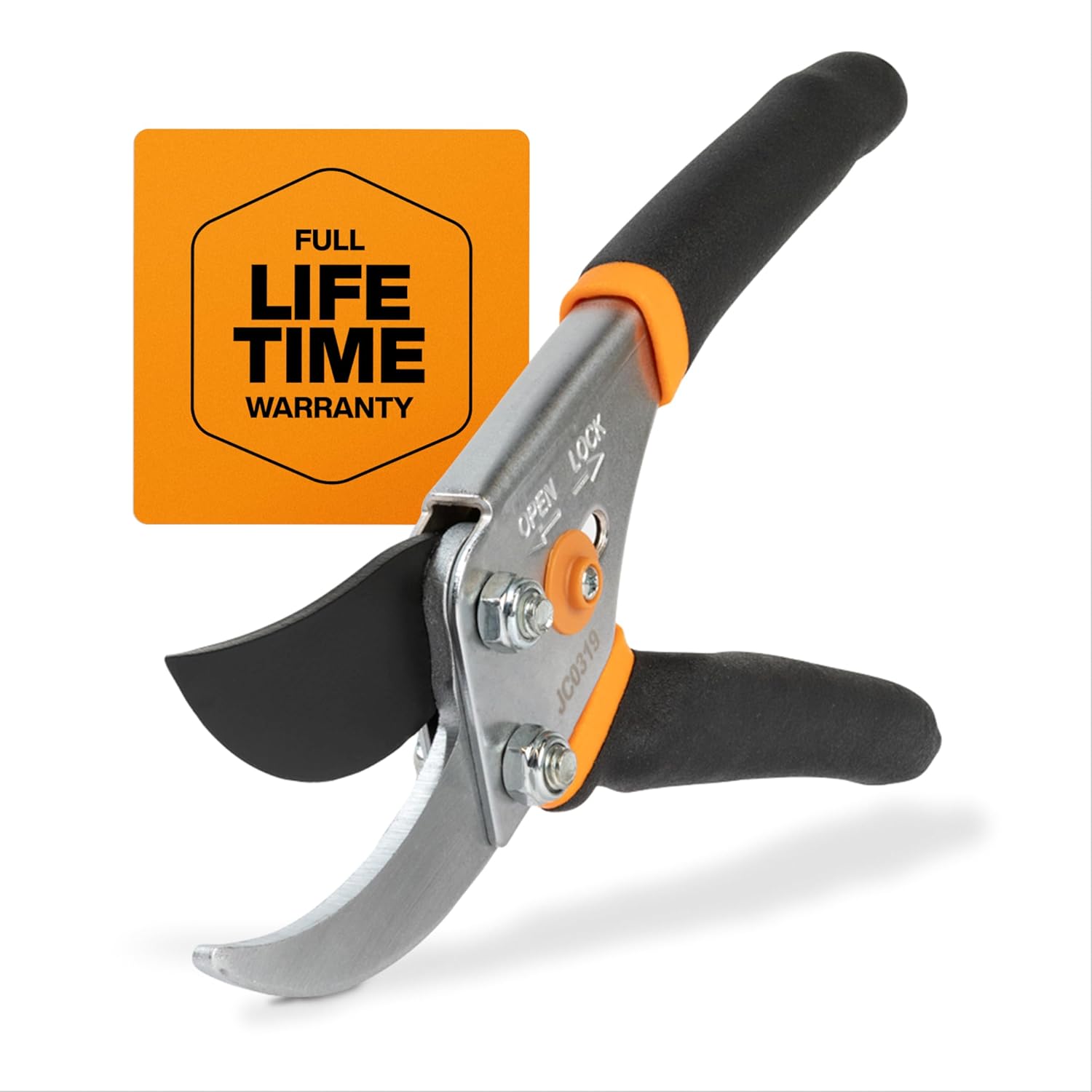
Fiskars Bypass Pruning Shears with Nonstick Coating
| Cutting width | 0.63 inches |
|---|---|
| Blade Edge | Serrated |
| Blade Material | Alloy Steel |
| Hand Orientation | Ambidextrous |
These Fiskars bypass pruning shears are a straightforward, reliable tool for everyday garden pruning. They use a bypass cutting action with precision-ground alloy steel blades and a low-friction coating so stems and green growth are sheared cleanly without crushing, which is helpful for flowers, shrubs, and small woody shoots up to about 5/8 inch. The pruners include a sap groove and nonstick finish to reduce sticking and rust, and an ergonomic non-slip handle that makes repeated trimming more comfortable. Because they are all-steel construction they feel solid and hold an edge through routine use, and the safety lock keeps the blades closed for storage. The main limitations are the modest cutting capacity, which is not suited for thick branches, and the simpler design lacks compound leverage for heavy cutting, so they work best for regular maintenance rather than heavy-duty pruning. For gardeners who want a durable, easy-to-maintain daily pruner, these are a dependable choice.
Best for: Home gardeners who want a dependable, low-maintenance pruner for routine trimming, deadheading, and shaping of flowers and small shrubs and who value proven, widely used tools.
Less Ideal for: People who need a pruner for larger woody branches or frequent heavy-duty cutting should choose a lopper or powered/pruning tool instead.
- Bypass blades and precision-ground steel deliver clean cuts on live stems
- Low-friction blade coating and sap groove reduce sticking and resist rust
- Ergonomic non-slip handle improves control and reduces hand fatigue
- All-steel construction offers durable, long-lasting performance
- Cut capacity limited to about 5/8 inch so not suitable for thicker branches
- No compound leverage mechanism, making heavy or woody cuts harder
Verdict: A tough, no-nonsense pruner that provides clean cuts and low-maintenance blades for everyday garden grooming.
Decerk 8.5" Bypass Pruning Shears with Titanium-Coated SK5 Blade

| Cutting width | 20 millimeters |
|---|---|
| Blade Type | Bypass |
| Blade Material | Titanium |
| Hand Orientation | Ambidextrous |
| Included Components | Replacement Spring |
These Decerk pruning shears are built for regular garden tasks like deadheading, stem trimming, and cutting small branches up to about 3/4 inch. The SK5 high-carbon steel blade is nano-polished and titanium-coated to resist rust and hold an edge longer, while the lever-action design multiplies cutting force so thicker stems go through with less hand strain. Aluminum handles with a rubberized grip make the tool comfortable to hold and the ambidextrous layout and one-hand safety lock simplify use and storage. The pruner ships with a spare spring and the straight bypass blade produces clean cuts that help plant health. Expect a compact, durable tool that suits routine pruning and light shrub work; it is not intended for heavy woody pruning beyond its stated cut capacity. As with any bypass pruner, keeping the blade clean and occasionally oiling the pivot will preserve performance over time.
Best for: Gardeners who prefer reliable, low-effort tools for routine pruning and want a durable, easy-to-use shear that reduces hand fatigue.
Less Ideal for: People who need a tool for heavy woody pruning or for frequent commercial-scale cutting should choose larger pruning tools or loppers instead.
- Titanium-coated SK5 bypass blade for longer edge life and corrosion resistance
- Lever-action design increases cutting force and reduces hand effort
- Ergonomic rubberized handles for a secure, comfortable grip
- Includes spare spring and one-hand safety lock for convenience and safer storage
- Cut capacity limited to about 20 mm (3/4 inch), not suitable for larger woody branches
- Blade care required to prevent sap buildup and maintain sharpness
Verdict: A comfortable, rust‑resistant bypass pruner with lever-action power that makes everyday garden cuts easier and gentler on the hands.
Choosing the Right Pruning Shears for Shrubs: Key Factors to Consider
Blade Type and Steel
Blade shape and steel alloy directly affect how cleanly a shear severs living shrub stems. Bypass blades give scissor-like action that slices past an anvil and are generally best for live, green wood because they compress less and cause cleaner wounds. Anvil shears crush softer stems and are better for dead wood, but can bruise living tissue and slow healing.
High-carbon steel and stainless-steel blends are common. High-carbon steels often take a keener edge and hold it longer but can be more prone to rust if not finished properly. Stainless or corrosion-resistant coatings reduce maintenance and are preferable if you prune in wet conditions or handle sap-heavy shrubs.
Cutting Capacity
Cutting capacity defines the maximum stem diameter you can prune without damaging the tool or forcing cuts that split wood. Shrubs present a mix of thin new growth and occasional thicker branches; choose shears with a capacity that matches the mature stems you expect to encounter. A shear rated for smaller diameters is fine for frequent light shaping, while thicker-stemmed shrubs require a higher-capacity tool or a separate lopper for bigger cuts.
Overreaching a shear's capacity can quickly dull edges and stress the hinge. For mixed shrub borders, gardeners often keep both a reliable shear for precision work and a larger pruner or lopper for coarser cuts.
Ergonomics and Handle Design
Ergonomic design affects how comfortable pruning sessions feel and how much strain lands on fingers, thumbs, and wrists. Look for handles shaped to follow the natural grip, with enough length to distribute pressure across the palm. Some shears offer offset handles that reduce knuckle contact with branches and improve wrist alignment during repeated cuts.
Cushioned grips and non-slip surfaces improve control in damp conditions, while adjustability in handle spread or a ratcheting action can help gardeners with reduced hand strength. Consider handle materials and contours if you prune for long periods or have arthritis concerns.
Maintenance and Sap Resistance
Sap, grit, and moisture build-up interfere with smooth cutting and can accelerate corrosion and blade gumming. Blades with nonstick coatings, easy-to-clean profiles, or simple disassembly are faster to maintain in the yard. Regular cleaning and occasional lubrication keep the hinge working smoothly and extend service life.
Consider how easy it is to sharpen the blade and whether replacement parts or serviceable fasteners are available. A shear that is easy to maintain will keep producing cleaner cuts and require fewer replacements over time.
Safety Features
Safety features matter when working among thorns, dense branches, or near delicate plantings. A reliable locking mechanism prevents accidental openings while carrying or storing shears. Blade guards or blade covers protect the cutting edge and reduce the chance of accidental cuts in a toolbox or garden bag.
Some shears include an automatic return spring tension that reduces hand strain but can complicate one-handed use. Evaluate safety elements in the context of how you carry tools and how often you need to make quick, frequent cuts while moving through a border.
Weight and Balance
Weight influences how long you can prune before fatigue sets in, while balance affects control and precision. Lighter shears reduce wrist and arm exhaustion for long maintenance sessions, but extremely light models sometimes sacrifice durability or cutting power. A well-balanced shear feels steady in the hand and requires less corrective movement on each cut.
Think about how much time you spend pruning in a session and whether you need a lighter tool for repeated shaping versus a sturdier tool for infrequent heavy cutting.
Best Shears for Different Shrub Tasks
Different shrub jobs call for different shears. Light shaping and deadheading use small, nimble shears that let you sculpt without harming adjacent foliage. For thicker structural pruning, choose a higher-capacity shear or reserve a bypass lopper for larger diameter cuts.
Think of your pruning tasks in zones: quick seasonal shaping, routine maintenance, and occasional renovation. Match the tool to the zone rather than expecting one shear to excel at every task.
- Light shaping: low-capacity bypass shears with fine tips
- Routine maintenance: comfortable, corrosion-resistant shears
- Renovation cuts: higher cutting capacity or a separate lopper
Sharpening and Edge Care in the Yard
Keeping a consistent edge is the single biggest factor in producing clean wounds that heal quickly. Use a small flat file or sharpening stone to maintain bevels and remove minor nicks. Work at the original bevel angle and make several light passes rather than aggressive reshaping.
After sharpening, wipe blades with a light oil to prevent rust and sap adhesion. A quick clean after each pruning session prevents build-up and keeps the shear operating smoothly between deeper maintenance intervals.
- Carry a small sharpening stone for field touch-ups
- Wipe sap with a rag dampened with household cleaner or solvent when needed
- Lubricate the hinge point after cleaning to maintain smooth action
Ergonomic Tips to Reduce Fatigue
Rotate pruning tasks among hands when possible and take brief breaks to avoid repetitive strain. Position your body so your elbow and shoulder, not just your wrist, supply force on larger cuts. Use an offset handle design or cushioned grips if you feel pressure points on the palm or thumb during regular sessions.
For gardeners with reduced grip strength, look for ratcheting mechanisms or options with longer lever arms that reduce the force needed per cut. Even modest reductions in required hand strength compound into significantly less fatigue over a multi-hour pruning session.
- Alternate hands and take short rest intervals
- Use body position to aid leverage on bigger stems
- Consider ratcheting options for limited grip strength
Care for Sap-Prone Shrubs
Some shrubs exude sticky sap that gums blade action quickly. For these, nonstick coatings, stainless finishes, and a routine cleaning strategy will keep shears functioning during long sessions. Carry a small solvent-safe rag to remove sap buildup and reduce frequency of emergency sharpening.
If you prune many sap-prone species, choose shears that disassemble easily so you can clean pivot points and springs thoroughly. Regularly check for corrosion in hidden areas where sap and moisture collect.
- Prefer corrosion-resistant finishes for sap-heavy work
- Clean blades during long sessions to prevent gumming
- Disassemble periodically to clean pivot and spring areas
Storing and Protecting Your Shears
Proper storage lengthens tool life. Keep shears dry, locked, and out of reach of children. A blade cover protects the edge and prevents accidental nicks in a shed, tote, or garden bag. Use a small amount of oil on the pivot and blades before seasonal storage to inhibit rust.
Inspect shears before each pruning season for loose fasteners, worn springs, or chips in the blade. Address minor repairs promptly to avoid larger failures during active use.
- Store in a dry place with a blade cover
- Oil pivot and blades before long-term storage
- Inspect and tighten fasteners at season start
How We Chose the Best Pruning Shears for Shrubs
We focused on attributes that matter to gardeners who prune shrubs often and across seasons. Key evaluation criteria included blade geometry and steel quality, which determine how cleanly the tool severs living wood and how long the edge holds between sharpenings. Ergonomics and handle design were assessed for grip comfort, hand span accommodation, and features that reduce repetitive strain during extended pruning. Sap and corrosion resistance were considered to judge how well a shear holds up in damp or sticky conditions and how easily it cleans in the field. Build and hinge durability were examined to ensure the tool keeps consistent cutting alignment under repeated use. We excluded multi-tool gadgets and shears intended primarily for floristry or bonsai where cutting angles and blade sizes are very different. Tools lacking clear blade material specs, poor user-adjustability, or obviously flimsy fasteners were removed from consideration. The remaining selections emphasize practical longevity, consistent cutting on live and older shrub growth, and comfort for frequent garden tasks.
FAQ
How wide should pruning shears cut for most shrubs?
Most shrubs are well-served by shears with a cutting capacity around 0.5 to 1 inch for routine shaping. Thicker structural branches will need a higher-capacity shear or a lopper. Match capacity to the largest stems you plan to cut routinely.
Are bypass or anvil shears better for live shrubs?
Bypass shears are usually better for live shrub growth because they slice cleanly past the opposing blade, creating smaller wounds that heal faster. Anvil shears can be useful for dead or very dry wood, but they tend to crush living stems.
How often should I sharpen pruning shears used on shrubs?
Frequency depends on use, but many gardeners sharpen seasonal shears once per growing season with field touch-ups as needed. If you prune frequently or cut gritty, woody stems, sharpen more often to maintain clean cuts.
What maintenance prevents sap from gumming blades?
Wipe blades after use, remove sap with a solvent-safe cloth when necessary, and apply a thin film of oil to the blade and pivot. Choosing corrosion-resistant finishes also reduces how quickly sap and moisture cause problems.
Can I use pruning shears if I have sore or weak hands?
Yes, but prioritize ergonomic handles, cushioned grips, and tools with a ratcheting action or longer lever arms to reduce required squeeze force. Also consider alternating hands and using loppers for thicker cuts to limit strain.
Final Verdict
When choosing pruning shears for shrubs, prioritize blade type and sharpness for clean wounds, the right cutting capacity for the stems you encounter, and ergonomics that let you prune comfortably for longer. Expect tradeoffs between weight, durability, and cutting power: lighter tools reduce fatigue but may sacrifice robustness for heavy renovation cuts. Match the shear to your common pruning tasks and maintain the blades regularly to keep shrubs healthy and healing quickly.
