

Note: This article contains affiliate links. If you click on these links and make a purchase, I may earn a small commission at no extra cost to you. This helps support my research and content. Read my full affiliate disclosure here.
Choosing the right mulch for a raised garden changes how your beds hold moisture, control weeds, and feed plants. The wrong choice can trap water, introduce pests, or break down too quickly and leave soil exposed. This guide covers the top shortlisted mulches suited to raised garden situations, focusing on moisture management, decomposition rate, and effects on soil structure. Below you will find the best options for common raised-bed conditions and an explanation of how we evaluated them so you can pick the mulch that fits your planting style and maintenance preferences.
Top Picks at a Glance
| Best Overall The best all-around choice for most situations | HealthiStraw GardenStraw Mulch, 2 cu ft |  |
| Best Value The sweet spot between price and what you get | Back to the Roots Organic Mulch, 1 Cubic Foot |  |
| Best Budget The cheapest option that still gets the job done reliably | GARDENWISE Premium Brown Wood Mulch (0.2 cu ft) |  |
| Highest Rated A top-rated pick with lots of positive feedback | Plantonix Coco Chips Mulch Brick (10 lb) – Compressed Coconut Husk Chips |  |
| Most Popular A crowd favorite that many people choose with confidence | HealthiStraw GardenStraw Premium Garden Mulch, 3 cu ft |  |
| Best Seller A high-volume bestseller chosen again and again | EZ Straw Seeding Mulch with Tackifier, 1 cu. ft. Bale |  |
HealthiStraw GardenStraw Mulch, 2 cu ft

| Net volume | 2 cu ft |
|---|---|
| Coverage | Up to 60 sq ft at 2–3" layer |
| Material | 100% non-GMO wheat straw |
| Packaging | 100% plant-based compostable |
HealthiStraw GardenStraw is a prepackaged wheat-straw mulch sold in a 2 cu ft box that’s been cut, split, and filtered to remove seeds and dust for a cleaner garden mulch. You spread a 2–3 inch layer over raised beds, vegetable plots, containers, or pathways to conserve moisture, reduce soil splash and erosion, and suppress weeds while the straw breaks down and adds carbon to the soil or compost. The interlocking straw fibers help it stay put when watered so you usually do not need tack or netting, and the box is packaged in fully compostable materials for low-waste gardening. Practical benefits include reduced watering by up to half, improved soil structure over time, and coverage that makes it easy to estimate how much to buy for small to medium raised beds. Limitations are the usual ones for straw: it decomposes relatively quickly so it needs replenishing each season, and despite seed removal there is a small risk of volunteer seedlings compared with sterile wood chip or rubber mulches.
Best for: Gardeners who want a natural, low-waste mulch for raised vegetable beds and containers and who value water savings and soil-building benefits over long-lasting permanence.
Less Ideal for: People seeking a permanent, low-maintenance landscape mulch or a completely sterile product for ornamental beds should consider alternative mulches.
- Made from 100% non-GMO wheat straw that is filtered to reduce seeds and dust
- Designed to interlock when watered so it stays in place without binders
- Good water conservation effect reducing watering frequency by up to 50%
- Compostable box and packaging for minimal plastic waste
- Versatile use for raised beds, containers, pathways, and lawn repair
- Breaks down relatively quickly and requires seasonal replenishment
- Not completely sterile so a small chance of volunteer seeds remains
Verdict: Choose this if you want a clean, compostable straw mulch that retains moisture and builds soil health in raised vegetable beds.
Back to the Roots Organic Mulch, 1 Cubic Foot

| Brand Name | Back to the Roots |
|---|---|
| Item Highlight | Premium organic garden mulch; peat-free; 25.7 quart bag |
| Unit Count | 16 Ounce |
| Volume | 23 cubic centimeters |
This organic mulch from Back to the Roots is a peat-free, upcycled plant-matter blend intended for beds, containers, and around shrubs and trees. It includes dolomitic limestone to help balance pH, yucca extract to improve moisture control, and gypsum to aid water absorption, so it both conserves moisture around root zones and contributes modest nutrients. Typical use is spreading a 2–3 inch layer around bushes, avoiding direct trunk contact, or mixing into the topsoil when planting. Its organic base and added plant food make it a good choice for supporting healthy growth and reducing watering frequency. Limitations to keep in mind are the bag size and volume relative to larger beds and that it is formulated as a general mulch rather than a heavy-duty long-lasting bark product, so it may break down faster and need replenishing more often.
Best for: Gardeners who want an eco-conscious, peat-free mulch that improves moisture retention and supports plant health around bushes and in raised beds.
Less Ideal for: People looking for a coarse, long-lasting decorative bark mulch or a single large bag solution for extensive shrub beds.
- Peat-free organic blend made from upcycled plant matter and wood fines
- Contains yucca extract for improved moisture retention and gypsum for better water absorption
- Includes dolomitic limestone to help adjust and stabilize soil pH
- Formulated with all-purpose plant food to support growth of vegetables, herbs, and shrubs
- Bag volume is relatively small for large or multiple bush beds so more bags may be needed
- Breaks down faster than coarse bark mulches and will require periodic replenishment
Verdict: Choose this peat-free organic mulch when you want an eco-friendly, moisture-saving soil cover that also supplies mild nutrients to bushes and raised beds.
GARDENWISE Premium Brown Wood Mulch (0.2 cu ft)
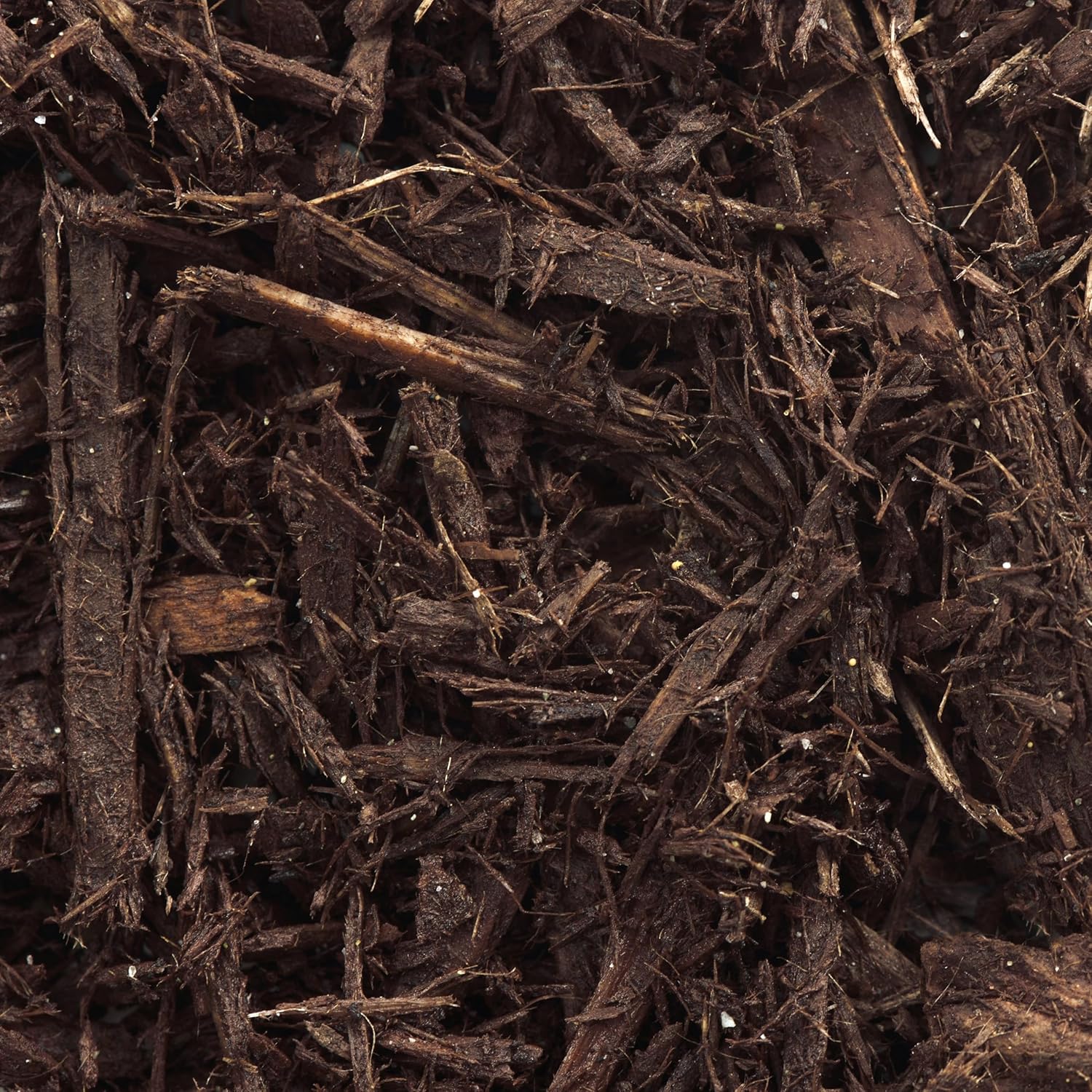
| Brand | GARDENWISE |
|---|---|
| Included Components | Brown Wood Mulch |
| Volume | 0.2 cubic feet |
GARDENWISE Premium Brown Wood Mulch is a compact 0.2 cubic foot bag of shredded wood designed for use in garden beds, around shrubs, and in planters. It functions as a decorative top layer that reduces weed growth, helps the soil retain moisture, and moderates soil temperature for plant roots. Typical use is applying a 1 to 2 inch layer over soil after planting or around established plants; the small bag size makes it convenient for spot repairs, container gardening, or sampling before committing to larger quantities. The product’s main benefits are its neat brown appearance and versatility for indoor and outdoor use. Because the package is small, it is easy to handle and store but requires many bags to cover even a modest bed, so it works best for small projects rather than large landscapes. There is no technical specification about wood type or longevity, so expect typical shredded wood decomposition and occasional replenishment over a season or two.
Best for: Buyers looking for an inexpensive, easy-to-handle mulch for small garden projects, container plants, or touch-ups who prioritize convenience and low upfront cost.
Less Ideal for: People planning to mulch large beds or whole-yard projects who prefer to cover wide areas with a single purchase.
- Small 0.2 cu ft bag is easy to carry and store for spot jobs and containers
- Helps suppress weeds and retain soil moisture when applied as a top layer
- Attractive brown color provides a natural, finished look for beds and pots
- Suitable for indoor and outdoor use, including potted plants
- Very small volume means multiple bags are needed for larger areas
- No detailed information on wood type or expected longevity
Verdict: A budget-friendly small bag of shredded brown wood mulch best suited for spot treatments, containers, and small garden projects.
Plantonix Coco Chips Mulch Brick (10 lb) – Compressed Coconut Husk Chips

| Unit Count | 160 Ounce |
|---|---|
| Item Type Name | Soil and Soil Amendments |
| Brand Name | plantonix |
| Volume | 15 gallons |
Plantonix Coco Chips arrive as a compact 10 pound brick that hydrates and expands into lightweight coconut husk chips for use as mulch, soil amendment, or terrarium bedding. You soak or wet the block to break it apart, then spread the chips over garden beds, containers, orchid pots, or raised beds to reduce evaporation and moderate soil temperature. The product is pre-screened, washed, and aged to remove dirt and rocks, and the low electrical conductivity and near-neutral pH make it safe to mix with potting mixes. Practical benefits include improved drainage and aeration compared with heavy wood mulches, long-lasting moisture retention that can reduce watering frequency, and an attractive tropical look. Important limitations are that you must rehydrate and break up the compressed brick before use which adds prep time, and coco chips do not supply nutrients so you will still need to fertilize regularly. Also note the safety warning about dust and keeping it away from children and pets during handling.
Best for: Buyers who prioritize reliable, consistent mulch performance and want a sustainable, low-maintenance material that retains moisture and improves soil structure for beds and containers.
Less Ideal for: Gardeners who need a nutrient-rich soil amendment or who prefer a no-prep, ready-to-spread loose mulch should consider alternatives.
- Made from 100% recycled coconut husks, a renewable alternative to peat and wood mulches
- Pre-screened and washed to remove dirt, rocks, and excess fiber
- Excellent at retaining moisture while maintaining airflow and drainage
- Lightweight and long-lasting so it does not compact like some organic mulches
- Requires soaking and manual breakup of the compressed brick before use
- Does not provide plant nutrients and should be used with a fertilizer plan
Verdict: A dependable, renewable mulch solution that holds moisture and improves aeration without compacting, ideal for gardeners who want consistent performance.
HealthiStraw GardenStraw Premium Garden Mulch, 3 cu ft

| Net volume | 3 cu ft |
|---|---|
| Intended use | Garden mulch, lawn seeding, compost-friendly |
| Material | 100% wheat straw |
| Source | Sustainably sourced, non-GMO |
HealthiStraw GardenStraw is a 3 cubic foot compressed bale of cleaned wheat straw formulated for use as garden mulch and seed protection. It is designed for vegetable, herb, flower and shrub beds where you want a lightweight, compostable mulch that retains soil moisture and suppresses weeds. The straw is processed to reduce dust and stray seeds and the short, specially cut fibers interlock when watered so the mulch stays in place without chemical tackifiers. For bushes you can apply a 2 to 3 inch layer around the drip line to cut evaporation, reduce compaction and gradually add organic matter as it breaks down. Practical benefits include easy spreading from a compressed bale, fast composting into the soil, and reduced watering needs. Limitations are that straw is less decorative than bark or wood chips and will decompose faster, so it requires periodic replenishing; it also provides less long-term weed barrier than heavier mulches. For gardeners focused on soil health and moisture conservation, it is a straightforward, low-risk choice.
Best for: Gardeners who prioritize soil health and want an easy-to-apply, compostable mulch for shrubs and mixed beds that reduces watering and improves organic matter over time.
Less Ideal for: People seeking a long-lasting, decorative mulch or a heavy-duty weed barrier for high-traffic beds should consider wood chips or stone instead.
- Cleaned, non-GMO wheat straw with reduced dust and seeds
- Fibers interlock when wetted so the mulch stays in place without binders
- Helps retain soil moisture and can reduce watering needs substantially
- Composts quickly and adds organic carbon to improve soil structure
- Decomposes faster than wood mulches so it needs topping up more often
- Less decorative and provides a lighter-duty weed barrier compared with heavier bark or rock mulches
Verdict: A clean, fast-composting straw mulch that conserves moisture and improves soil health, making it a safe, practical choice for mulching bushes.
EZ Straw Seeding Mulch with Tackifier, 1 cu. ft. Bale

| Indoor Outdoor Usage | Outdoor |
|---|---|
| Other Special Features of the Product | Organic |
| Moisture Needs | Moderate Watering |
| Material Features | Natural |
| Unit Count | 1 Count |
EZ Straw Seeding Mulch is a processed straw product blended with a natural tackifier that makes the straw cling together and form a protective mat over newly sown grass seed. You use it by spreading the straw lightly over seeded areas to protect seeds from wind, heavy washout, and birds while retaining moisture to promote faster germination. Notable features include the biodegradable natural material, an all‑natural tackifier that breaks down and feeds soil, and convenient UV‑protected bagging for storage. In practice it reduces the need for frequent watering, helps seed stay put on slopes and bare patches, and decomposes cleanly into the lawn as seedlings establish. Limitations are that it covers visually until the seed grows in so it is not decorative, and it does not replace soil preparation or starter fertilizer when those are needed for poor soils.
Best for: Buyers looking for a proven, low‑risk way to protect and speed lawn seed germination who value natural materials and social proof from other gardeners.
Less Ideal for: Homeowners who need an instant finished look or who require soil amendments and fertilizers in addition to surface protection should consider other products.
- Natural biodegradable straw that decomposes and feeds soil
- Tackifier binds straw to protect seed from wind, washout, and birds
- Helps retain moisture for faster germination and less frequent watering
- Packaged in a UV protected bag with handle for convenient storage
- Visible until grass establishes, so not a finished landscaping look
Verdict: Use this natural tackified straw mulch when you want a reliable, biodegradable way to protect seed and speed lawn germination.
Choosing the Right Mulch for Raised Garden: Key Factors to Consider
Moisture Retention and Drainage Balance
Raised beds dry out faster than ground soil because sides are exposed and soil volume is limited. A good mulch holds moisture at the surface and reduces evaporation while still allowing rain or irrigation to penetrate. Too dense or matting mulch can prevent water from entering and create dry patches below, while overly loose mulch may blow away or fail to moderate evaporation.
Think about the local climate and how often you water. In hotter, windier sites choose mulches that maintain contact with soil and resist being carried off. In heavy-rain climates avoid mulches that form an impermeable layer; instead pick one that lets water through quickly so beds do not become waterlogged.
Decomposition Rate and Replacement Frequency
Different mulches break down at very different speeds. Fast-decomposing materials add organic matter quickly but need to be topped up every season. Slow-decomposing mulches provide long-lasting coverage but may temporarily immobilize nitrogen as microbes work on the material, especially if the mulch is high in carbon.
If you prefer low-maintenance beds, choose a longer-lasting mulch and plan occasional top-ups. If improving soil organic content rapidly is your goal, use a faster-breaking material and plan to incorporate the remaining fragments into the soil at the end of the season.
Impact on Soil Biology and Nutrients
Mulch is not just a cover; it interacts with soil life. Organic mulches feed earthworms and beneficial microbes as they decompose, gradually improving structure and nutrient cycling. Some mulches can temporarily reduce available nitrogen while decomposers work, but they also contribute humus over time.
Consider whether your beds need a steady build of organic matter or merely a stable surface layer. Avoid materials that contain contaminants or high salt content that could harm seedlings or change soil chemistry in a raised bed's limited volume.
Weed Suppression and Seedbed Effects
Mulch suppresses weeds by blocking light and physically preventing weed seedlings from reaching the surface. Particle size, thickness, and how quickly gaps appear determine effectiveness. Fine mulches can settle and form a barrier but may also compact; chunky mulches leave air spaces and are less likely to mat.
For beds with persistent weed pressure, choose a mulch that builds a consistent barrier and consider layering with compost or a thin weed-control fabric underneath until perennial weeds are under control.
Pest and Disease Considerations
Some mulches can provide habitat for slugs, voles, or certain fungal pathogens if they stay too wet or are placed against plant stems. In raised beds where root and stem health is critical, avoid piling mulch directly against trunks or crowns and choose materials less likely to host pests.
Assess local pest risks and pick a mulch that reduces hiding spots for problematic species. In wet climates, select mulches that dry quickly on the surface to limit fungal issues.
Best Mulch Types for Different Raised Bed Goals
Raised beds are used for many purposes: fast soil-building, low-maintenance vegetable production, or ornamental plantings. Different mulch types align better with each goal. For building soil, choose materials that incorporate readily into the soil and feed microbes. For low-maintenance veggie beds, choose long-lasting mulches that suppress weeds and conserve water so you water less often. For decorative raised beds, prioritize appearance but balance that against how the mulch affects soil life and drainage.
- Soil building: choose mulches that decompose within a growing season or two.
- Low maintenance: choose chunkier, slow-breaking mulches that resist displacement.
- Ornamental beds: pick a mulch with uniform color and texture but ensure it still allows water entry.
Applying Mulch Correctly in Raised Beds
Application technique affects how well a mulch performs. Start with a weed-free surface and water the soil before spreading mulch so moisture is locked in. Keep mulch several inches away from plant stems to prevent collar rot and pest hiding spots. Aim for a depth that balances weed suppression with water penetration, typically 2 to 3 inches for many organic mulches and slightly less for finer materials.
- Water soil thoroughly before mulching.
- Avoid piling mulch against stems or crowns.
- Replenish thin or decomposed mulch in spring or late fall.
Seasonal Mulch Management
Mulch needs change through the year. Leave a thicker layer over winter to protect soil from freeze-thaw cycles, then thin or rake in spring as soils warm and seedlings emerge. Organic mulches that decompose rapidly are often worked into the topsoil during fall or spring bed preparations to return nutrients; persistent mulches may only need occasional top-ups.
- Thicker winter protection reduces heaving in cold climates.
- In spring, remove compacted or crusted layers to allow seedlings to emerge.
- In late season, consider incorporating spent mulch into the soil to feed microbes.
Mulch and Irrigation Compatibility
Consider how your irrigation system interacts with mulch. Drip lines under mulch can deliver water directly to roots without wetting the surface excessively. Some mulches hide emitters or make repairs harder; choose a material that is easy to move for maintenance. Also consider whether the mulch will absorb irrigation water or shed it; both behaviors influence irrigation frequency and emitter placement.
- Use drip irrigation under loose mulches for efficient watering.
- Mark emitter locations if you need to remove mulch for repairs.
- Test how quickly water penetrates a new mulch layer after installation.
Environmental and Sourcing Notes
Think about the sustainability of the mulch source. Locally sourced organic materials reduce transport impacts and often match soil biology better. Avoid materials treated with chemical dyes or preservatives that can leach into the soil. Reclaimed or recycled organic products can be good if they are clean and free of contaminants.
Also factor in how easy it is to get more of the material when you need to top up. Consistent supply helps maintain a uniform bed appearance and predictable decomposition patterns over time.
- Prefer local, untreated organic sources when possible.
- Avoid mulches with unknown chemical treatments.
- Plan for future availability to keep beds consistent.
How We Chose the Best Mulch for Raised Garden
We shortlisted mulches that perform well in raised garden beds based on measurable, garden-relevant criteria. We prioritized moisture retention because raised beds dry faster than in-ground soil and consistent moisture affects plant health and watering frequency. We assessed decomposition rate since mulches that break down too quickly require more frequent replacement and those that break down slowly may lock up nitrogen temporarily. Soil health impact was evaluated by looking at whether the mulch contributes organic matter and supports microbial activity over time. Weed suppression effectiveness was judged by mulch depth, particle size, and how quickly gaps form. Ease of application and ongoing maintenance considered how simple a mulch is to spread, how much dust or fines it produces, and whether it compacts or blows away. Finally, pest and pathogen risk was checked to avoid materials that commonly harbor insects or fungal issues in beds. We excluded materials that are primarily decorative without soil benefits, volatile industrial byproducts, and anything that consistently releases toxic compounds into soil. Products not suitable for container or raised bed use due to extreme drainage or compaction were also removed from consideration.
FAQ
How deep should I mulch a raised garden bed?
Depth depends on the mulch type and purpose. A general guideline is 2 to 3 inches for many organic mulches to suppress weeds and conserve moisture. Finer materials may work at slightly thinner depths while chunky materials can be applied a bit deeper without matting.
Can mulch cause root rot in raised beds?
Mulch itself does not cause root rot if applied properly. Problems arise when mulch is piled against stems or when a mulch forms an impermeable layer that keeps soil soggy. Leave space around stems and use mulches that allow water to pass through.
Should I mix mulch into the soil in my raised beds?
It depends on the mulch and your goals. Fast-decomposing organic mulches can be lightly worked into the topsoil to add organic matter. Slow-decomposing materials are better left on the surface and topped up periodically to maintain protection and weed suppression.
Is dyed or colored mulch safe for vegetable beds?
Dyed mulches often contain pigments and sometimes stabilizers. For vegetable beds, it is safer to choose untreated organic mulches to avoid introducing unfamiliar chemicals into the limited soil volume of a raised bed.
How often do I need to replace mulch in a raised garden?
Replacement frequency depends on decomposition rate and weather. Fast-breaking materials may need topping every season, while slow-breaking mulches can last multiple seasons. Inspect beds annually and replenish thin or compacted layers.
Final Verdict
Pick a mulch that matches what you want from your raised garden: moisture conservation, quick soil-building, or low-maintenance weed control. Prioritize materials that balance water penetration with surface moisture retention and that contribute positively to soil biology if building soil is a goal. Remember the tradeoffs between decomposition speed and maintenance. With the right choice and simple seasonal care you can reduce watering, cut weed pressure, and improve the long-term health of your raised beds.
